Our readers keep the lights on and my smoothie glass nicely filled. As an Amazon Associate, I earn from qualifying purchases.
Specs are compiled from manufacturer listings and verified buyer reviews and can change over time — please confirm the key details on the product page before buying.
If you are looking for the most image quality for the least cash, the real trick is knowing which corners were cut and which ones you won’t feel. Full-frame cameras (cameras with a sensor the same size as a frame of 35mm film) give you that shallow depth-of-field look and stellar low-light performance, but the price used to start well north of two thousand dollars. That is changing fast. This guide walks through thirteen of the most affordable full-frame models and kits you can buy today, showing you exactly what each one does well and where to accept a trade-off — all based on published specs and what real buyers report after months of use.
I’m Mohammad Maruf — the founder and writer behind WellFizz. This guide is built by comparing the manufacturers’ published specifications and the patterns across verified customer reviews, so you get each pick’s real strengths and trade-offs instead of marketing spin.
The cameras here range from compact travel bodies to pro-level workhorses, so whether you shoot portraits, street scenes, video, or weddings, there is a setup here that will stretch your dollar without sacrificing the core full-frame experience. This is your true north for finding a cheap full frame camera that actually delivers on its promise.
Quick Picks
- Canon EOS R8 Mirrorless Camera Body — Best Overall
- Canon EOS RP Full-Frame Mirrorless Camera + RF24-105mm Lens — Best Value
- Nikon Z6 III Full-Frame Mirrorless Camera — Premium Pick
- Panasonic LUMIX S5IIX Mirrorless Camera — Hybrid Powerhouse
- Nikon Z 6II Full-Frame Mirrorless Camera — Balanced Hybrid
- Sony a7 III Full-Frame Mirrorless Camera with 28-70mm Lens — Proven All-Rounder
- Sony Alpha 7C Full-Frame Mirrorless Camera (Silver) — Compact Travel
- Nikon Z f Full-Frame Mirrorless Camera — Retro Power
- Canon EOS 5D Mark IV Digital SLR Camera (Body Only) — Pro DSLR
- Nikon Z 7II Full-Frame Mirrorless Camera — Ultra-High Resolution
- Panasonic LUMIX S9 Full-Frame Mirrorless Camera — Social Creator
- Canon EOS 5D Mark II Full Frame DSLR Camera (Body Only) — Budget Classic
- Canon EOS 6D Mark II DSLR Camera with EF 24-105mm USM Lens — Feature-Packed DSLR
How To Choose The Best Cheap Full Frame Camera
Full frame is the gold standard for image quality because the large physical sensor gathers more light than smaller APS-C or Micro Four Thirds chips. But when you are watching your wallet, you need to decide which modern features you can skip and which ones you will miss every time you shoot. Here are the three biggest decisions that separate a satisfying cheap full frame camera from a frustrating one.
Autofocus Speed and Coverage
The biggest jump you will see between budget and premium models is how quickly and accurately the camera locks onto a moving subject. Entry-level full-frame cameras often use older contrast-detection autofocus or fewer phase-detection points (a system where the camera detects focus using dedicated sensor pixels), which means slower tracking of kids, pets, or sports. If you shoot mostly static landscapes or portraits, a simpler system is fine and saves you money.
Video Features vs. Still Photography
Many affordable full-frame bodies record 4K video, but watch for crop factors (the camera uses only the center of the sensor, making your lens seem more zoomed in) and recording time limits. A camera that is great for stills might overheat after 30 minutes of 4K video. Decide which you will do more of, then let that guide your choice.
Lens Ecosystem and Adaptability
Cheap camera bodies can become expensive fast if the lenses are costly. Canon’s RF mount and Sony’s E mount have wide third-party support, while Panasonic’s L-mount is newer with fewer budget lens choices. You can also adapt older DSLR lenses to mirrorless bodies with an adapter, which can open up cheap, high-quality glass from decades ago.
Quick Comparison
| Model | Best For | Megapixels | Max Continuous Shooting | Weight | Amazon |
|---|---|---|---|---|---|
| Canon EOS R8 | Best overall value | 24.2 MP | 40 fps | 0.91 lbs | Amazon |
| Nikon Z6 III | Premium mid-range video | 24.5 MP | — | — | Amazon |
| Panasonic S5IIX | Video hybrid powerhouse | 24.2 MP | — | — | Amazon |
| Nikon Z 6II | Balanced stills/video hybrid | 24.5 MP | 14 fps | 1.5 pounds | Amazon |
| Canon EOS RP | Entry-level full-frame kit | 26.2 MP | 5 fps | — | Amazon |
| Sony A7 III | Proven all-rounder | 24.2 MP | 10 fps | — | Amazon |
| Sony Alpha 7C | Compact travel companion | 24.2 MP | — | — | Amazon |
| Nikon Z f | Style meets performance | 24.5 MP | — | — | Amazon |
| Canon EOS 5D Mark IV | Pro DSLR build quality | 30.4 MP | 7.0 fps | — | Amazon |
| Nikon Z 7II | Ultra-high resolution | 45.7 MP | — | — | Amazon |
| Panasonic LUMIX S9 | Social media creator | — | — | — | Amazon |
| Canon EOS 5D Mark II | Historic budget option | 21.1 MP | 3.9 fps | — | Amazon |
| Canon EOS 6D Mark II | Packed with features | 26.2 MP | — | — | Amazon |
In‑Depth Reviews
1. Canon EOS R8 Mirrorless Camera Body

The featherweight that packs the same sensor and autofocus as the flagship R6 II.
This is the camera that gives you the core of Canon’s professional technology — a 24.2 million pixel CMOS sensor and DIGIC X Image Processor — in a body that is the lightest full-frame RF-mount mirrorless Canon makes. You get a 0.39-inch OLED EVF (an electronic viewfinder that shows you the exact exposure before you shoot) with a 120 fps refresh rate and a 3.0-inch vari-angle LCD touchscreen with 1.62 million dots. The Dual Pixel CMOS AF II covers 100% of the frame with 1,053 AF zones and automatically detects people, animals, vehicles, aircraft, trains, and horses using deep learning.
The video specs are genuinely impressive for the price: uncropped 4K at 60 fps oversampled from a 6K readout, Full HD high-frame-rate up to 180 fps, Canon Log 3, and HDR PQ. Owners mention that the 40 fps electronic shutter with full autofocus is a standout for action, and that the uncropped 4K60 with C-LOG3 is a feature set that rivals cameras costing twice as much. The catch is the small LP-E17 battery and a single SD card slot, and there is no IBIS (in-body image stabilization), so you want stabilized lenses for handheld video.
At 0.91 pounds, it is 65% lighter than the Nikon Z 6II, which weighs 1.5 pounds, making it the pick to grab for street photography, travel, and vlogging where weight matters most.
What Wows Users
- 40 fps electronic shutter with full AF — buyers call it “magic” for fast subjects
- Uncropped 4K60 video oversampled from 6K with C-LOG3 and HDR PQ
- 1,053 AF zones with deep learning subject detection (people, animals, vehicles, aircraft, trains, horses)
The Trade-Offs
- No IBIS — handheld video needs stabilized RF lenses
- Small LP-E17 battery — one reviewer noted “poor battery life (LP-E17)”
- Single SD card slot — no backup on paid gigs
For budget-conscious pros: The same internals as the R6 II at a fraction of the cost — ideal if you are building a video-centric kit and can work around the battery and single slot.
Watch for: Potential overheating at 4K60 after about 30 minutes, as one buyer flagged.
2. Canon EOS RP Full-Frame Mirrorless Camera + RF24-105mm Lens Kit

The cheapest way to get a complete full-frame kit that still delivers beautiful images.
That means you can shoot handheld at slower shutter speeds and still get sharp photos. It is also compact and lightweight, making it a natural choice for travel and vlogging.
Buyers who upgraded from older DSLRs like the Canon T3i or Sony a6300 report that the 1080p video is excellent with great face-detecting autofocus, though they note the 4K has limitations — it uses a crop factor and has a 30-minute recording limit. For stills, the full-frame sensor delivers a noticeable jump in depth, fine detail, and low-light performance. The variable-aperture kit lens is good but soft at the edges when wide open; one buyer suggests it sharpens up nicely around f/8.
Unlike the R8, the RP shoots at a modest 5 fps continuous, making it a poor choice for fast action or birds, but for portraits, landscapes, and casual shooting it is a fantastic deal.
The Strong Points
- 26.2 MP full-frame sensor with great color and low-light performance
- Kit lens gives you a 24-105mm zoom range with up to 5 stops of image stabilization
- Excellent 1080p video with face-detecting AF — buyers call it a “perfect balance”
The Limitations
- 4K video is cropped and capped at 30 minutes
- Continuous shooting is only 5 fps — too slow for sports or birds
- Kit lens lacks an AF/MF switch, requiring a menu dive to change
Ideal for budget-conscious upgraders: This is the camera for someone moving from a crop-sensor DSLR who wants the full-frame look without learning a new lens system — the kit lens gets you started immediately.
If you need video: The 4K crop and 30-minute limit are real constraints; customers note “4k has limitations (crop, 30min limit)”.
3. Nikon Z6 III Full-Frame Mirrorless Camera

The video-first body with a viewfinder bright enough to shoot in direct sunlight.
The Z6 III is built around a 24.5-megapixel BSI (back-side illuminated) sensor with EXPEED 7 processing, and it records 6K/60p internal N-RAW video as well as oversampled 4K UHD. For video shooters, the headline is the top-tier EVF (electronic viewfinder) that hits a max brightness of 4000 nits — meaning you can see your composition clearly even under harsh midday sun. The EVF also delivers 5760k-dot resolution, 120 fps refresh rate, and DCI-P3 color gamut coverage, so what you see is remarkably accurate.
Autofocus detects subjects down to -10 EV (extremely dim conditions) and is 20% faster than the Z6II, with the ability to lock onto human faces as small as 3% of the frame. Buyers praise the camera as “fast, reliable, excellent low light” and note that it survived heavy rain thanks to weather sealing. The ISO range spans 100-64,000, extendable to an equivalent of 204,800.
One trade-off: reviewers point out the extensive menu system takes time to learn, and battery life sits around 2 hours of heavy use. The dual card slots accept CFexpress Type B, SD, and XQD cards.
Key Strengths
- 6K/60p internal N-RAW video recording with oversampled 4K output
- 4000-nit EVF with 5760k-dot resolution — usable in bright sunlight
- AF detection down to -10 EV with 20% faster performance than Z6II
Watch Out For
- Battery life is roughly 2 hours under heavy use
- Menu system is less intuitive than Sony’s, per buyer feedback
- Autofocus can be finicky at night despite the -10 EV rating
Best for video-centric hybrid shooters: The 6K internal RAW and 4000-nit EVF make this a genuine tool for serious production work.
Skip if: You need a camera for long all-day event shooting without carrying spare batteries.
4. Panasonic LUMIX S5IIX Mirrorless Camera

A Netflix-approved mirrorless that records ProRes internally and never overheats.
The S5IIX is Panasonic’s answer to the hybrid shooter who needs both photo and video performance without compromise. The 24.2-megapixel full-frame sensor uses Phase Hybrid Autofocus (phase detection AF combined with contrast detection for fast, accurate tracking) and Active I.S. (image stabilization that supports walking shots) — a major leap from Panasonic’s older contrast-based systems. It records 5.8K ProRes internally, supports RAW over HDMI, and even handles wireless and wired IP streaming.
A built-in fan and high-efficiency heat sink mean unlimited video recording and livestreaming with no overheating. Shoppers say that the internal real-time LUT for v-Log eliminates the need for post-editing, and that the dual ISO of 640 and 4000 delivers remarkably low noise across both sensitivity ranges. The camera is Netflix-approved, which matters if you produce content for streaming platforms.
The catch is the L-mount lens system, which has a smaller selection of native lenses compared to Sony E or Canon RF. The camera weighs around 740 grams (roughly 1.6 pounds) and has average battery life.
Video-Focused Strengths
- 5.8K ProRes internal recording plus RAW over HDMI and IP streaming
- Unlimited recording thanks to an internal fan — no overheating at 4K
- Netflix-approved with dual native ISO (640/4000) for low-noise video
The Lens Factor
- L-mount has fewer native lenses than Sony or Canon ecosystems
- Average battery life — buyers report one battery lasts a full shoot for video
- 24MP file size may limit heavy cropping for large prints
If video is your primary focus: The S5IIX delivers professional codecs and unlimited recording in a body that costs less than half of a cinema camera.
Reach for it if: You need ProRes or BRAW workflow and don’t want to worry about recording limits.
5. Nikon Z 6II Full-Frame Mirrorless Camera

The versatile workhorse that gives you dual card slots without the flagship price.
The Z 6II uses a 24.5-megapixel BSI (back-side illuminated) sensor that excels in low light, shooting at up to 14 fps for action and recording 4K UHD video at 60p using full pixel readout — meaning no crop factor and no line-skipping. It has 3.5 times more buffer capacity than the original Z 6, so you can hold down the shutter for longer bursts without the camera slowing down.
Buyers coming from older Nikons like the D3300 praise the customizable controls — Active D-Lighting, Eye-AF (eye autofocus that locks onto a subject’s eye), and button mapping make the camera fast and intuitive to operate. The dual card slots (CFexpress/XQD plus UHS-II SD) give professionals confidence for paid work. The camera is also vertical-grip ready and supports USB-C constant power and charging, ideal for long livestreams.
At 1.5 pounds, it is heavier than the Canon R8’s 0.91 pounds, but the in-body stabilization and dual slots more than make up for the weight if you shoot weddings or events. One trade-off: the autofocus tracking can occasionally lose subjects, and there is no forward-rotating screen for self-filming.
What Makes It Reliable
- Dual card slots (CFexpress/XQD + SD) for instant backup
- 4K UHD 60p video with full pixel readout — no crop
- 3.5x larger buffer than Z 6 for extended action bursts
Minor Annoyances
- Focus tracking can lose subjects in complex scenes
- No articulating screen for self-filming or vlogging
- Heavier than some rivals at 1.5 pounds
For event and wedding photographers: The dual card slots and excellent high-ISO performance make this a reliable backup or primary camera for paid gigs.
If you need a vlogging camera: Look elsewhere — the lack of a selfie screen is a real drawback.
6. Sony a7 III Full-Frame Mirrorless Camera with 28-70mm Lens

The 2018 classic that still holds its own against newer competitors at a lower price.
The a7 III’s 24.2MP Exmor R CMOS sensor (a back-side illuminated sensor that gathers more light) delivers 15 stops of dynamic range and a native ISO range of 50 to 204,800. It shoots silently or mechanically at up to 10 fps with AE/AF tracking (automatic exposure and focus tracking between shots), and its 693 phase-detection AF points cover 93% of the image area — wide coverage that makes it easy to keep a moving subject in focus.
Buyers consistently call the image quality “amazing” and the battery life “excellent” — the NP-FZ100 battery is one of the longest-lasting in any mirrorless camera. The kit lens (28-70mm f/3.5-5.6) is decent for getting started, but most buyers recommend upgrading to a faster prime lens (like a 35mm f/1.8 or 50mm f/1.8) to open up the sensor’s full potential. One buyer mentioned that the menus are “a mess” until you customize the button layout, but after that it becomes manageable.
If you buy from Amazon, check for grey market imports — one buyer discovered they received an international version without a US warranty. Stick to sold-by-Amazon or authorized dealers.
Enduring Strengths
- 693 phase-detection AF points covering 93% of the frame
- 15-stop dynamic range and excellent low-light performance up to ISO 204,800
- Industry-leading battery life — one buyer says it “never let me down on a trip”
Aging Drawbacks
- No 10-bit internal video recording — a feature now common on cheaper competitors
- Sony menu system is notoriously complex until you customize it
- Kit lens is decent but will leave you wanting a wider aperture
Still a strong choice for stills: If your primary focus is photography, the a7 III’s sensor, AF, and battery life are tough to top at this price.
Video shooters should think twice: The lack of 10-bit video means less flexibility in grading, and newer cameras offer better codecs.
7. Sony Alpha 7C Full-Frame Mirrorless Camera (Silver)

World’s smallest and lightest full-frame camera that still uses the same sensor as the a7 III.
The Alpha 7C packs the same 24.2-megapixel back-illuminated 35mm full-frame sensor found in the a7 III into a dramatically smaller body. It shoots 4K video with full pixel readout and no pixel binning (meaning it uses every pixel on the sensor for the sharpest 4K image), and it offers 693 phase-detection AF points covering 93% of the image area. The 15-stop dynamic range and 14-bit uncompressed RAW output rival much larger cameras.
Buyers praise it as “tiny beast” and “absolute workhorse” for both stills and video. The battery life is great, and one reviewer who streams daily with the camera says the bokeh (background blur) is “wow” even in a studio setup with lights behind them. The main complaints are the small viewfinder, a slightly slow startup time, and the difficulty of balancing larger fast lenses on the compact body — a base plate or bracket is recommended for bigger hands.
Like the a7 III, be careful about grey market imports from Amazon. One buyer found out a year later that their camera was an international version without a US warranty.
Travel-Friendly
- World’s smallest and lightest full-frame body — fits in a jacket pocket with a pancake lens
- Same sensor and 693 AF points as the a7 III
- Excellent battery life for a camera this small
Size Compromises
- Small viewfinder is usable but not as comfortable as larger cameras
- Takes a few seconds to start up, which can miss spontaneous shots
- Feels unbalanced with heavy lenses like a 35mm f/1.2
If you prioritize portability above all else: The 7C puts a full-frame sensor in a body the size of an APS-C camera, making it the ultimate travel companion.
skip it if: You need a viewfinder you can rely on in bright sunlight — the small EVF is a real compromise.
8. Nikon Z f Full-Frame Mirrorless Camera

The retro-styled body that looks like a film camera from the 80s but shoots like a modern powerhouse.
The Z f packs a 24.5-megapixel BSI full-frame sensor with EXPEED 7 processing and a subject recognition AF system that can identify nine different subjects for tracking. It records 4K video at 30p oversampled from 6K and 4K UHD at 60p, along with 1080p slow motion at 120 fps. Internal 10-bit H.265 recording in SDR, N-Log, and HLG (high dynamic range formats) gives video editors room to grade.
Buyers with decades of Nikon experience say it feels “solid as a rock” and the black-and-white JPEG output is exceptional. The pixel shift shooting mode creates 96-megapixel stills for maximum resolution, and the 3.2-inch vari-angle touchscreen includes a new Touch Fn feature that lets you move focus points while using the viewfinder. The main complaints: ergonomics without an add-on grip are “horrible,” and the PSAM dial, combined with no aperture ring on Z lenses, creates a clumsy shooting experience compared to true retro cameras.
Unlike the Z 6II’s 1.5-pound weight, the Z f is slightly heavier and larger than expected from the photos, but the build quality is top-notch.
What It Excels At
- 9-subject recognition AF system with 3D tracking
- 4K/30p oversampled from 6K plus internal 10-bit H.265 recording
- Pixel shift shooting creates 96MP stills for maximum resolution
Ergonomic Hurdles
- Needs an aftermarket grip for comfortable handling — owners mention “ergonomics horrible”
- PSAM dial without aperture ring on Z lenses is confusing
- Play button placement is poor and the EVF refresh rate is slow
If aesthetics and build matter as much as specs: The Z f is a joy to hold and use if you grew up with film cameras, and the image quality matches much more expensive bodies.
Not for beginners: The controls are complex even by Nikon standards — recommendations are for “sophisticated users.”
9. Canon EOS 5D Mark IV Digital SLR Camera (Body Only)
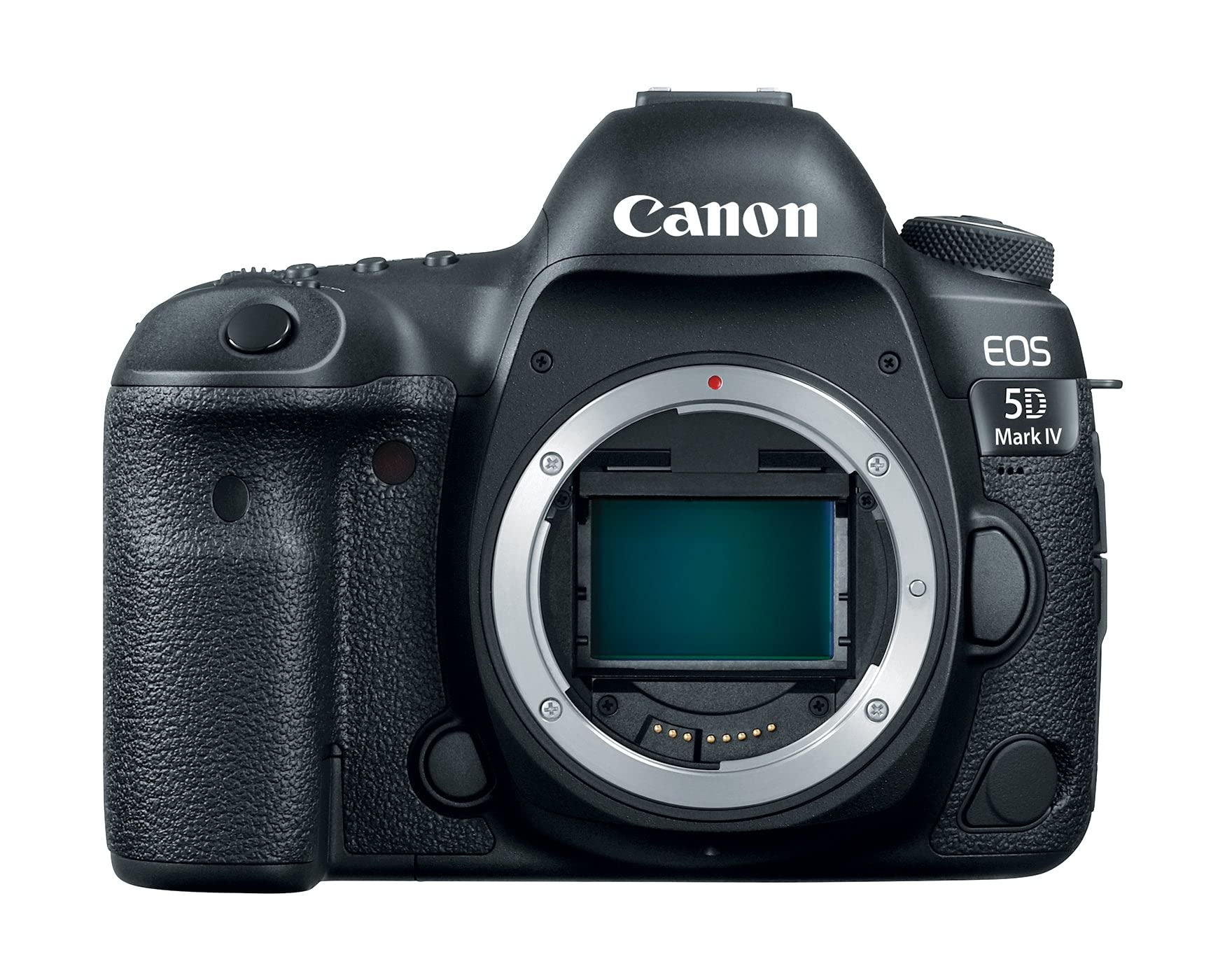
The 30.4-megapixel DSLR that proves an optical viewfinder still has a place in the mirrorless age.
The 5D Mark IV is not a mirrorless camera — it is a traditional DSLR with a 30.4-megapixel full-frame CMOS sensor and a DIGIC 6+ image processor. It shoots at up to 7 fps, records 4K Motion JPEG video at 30 or 24 fps, and uses Dual Pixel CMOS AF for smooth autofocus during live view and video. The ISO range spans 100-32,000 natively, expandable to 50-102,400.
Buyers who upgraded from the 5D Mark III or earlier praise the improved dynamic range and low-light performance, noting that high ISO up to 1600 has very little noise. The optical viewfinder is a major draw for purists — it works without power and doesn’t introduce EVF lag. The downside: 4K video is in Motion JPEG format, which creates enormous file sizes, and the fixed LCD screen (non-articulating) makes overhead or low-angle shots more difficult than on the 6D Mark II.
One buyer calls it a “workhorse of a camera” that has never failed during professional shoots, and notes that the dual pixel RAW micro-adjustments (available in Canon’s DPP software) can fine-tune focus after the shot.
Sustained Strengths
- 30.4 MP full-frame sensor with stellar dynamic range — near Sony’s level
- Optical viewfinder works without power and has no lag
- Professional build quality with excellent EF lens selection
Dated Video System
- 4K video is Motion JPEG — huge files with limited editing flexibility
- Fixed LCD screen — no flip-out for vlogging or self-portraits
- Continuous shooting at 7 fps is slow by modern mirrorless standards
For dedicated DSLR fans: If you have a collection of Canon EF lenses and prefer an optical viewfinder, the 5D Mark IV is still a capable professional body.
Skip if you need modern video: The Motion JPEG 4K and lack of a flippable screen make it a poor choice for video-centric work.
10. Nikon Z 7II Full-Frame Mirrorless Camera

The 45.7-megapixel beast that turns extreme resolution into usable real-world images.
The Z 7II’s 45.7-megapixel BSI sensor delivers 3.3 times more buffer capacity than the original Z 7, faster continuous shooting, and improved autofocus that tracks subjects with speed and precision. The dual card slots (CFexpress/XQD plus UHS-II SD) give professionals the redundancy they need for paid assignments. 4K UHD video at 60p allows smoother action playback and the ability to slow down footage in post.
Buyers coming from Sony APS-C systems praise the “outstanding sharpness and low noise,” noting that the 45MP sensor allows a competitive APS-C crop mode (you can shoot in a smaller sensor area and still have plenty of resolution). The built-in intervalometer and flicker-free exposure smoothing make it ideal for timelapse photography, and the 2-axis tilt touchscreen is useful for landscape compositions. The main gripe is poor battery life — one buyer strongly recommends backup batteries — and the fact that video lacks HEVC compression, leading to large file sizes.
For high-res landscape, architecture, or commercial work where you need the ability to crop deeply or make large prints, the Z 7II is the best value per pixel in this list.
Resolution Advantages
- 45.7 MP sensor provides enormous cropping flexibility and large-print capability
- 3.3x more buffer capacity than the Z 7 — holds longer bursts
- Built-in intervalometer and flicker-free exposure for timelapse
Video Limitations
- No HEVC compression — video files are very large
- Battery life is poor — one buyer says “recommends backup batteries”
- Menu system has a learning curve for former Sony users
If you need the most resolution for the least money: The Z 7II’s 45.7 MP sensor rivals cameras costing thousands more, making it the pick for landscape and commercial shooters.
Skip if you are a video-first shooter: The huge file sizes and lack of modern compression make it less practical than the Z6 III or S5IIX for video work.
11. Panasonic LUMIX S9 Full-Frame Mirrorless Camera with S 18-40mm Lens
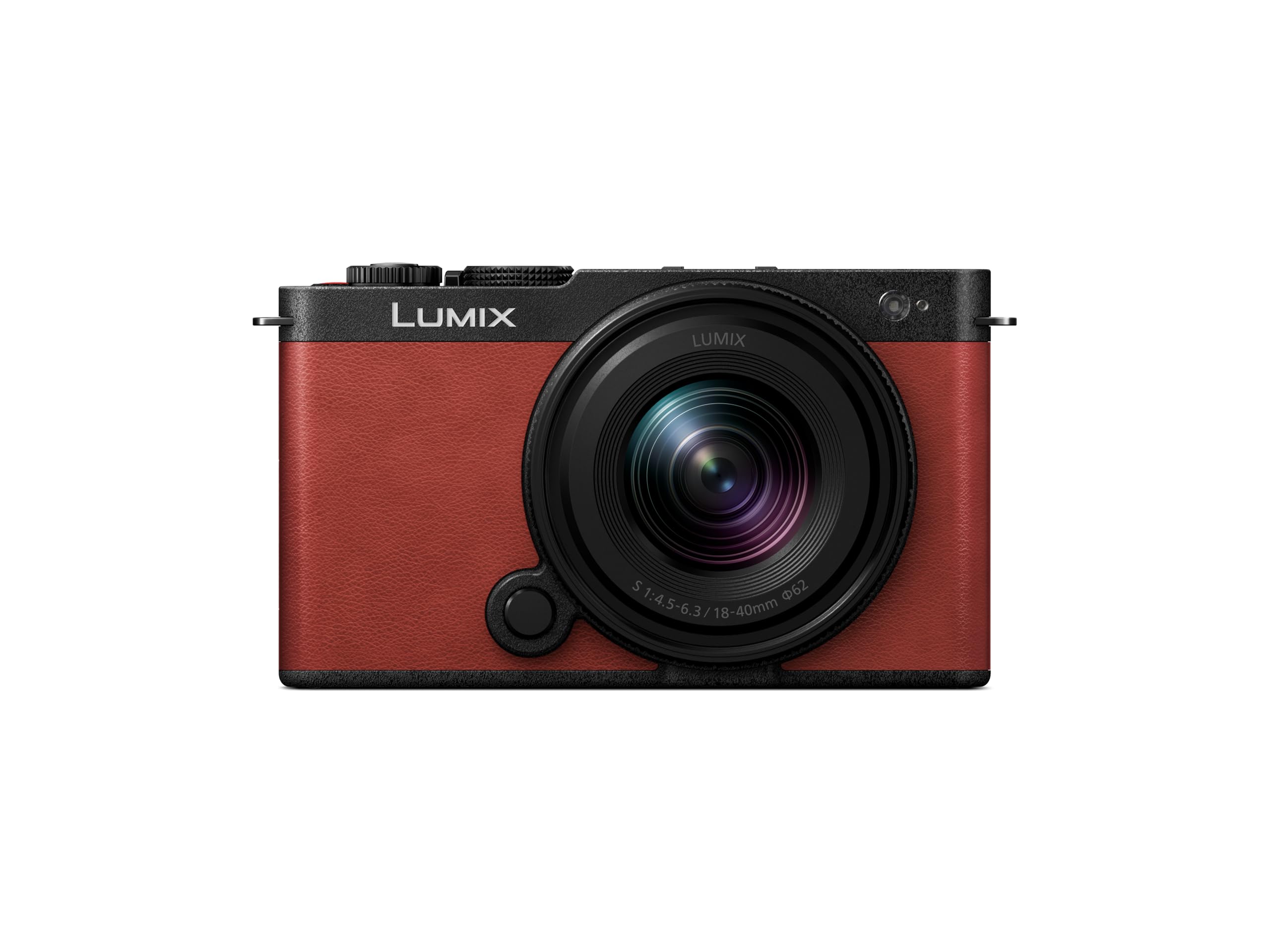
The tiny full-frame camera built to get shots from sensor to social media in seconds.
The LUMIX S9 is designed around speed of workflow. With the LUMIX Lab app and an ultra-fast Wi-Fi connection, photos appear in your phone’s photo library almost instantly. It shoots in Open Gate mode, which captures the full sensor area so you can frame for vertical, horizontal, or square formats from a single shot — ideal for repurposing content across Instagram, TikTok, and YouTube. The S9 also delivers high-resolution video recording with no record limits after an update, and buyers confirm no overheating even after over 1 hour of 4K30 recording.
The compact 18-40mm F4.5-6.3 lens makes the whole kit pocketable, and the camera uses Depth From Defocus autofocus (a Panasonic system that measures sharpness from blur patterns). One buyer calls it “one of the best full frame cameras for the price” and notes the LUT (look-up table) feature and Lumix Lab app are excellent for on-the-go editing. However, the camera has no built-in flash and no hotshoe to attach one — one buyer was frustrated to discover the cold shoe is “decorative.”
Compared to the Sony ZV-E1, customers note the S9 has no overheating issues and better image quality, but it lacks an EVF and headphone jack.
Speed-First Features
- Open Gate video captures all aspect ratios from one clip for social media repurposing
- Ultra-fast Wi-Fi transfer to phone with LUMIX Lab app
- No record limits and no overheating — buyers confirm 1+ hours at 4K30
Missing Elements
- No flash and no functional hotshoe — the cold shoe is “decorative” per one buyer
- No EVF — composing in bright sunlight is harder
- Requires an add-on grip for comfortable one-handed use
If you create content for social platforms: The instant transfer and Open Gate video make this the most efficient camera for creators who post daily across multiple formats.
Not for event photographers: The lack of flash and hotshoe kills its usefulness in low-light indoor events.
12. Canon EOS 5D Mark II Full Frame DSLR Camera (Body Only)

The 5D Mark II launched in 2008 with a 21.1-megapixel full-frame CMOS sensor, Full HD video, and a DIGIC 4 processor. It was the first DSLR to deliver professional-quality video, and it is still capable of producing beautiful stills, especially at its native ISO range of 100-6400 (expandable to 25,600). The body is weather-sealed, and reviewers point out it surviving heavy rain and mud.
One buyer reports ISO performance “clean up to 3200-4000” on a refurbished unit with a 600-shot shutter count. Video quality matches the Canon 7D and 60D, but advanced features like audio monitoring require the MagicLantern firmware hack. The 9-point AF system with contrast detection in live view is painfully slow by modern standards. The 3.9 fps continuous shooting is too slow for sports.
This camera is not for beginners or those needing modern autofocus and video codecs. If you want the cheapest entry to full-frame image quality and are comfortable with manual focus, it remains a legendary bargain.
Why It Still Matters
- 21.1 MP full-frame sensor produces prints up to 40×50 inches, per one buyer
- Weather-sealed body that withstands heavy rain and mud
- Extremely affordable on the used market — one buyer got a refurb for
Modern Weaknesses
- Only 9 autofocus points with slow contrast detection in live view
- 3.9 fps continuous shooting is not suitable for action or sports
- No auto ISO in manual mode — a dealbreaker for runway and nature shooters
For budget purists and tinkerers: If you can live without modern autofocus and are willing to use MagicLantern, the 5D Mark II gives you the full-frame look for the price of a meal out.
Most buyers should look at newer options: The autofocus and video limitations are severe enough that the EOS RP or a used a7 III are worth the extra money.
13. Canon EOS 6D Mark II DSLR Camera with EF 24-105mm USM Lens

The DSLR that gives you 26.2 megapixels, a vari-angle screen, and a solid L-series kit lens.
The 6D Mark II pairs a 26.2-megapixel full-frame CMOS sensor with a DIGIC 7 image processor and a 45-point all-cross-type autofocus system (every AF point is a cross-type sensor, which is more sensitive to detail in both horizontal and vertical lines). It records Full HD video at 60p with Dual Pixel CMOS AF for smooth phase-detection focusing during live view. The vari-angle 3.0-inch touchscreen is a major upgrade over the fixed LCD of the 5D Mark IV, making it easier to shoot from high or low angles.
Buyers upgrading from crop-sensor Canon DSLRs like the T3i say the high ISO quality is “great” and the WiFi works for basic transfers (though not as smoothly as AirDrop). The EF 24-105mm F4L IS II USM lens is a substantial, well-built L-series lens with a versatile zoom range and image stabilization. The main criticism from reviews is that the 45 AF points are clustered in the center of the frame — one buyer says about 10-15% of the time they wish the points spread further to the edges, something a 5D Mark IV or a mirrorless camera would solve.
The camera is bulkier and heavier than a mirrorless kit, but for those who prefer an optical viewfinder and a traditional DSLR experience, it delivers professional-quality images at a fraction of the cost of the 5D series.
What It Does Well
- 26.2 MP full-frame sensor with great high-ISO performance — “clean” at higher sensitivities
- Vari-angle 3.0-inch touchscreen for flexible shooting angles
- Comes with a professional EF 24-105mm F4L IS II USM lens
Limitations to Know
- 45 AF points are clustered in the center — edge composition is occasionally tricky
- No 4K video — Full HD 60p only
- Heavier and bulkier than mirrorless alternatives
If you want DSLR reliability with modern conveniences: The vari-angle screen and excellent L-series kit lens make the 6D Mark II a well-rounded tool for family, travel, and portrait photography.
Buyers who need 4K or edge-focused AF: The center-clustered AF and lack of 4K video are the two biggest reasons to choose a mirrorless camera instead.
Understanding the Specs
Continuous Shooting Speed (fps)
Frames per second tells you how many photos the camera can take in one second while holding the shutter button. For action photography — sports, wildlife, kids running — you want at least 10 fps to catch the peak moment. The Canon R8 hits 40 fps with its electronic shutter, which is overkill for most people but gives you a burst of shots so fast you can pick the perfect frame. A camera like the Canon RP at 5 fps will miss that split-second expression during a birthday party.
Autofocus Points and Coverage
AF points are the tiny sensors on the image sensor that detect focus. More points and wider coverage across the frame mean the camera can track a subject that moves to the edge of your composition without losing lock. The Canon R8 has 1,053 AF zones covering 100% of the frame, so you can compose a runner at the far left and the camera will keep them sharp. Cameras with fewer, center-clustered points (like the 6D Mark II’s 45 points) force you to focus and recompose, which can miss focus on fast-moving subjects.
Megapixels and Sensor Resolution
Megapixels determine how much detail the sensor can capture, which directly affects how large you can print or how aggressively you can crop a photo. A 24-megapixel sensor is the balance for most people — it delivers sharp 16×20 inch prints and handles low light well. The Nikon Z 7II’s 45.7 megapixels lets you crop down to a small section of an image and still have enough resolution for a social media post, but the large files fill up memory cards faster and require more processing power in editing software.
IBIS vs. Lens-Based Stabilization
IBIS (in-body image stabilization) moves the sensor to counteract camera shake, and it works with any lens you attach. This is a huge advantage for handheld video and shooting in dim light without a tripod. The Nikon Z 6II, Panasonic S5IIX, and Sony a7 III all have IBIS. The Canon R8 and RP lack IBIS, meaning you rely on stabilized lenses (marked “IS” in Canon’s lineup) for smooth handheld footage. If you shoot video often or hate carrying a tripod, IBIS is worth paying extra for.
FAQ
Is a cheap full frame camera really worth it compared to a good APS-C camera?
How many megapixels do I really need in a cheap full frame camera?
Can I use my old Canon/Nikon DSLR lenses on a mirrorless full frame camera?
What is the difference between mechanical shutter and electronic shutter?
Do cheap full frame cameras have good battery life?
Is 4K video on a cheap full frame camera actually usable?
What does IBIS mean and do I really need it?
Can I use third-party lenses like Sigma or Tamron on these cameras?
What is the best cheap full frame camera for beginners?
How long will a cheap full frame camera last?
Final Thoughts: The Verdict
For the majority of shoppers, the cheap full frame camera winner is the Canon EOS R8 because it gives you the core technology of a camera — 40 fps shooting, uncropped 4K60 with C-LOG3, and a 1,053-point AF system — in the lightest RF-mount body Canon makes. If you need dual card slots and IBIS for professional event work, grab the Nikon Z 6II. And for video creators who want unlimited recording and ProRes workflows without spending, the Panasonic LUMIX S5IIX is the pick that punches way above its price.
How We Picked
We do not accept paid placement. Every pick is matched to a real buyer and a real use-case; we do not hands-on test units.
Sources & Methodology
Specifications: manufacturer listings and product documentation. Review insights: verified customer reviews, as of July 2026. Pricing: not shown on this page (it changes often); check the current price via the retailer link.
As an Amazon Associate, WellFizz earns from qualifying purchases. This does not affect which products we feature.
Related Guides

Mo Maruf
I created WellFizz to bridge the gap between vague wellness advice and actionable solutions. My mission is simple: to decode the research and give you practical tools you can actually use.
Beyond the data, I am a passionate traveler. I believe that stepping away from the screen to explore new environments is essential for mental clarity and physical vitality.