Our readers keep the lights on and my smoothie glass nicely filled. As an Amazon Associate, I earn from qualifying purchases.
Specs are compiled from manufacturer listings and verified buyer reviews and can change over time — please confirm the key details on the product page before buying.
An accounting student’s laptop needs to survive marathon spreadsheet sessions, a dozen open browser tabs, and the occasional late-night tax project — all without freezing at the wrong moment. The right machine pairs a quick processor with enough memory to keep your accounting software and textbook tabs running side-by-side., plus a numeric keypad that saves you from hunting for numbers on the top row. This guide breaks down four real options, from budget-friendly daily drivers to performance powerhouses, so you pick the one that gets your work done.
I’m Mohammad Maruf — the founder and writer behind WellFizz. This guide is built by comparing the manufacturers’ published specifications and the patterns across verified customer reviews, so you get each pick’s real strengths and trade-offs instead of marketing spin.
A laptop that handles QuickBooks, Excel, and multiple research windows at once saves you hours of frustration each week.
Quick Picks
- Lenovo V-Series V15 Business Laptop — Powerhouse Pick
- HP 17 Inch Laptop for Business, AMD Ryzen 5 — Best Overall
- HP 17.3″ Business Laptop, 16GB RAM 512GB SSD — Mid-Range Value
- Lenovo IdeaPad 1 Laptop, 15.6″ FHD — Budget Champion
How To Choose The Best Computer For Accounting Students
Picking an accounting laptop means ignoring the gaming hype and focusing on the specs that matter for spreadsheets, financial software, and multitasking. Here are the three things to get right.
Processor Power: Cores Count When You Are Balancing Books
Your processor (the brain of the laptop) determines how fast your accounting software loads and how many apps you can run at once. For accounting tasks like Excel, QuickBooks, or tax preparation software, you want at least 4 cores (individual calculating units) — more cores mean the laptop can handle multiple calculations at the same time without stuttering. The cheapest chips like the Intel Celeron N4500 have just 2 cores, which works fine for light web browsing but will struggle when you have a spreadsheet, a PDF of tax code, and a browser with 10 tabs open.
RAM: The Magic Number for Multitasking
Random Access Memory (RAM) is your laptop’s short-term workspace — it holds everything you are actively working on, like a desk where you spread out your papers. For accounting students, 8GB is the bare minimum, but 16GB is the real balance that lets you keep your accounting software, a dozen browser tabs, and a word processor all open without the system slowing down. If you plan to run virtual machines (simulated computers inside your laptop) or big datasets in your coursework, 32GB or even 40GB gives you room to breathe without ever closing a tab.
The Numeric Keypad: A Small Feature That Saves Hours
A full numeric keypad on the right side of the keyboard lets you enter numbers with one hand while your other hand navigates the spreadsheet — it is a small detail that makes a huge difference when you are entering rows of financial data. Every laptop on this list includes one, but double-check before you buy any accounting machine: missing this feature means you will be reaching for the top-row numbers or buying a separate external keypad, which defeats the purpose of a portable laptop.
Quick Comparison
| Model | Best For | Processor Cores | RAM | Display Size | Amazon |
|---|---|---|---|---|---|
| Lenovo V-Series V15 | Heavy Multitasking | 8 Cores | 40GB | 15.6″ | Amazon |
| HP 17″ AMD Ryzen 5 | Large-Screen Productivity | 6 Cores | 32GB | 17.3″ | Amazon |
| HP 17.3″ Business | Mid-Range Budget | 10 Cores | 16GB | 17.3″ | Amazon |
| Lenovo IdeaPad 1 | Entry-Level Value | 2 Cores | 12GB | 15.6″ | Amazon |
In‑Depth Reviews
1. Lenovo V-Series V15 Business Laptop

The 8-core AMD Ryzen 7 and 40GB RAM chew through spreadsheets and heavy multitasking without slowing down.
If you are the kind of student who keeps your accounting software, a dozen research tabs, a PDF textbook, and a video lecture running simultaneously, the Lenovo V-Series V15 gives you the firepower to do it all without a single stutter. It packs an AMD Ryzen 7 7730U processor with 8 cores and 16 threads, versus 2 cores and 2 threads on the budget Celeron options, so complex financial calculations and large datasets get handled without delay. The 40GB of high-bandwidth RAM, compared to the IdeaPad’s 12GB, lets you run memory-hungry accounting applications and keep every tab open without slowing down. With a 1TB PCIe NVMe SSD (a type of solid-state drive that is very fast), the operating system loads in under 10 seconds according to buyers, and you have plenty of space for QuickBooks files, tax software, and semester projects.
One owner mentioned the laptop failed after about 2 weeks of use: won’t turn on, LED on but no boot, screen flickers then shuts off — a notable warning from the reviews. A buyer who purchased 24 of these for business reported that 1 of 24 failed within 6 months, and a Lenovo warranty tech noted the 40GB RAM upgrade may not be supported by the motherboard (the main circuit board, designed for 8GB). The 15.6-inch 1920 x 1080 Full HD display is sharp enough for detailed spreadsheets, though reviewers report the colors are slightly washed out compared to other computers. The keyboard includes a full numeric keypad for efficient data entry, and the battery lasts 8 hours per charge with fast USB-C recharging.
The Speed Demon
- 8-core AMD Ryzen 7 handles heavy multitasking and financial software easily
- 40GB RAM is the highest capacity on this list, great for virtual machines (simulated computers) or big datasets
- 1TB SSD provides fast boot times (under 10 seconds per buyers) and ample storage
- Full numeric keypad makes number entry in spreadsheets much faster
Watch For
- Some units have failed within weeks — a known reliability concern
- Display colors appear washed out compared to other laptops
- Motherboard may not officially support the full 40GB RAM configuration
- 15.6-inch screen is a bit bulky for frequent travel
Reach for this if: you need maximum multitasking power for complex accounting projects and don’t mind the slightly bigger size.
Look elsewhere if: reliability is your top concern — the review pattern of early failures is a real risk to consider.
2. HP 17 Inch Laptop for Business, AMD Ryzen 5
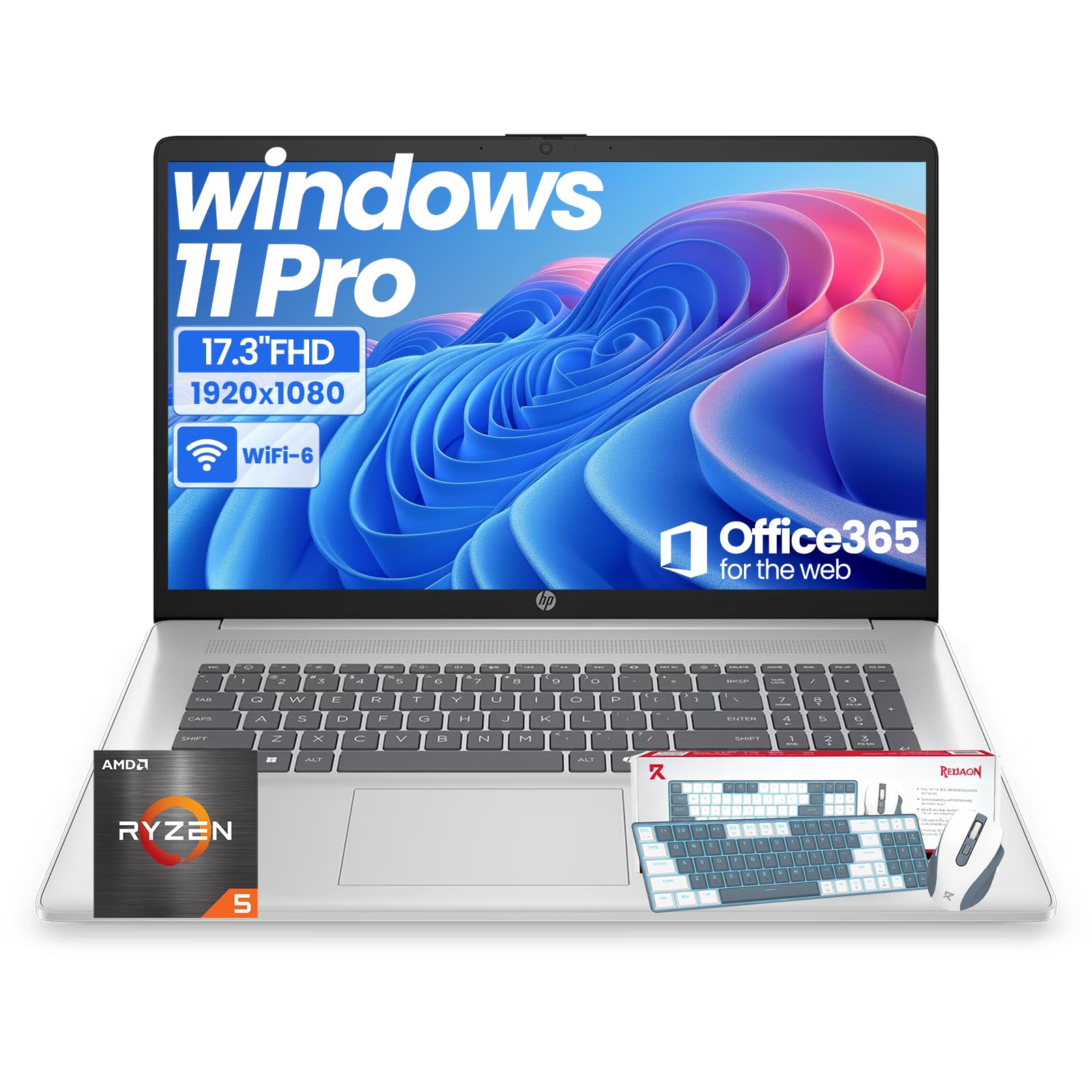
The 17.3-inch 1080p IPS display gives you desktop-level visibility for side-by-side spreadsheets in a portable package.
For accounting students who spend hours staring at financial statements and tax forms, the 17.3-inch Full HD (1920 x 1080) IPS display (a screen type with better color and wider viewing angles) on this HP is a standout — it has a 1920 x 1080 resolution versus 1600 x 900 on the HP 17.3″ Business model, so numbers in spreadsheets stay crisp and readable without zooming in. The 17.3-inch display, compared to 15.6-inch models, gives you more room for two windows side by side without squinting, which is a huge advantage when reconciling accounts. Under the hood, the AMD Ryzen 5 7430U processor delivers 6 cores and 12 threads, while the HP 17.3″ Business laptop has 10 cores and 12 threads, so your accounting software and browser tabs stay responsive even under heavy load. The 32GB RAM and 1TB SSD handle the same capacity as the V-series but in a larger, more comfortable screen format.
The anti-glare 1920 x 1080 IPS panel lets you work under harsh dorm-room lighting or near a window without reflections. It includes a full numeric keypad for efficient data entry and features an AI Copilot key for quick access to smart assistance in Office apps. The Wi-Fi 6 (a fast wireless standard) and Bluetooth 5.2 keep connections quick and stable. No customer reviews are available yet for this model, so the reliability picture is still emerging — you are buying based on specs rather than long-term user feedback.
The Screen Advantage
- 17.3-inch FHD IPS display with 1920 x 1080 resolution offers plenty of screen real estate
- 6-core AMD Ryzen 5 handles multitasking smoothly
- 32GB RAM and 1TB SSD provide generous capacity for accounting files
- Anti-glare screen lets you work in bright rooms without reflections
Unknown Territory
- No verified customer reviews yet, so real-world performance and durability are unproven
- 17.3-inch screen makes it heavier to carry around campus compared to 15.6-inch models
- Integrated Radeon Graphics won’t handle gaming or video editing well
Best for: students who prioritize screen size for side-by-side spreadsheets and want ample RAM and storage right from the start.
Choose this over the Lenovo V-Series if you want a bigger, sharper display and are willing to accept the lack of long-term user feedback.
3. HP 17.3″ Business Laptop, 16GB RAM 512GB SSD
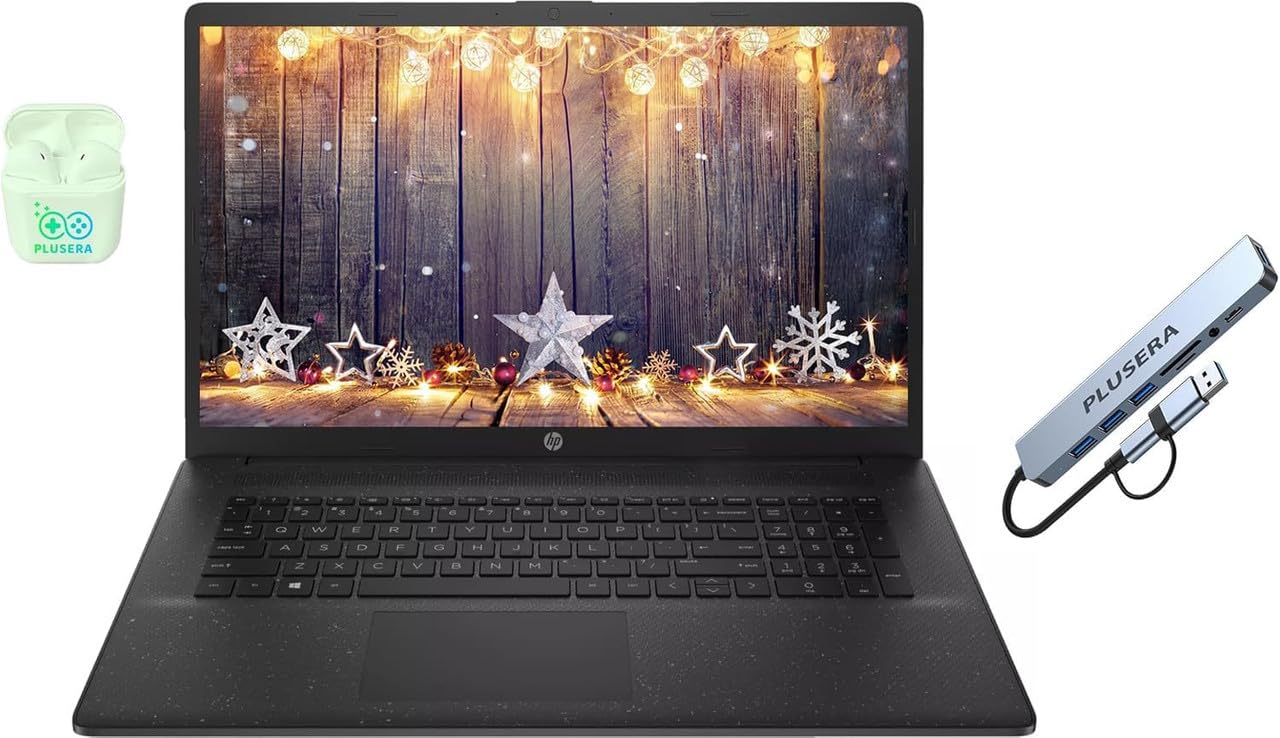
The 10-core Intel Core i5 offers raw processing power, but buyer-reported crashing issues make reliability a concern.
The HP 17.3″ Business Laptop stands out for its Intel Core i5 processor with 10 cores and a max boost clock (peak speed) up to 4.6GHz — versus 2 cores on the budget Celeron model — so accounting software and multiple browser tabs run without breaking a sweat. The 17.3-inch screen is the largest size on this list, giving you a generous workspace for spreadsheets, but the 1600 x 900 resolution falls short compared to the 1920 x 1080 display on the HP AMD Ryzen 5 model — meaning text and numbers won’t be as sharp, especially when working with dense financial tables. The 16GB of DDR4 RAM (the most common type of laptop memory) is enough for most student tasks, and the 512GB SSD provides fast boot times and adequate storage for coursework.
The catch here is the reviews. One reviewer noted the laptop keeps crashing: “worst owned,” with more downtime than uptime. Another reviewer noted there is no ethernet (wired internet) port — a missing feature for those who prefer a wired connection in the dorm. The display brightness is rated at 250 nits (a unit of brightness), which is on the lower side and may feel dim in bright rooms. It comes with a PLUSERA earphone and an 8-in-1 hub included, which sweetens the deal a bit. The 17.3-inch size also means finding a laptop bag that fits can be an issue, as one buyer mentioned.
The Processor Punch
- 10-core Intel Core i5 is the highest core count on this list for multi-threaded tasks (handling many instructions at once)
- Large 17.3-inch screen gives you lots of workspace for spreadsheets
- Included earphones and 8-in-1 hub add extra value
- 16GB RAM is solid for typical accounting student multitasking
Reliability Questions
- Buyers report crashing issues — “Laptop keeps crashing; worst owned”
- 1600 x 900 resolution is noticeably less sharp than 1080p (1920 x 1080) displays
- No ethernet port for wired internet connections
- 250 nits brightness is dim for bright classroom or library lighting
Choose it for: the raw processing power (10 cores) and large screen if you are willing to take a chance on reliability.
Be warned: the crashing reports from multiple buyers make this a riskier pick compared to the HP AMD Ryzen 5 model, which has a bigger screen at a better resolution.
4. Lenovo IdeaPad 1 Laptop, 15.6″ FHD

The 15.6-inch FHD display and 12GB RAM handle web-based accounting tasks at a budget-friendly price.
For web-based accounting coursework — like online versions of QuickBooks, Google Sheets, or your school’s learning portal — the Lenovo IdeaPad 1 gives you a capable machine at a budget-friendly price point. It features a 15.6-inch Full HD (1920 x 1080) display, which is a clear step up in sharpness from the 1600 x 900 screens found on some similarly-priced alternatives. The 12GB of RAM is enough to keep a handful of browser tabs and a word processor open at the same time, and the 512GB PCIe NVMe SSD ensures fast boot-ups and quick file transfers. The Intel Celeron N4500 processor has just 2 cores, compared to the 10-core i5 in the HP 17.3″ Business laptop, so it will struggle with heavy multitasking or demanding financial software — but for web-based tasks and light spreadsheet work, it gets the job done.
One owner reported using it “2-3 times/week for 6 weeks” and found it exceeded expectations for internet, bills, and homework. Another reviewer noted it weighs only 3.4 lbs, making it easy to carry between classes. The numeric keypad is present, which is important for accounting work, and the laptop includes a 1-year Office 365 subscription. The Celeron N4500 is not suited for gaming or video editing, and buyers mention the button layout differs from older Lenovo models, which takes some getting used to. The 15.6-inch size strikes a good balance between screen real estate and portability — unlike the 17.3-inch HP models, it fits easily into a standard backpack.
Budget-Friendly Value
- Sharp 15.6-inch FHD display at 1920 x 1080 resolution
- Lightweight at 3.4 lbs — easy to carry around campus
- 12GB RAM and 512GB SSD provide decent speed and storage for the price
- Includes numeric keypad and 1-year Office 365 subscription
Processing Limits
- 2-core Celeron N4500 will struggle with heavy multitasking or complex accounting software
- Not suitable for gaming, video editing, or running virtual machines
- Different keyboard layout takes some adjustment per buyer feedback
Grab it for: light web-based accounting coursework and everyday tasks at an entry-level price.
If your classes require running resource-intensive accounting software on the laptop itself, step up to one of the HP models with at least 6 cores.
Understanding the Specs
Processor Cores and Threads
The processor cores are like having multiple assistants working on your spreadsheet at the same time. More cores mean your laptop can handle multiple calculations and tasks without slowing down. For accounting students, 4 to 6 cores is the balance — the Lenovo V-Series has 8 cores from its AMD Ryzen 7, while the budget IdeaPad has only 2 cores from its Intel Celeron. Each core can handle two threads (tasks) at the same time, so an 8-core/16-thread processor can juggle 16 tasks at once, which is perfect for running QuickBooks alongside tax software and a dozen browser tabs.
RAM Capacity
RAM is your laptop’s short-term memory — it holds everything you are actively working on, like a desk where you spread out your textbooks, calculator, and notes. For accounting students, 16GB is the comfortable minimum, 32GB offers serious multitasking room, and 40GB (like in the Lenovo V-Series) is more than enough for most but gives you the freedom to never close a tab. The budget IdeaPad has 12GB, which is fine for light web-based work but will fill up quickly if you open many large spreadsheet files or PDFs at once.
FAQ
Does an accounting student really need a numeric keypad?
Can a laptop with 12GB RAM handle accounting software like QuickBooks?
Is a 2-core processor enough for accounting coursework?
What is the difference between a 15.6-inch and 17.3-inch screen for accounting work?
Is an IPS display important for an accounting laptop?
How much storage space does an accounting student need?
Can a budget accounting laptop be upgraded later?
Is Windows 11 Pro worth paying extra for accounting students?
What if my accounting software needs a wired internet connection?
Can I use any of these laptops for online exams or proctored tests?
Final Thoughts: The Verdict
For most accounting students, the reliable all-rounder is the HP 17 Inch Laptop with AMD Ryzen 5 because it delivers a sharp 17.3-inch 1080p IPS screen, 6-core processing power, and 32GB RAM — giving you the screen real estate to work with complex spreadsheets without paying for hardware that owners mention fails. If you need extreme multitasking muscle with 40GB RAM and 8 cores, the Lenovo V-Series V15 is your machine, but watch for the early-failure reports. For web-based accounting coursework on a budget, the Lenovo IdeaPad 1 gives you the best value, provided you stick to light tasks.
How We Picked
We do not accept paid placement. Every pick is matched to a real buyer and a real use-case; we do not hands-on test units.
Sources & Methodology
Specifications: manufacturer listings and product documentation. Review insights: verified customer reviews, as of July 2026. Pricing: not shown on this page (it changes often); check the current price via the retailer link.
As an Amazon Associate, WellFizz earns from qualifying purchases. This does not affect which products we feature.

Mo Maruf
I created WellFizz to bridge the gap between vague wellness advice and actionable solutions. My mission is simple: to decode the research and give you practical tools you can actually use.
Beyond the data, I am a passionate traveler. I believe that stepping away from the screen to explore new environments is essential for mental clarity and physical vitality.