Our readers keep the lights on and my smoothie glass nicely filled. As an Amazon Associate, I earn from qualifying purchases.
Specs are compiled from manufacturer listings and verified buyer reviews and can change over time — please confirm the key details on the product page before buying.
That moment you lean into a corner on a worn-out rear tire — the rear feels loose, and the wobble tells you it is time for new rubber. A good set of cheap motorcycle tires keeps you planted, confident, and safe while staying affordable.. This guide compares four budget-conscious tires that prioritize grip, stability, and value for your cruiser or V-twin..
I’m Mohammad Maruf — the founder and writer behind WellFizz. This guide is built by comparing the manufacturers’ published specifications and the patterns across verified customer reviews, so you get each pick’s real strengths and trade-offs instead of marketing spin.
If you ride a cruiser, metric bike, or V-twin and need to replace worn rubber while staying affordable, you have a practical breakdown here of the best cheap motorcycle tires that actually deliver where it counts: grip, stability, and wet-weather traction.
Quick Picks
- Shinko 777 Front H.D. 100/90-19 (61H) Black Wall Motorcycle Tire — Best Overall
- Shinko 87-4594 777 Rear H.D. Motorcycle Tire 130/90b-16 (73H) Black Wall — Budget Champion
- Dunlop D404 Rear 130/90-16 67H — Entry Level Performer
- Shinko 777 Rear H.D. Motorcycle Tire 170/80B-15 (83H) White Wall — Style & Touring
How To Choose The Best Cheap Motorcycle Tires
Buying tires on a budget does not mean you have to compromise safety or handling. The key is knowing which specs to prioritize and which to trade off.. Here is what to look for before you click “add to cart.”
Size Compatibility
The most important factor is size. A tire code like 130/90-16 tells you the width in millimeters (130), the aspect ratio (the sidewall height as a percentage of width, here 90), and the rim diameter in inches (16). Matching this exactly to your bike’s stock size avoids rubbing issues and speedometer errors.
Load Capacity and Speed Rating
The load index (a number like 67 or 83) tells you how much weight the tire can carry at maximum pressure. For heavy cruisers or bikes that carry a passenger or luggage, a higher load index gives you a safety margin. The speed rating (H = tested up to 130 mph) ensures the tire is stable at highway speeds.
Tread Compound vs. Longevity
Soft rubber compounds give you excellent grip in corners and wet conditions, but they wear faster. A harder compound lasts longer but may feel less planted. Buyer reviews suggest some budget tires show noticeable wear around 4,500 miles., so balance your need for grip with how many miles you ride each season.
Construction Type
Bias-ply construction (where the cords run diagonally across the tire) is common at this price point and delivers a smooth ride. Some tires, like those with aramid belting (a strong synthetic fiber layer), offer extra stability for touring loads. If you do long-distance riding with gear, look for a reinforced carcass.
Quick Comparison
On smaller screens, swipe sideways to see the full table.
| Model | Best For | Load Capacity | Weight | Size (Diameter) | Amazon |
|---|---|---|---|---|---|
| Shinko 777 Front 100/90-19 | Commuters & Budget Riders | 908 Pounds | 9.2 Pounds | 19 Inches | Amazon |
| Dunlop D404 Rear 130/90-16 | Entry-Level & Light Cruisers | 67 Load Index | 13 Pounds | — | Amazon |
| Shinko 777 Rear 130/90-16 | Value & Wet Grip | 805 Pounds | 15.05 Pounds | 25.2 Inches | Amazon |
| Shinko 777 Rear 170/80-15 White Wall | Classic Style & Touring | 83 Load Index | 15 Pounds | 510 Millimeters | Amazon |
In‑Depth Reviews
1. Shinko 777 Front H.D. 100/90-19 (61H) Black Wall Motorcycle Tire

This front tire kills handlebar shake and keeps you planted, all on a budget.
The Shinko 777 front tire is designed for cruiser and V-twin bikes, and the ride feel reflects that. Buyers report it “fixes 98% of handlebar shake on Yamaha Bolt,” making the front end smoother and more stable through turns. The tread uses siping (small slits that improve grip on wet pavement) and grooves that boost traction in rain, an area where many budget tires fall short. It has an H-speed rating (tested up to 130 mph), so you get highway confidence without paying a premium.
At just 9.2 pounds, it is noticeably lighter than the Shinko 777 rear tire (15.05 pounds), and its aramid-belted construction adds stability without adding heft. Some owners mention a longer break-in period and slightly higher steering effort at low speeds, which is typical for a sticky front tire. It carries a load capacity of 908 pounds — a high number for a front tire — and is the smartest start for anyone building a matched Shinko 777 set. Compared to the Dunlop D404 rear (67 load index), this front tire offers a much higher weight ceiling for your bike’s front end.
Grip & Stability
- Aramid belted construction feels stable and planted
- Improved traction compared to older Shinko compounds
- High load capacity for a front tire — 908 pounds
- Customers note eliminating handlebar shake
Trade-Offs
- Longer break-in period than some expect
- Higher low-speed steering effort
Best for: Riders on a cruiser or V-twin who want a stable front end and better wet grip without paying premium-brand prices.
Not ideal for: Those who need an immediate break-in experience — expect a few hundred miles before full stickiness.
2. Shinko 87-4594 777 Rear H.D. Motorcycle Tire 130/90b-16 (73H) Black Wall

A heavy-duty rear with a reinforced 10-ply carcass that feels planted under load.
This rear tire shares the same traction-focused rubber compound and tread pattern as the front version, creating a matched set that performs well in wet and dry conditions. The key difference is the beefier construction: a 10-ply rated carcass with reinforced belts gives it a sturdy, planted feel under load. One reviewer noted it delivered “comparable performance to pricier brands at lower cost” and said easy mounting was a bonus. and said easy mounting was a bonus — no wheel weights were needed when the dot was aligned with the valve stem. It has a 73H speed and load rating (H = up to 130 mph, load index 73 = about 805 pounds).
The tire weighs 15.05 pounds, significantly heavier than the front 19-inch model (9.2 pounds), and carries a load capacity of 805 pounds. The maximum pressure rating is 350 kilopascals (about 51 psi) — notably higher than the Shinko White Wall’s 310 kPa (45 psi) — giving you more tuning flexibility for heavier loads. Buyers on 1986 FXRS Harleys reported smooth highway handling and easy balance, with many saying they would buy again.. One trade-off across reviews: the soft compound may shorten tread life for high-mileage riders compared to the Dunlop D404, but the grip-to-value ratio is tough to top at this price.
Reinforced Build
- 10-ply rated carcass with reinforced belts for stability
- High maximum pressure (350 kPa) for load tuning
- Smooth highway handling reported by multiple reviewers
- Reviewers point out easy mounting and balance
Wear Concerns
- Soft compound may reduce tread life for high-mileage riders
- Long-term mileage still unknown in reviews
Ideal for: Cruiser owners who want a sturdy rear tire with great grip and easy install for a fair price.
Think twice if: You ride more than 5,000 miles per year — harder-compound touring tires may suit you better.
3. Dunlop D404 Rear 130/90-16 67H
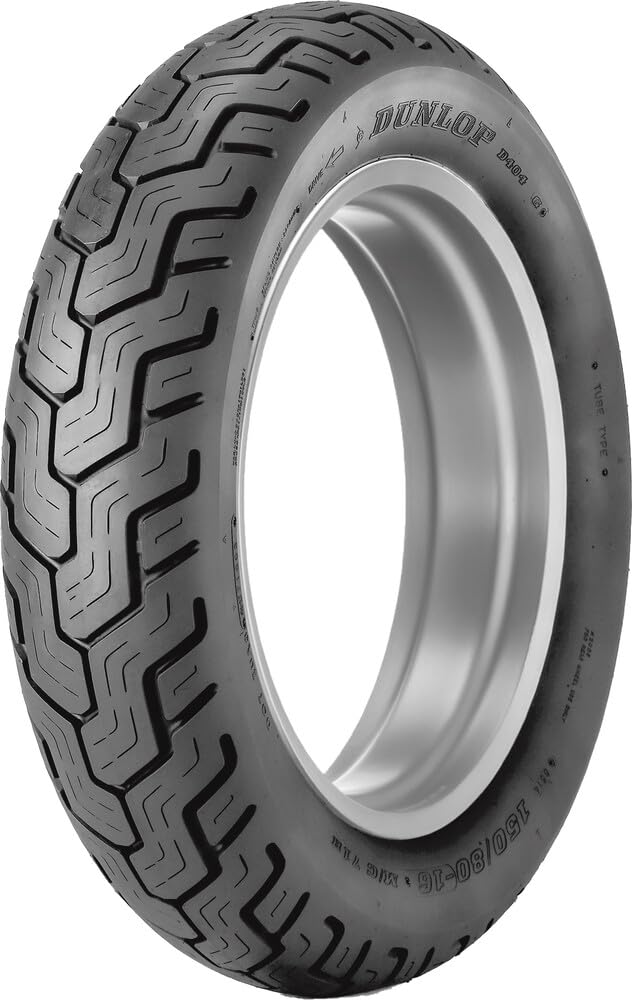
A familiar brand, a fair price, and a bias-ply ride that works for short commutes.
Dunlop is a household name in motorcycle tires, and the D404 is their entry-level bias-ply (the cords run diagonally across the tire, giving a smooth feel at lower speeds) option aimed at riders who want a known brand without spending a lot. The tread compound balances mileage and grip, and the front-and-rear patterns are designed to push water away for better wet-weather traction. Many buyers on Sportsters and older Harleys found it a straightforward replacement that provides “amazing grip” and holds up well at a “fair price.”
The weight is 13 pounds — heavier than the Shinko 777 front (9.2 pounds) but lighter than the Shinko 777 rear (15.05 pounds). Its load index is 67.0 (about 677 pounds), which is significantly lower than the Shinko White Wall’s 83 load index (about 1,074 pounds), so it carries less weight before hitting its limit. One honest review from a 2002 Sportster 1200 Custom owner noted, “very affordable tire, but you do get what you pay for and got about a half a year of riding out of it before showing wear (around 4500 miles).” That is a shorter lifespan than some riders expect, so it is best for moderate seasonal riding, not heavy daily commuting. It also lacks the reinforced belting found on the Shinko 777, so it is less suited for heavy touring loads.
Affordable & Smooth
- Bias-ply construction offers a comfortable ride
- Tread designed for water evacuation in rain
- Recent manufacture date when shipped (shoppers say)
Limited Lifespan
- Buyers report wear around 4,500 miles
- Lower load index (67) than other options here
Best for: Budget-minded riders on Sportsters or light cruisers who ride seasonally and need a quick, known replacement.
Better options for: Long-distance riders or anyone carrying heavy loads — look at the Shinko 777 rear for more capacity and durability.
4. Shinko 777 Rear H.D. Motorcycle Tire 170/80B-15 (83H) White Wall

Classic white wall looks meet heavy-duty touring construction that handles real loads.
If you want the vintage white wall aesthetic (the classic raised white sidewall lettering) without sacrificing modern load capacity, this Shinko 777 rear tire in the 170/80B-15 size is the pick. Its aramid-belted 4-ply rated carcass resists deformation under heavy touring loads, and the reinforced belting is designed for long-distance riding with a passenger or luggage. The load index is 83 — a full 24% higher than the Dunlop D404 rear (67 load index) — meaning it carries significantly more weight safely at highway speeds.
Weighing 15 pounds, it is roughly the same as the black wall Shinko 777 rear (15.05 pounds) but in a wider 170mm width for a larger contact patch and more stability at speed. The maximum pressure is 310 kilopascals (about 45 psi) — lower than the black wall version (350 kPa or 51 psi), giving you a slightly softer ride, which touring riders often prefer. One buyer on a 2006 VTX1300R reported, “I’ve probably put every 25K miles on these tires and still going up,” praising the grip and durability even after burnouts. Multiple reviewers called them “great value” and noted a DOT date just two months old.. The H-rating (up to 130 mph) keeps things safe on the highway. It is the most expensive pick here, but for its blend of load capacity, grip, and looks, it justifies the premium.
Touring-Ready Build
- Load index of 83 — 24% higher than the Dunlop D404 (67)
- Aramid belted construction resists deformation under heavy loads
- Owners mention over 25K miles with good grip remaining
- Classic white wall styling
Considerations
- Premium price compared to other budget tires
- Lower maximum pressure (310 kPa) than the Shinko black wall (350 kPa)
Reach for this if: You tour long distances with luggage or a passenger and want a white wall that actually performs under load.
Look elsewhere if: Your bike is a light commuter that does not need the extra load capacity — the standard 777 rear is more budget-friendly.
Understanding the Specs
Load Index
The load index is a number stamped on the tire sidewall that tells you how much weight the tire can safely carry when inflated to its maximum pressure. A higher number means more capacity — for example, index 83 handles about 1,074 pounds, while index 67 handles about 677 pounds. For heavier cruisers or bikes that carry a passenger and luggage, a higher load index gives you a bigger safety cushion.
Speed Rating
The speed rating is a letter code (H, V, W, etc.) that shows the tire’s maximum safe speed. An H-rated tire is tested up to 130 mph, while a V-rated tire goes up to 149 mph. For most street riding and highway cruising, H is plenty. The rating also affects how the tire handles heat buildup at high speeds — a higher rating generally means better heat dissipation.
FAQ
Will a 130/90-16 tire fit my bike if the stock size is 130/90-16?
How many miles should a cheap motorcycle tire last?
Can I mix a Shinko 777 front with a Dunlop rear?
What does “H.D.” mean on a Shinko 777 tire?
Do I need a tube for a tubeless motorcycle tire?
What is the difference between bias-ply and radial motorcycle tires?
How do I know what load index I need for my cruiser?
Are cheap motorcycle tires safe for highway riding?
What is the correct tire pressure for a Shinko 777 rear tire?
Final Thoughts: The Verdict
For most riders, the best cheap motorcycle tires winner is the Shinko 777 Front H.D. because it combines aramid-belted stability, a high 908-pound load capacity, and verified buyer reports of eliminating handlebar shake — all at a wallet-friendly price. If you want a heavy-duty rear with a reinforced 10-ply carcass and easy balance, grab the Shinko 87-4594 777 Rear. And for classic white wall style plus touring-grade load capacity, the standout is the Shinko 777 Rear White Wall.
How We Picked
We do not accept paid placement, and we did not hands-on test every unit. Instead, we match each pick to a real buyer and use-case by comparing the manufacturers’ published specifications against the patterns in verified customer reviews — so you get each pick’s real strengths and trade-offs instead of marketing copy.
Sources & Methodology
Specifications: manufacturer listings and product documentation. Review insights: verified customer reviews, as of July 2026. Pricing: not shown on this page (it changes often); check the current price via the retailer link.
As an Amazon Associate, WellFizz earns from qualifying purchases. This does not affect which products we feature.

Mo Maruf
I created WellFizz to bridge the gap between vague wellness advice and actionable solutions. My mission is simple: to decode the research and give you practical tools you can actually use.
Beyond the data, I am a passionate traveler. I believe that stepping away from the screen to explore new environments is essential for mental clarity and physical vitality.