Our readers keep the lights on and my smoothie glass nicely filled. As an Amazon Associate, I earn from qualifying purchases.
Specs are compiled from manufacturer listings and verified buyer reviews and can change over time — please confirm the key details on the product page before buying.
You zip up your new ski coat at the base lodge, and on the first chairlift, wet cold seeps through your shoulders. That is the day you regret the buy. The real job of a coat for skiing is to keep you dry, warm, and free to move from first chair to last run without turning into a sweatbox when you hike. This guide breaks down five very different coats, from a lightweight pullover shell you layer yourself to a premium 3-in-1 system that handles three seasons on its own, so you can match your actual skiing style to the right build.
I’m Mohammad Maruf — the founder and writer behind WellFizz. This guide is built by comparing the manufacturers’ published specifications and the patterns across verified customer reviews, so you get each pick’s real strengths and trade-offs instead of marketing spin.
Your ideal coat depends on matching your climate, your activity level, and how much layering you want to manage on the mountain.
Quick Picks
- Alpine Swiss Mens Snowboard Jacket 10K Waterproof Hooded Ski Shell Anorak — Best Value
- Columbia Whirlibird V Interchange Jacket — Most Versatile
- THE NORTH FACE Men’s Freedom Insulated Jacket — Best Overall
- Helly Hansen LIFALOFT Insulated Ski Jacket (Alpha) — Premium Pick
- THE NORTH FACE Men’s Thermoball Eco Snow Triclimate Waterproof Insulated Ski Jacket — Maximum Adaptability
How To Choose The Best Coat For Skiing
Picking a ski jacket is about three measurable things: how waterproof the shell is (its rating in millimeters), how much insulation you need for the temperatures you ski in, and whether the coat’s design — shell-only, insulated, or zip-in 3-in-1 — matches how you like to layer.
Waterproof Rating and Breathability
The waterproof rating, measured in millimeters, tells you how much water pressure the fabric can handle before leaking. A 10,000mm rating, like the Alpine Swiss anorak carries, handles wet snow and light rain fine for most resort days. That means your base layer stays dry. The North Face jackets in this list use 2-layer DryVent shells with sealed seams — a bonding method that stops water from seeping through stitch holes — that keep moisture out during sustained precipitation. The Helly Hansen jacket is described here with a proprietary water-resistant shell for light precipitation and falling snow. Breathability, measured in grams, is the other half: a 5000g/m²/24hr rating lets sweat vapor escape so you do not end up wet on the inside from exertion.
Insulation Type and Weight
Synthetic insulation — Heatseeker (The North Face), LIFALOFT (Helly Hansen), or Thermoball — retains warmth even when damp, unlike goose down which clumps when wet and loses its insulating power. The weight, stated in grams (e.g. 80g in the body of the Freedom Insulated jacket), tells you how much warmth the coat carries on its own. A shell jacket (Alpine Swiss) has zero insulation and relies entirely on your mid-layers, which means you can wear it from 10°F to 40°F by swapping a fleece for a light sweater. An insulated jacket (Helly Hansen Alpha) bundles warmth into the coat itself, ideal for cold days where you want one-piece simplicity.
Slope-Specific Features
Look for a powder skirt (a snap-close or elastic panel at the waist that blocks snow from riding up when you fall), a helmet-compatible hood, and a wrist pass pocket so you do not have to dig for your lift ticket. Underarm vents let you dump heat during a hike without unzipping the whole front. A RECCO reflector (a passive device that helps ski patrol locate you with a detector) is found on the Helly Hansen Alpha — a serious safety add-on for backcountry or deep-powder days where avalanche risk is real.
Quick Comparison
On smaller screens, swipe sideways to see the full table.
| Model | Best For | Waterproof Rating | Insulation | Weight | Amazon |
|---|---|---|---|---|---|
| Alpine Swiss Anorak Shell | Layering flexibility on a budget | 10,000mm | None (shell only) | 2.1 lbs | Amazon |
| Columbia Whirlibird V Interchange | Versatile 3-in-1 for variable weather | Waterproof breathable shell | Thermal-reflective liner | — | Amazon |
| North Face Freedom Insulated | Reliable warmth in extreme cold | DryVent 2L waterproof | 80g Heatseeker | — | Amazon |
| Helly Hansen Alpha LIFALOFT | Lightweight premium warmth with safety features | Water-resistant | LIFALOFT synthetic | 2.8 lbs | Amazon |
| North Face Thermoball Eco Triclimate | Long-term durability and adaptable 3-in-1 system | DryVent waterproof seam-sealed | ThermoBall + Heatseeker | — | Amazon |
In-Depth Reviews
1. Alpine Swiss Mens Snowboard Jacket 10K Waterproof Hooded Ski Shell Anorak
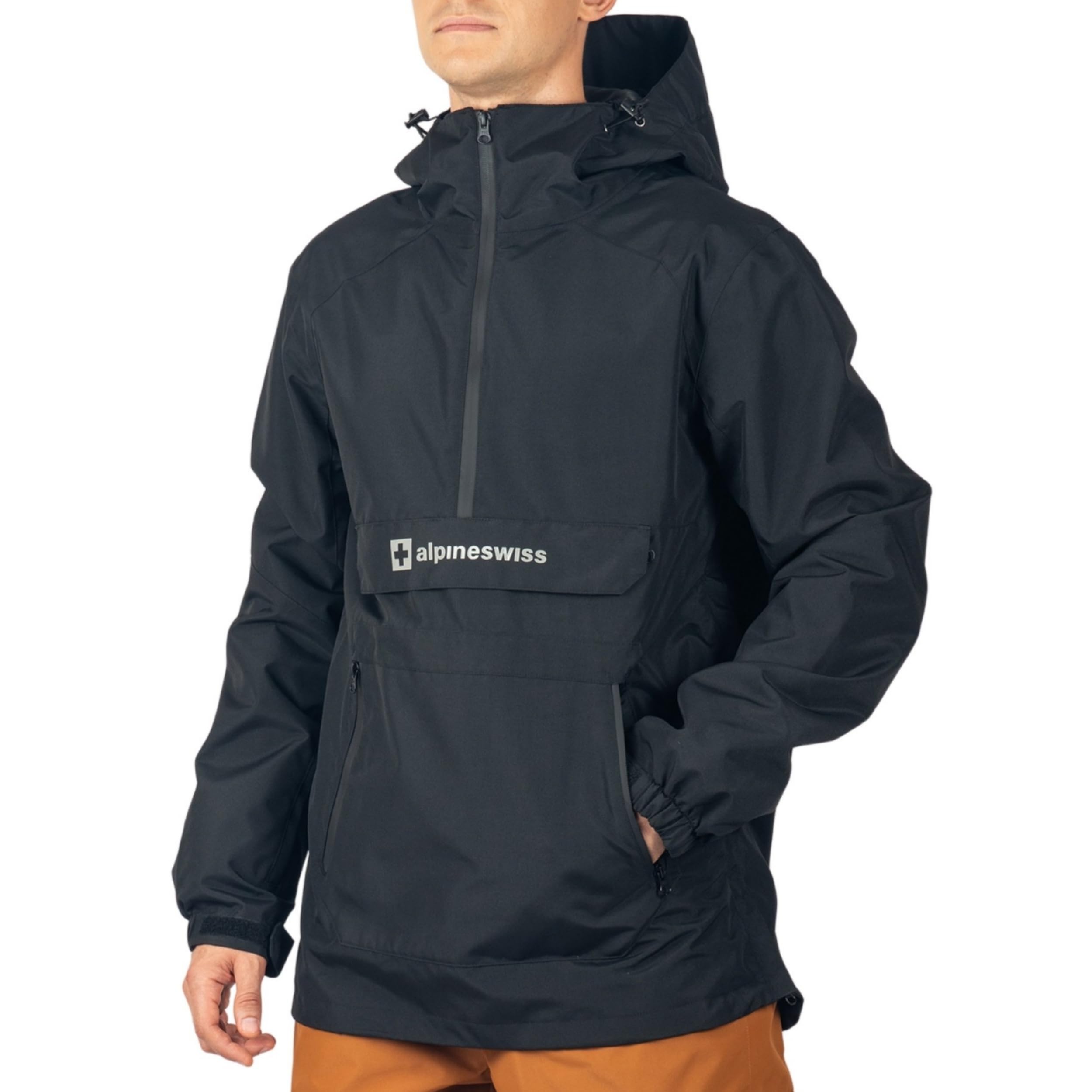
You control the warmth yourself with this featherlight shell that costs less than most single mid-layers.
This jacket carries no insulation at all — it is a pure shell built around a 10,000mm waterproof rating and a 5000g/m²/24hr breathability rating, so it stops snow and wind while letting sweat escape. Because there is no built-in lining, you control warmth completely by what you wear underneath, making this coat work from early-season slush to deep winter if you layer right. At 2.1 pounds versus the 2.8-pound Helly Hansen Alpha, you barely feel it on your shoulders during a full day of carving — a real advantage for aggressive skiers who do not want bulk.
The anorak (pullover) design uses a long side zipper from underarm to hem so you do not have to wrestle it over your head, and a small vent zipper under the right arm gives quick cooling when you work up a sweat. Buyers point out the fleece-lined kangaroo hand warmer pocket and the non-slip elastic powder skirt with snaps as genuine slope-ready details at this price, though some note the relaxed fit means you may want to size down if you plan to wear it without heavy mid-layers. Unlike the more expensive North Face Freedom Insulated, this shell puts the layering decision entirely in your hands — ideal if you already own a good fleece or puffy.
What punches above its price
- Full 10,000mm waterproof rating with taped seams at a budget entry point
- Helmet-compatible drawstring hood and fleece-lined chin guard keep snow off your face
- Dedicated sleeve pass pocket plus an internal mesh phone sleeve inside the front flap pocket
The trade-offs you accept
- No built-in insulation — you must layer for warmth
- Pullover anorak style takes getting used to versus a full-zip jacket
- Breathability (5000g) is adequate for resort skiing but may feel stuffy during high-output touring
Best for the buyer who: wants one waterproof shell that works across fall, winter, and spring by swapping their mid-layer, and prefers to spend their budget on quality base layers rather than built-in insulation. The trade-off is you must own a good fleece or puffy already.
2. Columbia Whirlibird V Interchange Jacket
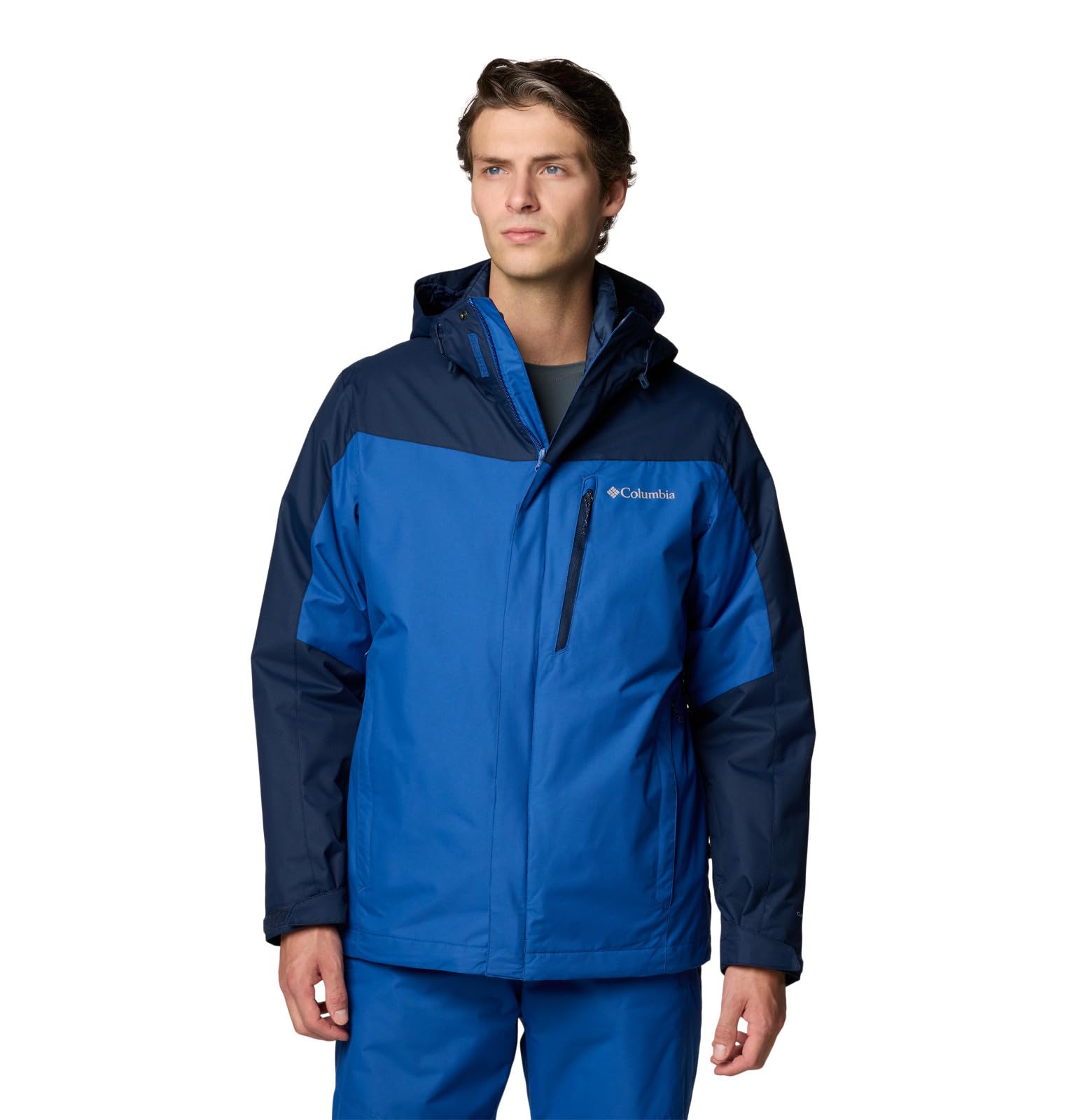
This coat adapts to weather shifts faster than you can say “ice storm” — it is three jackets in one.
Columbia’s 3-in-1 Interchange system gives you a fully waterproof-breathable shell worn alone on mild days, an insulated thermal-reflective liner worn as a standalone mid-layer, and both zipped together for serious cold and snow. The Omni-Heat reflective lining bounces your own body heat back at you instead of letting it soak into the insulation — the brand claims it retains more warmth than standard synthetics of the same weight. That single coat covers everything from a 40°F spring afternoon to a 10°F powder day without needing a second jacket in your gear bag. The shell includes a powder skirt, a ski pass pocket on the sleeve, and underarm vents — all the slope-specific features you expect.
Buyers consistently call this the most practical single-jacket solution for resort skiers who face a wide temperature range across a season. The extended sizing options mean it accommodates taller and broader builds better than many competitors. Unlike the North Face Thermoball Triclimate, which uses a zip-in liner with Thermoball fill, Columbia uses a reflective thermal liner that is thinner but surprisingly warm for its weight, making the combined system less bulky in the arms and shoulders — a real advantage if you hate feeling wrapped in a sleeping bag on the chairlift.
Why it earns the interchange name
- Shell and liner each function independently, giving three distinct coats from one purchase
- Omni-Heat reflective liner provides noticeable warmth without heavy insulation bulk
- Extended sizing available — rare in this mid-range price tier
Where it compromises
- Liner alone is not as warm as a dedicated puffy jacket for standing around in deep cold
- The one-piece system means you cannot swap in a different mid-layer if the liner gets wet
The practical pick for: skiers and snowboarders who hit the mountain from November through April and want one jacket that handles 30-plus degrees of temperature swing without buying extra layers. If you only ski below 0°F and never take the shell off, the liner’s weight-saving design trades some extreme-cold margin for everyday comfort — consider the North Face Freedom instead.
3. THE NORTH FACE Men’s Freedom Insulated Jacket
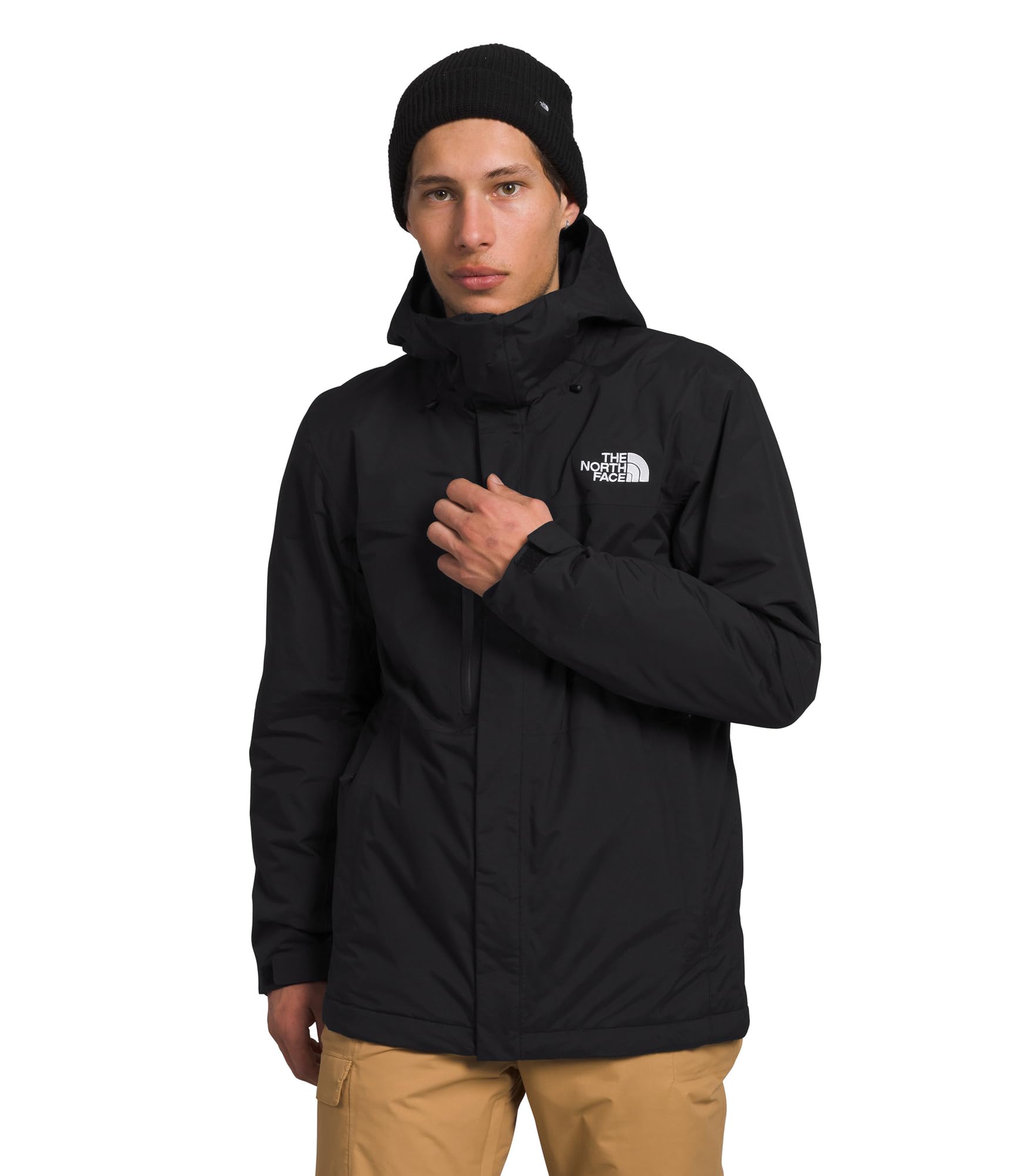
One jacket that earns its keep when the thermometer reads twenty below — buyers call it the warmest coat they have owned.
The Freedom Insulated jacket delivers serious sub-zero warmth and full waterproofing in a single, well-built package. It pairs a waterproof, breathable DryVent 2L shell (a 2-layer fabric that bonds a membrane to an inner liner so it feels soft against your skin) with a non-PFC DWR finish (a water-repellent treatment that avoids certain environmentally persistent chemicals) and 80 grams of Heatseeker synthetic insulation in the body. That 80g rating means enough warmth for bitter-cold chairlift rides without turning into a furnace during a hard run. The fixed helmet-compatible hood and underarm vents let you adjust to changing conditions without removing the jacket, and the snap-down powder skirt with gripper elastic seals out snow when you take a tumble.
One reviewer who owns this jacket noted it is “super light when you hold it but don’t let that fool you” — the 80g Heatseeker insulation, according to buyers, punches well above its weight for warmth, helped by the waterproof shell that stops wind from stealing your heat. The standard fit gives you room for a mid-layer without looking boxy, and the zip wrist pocket with an integrated goggle wipe is a small but genuinely useful touch you do not appreciate until you need it mid-run. Unlike the Alpine Swiss shell which demands you supply your own insulation, the Freedom delivers warmth right in the coat, making it the simplest grab-and-go option for anyone who skis in genuinely cold conditions.
Unmissable warmth-per-pound: the 80g Heatseeker fill combined with a sealed DryVent shell delivers reliable heat into sub-zero range that few single-jacket systems match without adding bulk.
The practical miss: some buyers expected a removable fleece lining and found the jacket warm enough on its own, but the liner is not included — if you want a zip-out layer, step up to the Thermoball Triclimate below at a higher price.
Buy this if: you want one seriously warm, fully waterproof jacket you can pull on and forget about — no layering math, no separate shells, just reliable heat at -20°F. If you ski mostly in spring slush or mild climates, the 80g of fixed insulation may feel too warm on sunny days; the Alpine Swiss shell is a better fit for your climate.
4. Helly Hansen LIFALOFT Insulated Ski Jacket (Alpha)
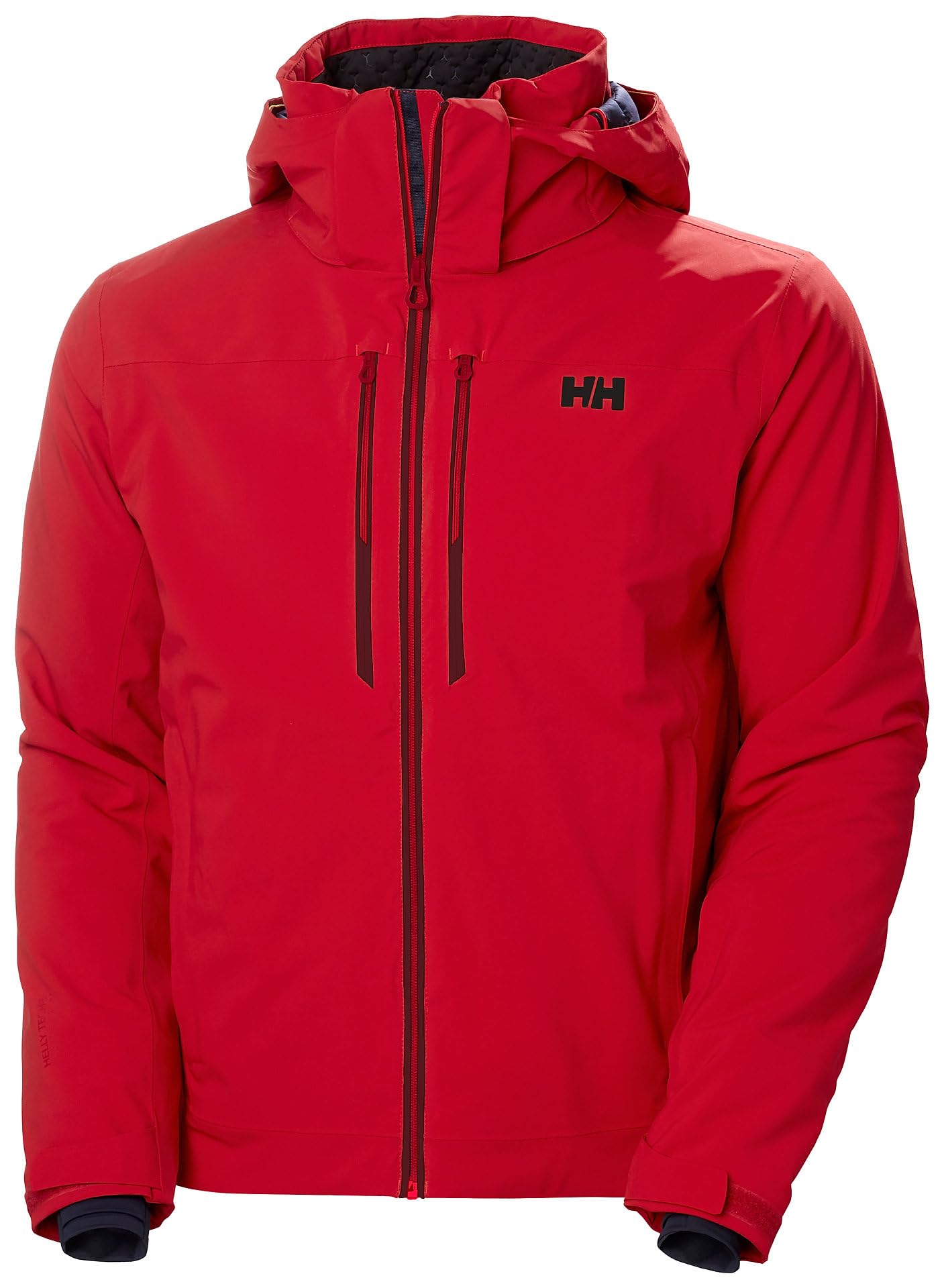
Norwegian-engineered warmth that skips the bulk without skipping the safety gear — a RECCO reflector is built in.
The Helly Hansen Alpha runs on LIFALOFT insulation — a synthetic fill the brand claims provides warmth comparable to heavier materials while keeping the jacket at 2.8 pounds. That is noticeably more substantial than the Alpine Swiss shell’s 2.1 pounds, but the weight comes from fully built-in insulation. The water-resistant exterior handles light precipitation and falling snow, though it stops short of the full waterproof membrane you get on the DryVent North Face jackets, so this coat shines brightest in cold, dry powder conditions rather than wet Pacific Northwest rain. The adjustable, helmet-compatible hood and powderskirt are standard here, but the distinguishing features are the RECCO Advanced Rescue system (a passive reflector that helps ski patrol locate you using a handheld detector) and the LIFE POCKET+ technology, which uses insulation around the chest pocket to preserve your phone battery in cold weather.
Helly Hansen, born in Norway in 1877, builds gear trusted by professional mountaineers, and the Alpha reflects that pedigree in its underarm vents for temperature regulation and a dedicated ski pass pocket. Compared to the Columbia Whirlibird, the Alpha is a simpler system — one fixed-insulation coat rather than a 3-in-1 — which means fewer zippers and less fiddle factor on the mountain. Buyers who choose this jacket tend to prioritize the safety tech (RECCO) and the sleek, alpine-professional look over the raw waterproofing numbers of the competition.
What separates it from the pack
- RECCO reflector built in — a legit safety feature that makes you locatable in avalanche debris
- LIFE POCKET+ insulation keeps your phone running longer in freezing temps
- LIFALOFT insulation provides high warmth-to-weight ratio for active skiing
Honest limitations
- Water-resistant rather than fully waterproof — not the best pick for wet, heavy snowfall or rain
- At 2.8 pounds it is the heaviest jacket in this lineup, though the warmth justifies the weight
For the skier who: spends time in big-mountain terrain or backcountry-adjacent zones where RECCO rescue capability offers real confidence, and values a streamlined, one-piece insulated coat over a modular system. If you ski in sustained rain or wet snow, the water-resistant finish has limits — the North Face Freedom’s fully waterproof DryVent shell serves you better in those conditions.
5. THE NORTH FACE Men’s Thermoball Eco Snow Triclimate Waterproof Insulated Ski Jacket
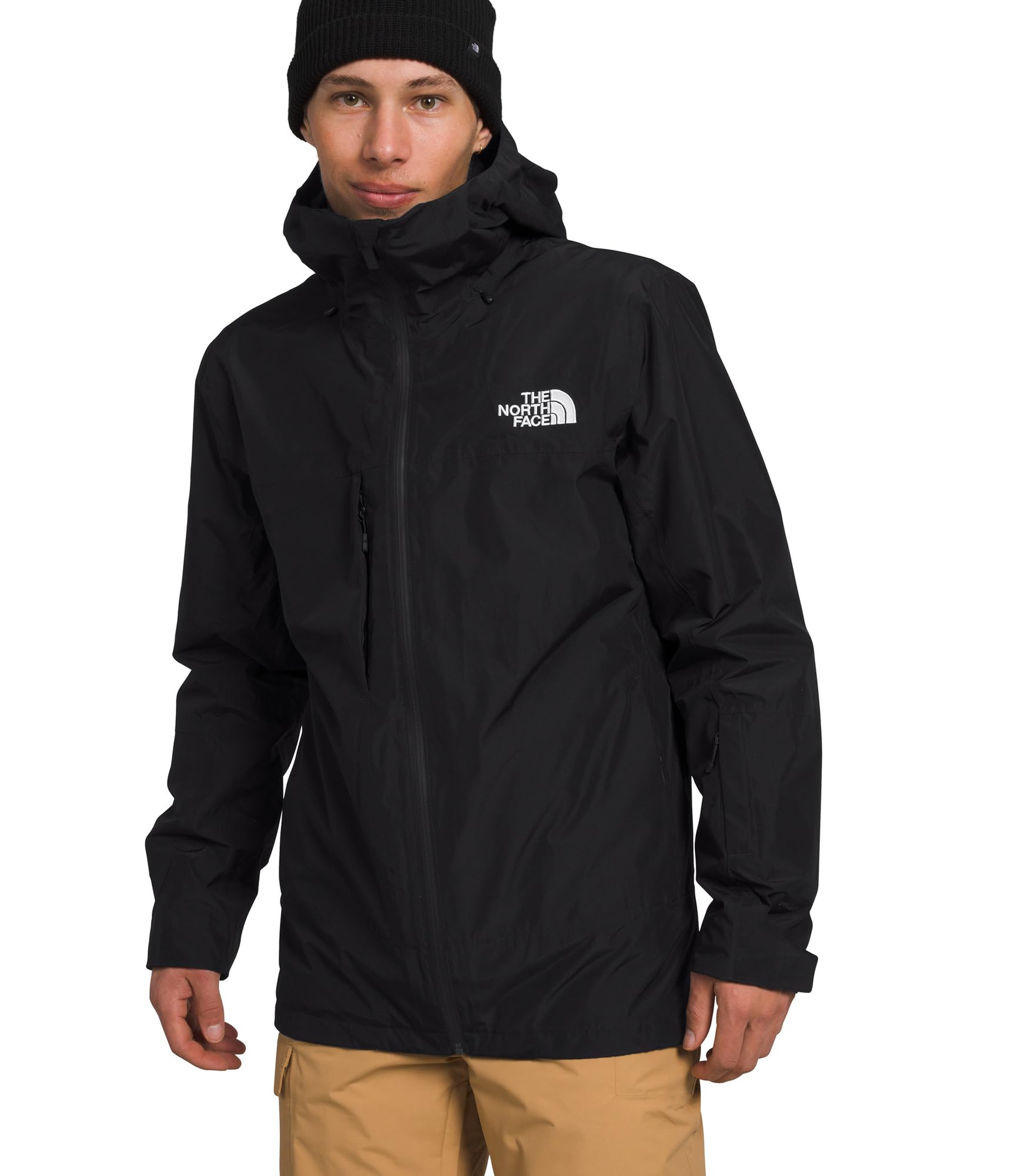
This three-in-one system has a decades-long track record — one reviewer says they used it in Antarctica and bought a replacement.
The outer layer is a fully waterproof DryVent shell with sealed seams and a non-PFC DWR finish, made from 100% recycled polyester. The zip-in liner uses ThermoBall Eco synthetic insulation (an updated fill designed to mimic down clusters while staying warm when wet — the brand claims it retains 98% of its insulating power when damp) combined with Heatseeker insulation, giving you a system that handles everything from a dry 30°F day in the liner alone to a blizzard with both layers zipped together. The helmet-compatible hood, underarm vents, powder skirt, internal hem cinch-cord, wrist pocket with goggle wipe, and a media-ready chest pocket cover every slope need without excess.
Unlike the Columbia Whirlibird which uses a thin reflective liner, the Thermoball Triclimate packs genuine fill into its inner layer, making each piece more substantial on its own. The shell is zip-in-compatible with other The North Face layers, so you can swap the liner for a different mid-layer from the same ecosystem. Buyers report that the jacket runs true to size with room for a light layer underneath, but several recommend ordering one size up if you plan to wear a thick fleece or hoodie under the shell. One reviewer reports they “Owned 20+ years; used in Europe, Arctic, Antarctica” — after that kind of real-world abuse, they bought a replacement. Compared to the Freedom Insulated jacket, this Triclimate gives you more control over warmth across a wider temperature spectrum, though it costs more — the premium is for the modularity and the proven long-range durability.
True multi-season versatility: the shell alone works as a rain jacket for spring, the liner works as a stand-alone puffy for fall walks, and the combined system handles the coldest days on the mountain — three coats in one closet footprint.
The catch to know: the price jump from the Freedom Insulated is real and you need to decide if you will actually use the modular pieces separately enough to justify it; if you never separate the layers, the Freedom is the simpler (and cheaper) buy.
Best for the skier who: travels to varied climates, wants one coat that transitions from the city to the summit, and values a system where you can replace a single layer rather than the whole jacket. If you only ski in one temperature zone and never unzip the liner, the simpler, less expensive Freedom Insulated serves you just as well for strictly cold-weather resort days.
Understanding the Specs
Waterproof Rating (mm)
This number tells you how much water pressure the fabric can handle before it leaks through. A 10,000mm rating, like the Alpine Swiss anorak, handles moderate rain and wet snow well — meaning your base layer stays dry on a snow day. Jackets without a listed millimeter rating, such as the Helly Hansen Alpha, use a proprietary water-resistant finish — fine for dry powder but less reliable in sustained wet conditions. The DryVent shells on the North Face jackets are fully waterproof and seam-sealed, meaning no water gets through the stitching either, which matters if you spend a full day in falling snow.
Insulation Weight and Type
Measured in grams (e.g. 80g in the North Face Freedom Insulated), this tells you how much synthetic fill is in the body of the jacket. Heavier insulation (80g) means more built-in warmth without relying on layers underneath — so you stay warm on a -20°F chairlift ride. Lighter options (ThermoBall, LIFALOFT) use advanced synthetic fibers that trap air efficiently while compressing small for packing. All synthetic insulations listed here — Heatseeker, ThermoBall, LIFALOFT — stay warm even when damp, unlike goose down which loses insulating power when wet and takes forever to dry on the mountain.
FAQ
Can I wear a ski jacket casually or will it look too technical?
What is the difference between a 2-layer and a 3-layer ski jacket?
How do I wash a ski jacket without ruining its waterproofing?
Will a helmet-compatible hood fit my snowboarding helmet?
What does a powder skirt actually do?
How many years should a good ski jacket last?
Is a 10,000mm waterproof rating enough for resort skiing?
Can I use a ski jacket for hiking or everyday winter wear?
What does RECCO mean and do I need it?
What is the difference between a shell jacket and an insulated jacket for skiing?
Final Thoughts: The Verdict
For most skiers, the coat for skiing winner is the North Face Freedom Insulated Jacket because it delivers serious sub-zero warmth and full waterproofing in one simple, well-built package that reviewers consistently praise for its heat retention without excessive bulk. If you want maximum versatility across a wide temperature range, grab the Columbia Whirlibird V Interchange for its three-in-one system that adapts to every season. And for the skier who prioritizes safety features and lightweight premium insulation, the Helly Hansen Alpha LIFALOFT with its RECCO reflector and LIFE POCKET+ technology is the technical choice that looks as good on the chairlift as it performs in the backcountry.
How We Picked
We do not accept paid placement, and we did not hands-on test every unit. Instead, we match each pick to a real buyer and use-case by comparing the manufacturers’ published specifications against the patterns in verified customer reviews — so you get each pick’s real strengths and trade-offs instead of marketing copy.
Sources & Methodology
Specifications: manufacturer listings and product documentation. Review insights: verified customer reviews, as of July 2026. Pricing: not shown on this page (it changes often); check the current price via the retailer link.
As an Amazon Associate, WellFizz earns from qualifying purchases. This does not affect which products we feature.

Mo Maruf
I created WellFizz to bridge the gap between vague wellness advice and actionable solutions. My mission is simple: to decode the research and give you practical tools you can actually use.
Beyond the data, I am a passionate traveler. I believe that stepping away from the screen to explore new environments is essential for mental clarity and physical vitality.