Our readers keep the lights on and my smoothie glass nicely filled. As an Amazon Associate, I earn from qualifying purchases.
A beeping smoke alarm during a simple sear isn’t just annoying—it’s a safety risk that trains you to ignore the very device meant to save your life. A quality combination detector doesn’t just scream louder; it uses smarter sensing to distinguish a burned piece of toast from an actual fire, and it never leaves you guessing about a silent, invisible CO leak.
I’m Mohammad Maruf — the founder and writer behind WellFizz. I’ve spent hundreds of hours breaking down the sensing technologies, battery chemistries, and compliance standards that define modern safety detectors, so you can cut through the noise and pick the right guardian for your home.
Whether you need whole-home wireless interconnection, a slim profile that blends into the ceiling, or a sealed 10-year battery that eliminates annual swap-outs, this guide to the best combination smoke and carbon monoxide detector gives you the hard specs and real-world trade-offs to make a confident decision.
How To Choose The Best Combination Smoke And Carbon Monoxide Detector
Choosing the right combo unit means balancing sensor accuracy, power source, and the physical footprint in your home. The wrong pick can lead to nuisance chirps that erode trust or a dead unit during a real emergency. Focus on these three pillars before you buy.
Sensor Technology: Photoelectric vs. Ionization
For a combination detector, the smoke sensor should be photoelectric—it responds faster to smoldering, slow-burning fires (typical in household incidents) and is far less prone to false alarms from cooking steam or shower humidity than ionization sensors. The CO sensor should always be electrochemical, as that technology provides accurate, continuous readings of carbon monoxide levels down to parts per million.
Power Source: Replaceable Batteries vs. Sealed Lithium
AA-battery units let you swap cells instantly when they run low, but you must stay disciplined about replacements. Sealed 10-year lithium models eliminate that chore entirely—once the battery dies, the entire unit gets replaced at end-of-life, which also aligns with the sensor’s own degradation timeline. For hardwired installations, battery backup is still critical for power-outage protection.
Interconnection and Smart Features
Wireless interconnection lets one triggered alarm awaken every other unit in your home—crucial for multi-level houses where a basement fire might go unheard upstairs. Some mid-range and premium models support RF linking between compatible units without needing a hardwired common wire. True smart integration with Wi-Fi adds phone alerts but requires ongoing network management and app updates.
Quick Comparison
On smaller screens, swipe sideways to see the full table.
| Model | Category | Best For | Key Spec | Amazon |
|---|---|---|---|---|
| X-Sense SC01-W 3-Pack | Premium | Whole-home wireless interconnect | 10-Year sealed lithium; 18-unit link | Amazon |
| Kidde 900-CUDR-V | Premium | Voice alerts & self-testing | Electrochemical CO sensor; 85 dB | Amazon |
| Kidde 30CUDR-V | Mid-Range | Voice hazard announcements | UL 217 10th Ed.; 2 AA alkaline | Amazon |
| First Alert SMICO100 | Mid-Range | Reliable precision detection | Precision Detection; 0.66 lbs | Amazon |
| First Alert SMCO100 | Mid-Range | Easy AA-battery operation | Test/silence button; 5.6 in. | Amazon |
| X-Sense SC06 | Budget | 10-year sealed battery value | 10-year lithium; 85 dB alarm | Amazon |
| First Alert SMCO200 | Budget | Slim-profile ceiling mount | 1-inch depth; 8.64 oz | Amazon |
In‑Depth Reviews
1. X-Sense SC01-W 3-Pack
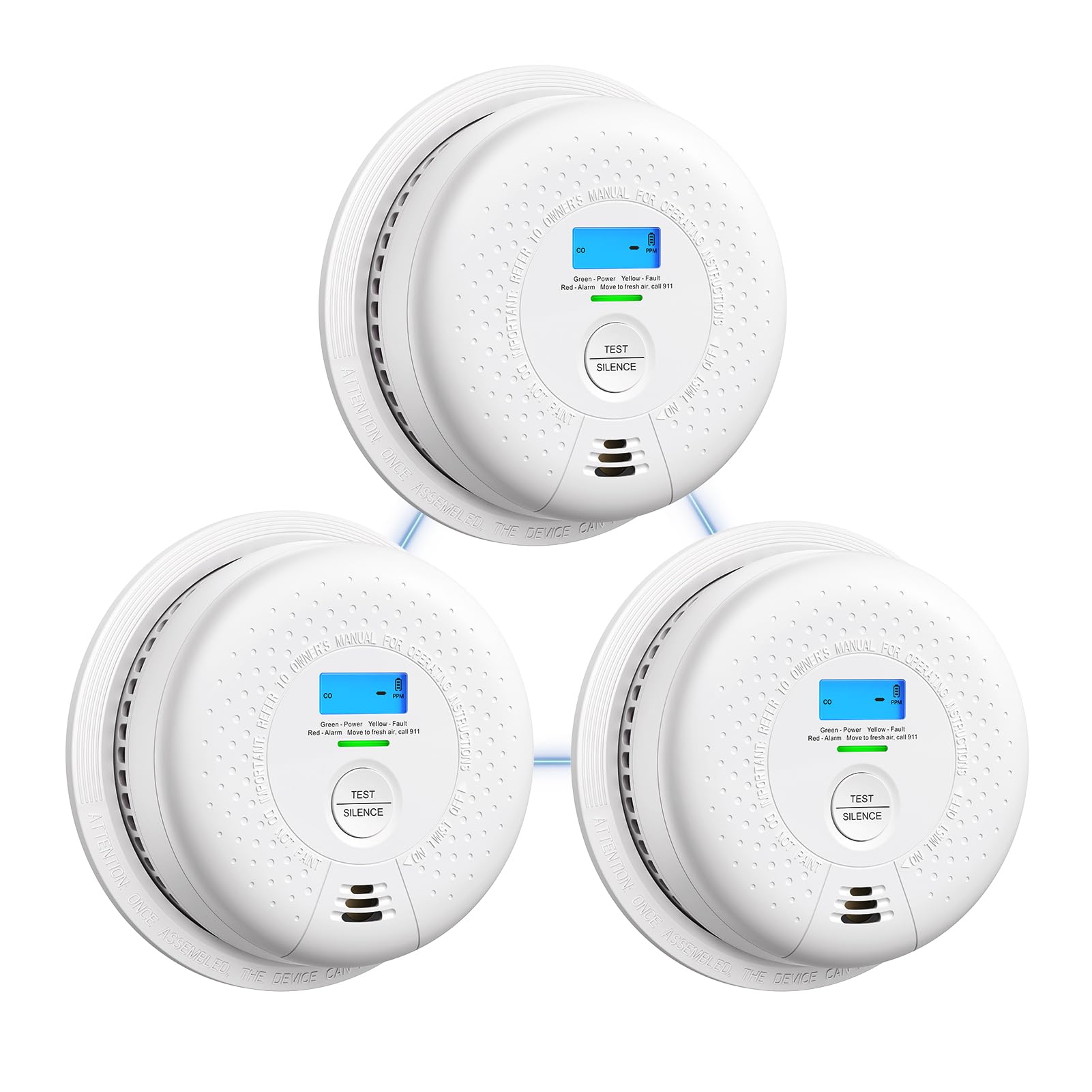
The X-Sense SC01-W is the premium choice for anyone who wants whole-home protection without running new wiring. Its wireless RF interconnection means that when one unit detects smoke or CO, every linked alarm in your home—up to 18 devices—sounds the 85 dB alert simultaneously. The 10-year sealed lithium battery powers the unit for its entire service life, eliminating the annual battery swap ritual and the risk of pulling dead batteries mid-crisis.
Each unit is UL 217 and UL 2034 certified, using a photoelectric smoke sensor and an electrochemical CO sensor for accurate threat detection. The heat-resistant PC housing adds durability in garages or attics. The three-pack delivers exceptional per-unit value, covering a typical two-story home right out of the box.
Mounting requires attention to old round electrical boxes—the base plate may need a cover adapter if you’re replacing a hardwired unit. Sync between alarms is straightforward, but there is no Wi-Fi or smartphone notification, so you won’t get remote alerts when you’re away.
Why it’s great
- Wireless interconnect wakes every alarm in the house simultaneously
- Sealed 10-year lithium battery for maintenance-free operation
- UL 217 and UL 2034 certified with photoelectric/electrochemical sensors
Good to know
- No Wi-Fi or remote alerts—local alarm only
- Mounting plate may not cover old round electrical boxes
- Higher upfront investment than single AA-battery units
2. Kidde 900-CUDR-V

The Kidde 900-CUDR-V stands out with voice alerts that audibly announce the specific hazard—“Fire!” for smoke or “Warning Carbon Monoxide” for CO—so you know the threat without hunting for a blinking light. Its 24/7 self-testing component continuously verifies electronic functionality, though manual test button presses remain the only way to confirm the horn and sensor response.
This unit uses a photoelectric sensor for smoldering fires and an electrochemical sensor for CO detection. The 85-decibel alarm pairs with LED indicators: green for normal operation, amber for error, and red for an active event. Two AA batteries (included) power it, making replacement simple, but the unit still sounds the low-battery chirp you’ll need to respond to.
Some users report false-alarm events after a few months, typically resolved by power-cycling the batteries. The mounting bracket allows four orientations, and the 3-inch screw spacing matches many older Kidde baseplates for quick retrofits.
Why it’s great
- Voice announcement tells you smoke vs. CO without looking
- Continuous self-testing checks electronics 24/7
- LED status lights give immediate visual feedback
Good to know
- Occasional false alarms may require battery power cycle
- Not wirelessly interconnectable out of the box
- AA batteries still need periodic replacement
3. Kidde 30CUDR-V

The Kidde 30CUDR-V brings the same voice-hazard announcement system as its sibling but at a more accessible mid-range price point. It meets UL 217 10th Edition and UL 2034 5th Edition standards, with advanced sensing engineered for faster smoke detection than previous generations. The real gain here is the voice messaging that says “Fire” or “Warning, Carbon Monoxide,” helping everyone in the home react correctly and quickly.
Two AA alkaline batteries (included) provide the power, backed by a 10-year limited warranty on the alarm unit itself. The design is compact at 5 inches across and 1.88 inches deep, fitting a standard ceiling or wall footprint. An 85 dB alarm with red LED light supplies clear audible and visual warnings.
Customer feedback shows occasional early failure—some units begin fault-chirping within months. Kidde’s email customer service has drawn criticism for slow response on warranty claims, so consider buying from a retailer with a flexible return policy.
Why it’s great
- Voice hazards announce “Fire” or “Warning Carbon Monoxide”
- Meets latest UL 217 10th Edition safety standard
- Compact 5-inch diameter fits most mounting locations
Good to know
- Isolated reports of early failure within first year
- Manufacturer customer support can be slow to respond
- No wireless interconnect or smart features
4. First Alert SMICO100

The First Alert SMICO100 uses the company’s Precision Detection technology, designed to reduce nuisance alarms from cooking while still providing early warning in a real fire event. It runs on AA batteries, so when the batteries die you can swap them instantly rather than replacing the whole unit. The 5.6-inch diameter and 2-inch depth fit standard ceiling openings without protruding awkwardly.
Dual smoke and CO protection comes from a photoelectric smoke sensor and an electrochemical CO sensor. The test/silence button lets you quickly verify function or quiet a nuisance trigger. An end-of-life warning chirp tells you when the entire unit has reached its service limit, preventing silent failures past the 10-year mark.
RV and camper van owners appreciate the easy install and multiple mounting hole patterns on the baseplate. Some users note that the screw slots may not perfectly align with older hardwired brackets, requiring a small adapter or a new mounting hole pattern.
Why it’s great
- Precision Detection reduces cooking-related false alarms
- AA batteries mean instant replacement without unit swap
- End-of-life warning prevents expired silent units
Good to know
- Baseplate may not align with all old hardwired brackets
- No voice alerts or wireless interconnect capability
- Requires manual test button—no self-testing
5. First Alert SMCO100

The First Alert SMCO100 strips the package down to essentials while keeping the core Precision Detection sensor package. It provides reliable 2-in-1 smoke and CO protection with AA battery operation, a test/silence button, and an end-of-life warning. The 5.6-inch diameter and 1.9-inch depth make it a direct replacement for older single-function alarms.
Like the SMICO100, this unit uses photoelectric and electrochemical sensing. The difference is subtle—no extra baseplate pattern options—making it slightly better suited for brand-new installations rather than retrofits. Users report quick and simple installation, and the thin profile sits flush against the ceiling.
A practical note: the Precision Detection is effective but not immune to heavy cooking smoke—frying fish uncovered can trigger it. That’s normal behavior for a detector designed to catch real fires, just be aware during high-heat meal prep.
Why it’s great
- Affordable entry point for reliable dual detection
- Precision Detection reduces nuisance alarms vs. older sensors
- Lightweight at 0.52 pounds—easy to mount on drywall
Good to know
- Can still trigger from heavy cooking smoke
- No voice alerts or interconnect features
- Mounting baseplate may not fit all existing brackets
6. X-Sense SC06
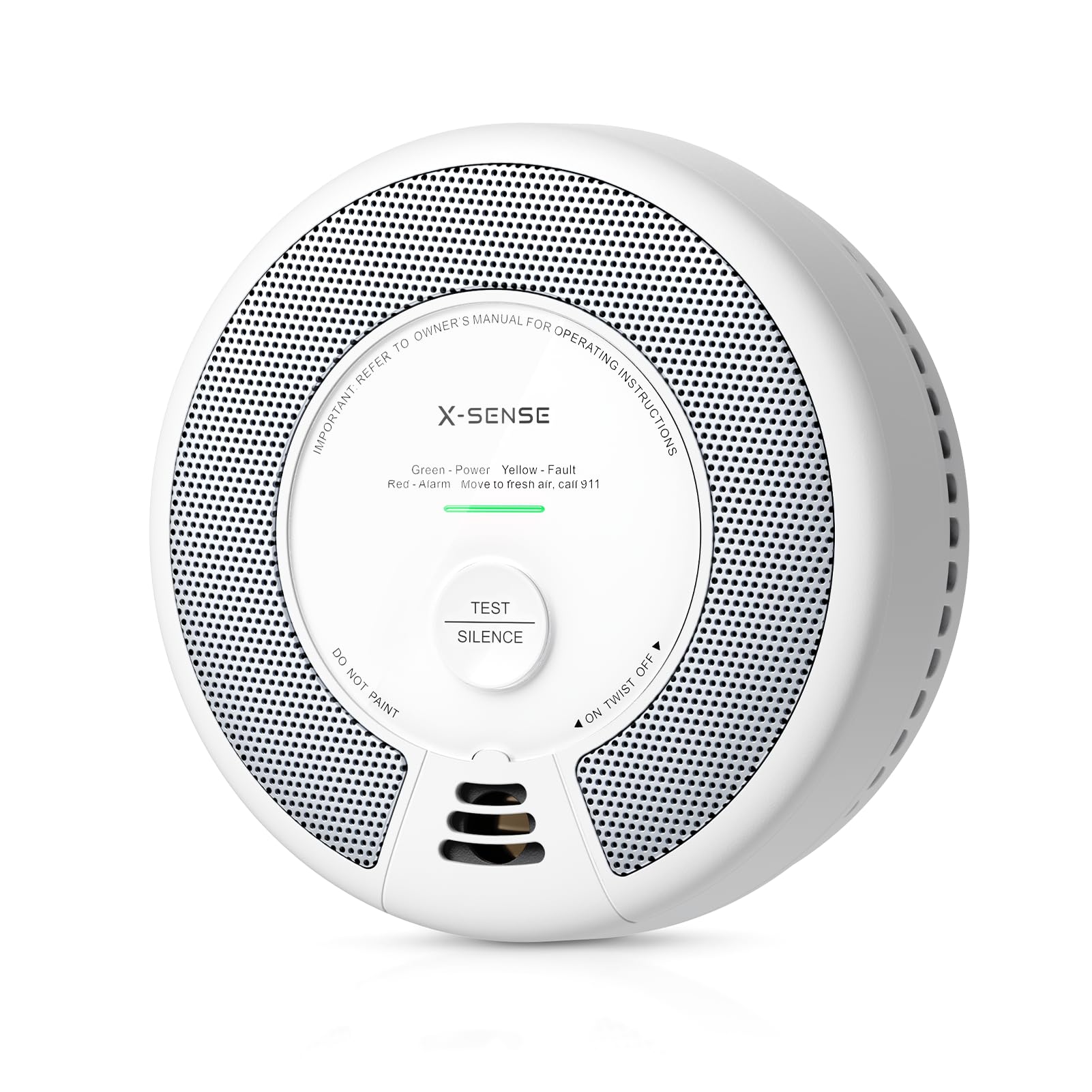
The X-Sense SC06 delivers 10 years of continuous protection from a pre-installed sealed lithium battery—no battery swaps, no low-battery chirps at 2 AM. It uses the same photoelectric and electrochemical sensor pair as its higher-end sibling but in a standalone, non-interconnected package. The 85 dB alarm is loud enough to wake a sleeping household.
Installation requires only three screws and anchor plugs. The one-button interface handles testing and silence. Made from heat-resistant PC material, it withstands attic and garage temperatures better than standard plastic alarms. UL 217 and UL 2034 certification confirms it meets modern safety benchmarks.
A small batch of units has been reported to false-alarm for CO at around 14 months of use. The deactivation process is irreversible once triggered, so you’ll need to replace the entire unit. X-Sense offers a 5-year warranty and lifetime technical support for such cases.
Why it’s great
- Sealed 10-year lithium battery eliminates annual swaps
- Heat-resistant PC shell for demanding environments
- UL 217 and UL 2034 certified for safety compliance
Good to know
- Occasional CO nuisance alarms reported after several months
- No wireless interconnect—each unit operates independently
- Irreversible deactivation on fault means full unit replacement
7. First Alert SMCO200

The First Alert SMCO200 is designed for aesthetics as much as function. Its slim profile measures just 1 inch deep—about half the depth of a standard alarm—so it hugs the ceiling without the bulky dome look. This makes it the best choice for open-concept living spaces where the detector is visible from the main seating area.
Despite the low profile, it packs Precision Detection technology that meets the latest industry standards for nuisance alarm reduction. Two replaceable AAA batteries power the unit, and an end-of-life warning chirps when the whole unit needs replacement. Setup is straightforward: insert the batteries, twist onto the mounting plate, and press the test button.
At 8.64 ounces, it’s featherlight and easy to mount on standard drywall or ceiling joists. The smaller housing means less surface area for the alarm horn, but the audible alert is still rated adequate for a typical bedroom or hallway. If you prioritize visual discretion over advanced interconnectivity, this is your unit.
Why it’s great
- Ultra-slim 1-inch depth blends into modern ceilings
- Precision Detection reduces false alarms from cooking
- Lightweight and simple to install with AAA batteries
Good to know
- No voice alerts or wireless interconnect features
- Smaller horn area may produce slightly less volume
- AAA batteries require more frequent changes than AA
FAQ
How often should I replace a combination smoke and CO detector?
Why does my combination detector false-alarm during cooking?
Can I interconnect different brands of smoke and CO detectors?
Final Thoughts: The Verdict
For most users, the best combination smoke and carbon monoxide detector winner is the X-Sense SC01-W 3-Pack because it combines wireless whole-home interconnection with a maintenance-free 10-year sealed battery at a competitive per-unit price. If you want clear voice alerts that tell you exactly what the threat is without leaving your bed, grab the Kidde 900-CUDR-V. And for a discreet, ultra-slim profile that disappears into a modern ceiling, nothing beats the First Alert SMCO200.

Mo Maruf
I created WellFizz to bridge the gap between vague wellness advice and actionable solutions. My mission is simple: to decode the research and give you practical tools you can actually use.
Beyond the data, I am a passionate traveler. I believe that stepping away from the screen to explore new environments is essential for mental clarity and physical vitality.