Our readers keep the lights on and my smoothie glass nicely filled. As an Amazon Associate, I earn from qualifying purchases.
For anyone with red‑green color vision deficiency, the world arrives in a muted palette where stop signs and green grass share the same dusty grey. Color blindness glasses promise to separate those wavelengths back into distinct, vivid hues — but the technology works differently for each person, and choosing the wrong lens type means seeing nothing but a pinkish wash over an unchanged view. Before you buy, you need to understand not just the brand, but the exact lens category that matches your specific cone‑cell mutation.
I’m Mohammad Maruf — the founder and writer behind WellFizz. This buying guide is based on deep analysis of lens‑filtering science, real‑world user feedback across seven distinct models, and the measurable difference each pair makes in Ishihara test scores and everyday color recognition.
After cross‑referencing hundreds of verified reviews and technical specifications, I’ve identified the optics that genuinely enhance contrast rather than just tint your field of view. Here is my comprehensive guide to the best color blindness glasses on the market, ranked for real‑world visual improvement.
How To Choose The Best Color Blindness Glasses
Not every pair of tinted lenses will correct your color vision. The most effective color blindness glasses use a selective notch‑filtering technology that cuts out specific overlapping wavelengths on the red‑green spectrum, increasing contrast between those two colors without dimming the rest of your visual field. Budget models often rely on simple dye coatings that shift everything towards pink or purple — which can feel like a change but does not actually improve color discrimination.
Match the Lens Type to Your Deficiency
Red‑green color blindness splits into deuteranopia (green‑sensitive cones missing) and protanopia (red‑sensitive cones missing). A brown lens (Type A) works best for mild to moderate deuteranopia, while a purple lens (Type B) targets strong protanopia. Red lenses (Type D) help moderate to strong red deficiency. Buying a pair that does not match your specific deficiency — even from a premium brand — will produce minimal or no improvement. Use the brand’s online test or an Ishihara chart before ordering.
Indoor vs. Outdoor Performance
Most color‑correcting lenses are designed for bright sunlight, where the filtering effect is strongest. Indoors, under fluorescent or warm LED light, the same lens may appear too dark or fail to separate colors at all. Some brands (notably EnChroma and Pilestone) offer indoor‑specific lenses with a lighter tint. If you plan to wear your glasses mainly at work or school, prioritize an indoor‑rated lens like Pilestone’s Type C or EnChroma’s Cx1 series over a sun lens.
Quick Comparison
On smaller screens, swipe sideways to see the full table.
| Model | Category | Best For | Key Spec | Amazon |
|---|---|---|---|---|
| EnChroma Ellis | Premium | Serious outdoor use, strong deuteranopia/protanopia | Cx3 notch‑filter lens, TR‑90 frame | Amazon |
| EnChroma Tilden Cx3 | Premium | Everyday outdoor color correction | Polycarbonate frame, Cx3 Sun lens | Amazon |
| Pilestone TP-006 | Mid-Range | Mild/moderate red‑green outdoor/indoor | Type A brown lens, aviator style | Amazon |
| Pilestone GM-2 | Mid-Range | Strong red deficiency (protanopia) | Type D red lens, lightweight frame | Amazon |
| ZIIZZ Multi‑Coated | Budget | Entry‑level trial for red‑green blindness | Blue‑coated lens, metal hybrid frame | Amazon |
| Teen‑016 Colorblind | Budget | Light trial for red‑green deficiency | UV400‑blocking, anti‑scratch lens | Amazon |
| Teenkorvov Color Blind | Budget | Affordable indoor/outdoor test pair | UV400‑blocking, full‑frame unisex | Amazon |
In‑Depth Reviews
1. EnChroma Ellis – Cx3 Sun

The EnChroma Ellis uses the brand’s proprietary Cx3 notch‑filter lens, which physically removes a narrow band of overlapping wavelengths between red and green cones. For users with moderate to strong deuteranopia or protanopia, this produces an immediate increase in color separation — reds become richer, greens gain definition, and the overall scene retains a natural balance rather than washing into a single tint. The TR‑90 frame is handcrafted in Italy, weighs very little on the face, and includes a hard case for everyday carry.
Multiple verified reviews describe emotional reactions: users seeing red Christmas lights for the first time, distinguishing tree bark from leaves, and correctly identifying traffic lights from a longer distance. Outdoor performance is outstanding in bright sunlight, though the Cx3 lens does dim noticeably under indoor fluorescents. The Ellis frame fits medium face sizes (54‑18‑145) and is available in both Deutan and Protan‑specific lens versions, so you must take the EnChroma online quiz before ordering to ensure a match.
The premium tier price reflects patented technology and Italian craftsmanship. Some users with mild deficiency report only a subtle shift, and a small percentage (roughly 20 percent, per user reports) see no improvement at all. Consider the Ellis if your color blindness is confirmed to fall within the red‑green range and you want the most advanced optical engineering currently available.
Why it’s great
- Patented notch‑filter lens provides the highest color contrast improvement for strong deuteranopia/protanopia
- Lightweight, durable TR‑90 frame with a comfortable saddle nose bridge
- Includes branded case, cloth, and precise lens matching via online quiz
Good to know
- Works best outdoors in bright sunlight; indoor performance is diminished
- Not effective for about 20 percent of red‑green deficient users — no return guarantee covers mismatch, so use Amazon’s return policy
2. EnChroma Tilden Cx3 Sun

The Tilden frame from EnChroma borrows design cues from classic adventure eyewear — bold matte‑black polycarbonate with rubberized temple tips and a saddle nose bridge. The Cx3 Sun lens is the same notch‑filtering technology used in the Ellis, tuned for outdoor use. Users with strong deuteranopia consistently report seeing red seeds in fruit, bright stop signs, and the green of tree buds for the first time. The lens also provides 100 percent UV protection, making it suitable as both a color‑correction tool and a daily sun lens.
Verified reviews highlight the life‑changing effect: one father cried seeing the red seeds inside a bell pepper; another user improved from a severity score of 88 down to 16 on the Cambridge Color Test. The polycarbonate frame is impact‑resistant and lighter than acetate, but several users note the side hinges can feel less robust after six months of daily wear. EnChroma’s warranty is limited compared to budget alternatives with Amazon return policies, though the brand does offer a 60‑day return window on direct purchases.
The Tilden works best for users whose EnChroma quiz result falls into the Deutan or Protan category. If your color blindness is mild or you need an indoor‑only lens, consider the EnChroma Grayson (Cx1 indoor lens) instead. For outdoor adventures and everyday life in the sun, the Tilden delivers the most dramatic visual shift in this price tier.
Why it’s great
- Same Cx3 notch‑filter lens as the Ellis at a slightly lower frame cost
- Rugged polycarbonate frame with rubberized grip for active outdoor use
- UV400 protection built into the color‑correcting lens
Good to know
- Some users report frame hinge breakage after extended daily use
- Indoor performance is weak — not designed for office or classroom settings
3. Pilestone TP-006 Aviator – Type A
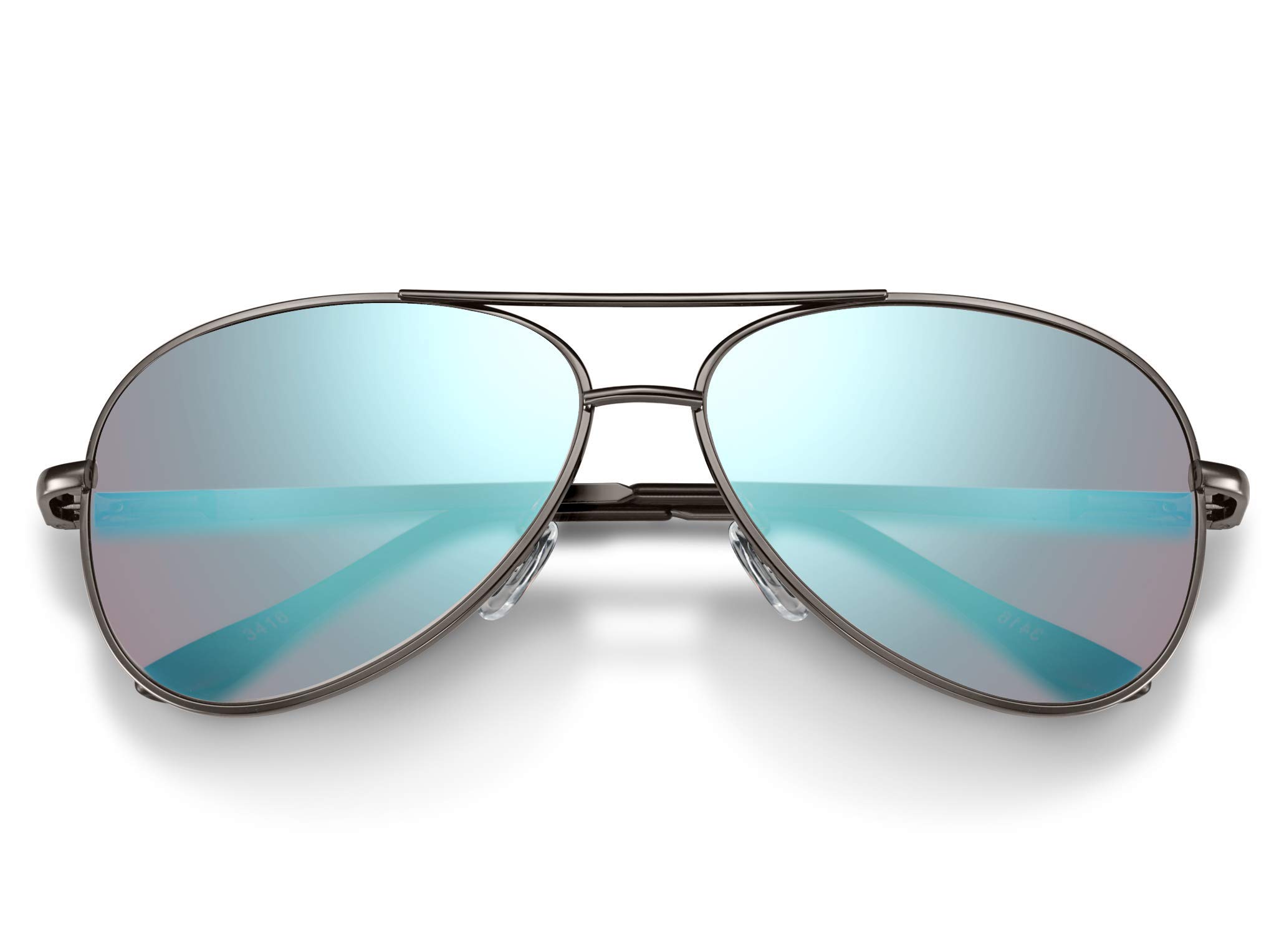
Pilestone has been engineering color‑filtering eyewear since 2011, and the TP‑006 Aviator with a Type A brown lens is their most popular model for mild to moderate red‑green deficiency. The brown lens selectively filters overlapping wavelengths without the heavy pink or purple tint found in many budget alternatives. Users with moderate deuteranopia report seeing yellow traffic signs “pop,” distinguishing road stripes from asphalt, and reading Ishihara test plates that were previously invisible. The aviator frame is unisex and fits most adult face shapes.
Verified reviews consistently praise the price‑to‑performance ratio: several users directly compared the TP‑006 against EnChroma models and kept the Pilestone because the color enhancement was comparable while the frame felt more comfortable. One reviewer with moderate‑strong protanopia passed the Ishihara test with these glasses and rated his deficiency as “mild protan at worst” while wearing them. The dark tint does make the lenses act like sunglasses, which teachers and coworkers sometimes find unusual for indoor wear.
Choose the TP‑006 if your color blindness is mild to moderate and you want a proven lens that works both outdoors and in brighter indoor environments. Pilestone offers a 60‑day return policy for manufacturer defects, though the return window is not as generous as Amazon’s standard policy. For severe protanopia, step up to the Pilestone GM‑2 with a Type D red lens.
Why it’s great
- Type A brown lens provides natural‑looking color separation without excessive tint
- Strong user satisfaction with Ishihara test improvement and daily color recognition
- Classic aviator style fits a wide range of face shapes
Good to know
- Dark lens limits indoor use; may look like sunglasses in workplace settings
- Does not work for all deficiency types — must use Pilestone lens selection test first
4. Pilestone GM‑2 – Type D

The Pilestone GM‑2 with a Type D red lens is engineered specifically for moderate to strong red deficiency (protanopia). Unlike the brown Type A lens, the red lens aggressively filters the wavelengths that cause red‑green confusion in users whose red cones are missing or malfunctioning. Verified reviews from users with strong protanopia describe seeing red car paint, stop signs, and flowers as vivid scarlet for the first time — colors that previously appeared as brown or grey. One user with a corrected CBC score dropping from 88 severity to 16 called the glasses “Lasik for color blindness.”
Multiple reviewers note that the glasses have a rose‑colored tint that affects whites and pastels — the sky may appear slightly pink, and white surfaces take on a warm hue. This is the trade‑off for the aggressive filtering: you gain red‑green discrimination at the cost of natural white balance. The frame itself is narrow and lightweight (0.32 ounces), which fits smaller faces well but feels small on larger heads. Pilestone includes a protective case and cloth, and the brand’s US‑based support team is responsive to lens matching questions.
This is the right pick if you have confirmed strong protanopia and you want an affordable alternative to premium brands. Several users explicitly state they returned EnChroma glasses and kept the GM‑2 because the color enhancement was more dramatic for their specific condition. Use Pilestone’s online lens chart (the Ishihara numbers 98, 99, 60 test) to confirm Type D is correct for you before purchasing.
Why it’s great
- Type D red lens specifically targets strong red deficiency with dramatic results
- Extremely lightweight frame (0.32 oz) for comfortable extended wear
- Multiple user reports of passing Ishihara and CBC tests while wearing
Good to know
- Rose tint significantly alters white/blue perception — sky and white walls look pink
- Narrow frame may not suit wider faces or those needing a larger lens area
5. ZIIZZ Multi‑Coated Blue Lens

ZIIZZ offers an entry‑level pair of color blindness glasses with a multi‑coated blue lens designed for red‑green deficiency. At the budget tier, the technology relies on a surface coating rather than a notch‑filter embedded in the lens material. This coating shifts the color spectrum towards pinkish‑red — microwave numbers turn grey instead of green, and lights take on a magenta hue. For some users with very mild deficiency, this shift provides enough contrast to notice a difference; for others, the effect is purely cosmetic with no improvement in color discrimination.
Verified reviews are mixed: one user reports their son loved the glasses, while another says the recipient has not worn them again after the first use. The metal hybrid frame feels more substantial than all‑plastic budget alternatives, and the included hard case, bag, cloth, and test card add perceived value. However, multiple one‑star reviewers note the lenses make everything “too pink” and fail to separate greens, greys, or browns. The clip‑on variant (sold separately) is a better pick for those who already wear prescription glasses.
Consider the ZIIZZ if you are curious about color‑correcting eyewear but not ready to invest in a premium pair. The low entry cost lets you test whether lens‑based correction works for your specific vision before spending more. If you see a meaningful difference, upgrade to a Pilestone or EnChroma model with proper notch‑filter technology.
Why it’s great
- Very affordable entry point to test color‑correction technology
- Stylish metal hybrid frame with complete accessory kit (case, cloth, test card)
- Available in multiple variants including a clip‑on for prescription glasses wearers
Good to know
- Lens coating creates a strong pink/magenta tint without true color separation for many users
- Mixed reviews suggest effectiveness is highly inconsistent across different deficiency types
6. Teen‑016 Colorblind Glasses

The Teen‑016 from Teenkorvov is a full‑frame budget option that markets UV400 protection and anti‑scratch coatings alongside its color‑correcting claim. The lens is a darker tint than most budget competitors, which helps reduce glare but also makes the glasses feel like light‑density sunglasses. Some users with strong red‑green deficiency report emotional breakthroughs — one reviewer’s father wept upon seeing red shades he had never perceived. Others report zero change in color discrimination, with grass and traffic lights looking identical with or without the glasses on.
Fit is a common complaint: the frame runs small, and users with larger heads find the lenses narrow and the temples short. The product is listed under “womens” department on Amazon, though the design is unisex. Several reviewers with moderate deficiency saw noticeable improvement in the Ishihara test, changing their red/green balance from 0 percent red to 75 percent red when wearing the glasses. The flip side is that the same shift can make greens disappear for some deuteranopes.
Use the Teen‑016 as a low‑cost trial, especially if you have a smaller face or are buying for a child. The UV400 protection adds practical value beyond color correction. For more consistent results, especially if you have strong protanopia or deuteranopia, invest in a lens‑matched Pilestone or EnChroma model.
Why it’s great
- UV400 and anti‑scratch coatings add durability beyond basic tinted glasses
- Some users report dramatic emotional reactions and improved Ishihara test scores
- Low price makes it a low‑risk trial for children or first‑time buyers
Good to know
- Frame runs small — not suitable for larger adult head sizes
- Very inconsistent results: approximately half of users report no noticeable improvement
7. Teenkorvov Color Blind Glasses

This Teenkorvov model is nearly identical to the Teen‑016 in construction and lens technology but comes in a slightly different frame shape that fits a broader range of adult faces. The lens uses a pink‑tinted coating that, in bright outdoor conditions, can make the sky appear more vivid and autumn leaves pop against the background. One user who scored 87 percent colorblind on a test described the effect as “actually working” — she could see the sky’s blue intensity and the orange of fall foliage for the first time. Another reviewer noted that the glasses turned reds into orange and muted some greens, which suggests the filter shifts the spectrum rather than separates it cleanly.
Indoor performance is poor for most users: the tinted lens darkens the view without providing meaningful color contrast under artificial light. Several reviewers report that the solid pink color of the lens (visible to others) makes the glasses look more like novelty eyewear than a serious optical aid. The frame material feels flimsy compared to the metal‑hybrid ZIIZZ, and one reviewer noted the arms seem likely to break with regular use. The product includes a test card and a basic cloth bag, but no hard case.
This is the most basic entry point in the list. It works well enough as a proof‑of‑concept for outdoor color enhancement, but the lens science is far behind the Pilestone and EnChroma options. If you are willing to spend slightly more for a dramatic difference in lens performance, skip this model and go straight to the Pilestone TP‑006 or GM‑2.
Why it’s great
- Outdoor color enhancement works for some users, particularly for blue and orange contrast
- Lowest price point among reviewed models — very low‑risk trial
- Frame fits a wider adult face size than the Teen‑016
Good to know
- Solid pink lens tint is obvious to others and provides no indoor color separation
- Frame feels less durable than budget alternatives from ZIIZZ
FAQ
Do color blindness glasses work for every type of color vision deficiency?
Can I wear color blindness glasses indoors and outdoors with the same lens?
How do I know which lens type is right for my color blindness?
Will these glasses cure my color blindness permanently?
Final Thoughts: The Verdict
For most users, the best color blindness glasses overall are the EnChroma Ellis because its patented notch‑filter lens provides the most dramatic color separation for both deuteranopia and protanopia while maintaining a natural frame feel. If you have strong protanopia and want equally dramatic results at a lower price, grab the Pilestone GM‑2 Type D. And for a versatile, mid‑range pair that works for mild to moderate red‑green deficiency in most lighting conditions, nothing beats the Pilestone TP‑006 Aviator.

Mo Maruf
I created WellFizz to bridge the gap between vague wellness advice and actionable solutions. My mission is simple: to decode the research and give you practical tools you can actually use.
Beyond the data, I am a passionate traveler. I believe that stepping away from the screen to explore new environments is essential for mental clarity and physical vitality.