Our readers keep the lights on and my smoothie glass nicely filled. As an Amazon Associate, I earn from qualifying purchases.
The single biggest design headache in a van build isn’t the bed or the kitchen—it’s the toilet. A composting toilet for van life needs to solve for four impossible constraints simultaneously: zero odor in a tiny enclosed space, extreme compactness, infrequent emptying that fits your travel rhythm, and a urine-diversion system that works for both men and women without splash or mess. Most options fail at one of these—and failure inside a metal box is not negotiable.
I’m Mohammad Maruf — the founder and writer behind WellFizz. I’ve spent hundreds of hours analyzing septic system alternatives, reading specification sheets on liquid-diverting geometries, fan CFM ratings, and weight capacities, and cross-referencing real-world owner experiences to separate the concepts that actually work in a moving vehicle from the ones that look good on a website.
This guide breaks down every serious option, from compact portable separators to full-size electric sealing units, so you can confidently select the best composting toilet for van that fits your build, your emptying schedule, and your relationship with cleanliness.
How To Choose The Best Composting Toilet For Van
Selecting a composting toilet for a van involves more than just picking the smallest option. You must weigh liquid and solid holding capacity, the type of separation mechanism, the need for a 12V fan or agitator, and how the unit’s geometry fits your specific van floor plan.
Urine Diversion Is Non-Negotiable
Any urine that mixes with solid waste produces immediate, overpowering ammonia-based odors in a confined space. Look for a toilet with a well-designed diverter that channels liquid away from solids into a separate, sealed container. The diverter’s shape and angle determine whether the experience is clean or messy—especially for women.
Holding Capacity And Emptying Frequency
For a weekend trip, a 1.2-gallon urine tank may be adequate, but for full-time van life, a 2.4-gallon or larger liquid reservoir reduces the daily chore of dumping. Solids bins should hold enough medium—coco coir or peat—to cover several days of use before needing a fresh bag. Larger capacity means less contact with waste but also a bigger footprint.
Power Requirements And Ventilation
Many effective composting toilets rely on a 12V fan to create negative air pressure that pulls odors out through a vent hose. This fan runs continuously. Electric agitators and dry-flush mechanisms also draw on your house battery. Understand each unit’s power draw: a whisper-quiet 12V fan versus a motorized auger or an automated sealing mechanism each impacts your power budget differently.
Quick Comparison
On smaller screens, swipe sideways to see the full table.
| Model | Category | Best For | Key Spec | Amazon |
|---|---|---|---|---|
| OGO Origin | Separator | Full-time van life | 2.4-gal urine bottle | Amazon |
| Dry Flush (modiwell) | Dry Flush | Minimal-contact users | 5200mAh battery | Amazon |
| Cuddy Lite | Separator | Small vans with tight layouts | LED fill indicator | Amazon |
| Separett Villa | Wall-Mount | Schoolies & homesteads | 34 lb high-capacity | Amazon |
| Modiwell R1808 | Dry Flush | RV owners avoiding black tanks | 180° swivel top | Amazon |
| Laveo Dry Flush | Dry Flush | Full-size comfort | Wood seat | Amazon |
| Thinktank WC | Separator | Men who stand to urinate | Patented trap door | Amazon |
| TRELINO Evo S | Separator | Ultra-compact weekend setups | 11.7″ tall | Amazon |
| Thinktank Waterless | Separator | Long-term off-grid cabins | Separate intake & exhaust | Amazon |
In‑Depth Reviews
1. OGO Origin Composting Toilet

The OGO Origin is built specifically for the narrow dimensions of a Sprinter or Transit van: its 15-inch width fits into a corner that most composting toilets miss entirely. The push-button electric agitator replaces the messy manual crank found on other models, so you never have to reach into the waste area to mix solids with coconut coir or peat moss.
The 2.4-gallon urine bottle provides enough capacity for two people over several days before needing a dump, and the quiet 12V fan creates consistent negative pressure that keeps the small enclosure odor-free. The body is molded from durable polypropylene, and the manufacturer backs the plastic components with a five-year warranty.
Some users report that the urine diverter sits relatively high, which can interfere with posture during use, but the trade-off is a cleaner separation channel that rarely clogs. The unit weighs 28 pounds and can be mounted to the floor or left freestanding in a tight floor plan.
Why it’s great
- Smallest footprint for van-specific layouts
- Electric agitator eliminates manual cranking
- Large urine capacity and strong 12V fan
Good to know
- Urine diverter height may feel awkward for some
- Requires a 110V adapter for home charging
2. Cuddy Lite Portable Compost Toilet
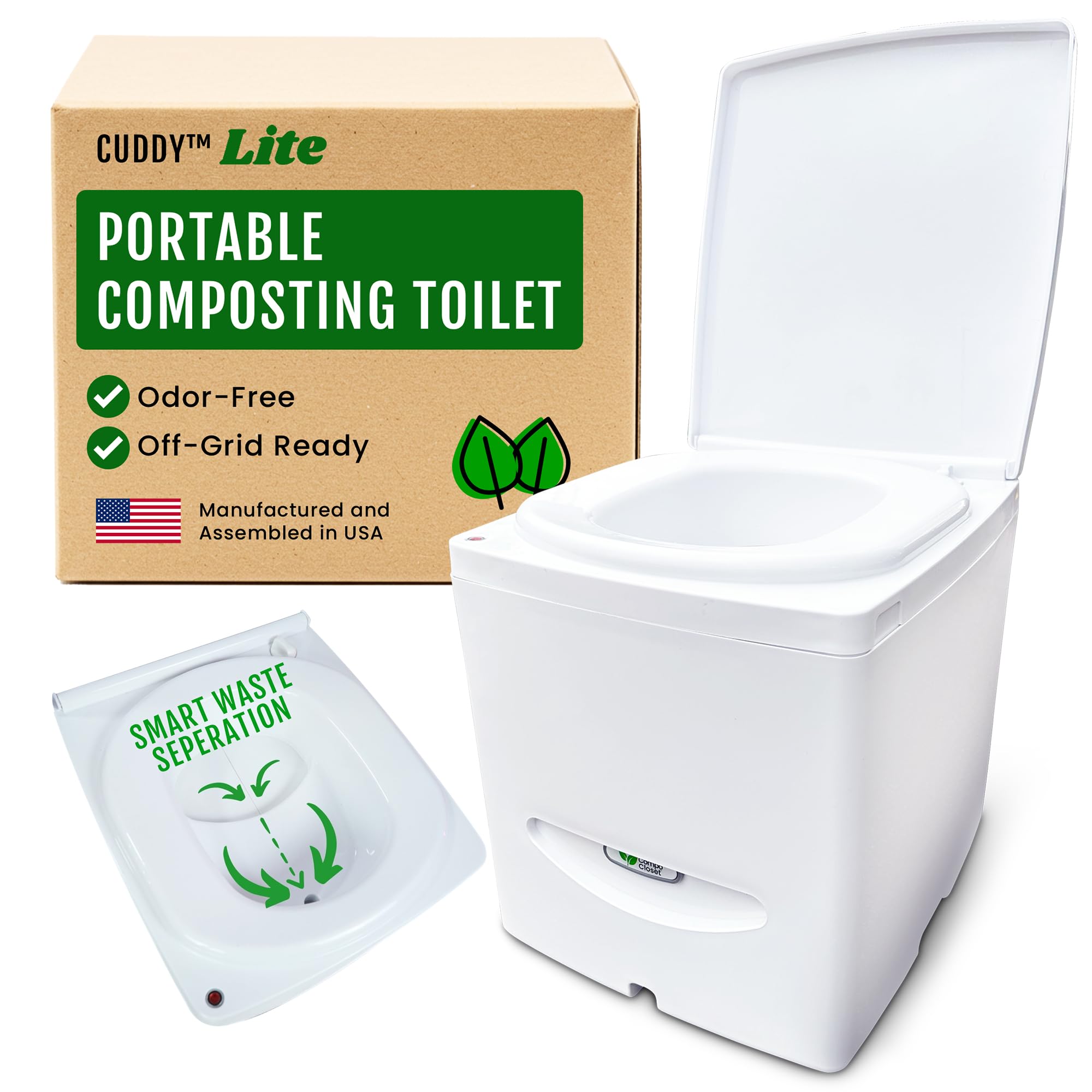
The Cuddy Lite uses a two-plate drop-zone cover that separates liquid from solid waste with no exposed contact, and the extra-large opening reduces aiming errors for both seated and standing users. The interior agitation handle is positioned at the front of the solids bin—ideal if the toilet sits inside a sliding drawer where side access is blocked.
Odor control is managed by a near-silent 12V fan that runs without noticeable vibration, and the built-in carbon filter traps residual smells. The LED liquid fill indicator runs off a standard 9V battery, so you don’t need to wire anything to your van’s electrical system unless you want to hardwire the fan.
At 24 pounds and a compact 17-inch depth, this toilet slides easily into a shallow cabinet or under a bench seat. Users who empty every two days report zero smells and straightforward cleaning, and the sealed liquid container doubles as a spot-treatment tool for weeds when diluted.
Why it’s great
- Extra-large drop zone for splatter-free use
- Front-mounted agitator works inside drawers
- Low-power fan; 9V battery for indicator
Good to know
- No side handles included for lifting
- Some users drill drain holes for hose cleaning
3. TRELINO Composting Toilet Evo S

The TRELINO Evo S is the smallest unit in this review, standing only 11.7 inches tall with a footprint roughly the size of a hardcover book. The separation design uses a blue urine canister and a solid waste container made from recyclable ABS plastic, and the drying function reduces moisture in the solids bin to help suppress bacteria growth.
This unit is best suited for solo van travelers or weekend warriors who don’t mind emptying the 1.2-gallon urine bottle daily. The 330-pound weight rating is surprisingly robust given the small dimensions, and the German manufacturing results in tight tolerances that prevent leaks at the separation point.
However, the 1.6-gallon solids container fills quickly, and there is no fan or agitator built in, so odor control relies entirely on the separation drying function and regular addition of dry cover material. A few users report that the urine diverter’s geometry can cause cross-contamination for female users, leading to cleanup challenges.
Why it’s great
- Smallest size ideal for ultra-compact van builds
- Sturdy ABS construction; German-made
- Lightweight at 8.6 pounds
Good to know
- No built-in fan or agitator
- Urine container lacks overflow indicator
- Small capacity requires daily emptying
4. Thinktank Composting Toilet
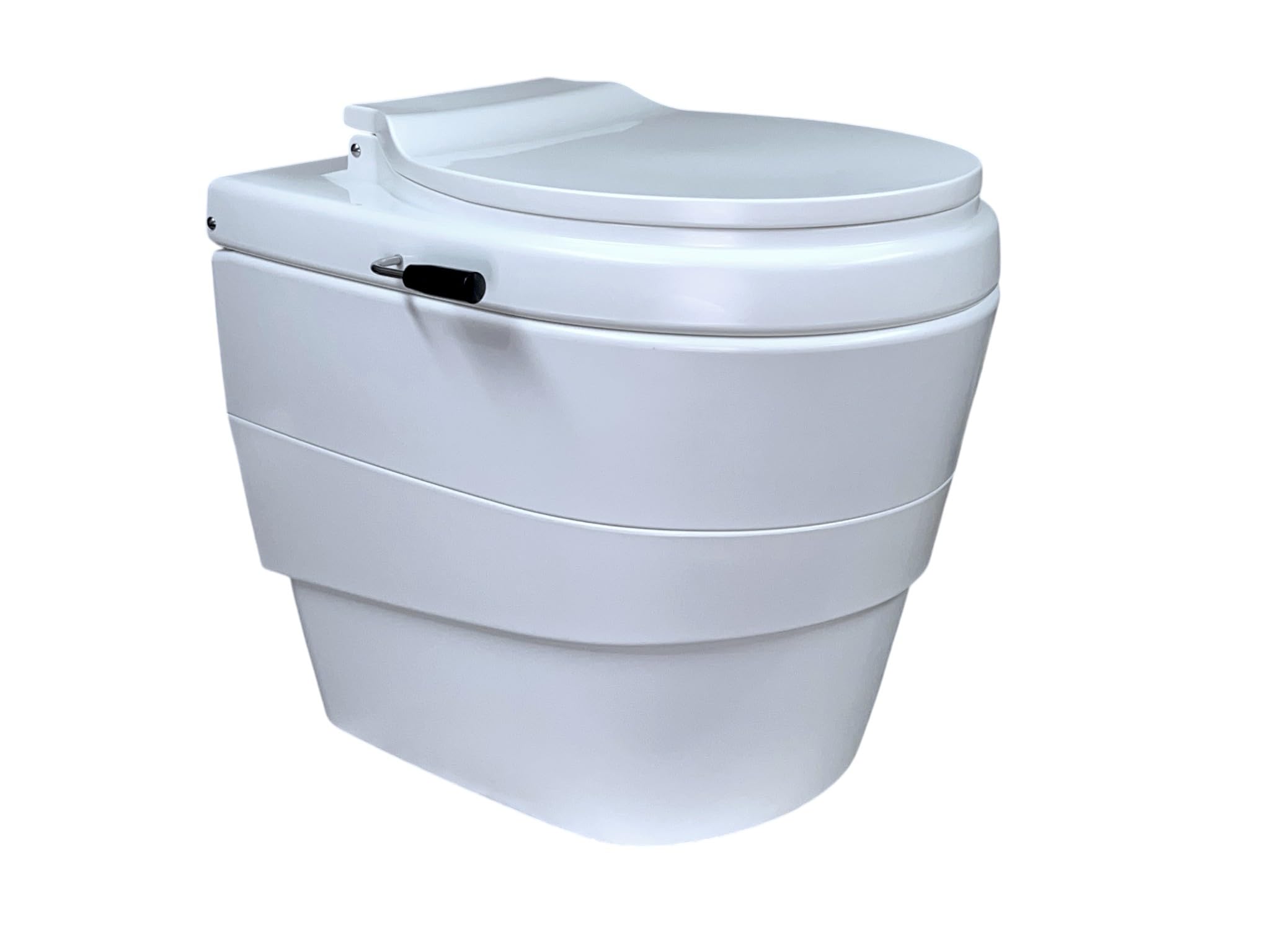
The Thinktank toilet uses a patented trap door that physically conceals the waste below the seat. This design means you never see or smell the solid waste during use, and the bag-liner system allows you to remove the entire container without touching its contents. The separate intake and exhaust pipes ensure that heated or cooled air from your van interior is not lost to the composting chamber.
Men can stand to urinate thanks to the integrated urine diverter—a feature unique to this model—and the bowl-free design makes cleaning straightforward. The massive airflow generated by the fan keeps odor levels at zero even after multiple days of heavy use. The unit is floor-mounted and requires a 110V wall adapter or a 12V hardwire to your van’s battery.
One trade-off is that the plastic body scratches easily, so cleaning requires a soft cloth. Some users find the bag-securing method—a rubber band—frustrating compared to a clamp system. But for those who prioritize hygiene isolation and the ability to stand while urinating, this is the most thoughtfully engineered option available.
Why it’s great
- Trap door hides waste completely
- Men can stand to urinate
- Separate intake/exhaust preserves cabin temps
Good to know
- Bag securing relies on rubber bands
- Outer plastic scratches easily
- Requires hardwiring or 110V adapter
5. Dry Flush Toilet (modiwell Loo Seal)
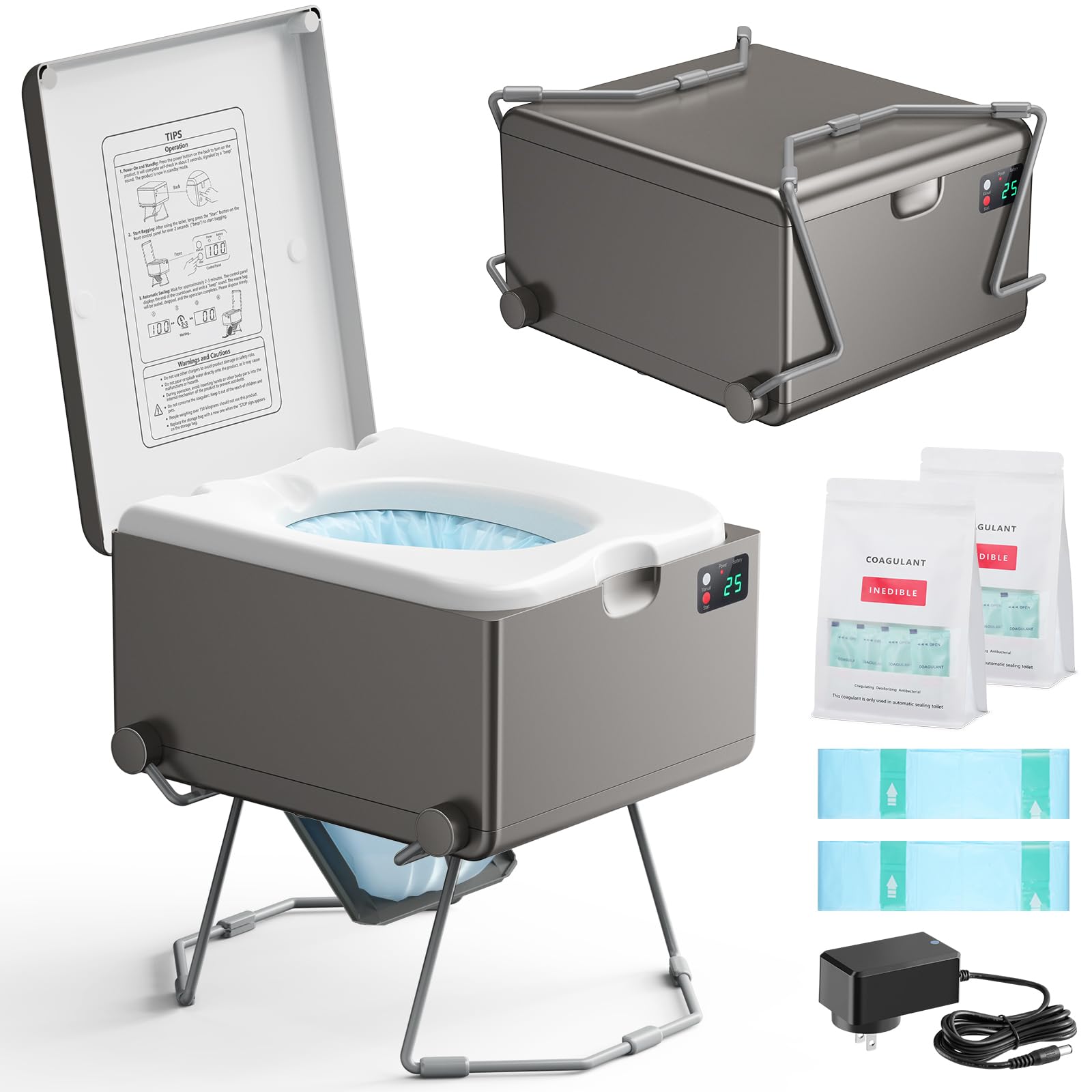
The modiwell Loo Seal uses a one-button dry-flush mechanism that heat-seals waste into a bag, eliminating any need to separate liquids from solids manually. The 5200mAh rechargeable battery supports up to 100 flushes per charge, and the stainless steel support legs are rated to 350 pounds. The waste bag with coagulant powder solidifies liquids, turning the sealed packet into a dry, odorless bundle you can toss in any trash bin.
This is not a composting toilet in the traditional sense—there is no separation, no fan, and no medium. It is a self-contained sealing toilet that trades the responsibility of managing a urine diverter for the ongoing purchase of proprietary refill bags. For van dwellers who want the absolute simplest disposal routine and are willing to pay for consumables, this is a compelling alternative.
A small number of users experienced an E4 error that required a full unit replacement, though the customer service team responded quickly. The bag reservoir can hold only three sealed packets before it blocks the sensor, so you must empty it more frequently than the flush count would suggest.
Why it’s great
- No separating, mixing, or cleaning solids bins
- Long battery life for off-grid use
- Waste seals into odorless packets
Good to know
- Requires ongoing purchase of proprietary bags
- Occasional error codes reported
- Bag reservoir capacity is limited
6. Separett Villa Urine-Separating Compost Toilet

The Separett Villa is a wall-mounted urine-diverting toilet designed for larger vans, school bus conversions, and stationary off-grid installations. It does not use any composting medium, mixing, or agitator—the solid waste falls directly into a large bucket or compost bag that sits beneath the unit, while urine is channeled through a hose to a separate container or external drain.
The built-in fan exhausts odors through a vent pipe, and the unit’s height and oblong seat shape feel close to a standard residential toilet. Because there is no composting medium, you don’t need to carry bags of peat or coco coir, which saves space in a van. The 34-pound unit is heavy, but the wall-mounted installation frees up floor space for storage.
One installation quirk is that the urine line requires a second hole through the van floor, and the large compost bucket may need to be emptied weekly during full-time use. The PVC vent pipe fittings can be slightly loose with standard SCH 40 PVC, so you may need an adapter for a tight seal.
Why it’s great
- No composting medium required
- Wall-mounted design saves floor space
- Feels like a standard residential toilet
Good to know
- Large footprint for a van
- Requires two vent/urine holes through floor
- Loose PVC vent fittings reported
7. Laveo Dry Flush Toilet
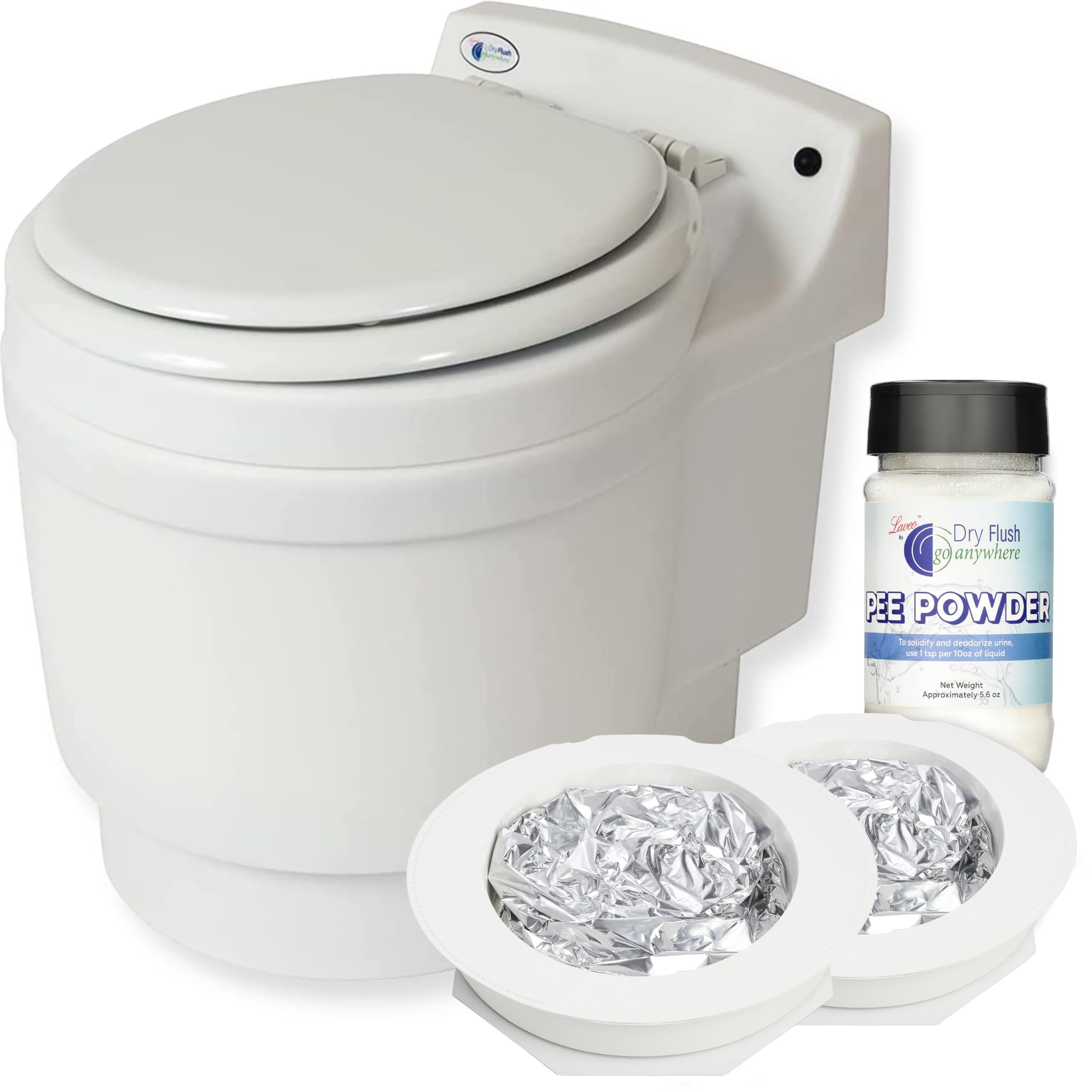
The Laveo Dry Flush is a full-size waterless toilet that wraps waste in a heat-sealed cartridge rather than relying on separation or composting. Each cartridge is rated for 15 solid flushes (or up to 28 with the included Pee Powder), and the battery holds its charge for months of intermittent use. The unit comes with two cartridges, a charger, and a bottle of Pee Powder that extends the life of each cartridge by absorbing liquid.
Because it’s the same height and width as a standard household toilet, adults find it far more comfortable to use than low-profile portable units. The wood seat adds a touch of warmth that plastic lacks, and the flush mechanism is whisper-quiet. Refill cartridges are available as consumables, and while they are not cheap per flush, the total cost is comparable to managing a cassette toilet disposal station.
The main drawback is that once a cartridge is sealed, it must be thrown away—there is no way to separate or compost the waste. This makes the Laveo best suited for van dwellers who have regular access to trash disposal and prefer not to handle waste directly.
Why it’s great
- Full height and wood seat for comfort
- No separating, mixing, or chemicals
- Battery lasts months between charges
Good to know
- Cartridges are costly as ongoing expense
- Waste is not compostable
- Less space-efficient than separators
8. Modiwell Loo Seal R1808
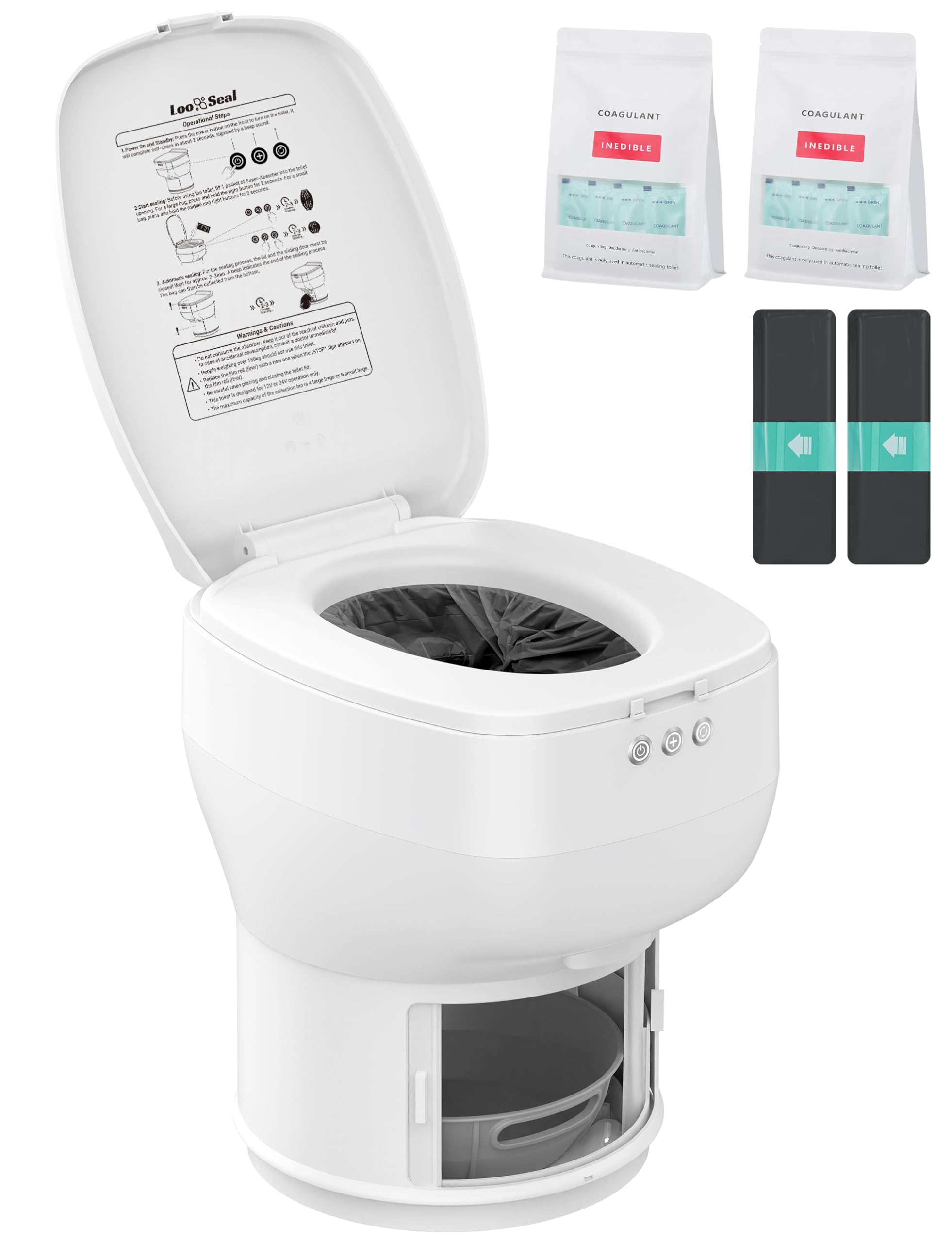
The Loo Seal R1808 rotates 180 degrees, allowing the seat to face different directions within a small bathroom. This flexibility is valuable in vans where the toilet footprint must serve multiple configurations. Like the earlier modiwell model, this is a dry-flush sealing toilet that uses heat to close each waste bag, and the coagulant powder solidifies liquid so bags never leak.
The integrated 55.5 Wh battery delivers up to 100 sealing cycles per charge, and the charging system accepts a 9–30V DC vehicle connection, so you can wire it directly to your van’s house battery without an inverter. The base can be anchored permanently or left freestanding, and the built-in carry handle makes pull-out storage simple.
One nuance is that the reservoir only holds three sealed bags before the sensor blocks further disposal, so you must empty the reservoir frequently. The seat could be larger for comfort, and the base feels slightly wobbly before bolting down. But for van owners who want a zero-handling solution and have a consistent supply of replacement bags, this is a strong mid-range contender.
Why it’s great
- 180° swivel for flexible van layouts
- DC charging compatible with house battery
- No handling of separators or compost medium
Good to know
- Bag reservoir holds only three sealed packs
- Base feels wobbly unless bolted
- High ongoing consumable cost
9. Thinktank Waterless Toilet
This larger version of the Thinktank toilet delivers the same trap-door concealment, separate air intake and exhaust, and zero-odor operation, but with a deeper footprint of 23.2 inches. The additional depth allows for a more comfortable seating posture for taller users, and the solids bin accepts larger bags that extend the time between dumps.
The entire unit is wired for both 12V DC and 110V AC, so you can install it in a van, cabin, or tiny house without worrying about power compatibility. The massive airflow fan consumes minimal power while moving enough air to keep the chamber dry and odor-free even in humid environments. The customer service from the owner, Richard, is frequently cited as exceptional, with rapid response to installation questions and replacement parts shipped internationally at low cost.
The downsides are consistent with the smaller model: the bags rely on a rubber band closure that some users find flimsy, and the plastic scratches if you use abrasive cleaners. But for full-time van dwellers who want a true three-month bag interval between changes and the hygiene of a hidden waste chamber, this is the long-haul solution.
Why it’s great
- Large solids bin for infrequent emptying
- Dual voltage power: 12V DC and 110V AC
- Trap door hides waste; zero odor
Good to know
- Rubber band bag closure is not ideal
- Deep footprint may not fit small cabinets
- Plastic scratches under abrasive cleaning
FAQ
Can a composting toilet in a van freeze in winter?
How often do you need to empty a composting toilet in a van?
Do composting toilets smell in a van?
What is the smallest composting toilet for a van?
Can men stand to urinate in a van composting toilet?
Final Thoughts: The Verdict
For most van dwellers, the best composting toilet for van is the OGO Origin because it combines the smallest width with a push-button electric agitator and a large 2.4-gallon urine bottle, minimizing daily maintenance while fitting into tight Sprinter and Transit layouts. If zero contact with waste is your priority, grab the Dry Flush Toilet by modiwell for its one-touch sealing that eliminates handling entirely. And for those who want the absolute longest interval between full system dumps and a design that conceals waste behind a trap door, nothing beats the Thinktank Waterless Toilet.

Mo Maruf
I created WellFizz to bridge the gap between vague wellness advice and actionable solutions. My mission is simple: to decode the research and give you practical tools you can actually use.
Beyond the data, I am a passionate traveler. I believe that stepping away from the screen to explore new environments is essential for mental clarity and physical vitality.