Our readers keep the lights on and my smoothie glass nicely filled. As an Amazon Associate, I earn from qualifying purchases.
That thin, hollow sound from your monitor’s internal speakers is robbing your music, movies, and games of their impact. You don’t need a massive soundbar or a full bookshelf setup to fix it — you need a pair of speakers that deliver real stereo separation, clean mids, and actual bass without consuming your entire desk. The difference a dedicated set of compact computer speakers makes is night and day, turning a cramped workspace into an immersive audio environment.
I’m Mohammad Maruf — the founder and writer behind WellFizz. I’ve spent hundreds of hours analyzing frequency response curves, driver materials, amplifier topologies, and connectivity standards across dozens of models to find which compact speakers actually deliver on their promises.
After researching dozens of models for this guide, I’ve settled on seven standouts that cover different budgets and use cases, ensuring any buyer can find their ideal match among today’s best compact computer speakers.
How To Choose The Best Compact Computer Speakers
Picking the right pair of compact speakers for your desk isn’t just about picking the cheapest option or the one with the most RGB. You need to match the speaker’s design to your physical space, your preferred audio source, and the type of content you consume most. Ignoring these factors will leave you with either a weak, tinny sound or a speaker that takes up half your monitor’s footprint.
Driver Size and Cabinet Material
The full-range drivers inside compact speakers typically range from 2 to 3 inches. A larger driver moves more air, which directly translates to stronger bass and higher maximum volume. But the driver is only half the story. The cabinet material — plastic versus MDF (medium-density fiberboard) — determines how much resonance and distortion colors the sound. MDF enclosures deaden vibrations, producing cleaner mids and tighter bass, while plastic cabinets can introduce a hollow, boxy quality to the output.
Connectivity: Wired, Wireless, or Both
Your setup dictates your connection choice. USB-powered speakers with a 3.5mm auxiliary input are the simplest: one cable for power and audio, no wall outlet needed. But USB audio can introduce latency or noise on some motherboards, making Bluetooth 5.0 or higher a better option for lag-free streaming. Models with independent digital-to-analog converters (DACs) built into their USB inputs often sound noticeably cleaner than those relying on your computer’s internal sound card. If you game or produce audio, prioritize low-latency wired connections or high-end Bluetooth codecs.
Quick Comparison
On smaller screens, swipe sideways to see the full table.
| Model | Category | Best For | Key Spec | Amazon |
|---|---|---|---|---|
| OHAYO 60W | Premium Bookshelf | Audiophile-grade desktop sound | 30W x 2, 3″ carbon driver + tweeter | Amazon |
| Edifier R20BT | Premium Compact | App EQ and ambient lighting | 2.75″ driver, Bluetooth 6.0 | Amazon |
| Edifier Hecate G2000 | Gaming RGB | Budget gaming with EQ modes | 16W x 2 peak, 2.75″ driver | Amazon |
| Creative Pebble V2 | Value Stereo | Upgrading from monitor speakers | 50.8mm drivers, USB-powered | Amazon |
| Amazon Basics 2.0 | Budget Stereo | Simple, affordable desktop fix | USB-powered, bottom bass radiator | Amazon |
| ROSON A-293 | Entry-Level | Plug-and-play basic audio | 3W x 2, 3.5mm + USB | Amazon |
| Turtlebox Gen 3 | Rugged Outdoor | Extreme outdoor durability | 120dB, IP67, 72hr battery | Amazon |
In‑Depth Reviews
4. OHAYO 60W

The OHAYO 60W speakers use a genuine MDF wooden enclosure, which dramatically reduces cabinet resonance compared to the plastic shells found on most compact models. Inside, a 0.75-inch carbon fiber silk dome tweeter handles the highs while a 3-inch carbon fiber full-range driver covers the mids and bass — a dual-driver configuration that is rare at this size and price. The independent integrated sound card ensures the digital-to-analog conversion happens inside the speaker cabinet, bypassing your computer’s noisy internal audio circuitry entirely.
The rear bass port extends low-end response noticeably, giving kick drums and bass lines a physical presence that 2-inch driver systems simply cannot produce. The front-panel volume knob is satisfyingly tactile, and the separate treble and bass controls allow fine-tuning without launching a software EQ. Bluetooth 5.3, RCA, AUX, and USB inputs give you every connection option you could need, making this set the most versatile and sonically mature option in the compact category.
Reviews from experienced users note that the USB input produces substantially cleaner audio than the 3.5mm jack, and with three pairs already purchased by one reviewer for different setups, the consistency is clearly there. The only trade-off is that the 3-inch drivers, while impressive for their size, can’t match a dedicated subwoofer for sub-bass extension.
Why it’s great
- MDF wood cabinet minimizes resonance for clean mids
- Dual carbon-fiber drivers deliver genuine highs and lows
- Five connection inputs including Bluetooth 5.3 and USB-C
- Separate treble and bass knobs for on-the-fly tuning
Good to know
- Bass extension limited by 3-inch driver physics
- Requires wall power, not USB-bus powered
5. Edifier R20BT
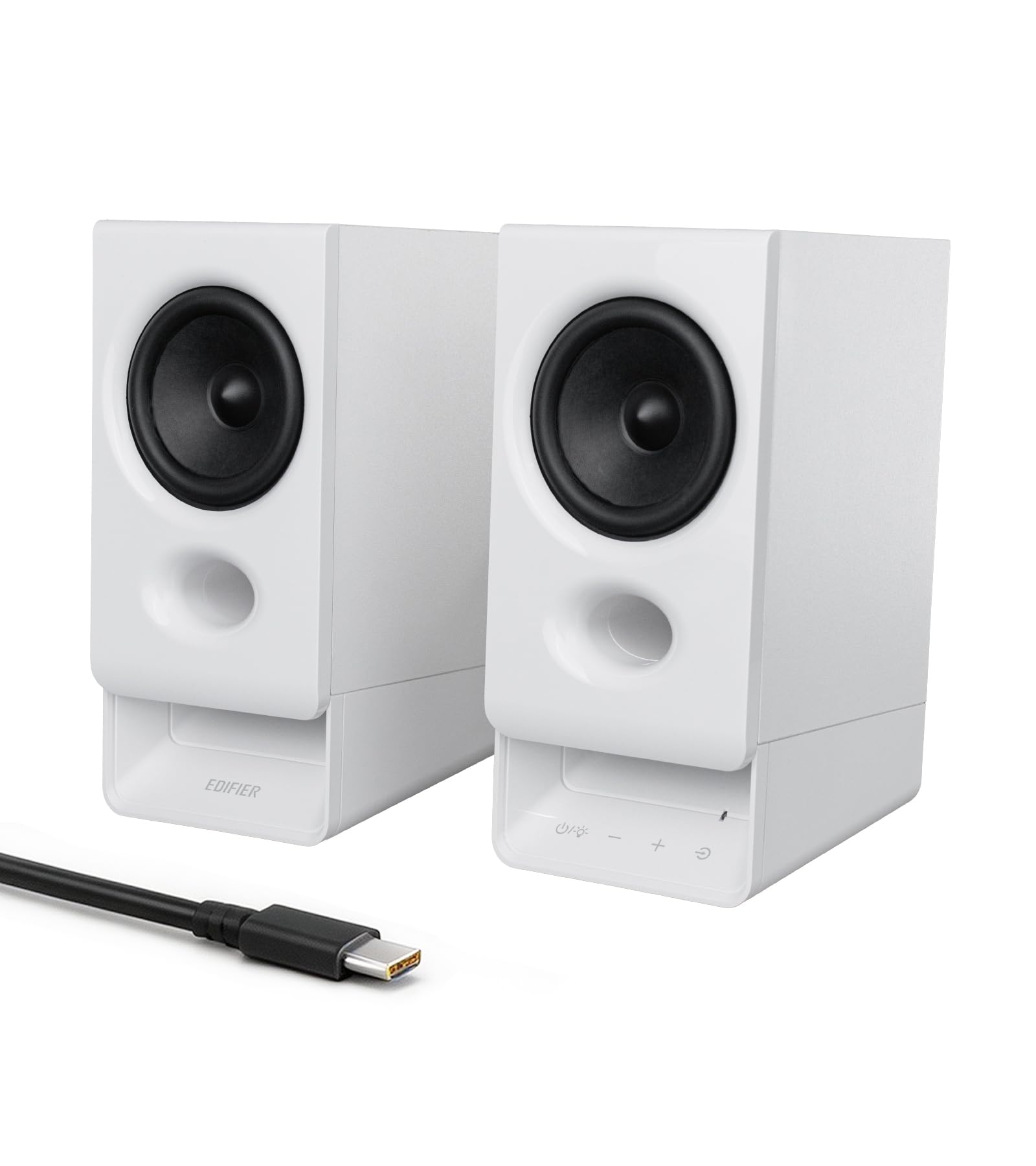
The Edifier R20BT packs a 2.75-inch full-range driver into a slim MDF cabinet with a rear bass reflex port, giving it surprising low-end punch for its footprint. What sets it apart from nearly every other compact speaker is the companion app — the Edifier ConneX mobile app and TempoHub desktop software let you adjust a 10-band equalizer, switch between Classic, Dynamic, and Vocal presets, and customize the RGB ambient lighting. That level of software integration is unheard of at this size and price tier.
Connectivity is forward-looking with Bluetooth 6.0 and multipoint pairing, meaning you can switch between your computer and phone without re-pairing. The USB-C input handles both power and digital audio, reducing cable clutter on your desk. The top-mounted touch panel controls power, lighting, volume, and input selection, though some users report the touch sensors can be inconsistent. The 4-pole 3.5mm headphone jack supports both audio and microphone pass-through, which is a thoughtful addition for a shared office environment.
While the 5W RMS output won’t fill a large room, it is more than adequate for near-field desktop listening at moderate volumes. The white finish and compact dimensions make it an attractive option for minimalist workspaces. The sound is balanced and clean, though some listeners may find it lacks the warmth or bass weight of larger bookshelf speakers.
Why it’s great
- Full-featured companion app with custom EQ and presets
- Bluetooth 6.0 with multipoint for dual-device streaming
- USB-C digital audio input reduces desktop clutter
- Microphone-compatible headphone jack for office calls
Good to know
- Touch controls can be unreliable for quick adjustments
- Some units have Bluetooth connectivity stability issues
6. Edifier Hecate G2000
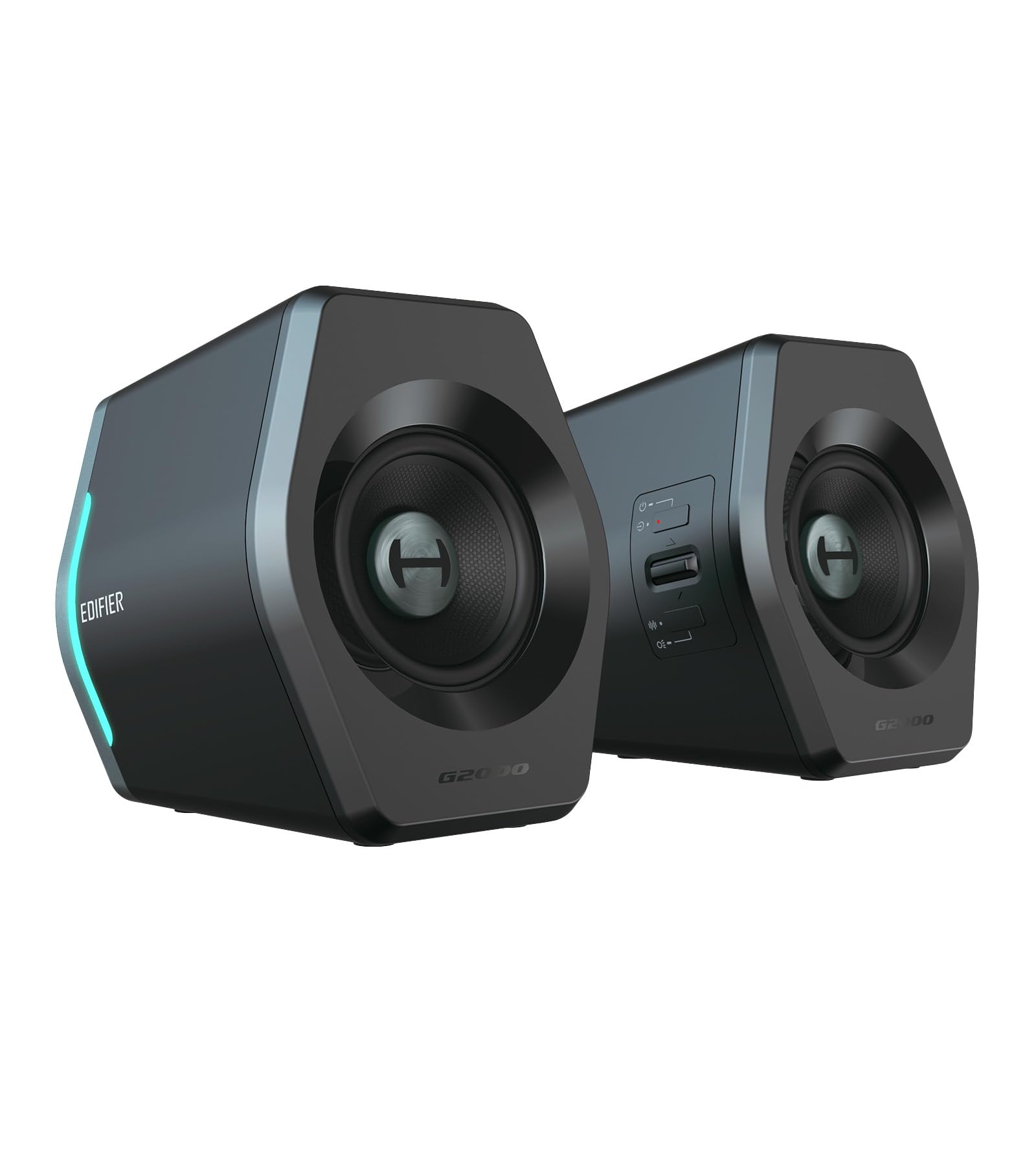
The Hecate G2000 is Edifier’s gaming-focused compact speaker, delivering 32 watts of peak power from a pair of 2.75-inch full-range drivers. The 10-degree upward tilt angles the drivers toward your ears, improving clarity in the near field. Dedicated Gaming, Movie, and Music EQ modes are selectable via the front knob, and the 12 customizable RGB lighting effects let you match your desktop aesthetic without relying on software that eats system resources.
Connectivity covers Bluetooth 5.1, USB sound card, and 3.5mm AUX inputs, making it compatible with PC, PS4, Mac, and mobile devices. The matte panel finish and metal laser-engraved control knob give the G2000 a premium feel that belies its mid-range positioning. Reviewers consistently praise the bass response as “explosive” for the size, with some comparing it favorably to the Creative Pebble V3 in terms of overall power and clarity.
The primary complaint is the startup and shutdown sound effects — an electronic jingle that some users find grating and impossible to disable. Additionally, the RGB lighting, while vibrant, may feel excessive for a professional or minimalist workspace. For pure gaming immersion at a compact size, however, this set punches well above its weight class.
Why it’s great
- 32W peak power delivers room-filling volume
- Three dedicated EQ modes for games, movies, and music
- 10-degree upward tilt optimizes sound for near-field listening
- 12 RGB effects with easy knob control
Good to know
- Startup and shutdown chime cannot be disabled
- RGB lighting may not suit all desk aesthetics
1. Creative Pebble V2

The Creative Pebble V2 has become a benchmark in the budget compact speaker category for good reason. Its 50.8mm full-range drivers are larger than most competitors at this price, and they sit at a 45-degree upward angle to project sound directly toward your ears. The USB-C port handles both power and audio, with a secondary 3.5mm AUX input for devices without a USB audio interface. A physical gain switch on the bottom lets you toggle between high and low sensitivity, giving you extra headroom for quieter audio sources.
Reviews consistently highlight the surprising bass output for a USB-powered system, though the low end is more of a mid-bass punch than true sub-bass extension. A third-party EQ app like SpeakerAmp or FXSounds can dramatically improve the frequency balance, making these speakers sound far more expensive than their asking price. The compact footprint — roughly the size of a hockey puck — leaves plenty of desk space for your keyboard and mouse.
The main compromises are the lack of a front headphone jack and the fact that the physical color is a dark forest green rather than the black shown in product images. Some users also note that the gold driver cone is a minor aesthetic distraction. For pure price-to-performance ratio in a USB-powered desktop speaker, however, this remains a top contender.
Why it’s great
- 50.8mm drivers angled upward for better near-field sound
- USB-C + AUX input with high/low gain modes
- Surprising bass output for a USB-powered system
- Extremely compact footprint maximizes desk space
Good to know
- No front-panel headphone jack
- Color may be dark green, not black as advertised
2. Amazon Basics Stereo 2.0

The Amazon Basics Stereo 2.0 speakers use a bottom-firing passive radiator to generate what reviewers describe as a “springy” bass sound that adds warmth to music and movies far beyond what the driver alone could produce. The metal-finish cabinets and scratch-resistant padded base give them a more premium aesthetic than their entry-level price suggests. The blue LED power indicator is subtle but adds a touch of visual feedback without being a distraction.
Setup is as simple as plugging the USB cable into your computer for power and connecting the 3.5mm AUX cable to your audio source — no external power brick required. The in-line volume control is convenient, though the knob sits on a cable that may dangle below your desk. Reviewers recommend setting the hardware volume knob to maximum and adjusting through software to avoid the cable hanging too low. Sound quality is described as clear and loud enough for music, videos, and video calls, with better bass than typical monitor speakers.
Performance on game consoles like the PS5 is less impressive, with a lower volume ceiling and reduced bass extension compared to desktop PC use. Some units arrived with minor cosmetic scratches on the top surface, though this is a minor issue given the price point. For the user who needs a simple, reliable audio upgrade with no setup complexity, this is a solid choice.
Why it’s great
- Passive bass radiator adds warmth without extra power
- USB-powered, no wall outlet needed
- In-line volume control for quick adjustments
- Compact size fits easily under a monitor riser
Good to know
- Volume knob on cable can hang below desk level
- Lower performance on PS5 compared to PC
3. ROSON A-293

The ROSON A-293 is a no-frills entry-level speaker pair designed for maximum simplicity. The right speaker houses all the connections: USB power, AUX input, a volume knob, and a headphone jack on the front panel. There are no software drivers to install, no EQ profiles to configure — just plug the USB and 3.5mm cables into your computer and you’re running. The full-range 2.0 channel drivers deliver 3 watts per channel, which reviewers describe as “clear, bright, and rounded” for spoken word and music at close range.
Cable length is generous, with 39-inch USB and AUX cables and 31.5 inches of wire between the left and right speakers, giving you flexibility to place the pair across a wide monitor setup. The soft foam feet grip the desk surface and reduce vibration transfer, keeping your desk clean of rattles at moderate volumes. The blue power LED on the right speaker provides a clear status indicator.
The 3W x 2 power output is adequate for a small desk or bedroom but will struggle to fill a large room at high volumes. Reviewers note that the sound quality is comparable to other basic USB speakers in this price range — clear but lacking the bass presence of more expensive models. For the user who just wants to hear system sounds and YouTube videos without mechanical buzz from monitor speakers, the ROSON delivers exactly what it advertises.
Why it’s great
- Front-panel headphone jack for private listening
- Generous cable lengths for wide monitor setups
- Plug-and-play USB operation, no drivers needed
- Soft foam feet minimize desk vibration
Good to know
- 3W per channel limits maximum volume in larger rooms
- Bass response is minimal compared to larger driver systems
7. Turtlebox Gen 3
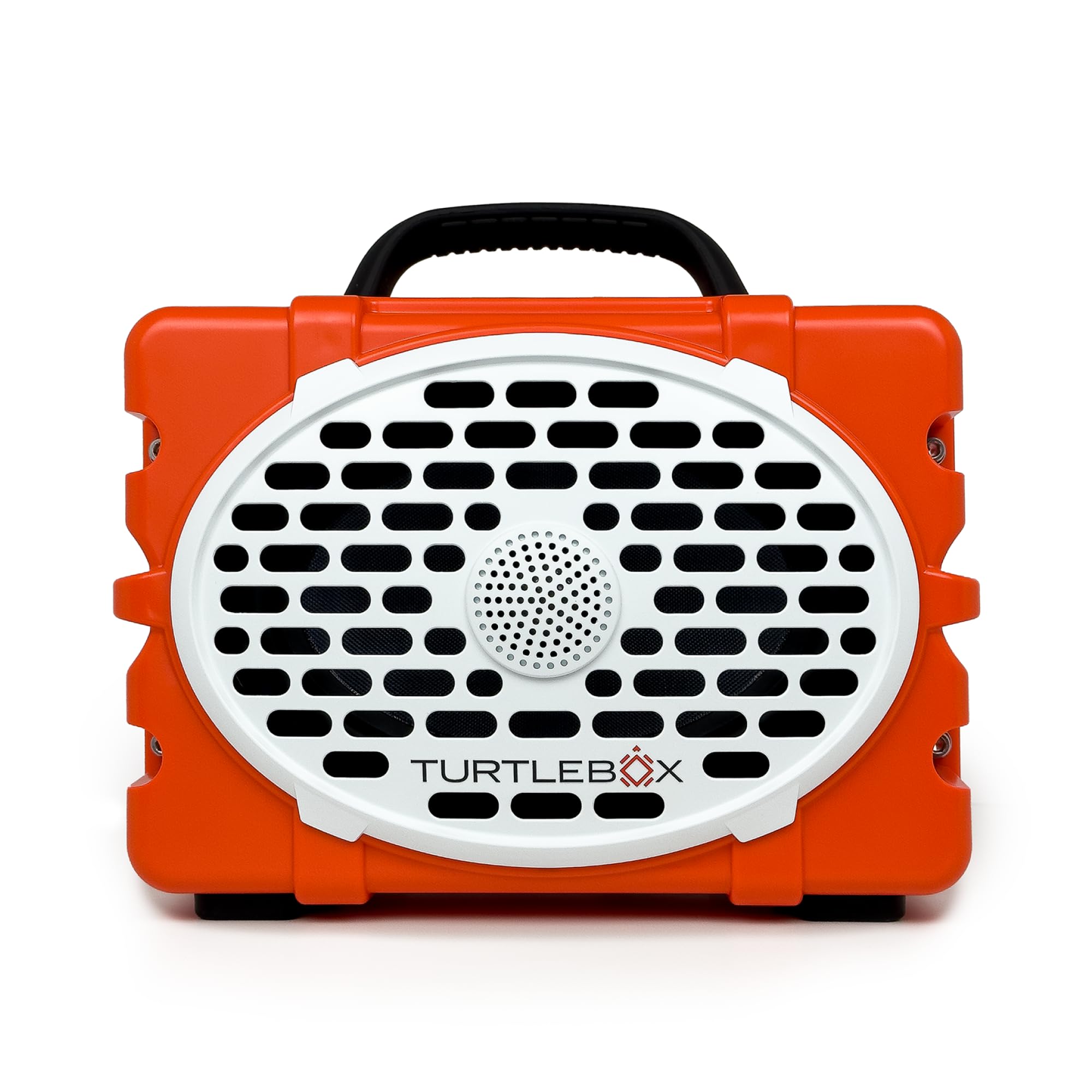
The Turtlebox Gen 3 is a category outlier — a portable Bluetooth speaker built to withstand extreme environments rather than a dedicated desktop pair. Its 1-inch titanium tweeter and 6×9-inch woofer produce 120dB of sound pressure, making it loud enough for outdoor parties, construction sites, or tailgating events. The 85Wh lithium-ion battery delivers up to 72 hours of continuous playback on a single charge, which is exceptional for any speaker, let alone one this compact and rugged.
IP67 waterproofing means it can survive full submersion in fresh or saltwater, and the drop-proof, crush-proof chassis ensures it won’t fail if knocked off a table. The Party Mode allows unlimited speaker pairing, letting you create a true stereo or multi-channel setup across a large area. The Class D digital amplifier is highly efficient, keeping the speaker cool and conserving battery during extended use.
For a pure desktop computer speaker, the Turtlebox is overkill both in price and intended use. It lacks the wired connectivity and near-field optimization of the other models on this list, and its single-unit design means you don’t get true stereo separation unless you buy two. However, for the user who needs one speaker for both their desk and their outdoor adventures, it is uniquely capable.
Why it’s great
- 120dB peak output cuts through outdoor noise easily
- IP67 waterproof and fully drop-proof chassis
- 72-hour battery life covers multi-day trips
- Unlimited Party Mode pairing for large spaces
Good to know
- Single-unit design lacks native stereo separation
- Premium price far exceeds typical desktop speaker budgets
FAQ
Can I use USB-powered speakers with a gaming console like the PS5?
Is a Bluetooth connection good enough for music production or gaming?
How much desk space do compact speakers really need?
Final Thoughts: The Verdict
For most users, the compact computer speakers winner is the OHAYO 60W because its MDF cabinet and dual carbon-fiber drivers deliver genuinely high-fidelity sound that rivals budget bookshelf speakers. If you want app-controlled EQ and customizable ambiance in a white desktop-friendly package, grab the Edifier R20BT. And for the best pure value that still delivers surprising bass and clarity, nothing beats the Creative Pebble V2.

Mo Maruf
I created WellFizz to bridge the gap between vague wellness advice and actionable solutions. My mission is simple: to decode the research and give you practical tools you can actually use.
Beyond the data, I am a passionate traveler. I believe that stepping away from the screen to explore new environments is essential for mental clarity and physical vitality.