Our readers keep the lights on and my smoothie glass nicely filled. As an Amazon Associate, I earn from qualifying purchases.
Choosing the wrong coating for your RV’s roof means spending a season re-caulking seams and scrubbing black streaks off the sidewalls. The specific deck material—whether it’s aged EPDM rubber, a TPO membrane, aluminum, or fiberglass—demands a tailored chemistry to bond permanently, reflect heat, and move with the structure as temperatures swing from freezing nights to blistering afternoons.
I’m Mohammad Maruf — the founder and writer behind WellFizz. I’ve spent hundreds of hours analyzing the chemical formulations, coverage rates, and real-world adhesion reports behind these roof coatings so you can match the right product to your RV’s exact substrate without a costly mismatch.
This guide compares seven of the most popular options on the market, breaking down the differences in acrylic elastomeric, silicone, and liquid-rubber formulas to help you find the best coating for rv roof materials that need lasting waterproofing and solar reflection.
How To Choose The Best Coating For RV Roof
The wrong selection leads to peeling, bubbling, or a coating that cures too rigid and cracks under thermal expansion. Start by identifying your roof material—plasticizers in some coatings attack TPO membranes, while other formulas simply won’t bond to slick factory-finished metal. Match the chemistry to your substrate first, then prioritize reflectivity and coverage.
Match the formula to your substrate
Acrylic elastomeric coatings bond well to clean EPDM, metal, and spray polyurethane foam but can be incompatible with unprimed TPO. Silicone coatings offer excellent adhesion to TPO and fiberglass without a primer, but they are difficult to recoat if repairs are needed later. Liquid-rubber formulations often require a dedicated primer on EPDM roofs to ensure long-term grip.
Check coverage rate and dry-film thickness
Most one-gallon cans claim between 50 and 200 square feet per coat, but the durability of the membrane depends on applying a minimum of two heavy coats. Thin applications sacrifice the elastomeric flexibility that prevents cracks when the roof panel expands in direct sun. Always calculate the total square footage of your roof before buying—a 30-foot trailer roof can need four gallons or more for adequate thickness.
Prioritize solar reflectivity for interior comfort
White or highly reflective coatings lower the surface temperature of the roof by 30 to 40 degrees on a hot day. That drop translates directly into less strain on your air conditioner and a noticeably cooler interior. Look for stated reflectivity percentages or third-party cool-roof ratings if that matters for your camping climate.
Quick Comparison
On smaller screens, swipe sideways to see the full table.
| Model | Category | Best For | Key Spec | Amazon |
|---|---|---|---|---|
| Protect All 68128 | Rubber Treatment | EPDM maintenance & anti-chalking | Anti-static polymer, 1 gallon | Amazon |
| Dicor RP-MRC-1 | Acrylic Elastomeric | Metal RV roofs needing heat deflection | 200 sq ft coverage per gallon | Amazon |
| BEEST B-5000 | Liquid Rubber | Multi-surface leak sealing (needs primer) | 50 sq ft per gallon at 2 coats | Amazon |
| Kohree KR418 | 100% Silicone | No-primer TPO & fiberglass bonding | 100% silicone, 30 sq ft at 2-3 coats | Amazon |
| Marlin ATC-WHT-1 | Acrylic Elastomeric | General RV roofs (EPDM, metal, concrete, wood) | 60 sq ft per gallon at 2 coats | Amazon |
| Gardner STA-Kool SK-7705 | Acrylic Elastomeric | Large roofs needing high coverage (5gal) | 500-600 sq ft per 5 gallons | Amazon |
| Rust-Oleum 710 | Elastomeric Coating | High-reflectivity EPDM & metal roofs | 84% initial reflectivity | Amazon |
In‑Depth Reviews
1. Rust-Oleum 710 Elastomeric Roof Coating
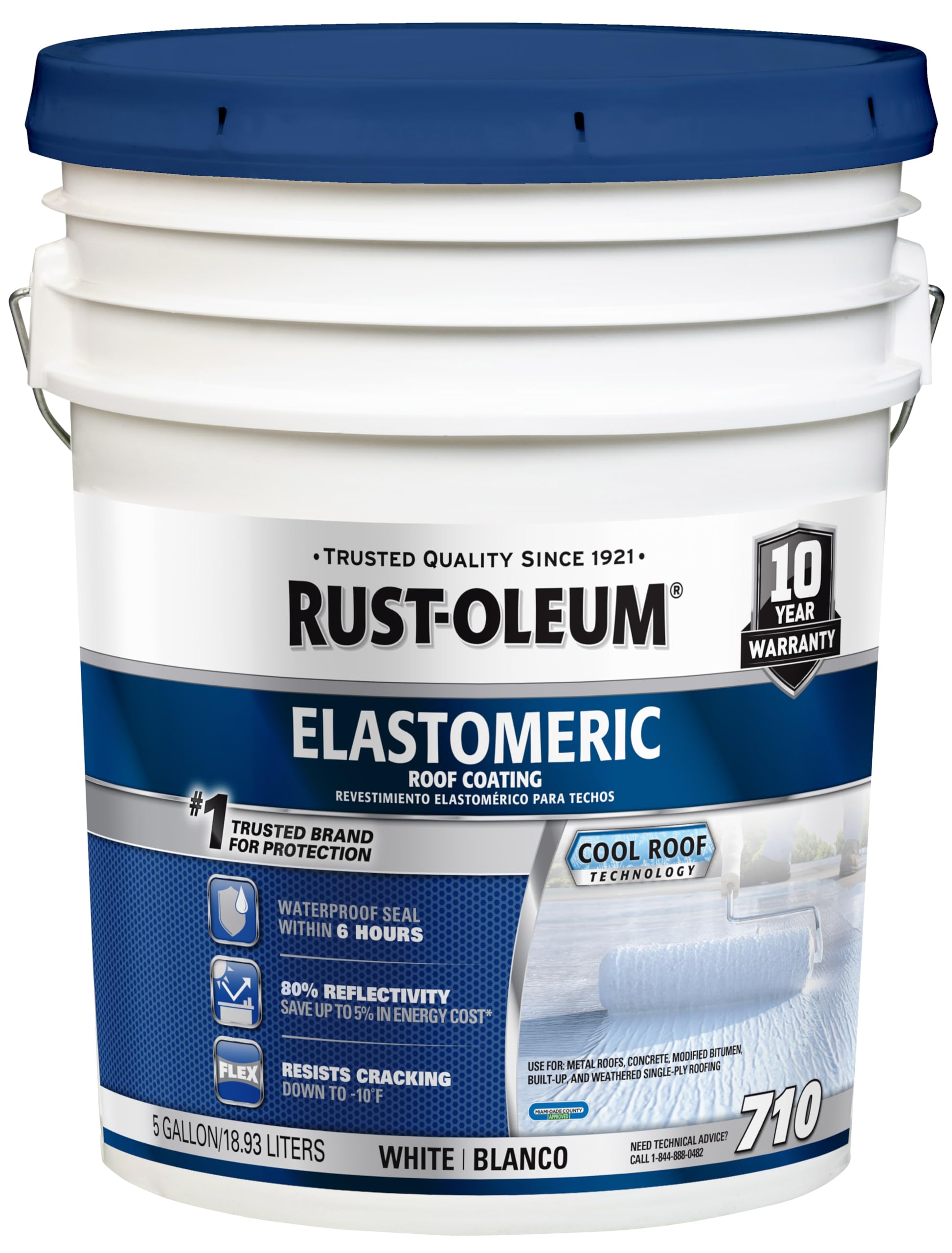
The Rust-Oleum 710 delivers a thick, latex-like consistency that requires no stirring before application and can be rolled on with a 3/4-inch nap roller. Its 84% initial solar reflectivity dramatically lowers roof-surface temperature, keeping the interior cooler even on triple-digit days. The formula cures to a flexible, rubbery membrane that moves with thermal expansion without cracking—an important trait for both EPDM rubber roofs and metal surfaces.
Coverage breaks down to roughly 1.5 gallons per hundred square feet per coat, so a two-coat job on a standard 30-foot trailer roof will consume the full 5-gallon pail. Users report that the coating dries to the touch in about 30 minutes in low humidity, but full cure takes up to 24 hours. The membrane becomes rain-resistant in roughly 6 hours, though thicker applications may need up to 18 hours before they are safe from wash-off.
Multiple owners with EPDM roofs noted that the top floor of their rig felt noticeably cooler after application, and one reviewer pushed the coating past the 5-year mark without delamination. Cleanup is simple with soap and water while the product is still wet, and the pail design eliminates the need for a separate stirring stick.
Why it’s great
- Highest solar reflectivity among the group
- Quick 6-hour rain resistance window
- No stirring needed before application
Good to know
- Requires multiple coats for proper thickness
- 5-gallon pail is heavy and bulky to handle
2. Gardner STA-Kool SK-7705
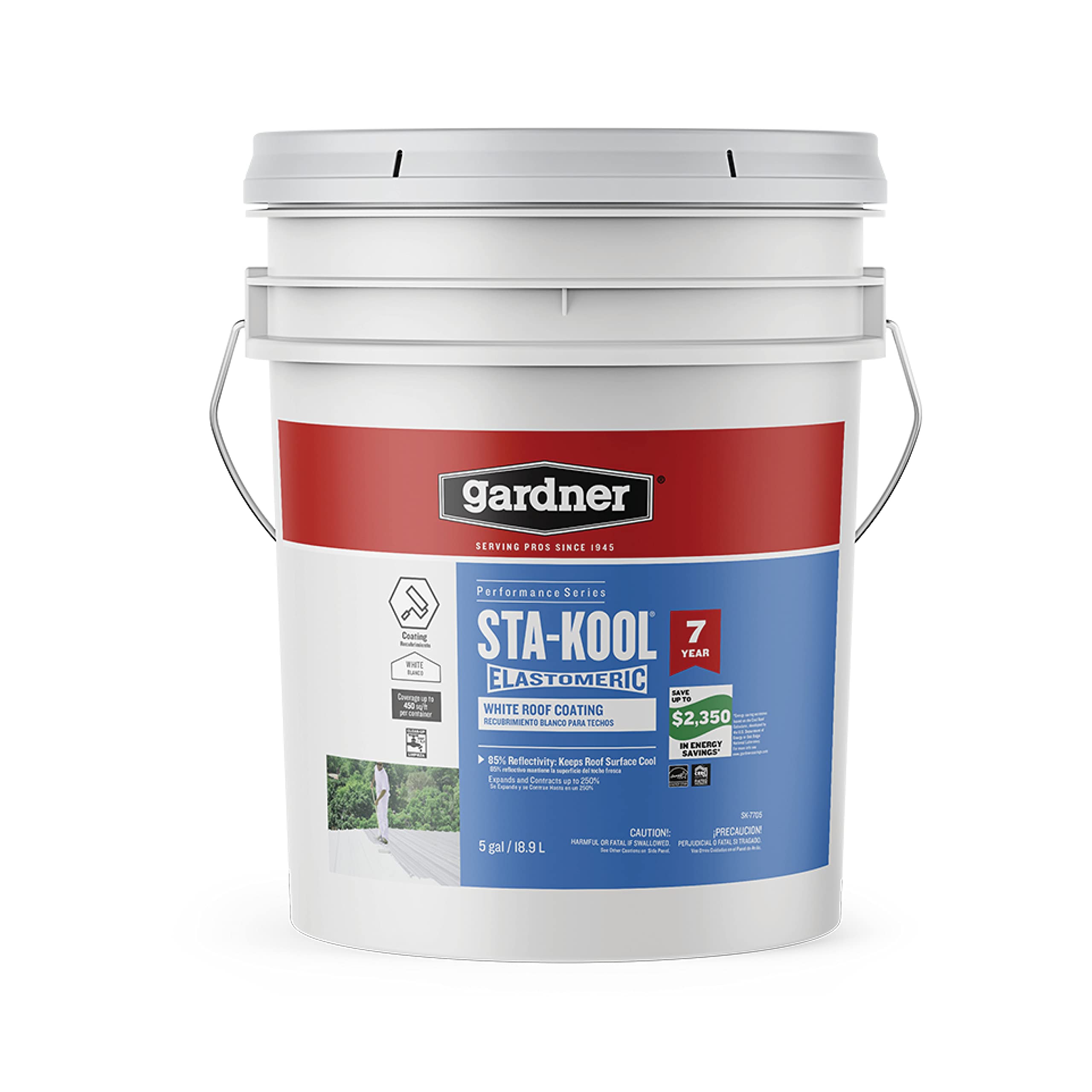
The Gardner STA-Kool SK-7705 is a traditional acrylic elastomeric coating designed for large surfaces, offering a massive 500 to 600 square feet of coverage per 5-gallon pail. That makes it the most economical option for owners of 40-foot diesel pushers or high-top campervans who need broad, even coverage without buying multiple cans. The matte white finish reflects sunlight effectively and dries to a clean, professional appearance.
Dry time is notably fast—owners report the coating becomes touch-dry in roughly 45 minutes under moderate conditions, allowing for a second coat the same day. The product bonds to a wide range of surfaces, including aluminum, metal, and even composite shingles with the help of a fiberglass mat for bridging cracks. One owner used it successfully on a 12×16 aluminum roof and still had half a bucket left for future touch-ups.
While the coverage is exceptional for large flat roofs, the 5-gallon pail is impractical for small repairs or owners with single-axle trailers who only need a quart. The formula requires at least two heavy coats to achieve the advertised waterproof membrane, and it should not be applied if temperatures are expected to drop below freezing within 24 hours.
Why it’s great
- Best per-gallon coverage for large rigs
- Fast 45-minute dry time between coats
- Versatile on metal, composite shingles, and concrete
Good to know
- Too much volume for small RV roofs
- Not recommended for unprimed TPO roofs
3. Kohree KR418 100% Silicone RV Roof Coating
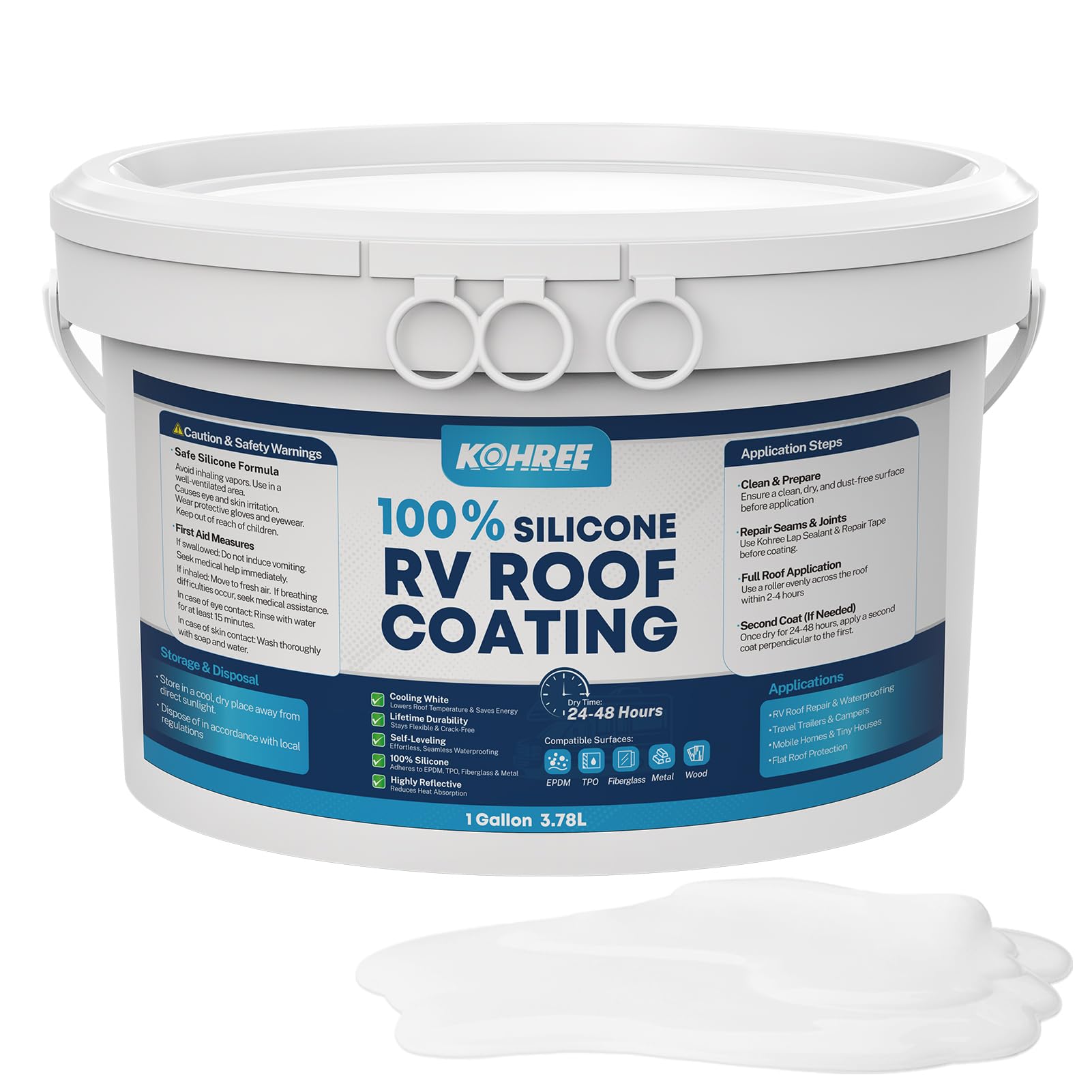
The Kohree KR418 is formulated with 100% silicone, which gives it superior flexibility and breathability compared to standard acrylic coatings. This chemistry allows it to expand and contract with extreme temperature swings without cracking, and it bonds directly to EPDM rubber, TPO, metal, wood, and fiberglass without any primer. For owners with TPO or fiberglass roofs, that no-primer application saves significant time and eliminates the risk of a misapplied bonding layer.
One gallon covers roughly 50 square feet per coat, and two to three thick coats are recommended for a durable waterproof seal. Real-world users found that a 30-foot fifth-wheel trailer needed about 4 gallons to achieve full coverage with the proper film thickness. The silicone formula dries to a rubbery surface that resists UV damage and reflects heat, reducing interior cabin temperatures noticeably.
Packaging is improved with an aluminum inner bag that preserves the sealant’s stability during storage, though some users note the buckets are difficult to open. The low-odor, harmless formula makes it safe for indoor-outdoor use around pets and family. Because silicone does not easily accept recoating, any future repairs will require careful surface preparation or a dedicated silicone-compatible top coat.
Why it’s great
- No primer required on TPO, fiberglass, or EPDM
- High flexibility resists cracking in temperature swings
- Low odor and safe for pets
Good to know
- Difficult to recoat if repairs are needed
- Buckets are hard to open
4. BEEST B-5000 Liquid Rubber RV Roof Coating

The BEEST B-5000 is an acrylic elastomeric liquid-rubber coating designed for versatility across EPDM, TPO, aluminum, fiberglass, and even PVC/vinyl surfaces. Its solvent-free, ultra-low-VOC formula makes it one of the safer options for DIY applicators who work in confined spaces or around sleeping areas. The coating applies thickly without running, filling small cracks and imperfections in the roof surface to create a seamless waterproof barrier.
Coverage is rated at 50 square feet per gallon when applied in two heavy coats, meaning a 30-foot trailer will need roughly 4 gallons plus a dedicated primer if the roof is EPDM rubber. BEEST explicitly states that EPDM roofs must use the brand’s cleaner and primer before the coating is applied to ensure long-term adhesion. The product requires 4 hours between coats and a full 48-hour cure before exposure to standing water.
Users consistently praise the thick, non-runny consistency and the adhesion strength. Several owners with utility trailers and metal roofs reported that the coating stopped leaks that had persisted for years. The family-owned Pennsylvania company backs the product with a satisfaction guarantee and phone-based customer support, adding a layer of trust for first-time buyers nervous about investing in multiple gallons.
Why it’s great
- Thick, non-runny coverage for leak sealing
- Ultra-low VOC and safe for indoor use
- Good adhesion on multiple substrates
Good to know
- EPDM roofs require a separate primer
- Full cure takes 48 hours
5. Dicor RP-MRC-1 Acrylic Elastomeric Coating

Dicor’s RP-MRC-1 is purpose-built for metal RV roofing—aluminum, steel, or corrugated panels—and is explicitly not recommended for EPDM rubber or TPO membranes. Its brilliant white finish provides superior solar reflectivity, and real-world users confirm that the roof surface goes from too-hot-to-touch to comfortably warm after just two thin coats. The 200 square feet per gallon coverage rate is the highest among the single-gallon options, meaning one can may be enough for smaller trailers.
The acrylic elastomeric chemistry cures to a matte, flexible membrane that moves with the metal panel as it expands in the afternoon sun. One owner on a 38-year-old aluminum roof reported excellent heat deflection and no new leaks after two coats. The coverage rate encourages multiple thin coats; thicker single applications can cure slowly and run off the roof edge, leaving streaks on the RV sidewalls.
Dicor also recommends using the brand’s conditioner and sealant alongside the coating for a complete system, particularly on seams and edges where leaks most often develop. The coating has demonstrated longevity beyond six years in real-world use, though that requires proper surface prep and avoiding silicone-based sealants during earlier repairs.
Why it’s great
- Highest single-gallon coverage at 200 sq ft
- High heat deflection on aluminum roofs
- Proven 6-year durability with proper prep
Good to know
- Not compatible with EPDM or TPO roofs
- Thick coats may run and stain sidewalls
6. Marlin ATC-WHT-1 Acrylic Elastomeric Coating

Marlin’s ATC-WHT-1 is a plasticizer-free, single-component acrylic elastomeric coating formulated for the broadest substrate compatibility of the group: EPDM rubber, PVC, Hypalon, TPO, polyurethane foam, wood, concrete, metal, and even granulated asphaltic surfaces. Its plasticizer-free chemistry means it won’t migrate into or degrade TPO membranes—a common failure mode with cheaper coatings. The coating retains flexibility in extreme heat and cold without becoming brittle.
Coverage is rated at 60 square feet per gallon when applied in two heavy coats, and the ideal application temperature window is above 50 degrees Fahrenheit with no rain expected within 24 hours. Owners of 33-foot trailers with multiple slide-outs reported needing just over two gallons for complete coverage, which places the per-job cost well below the premium silicone alternatives. The coating dries quickly in warm weather, allowing for two-coat application in a single afternoon.
Customer feedback highlights the easy spreading consistency and professional-looking finish even for first-time applicators. The white acrylic surface provides UV resistance and solar reflectivity, though it does not match the 84% reflectivity of the Rust-Oleum 710. One key downside: the product is packaged in a can with a simple reseal, and any unused portion should be stored in a conditioned space to prevent freeze damage.
Why it’s great
- Plasticizer-free works safely on TPO
- Broadest substrate compatibility in the lineup
- Fast dry time allows same-day second coat
Good to know
- Moderate reflectivity compared to premium options
- Requires careful storage to avoid freeze damage
7. Protect All 68128 Rubber Roof Treatment

The Protect All 68128 is not a thick elastomeric coating—it’s a maintenance treatment formulated specifically for EPDM rubber roofs. Its anti-static polymer coating prevents dirt and grime from sticking to the rubber surface, dramatically reducing the powdery chalk that causes gray streaks to run down the sidewalls during rain. It also provides UV protection that keeps the rubber pliable and slows the oxidation process that leads to cracking.
Application is simple: clean the roof with Dawn or a dedicated cleaner, then apply the treatment with a painting pad, sponge mop, or even bare hands. Owners report covering a 32-foot trailer in under 30 minutes using a painting pad. A single gallon can last up to 8 applications over two years, making the per-use cost extremely low. The treatment dries to a slick, glossy finish that makes future dirt and pollen removal as simple as a rinse from a garden hose.
Because it is a treatment rather than a sealant, it does not bridge gaps or stop leaks—it extends the life of an already-sound rubber roof. For EPDM roofs in good condition that are stored outdoors in hot climates, applying this every four months virtually eliminates the need for heavy cleaning and dramatically reduces the chalking that ages the rubber prematurely.
Why it’s great
- Prevents chalking and gray sidewall streaks
- Quick 30-minute application for large trailers
- Extremely low per-use cost
Good to know
- Does not seal leaks or add structural thickness
- Only compatible with EPDM rubber roofs
FAQ
Can I apply an acrylic coating over my RV’s existing silicone sealant?
How often should I recoat my RV roof with an elastomeric coating?
Why does my EPDM rubber roof need a separate primer before coating?
Is a 5-gallon pail too much for a small travel trailer roof?
Will a white roof coating actually reduce my air conditioning load?
Final Thoughts: The Verdict
For most users, the best coating for rv roof overall is the Rust-Oleum 710 because its 84% solar reflectivity, fast 6-hour rain resistance, and proven 5-year lifespan provide the best combination of performance and value across EPDM, metal, and composite roofs. If you need broad coverage for a 40-foot coach, grab the Gardner STA-Kool SK-7705 for its unbeatable per-gallon coverage. And for TPO or fiberglass roofs where you want to skip the primer step, nothing beats the Kohree KR418 with its 100% silicone formula that bonds directly to the substrate.

Mo Maruf
I created WellFizz to bridge the gap between vague wellness advice and actionable solutions. My mission is simple: to decode the research and give you practical tools you can actually use.
Beyond the data, I am a passionate traveler. I believe that stepping away from the screen to explore new environments is essential for mental clarity and physical vitality.