Our readers keep the lights on and my smoothie glass nicely filled. As an Amazon Associate, I earn from qualifying purchases.
Finding a recording microphone that captures clear, warm vocals without draining your wallet is the single biggest challenge for new podcasters, streamers, and home-studio beginners. The gap between a thin, noisy USB mic and a professional-grade XLR setup often feels impossibly wide — but it doesn’t have to be.
I’m Mohammad Maruf — the founder and writer behind WellFizz. I’ve spent hundreds of hours analyzing frequency response graphs, diaphragm types, and signal-to-noise ratios across dozens of budget-friendly models to find the ones that truly deliver studio-quality results without the premium price tag.
This guide cuts through the marketing noise to help you find the best cheap recording microphone that actually works for your specific recording environment and vocal style.
How To Choose The Best Cheap Recording Microphone
Not every budget mic is built the same. The key is matching the microphone’s design to your specific use case — whether it’s podcasting, gaming, voiceovers, or live streaming. Focus on three core areas before you buy.
Match the Microphone Type to Your Environment
Dynamic microphones are the gold standard for untreated rooms. Their moving-coil design rejects ambient noise like computer fans, air conditioners, and street traffic, making them ideal for spoken-word content. Condenser microphones, while more sensitive and detailed, will pick up every click, hum, and breath — they require a quiet, treated space to shine.
Understand Your Connection Path
XLR microphones require an audio interface or mixer but deliver cleaner audio with lower noise floors and more headroom. USB microphones offer plug-and-play convenience directly to your computer, but the built-in preamps are often noisier and less flexible. Many modern budget mics now offer hybrid USB/XLR connectivity, giving you a path to upgrade without replacing the mic.
Focus on the Pickup Pattern
Cardioid and supercardioid patterns are the workhorses for solo recording. They capture sound from the front while rejecting noise from the sides and rear. This is critical for avoiding room echo and bleed from your keyboard or mouse. Avoid omnidirectional patterns unless you are recording group conversations in a controlled space.
Quick Comparison
On smaller screens, swipe sideways to see the full table.
| Model | Category | Best For | Key Spec | Amazon |
|---|---|---|---|---|
| FIFINE AmpliGame KS5 | Bundle | All-in-one streaming & podcast kit | XLR/USB + audio mixer | Amazon |
| FDUCE SL40+ | Dynamic | Vocal recording with boom arm | 96kHz/24-bit USB & XLR | Amazon |
| MAONO PD100X | Hybrid | Gamers wanting RGB & dual connectivity | USB/XLR dynamic, 24-bit/48kHz | Amazon |
| HyperX SoloCast 2 | Condenser | Plug-and-play desktop recording | 24-bit/96kHz USB-C condenser | Amazon |
| Sennheiser XS 1 | Dynamic | Handheld vocal & live speech work | XLR dynamic with mute switch | Amazon |
| Razer Seiren V3 Mini | Condenser | Compact gaming & streaming | Supercardioid USB condenser | Amazon |
| MAONO PD100 | Dynamic | Budget podcasting & voiceover | XLR dynamic, 60-14kHz range | Amazon |
In‑Depth Reviews
1. FIFINE AmpliGame KS5 Gaming Equipment Bundle

The FIFINE AmpliGame KS5 goes beyond a simple microphone by bundling a dynamic XLR mic with a dedicated audio mixer. This gives you hardware-level control over volume faders, mute channels, and headphone monitoring — features normally reserved for far more expensive studio setups. The XLR connection between mic and mixer ensures a clean, noise-free signal path, a significant step up from consumer USB-only mics.
The dynamic capsule naturally rejects room echo and background chatter, making it perfect for live streaming and podcasting where you can’t control the environment. The mixer’s RGB lighting adds visual flair, but the real value is in the four-channel mixing capability, allowing you to blend game audio, voice, and music independently.
Users consistently praise the sound quality jump from headset mics and the intuitive layout of the mixer controls. Some note the plastic build of the mixer is expected at this price point, and a small number report sporadic mixer reboot issues. On the whole, this kit delivers a complete, upgrade-ready studio foundation that outclasses buying a mic and interface separately.
Why it’s great
- Full mixer and mic bundle with XLR connectivity
- Four-channel audio control with individual mute
- Excellent ambient noise rejection from dynamic capsule
Good to know
- Mixer body is predominantly plastic
- Some units experience intermittent mixer power cycling
- Voice changer effects are gimmicky for serious use
2. FDUCE SL40+ Dynamic Microphone with Boom Arm

The FDUCE SL40+ stakes its claim with a 24-bit/96kHz sampling rate — a spec usually reserved for pricier interfaces and condensers. This high-resolution capture means your voice retains detail, air, and transient snap even when recording at lower gain levels. The dynamic core pairs this with a cardioid pattern that focuses on your mouth and rejects the ambient noise of a typical gaming or home office environment.
Included in the package is a full metal boom arm with a table mount clamp, saving you the immediate expense of buying a separate mic stand. The arm allows precise positioning to take advantage of the cardioid pattern’s sweet spot, which is critical for achieving consistent levels. Dual USB and XLR outputs let you start with USB convenience and later transition to an audio interface without buying a new mic.
User feedback highlights the noticeable audio improvement over headset mics and the clean desk setup the boom arm enables. A common complaint is the swivel joint that can unscrew the mic when rotated to the left, requiring occasional retightening. For the price, the SL40+ offers a rare combination of build quality, included accessories, and professional-grade sampling rate.
Why it’s great
- Professional 24-bit/96kHz sampling rate
- Solid all-metal construction with included boom arm
- Dual USB/XLR connectivity for future upgrades
Good to know
- Swivel joint can loosen with repeated left-hand rotation
- Some users note the need for a small inline preamp for XLR use
- No mute button on the mic body itself
3. MAONO PD100X USB/XLR Dynamic Microphone

MAONO’s PD100X improves upon the standard PD100 with a higher 24-bit/48kHz sampling rate and a dual USB/XLR interface. The dynamic capsule uses a custom core combined with an algorithm-based noise reduction system accessible through the MaonoLink software. This allows you to dial in the level of ambient noise suppression — from light filtering for a quiet room to aggressive cut for a noisy one — directly from your computer.
The USB connection unlocks three zones of customizable RGB lighting with eight color options and three modes, perfect for matching a gaming rig’s aesthetic. Below the mic, a tap-to-mute button and a 2-in-1 smart knob control gain and headphone monitoring volume separately. These controls are only active in USB mode, but they offer desktop convenience that XLR-only mics cannot match without external hardware.
Customers report that the XLR connection produces noticeably clearer audio than the USB path, which introduces some compression. The RGB and mute functions are a hit for streamers, though the red mute light appears orange on camera. For gamers and streamers wanting a single desktop mic that does double duty on USB and XLR, the PD100X is a versatile performer.
Why it’s great
- Dual USB/XLR with MaonoLink noise reduction software
- Customizable RGB lighting with 8 colors and 3 modes
- On-mic mute tap, gain knob, and headphone output
Good to know
- USB audio path slightly less detailed than XLR
- RGB, mute, and knob functions unavailable in XLR-only mode
- Narrow pickup range requires careful positioning
4. HyperX SoloCast 2 USB Condenser Microphone
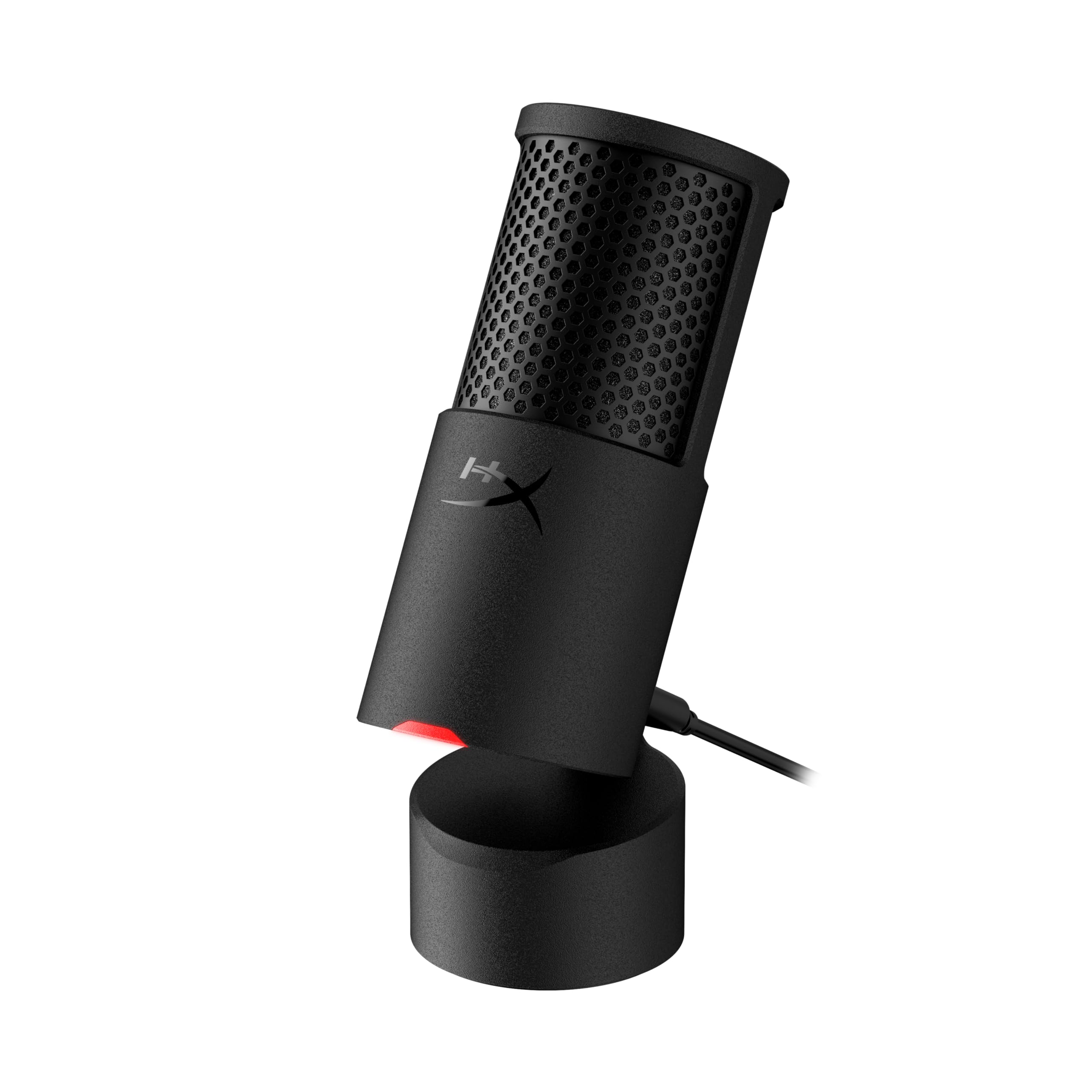
The HyperX SoloCast 2 brings studio-grade 24-bit/96kHz audio in a remarkably compact, all-in-one USB-C package. Unlike many budget condensers that require an external shock mount and pop filter, the SoloCast 2 integrates both directly into its chassis. The internal suspension system dampens vibrations from desk bumps and typing, while the foam pop filter tames plosive bursts without a bulky add-on.
The cardioid polar pattern captures your voice with natural clarity while reducing pickup from the sides and rear. Tap-to-mute with a red LED indicator gives immediate visual confirmation of mic status. The HyperX NGENUITY software provides customizable filters — high-pass, low-pass, and voice enhancement — that can be saved directly to the mic’s internal memory, so your settings travel with the device to any computer.
Users are impressed with the sound quality and the clean, uncluttered design. However, some note the mic is extremely sensitive and picks up heavy background noise in untreated rooms; the internal shock mount and pop filter are effective but not as robust as standalone versions. The low-profile stand also benefits from replacing with a boom arm for optimal positioning.
Why it’s great
- High 24-bit/96kHz resolution in a compact USB-C mic
- Integrated shock mount and pop filter simplify setup
- NGENUITY software with on-mic saved audio filters
Good to know
- High sensitivity picks up significant room noise
- USB-C port placement on lower back can disconnect with movement
- No onboard gain control knob
5. Sennheiser XS 1 Handheld Dynamic Microphone

Sennheiser brings its decades of pro-audio engineering to the budget tier with the XS 1. This is a pure handheld dynamic microphone with an XLR connector — no USB, no software, no RGB. The cardioid polar pattern is tuned for speech and vocal clarity, with a frequency response that emphasizes presence and intelligibility without excessive bass buildup. The dynamic capsule handles high sound pressure levels without distortion, making it suitable for live vocals as well.
The build quality is where the XS 1 punches above its weight. The metal enclosure feels dense and robust, and the included silent mute switch operates with a smooth, confident action that won’t create noise in your recording. The mic ships with a standard mic clip and a padded carry pouch. The 600-ohm impedance matches well with most audio interfaces and mixers without the need for an additional inline preamp.
Users consistently mention the brand trust factor and the premium feel of the construction. The audio is described as clear and natural, though some note it lacks the deeper, warmer tone of Sennheiser’s e835 series. For those who already own an audio interface and want a reliable, handheld dynamic mic for vocals, podcasting, or public speaking, the XS 1 is an unbeatable value in brand-name engineering.
Why it’s great
- Renowned Sennheiser build quality and audio tuning
- Silent mute switch for live control
- 600-ohm impedance works without extra preamps
Good to know
- Pure XLR — requires an audio interface or mixer
- Lacks the deeper low-end of Sennheiser’s e835 line
- No included stand, cable, or pop filter
6. Razer Seiren V3 Mini USB Condenser Microphone

Razer designed the Seiren V3 Mini for the gamer or streamer who needs professional vocal clarity in a footprint that barely takes up any desk space. The supercardioid pickup pattern is tighter than standard cardioid, meaning it focuses more narrowly on your mouth and rejects more side noise — a distinct advantage for suppressing keyboard clicks and mouse taps in close quarters.
The condenser capsule delivers crisp, detailed high-frequency reproduction that brings sibilance and articulation to the forefront. A built-in shock absorber in the tilting stand dampens accidental bumps, and the tap-to-mute sensor on top of the mic provides an instant, satisfying way to silence yourself between rounds or takes. The LED ring changes color to indicate mute status at a glance. Advanced controls like studio-level sample rates and separate volume mixes are accessible through Razer Synapse software.
Owners love the sleek, minimalist look and the effective tap-to-mute feature. A few users note the background noise rejection is less aggressive than they expected without software filtering, and some mention the mute sensor can occasionally require multiple taps to register. For gamers who prioritize desk space and want a condenser’s clarity with supercardioid isolation, the Seiren V3 Mini delivers.
Why it’s great
- Supercardioid pattern excels at rejecting side noise
- Ultra-compact and lightweight for tight desks
- Tap-to-mute with clear LED status indicator
Good to know
- Condenser design still picks up room echo without treatment
- No physical volume or gain controls on the mic
- Mute sensor can be inconsistent with light taps
7. MAONO PD100 XLR Dynamic Microphone

The MAONO PD100 is the pure entry-level XLR dynamic microphone, designed specifically for podcasters and voice-over artists who want to avoid USB’s inherent noise floor limitations. The dynamic capsule with its internal double-layer pop filter attenuates plosive sounds — the ‘p’ and ‘b’ bursts that cause distortion — before the signal ever reaches your interface. The frequency response of 60-14kHz is focused on the vocal range, producing a warm, mellow tone that flatters both male and female voices.
This package comes with everything a beginner needs: the metal-bodied mic, a heavy round base, a desktop stand with a 2.36-inch rod extender, and a 6.56-foot XLR cable. The included threads support both 5/8-inch and 3/8-inch standards, so mounting to any standard boom arm is straightforward. The cardioid pattern ensures you capture your voice and little else, making it effective in shared or noisy spaces.
Users praise the build quality and the clean, natural sound for spoken word. The main caution is that XLR dynamic mics require significant gain from your audio interface; some users find they need an inline preamp like a Fethead to achieve optimal levels without introducing interface noise. For the price, the PD100 provides an honest, no-frills path into XLR recording that outperforms similarly priced USB mics in noise rejection.
Why it’s great
- All-metal build with integrated pop filter
- Complete kit with stand, extender, base, and XLR cable
- Warm, noise-rejecting sound for spoken word
Good to know
- Requires an audio interface with high gain capability
- No USB output — not plug-and-play
- Lacks the airy top-end of a condenser microphone
FAQ
Can a cheap recording microphone sound as good as an expensive one?
Do I need an audio interface for a dynamic microphone?
Why do dynamic microphones sound muffled compared to condensers?
What is the most important spec for a cheap recording microphone?
Final Thoughts: The Verdict
For most users, the best cheap recording microphone winner is the FIFINE AmpliGame KS5 because it bundles a quality dynamic XLR mic with a dedicated audio mixer, giving you full hardware control over your sound from day one. If you want a compact USB condenser that requires zero setup and delivers studio-grade 24-bit/96kHz clarity, grab the HyperX SoloCast 2. And for a pure, road-ready XLR handheld dynamic from a legendary brand, nothing beats the Sennheiser XS 1.

Mo Maruf
I created WellFizz to bridge the gap between vague wellness advice and actionable solutions. My mission is simple: to decode the research and give you practical tools you can actually use.
Beyond the data, I am a passionate traveler. I believe that stepping away from the screen to explore new environments is essential for mental clarity and physical vitality.