Finding a reliable power source for your flashlights, security cameras, or smart home sensors often means buying disposable batteries over and over. Switching to rechargeable CR123 cells eliminates that recurring expense and the constant waste, but the market is flooded with options that differ wildly in capacity, voltage stability, and cycle life.
I’m Mohammad Maruf — the founder and writer behind WellFizz. I’ve spent hundreds of hours analyzing battery specifications, customer longevity reports, and real-world performance data to separate the honest performers from the overstated claims in this narrow category.
Whether you’re powering an Arlo security system or a high-drain tactical light, this guide covers the absolute best cr123 rechargeable batteries that deliver consistent voltage, safe charging, and long-term value.
How To Choose The Best CR123 Rechargeable Batteries
Selecting the right rechargeable CR123 cell goes beyond just looking at milliamp-hour (mAh) numbers. You need to match the battery chemistry, voltage, and protection circuitry to your device’s requirements. A mismatch can lead to poor performance or even damage your gear.
Chemistry: Li-ion vs. NiMH
Most rechargeable CR123 cells are lithium-ion (Li-ion) with a nominal voltage of 3.7V, compared to the 3.0V of a standard disposable. Some devices, especially precision electronics like cameras, may run hot or shut down on 3.7V, while high-drain flashlights thrive on the extra voltage. NiMH rechargeable CR123s are rarer but deliver a more stable 3.0V output, making them a drop-in replacement for disposables without voltage concerns. Always check your device’s voltage tolerance before buying.
Capacity and Cycle Life
Capacity in CR123 rechargeable cells typically ranges from 600mAh to 1600mAh. Higher mAh numbers mean longer runtime between charges. Cycle life — the number of times a battery can be recharged before its capacity drops significantly — is equally important. Quality Li-ion cells offer 500 to 1500 cycles. A cheap battery with a high mAh claim but low cycle life will cost more per use over a year than a mid-range option with double the cycles.
Built-In Protection and Charger Compatibility
Lithium-ion cells require protection circuits to prevent overcharging, over-discharging, and short circuits. Look for cells with built-in PCB (protection circuit board) and a charger that includes automatic shutoff and individual channel monitoring. Using an unprotected cell in a multi-battery device or a charger without proper termination creates a safety risk.
Quick Comparison
On smaller screens, swipe sideways to see the full table.
| Model | Category | Best For | Key Spec | Amazon |
|---|---|---|---|---|
| FARSAIL 4-Pack with Charger | Li-ion Kit | Arlo cameras & high-drain devices | 800mAh, 600 cycles, 1.5hr charge | Amazon |
| NERMAK 3.7V 3200mAh USB | Li-ion USB-C | Flashlights & Bluetooth speakers | 3200mAh, built-in USB-C, 2-pack | Amazon |
| Soshine RCR123A Charger | Charger Only | Frequent battery rotation, travelers | 2-slot, Type-C, 3.6V cut-off | Amazon |
| BONAI 16-Pack CR123A | Non-Rechargeable | Emergency kits & backup storage | 1500mAh, 10-year shelf life | Amazon |
| EBL 12-Pack CR123A | Non-Rechargeable | Budget bulk for sensors & alarms | 1600mAh, 10-year shelf life | Amazon |
In‑Depth Reviews
1. FARSAIL 4-Pack Rechargeable 123A with Smart LCD Charger

The FARSAIL kit delivers the most complete solution for anyone regularly cycling through CR123 batteries. Each Li-ion cell delivers a consistent 3.7V output and 800mAh capacity, which translates to one to two months of runtime in compatible Arlo security cameras. The included smart LCD charger provides individual channel monitoring and charges four batteries simultaneously in about 1.5 hours at 2A — significantly faster than most universal chargers.
The 600-cycle rating means each battery replaces roughly 600 disposable cells, creating substantial long-term savings. The charger features overcharge, over-current, and short-circuit protection, with an automatic shutoff that prevents trickle-charging damage. Users consistently report solid compatibility with VMS3130, VMC3030, VMK3200, and other Arlo HD camera models, along with high-drain flashlights.
The only downsides are the micro USB input on the charger — which feels dated compared to USB-C — and a slightly shorter per-charge runtime than high-capacity disposable CR123s. If your device can handle the 3.7V input, this kit is the most practical rechargeable investment for frequent users.
Why it’s great
- Complete kit with charger and 4 cells
- Fast 1.5-hour charge time at 2A
- 600-cycle lifespan for long-term savings
- Individual LCD channel monitoring
Good to know
- Charger uses micro USB, not USB-C
- 800mAh capacity lower than some competitors
- Not compatible with older 3V-only devices
2. NERMAK 3.7V 3200mAh USB Rechargeable Lithium Ion (2-Pack)
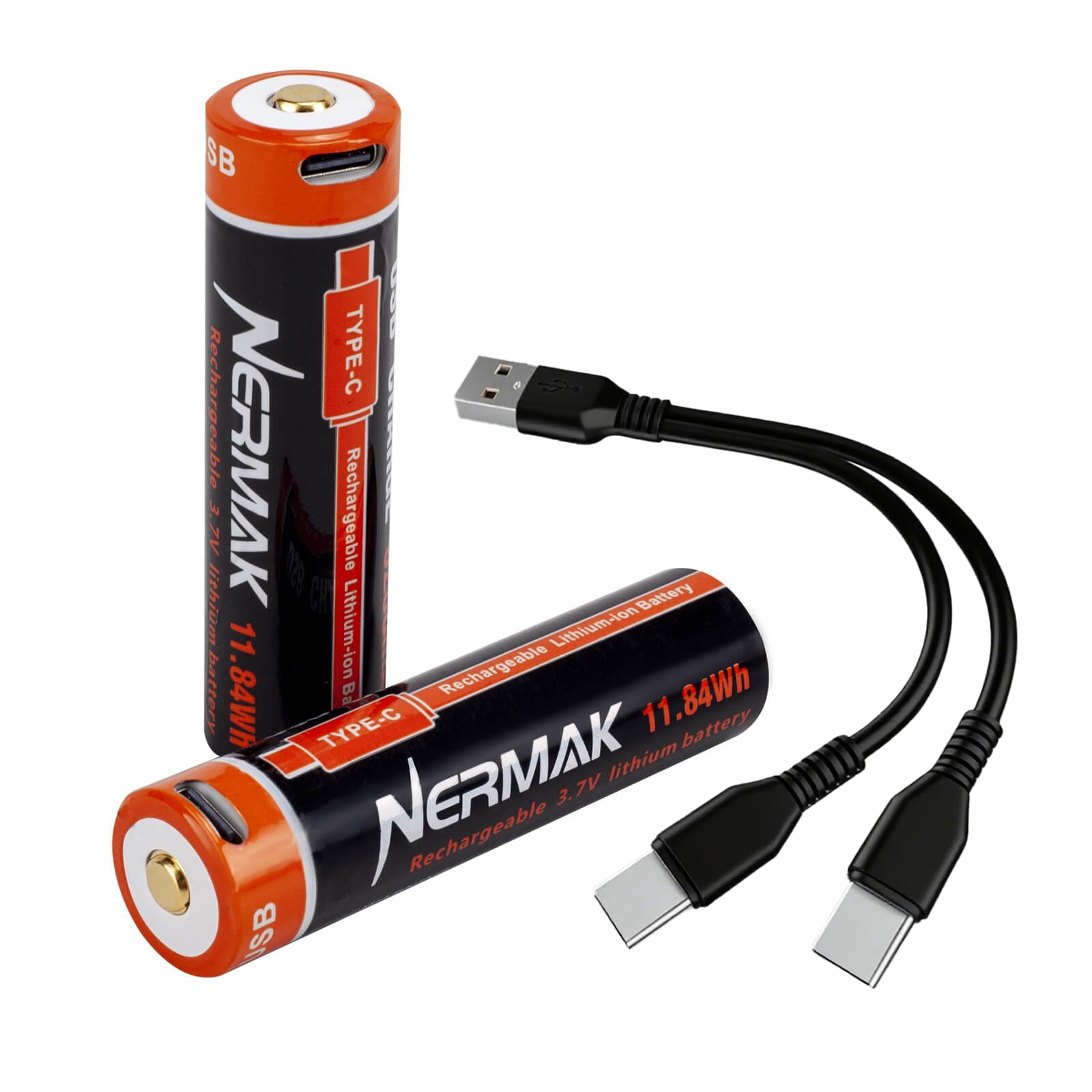
The NERMAK cells stand out because they integrate a USB-C port directly into the battery body, eliminating the need for a separate battery charger. With a claimed 3200mAh capacity — roughly four times that of a standard CR123 rechargeable — these cells provide extended runtime for flashlights, headlamps, and Bluetooth speakers. The built-in USB-C port supports C-C output, meaning you can even use the battery as an emergency power bank for your phone.
The included 2-in-1 USB cable and 1500+ charge cycle rating position these as a high-endurance option for users who want to eliminate extra accessories. The safety protections cover overcharging, over-discharging, over-current, and short circuits. The physical size is longer than a standard button-top 18650, measuring 70mm instead of 65mm, which prevents fitting into devices with tight battery compartments or flat-top-specific chargers.
Customer feedback reveals mixed long-term reliability, with some units failing after several months. The inability to charge these in a standard external charger and the incompatible length for some hosts means this pick is best reserved for devices with generous battery tubes and users comfortable with direct USB charging.
Why it’s great
- No external charger needed — USB-C built in
- Very high 3200mAh capacity
- Can serve as emergency phone power bank
- 1500+ charge cycles claimed
Good to know
- 70mm length may not fit standard devices
- Some units have reported early failure
- Cannot be charged in most standard Li-ion chargers
3. Soshine RCR123A Battery Charger for RCR123 16340 CR2
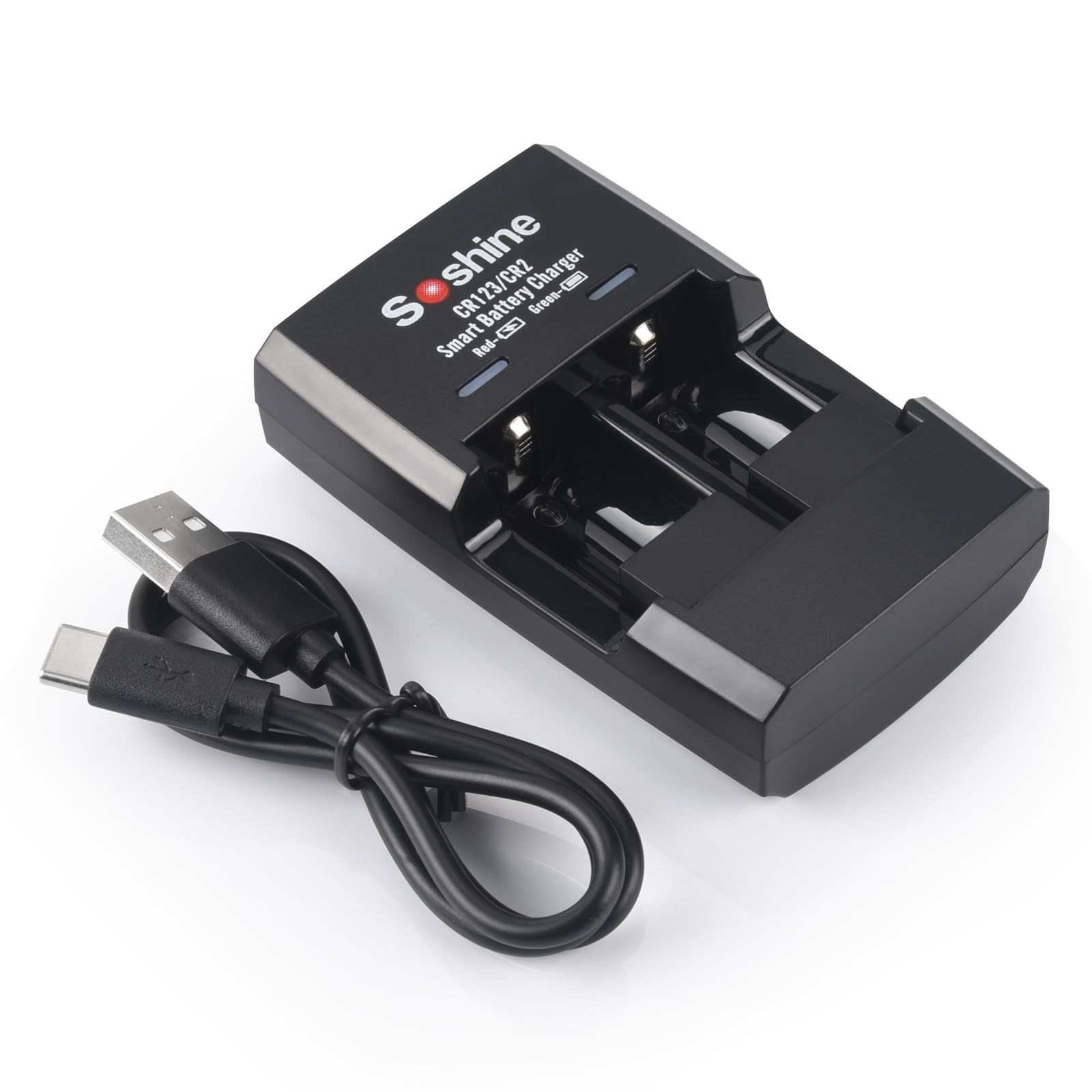
If you already own a set of RCR123A or 16340 cells and need a dedicated charger, the Soshine unit delivers focused performance in a compact package. The adjustable slot design accommodates multiple sizes including CR2, 15270, and 3V LiFePO4 batteries, making it versatile for users managing different cell types. The Type-C input provides modern convenience and easy travel compatibility.
The safety suite includes short-circuit protection, over-voltage cut-off at 3.65V, and reverse polarity protection — essential features for unattended charging of lithium cells. The independent charging channels allow you to charge one or two batteries at different states of discharge without cross-channel interference. The red-to-green LED indicator provides clear charging status at a glance.
The 300mA current rating is on the lower side, meaning a full charge cycle takes longer than a 1A or 2A charger. Some users reported unit failure after several months, though the majority find it reliable for periodic use. If you value portability and multi-chemistry support over raw charging speed, this is a solid mid-range option.
Why it’s great
- Compact and travel-friendly with Type-C input
- Independent dual slots for flexible charging
- Safety protections: short-circuit, over-voltage, reverse polarity
- Compatible with multiple cell types
Good to know
- Low 300mA charge current means slow charging
- Some units have failed after a few months
- Only 2 slots, not suited for heavy multi-battery users
4. BONAI CR123A 3V Lithium Battery 1500mAh (16-Pack)
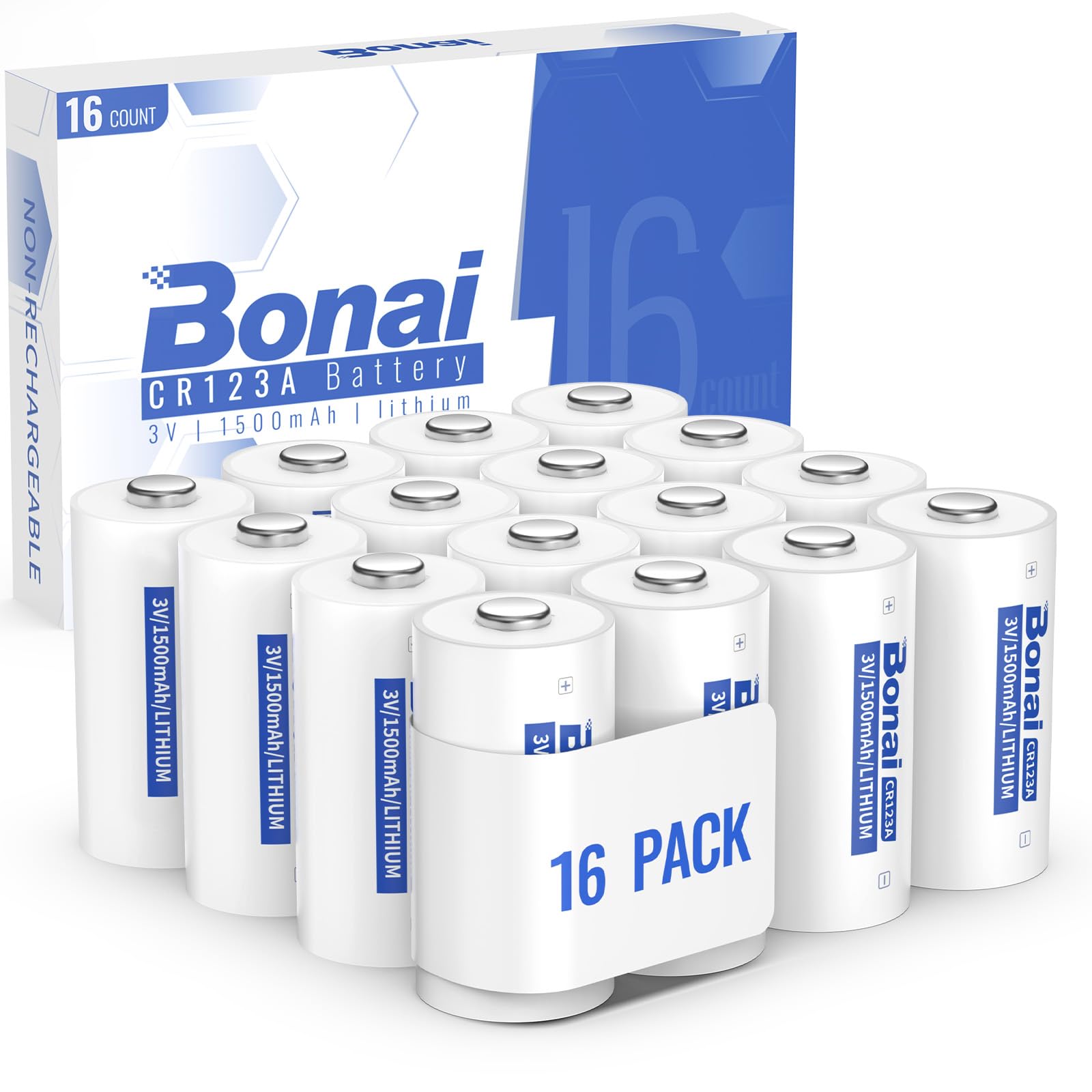
The BONAI 16-pack is a premium disposable lithium option, not a rechargeable cell. It earns its spot in this guide because many users pairing rechargeable kits still need a reliable backup supply for emergency kits, outdoor gear, or devices where voltage drop from rechargeables causes performance issues. Each cell delivers 1500mAh at a stable 3V, matching the exact voltage of standard CR123 devices without any compatibility concerns.
The 10-year shelf life makes this pack an ideal reserve for smoke detectors, motion sensors, and flashlights stored in vehicles or emergency bags. The UL and RoHS certifications, combined with PTC protection against short circuits and leaks, provide the same safety confidence as top-tier brands at a lower per-cell cost. The wide operating temperature range of -40°F to 140°F ensures reliable function in extreme conditions.
The main limitation is that these are single-use only — they cannot be recharged and are not recommended for Arlo security cameras by the manufacturer. For users who need a high-volume disposable supply for low-drain sensors or a long-term emergency stash, the BONAI pack offers excellent value and certified safety.
Why it’s great
- 16-pack provides generous supply for emergency kits
- 10-year shelf life for long-term storage
- UL and RoHS certified with PTC protection
- Stable 3V output for voltage-sensitive devices
Good to know
- Non-rechargeable — single use only
- Not recommended for Arlo security cameras
- Per-cell cost higher than rechargeable over time
5. EBL 12 Count CR123A 3V Lithium Battery 1600mAh
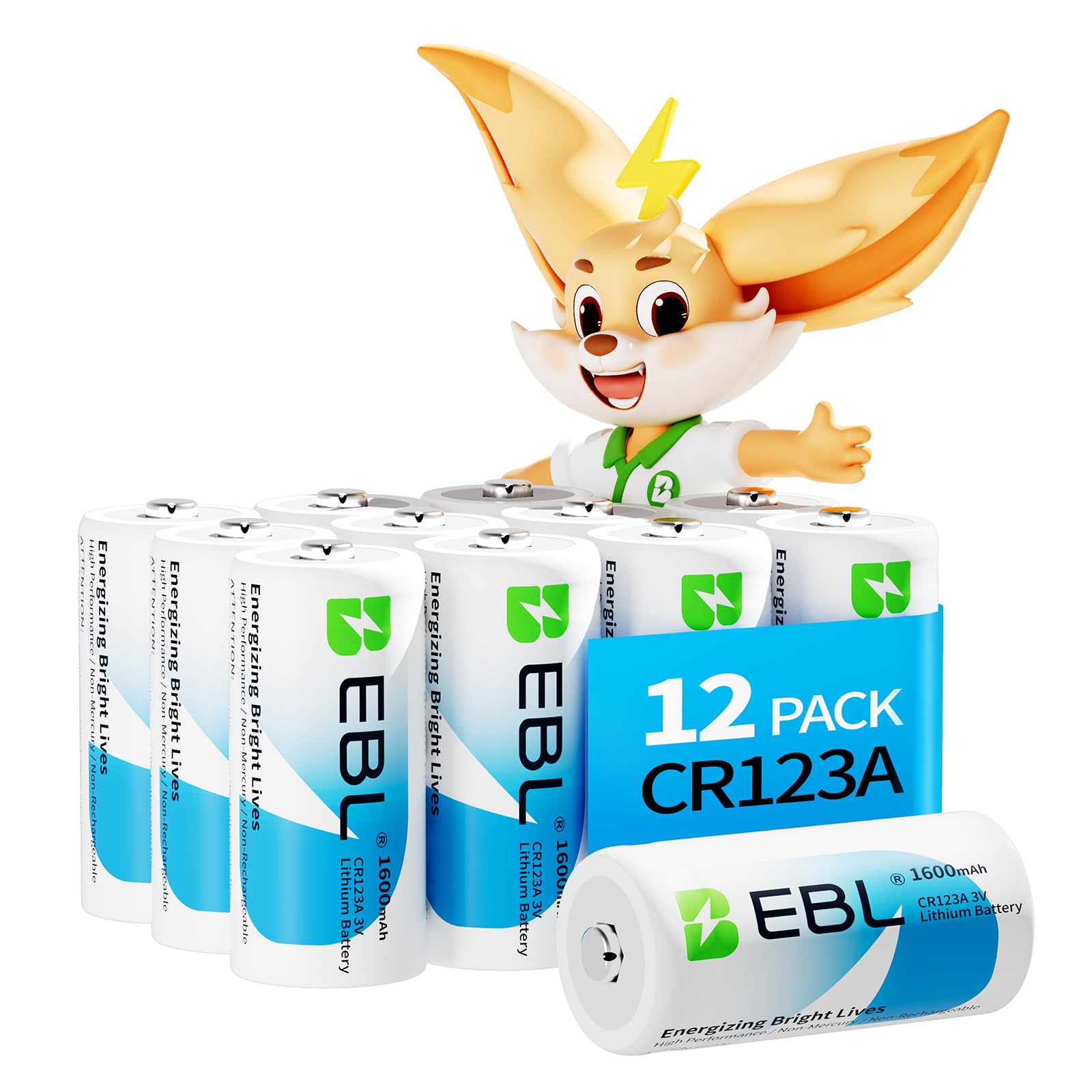
The EBL 12-pack is a straightforward disposable lithium CR123A option aimed at users who need a large quantity at the lowest per-unit cost. Each cell provides 1600mAh capacity at 3V, with a 10-year shelf life and a wide operating temperature range from -40°F to 158°F. The leak-proof construction and PTC safety technology provide basic protection for use in alarms, sensors, and flashlights.
Customer reports are mixed, with several users noting rapid self-discharge when installed in ADT window and door sensors. Some reported that all 12 batteries drained within two months of installation in new sensors, suggesting potential quality inconsistency between batches. The brightness and voltage output complaints from flashlight users further indicate that actual performance may not match the claimed 1600mAh spec.
Given the inconsistency in real-world reports and the fact that these are non-rechargeable, this pack is best suited as an ultra-budget emergency backup where frequent replacement is acceptable. For critical security systems or high-drain devices, the reliability concerns make a rechargeable kit or a more premium disposable a safer investment.
Why it’s great
- Low per-unit cost for bulk buyers
- 10-year shelf life for long-term storage
- Broad device compatibility
- Extreme temperature range tolerance
Good to know
- Reports of rapid drain in security sensors
- Inconsistent brightness output concerns
- Non-rechargeable adds recurring waste and cost
FAQ
Can I use a 3.7V rechargeable CR123 in a device designed for 3V disposables?
What does the protection circuit on a CR123 rechargeable do?
Why do some CR123 rechargeable batteries self-discharge faster than others?
Final Thoughts: The Verdict
For most users, the cr123 rechargeable batteries winner is the FARSAIL 4-Pack with Smart LCD Charger because it delivers a complete, safe, and fast-charging kit with 600-cycle cells that pay for themselves quickly in high-drain devices. If you want built-in USB charging and the highest capacity, grab the NERMAK 3200mAh USB-C pack — just confirm it fits your device’s battery tube. And for emergency backup or low-drain sensors where rechargeables aren’t practical, the BONAI 16-pack offers certified safety and a decade of shelf life at a very fair cost.

Mo Maruf
I created WellFizz to bridge the gap between vague wellness advice and actionable solutions. My mission is simple: to decode the research and give you practical tools you can actually use.
Beyond the data, I am a passionate traveler. I believe that stepping away from the screen to explore new environments is essential for mental clarity and physical vitality.