Workstation CPUs live in a different world than their gaming cousins — they spend their days under sustained multi-threaded loads that can expose voltage flaws, thermal limits, and memory controller weaknesses that never surface in a benchmark. Whether you are compiling code, rendering 3D assets, or running virtual machines for a homelab, the processor you choose dictates how many minutes — or hours — you wait for a task to finish.
I’m Mohammad Maruf — the founder and writer behind WellFizz. For this guide I’ve lined up nine workstation-class processors across AMD and Intel, analyzed hundreds of verified buyer experiences, cross-referenced real-world build logs, and broken down the specific platform trade-offs that define a smart workstation purchase.
If you are building a productivity rig that must handle sustained all-core work without stability hiccups, this is the best cpu for workstation buying guide you need before you spend a single dollar on silicon.
How To Choose The Best CPU For Workstation
Workstation buyers often fixate on clock speed, but sustained all-core throughput depends on three pillars: the number of physical cores, the size and layout of the cache, and the memory channel configuration. A 6-core CPU that boosts to 5.6 GHz will still bottleneck on a 40-million-polygon 3D scene if the L3 cache runs dry or the memory bandwidth caps out. Start by matching core count to your worst-case workload, then check the platform support for ECC memory and the number of PCIe lanes you need for GPUs, NVMe drives, and capture cards.
Core count vs. clock speed
Video encoding, software compilation, and scientific simulation scale almost linearly with core count. A 16-core processor at 4.0 GHz all-core will finish a Blender render faster than an 8-core processor at 5.5 GHz because the work splits across all threads. Reserve very high clock speeds for tasks like CAD wireframe manipulation or lightroom preview generation where single-thread latency dominates. Most workstation builders prioritize 12 cores as a baseline and move up to 24 or 32 cores for heavy rendering or virtualization.
Cache, memory channels, and PCIe lanes
L3 cache reduces the penalty when the CPU has to fetch data from RAM — a 96 MB or 152 MB cache can keep frequently accessed geometry data local, speeding up iterative saves in modeling software. Quad-channel DDR5 memory (Threadripper PRO) doubles the bandwidth of dual-channel consumer platforms, which matters when you are scrubbing 8K timelines or training AI models. PCIe lane count determines how many x16 graphics cards and fast NVMe SSDs you can run simultaneously. The Threadripper platform provides 80 usable lanes, whereas AM5 and LGA1700 top out around 20-28 lanes once the chipset subtracts its overhead.
Platform maturity and stability
Workstation motherboards from brands like ASUS (Pro WS series) add features like IPMI remote management, multi-GPU clearance, and reinforced VRM cooling that consumer boards lack. ECC R-DIMM support — critical for data integrity during long renders — is available on WRX80 and sTR5 platforms but absent on most consumer sockets. Check whether the chipset has known voltage or degradation issues; recent Intel generations had documented instability problems under sustained load that required microcode patches, making AMD platforms the safer bet for mission-critical builds.
Quick Comparison
On smaller screens, swipe sideways to see the full table.
| Model | Category | Best For | Key Spec | Amazon |
|---|---|---|---|---|
| AMD Threadripper 7960X | HEDT Workstation | 24-core rendering & VM host | 152 MB L3 cache / 80 PCIe lanes | Amazon |
| Intel Core Ultra 9 285K | Performance Hybrid | CAD/SolidWorks stability | 24 cores / 5.7 GHz boost / 40 MB | Amazon |
| Intel Core i9-14900K | Consumer Flagship | Multi-purpose / homelab | 24 cores / 6.0 GHz boost / 36 MB | Amazon |
| AMD Ryzen 9 7900X | High-End Consumer | Photo/video editing + gaming | 12 cores / 5.6 GHz / 76 MB total | Amazon |
| AMD Ryzen 7 9800X3D | Gaming-First | Light workstation + max FPS | 8 cores / 104 MB cache / Zen5 | Amazon |
| AMD Ryzen 9 5900XT | AM4 Value | Budget multi-core / home server | 16 cores / 72 MB / 130W TDP | Amazon |
| PCSP P520 (Xeon W-2135) | Renewed Workstation | Lab / NAS / budget render node | 6 cores / 3.7 GHz / 8.25 MB | Amazon |
| ASUS WRX80E-SAGE (mobo) | Server-Grade Platform | Threadripper PRO / IPMI build | 7x PCIe 4.0 x16 / dual 10GbE | Amazon |
| ASUS TRX50-SAGE (mobo) | HEDT Platform | Threadripper 7000 / multi-GPU | 36 power stages / 3x PCIe 5.0 x16 | Amazon |
In‑Depth Reviews
1. AMD Ryzen Threadripper 7960X

The Threadripper 7960X sits right at the sweet spot of the HEDT lineup — 24 Zen 4 cores with 48 threads, a 152 MB cache, and quad-channel DDR5 RDIMM support up to 1 TB. The 80 usable PCIe lanes mean you can populate three double-wide GPUs and several NVMe drives without lane sharing, which is exactly what a rendering node or AI training box needs.
Verified buyers report sustained all-core temps between 67-75°C under a custom water loop, with no throttling during hours-long compile jobs. The platform requires an sTR5 motherboard and a serious cooler — the 350 W TDP is no joke and EXPO memory profiles may trigger an overclocking fuse warning, though AMD claims it does not void the warranty.
For mixed workloads that demand both high core throughput and platform expandability, this processor delivers performance that puts compile times from minutes down to seconds compared to an 8-core consumer chip. It is not ideal for gaming alone, but if you know why you need 24 threads, this is the anchor CPU for a premium workstation.
Why it’s great
- 80 usable PCIe 5.0 lanes for multi-GPU setups
- Quad-channel DDR5 RDIMM up to 1 TB
- Sustained all-core loads at 67-75°C with appropriate cooling
Good to know
- 350 W TDP requires a robust cooling solution (custom loop or high-end AIO)
- EXPO memory overclocking may trip an OCP fuse (warranty implications unclear)
- No integrated graphics; a discrete GPU is mandatory
2. Intel Core Ultra 9 285K

Intel’s Arrow Lake architecture brings a thermal profile that engineers find more predictable than the previous 13th/14th-gen Raptor Lake parts. The 8 P-cores hit 5.7 GHz while the 16 E-cores handle background threading, and the integrated graphics provide a display output for troubleshooting without a GPU — a convenience for workstation builds that ship headless initially.
Buyers using SolidWorks and other CAD tools report stable 24-hour burn-in runs at 73-78°C under a 360 mm AIO, drawing around 205 W. The LGA 1851 socket requires an Intel 800-series motherboard, and the platform supports CUDIMM memory for higher-speed DDR5 stability. This generation avoided the voltage degradation issues that plagued earlier Intel hardware.
For a professional CAD workstation that needs reliability under constant load without the platform cost of Threadripper, the Core Ultra 9 285K strikes the right balance. The memory controller handles four DIMMs at 4000 MHz without issues, and the 40 MB L2/L3 cache keeps model data local during complex assemblies.
Why it’s great
- Improved thermal stability vs. previous Intel generations
- Integrated graphics for headless builds and diagnostics
- Stable memory controller supports 4x DDR5 at high speeds
Good to know
- Requires LGA 1851 motherboard (no backward compatibility with LGA 1700)
- Peaks at ~250 W under full turbo — needs a robust cooler
- 24 threads (not 32) due to no hyperthreading on E-cores
3. Intel Core i9-14900K
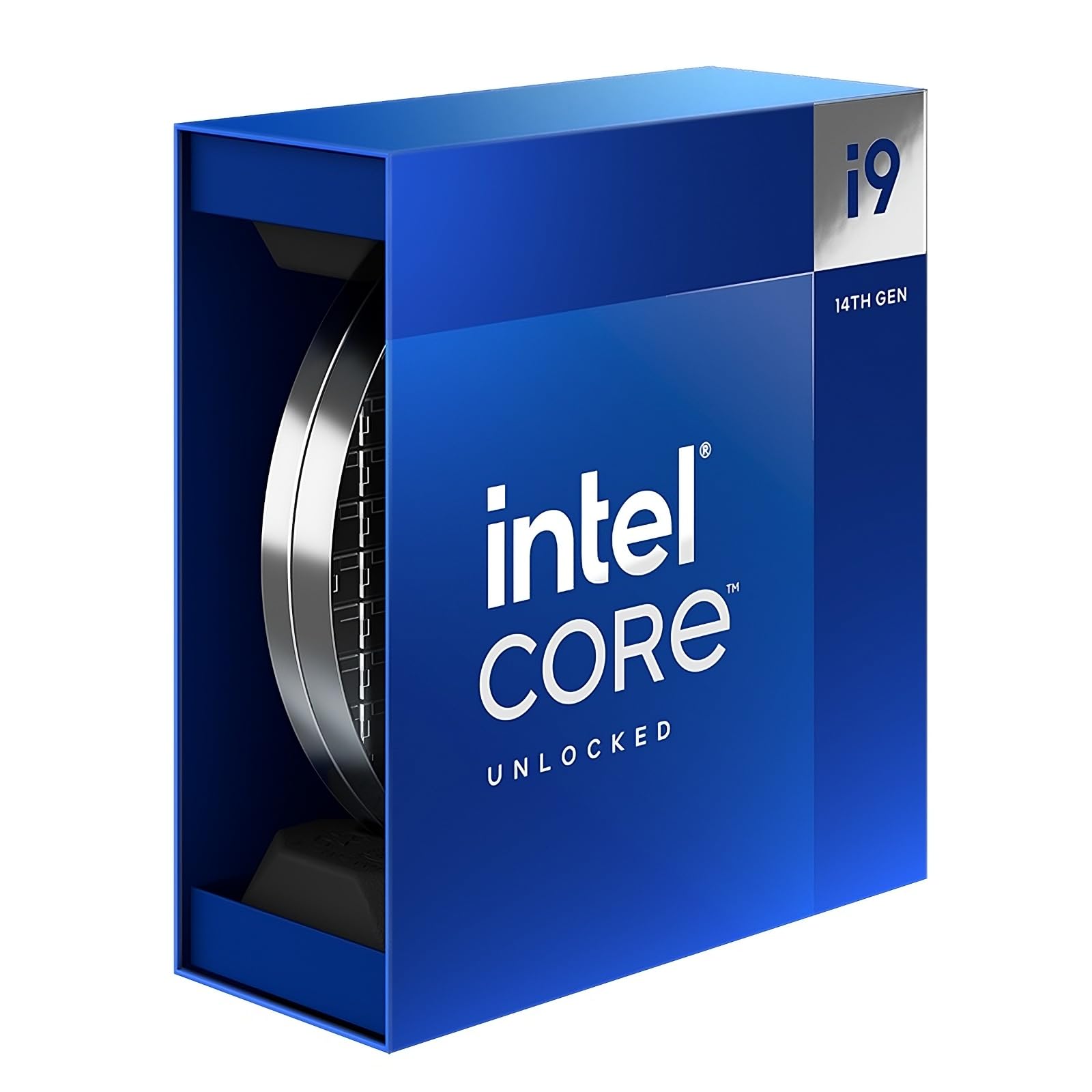
The 14900K is the peak of Raptor Lake Refresh: 8 P-cores hitting 6.0 GHz paired with 16 E-cores for 24 cores and 32 threads total. This CPU runs Proxmox nodes, compilation servers, and streaming rigs equally well — one verified user runs four of them in homelab nodes that stay on 24/7 except for a 3-hour maintenance window.
The trade-off comes from the platform’s documented instability under sustained voltage. Several buyers report ring collapse and memory controller failures after 2-3 months, even at conservative voltages around 1.25 V. Intel eventually issued microcode patches to address the degradation issue, but the experience leaves some builders wary. A 360 mm AIO or high-end air cooler is mandatory to keep all-core loads under throttling temps.
If you want a do-everything desktop for a homelab that also plays games, the 14900K offers the highest single-core frequency of any CPU on this list. Just pair it with a motherboard known for stable voltage delivery — some boards from Asus and Gigabyte avoid the crashes that plague other models.
Why it’s great
- Highest single-core boost at 6.0 GHz
- Compatible with LGA 1700 motherboards (broadest platform choice)
- Handles virtualization, streaming, and gaming without compromise
Good to know
- Documented voltage degradation issues — needs a stable motherboard and potential microcode updates
- Runs very hot under sustained all-core load; requires top-tier cooling
- Intel RMA process can be costly and time-consuming if failure occurs
4. AMD Ryzen 9 7900X

The 7900X delivers 12 Zen 4 cores on the AM5 platform with a 5.6 GHz boost clock, 76 MB of total cache, and an integrated RDNA 2 graphics controller. This makes it a strong choice for video editors and photographers who need GPU acceleration for previews without a dedicated card. Buyers running DaVinci Resolve and Lightroom report smooth timeline scrubbing even before a discrete GPU is installed.
Thermal behavior is notable — the 7900X runs hot out of the box, reaching the 95°C thermal limit under all-core load even with a 360 mm AIO. Many users underclock to 4.6 GHz to keep temps under 60°C when not pushing high-thread workloads. The AM5 socket supports DDR5 and PCIe 5.0, and the platform is compatible with Windows and Linux without driver issues.
For a workstation that needs a balance of multi-core performance, integrated graphics, and a reasonable platform cost, the 7900X hits a sweet spot. It handles photo editing, 3D modeling, and moderate gaming equally well, and the 12-core layout keeps productivity tasks moving without the premium of a Threadripper.
Why it’s great
- 12 cores with 5.6 GHz boost on the AM5 platform
- Integrated RDNA 2 graphics for GPU-accelerated preview
- Excellent value for video/photo editing workloads
Good to know
- Hits ~95°C under full load — requires a high-end cooler
- Many users underclock to reduce fan noise and temps
- Not as strong in pure gaming as X3D variants
5. AMD Ryzen 7 9800X3D
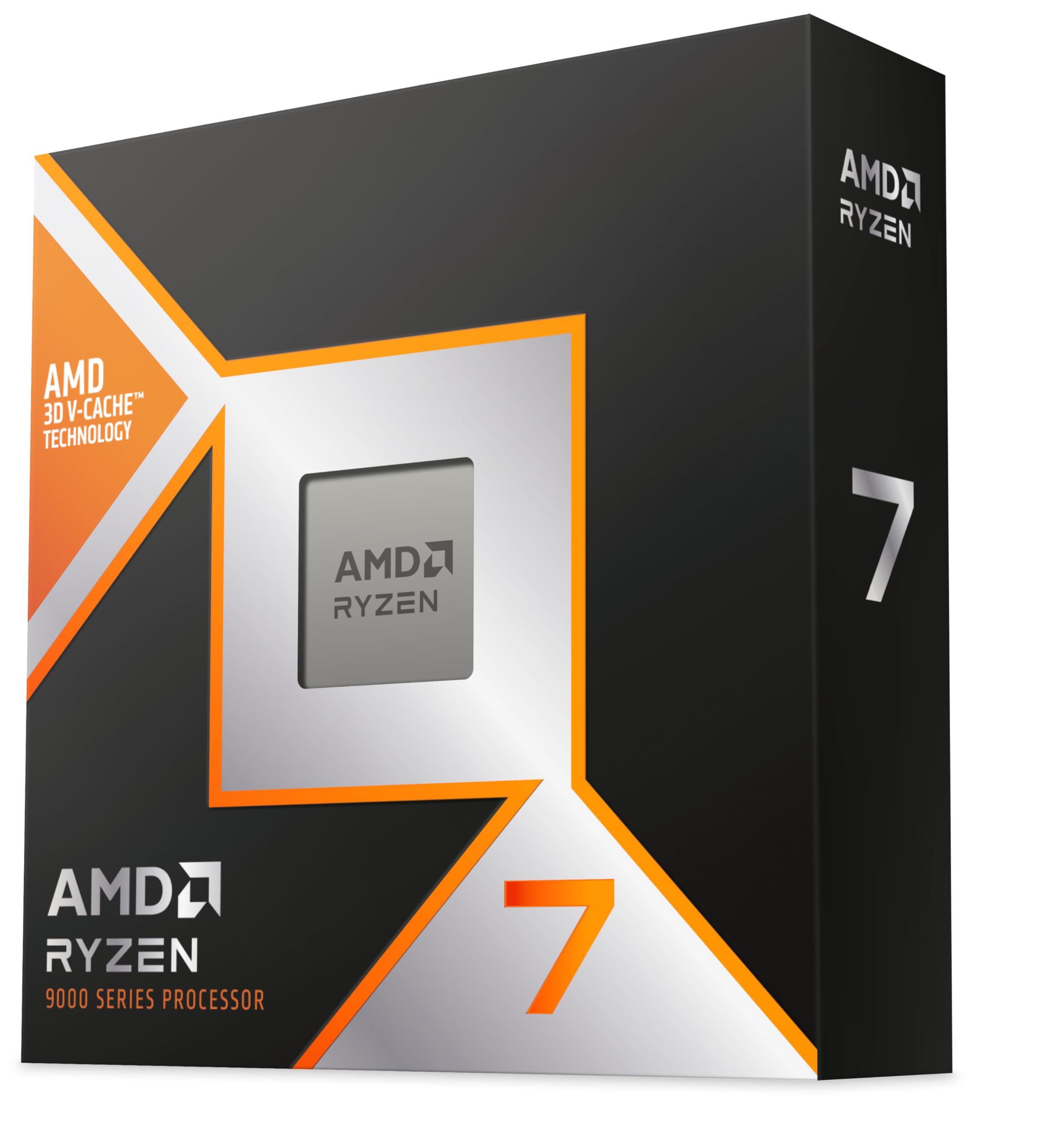
The 9800X3D packs 104 MB of L3 cache thanks to second-generation 3D V-Cache on the Zen 5 architecture. While 8 cores is light for heavy rendering, the massive cache eliminates RAM latency bottlenecks in gaming and simulation software that benefits from data locality — engineering simulation and scientific computing often see outsized gains.
Buyers report excellent thermals even with modest air coolers — idle around 40°C and peak under 80°C with the bundled (not included) cooler. The AM5 platform drop-in compatibility means you can upgrade from a cheaper AM5 chip without changing the motherboard. Productivity tasks run smoothly, though a 12- or 16-core chip will finish render jobs faster.
If your workstation is split between game development, light modeling, and high-FPS gaming, the 9800X3D offers the best gaming performance on the consumer market while still handling compile tasks. It is not a Threadripper replacement, but for a single-rig that does both, it is the smartest pick.
Why it’s great
- 104 MB L3 cache dramatically reduces memory latency
- Excellent gaming performance combined with capable productivity
- Good thermals — runs cool even with mid-range coolers
Good to know
- 8 cores limit sustained multi-threaded workstation performance
- No integrated graphics
- Premium price for the 3D V-Cache technology
6. AMD Ryzen 9 5900XT
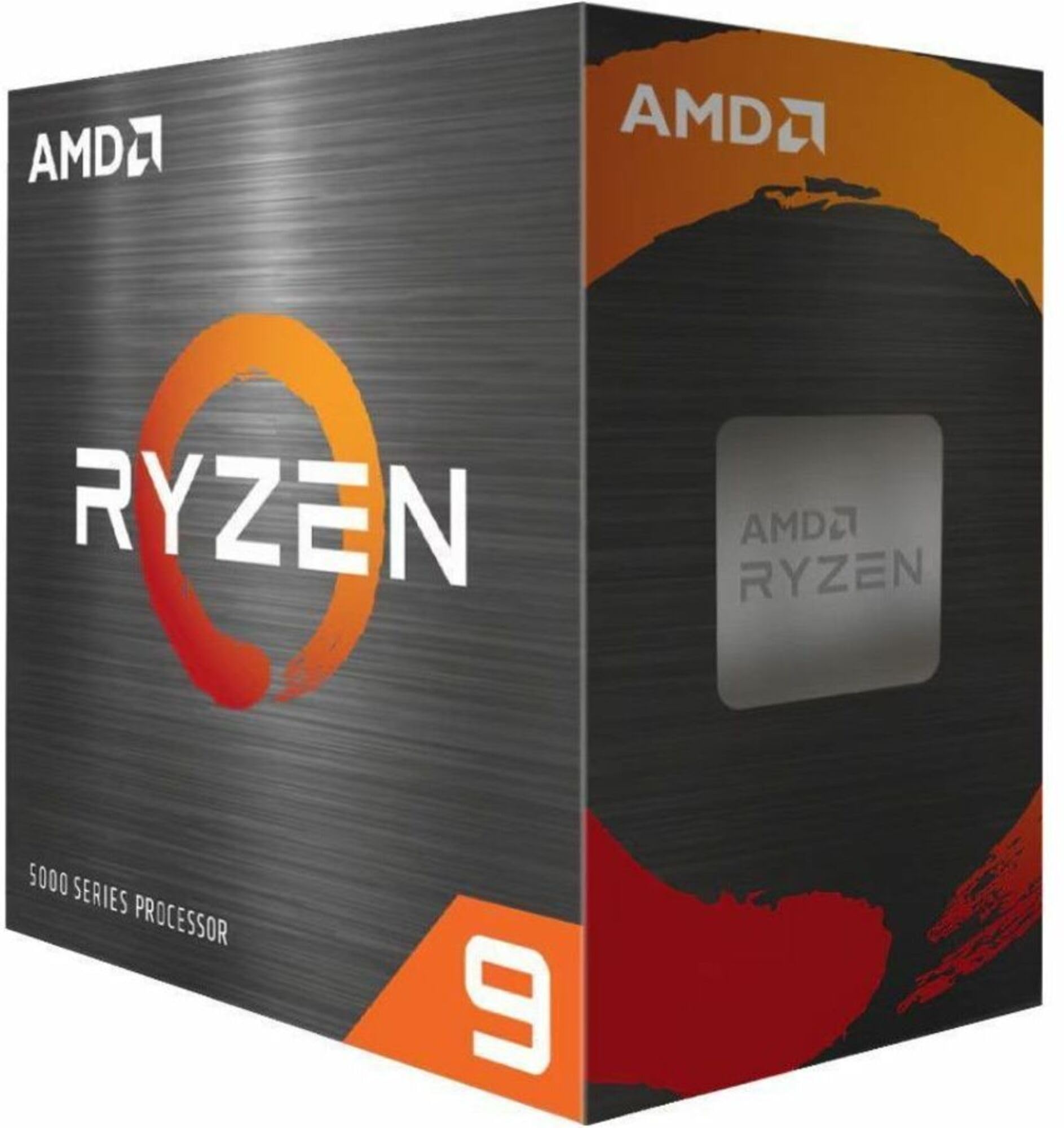
The 5900XT brings 16 Zen 3 cores and 32 threads to the AM4 platform for a price that undercuts any current-gen 16-core part. With a 130 W TDP, it runs cooler than the 5950X and delivers better multi-threaded performance due to less thermal throttling. Buyers use it for transcoding, compression, and as a home server CPU where the high core count makes a difference.
Single-core boost is rated at 4.8 GHz, but real-world all-core boost settles around 4.1 GHz with SSE workloads and lower with AVX2. Gaming performance is adequate, though the split CCD design can cause latency issues — some users disable the second CCX for best results. The AM4 platform keeps existing DDR4 builds viable.
For a budget-minded workstation builder who wants 16 cores without upgrading to DDR5, the 5900XT is the cheapest path to high thread counts. Pair it with a 360 mm AIO and a B550 or X570 motherboard for a reliable render or transcoding node.
Why it’s great
- 16 cores at a budget-friendly price point
- Lower power draw and better thermals than the 5950X
- Keeps DDR4 AM4 platform relevant for cost-effective upgrades
Good to know
- All-core boost is lower than rated peak — expect 4.1 GHz average
- Gaming performance limited by split CCD latency
- Requires an aftermarket cooler — not included
7. PCSP P520 (Intel Xeon W-2135)

This is a pre-built Lenovo P520 tower equipped with a Xeon W-2135 — a 6-core, 12-thread Skylake-W processor at 3.7 GHz base. The unit comes with 32 GB DDR4, a 900W 80 Plus Platinum power supply, and no GPU, storage, or OS — it is a bare-bones workstation base for users who supply their own components. The 2x M.2 NVMe slots and 2x 3.5″ bays provide storage flexibility.
Verified buyers praise the clean condition and robust packaging for a refurbished unit, though note that the machine requires a GPU (no onboard video) and original power cables may lack connectors for modern video cards. The screw-less modular chassis makes swapping components easy. The platform supports up to 8 RAM slots and dual PCIe x16 slots.
This is an entry-level option for homelab users running Linux or Windows who need a cheap, expandable base for light virtualization or file serving. The 6-core Xeon will not compete with modern 16-core chips, but the 900W platinum PSU and LGA 2066 platform offer upgrade potential.
Why it’s great
- Excellent value for a pre-built expandable workstation base
- 900W 80+ Platinum PSU leaves headroom for upgrades
- Modular, tool-less chassis makes component swaps easy
Good to know
- 6-core Xeon is outdated for modern multi-threaded workloads
- No GPU, storage, or OS included — requires full build-out
- Cooling fans are audible under load
8. ASUS Pro WS WRX80E-SAGE SE WiFi II (Motherboard)

This E-ATX motherboard supports AMD Ryzen Threadripper PRO 3000/5000 series processors on the WRX80 chipset. It provides 7 PCIe 4.0 x16 slots, dual 10Gb Intel Ethernet, WiFi 6E, and ASUS IPMI remote management via an ASMB9-iKVM BMC. The 16 power stages handle the high core-count Threadripper PRO chips with 280W+ TDPs.
Buyers note the board is very large and heavy — not all cases fit it, and the PCIe slots are tightly spaced so only five of the seven x16 slots are realistically usable with double-wide GPUs. Several users report early DOA units, but replacements are generally handled well. The platform supports up to 2 TB of 8-channel DDR4 ECC R-DIMM memory.
If you are building a Threadripper PRO workstation and need IPMI out-of-band management, dual 10Gb networking, and maximum PCIe expansion for AI/ML training rigs, this board is the go-to choice. It is expensive, but the feature set justifies the cost for production environments.
Why it’s great
- Seven PCIe 4.0 x16 slots for multi-GPU builds
- Dual 10Gb Ethernet and WiFi 6E built-in
- IPMI remote management for server-grade remote administration
Good to know
- Very heavy E-ATX form factor limits case compatibility
- PCIe slot spacing forces trade-offs with double-wide GPUs
- Some units arrive with DOA slots — check immediately on arrival
9. ASUS Pro WS TRX50-SAGE WIFI (Motherboard)

The TRX50-SAGE is built for AMD Ryzen Threadripper 7000 series processors (both PRO and non-PRO). It features 36 power stages, three PCIe 5.0 x16 slots, WiFi 7, and a 10 Gb plus 2.5 Gb dual LAN setup. The board supports up to 1 TB of ECC R-DIMM DDR5 memory across four slots.
Buyers report excellent performance with the 7960X and 7970X chips, with one user building a SolidWorks workstation that runs stable 24/7 at 73-78°C. The platform also supports SlimSAS NVMe for high-density storage. However, some users note that the PCIe retaining clips break easily, and the lack of a backplate means heavy coolers can flex the PCB over time.
For a Threadripper 7000 build that needs PCIe 5.0 bandwidth for the fastest NVMe drives and future GPU cards, this board delivers the platform stability and connectivity that workstation builders demand. The IPMI expansion card slot adds remote management capability for enterprise deployment.
Why it’s great
- Three PCIe 5.0 x16 slots for up-to-date bandwidth
- 36 power stages with massive VRM cooling for high-TDP chips
- Dual 10Gb and 2.5Gb LAN plus WiFi 7
Good to know
- PCIe retaining clips fragile — handle with care
- No backplate — heavy coolers risk board flex
- Space between adjacent PCIe slots limits multi-GPU clearance with wide cards
FAQ
Do I need ECC memory for my workstation build?
Is a Threadripper worth it over a high-end Ryzen for a 3D modeling workstation?
Can I use a gaming CPU like the 9800X3D for workstation tasks?
How much cooler do I need for a 350W TDP workstation CPU?
What motherboard chipset supports Threadripper 7000 series processors?
Final Thoughts: The Verdict
For most users, the best cpu for workstation winner is the AMD Ryzen Threadripper 7960X because it delivers 24 cores with 152 MB cache, 80 PCIe lanes, and quad-channel DDR5 — a combination that handles rendering, compilation, simulation, and heavy multitasking without bottlenecking. If you need professional CAD stability and platform reliability, grab the Intel Core Ultra 9 285K for its predictable thermal profile and integrated graphics. And for a budget-friendly multi-core build that keeps DDR4 alive, nothing beats the AMD Ryzen 9 5900XT.

Mo Maruf
I created WellFizz to bridge the gap between vague wellness advice and actionable solutions. My mission is simple: to decode the research and give you practical tools you can actually use.
Beyond the data, I am a passionate traveler. I believe that stepping away from the screen to explore new environments is essential for mental clarity and physical vitality.