Our readers keep the lights on and my smoothie glass nicely filled. As an Amazon Associate, I earn from qualifying purchases.
A broadhead that flies true, opens on impact, and cuts a devastating wound channel is the single most critical piece of gear between you and a clean kill. Choose wrong, and you face a wounded deer, a broken arrow, and a long night of regret. The difference between a 20-yard recovery and a lost animal often comes down to blade thickness, deployment reliability, and cutting diameter — not brand hype.
I’m Mohammad Maruf — the founder and writer behind WellFizz. I’ve spent hundreds of hours analyzing broadhead mechanical specifications, customer failure reports, and terminal performance data to separate proven performers from marketing claims.
This guide breaks down the top mechanical, fixed-blade, and hybrid designs currently on the shelf so you can match your bow setup to the right head. Whether you shoot a 350fps crossbow or a 55lb compound, you need the best deer hunting broadheads for your specific arrow speed and game size.
How To Choose The Best Deer Hunting Broadheads
Selecting a broadhead isn’t about picking a brand name — it’s about matching blade deployment style, weight, and cutting diameter to your specific bow speed, draw weight, and typical shot distance. A 125-grain head that works flawlessly from a 70lb compound may fail on a 45lb recurve. Understand these three variables before swiping a card.
Fixed Blade vs Mechanical vs Hybrid
Fixed-blade broadheads offer absolute reliability — no moving parts, no deployment failure, and maximum bone-breaking capability. The trade-off is flight sensitivity: fixed blades require perfectly tuned arrows and often impact differently than field points. Mechanical broadheads fly identically to field points because blades remain tucked during flight, but they rely on impact energy to deploy — slower bows or glancing hits can fail to open the blades fully. Hybrid designs combine a fixed-blade cutting surface with one or two deployable blades, offering the best of both worlds: reliable penetration from the fixed edge plus a larger total wound channel from the mechanical blades.
Blade Thickness and Ferrule Construction
Blade thickness is measured in thousandths of an inch. A .035-inch blade will punch through shoulder bone and ribcage without curling, while .020-inch blades are lighter and cut wider channels but risk folding on heavy bone. The ferrule material — aluminum, stainless steel, or carbon steel — determines whether the head survives high-speed impacts or shears at the threads. One-piece MIM (metal injection molded) construction eliminates loose components and improves rotational balance.
Cutting Diameter and Penetration Depth
Cutting diameter directly dictates blood loss rate and wound channel size. A 2-inch mechanical creates a massive hemorrhage but requires sufficient kinetic energy to open both blades against hide and rib resistance. A 1-inch fixed blade penetrates deeper and passes through heavy bone more easily but produces a smaller blood trail. The ideal compromise for whitetail deer at typical compound-bow distances (20-40 yards) is a cutting diameter between 1.5 and 1.75 inches — large enough for visible blood trails, narrow enough for reliable pass-throughs.
Quick Comparison
On smaller screens, swipe sideways to see the full table.
| Model | Category | Best For | Key Spec | Amazon |
|---|---|---|---|---|
| G5 Megameat | Mechanical | Massive wound channels from compound bows | 2″ cutting diameter, 3 deployable blades | Amazon |
| Slick Trick Magnum | Fixed Blade | Large game, bone-breaking penetration | 125 gr, .035″ stainless blades, 2.25″ total cut | Amazon |
| Muzzy Trocar HB | Hybrid | Hybrid reliability with massive cut | 2 5/8″ total cut, 2 fixed + 2 mechanical blades | Amazon |
| RAGE Chisel Tip SC | Mechanical | Tough quartering shots, chisel tip penetration | 1.6″ cut, 0.035″ blades, shock collar retention | Amazon |
| G5 Montec CS | Fixed Blade | Low-poundage bows, deep penetration | 1 1/16″ cut, one-piece carbon steel MIM | Amazon |
| New Archery Killzone | Mechanical | Budget-friendly rear-deploy mechanical | 2″ cut, no O-rings/rubber bands | Amazon |
| Swhacker #219 | Mechanical | Crossbow-specific expandable | 1.75″ cut, Two-Slice deployment technology | Amazon |
In‑Depth Reviews
1. G5 Megameat
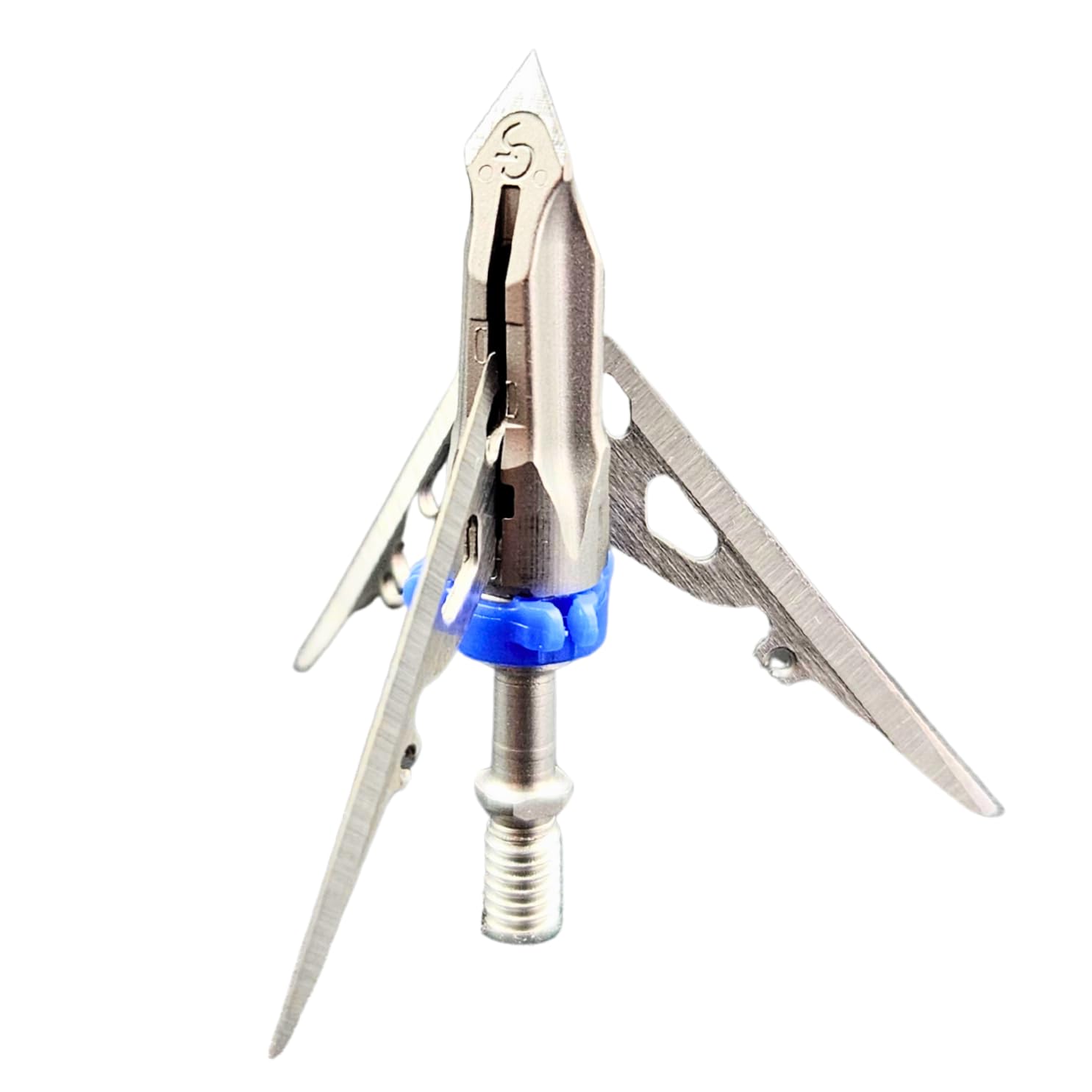
The G5 Megameat delivers a massive 2-inch cutting diameter from three rearward-sliding stainless steel blades, creating a wound channel that produces immediate, heavy blood trails. Deer hit with this head rarely travel more than 40 yards — the hemorrhage rate is that aggressive. The SnapLock collar prevents blade deployment during flight, so it flies identically to a field point out to 50 yards.
The chisel tip is engineered to punch through shoulder bone and ribcage without deflecting, a common failure point for mechanicals with thinner tips. Available in 100 and 125 grain weights, the Megameat accommodates both compound and recurve setups. All blades and collars are replaceable, which extends the head’s lifespan beyond a single harvest.
Blades will bend after heavy bone impact — this is normal for a three-blade mechanical with a 2-inch profile. The heads also protrude significantly from a standard quiver, so you need a broadhead-specific quiver or cover to prevent accidental blade opening during carry.
Why it’s great
- Massive 2-inch wound channel guarantees visible blood trails
- Chisel tip punches through bone without deflection
- Replaceable blades and collars extend head life
- Flies exactly like field points for easy sight-in
Good to know
- Blades may bend on heavy shoulder bone impact
- SnapLock collar can snag on standard quiver foam
- Premium price point per 3-pack
2. Slick Trick Magnum 125gr

The Slick Trick Magnum is a fixed-blade broadhead built around a super-steel ferrule and .035-inch stainless steel blades that deliver a total cutting diameter of 2.25 inches across four cutting surfaces. That’s a fixed-blade head producing a wound channel comparable to many mechanicals, but with zero deployment failure risk. The four-edge, bone-splitting tip handles quartering shots and shoulder impacts without deflection.
At 125 grains, the Magnum is heavier than standard 100-grain heads, which shifts the point of impact slightly. Most shooters report that it flies close to field points but requires a small sight adjustment — roughly 1-2 inches at 30 yards. The Alcatraz Bladelock system keeps blades securely in the ferrule even after multiple impacts, so you can reuse the head across multiple deer with only a touch-up sharpening.
The 4-pack delivers better per-head value than most competitors, and the blades are thick enough to survive spine and shoulder impacts without curling. The trade-off is that fixed blades demand a well-tuned arrow and consistent form — broadhead flight is less forgiving than with a mechanical.
Why it’s great
- 2.25-inch total cut from a fixed-blade design
- .035-inch blades survive bone impacts without folding
- 4-pack provides excellent per-head value
- Bladelock system keeps blades tight through reuse
Good to know
- Requires bow tuning for optimal field-point flight match
- 125-grain weight may not suit all arrow spine setups
- Small tip may not create as large a blood trail as 2-inch mechanicals
3. Muzzy Trocar HB

The Muzzy Trocar HB combines two fixed blades with a 1-inch cut and two mechanical blades that deploy to create a total cutting diameter of 2.625 inches. This hybrid approach means you get the penetration reliability of a fixed blade on entry, plus the massive hemorrhage of a mechanical on exit. The chisel tip construction crushes through bone and prevents deflection, unlike point-heavy mechanicals that glance off hard angles.
The offset fixed blades create spin stabilization during flight, making the Trocar HB more accurate than many pure mechanicals. The mechanical blades stay locked tight against the steel ferrule until impact, so there is zero risk of premature deployment. The .035-inch surgical steel thick enough to handle high-speed impact without folding.
Some users report that the mechanical blades leave little blood for the first 20 yards after a pass-through, then the wound channel opens fully and creates heavy blood. This is likely due to the mechanical blades opening slightly delayed behind the fixed blade entry. A double-lung shot typically results in a 40-50 yard recovery.
Why it’s great
- Hybrid design offers both penetration and massive wound channel
- Chisel tip crushes bone without deflection
- Offset fixed blades provide field-point-like accuracy
- Thick .035-inch blades survive repeated impacts
Good to know
- Initial blood trail may be sparse for the first 20 yards
- Requires tuning to match field-point impact
- Mid-range price point
4. RAGE 3-Blade Chisel Tip SC
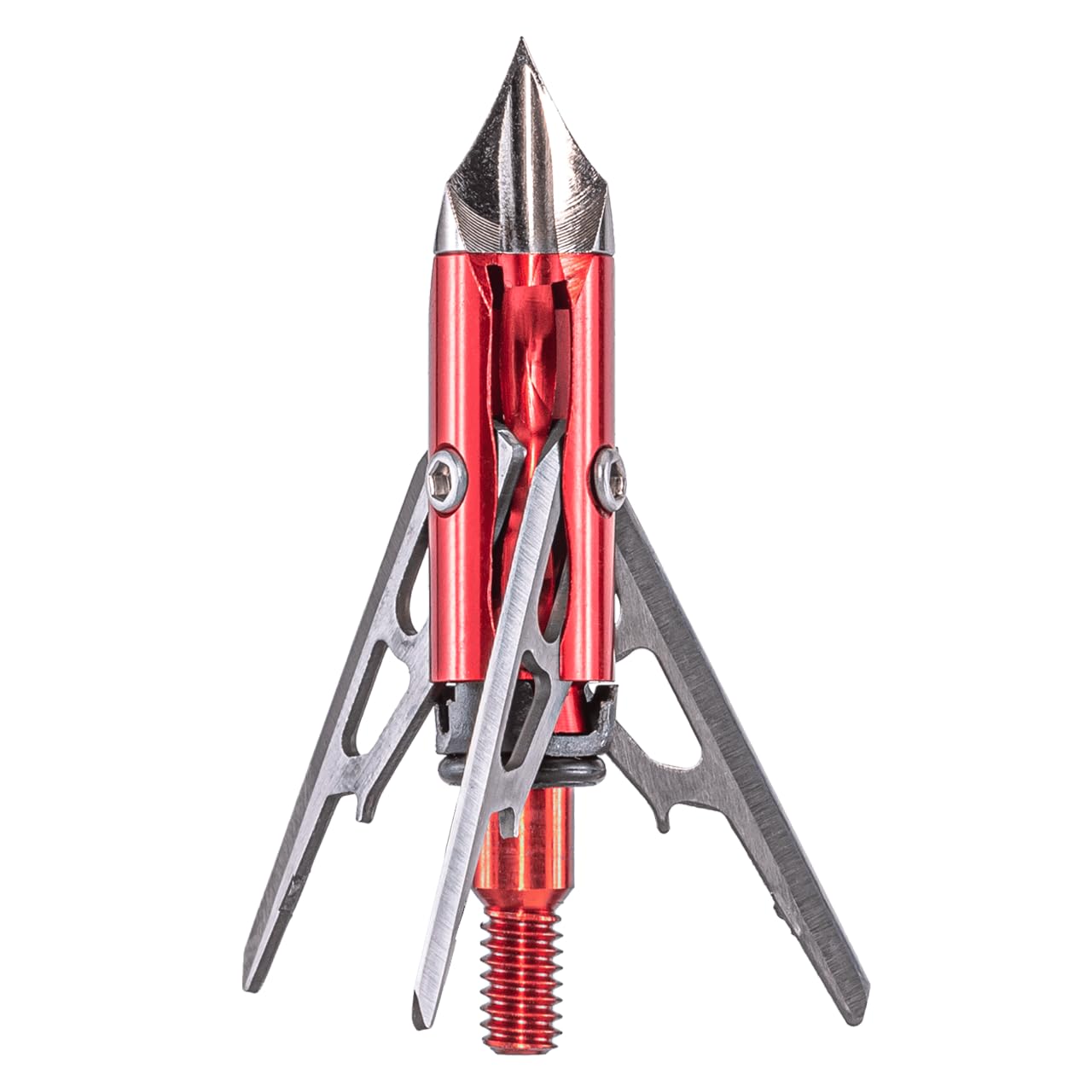
The RAGE Chisel Tip SC uses a shock collar to keep blades closed during flight, then a slip-cam deployment system that drives three .035-inch stainless steel blades open on contact. The chisel tip is the standout feature — it punches through bone and heavy hide that would stop older RAGE designs with needle tips. The swept-back blade angle reduces deployment resistance, allowing the blades to open fully even on low-speed or angle hits.
Field reports consistently note that this head flies identically to field points out to 60 yards, with tight groups that rival any mechanical on the market. The reinforced aluminum ferrule transfers energy directly into the cutting surface, so blade failure is rare. Six deer kills in one review all resulted in pass-through shots with no blade damage.
The shock collar is effective, but some users report that the practice tip included in the package doesn’t match the flight of the actual broadhead — the practice tip may require minor filing to fit the ferrule correctly. Additionally, the three-blade design creates more friction on entry than a two-blade design, which may reduce penetration on heavier game.
Why it’s great
- Chisel tip penetrates bone that stops other mechanicals
- Shock collar prevents accidental in-flight deployment
- Flies identical to field points for easy sight-in
- .035-inch blades handle repeated impact well
Good to know
- Practice tip may not match broadhead flight perfectly
- Three-blade design reduces penetration vs two-blade options
- Blades may bend after heavy bone contact
5. G5 Montec CS
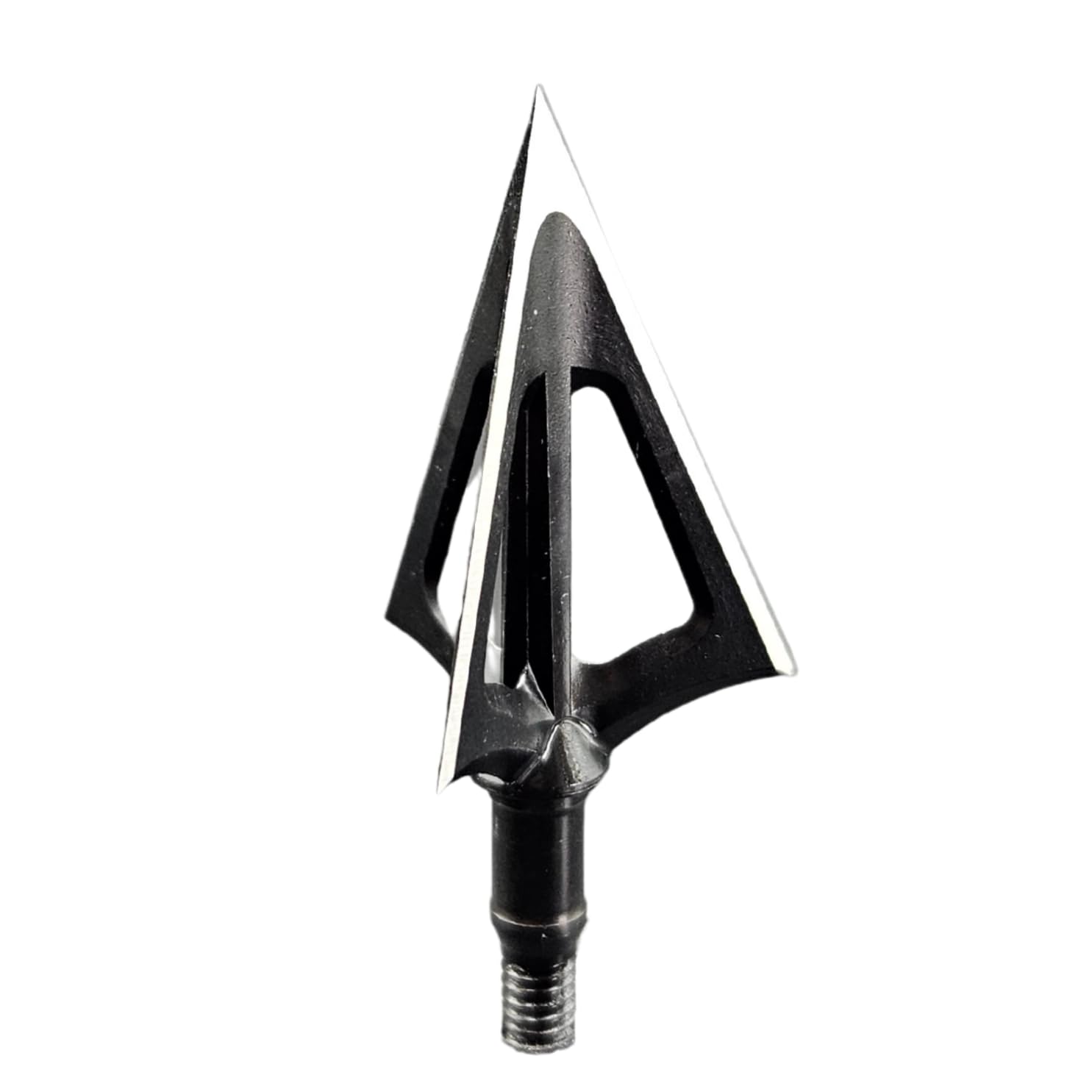
The G5 Montec CS is a one-piece carbon steel broadhead made through metal injection molding (MIM), meaning there are no blades to assemble, no ferrule-to-blade gaps, and no soldered joints that can fail on impact. This single-piece construction delivers the highest penetration potential in this list — testers report pass-throughs on 350-pound bears and whitetail shoulder blades at low draw weights around 53 pounds.
The cutting diameter is a modest 1.0625 inches, but the diamond-cut edge touches up easily with a waterstone, and the head can be reused across multiple deer with only a few passes on a sharpener. The 100-grain weight balances well with standard arrow spines, though the head may impact 1-2 inches lower than field points past 25 yards if blades aren’t aligned exactly with fletchings.
The sacrifice for this penetration is wound channel size — a 1-inch cut produces less hemorrhage than a 2-inch mechanical. Blood trails can be sparse if the deer doesn’t have a high-pressure exit wound. For lower-poundage bows, however, this is often the only head that guarantees a pass-through shot.
Why it’s great
- One-piece MIM construction eliminates blade failure
- Exceptional penetration at low draw weights
- Diamond-cut edge easily resharpens for multiple uses
- Spin-tested for perfect balance out of the box
Good to know
- 1-inch cutting diameter creates smaller blood trails
- Flies slightly off from field points past 25 yards
- Fixed-blade design requires tuned arrows
6. Swhacker #219 Crossbow
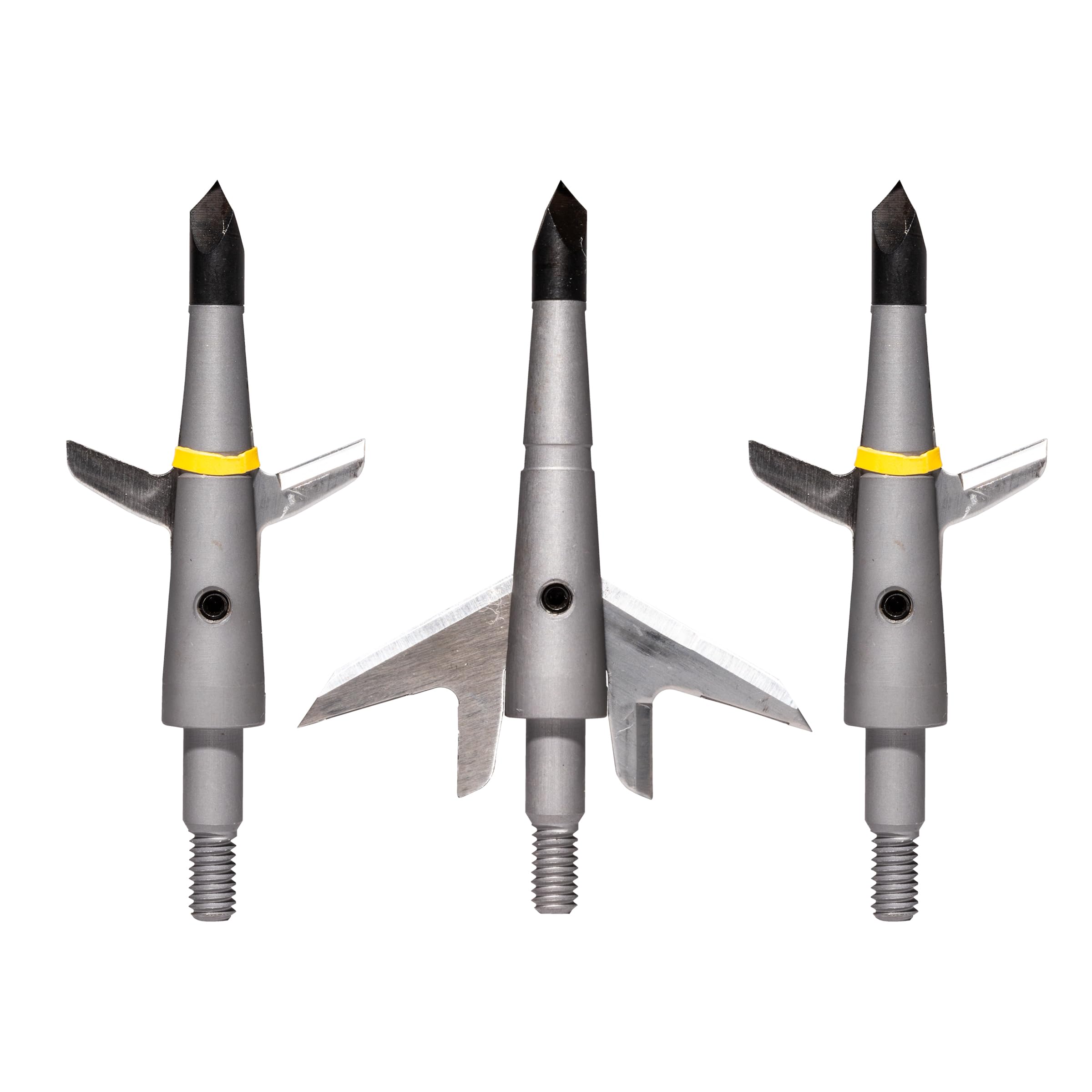
The Swhacker #219 is purpose-engineered for crossbow velocities, featuring a 1.75-inch expandable cutting diameter from a two-blade design. The patented Two-Slice technology uses wing blades that engage first while the primary blades remain closed, then all blades deploy on impact for controlled energy transfer. This sequential deployment reduces the shock load on the arrow shaft, which is critical at crossbow speeds above 350fps.
The aircraft-grade aluminum ferrule and stainless steel blades are built to handle the higher kinetic energy of crossbow bolts. The compact in-flight profile ensures accuracy at crossbow distances — multiple reviewers report dead-on accuracy out to 30-50 yards from Ravin and TenPoint crossbows. The included practice tip is a useful addition for sight-in without wasting broadheads.
Reviewers consistently note that the pre-installed rubber bands snap easily and that crossbow shooters with bows over 400fps should replace them with two bands instead of one to prevent premature opening. Some users report that the practice tip does not perfectly match the flight of the actual broadhead — a known issue that requires adjusting POI after switching heads.
Why it’s great
- Purpose-built for crossbow velocities and bolt energy
- Two-Slice technology delivers controlled deployment
- Accurate flight at crossbow hunting distances
- Comes with practice tip for sight-in
Good to know
- Factory rubber bands may fail on high-speed crossbows
- Practice tip doesn’t match broadhead flight perfectly
- Blades can open in flight if bands aren’t doubled
7. New Archery Products Killzone 2-Blade
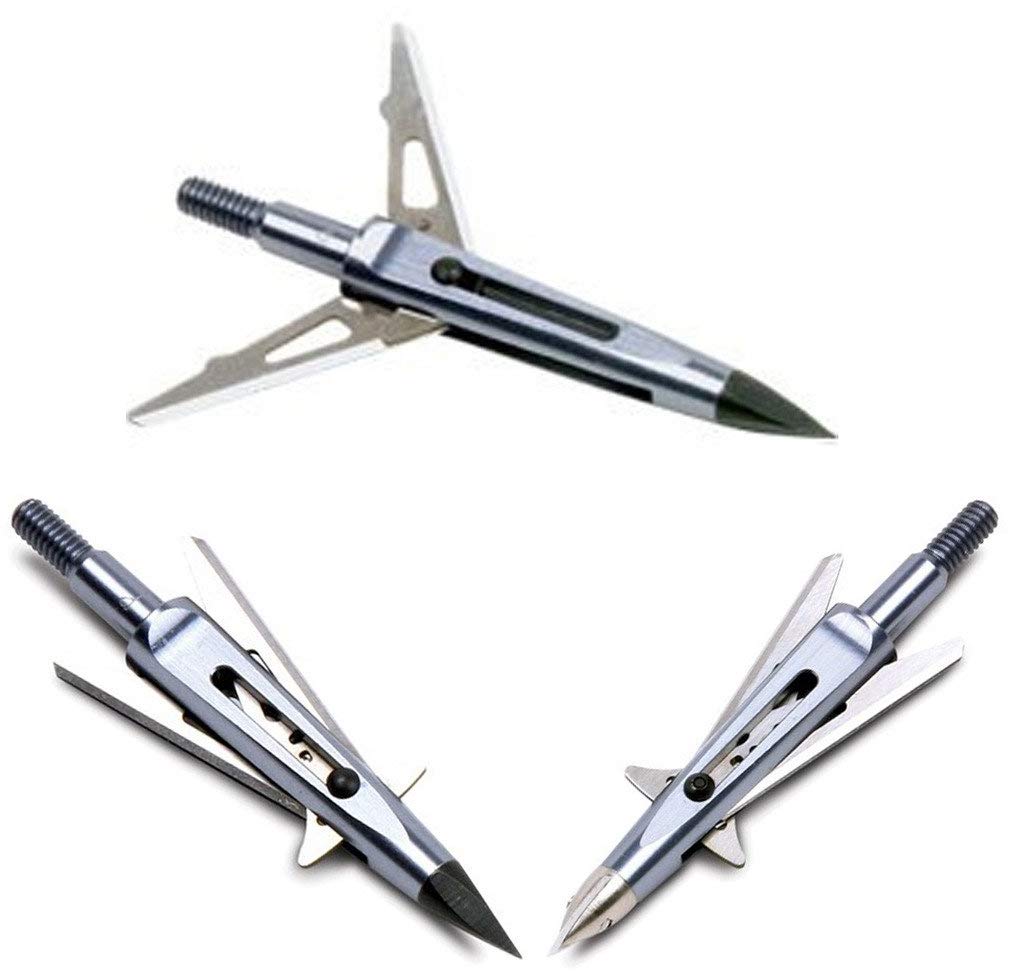
The New Archery Products Killzone uses a rear-deploying two-blade design with a 2-inch cutting diameter and a spring-clip retention system that eliminates O-rings and rubber bands entirely. This is a significant reliability advantage — no bands to snap, no rings to degrade in storage. The Trophy Tip ensures the point penetrates before the blades open, reducing the energy required for full deployment.
At this price point, the Killzone offers a 2-inch cut for significantly less than most premium mechanicals. Reviewers note that the head works fine with crossbows despite a 360fps warning on the packaging — many users report pass-through shots on does at 42 yards from crossbow setups. The blades can be straightened with pliers after impact if they bend, extending the head’s life beyond one use.
The blade retention system is reliable, but some users report that the point is not sharp out of the box and requires touch-up with sandpaper or a stone before the first use. Additionally, the head may not fly perfectly with all arrow spines — some shooters report a slight impact shift compared to field points that requires tuning.
Why it’s great
- 2-inch cutting diameter at a budget-friendly price
- No O-rings or rubber bands to fail
- Rear-deploy design reduces energy loss on entry
- Works crossbow despite packaging warning
Good to know
- Point may require sharpening out of the box
- Flight may shift slightly from field points
- Blades bend on heavy bone contact
FAQ
Can I use crossbow broadheads on a compound bow?
Do mechanical broadheads fly like field points?
How many times can I reuse a broadhead?
What grain weight should I choose for whitetail?
Final Thoughts: The Verdict
For most users, the best deer hunting broadheads winner is the G5 Megameat because it combines a massive 2-inch cutting diameter with field-point flight accuracy and a reliable SnapLock collar. If you want bone-shattering penetration without worrying about deployment failure, grab the Slick Trick Magnum 125gr. And for low-poundage bows needing maximum penetration, nothing beats the G5 Montec CS.

Mo Maruf
I created WellFizz to bridge the gap between vague wellness advice and actionable solutions. My mission is simple: to decode the research and give you practical tools you can actually use.
Beyond the data, I am a passionate traveler. I believe that stepping away from the screen to explore new environments is essential for mental clarity and physical vitality.