Our readers keep the lights on and my smoothie glass nicely filled. As an Amazon Associate, I earn from qualifying purchases.
A standard shop vac fills with fine dust in minutes, losing suction and forcing you to pound the filter clean every time you start a new cut. A cyclone dust collector changes that physics problem entirely — it spins the incoming airstream fast enough to fling sawdust, chips, and debris into a separate drum before the air ever touches your vacuum filter. That single action keeps your primary unit running at peak CFM for hours, not minutes, and sends dramatically less particulate back into your shop’s air.
I’m Mohammad Maruf — the founder and writer behind WellFizz. I’ve spent hundreds of hours researching cyclone separation technology, comparing CFM ratings across multiple impeller designs, and analyzing how different inlet geometries and micron ratings translate into real workshop performance.
This guide breaks down the best options available today by assessing airflow capacity, separation efficiency, build quality, and real-world compatibility with everything from benchtop planers to 4-inch duct runs. Whether you need a compact retrofit for a single-stage unit or a complete 1,300 CFM system with dual inlets, the best cyclone dust collector for your shop comes down to matching your tool count and dust volume to the correct impeller size and filter rating.
How To Choose The Best Cyclone Dust Collector
Selecting the right cyclone dust collector for your workshop requires matching three variables: the volume of debris your tools generate, the diameter of your existing dust ports, and the space you have for a collection drum or bag. A system that works for a benchtop sander will choke on a 13-inch planer, while a high-CFM unit aimed at a jointer may be overkill for a compact garage.
Airflow Rating and Impeller Design
CFM (cubic feet per minute) measures the volume of air the collector moves, but the spec only matters when paired with your tool’s port size. A collector rated at 600 CFM through a 4-inch port will behave very differently than the same CFM squeezed through a 2.5-inch hose. Steel impellers handle wear better than aluminum or plastic when processing dense hardwoods and long planer shavings. Look for a 9-inch or larger impeller diameter in the mid-tier units; anything below that typically pairs with smaller shop-vac style motors.
Separation Efficiency and Filter Micron Rating
A true cyclone design separates more than 99% of debris before it reaches the filter, which directly extends filter life and maintains consistent suction. The micron rating of the bag or canister — 5-micron, 2.5-micron, or 2-micron — determines the smallest particle that gets captured. If you work with MDF or drywall, lower micron ratings matter more because those materials generate dangerously fine dust that stays airborne for hours. Retrofitting a pleated canister filter onto a collector that came with a 5-micron bag is one of the most common upgrades among serious woodworkers.
Port Configuration and Tool Compatibility
Single-stage collectors typically include one 4-inch intake port. Higher-end units offer dual inlets so you can connect two tools simultaneously — useful when running a planer and a table saw in sequence — but you should only open one blast gate at a time to maintain full CFM on the active tool. Check whether the unit includes hose adapters or reducers; several models in this list ship without any hose, which adds to your total setup cost.
Quick Comparison
On smaller screens, swipe sideways to see the full table.
| Model | Category | Best For | Key Spec | Amazon |
|---|---|---|---|---|
| JET DC-1100VX-CK | Single-Stage | Serious woodshop with continuous use | 1-1/2 HP, 2-micron canister | Amazon |
| Shop Fox W1666 | Single-Stage | Large shop with 240V access | 2 HP, 1,550 CFM | Amazon |
| WEN DC1300 | Single-Stage | Two-tool simultaneous collection | 1,300 CFM, 50-gal bag | Amazon |
| Festool CT CYCLONE | Separator | Festool extractor users needing portability | Fits CT 26/36/48, aluminum | Amazon |
| Shop Fox W1727 | Single-Stage | Small shop, entry-level woodworking | 800 CFM, 1 HP | Amazon |
| Mullet High-Speed Cyclone | Separator | Shop vac upgrade for fine dust | 99% pre-separation, PVC connection | Amazon |
| Oneida Air Systems Cyclone | Separator | Single-stage collector retrofit | Fits 1-3 HP, 4/5 DIY | Amazon |
| WEN DC3474 | Single-Stage | Budget shop vac replacement | 600 CFM, 7.4A motor | Amazon |
| Air Supply Cyclone Blower | Pool | Pool line winterization and liner installation | 3 HP, 2-inch NPT intake | Amazon |
In‑Depth Reviews
1. JET Vortex Cone Dust Collector DC-1100VX-CK
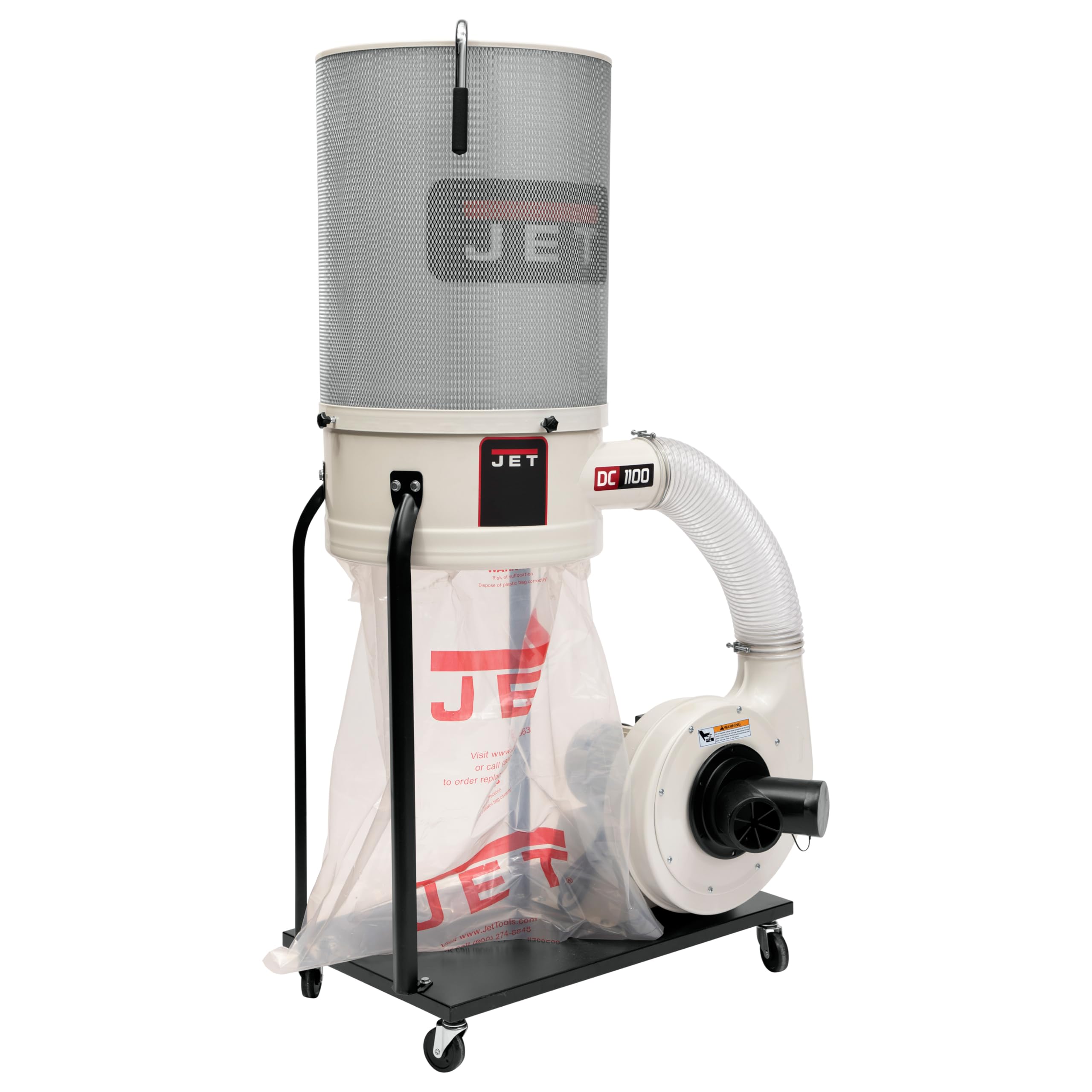
The JET Vortex Cone delivers a 1-1/2 HP permanently lubricated motor paired with a vortex cone that improves chip separation inside the collection bag, minimizing premature filter clogging. The 2-micron canister filter captures a significantly finer range of particles than the standard 5-micron bags found on most entry-level units, making it a strong choice for shops where MDF or drywall dust is common. The unit operates at roughly 80 dB, which is quieter than a typical shop vac and uses a lower frequency hum that feels less fatiguing over long sessions.
Assembly takes about an hour with two people, and the instructions are clear compared to other models in this class. The four casters provide solid mobility, and the quick-connect collection bags use an elastic band for fast changes. Users report that the cyclonic action effectively separates the bulk of chips and dust, so the canister filter stays clean much longer than on single-stage units without vortex technology. The build uses heavy-duty materials, and JET backs it with a 5-year warranty.
Some users note that the fine dust filtration, while better than a shop vac, still leaves room for improvement — adding a secondary separator like a Dust Deputy captures an additional 80% of debris before it reaches the canister. The 1-1/2 HP motor handles table saws, routers, and drum sanders well, but a planer may require lighter passes to avoid overwhelming the intake. For sustained filter performance and a quieter shop environment, this unit justifies its position at the top of the list.
Why it’s great
- 2-micron canister filter for superior fine dust capture
- Quieter operation than a standard shop vac
- 5-year warranty for long-term reliability
Good to know
- Heavy assembly requires two people
- Planer shavings may need lighter passes
- Fine dust filtration still benefits from a pre-separator
2. Shop Fox W1666 2 HP Dust Collector

The Shop Fox W1666 is a 2 HP, 1,550 CFM single-stage collector that runs on 220V, making it a serious contender for larger shops with multiple stationary tools. The steel impeller handles the hard materials and long shavings from a jointer or planer without the wear issues that affect plastic or aluminum impellers. The 2.5-micron top filter bag captures fine dust better than the 5-micron bags found on many entry-level units, and the unit includes a safety key switch for added protection.
Users consistently report that the W1666 is quieter than expected for a 2 HP unit, with most of the noise coming from air movement rather than motor vibration. The mobility setup includes casters, though the wheels are on the smaller side for a 95-pound machine. Many users recommend adding a cyclone pre-separator to keep the filter bag clean longer, especially when processing heavy chip loads from a planer. The steel build and powder-coated finish give it a durable, industrial feel.
Assembly can take two to three hours, and several users note that the packaging sometimes arrives damaged or that a few washers may be missing. The bag support arm is not the most rigid design, and the bottom collection bag can be tricky to install without a second person. Despite these setup quirks, the W1666 delivers enough suction to pull shavings from a planer through a 4-inch port at about 4 feet, making it one of the most powerful options in its tier.
Why it’s great
- Steel impeller and powder-coated housing for durability
- High 1,550 CFM airflow for tool-heavy shops
- Safety key switch included
Good to know
- Requires 220V outlet
- Heavy assembly with potential missing hardware
- Bag support arm can bend under load
3. WEN DC1300 1,300 CFM Dust Collector

The WEN DC1300 uses a 14-amp motor to spin a 10-inch steel impeller at 3,450 RPM, moving up to 1,300 CFM of air. That positions it well above the sub-800 CFM units in the budget tier, and it comes with two 4-inch intake ports so you can keep two tools connected simultaneously — just open one blast gate at a time for full suction. The 50-gallon vertical collection bag is large enough to handle multiple sessions before needing a change, and the rolling base with four swivel casters makes it easy to move around a small to medium shop.
Users consistently report that this unit captures roughly 99% of table saw dust and about 85% of bandsaw dust, with the drop-off on the bandsaw primarily caused by the difficulty of positioning the second hose. The assembly process is straightforward, though the instructions are not the clearest and some users note that the vertical supports feel a bit flimsy. The upper bag arm is fixed at one angle, and the bag hook can slip off if not positioned carefully.
The DC1300 is not quiet — you will want ear protection — but the trade-off is a serious jump in CFM for a mid-range price. It pairs well with the WEN air filtration unit for a complete shop dust strategy, and users who combine the two report being able to remove their respirator shortly after finishing cuts. For the CFM-per-dollar ratio, this unit is hard to beat.
Why it’s great
- 1,300 CFM moves more air than most mid-range units
- Dual 4-inch inlets for tool switching
- Large 50-gallon collection capacity
Good to know
- Loud operation requires hearing protection
- Flimsy vertical supports
- No hose or adapters included
4. Festool CT CYCLONE Dust Separator CT-VA-20
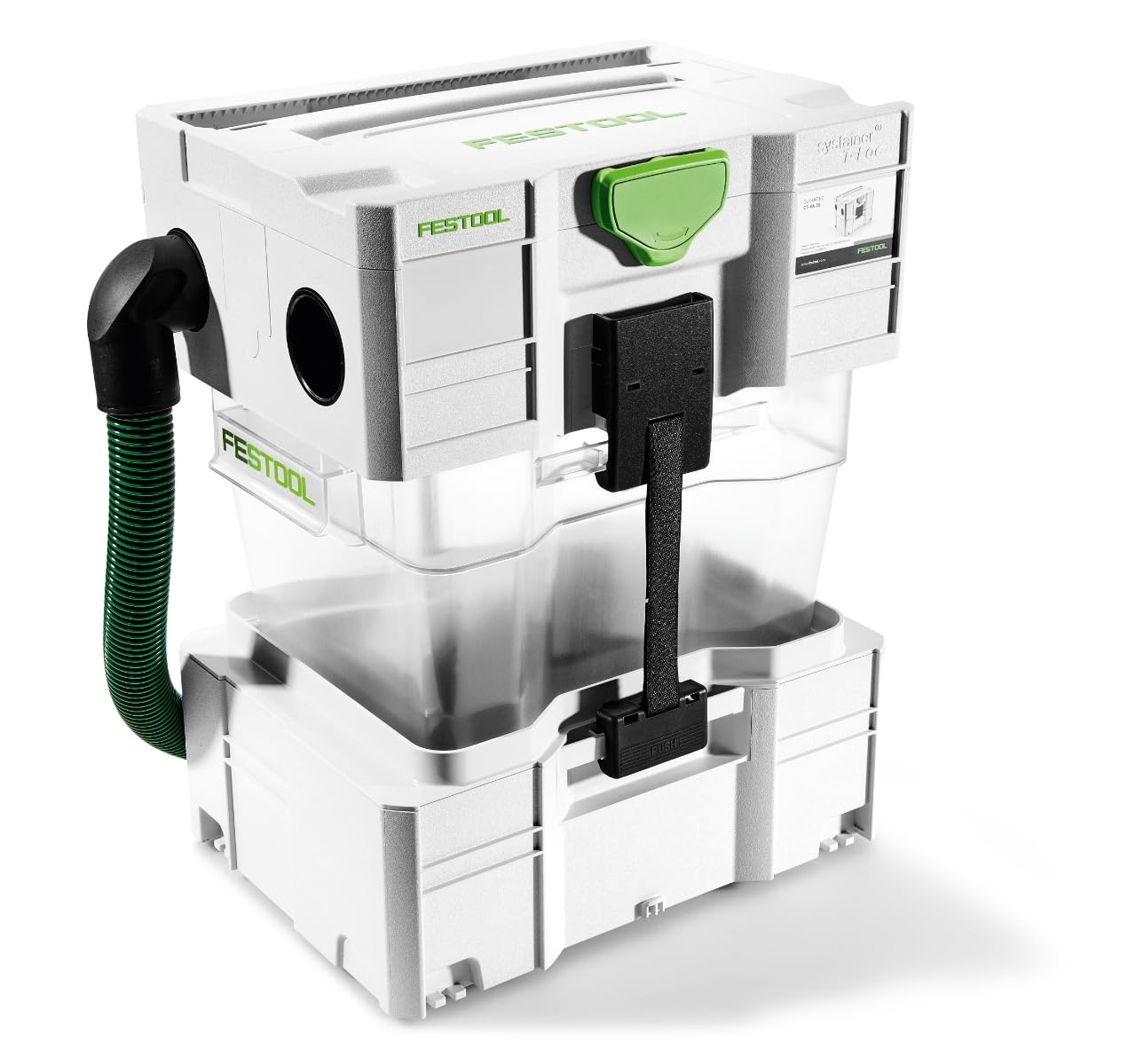
The Festool CT CYCLONE is not a standalone dust collector; it is a high-efficiency separator designed to sit between your CT 26, 36, or 48 dust extractor and your tool. Its flat cyclone geometry minimizes the space it occupies and integrates into the Festool Systainer modular system for easy transport. The aluminum construction is rigid and precisely engineered, and when paired with a HEPA-certified CT extractor, the system meets OSHA Table 1 compliance for silica dust.
Users report that the separator captures roughly 95% of debris before it ever reaches the extractor bag, dramatically extending the time between bag changes. The unit weighs about 15 pounds and fits securely on top of the extractor, and the friction-fit connections are simple to assemble. Some users notice a slight initial drop in suction, but tool performance does not suffer, and the bag stays clean for weeks even in professional cabinet shop environments.
The main limitation is that the friction-fit parts can sometimes misalign, causing a more significant suction drop until you reseat them. This unit also struggles with very large chips — it works best with fine dust and medium chips. The cost is high relative to other separator options, but for Festool ecosystem users, the integration and build quality make it a long-term investment that pays for itself in reduced bag consumption.
Why it’s great
- Aluminum build with precise Festool engineering
- OSHA Table 1 compliant for silica dust
- Fits within Systainer storage system
Good to know
- Requires Festool CT extractor for full benefit
- Friction-fit parts can misalign
- Not ideal for very large chip loads
5. Shop Fox Portable W1727 1 HP Dust Collector

The Shop Fox W1727 is a 1 HP, 800 CFM single-stage collector designed for compact workshops where space is tight. It operates at roughly 82.5 dB, significantly quieter than a 6 HP shop vac that can hit 102.5 dB, making it a much more pleasant companion for daily woodworking. The 2.5-micron top filter bag captures fine dust better than older 5-micron designs, and the unit includes a floor port for quick cleanup of sawdust piles.
Users in small shops — 8 by 10 feet — report that running a 4-inch hose through the wall into an adjacent room works perfectly, with good suction through a single blast gate on tools like a table saw, sander, and router. The unit is portable on its included base, and bag changes are straightforward. Some users have kept the W1727 running for five years with minimal issues, using trash compactor bags instead of the standard collection bag for cost savings.
The trade-off is airflow: the W1727 handles 4-inch hose runs up to about 10 feet well, but it is not intended for a fixed duct system throughout a large shop. The switch feels less robust than the rest of the unit, and the plastic collection bag is reusable but not the sturdiest. For a small shop or a dedicated tool station, this collector provides a balanced mix of performance, noise reduction, and footprint.
Why it’s great
- Much quieter than a shop vac at 82.5 dB
- 2.5-micron top bag for better filtration
- Compact footprint for small shops
Good to know
- Not designed for large duct systems
- Switch feels less durable than the body
- Plastic bag is reusable but not heavy-duty
6. Mullet High-Speed Cyclone Dust Collector

The Mullet High-Speed Cyclone is a stand-alone separator that connects between any standard wet/dry shop vac and your tool. Its parabolic interior geometry creates a faster airstream than straight-wall cyclone designs, which improves separation efficiency — users report over 99% of fine dust and concrete debris being captured before it reaches the vac filter. The unit includes a rigid cut-to-fit PVC connection that eliminates the bungee-cord-and-duct-tape assemblies common with bucket-style separators.
Users have used the Mullet for demanding applications like popcorn ceiling removal, concrete floor grinding, and heavy woodworking, and in every case report that the shop vac bag and HEPA filter remained nearly clean after hours of use. The included hose adapters fit virtually all wet/dry vac brands, and the setup takes less than 10 minutes using the included template to cut the PVC tube. The plastic construction is heavy-duty and sturdy, not flimsy.
The main downside is that the collection bin fills up relatively fast — you will need to dump it frequently during heavy production runs. The unit also relies on the shop vac for suction power, so it does not add CFM on its own. For anyone who already owns a quality shop vac and wants to extend filter life and maintain suction, the Mullet is one of the most effective and simplest upgrades available.
Why it’s great
- Parabolic design for faster cyclone spin and better separation
- Universal hose adapters for any shop vac
- Simple 10-minute setup with PVC connection
Good to know
- Collection bin fills quickly in heavy use
- Does not add suction power — relies on shop vac
- Requires separate PVC tube (not included)
7. Oneida Air Systems Cyclone Attachment for Single Stage

The Oneida Air Systems Cyclone Attachment is a retrofit top that converts any single-stage dust collector from 1 HP to 3 HP into a two-stage system. The integrated air ramp and neutral-vane inlet design achieves over 99% separation efficiency, meaning the vast majority of chips and dust drop into a collection drum before reaching the collector filter. It comes with a gasket, two 4-inch reducer adapters, and lid mounting hardware, and is made in the USA under active patents.
Users report that this attachment transforms Harbor Freight, ShopFox, and Jet single-stage units into much more effective systems. The fine dust that used to coat the filter bag in minutes now stays in the drum, and the filter stays clean for weeks instead of days. The build quality is high, and the compact 7.7-pound design mounts easily to a 55-gallon barrel or similar collection container. Users note that the cyclone does not create a noticeable suction loss compared to the original single-stage setup.
The main issue some users encounter is sealing: the gasket material does not always create a perfect airtight seal against every drum lid, and some have added a plywood mounting plate to eliminate gaps. The price is higher than a bucket-style separator, but the industrial-grade separation performance and US manufacturing justify it for serious woodworkers upgrading an existing collector rather than buying a whole new system.
Why it’s great
- 99% separation keeps filter clean for much longer
- Fits 1-3 HP single-stage collectors
- Made in USA with patented air ramp design
Good to know
- Seal against drum lids can be inconsistent
- Higher cost than bucket-style separators
- Installation may require a plywood mounting plate
8. WEN DC3474 7.4-Amp Dust Collector

The WEN DC3474 is a 7.4-amp induction motor dust collector that moves up to 600 CFM through a 9-inch impeller, targeting users who want to step up from a shop vac without spending on a full-size system. It draws about 480 watts compared to a shop vac’s 1,000 watts, runs quieter at roughly 72 dB, and moves about four times the airflow. The unit includes a 15-gallon 5-micron zippered collection bag, an onboard carrying handle, and swivel casters for mobility.
Users report that the DC3474 works well as a dedicated collector for a single tool — a planer, drum sander, or small table saw — and is noticeably quieter and more efficient than a typical shop vac. The wall-mount option works with the wheels attached, saving floor space in tight garages. The 5-micron bag is adequate for rough chips, but users switching to a DustRight 5-micron or canister filter report near-zero visible dust.
The biggest drawback is that the unit does not include any hose or adapters, so you will need to budget for a separate 4-inch hose and fittings. Some small parts can get sucked into the impeller, so adding a mesh screen at the intake is recommended. The bag also tends to puff fine dust through the fabric when it is only one-third full, which means the 5-micron rating is more of a baseline than a high-filtration solution.
Why it’s great
- Much quieter and more efficient than a shop vac
- Compact footprint with wall-mount option
- Good entry point for single-tool dust collection
Good to know
- No hose or adapters included
- 5-micron bag puffs fine dust when partially full
- Small parts may get sucked into impeller without a screen
9. Air Supply 3 HP Cyclone Pool Line Blower

The Air Supply Cyclone Pool Line Blower is a specialized 3 HP, 120-volt motor designed for pool winterization and vinyl liner installation, not for workshop wood dust. It uses a 2-inch NPT intake and a 1.5-inch standard hose adapter on the discharge to blow water out of pool return lines, main drains, and skimmers. The motor is powerful enough to clear six return outlets simultaneously, creating geysers of water that confirm the lines are fully drained.
Users consistently report that this blower does in one pass what weaker units struggle with across multiple attempts. The 14-amp draw is significant, and the unit is loud — but for seasonal pool closing, the noise is a one-time trade-off for reliable freeze protection. The blower also works for inflating vinyl pool liners during installation. Users who previously hired pool companies for closing report that the blower pays for itself within one season.
The main caveats: the blower requires separate 1.5-inch and 2-inch hoses and adapters, none of which are included. It is not suitable for 1/2-inch or 3/8-inch diameter lines used for some smaller pool features, and water can backflow into the unit if the hose connection is not properly secured. This product is highly category-specific and should not be confused with a woodworking cyclone dust collector.
Why it’s great
- Clears pool lines in a single pass
- Pays for itself in one season vs hiring pool companies
- Also works for vinyl liner installation
Good to know
- Hoses and adapters not included
- Not for thin-diameter pool lines
- Water backflow risk without secure connections
FAQ
Can I use a cyclone dust collector with a shop vac instead of a dedicated dust collector?
What size cyclone dust collector do I need for a planer or jointer?
How often do I need to empty the collection drum or bag?
Final Thoughts: The Verdict
For most users, the best cyclone dust collector winner is the JET Vortex Cone DC-1100VX-CK because its 2-micron canister, quiet operation, and 5-year warranty deliver professional-grade performance for serious workshops. If you want a high-CFM unit for a multi-tool shop, grab the Shop Fox W1666 and benefit from its 1,550 CFM steel impeller. And for a budget-friendly entry into cyclone separation without buying a whole new collector, nothing beats the Mullet High-Speed Cyclone as a shop vac upgrade.

Mo Maruf
I created WellFizz to bridge the gap between vague wellness advice and actionable solutions. My mission is simple: to decode the research and give you practical tools you can actually use.
Beyond the data, I am a passionate traveler. I believe that stepping away from the screen to explore new environments is essential for mental clarity and physical vitality.