Our readers keep the lights on and my smoothie glass nicely filled. As an Amazon Associate, I earn from qualifying purchases.
A pontoon boat skims across the surface, but the real danger hides below. Shifting sandbars, submerged stumps, and sudden drop-offs can turn a relaxing cruise into a costly repair or a dangerous grounding. A depth finder purpose-built for a pontoon’s wide, flat hull gives you the constant bottom reading you need to navigate confidently in both familiar and unfamiliar waters.
I’m Mohammad Maruf — the founder and writer behind WellFizz. I’ve spent hundreds of hours analyzing sonar specifications, transducer mounting options, and display performance to help pontoon owners choose a depth finder that matches their boat’s unique profile and their typical fishing or cruising style.
This guide breaks down the best options for reading the water beneath your deck so you can find the best depth finder for pontoon boat that fits your setup and your budget.
How To Choose The Best Depth Finder For Pontoon Boat
Not every depth finder plays nice with a pontoon. The wide, flat aluminum hull creates turbulence and can block sonar signals if you aren’t careful. Focus on these decision points before you buy.
Transducer Mounting and Hull Compatibility
The transducer is the heart of any depth finder. On a pontoon, you typically mount it on the transom of the center tube or on the rear deck. A transom-mount transducer is the most common choice, but you need a unit that includes a long enough cable to reach your console. Some pontoons run the cable inside the tubes, so measure the distance from your stern to your dash before selecting a model. Thru-hull or in-hull mounts work well for pontoons that stay in the water, but they require a clean, solid surface inside the toon.
Screen Size and Sunlight Readability
Pontoon consoles often sit low and catch direct sunlight all day. A small, low-resolution screen washes out fast. Look for a display size of at least 4 inches with high brightness and an IPS panel if possible. A sunlight-readable screen with polarized lens support lets you see the bottom contour without shading the unit with your hand.
Sonar Technology for Shallow and Deep Water
Pontoons run in both shallow bays and deep main channels. Dual-beam or CHIRP sonar gives you the flexibility to switch between wide coverage in shallow water and a narrow, detailed beam in deeper spots. A basic single-frequency depth sounder works for pure depth readings, but if you fish, look for Down Imaging or Side Imaging to locate structure and baitfish holding near pontoon-friendly shorelines.
Quick Comparison
On smaller screens, swipe sideways to see the full table.
| Model | Category | Best For | Key Spec | Amazon |
|---|---|---|---|---|
| Humminbird Helix 5 Sonar G2 | Premium | Pontoon with flush mount dash | 5-inch display, Dual Beam PLUS | Amazon |
| Garmin Striker Vivid 7cv | Premium | Large pontoons needing big screen | 7-inch display, CHIRP ClearVü | Amazon |
| Lowrance HOOK Reveal 5 | Premium | Anglers wanting FishReveal tech | 5-inch SolarMAX, SplitShot | Amazon |
| Garmin Striker Plus 4 | Mid-Range | Budget-friendly GPS mapping | 4.3-inch display, Quickdraw | Amazon |
| Humminbird PiranhaMAX 4 | Mid-Range | Entry-level Down Imaging | 4.3-inch color, Down Imaging | Amazon |
| Lowrance Eagle Fish Finder | Mid-Range | IPS screen in bright sun | 4-inch IPS, twist-lock mount | Amazon |
| HawkEye DT2BX-TM | Mid-Range | Pure depth reading dash mount | 2-inch LCD, 600ft max depth | Amazon |
| Yoocylii Handheld Finder | Budget | Portable use on small pontoons | 3.5-inch LCD, wireless probe | Amazon |
| Garmin LiveScope Plus | High-End | Serious anglers needing live view | Live Forward/Down sonar | Amazon |
In‑Depth Reviews
1. Humminbird 410190-1 Helix 5 Sonar G2

The Helix 5 G2 hits the sweet spot for pontoon owners who want a permanent flush-mounted unit with a screen large enough to read at a glance. Its 5-inch widescreen TFT display gives you room to see sonar returns clearly without taking up your entire dash. The Dual Beam PLUS sonar lets you switch between a narrow 20-degree beam for precise bottom detail and a wide 60-degree beam for coverage, which is useful when cruising shallow flats where a pontoon’s draft is minimal.
SwitchFire Sonar gives you two display modes — Max Mode shows every return including thermoclines and debris, while Clear Mode reduces clutter for a cleaner view of fish arches and the bottom. The included XNT 9 20 T transom-mount transducer has enough cable for most pontoon runs, and the unit is AIS and AutoPilot compatible if you plan to integrate with a navigation system later. Users report easy menu navigation and reliable depth tracking at cruising speeds up to about 20 mph.
This unit does not include GPS or Down Imaging, so it is focused purely on sonar performance. That makes it ideal if you already have a GPS chartplotter on board and just need a dedicated depth finder with excellent sonar quality. The flush mount kit (sold separately) gives a clean, professional look on a pontoon console.
Why it’s great
- SwitchFire sonar adapts to water conditions instantly
- 5-inch widescreen is easy to read in direct sun
- Dual Beam PLUS covers both shallow and deep zones
Good to know
- No built-in GPS or Down Imaging
- Screen may need a RAM mount for optimal viewing angle on low consoles
2. Garmin Striker Vivid 7cv

For a larger pontoon where you have dash space to spare, the Striker Vivid 7cv provides a generous 7-inch color display that remains readable even under harsh midday glare. The vivid scanning sonar color palettes make it easy to distinguish between hard bottom, vegetation, and fish holding near the toons. The included GT20-TM transducer delivers both traditional CHIRP sonar and CHIRP ClearVü scanning sonar for a photo-like view of the bottom structure.
Built-in Quickdraw Contours mapping lets you create custom 1-foot contour maps of the lakes you frequent — a major advantage if you run your pontoon in uncharted waters or shifting sandbar areas. The high-sensitivity GPS marks waypoints for your favorite sandbar hangouts or fishing spots, and Wi-Fi connectivity links to the ActiveCaptain app for software updates and waypoint transfer from your phone.
At 4.7 pounds, this is a substantial unit. The bailmount bracket works well, but on a pontoon subject to wave slap and wind, a more secure RAM mount is a smart upgrade. The transducer cable length is adequate for most center-console pontoons, but measure your run before installation to avoid needing an extension.
Why it’s great
- Large 7-inch display with vivid color palettes
- Quickdraw Contours create custom lake maps
- Wi-Fi connectivity for app integration
Good to know
- No preloaded maps included
- Heavier unit may need a reinforced mount
3. Lowrance HOOK Reveal 5 SplitShot

Pontoon owners who fish seriously need more than just a depth number. The HOOK Reveal 5 uses FishReveal technology, which blends CHIRP sonar returns with DownScan Imaging to make fish literally light up on screen as bright, easy-to-spot targets. This is a huge advantage when you are drifting over a drop-off and want to see exactly where the walleye or crappie are holding relative to your pontoons.
The SplitShot transducer packs both wide-angle high CHIRP sonar for depth and structure and high-resolution DownScan Imaging into one compact skimmer. Autotuning sonar adjusts gain and sensitivity as you move from shallow marina channels to deeper lake basins, so you don’t have to fiddle with settings constantly. The SolarMAX display is tuned for daylight visibility and holds up well on an open pontoon helm.
Preloaded C-MAP US Inland mapping covers nearly 4,000 lakes, and Genesis Live lets you create custom real-time contour maps as you cruise. The unit is light at just under a pound, making it easy to mount on a RAM ball without stressing the dash. The flush mount option gives a clean install if you prefer a permanent setup.
Why it’s great
- FishReveal combines sonar and DownScan for clear targets
- Autotuning sonar adjusts to changing depths
- Preloaded maps and Genesis Live mapping
Good to know
- Menu system has a learning curve for new users
- DownScan performance drops at speeds above 10 mph
4. Garmin Striker Plus 4
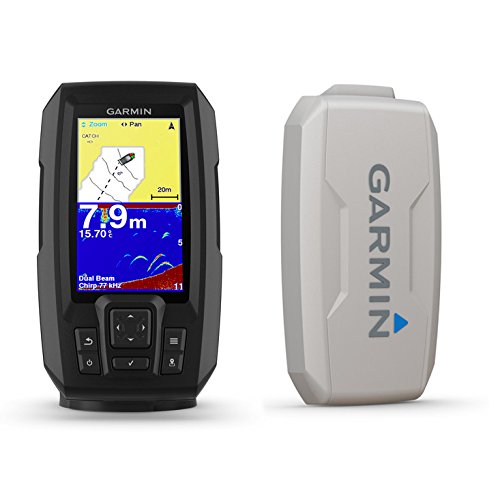
The Striker Plus 4 packs GPS mapping into a compact, budget-friendly package that works well on smaller pontoons or as a secondary unit at the helm. The dual-beam transducer uses Garmin CHIRP traditional sonar to deliver crisp target separation, and the built-in Quickdraw Contours software lets you generate 1-foot contour maps for up to 2 million acres — plenty for your home lake rotation.
The 4.3-inch QSVGA display is sunlight-readable and the interface is intuitive enough that you can get a depth reading within seconds of powering on. The protective cover included in the box helps shield the unit when not in use, which matters on a pontoon where the helm is exposed to weather. Users consistently report reliable bottom tracking at speeds up to about 8 knots, with occasional lockout above 12 knots.
The GPS function lets you mark your favorite anchoring spots, sandbars, and fishing honey holes. The unit is light at just over a pound, so it mounts easily on a tilt/swivel bracket without sagging. If you want a simple, reliable depth finder with basic GPS mapping and don’t need Down Imaging, this is a strong mid-range pick.
Why it’s great
- Built-in GPS with Quickdraw Contours mapping
- Sunlight-readable 4.3-inch display
- Includes protective cover for storage
Good to know
- No Down Imaging or Side Imaging
- Bottom lockout can occur above 12 knots
5. Humminbird PiranhaMAX 4

Humminbird’s PiranhaMAX 4 brings Down Imaging to the entry-level price bracket. For a pontoon owner who wants to see brush piles, submerged timber, and rock structure in photo-like clarity without spending on a premium unit, this is a compelling option. The dual-beam sonar lets you choose between a narrow 20-degree beam for detail and a wide 60-degree beam for coverage, giving you flexibility as you move from skinny water to deeper channels.
The 4.3-inch color TFT display is a step up from smaller monochrome screens and remains visible in most daylight conditions. Fish ID+ and depth alarms add safety and convenience, and the tilt and swivel mount fits well on a pontoon console. The included XNT 9 DI T transducer is a transom-mount skimmer, but — and this is critical for pontoons — the cable length is not officially specified. Several buyers of 24-foot pontoons report the cable falls two feet short of the dash, requiring a separate extension cable.
If your pontoon has a short cable run or you can mount the unit closer to the stern, this unit delivers excellent bang for the buck. The menu navigation is straightforward, and the Down Imaging capability helps you locate the kind of structure that holds fish near pontoon-friendly shorelines.
Why it’s great
- Down Imaging at an entry-level price
- Dual Beam sonar for shallow and deep water
- Easy-to-navigate interface
Good to know
- Transducer cable may be too short for larger pontoons
- No GPS or mapping capability
6. Lowrance Eagle Fish Finder

The Lowrance Eagle is a no-nonsense fish finder that prioritizes screen quality above all else. Its 4-inch IPS display offers wide viewing angles and stays crisp even when you are wearing polarized sunglasses — a common pain point on pontoons where the sun bounces off the water and the deck simultaneously. The reliable twist-lock connector system makes installation straightforward, and the unit accepts flush, surface, or panel mounts.
Enhanced sonar processing allows for portrait orientation and true-scroll sonar, giving you a real-time view of the bottom passing beneath your toons. The autotuning sonar dials in the optimal settings from the first power-up, which saves time for anglers who just want to launch and fish. The unit comes with a one-year warranty, which provides peace of mind given the harsh marine environment.
This finder is sonar-only with no GPS or mapping. It’s a direct replacement for earlier Lowrance Chirp 4 units — the mounting holes and footprint match exactly, making it an easy upgrade if your old unit failed. Several users running pontoons confirm it shows brush piles and fish arches effectively, though fish size accuracy is approximate.
Why it’s great
- IPS screen stays readable with polarized sunglasses
- Twist-lock connector for easy install
- Exact replacement for older Lowrance 4-inch units
Good to know
- No built-in GPS or mapping
- Sonar performance degrades at higher planing speeds
7. HawkEye DT2BX-TM In-Dash Depth Sounder
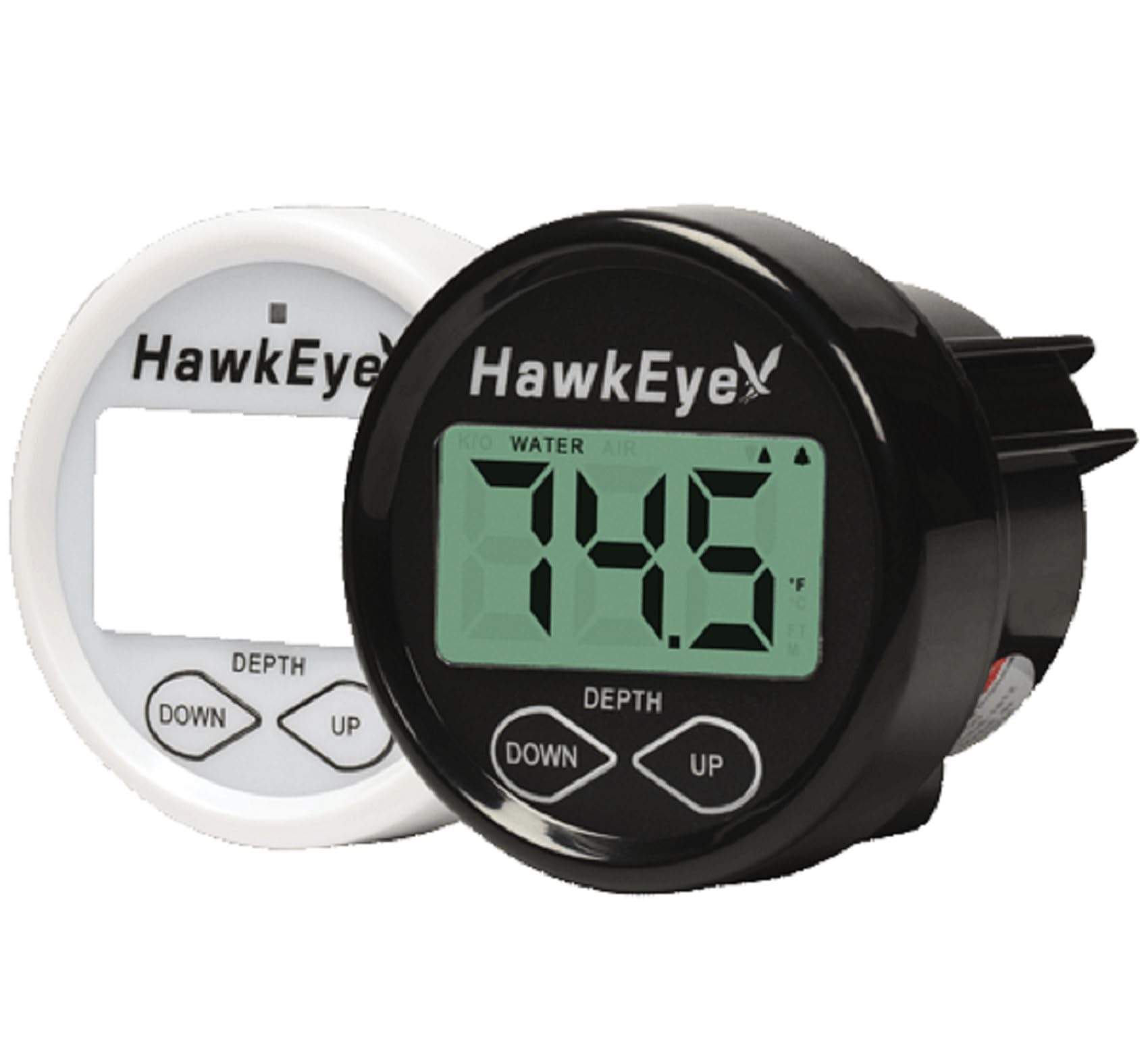
For the pontoon owner who wants nothing but a clean, permanent depth display, the HawkEye DT2BX-TM is the purest option. This in-dash sounder requires a 2-inch hole for flush mounting and presents depth readings on a large, glare-free polarized LCD with a soft glow backlight. It reads from 2.5 feet down to 600 feet, which covers virtually every freshwater and insalt water scenario a pontoon will encounter.
The three-stage advanced warning system combines an audible alarm, an LED warning light, and LCD indicators to alert you to shallow water — critical when navigating a pontoon in unfamiliar reservoirs where submerged hazards lurk just below the surface. The included transom-mount temperature transducer also reports water and air temperature, which helps you identify thermoclines where fish may be holding. Algorithmic programming reduces false readings from turbulent water, a frequent issue behind a pontoon’s wide transom.
The display is intentionally simple: depth, temperature, and alarms. There is no sonar imaging, no GPS, no fish icons. If your priority is a reliable, no-fuss depth reading that matches your boat’s dash aesthetics, this is your unit. The storage sun cover protects the screen when not in use. Note that some users report intermittent depth readings after several seasons, and HawkEye’s customer support has drawn criticism for slow responses.
Why it’s great
- Flush-mount install looks factory-original
- Three-stage shallow water alarm system
- Reads depth and water/air temperature
Good to know
- No sonar imaging or fish finding features
- Customer support has mixed reviews
8. Yoocylii Handheld Fish Finder
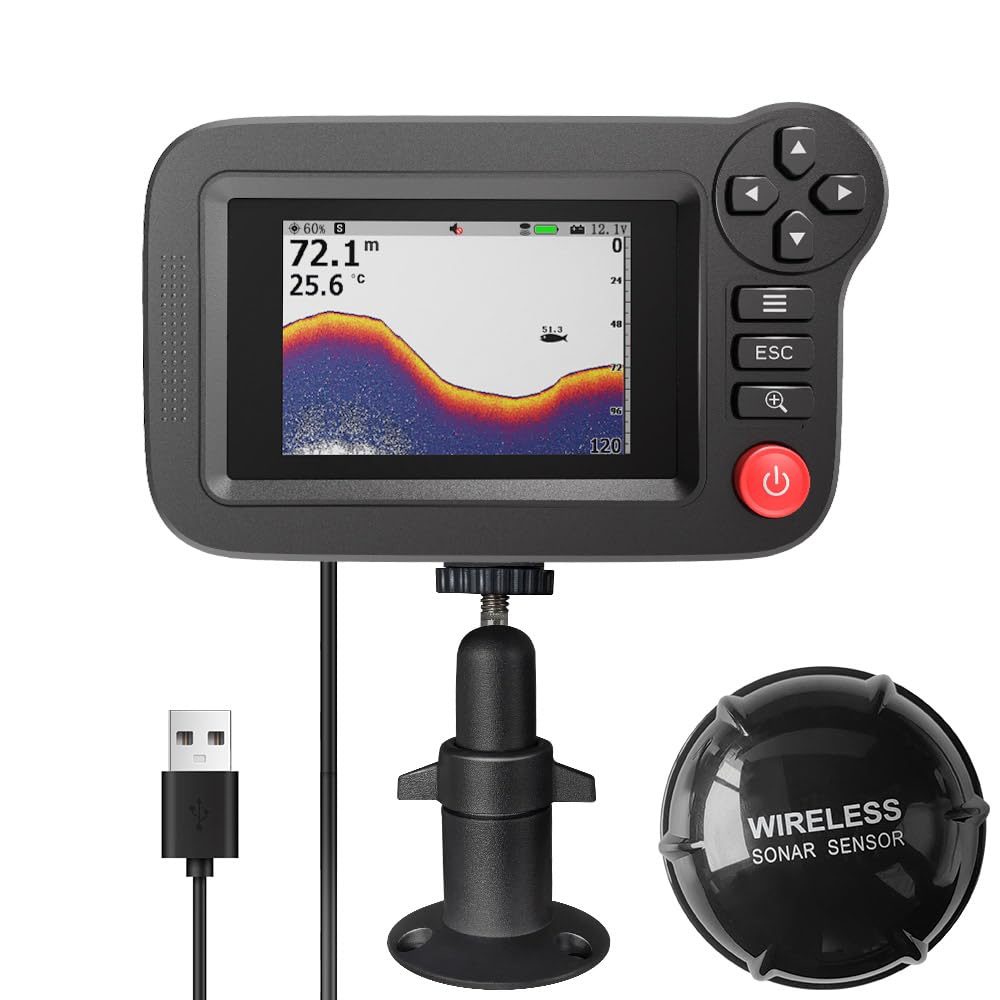
The Yoocylii takes a completely different approach: no wiring, no permanent mount, no dash installation. This handheld unit uses a wireless sonar probe that you can deploy over the side of your pontoon, making it ideal for small toons, rental boats, or anglers who want a depth finder they can move between multiple vessels. The 125 kHz sonar sensor reads down to 164 feet and the wireless range extends up to 656 feet in open conditions.
The 3.5-inch color LCD display is not as bright as premium units, but it remains readable in moderate daylight. The unit shows fish size icons (small, medium, large), water temperature, bottom contours, and depth, and it includes adjustable alarms for shallow and deep zones. The IP67 waterproof probe is robust enough for freshwater lakes and insalt bays. The unit runs on AA batteries or can be powered via USB or 12V cable.
Build quality reflects the budget price point. Several users report the locking nut on the depth finder stripping quickly, and the antenna joint can be fragile when folding flat. Battery life is also a concern — the device chews through alkaline cells if you leave it on for full-day outings. For occasional depth checks on a small pontoon, it works; for daily reliance, consider the wired options above.
Why it’s great
- Fully portable, no wiring required
- Wireless sonar probe with 164ft depth range
- Shows fish icons and water temperature
Good to know
- Build quality is entry-level with fragile antenna
- Battery life is short on standard cells
9. Garmin LiveScope Plus System

The LiveScope Plus System is the most advanced sonar technology available for recreational boats, and it transforms a pontoon into a serious fishing platform. The LVS34 transducer paired with the GLS 10 black box delivers live, real-time sonar imagery in Forward, Down, and Perspective modes. You can watch fish react to your bait in real time, see individual crappie suspended near pontoon poles, and identify exactly where the bottom transitions from sand to rock.
The improved screen clarity and reduced noise artifacts mean you spend less time interpreting fuzzy returns and more time fishing. The system supports vivid color palettes that enhance detail, making it easier to distinguish between baitfish clouds and predator species. The mount kit includes trolling motor barrel and shaft mounts, a perspective mount bracket, and all necessary cables.
There are two major considerations for pontoons. First, this is a black box system that requires a compatible Garmin ECHOMAP or GPSMAP display — it does not include its own screen, so you need a separate chartplotter to view the live feed. Second, the price point places this in a premium tier. For the dedicated pontoon angler who wants the absolute best live-view sonar, this system delivers an experience that no other depth finder can match.
Why it’s great
- Live real-time sonar with Forward, Down, and Perspective modes
- LVS34 transducer with sharp clarity and reduced noise
- Upgradeable from existing LiveScope GLS 10 systems
Good to know
- Requires separate compatible Garmin display (not included)
- Premium price point far exceeds entry-level options
FAQ
Can I mount a transom transducer on a pontoon boat?
Do I need Down Imaging on a pontoon depth finder?
Why does my depth finder lose bottom reading at high speed?
Final Thoughts: The Verdict
For most pontoon owners, the best depth finder for pontoon boat winner is the Humminbird Helix 5 Sonar G2 because it balances a large, readable display with Dual Beam PLUS sonar that works in both shallow and deep water, and its flush-mount capability gives a clean factory look on the dash. If you want GPS mapping and a bigger screen, grab the Garmin Striker Vivid 7cv. And for pure, no-fuss depth reading with a factory-style in-dash installation, nothing beats the HawkEye DT2BX-TM.

Mo Maruf
I created WellFizz to bridge the gap between vague wellness advice and actionable solutions. My mission is simple: to decode the research and give you practical tools you can actually use.
Beyond the data, I am a passionate traveler. I believe that stepping away from the screen to explore new environments is essential for mental clarity and physical vitality.