Our readers keep the lights on and my smoothie glass nicely filled. As an Amazon Associate, I earn from qualifying purchases.
A proper bowl of miso soup or a silky chawanmushi starts with one foundational layer: a clean, savory broth. Dashi packets promise that umami base without the task of grating katsuobushi or steeping kombu for hours, but the sheer number of blends on the shelf—bonito, sardine, kombu, shiitake, or a mix—makes it hard to know which pouch delivers the real depth you’re craving.
I’m Mohammad Maruf — the founder and writer behind WellFizz. I’ve spent countless hours dissecting ingredient lists, cross-referencing customer feedback on flavor strength and additive content, and evaluating the practical yield of each packet format to help you buy with confidence.
After analyzing dozens of brands and customer experiences, I’ve narrowed the field to the five that consistently produce a true, satisfying broth. Whether you need a single-serve tea bag or a bulk resealable pouch, this guide to the best dashi packets will point you to the right pick for your kitchen.
How To Choose The Best Dashi Packets
Picking a dashi packet isn’t a one-spoon-fits-all decision. The right choice depends on the type of dishes you cook most often, how much time you want to spend, and whether clean-label ingredients matter to you. Understanding a few core specs will help you avoid a broth that tastes weak, overly fishy, or loaded with unwanted additives.
Format: Powder vs. Tea Bag vs. Liquid Concentrate
Powdered dashi is instant and dissolves fully, making it ideal for seasoning stir-fries or mixing into egg mixtures for tamagoyaki. Tea-bag-style packets (individual sachets you steep and remove) give a clearer broth with no sediment, perfect for miso soup or delicate noodle broths where visual clarity matters. Liquid concentrates are the fastest option but tend to have a shorter shelf life and a slightly different flavor profile. For most home cooks, powder offers the best balance of convenience and versatility, while tea bags win when presentation counts.
Ingredient Base: Single Fish vs. Multi-Seafood Blend
Single-ingredient dashi (pure bonito, pure kombu, or pure sardine) gives you a clean, predictable flavor that works well in specific recipes. A multi-seafood blend—combining bonito, mackerel, flying fish, sardine, kombu kelp, and shiitake—creates a more layered, complex umami that can stand up to heartier stews and richer noodle soups. If you cook a wide range of Japanese dishes, a blended packet is more forgiving and versatile. If you’re making a specific dish like oyakodon that calls for a pure bonito stock, stick with a single-fish base.
Additives: MSG, Salt, and Preservatives
Many mass-market dashi powders include added monosodium glutamate, sugar, or powdered soy sauce to boost flavor cheaply. Premium packets highlight additive-free or MSG-free labels, relying on the natural glutamates from dried fish and kelp. Check the sodium content per serving: some packets are salt-heavy to act as a seasoning, while others deliver pure umami with very low salt, letting you control the final seasoning. If you’re watching sodium or prefer a cleaner taste, prioritize packets that list only dried fish, kelp, and mushrooms on the ingredient panel.
Quick Comparison
On smaller screens, swipe sideways to see the full table.
| Model | Category | Best For | Key Spec | Amazon |
|---|---|---|---|---|
| Kayanoya Original Dashi Stock Powder | Premium | Restaurant-quality miso soup & udon | 8g x 12 packets; skipjack, herring, flying fish & kombu | Amazon |
| Grelim Dashi Stock Japan | Mid-Range | Additive-free multi-seafood broth | 8g x 18 packets; 6 Japanese ingredients, no MSG | Amazon |
| Ajinomoto Hondashi Bonito Soup Stock | Mid-Range | Bulk cooking & everyday seasoning | 2.2 lb resealable bag; 1 tsp makes 3–6 cups | Amazon |
| Dried Mix Seafood Anchovy Kelp Dashi Pack | Budget | Budget-friendly tteokbokki & soup base | 16g x 10 tea bags; anchovy & kelp blend | Amazon |
| Higashimaru Udon Soup | Budget | Kansai-style udon broth in bulk | 8g x 50 bags; pre-seasoned udon soup base | Amazon |
In‑Depth Reviews
1. Kayanoya Original Dashi Stock Powder
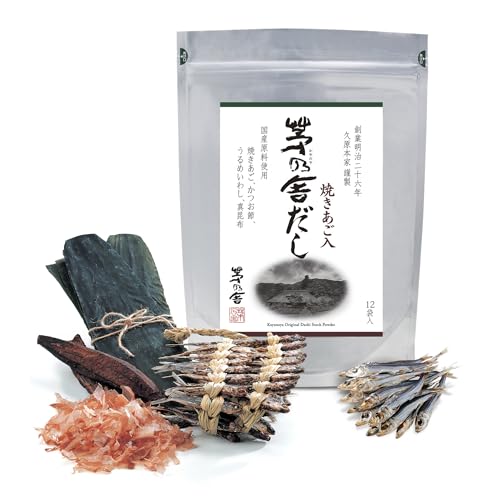
Kayanoya blends skipjack tuna flakes, round herring, roasted flying fish, and kombu into a single 8-gram packet that produces a deeply savory, lower-sodium broth in under two minutes. Customers consistently describe the flavor as clean, naturally sweet, and balanced—without the heavy salt punch found in many instant stocks. The individually wrapped packets keep the powder fresh and make portion control effortless for single meals.
This is the packet that repeat buyers reach for when they want restaurant-quality miso soup at home without spending an hour simmering bones or scraping bonito flakes. The tea-bag-style sachet steeps directly in 400 ml of water and lifts out cleanly, leaving a crystal-clear broth that works just as well for udon, chawanmushi, and even Western seafood bisques as it does for traditional Japanese stews.
The premium price reflects the quality of the Japanese-grown ingredients and the additive-free formulation. If you make dashi-based dishes a few times a week and value flavor depth over penny-pinching, Kayanoya delivers the most consistent, versatile umami base in this lineup.
Why it’s great
- Complex multi-fish umami from skipjack, herring, flying fish, and kombu
- Very low sodium for a dashi packet—lets you control final seasoning
- Tea-bag format yields a clear, sediment-free broth every time
Good to know
- Pricier per packet than bulk powder options
- Only 12 packets per box; heavy users may need to stock up
2. Grelim Dashi Stock Japan
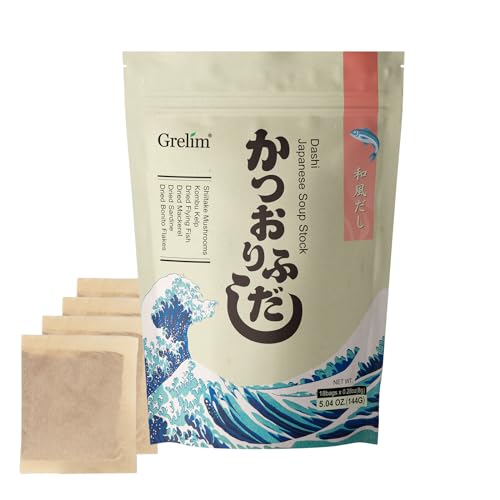
Grelim uses six Japanese domestic ingredients—bonito flakes, dried sardines, dried mackerel, dried flying fish, kombu kelp, and shiitake mushrooms—with no added salt, sugar, powdered soy sauce, chemical seasonings, or MSG. Each 8-gram tea bag makes roughly 3 to 4 cups of a light, balanced broth that customers describe as “refreshing” rather than overwhelmingly fishy.
The additive-free formulation is a standout for cooks who want to build flavor from scratch. Reviewers note that the broth works beautifully for miso soup, nabe hot pot, and even as a seasoning liquid for simmered vegetables. The 18-pack count gives you a decent supply without committing to a bulk bag that might lose potency before you finish it.
A small but honest caveat: some customers find that a single packet produces a milder broth than they’d like, especially when using it for heartier stews. Doubling up is an easy fix, but it cuts the per-use value. If you prefer a delicate, clean base that doesn’t fight with other ingredients, Grelim is a superb mid-range choice.
Why it’s great
- Six-ingredient blend creates layered umami without any additives
- No added salt or sugar—pure natural flavor
- 18 packets offer strong value for a premium ingredient list
Good to know
- Mild profile may require two packets for richer dishes
- Tea-bag format means you can’t adjust concentration mid-cook
3. Ajinomoto Hondashi Bonito Soup Stock

Ajinomoto Hondashi is the gold standard for sheer volume and kitchen versatility. This 2.2-pound resealable bag contains a fine bonito-based powder that dissolves instantly—one teaspoon makes anywhere from 3 to 6 cups of broth depending on how concentrated you want it. The zip-top closure keeps the powder fresh between uses, and the sheer quantity makes it the most cost-effective option for daily cooking.
Customers rave about its flavor for miso soup, udon broth, ramen seasoning, and tamagoyaki. The granular format gives you total control over strength and saltiness, unlike pre-portioned tea bags. It’s a staple in many Japanese home kitchens precisely because you can use a pinch for seasoning vegetables or a heaping spoonful for a full pot of sukiyaki broth.
The trade-off is that Hondashi includes added salt, sugar, and MSG to create its classic savory profile. If you’re strictly avoiding those additives, this isn’t the cleanest option. But if you cook Japanese food multiple times a week and want a reliable, affordable, and potent bonito base, the Hondashi bulk bag is unmatched in convenience and value.
Why it’s great
- Exceptional value per serving—one bag lasts heavy users for months
- Powder format allows precise strength adjustment per dish
- Trusted brand with decades of consistent quality
Good to know
- Contains MSG, sugar, and added salt—not a clean-label product
- Bonito-only flavor lacks the complexity of multi-ingredient blends
4. Dried Mix Seafood Anchovy Kelp Dashi Pack
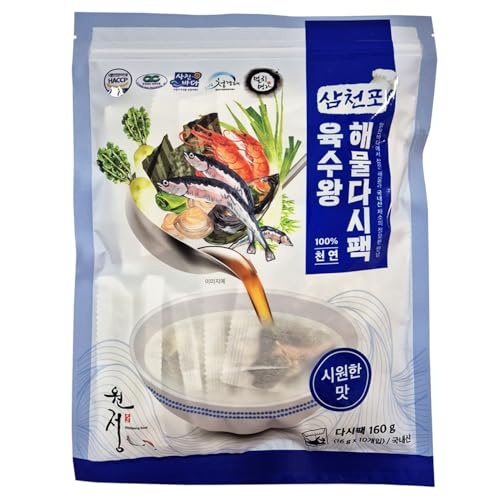
This Korean-style dashi pack blends dried anchovy and kelp into a pre-measured tea bag that produces a mild, savory broth with minimal cleanup. At 16 grams per sachet, these are larger than many Japanese-style packets—each bag is designed to steep in roughly 800 ml of water for about 10 minutes. Customers specifically praise it for tteokbokki, tteokguk (rice cake soup), and simple anchovy broth for pho-style recipes.
The flavor is noticeably milder and less salty than bonito-heavy packets, making it a good entry point for cooks new to dashi. Reviewers note that leaving the lid off during simmering reduces any fishy aroma, and the resulting broth works well as a noodle accompaniment or soup base without overwhelming other ingredients. The 10-bag count is modest, but each bag yields a generous volume of broth.
On the downside, the lower price point means the ingredient sourcing and flavor complexity don’t match premium multi-fish blends. Some customers find the anchovy-forward taste a bit one-dimensional for richer dishes. It’s a solid budget-friendly option for anchor recipes, but not the best choice when you need deep, layered umami.
Why it’s great
- Large 16g sachets produce a generous volume of broth per bag
- Very mild and not too salty—good for beginners and simple soups
- Easy cleanup with tea-bag format; no straining needed
Good to know
- Anchovy-only profile lacks the depth of fish-and-kombu blends
- Only 10 bags per package; frequent users will run out quickly
5. Higashimaru Udon Soup

Higashimaru Udon Soup is a specialized product: it’s not a pure dashi base but a pre-seasoned soup concentrate designed specifically for Kansai-style udon noodle broth. Each 8-gram bag includes the seasoning—soy sauce, mirin, and dashi—already balanced for a single serving. Just add hot water and pour over cooked udon for an instant, authentic bowl with zero guesswork.
With 50 bags in a single box, this is the highest-count package in the lineup and the most cost-effective option per serving for dedicated udon fans. Customers consistently report that it tastes exactly like the broth they get at their local Japanese noodle shop, and the expiration dates tend to be generous, making bulk storage practical. The compact box stores easily in a pantry or cupboard.
The limitation is clear: this product is locked into a udon noodle use case. It’s too salty and soy-forward to work as a general-purpose dashi for miso soup, tamagoyaki, or hot pot. If you eat udon multiple times a week and want a quick, consistent broth, Higashimaru is a fantastic buy. If you need a versatile dashi for a range of dishes, look at the unsweetened, additive-free options higher on this list.
Why it’s great
- 50-bag count offers the lowest per-serving cost in this guide
- Pre-seasoned broth saves time—just add hot water and noodles
- Authentic Kansai-style udon flavor that rivals restaurant quality
Good to know
- Not a pure dashi—pre-seasoned for udon only, not general cooking
- Contains wheat; not suitable for gluten-free diets
FAQ
Can I use dashi packets for dishes other than miso soup?
How long do opened dashi packets stay fresh?
Final Thoughts: The Verdict
For most users, the best dashi packets winner is the Kayanoya Original Dashi Stock Powder because its multi-fish blend delivers the deepest, cleanest umami with no additives and a very low sodium profile. If you want pure bulk value for daily cooking, grab the Ajinomoto Hondashi Bonito Soup Stock. And for udon fans who want instant, authentic Kansai-style broth without any measuring, nothing beats the Higashimaru Udon Soup.

Mo Maruf
I created WellFizz to bridge the gap between vague wellness advice and actionable solutions. My mission is simple: to decode the research and give you practical tools you can actually use.
Beyond the data, I am a passionate traveler. I believe that stepping away from the screen to explore new environments is essential for mental clarity and physical vitality.