Our readers keep the lights on and my smoothie glass nicely filled. As an Amazon Associate, I earn from qualifying purchases.
That moment your trolling motor sputters and dies a mile from the ramp is the moment you realize not all marine batteries are built the same. The difference between a good day on the water and a long paddle back comes down to one critical choice: the chemistry and capacity of your deep-cycle power source.
I’m Mohammad Maruf — the founder and writer behind WellFizz. I’ve spent countless hours analyzing the technical specs, real-world customer feedback, and performance data to separate the true long-distance champs from the weekend warriors in this crowded category.
Whether you run a 12v kayak rig or a 36v bass boat, finding the best deep cycle marine battery for trolling motor means balancing amp-hour capacity, weight, cycle life, and budget against your specific on-water demands.
How To Choose The Best Deep Cycle Marine Battery For Trolling Motor
Choosing the right deep-cycle battery for your trolling motor is about more than picking the biggest amp-hour number you can afford. The chemistry, weight, physical size, and discharge characteristics all determine how your rig performs on the water. Here are the key factors to weigh before you buy.
Chemistry: AGM vs Flooded vs LiFePO4
AGM (Absorbed Glass Mat) batteries are the current standard for most serious anglers because they are sealed, maintenance-free, and handle deep discharges better than flooded lead-acid batteries. Lithium iron phosphate (LiFePO4) batteries weigh roughly 60-70% less than equivalent AGM batteries, deliver nearly 100% of their rated capacity, and can last 3,000-15,000 cycles — but they cost significantly more upfront. Flooded lead-acid is the budget option but requires regular water checks and ventilation.
Amp-Hour (Ah) Capacity and Run Time
Amp-hour rating directly translates to how long your motor can push the boat before needing a recharge. A 50Ah AGM battery might give you 3-4 hours on a 55lb thrust motor at moderate speeds, while a 100Ah LiFePO4 battery can run all day on the same setup. Standard rule: multiply your motor’s amp draw by your desired run time in hours, then add 20-30% buffer to avoid deep cycling below 50% on lead-acid or below 10-20% on lithium.
Group Size and Physical Fit
Group 24, 27, and 31 are the most common sizes for trolling motor batteries. Group 24 is compact and fits many smaller kayaks and jon boats. Group 27 and 31 offer taller, wider cases that hold more lead or cells, giving higher amp-hour ratings. Measure your battery tray or compartment before buying — lithium batteries often come in group-size-compatible cases but may have different terminal positions.
Quick Comparison
On smaller screens, swipe sideways to see the full table.
| Model | Category | Best For | Key Spec | Amazon |
|---|---|---|---|---|
| Litime 12V 100Ah TM | LiFePO4 | All-day fishing on a budget | 22.16 lb, 100Ah, ABYC E-13 | Amazon |
| Battle Born BB10012 | LiFePO4 | Warranty & reliability | 31 lbs, 100Ah, 10-year warranty | Amazon |
| Power Queen Group 24 | LiFePO4 | Compact lithium upgrade | 22 lbs, 100Ah, Group 24 | Amazon |
| DC HOUSE 12V 100Ah BT | LiFePO4 | Bluetooth monitoring | 23.8 lb, 100Ah, built-in BT | Amazon |
| VMAX MR127 | AGM | Proven AGM durability | 68 lbs, 100Ah, Group 27 AGM | Amazon |
| WEIZE 12V 100Ah | AGM | Budget-friendly AGM | 60 lb, 100Ah, Group 31 | Amazon |
| FLLYROWER 12V 100Ah | LiFePO4 | Value lithium with charger | 22 lb, 100Ah, Grade A cells | Amazon |
| yeagulch 2-Pack 100Ah | LiFePO4 | Multi-battery value bundle | 22 lb each, 100Ah, 2-pack | Amazon |
| Newport 12V50Ah AGM | AGM | Ultra-light 50Ah entry | 32 lb, 50Ah, Group 24 AGM | Amazon |
In‑Depth Reviews
1. Litime 12V 100Ah TM LiFePO4 Battery

The Litime 12V 100Ah TM hits the sweet spot for anglers who want lithium performance without paying Battle Born prices. It weighs just 22.16 pounds — roughly a third of a comparable AGM battery — which translates to noticeably better hole shot and top speed on a bass boat. The built-in BMS includes smart low-temperature protection (stops charging below 32°F and discharging below -4°F), so you can fish cold waters without damaging the cells.
Real-world owners report running a 45lb thrust trolling motor for eight hours and returning with the battery still near full charge. On a 36v Minn Kota Ultrex system, one reviewer used only 10% of capacity in five hours of active fishing. The ABYC E-13 compliant BMS also includes TVS (transient voltage suppression) to protect the motor from voltage spikes in rough water.
The one trade-off is the lack of a built-in Bluetooth module — you can’t check state of charge from your phone without an add-on monitor. Also, the battery may arrive in “sleep mode” and require a wake-up charge with a lithium-compatible charger. Given the price point and performance, this is the most balanced option for most serious trolling motor users.
Why it’s great
- 64% lighter than 100Ah AGM batteries, improving boat handling
- Smart BMS with low-temp protection and transient voltage suppression
- Real-world users report all-day run time on moderate thrust motors
Good to know
- No Bluetooth or state-of-charge display included
- May need a lithium-specific charger to wake from sleep mode
2. Battle Born BB10012 LiFePO4 Battery
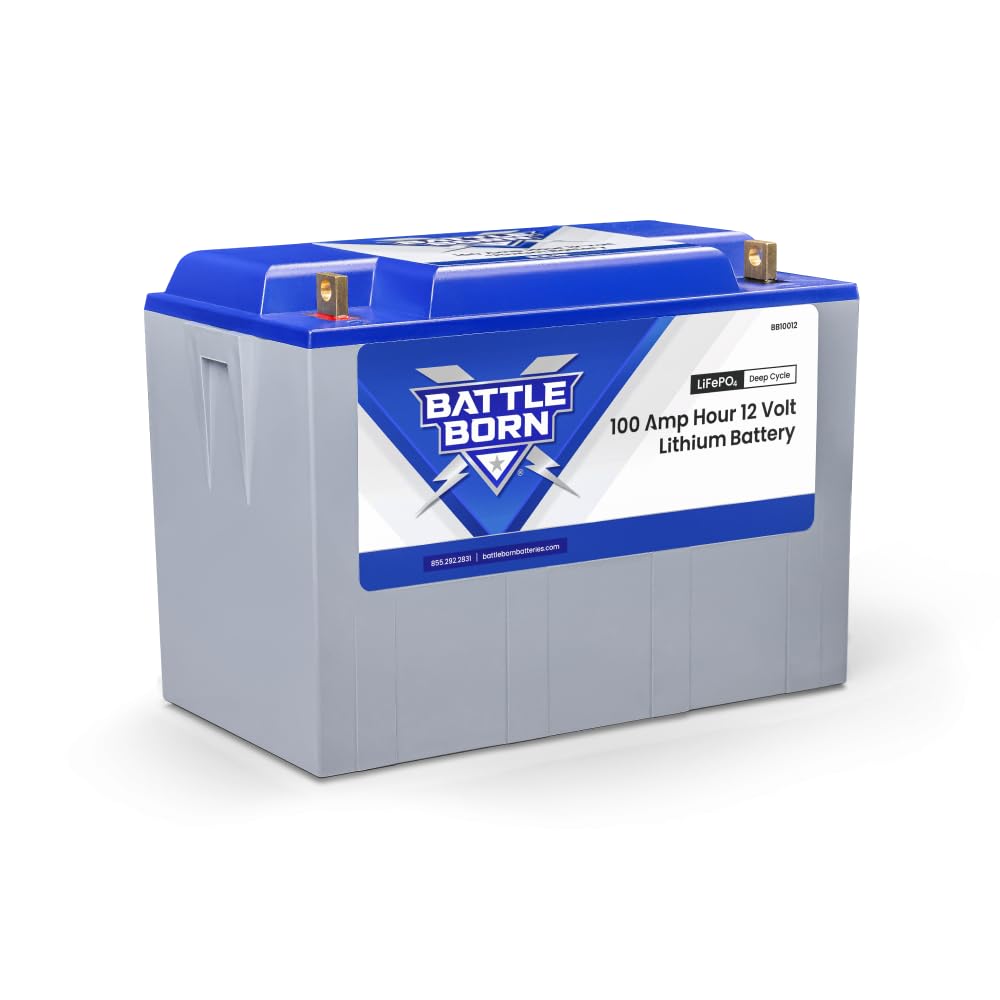
Battle Born has earned a reputation as the gold standard for drop-in lithium replacement batteries in the marine and RV world. The BB10012 weighs 31 pounds — heavier than some 100Ah lithium competitors but still 60% lighter than lead-acid — and fits standard Group 27 and 31 trays without modifications. The internal BMS is comprehensive, covering low-temperature protection, high/low voltage cutoffs, and short circuit prevention.
In real-world use, owners report powering a DC fridge and lights in an RV for 28 continuous hours compared to just 8 hours on a flooded lead-acid battery. For trolling motor applications, the LiFePO4 chemistry delivers flat voltage output throughout the discharge cycle, meaning your motor runs at full speed until the battery is nearly empty. The 10-year warranty and strong US-based customer support provide high long-term confidence.
The premium price is the obvious barrier — this is the most expensive battery in this roundup. You also need a lithium-compatible charger and potentially an upgraded alternator if using it in a vehicle charging system. For anglers who want maximum reliability and a hassle-free ownership experience, the Battle Born is the benchmark.
Why it’s great
- 10-year warranty with excellent US-based customer support
- Drop-in replacement for Group 27/31 trays with no modifications
- Full BMS protection including low-temperature and over-voltage cutoff
Good to know
- Premium price significantly higher than similarly rated competitors
- Requires lithium-compatible charger and may need alternator upgrade
3. Power Queen 12V 100Ah LiFePO4 Battery
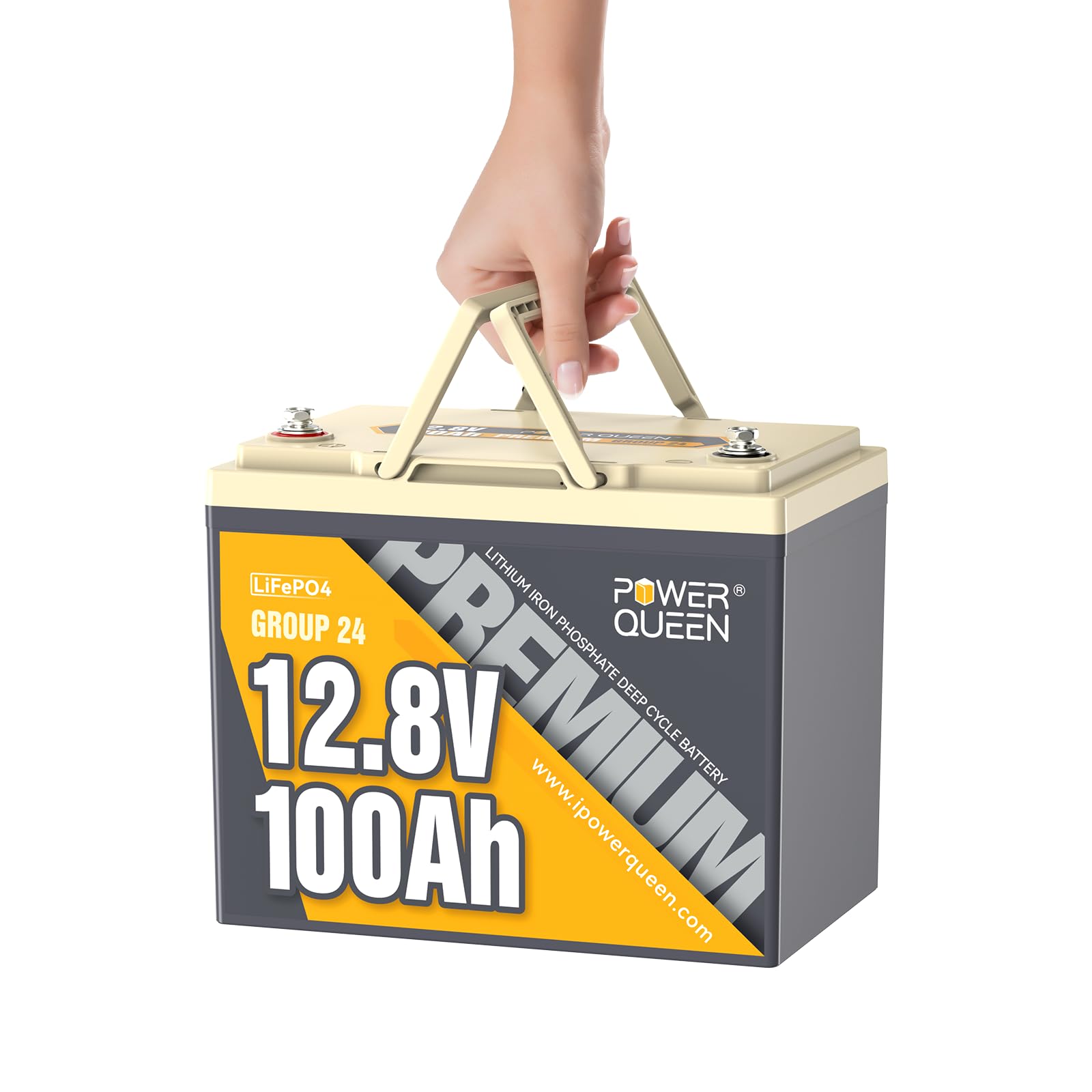
Power Queen’s Group 24 battery is built for tight spaces — it fits standard Group 24 battery boxes while delivering a full 100Ah. At just 22 pounds, it’s one of the lightest lithium options on the market, ideal for kayaks, canoes, and small jon boats where every pound affects draft and portability. The upgraded 100A BMS protects against overcharge, over-discharge, over-current, over-voltage, overload, and short circuits.
Owners have put these batteries through multi-year testing. One reviewer reported using it on a Motorguide Xi3 GPS trolling motor in a fishing kayak, running three miles offshore on Lake Erie at full power without any voltage sag or overheating. Another user installed approximately 20 Power Queen units across multiple projects, all of which outperformed their rated specs. The 5-year warranty offers above-average coverage for this price tier.
The major drawback is the lack of low-temperature charge protection. If you fish in freezing conditions, discharging below 32°F can permanently damage the cells — the BMS only protects against charging below freezing, not discharging. You will need to remove and store the battery indoors during winter if you live in cold climates. For warm-weather anglers and kayakers, this is a stellar compact lithium option.
Why it’s great
- Compact Group 24 size fits tight battery compartments
- Lightweight 22-pound design perfect for kayak and canoe use
- 5-year warranty and proven multi-year performance in real-world use
Good to know
- No low-temperature discharge protection — must store indoors in winter
- Grade-A cells but BMS lacks Bluetooth or display for state of charge
4. DC HOUSE 12V 100Ah LiFePO4 with Bluetooth
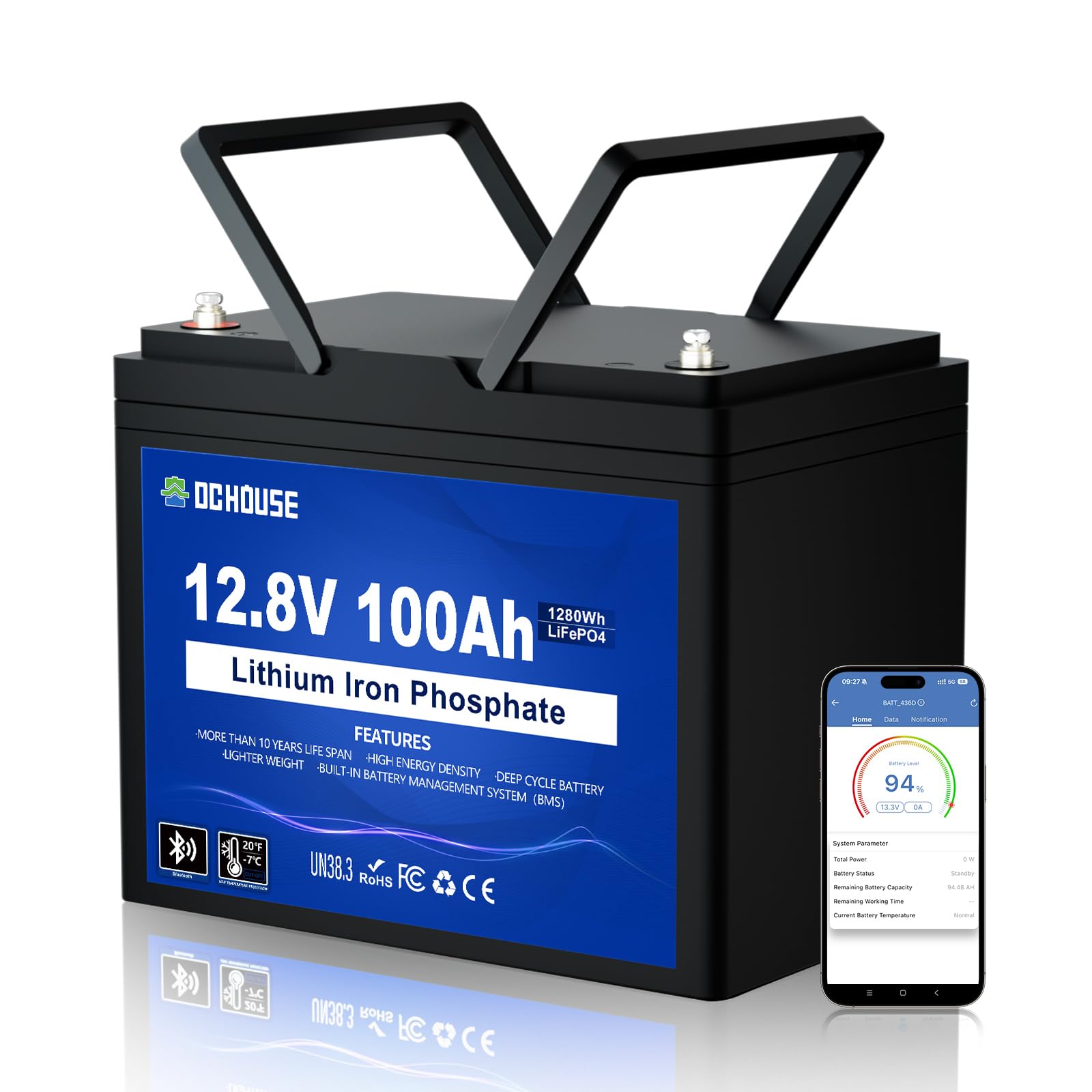
The DC HOUSE 12V 100Ah lithium battery stands out for its built-in Bluetooth module, allowing you to monitor voltage, current, state of charge (SOC), and even individual cell data through a smartphone app. The low-temperature protection is robust — it cuts off charging when the internal sensor hits 19.4°F and cuts off discharging at -4°F, with automatic recovery at 32°F. This makes it suitable for year-round use in cold climates.
Users report excellent performance powering trolling motors, CPAP machines via inverter while camping, and general marine electronics. One reviewer noted the Bluetooth range is limited to 5-10 meters, so your phone needs to stay relatively close to the battery compartment. The 3-year warranty is solid for this price bracket, though a small number of owners have flagged customer service response times as slower than expected.
The physical dimensions are close to BCI Group 24 spec but about 0.32 inches taller — verify your battery box clearance before purchase. It supports up to 4 series or 4 parallel connections but prohibits 4P4S configurations. For anglers who want real-time battery data on their phone without buying an external monitor, this is the smartest choice in the lineup.
Why it’s great
- Built-in Bluetooth for real-time voltage, current, and SOC monitoring
- Comprehensive low-temperature protection with auto-recovery
- Lightweight 23.8 lb design with solid 3-year warranty
Good to know
- Bluetooth range limited to 5-10 meters from battery
- Dimensions slightly taller than standard Group 24 — check fitment
5. VMAX MR127 AGM Deep Cycle Battery

The VMAX MR127 is a purpose-built AGM deep cycle battery that has been a staple in the marine world for years. It uses an absorbed glass mat electrolyte suspension system with heavy-duty lead-tin alloy grids that resist corrosion even after repeated deep discharges. At 68 pounds, it is heavy, but owners report that this weight comes with genuine capacity performance — running a 55lb Minn Kota for five hours and still retaining 95% charge afterward.
One reviewer ran two MR127s in series to power an 86lb thrust trolling motor, finding that four hours of active trolling only dropped the system voltage from 26.4V to 24.2V. The sealed, maintenance-free design means no water checks, no terminal corrosion, and no acid spills. The 1-year warranty is shorter than lithium options, but the 10-year expected lifespan common to quality AGM batteries is realistic for seasonal use.
The weight is the most significant downside — moving a 68-pound battery in and out of a boat is tough on the lower back, and it won’t fit in compact spaces like kayak hatches. Also, AGM batteries typically deliver only 50-60% of their rated capacity in practical deep cycling, so a 100Ah AGM effectively gives you 50-60 usable amp-hours. For anglers who want proven lead-acid durability and don’t mind the weight, the VMAX is a class leader.
Why it’s great
- Proven AGM build quality with heavy-duty lead-tin alloy grids
- Real-world users report 5+ hours of runtime on 55lb trolling motors
- Sealed, maintenance-free, and spill-proof design
Good to know
- Very heavy at 68 pounds — difficult to transport and install
- Only 50-60% practical usable capacity compared to lithium
6. WEIZE 12V 100Ah AGM Deep Cycle Battery

The WEIZE 12V 100Ah AGM battery is a budget-friendly entry point into the 100Ah AGM market. It fits Group 31 battery trays and weighs 60 pounds, making it slightly easier to handle than the VMAX MR127 but still a heavy lift. The 3% self-discharge rate means it holds its charge well during off-season storage, and the sealed lead-acid design requires no water filling or fluid level checks.
Owners have used this battery successfully for trolling motors, solar power backup, RV house batteries, and even emergency sump pump power. One reviewer paired two units with 150W solar panels for an off-grid RV setup and reported two years of trouble-free use. The AGM chemistry handles deep discharges better than flooded batteries, but like all AGM models, you should avoid routinely draining below 50% capacity to maximize lifespan.
The biggest limitation is the lack of a dedicated marine terminal. The battery comes with standard screw terminals that may require adapter posts for some trolling motor connectors. The 60-pound weight is still substantial, and the warranty is limited — check the seller’s policy before purchasing. For budget-conscious buyers who need 100Ah of reliable AGM power, this is one of the better values in this tier.
Why it’s great
- Affordable entry into 100Ah AGM capacity for trolling motors
- Very low 3% self-discharge rate for off-season storage
- Sealed, maintenance-free design with good build quality
Good to know
- Standard screw terminals may need adapters for marine trolling motor connectors
- 60-pound weight is manageable but still heavy for small boats
7. FLLYROWER 12V 100Ah LiFePO4 Battery

FLLYROWER packs Grade A LiFePO4 cells into a 22-pound package that claims up to 16,500 deep cycles — an outlier number even among lithium manufacturers. The built-in BMS covers low-temperature protection, high-temperature cutoff, short circuits, over-discharge, overcharge, overcurrent, and overheating. An included 7A AC charger adds value, though buyers note the charge speed is modest for a 100Ah pack.
Real-world testing by a reviewer showed an actual capacity of 103Ah on the first cycle, slightly exceeding the rated spec. Owners using it with Minn Kota trolling motors in saltwater report consistent all-day power with massive weight savings compared to the lead-acid batteries they replaced. The battery supports up to 5 series connections (5S) with no limit on parallel connections, enabling 24V, 36V, 48V, and 60V setups.
The lack of a state-of-charge indicator or Bluetooth is a noticeable omission — you cannot check remaining capacity without a separate meter or multimeter. Some users also reported tricky threads on the terminal bolts. The included USB-A ports are a nice bonus but not useful for trolling motor setups. For the price, this is a high-value lithium option that comes ready to run out of the box.
Why it’s great
- Includes free 7A AC charger — saves buying separately
- Grade A cells tested at over 100Ah actual capacity
- Supports 5S series for 60V setups with unlimited parallel expansion
Good to know
- No Bluetooth, display, or battery management app
- Included charger is slow for 100Ah pack
8. yeagulch 2-Pack 12V 100Ah LiFePO4 Battery
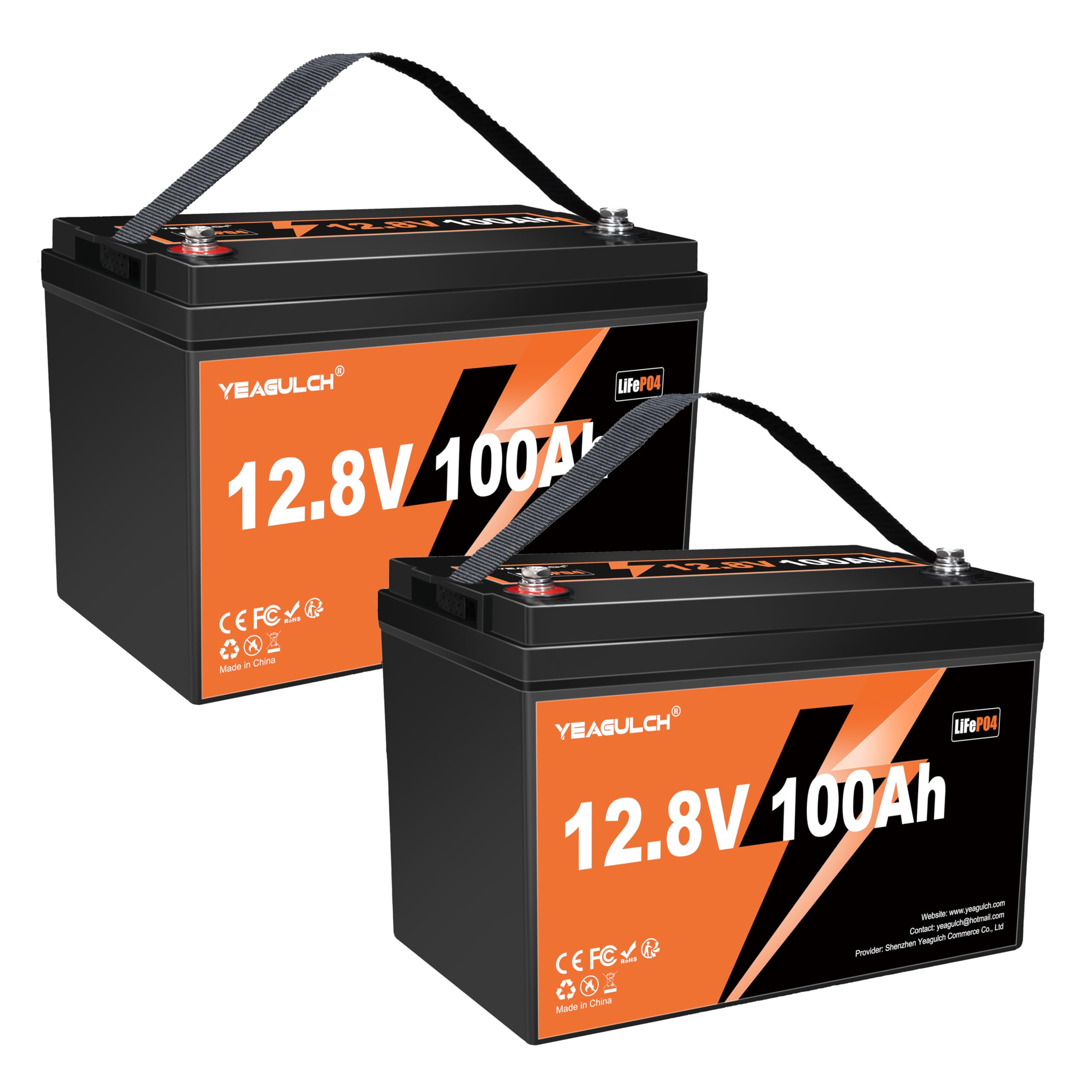
The yeagulch 2-pack delivers two 100Ah LiFePO4 batteries at a combined price that often undercuts single units from premium brands. Each battery weighs approximately 22 pounds — a 60-70% weight reduction over equivalent AGM batteries. This 2-pack format is ideal for 24V trolling motor systems or for doubling the capacity in parallel to 200Ah for full-day adventures.
Owners report excellent performance on 80lb trolling motors on 10-foot pontoons, with one user running multiple outings before needing a recharge. The LiFePO4 chemistry provides a flat voltage curve that delivers 10% more speed than lead-acid batteries at the same voltage. However, the BMS lacks Bluetooth connectivity, so you cannot monitor individual cell health or state of charge remotely.
The manufacturer warns against use in trolling motors exceeding 700W of power, so these are best suited for standard 12V and 24V setups rather than high-output 36V systems. Some customer feedback flags inconsistent quality — one reviewer had all four units fail in parallel while a single marine lead-acid battery outperformed them. Given the low per-unit cost, the risk is manageable, but buy with the expectation that you may need to test each battery on arrival.
Why it’s great
- Two 100Ah batteries at a very competitive combined price
- Each battery weighs just 22 pounds — ideal for 24V setups
- Flat voltage curve delivers full motor speed until battery is nearly empty
Good to know
- No Bluetooth or state-of-charge display on either battery
- Some users report inconsistent quality — test on arrival
9. Newport 12V50Ah AGM Deep Cycle Battery
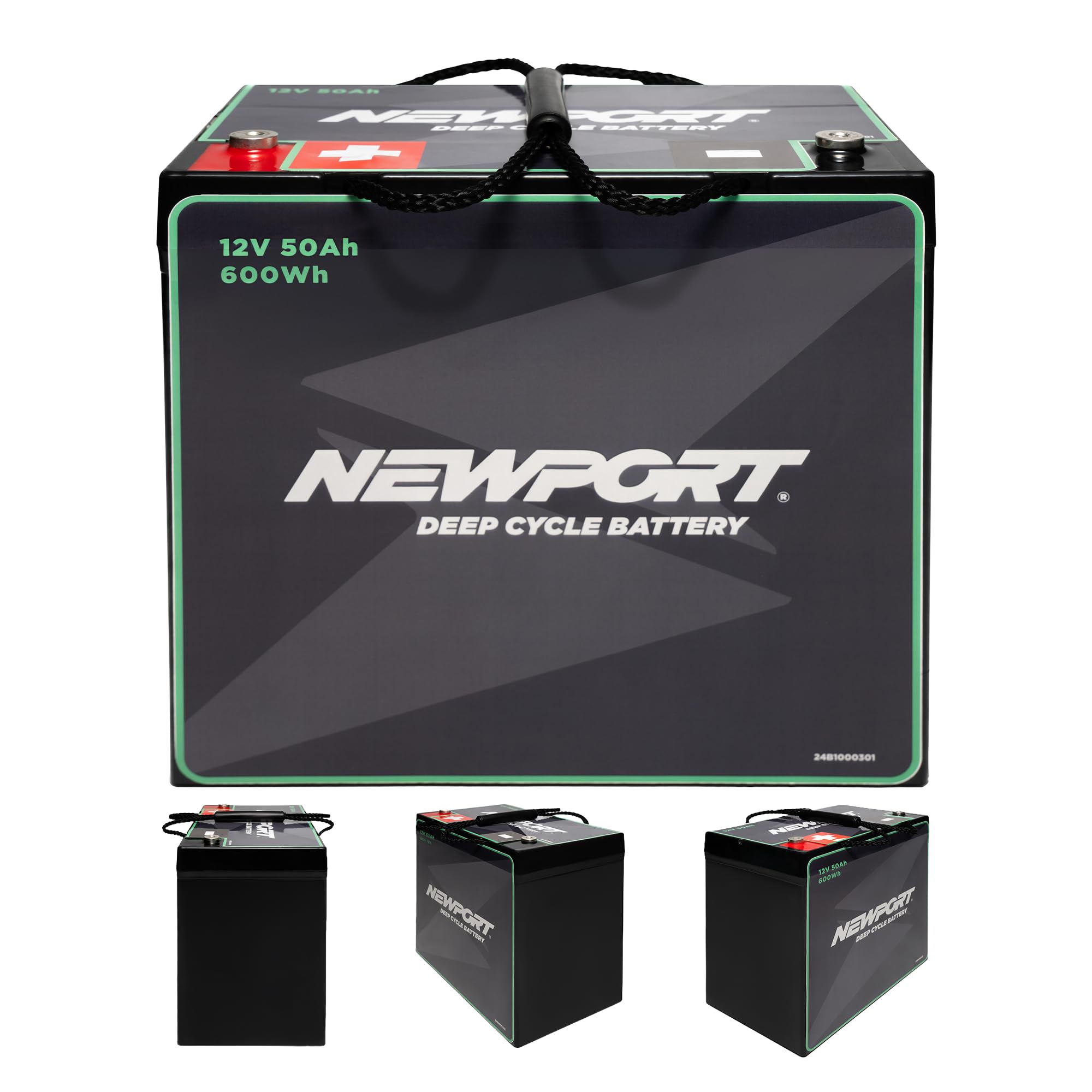
The Newport 12V50Ah AGM battery is a lightweight entry-level option for small kayaks, canoes, and dinghies with modest power needs. At 32 pounds and a 50Ah capacity, it is the lightest and smallest battery in this guide, making it easy to carry in one hand and install in tight compartments. The sealed AGM construction is leak-proof and maintenance-free, with marine-style terminals for direct trolling motor connections.
Owners report good real-world performance — one reviewer used it for full-day kayak fishing with a 55lb trolling motor at moderate speeds and got over four hours of steady power. Another user ran a 25lb thrust motor at full speed and achieved around seven hours before depletion. The battery also survived a 20mph tumble from a truck bed with only cosmetic damage and no performance issues, suggesting durable internal construction.
The 50Ah capacity is the main limitation — you will get roughly half the run time of a 100Ah battery, which may not be enough for multi-day excursions or large boats. Some owners reported the battery did not arrive fully charged and expected longer initial run time. The 1-year warranty is standard for AGM batteries. This is a solid choice for occasional weekend use on small, lightweight fishing rigs where every pound matters.
Why it’s great
- Lightweight 32-pound design — easy to carry and install in small boats
- Marine terminals for direct trolling motor connection
- Durable build survived a 20mph tumble with no performance loss
Good to know
- 50Ah capacity limits run time — half that of 100Ah batteries
- May arrive without full charge; requires initial top-up
FAQ
Can I use a lithium battery in a 24V or 36V trolling motor system?
How do I know if my trolling motor needs a group 24, 27, or 31 battery?
What’s the difference between a deep-cycle battery and a starting battery for a trolling motor?
Can I charge a LiFePO4 battery with my existing lead-acid charger?
Final Thoughts: The Verdict
For most users, the best deep cycle marine battery for trolling motor winner is the Litime 12V 100Ah TM because it balances lightweight lithium performance, comprehensive BMS protection, and a very competitive price without cutting corners on critical features like low-temperature cutoff. If you want the gold standard in reliability with the best warranty in the industry, grab the Battle Born BB10012. And for budget-conscious anglers who need a proven AGM workhorse, nothing beats the WEIZE 12V 100Ah AGM for price-to-performance on a tight budget.

Mo Maruf
I created WellFizz to bridge the gap between vague wellness advice and actionable solutions. My mission is simple: to decode the research and give you practical tools you can actually use.
Beyond the data, I am a passionate traveler. I believe that stepping away from the screen to explore new environments is essential for mental clarity and physical vitality.