Our readers keep the lights on and my smoothie glass nicely filled. As an Amazon Associate, I earn from qualifying purchases.
Setting drywall screws too deep tears the paper face, weakens the board, and creates extra mud work. A standard drill lacks the adjustable depth control and high RPM needed to drive thousands of screws flush without breaking the surface. Relying on a clutch-style drill for hanging sheetrock means constant over-driving or under-driving, costing you time and materials.
I’m Mohammad Maruf — the founder and writer behind WellFizz. I’ve spent hundreds of hours analyzing motor specs, depth-adjustment mechanisms, and ergonomic designs to separate production-grade drywall tools from general-purpose drills that should stay in the toolbox.
This guide breaks down the best drywall-specific screw guns and high-torque alternatives so you can hang board faster with fewer callbacks. Whether you prefer corded reliability or cordless convenience, you’ll find a drill for drywall that matches your pace and budget.
How To Choose The Best Drill For Drywall
Not every drill can keep screws flush without breaking the paper face. A dedicated drywall screwgun uses a depth-sensitive nosepiece that stops driving the moment the screw head reaches the correct depth. Standard drills with a clutch lack this precision and often require a separate drywall attachment to work correctly. Focus on three specs: RPM range, depth-adjustment mechanism, and power source.
Matched RPM for Your Stud Material
Drywall screw guns typically run between 4,000 and 5,300 RPM. Lower RPM models (around 4,000) provide smoother control when driving into light-gauge steel studs, where too much speed can strip the screw or damage the material. Higher RPM guns (5,000+) drive faster into wood framing, reducing fatigue on large jobs. If you plan to hang on both wood and metal, a variable-speed trigger gives you the flexibility to dial in the right pace for each surface.
Depth-Sensitive Nosepiece vs. Collated Attachment
A depth-sensitive nosepiece uses a spring-loaded cone that pushes against the drywall as you drive the screw. When the screw reaches the correct depth — typically just below the paper surface — the clutch disengages and prevents overdriving. This is the core feature that separates a screwgun from a standard drill. Collated attachments feed screws automatically from a strip, dramatically speeding up production work. For DIYers hanging a few sheets of board, a single-feed nosepiece is sufficient and keeps tool weight lower.
Corded Power vs. Cordless Convenience
Corded models like the Makita FS4200 deliver consistent full power at a lower price point and don’t require battery management. They are ideal for interior work where a generator or outlet is nearby. Cordless models such as the Bosch GTB18V-45N allow you to move around the room without dragging a cord, but you must factor in battery runtime and charging cycles. For a full-day hanging job on a single room, a corded tool is often simpler. For multi-room or multi-floor work, cordless freedom saves significant setup time.
Quick Comparison
On smaller screens, swipe sideways to see the full table.
| Model | Category | Best For | Key Spec | Amazon |
|---|---|---|---|---|
| DEWALT DW255 | Corded Screwgun | Production drywall on wood framing | 5,300 RPM / 6.0 Amp | Amazon |
| Milwaukee 2866-22 M18 | Cordless Kit | Jobsite flexibility with collated use | 4,500 RPM / 5.0 Ah Batteries | Amazon |
| Makita FS4200 | Corded Screwgun | Consistent depth on wood and steel | 4,000 RPM / 6.0 Amp | Amazon |
| Bosch GTB18V-45N | Cordless (Bare) | Ergonomic one-handed operation | 4,500 RPM / Brushless | Amazon |
| RIDGID ZRR86630 | Cordless (Bare) | Fast collated feeding for large jobs | 4,000 RPM / 330 in-lbs | Amazon |
| RYOBI P225 | Cordless (Bare) | Ryobi fanatics doing weekend projects | 4,700 RPM / Brushless | Amazon |
| SKIL DL6293B-10 | Cordless Kit | DIYers wanting a versatile drill for drywall and other tasks | 450 in-lbs / 2.0 Ah Battery | Amazon |
In‑Depth Reviews
1. DEWALT DW255 Drywall Screw Gun
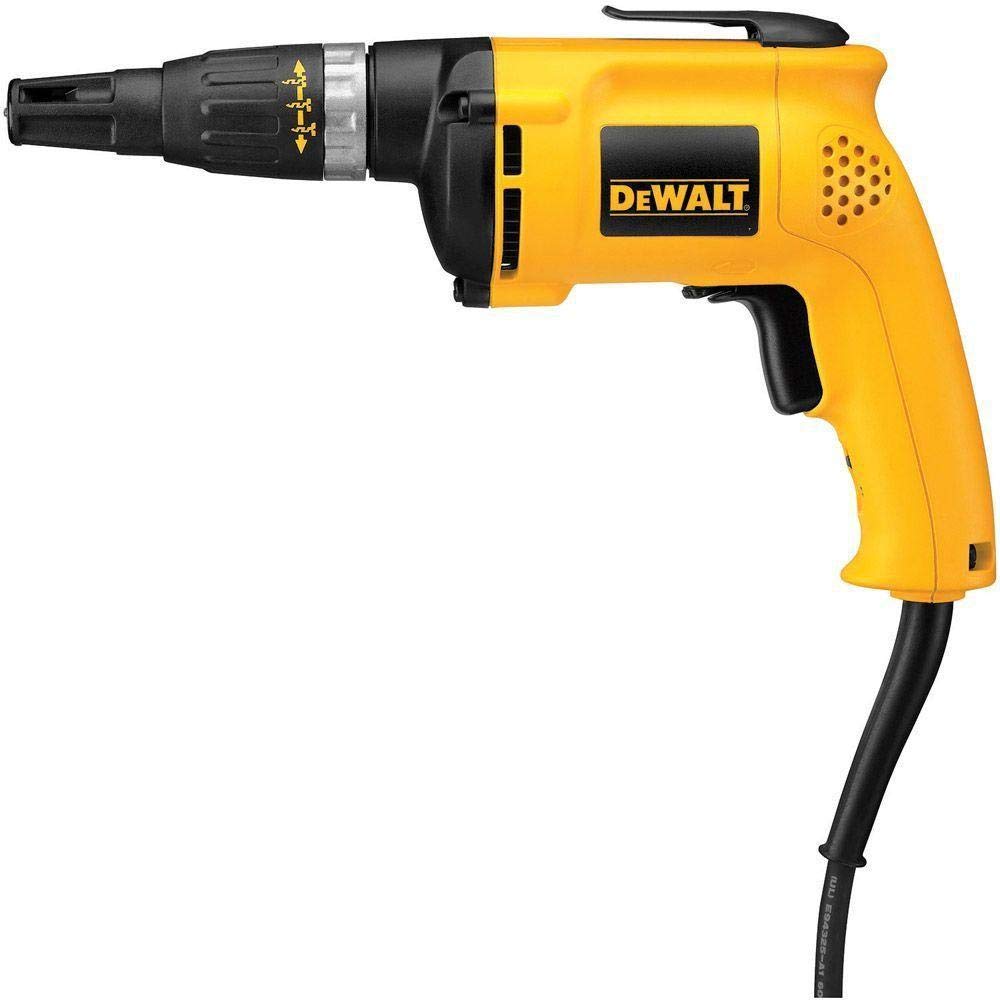
The DEWALT DW255 ranks as the top performer for pure drywall driving speed. Its 6.0-amp motor spins at 5,300 RPM — the fastest among the models reviewed here — which translates to rapid fastener installation on wood framing. The depth-sensitive nosepiece uses a “set and forget” micro-adjustment that produces consistent screw depth after a short setup period, eliminating the guesswork common with a standard drill clutch.
The helical-cut steel gears and heat-treated internal components are built for long-term durability on job sites where the tool runs hard all day. Weighing just 4.2 pounds, the two-finger trigger design reduces hand fatigue when setting hundreds of screws in a single session. The corded power delivery ensures zero downtime for battery swaps, which matters when you are working against a crew finishing schedule.
A Phillips #2 bit is included, though the reduced-tip bits can be difficult to source locally — plan to stock spares if you use this gun daily. Some users report that the depth and clutch adjusters are stiff out of the box and require a break-in period before moving smoothly. Once set, however, the consistency is hard to beat at this performance tier.
Why it’s great
- Fastest RPM (5,300) for production wood-framing work
- Lightweight at 4.2 lbs with ergonomic two-finger trigger
- Durable helical-cut steel gears for long service life
Good to know
- Depth and clutch adjusters can feel stiff initially
- Reduced-tip Phillips bits require sourcing a separate supply
- Corded design limits mobility away from a power outlet
2. Milwaukee 2866-22 M18 FUEL Drywall Screw Gun
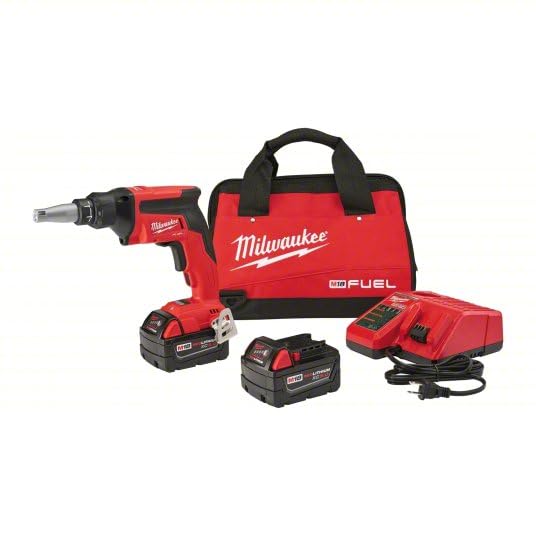
The Milwaukee 2866-22 is a cordless powerhouse designed for crews that need to move freely around a jobsite. The 4,500 RPM brushless motor delivers consistent power, and the kit ships with two 5.0 Ah batteries, providing enough runtime for extended hanging sessions without stopping to charge. The tool supports both single-feed operation and a collated attachment, making it viable for high-volume production work.
User feedback highlights the auto-shooting feature — when paired with a collated attachment, the gun feeds and drives screws automatically upon contact, which speeds up ceiling work significantly. The metal construction and M18 FUEL platform mean this tool shares battery compatibility with a wide range of Milwaukee job site equipment, simplifying your battery ecosystem if you already own other M18 tools.
The total weight — 9.3 pounds with batteries — is noticeably heavier than a corded screwgun. One-hand operation for extended overhead work may require a forearm rest or a support handle. A few users mention that they needed to read the instructions carefully to dial in the collated attachment, but once adjusted, the tool performed without issues.
Why it’s great
- Two high-capacity 5.0 Ah batteries for all-day runtime
- Auto-shooting collated mode speeds up production ceiling work
- Shares M18 battery platform with other Milwaukee tools
Good to know
- Heavier than corded alternatives at over 9 lbs with battery
- Collated attachment requires careful initial adjustment
- Premium investment compared to bare-tool or corded options
3. Makita FS4200 Drywall Screwdriver
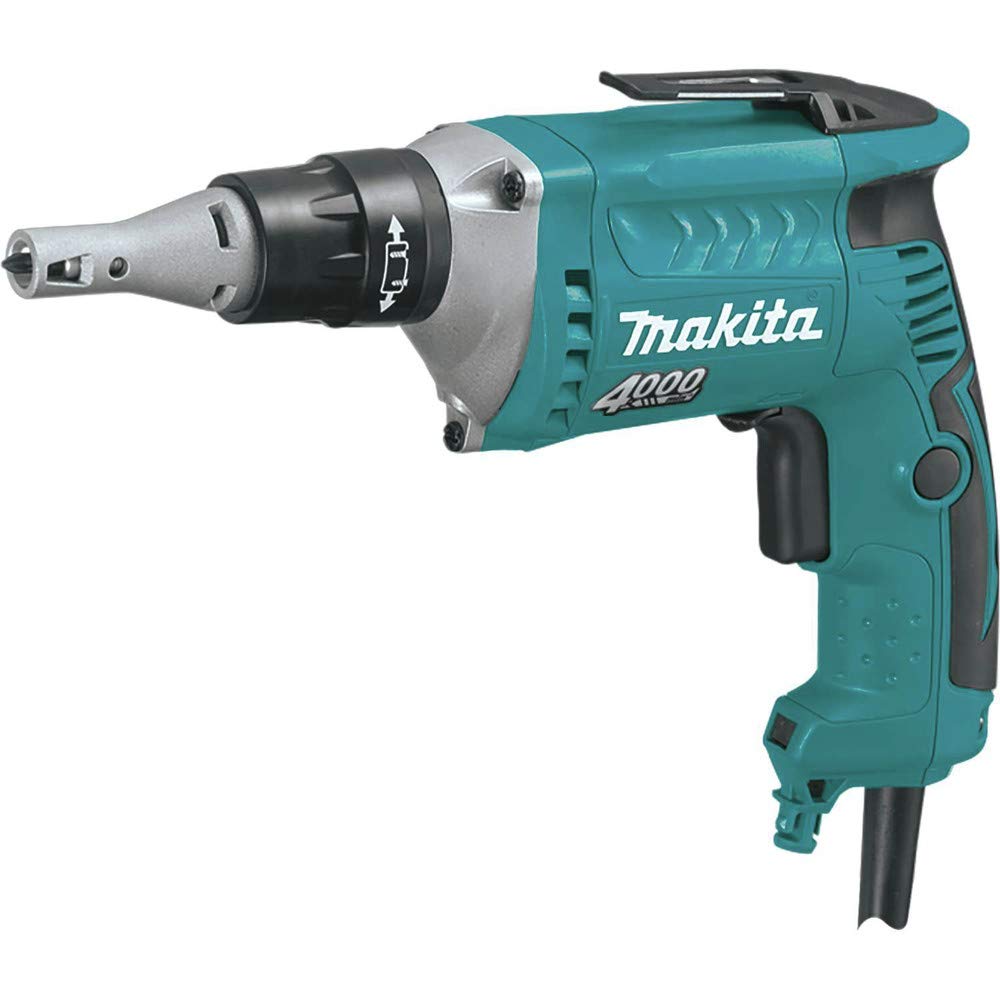
The Makita FS4200 delivers a more controlled driving experience with its 4,000 RPM maximum, making it the better choice for light-gauge steel studs where lower speed prevents stripping. The 6.0-amp motor provides ample torque without the high-speed surge that can cause over-penetration on thinner metal. The depth-adjustment system is intuitive and responsive — users report that a quick turn on the nosepiece produces consistent, repeatable results after just a few test screws.
The tool weighs only 3 pounds, making it the lightest corded model in this lineup. The directional air-flow vents route exhaust away from the operator, a thoughtful detail when working in tight spaces or inside closed rooms. An LED light illuminates the work area, which is helpful for driving screws in closets or corners where ambient lighting is poor. The steel-reinforced belt clip adds convenience for tool-on-toolbelt carry.
Some users note that the 4,000 RPM limit makes it slightly slower than a 5,000+ RPM gun when driving into dense wood framing, particularly for larger-gauge drywall screws. The included construction and warranty terms are standard — a 1-year manufacturer warranty — and the alloy steel gears have held up well under regular use in independent reviews.
Why it’s great
- Low 3 lbs weight reduces fatigue during long hanging sessions
- Depth adjustment is simple and produces consistent results
- LED light and directional vents improve visibility and comfort
Good to know
- 4,000 RPM is slower than premium corded competitors
- 1-year warranty is shorter than some competing brands
- Not ideal for high-speed wood-framing production jobs
4. Bosch GTB18V-45N 18V Brushless Screwgun (Bare Tool)

The Bosch GTB18V-45N focuses on operator comfort with a barrel-grip design that places your hand directly above the work surface. This Xtend Drive system activates the motor only when the bit senses pressure, reducing noise and preserving battery charge when the tool is idle. The 4,500 RPM brushless motor provides clean power for both wood and steel stud applications, and the variable-speed trigger gives you fine control for starting screws without stripping.
At just above 2 pounds (bare tool), it is among the lightest cordless screwguns available. The retractable depth gauge allows you to reverse a mis-set screw without removing the nosepiece cone — a minor but real time-saver on a busy wall. The belt clip is included, and the lock-on switch supports continuous operation for long runs across a ceiling line.
One limitation reported by contractors is that adjusting a screw that was set too shallow or too deep requires a separate screwdriver, since the tool lacks a slow-speed reverse mode. The bare-tool format means you need to supply a compatible 18V battery and charger, which adds to the upfront cost if you are not already invested in the Bosch 18V ecosystem.
Why it’s great
- Barrel-grip design keeps hand close to work for maximum control
- Retractable depth gauge enables quick reverse without cone removal
- Lightest cordless option at barely 2 lbs (bare tool)
Good to know
- Bare tool requires separate purchase of battery and charger
- No slow-speed reverse for fine-tweaking set screws
- Limited to users already invested in the Bosch 18V platform
5. RIDGID ZRR86630 18V Brushless Drywall Screwdriver with Collated Attachment

The RIDGID ZRR86630 is built for speed, arriving with a collated attachment that feeds screws from a strip automatically. The 4,000 RPM brushless motor and 330 inch-pounds of torque handle both wood and light-gauge steel studs efficiently. Users report that once the collated feed is dialed in, the tool “spits screws in fast” — a clear advantage for contractors working through hundreds of fasteners per room.
The metal construction and RIDGID nameplate suggest long-term durability. The tool-only format lets you use existing RIDGID 18V batteries, which is convenient for anyone already in that ecosystem. The trigger response is crisp, and the depth adjustment on the nosepiece is straightforward for setting screw depth to the correct break point on the drywall paper.
A notable issue surfaced in user reports: finding compatible drive shanks for the collated attachment can be inconsistent across different batches, and RIDGID customer support has, in some cases, directed buyers to purchase from Home Depot rather than Amazon for guaranteed compatibility. The collated attachment adds complexity and weight, so if you prefer a simple single-feed experience, this may feel over-engineered for smaller projects.
Why it’s great
- Collated attachment dramatically speeds up repetitive screw driving
- Metal construction and brushless motor for durability
- Compatible with existing RIDGID 18V battery line
Good to know
- Drive shank compatibility can vary across retail channels
- Collated setup is bulkier and heavier than non-collated tools
- Some users report support challenges confirming part fitment
6. RYOBI P225 ONE+ 18V Cordless Brushless Drywall Screw Gun (Bare Tool)

The RYOBI P225 is a cordless screwgun designed for homeowners who already own RYOBI ONE+ batteries. Spinning at 4,700 RPM, it slots between lower-speed steel-focused models and high-speed wood-focused tools, offering a decent middle ground for general home renovation. The brushless motor extends runtime, and the aluminum construction keeps the bare tool weight manageable at 2.73 pounds.
A standout feature for residential users is the quiet mode toggle, which reduces motor noise during operation — useful when working near occupied rooms or late in the day. The depth adjustment is straightforward, and the tool accepts standard 1/4-inch hex bits. For a weekend warrior hanging a few boards in a basement or garage, this screwgun eliminates the need to drag cords across a room.
Some users report that the screw-depth setting can drift during use if the tool is handled roughly, requiring periodic re-checks. The magnet that holds screws on the bit tip is weaker than on more expensive screwguns, making it harder to align screws single-handedly in overhead work. This is a trade-off at a lower entry point, and it reflects the tool’s positioning as a capable but budget-conscious option.
Why it’s great
- Quiet mode reduces noise for residential renovation projects
- Shares the huge RYOBI ONE+ battery system
- Brushless motor delivers good runtime per charge
Good to know
- Depth setting can drift during prolonged use
- Magnet at bit tip is weak for holding screws in place
- Bare tool requires separate battery and charger purchase
7. SKIL PWR CORE 20 DL6293B-10 Brushless Drill Driver Kit

The SKIL DL6293B-10 is a general-purpose cordless drill, not a dedicated screwgun, but its high torque output and 17-stage clutch make it a strong contender for drywall work when paired with a drywall bit. The brushless motor delivers up to 450 inch-pounds of torque, which is more than enough to drive screws through drywall into wood or light-gauge metal studs. The PWR Jump charger can bring the 2.0 Ah battery from zero to 25% in about five minutes — enough to drive roughly 100 screws before needing a full charge.
The keyless ratcheting chuck accepts standard hex bits, and the LED worklight with pre-light and after-glow function illuminates dim corners. At 3.4 pounds with the battery attached, it is heavier than a screwgun but still comfortable for single-hand operation. The kit includes the drill, one 2.0 Ah battery, and the rapid charger, so you have everything needed to start working out of the box.
Without a depth-sensitive nosepiece, you must rely on the clutch settings and your own feel to avoid overdriving screws. This is fine for smaller repair jobs or a single room, but for production work, a dedicated screwgun is faster and more consistent. Homeowners who need a drill for drywall plus general drilling and driving tasks will appreciate the versatility, but experienced hangers should stick with a drywall-specific tool.
Why it’s great
- 450 in-lbs torque handles drywall and stud driving with ease
- PWR Jump charger provides rapid 5-minute partial charge
- Versatile drill format works for general tasks beyond drywall
Good to know
- No depth-sensitive nosepiece — requires clutch and feel for depth
- General drill design is less efficient for high-volume screw driving
- 2.0 Ah battery may need recharging for larger rooms
FAQ
Can I use a standard drill instead of a drywall screwgun for hanging sheetrock?
What RPM do I need for drywall on steel studs?
Is a collated attachment worth the extra cost and weight?
Final Thoughts: The Verdict
For most users, the best drill for drywall winner is the DEWALT DW255 because it combines the highest RPM (5,300) in a lightweight, corded format that never loses power mid-run. If you want cordless flexibility and kit completeness, grab the Milwaukee 2866-22 M18 FUEL. And for steady control on steel studs with a bare-tool price, nothing beats the Bosch GTB18V-45N for ergonomic precision.

Mo Maruf
I created WellFizz to bridge the gap between vague wellness advice and actionable solutions. My mission is simple: to decode the research and give you practical tools you can actually use.
Beyond the data, I am a passionate traveler. I believe that stepping away from the screen to explore new environments is essential for mental clarity and physical vitality.