Our readers keep the lights on and my smoothie glass nicely filled. As an Amazon Associate, I earn from qualifying purchases.
When summer sun turns your bedroom into an oven, the right window covering does more than just dim the lights—it physically slows the transfer of radiant heat through the glass. A standard sheer panel offers zero resistance to infrared energy, but a properly constructed thermal curtain creates a dead-air barrier that raises your comfort level without touching the thermostat.
I’m Mohammad Maruf — the founder and writer behind WellFizz. For this guide, I’ve combed through hundreds of verified customer reports and compared fabric construction, lining density, and mounting specs to determine which panels actually deliver measurable heat rejection rather than just marketing claims.
Whether you live in a sun-baked apartment or a south-facing home, finding the right curtains to keep heat out means looking past color and focusing on weave density, back-coating technology, and panel width relative to your window opening.
How To Choose The Best Curtains To Keep Heat Out
Not every curtain marked “thermal” actually stops radiant heat. The key lies in how the fabric layers are constructed and how tightly the panel seals against the window frame. Focus on these three factors before you compare colors or patterns.
Weave Density and Lining Type
Triple-weave polyester fabric creates three separate layers—a decorative face, a core that traps air, and a backing that reflects light. Two-layer panels use a separate blackout lining sewn to the back. Both methods work, but triple-weave curtains tend to be lighter while lined panels often feel heavier and hang more rigidly. For maximum heat rejection, look for at least one opaque backing layer or a thread count dense enough that you cannot see light through a single fold.
Panel Width and Mounting Overhang
Heat seeps around the edges of a curtain that barely covers the window frame. The most effective heat-blocking installations use panels that extend 4–6 inches beyond each side of the window and reach within a half-inch of the floor. Grommet tops allow the curtain rod to sit close to the wall, minimizing the top gap where hot air can circulate behind the fabric. Back-tab designs create a cleaner seal against the rod but may leave a small gap at the top if the rod is set far from the wall.
Color and UV Reflectivity
Dark fabrics absorb and reradiate heat into the room slightly less than light fabrics when the sun is shining directly on them, but the difference is marginal compared to the presence of a thermal backing. A white panel with a full blackout coating will outperform a dark unlined panel every time. For rooms that get direct afternoon sun, dark colors with a white or silver backing offer the best balance of heat rejection and fade protection for your furniture.
Quick Comparison
On smaller screens, swipe sideways to see the full table.
| Model | Category | Best For | Key Spec | Amazon |
|---|---|---|---|---|
| RYB HOME Quilted Insulated | Premium | Drafty doors and patios | 4.5 lbs per panel, Oxford fabric | Amazon |
| KOUFALL Extra Wide Linen | Premium | Sliding glass doors | 70″ wide per panel | Amazon |
| NICETOWN Grey Full Shade | Mid-Range | Sound dampening plus insulation | Two-layer lined construction | Amazon |
| Guken Linen Blackout | Mid-Range | Linen look with full blackout | Gray backing for 100% block | Amazon |
| DANCURTON Cream Linen Blend | Mid-Range | Farmhouse style with white coating | White back coating | Amazon |
| LAMIT Velvet | Mid-Range | Luxury texture and partial block | 200g velvet, 65-80% block | Amazon |
| NICETOWN Grommet Curve | Budget | Budget-friendly triple weave | Triple weave, 85-99% block | Amazon |
In‑Depth Reviews
1. RYB HOME Large Summer Heat Blocking Thick Quilted Insulated Curtain
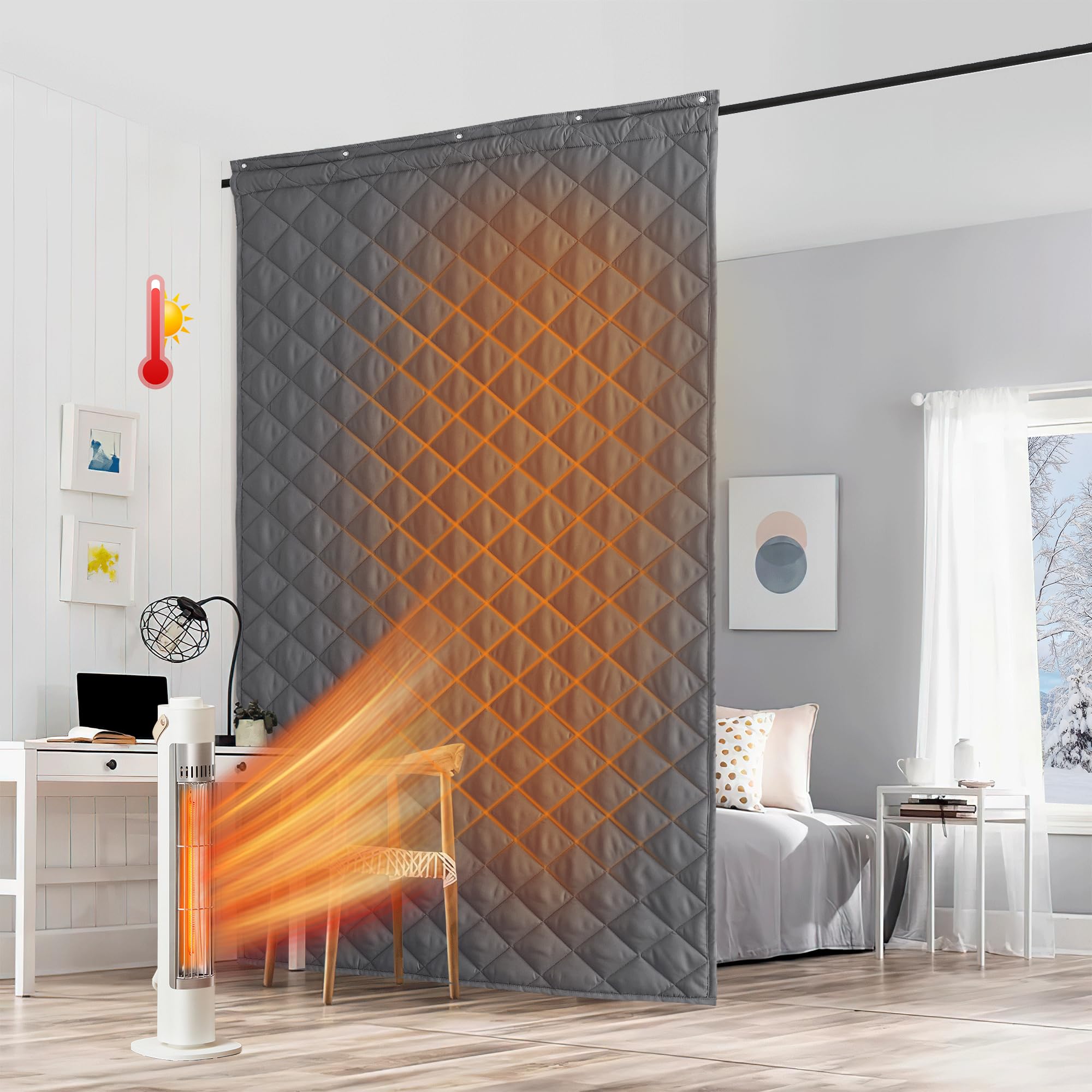
This is not your standard curtain. The RYB HOME uses a thick quilted Oxford fabric with a cotton-polyester fill that feels more like a padded door blanket than a window drape. Each panel weighs 4.5 pounds, which is roughly double the weight of a typical blackout curtain—that mass is what physically blocks heat transfer through sliding glass doors and drafty entryways. The outer fabric is waterproof and stain-resistant, so spills from muddy paws or splashes from a nearby door wipe clean with a damp cloth.
Mounting hardware including Velcro strips, hooks, and screws comes in the box, giving you three attachment methods. The Velcro option works well for renters who cannot drill into frames, while the hook-and-rod combination adds stability for the heavy fabric. Customers consistently report a measurable drop in room temperature after installation, particularly on west-facing doors that bake in the afternoon. The grey color looks more utilitarian than decorative, but the thermal performance is the best in this lineup for blocking both summer heat and winter drafts.
The caveat is that this is sold as a single panel, and the 48-inch width may not cover standard double doors without ordering two. The included hooks are somewhat lightweight for the fabric weight—some buyers replaced them with sturdier hardware from a local store. For deep window frames, the Velcro strips may leave a small air gap at the edges if not pressed firmly into place.
Why it’s great
- Heavy quilted construction blocks radiant heat better than any other panel tested
- Waterproof outer fabric survives door-adjacent spills and condensation
- Three mounting options (Velcro, hooks, rod) suit any living situation
Good to know
- Single panel only—expect to buy two for standard double windows
- Included hooks feel cheap relative to the curtain weight
- Oxford fabric looks more practical than elegant
2. KOUFALL Extra Wide 70 Inch Linen Soundproof Blackout Thermal Curtain
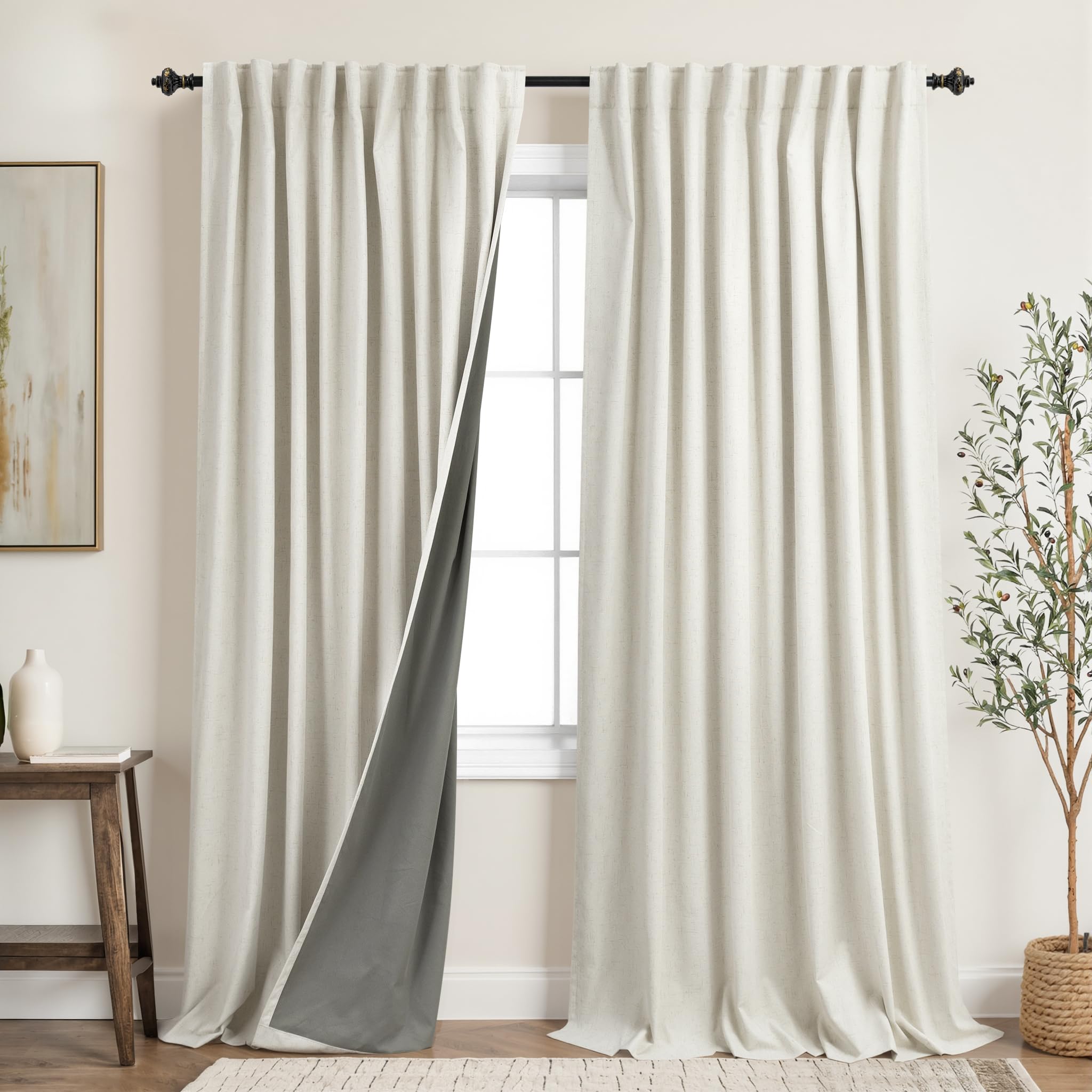
Standard curtain panels measure 52 inches wide, but sliding glass doors and oversized windows need more fabric to create a proper seal. KOUFALL solves this with a 70-inch-wide panel set that spans 140 inches total across two panels, covering most patio door openings without gapping. The fabric uses a polyester linen weave that looks like natural flax but drapes heavier—the back side is solid blackout material, while the front retains a soft, rustic texture that works in farmhouse and modern interiors alike.
Heat rejection comes from the thick lining that stops 100 percent of sunlight. Customers note that rooms go from bright to pitch black when these are closed, which helps reduce solar gain during peak afternoon hours. The rod pocket and back-tab hanging options let you choose between a gathered look or a flat panel that sits closer to the glass. Buyers with sliding doors report that the 84-inch length just skims the floor without puddling, which keeps the thermal seal intact at the bottom edge.
The linen texture does require steaming out packing wrinkles, and the black backing shows on the reverse side if you leave the curtains open. Some users found that the fabric weight requires a sturdy rod—a thin tension rod will sag under the combined weight of two panels. For the price per square foot of coverage, this is one of the most cost-effective ways to insulate a large opening.
Why it’s great
- Generous 70-inch width per panel covers wide doors and windows without gaps
- 100 percent blackout lining eliminates solar heat gain entirely
- Linen texture adds a stylish facade that avoids the cheap polyester look
Good to know
- Packing wrinkles require steaming before hanging
- Black backing visible from outside when curtains are open
- Heavy fabric needs a medium-to-heavy duty curtain rod
3. NICETOWN Grey Full Shade Curtain Panels

NICETOWN’s full shade curtain uses a two-layer construction—a decorative polyester face bonded to a separate blackout lining—rather than a single heavy fabric. This gives the panel a softer hand feel while still delivering complete light blockage and noticeable heat reduction. Customers who used these in hot, humid climates report that the lined structure stops the afternoon sun from heating the room without making the fabric feel stiff or plasticky.
The grey color matches most neutral decor schemes, and the silver grommets slide smoothly on standard rods with a 1.6-inch inner diameter. A common feedback point from buyers is that the two-layer design also dampens outside noise significantly—users mention reduced traffic hum and lowered cricket sounds at night. For heat control, the key is the dead-air space created between the two layers, which slows thermal conduction through the window. The panels are machine washable without shrinkage, which is unusual for lined curtains.
Some users found that the curtains leave a gap at the top if the rod is mounted more than two inches from the wall. To get the full thermal benefit, mount the rod as close to the window frame as possible and use panels that extend past the window sides. The 52-inch width per panel is the industry standard, so you may need to purchase additional pairs for wider windows.
Why it’s great
- True two-layer construction blocks all light and slows heat transfer
- Noticeable noise reduction adds value in urban or high-traffic settings
- Machine washable without shrinkage or delamination
Good to know
- Top gap occurs if rod is mounted more than 2 inches from wall
- Standard 52-inch width requires multiple pairs for wide windows
- Initial wrinkles may need a steam iron to remove fully
4. Guken 100% Blackout Olive Green Linen Curtains
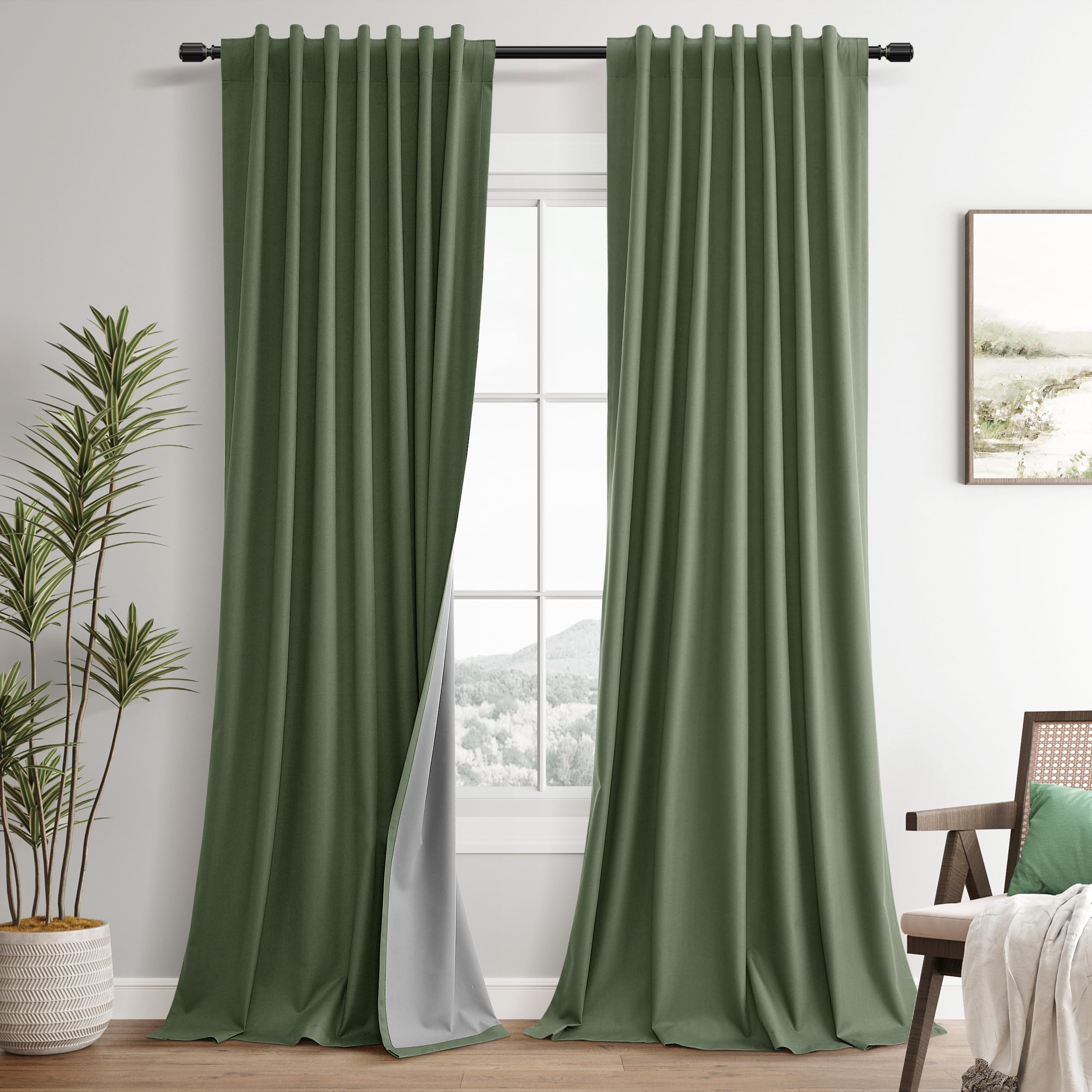
Guken brings a rare combination—a linen-blend fabric that actually delivers 100 percent blackout. The secret is a dense gray backing applied to the back of the linen weave, which stops all light penetration while keeping the front texture soft and natural. The olive green color tested here blocks radiant heat efficiently because the dark face absorbs solar energy while the gray backing prevents it from radiating into the room. Customers who bought these for south-facing bedrooms report that the room stays measurably cooler in the afternoon compared to their previous lightweight panels.
The set includes 30 pleat hooks for creating a tailored pleated look, and the back-tab design creates a clean, gathered drape that hides the rod completely. The fabric is substantial without feeling stiff—users describe it as having a nice weight that hangs straight without needing weights. The thermal insulation effect is reinforced by the dead-air pocket formed between the linen face and the gray backing layer. The back-tab design also allows the curtain to sit closer to the window frame, reducing the top gap that can undermine heat blocking.
The plastic rod pocket hardware is stiffer than some buyers expected—it makes a slight noise when sliding the curtain open and closed. The 84-inch length is generous, but the olive green color may not match every decor palette. Some users note that the fabric requires a quick steam to remove fold lines from packaging.
Why it’s great
- Gray backing delivers complete light and heat blockage behind a premium linen facade
- Back-tab pleated design creates a tailored look that seals tightly against the wall
- Substantial fabric weight hangs cleanly without extra liner inserts
Good to know
- Plastic rod pocket hardware makes noise when sliding
- Olive green is a specific color that limits decor matching
- Packaging fold lines need steaming to relax
5. DANCURTON Cream Linen Blend Blackout Curtains

DANCURTON uses a white back-coating on a linen-polyester blend to achieve full blackout without the dark backing color that some find jarring from the outside. The cream natural color stays light and airy, making it a strong choice for rooms where you want the curtains to feel soft and open even when closed. The white coating reflects sunlight before it can penetrate the fabric, which is mechanically the same principle as a reflective window film but in a decorative format.
Three hanging methods are built into the header: back tabs for a clean hidden-rod look, a 3-inch rod pocket for a gathered style, or clip rings for a casual drape. The back-tab option keeps the fabric close to the wall, which is important for minimizing heat leakage at the top. Customers consistently praise the fabric weight—it is dense enough to block light completely but not so heavy that it strains a standard curtain rod. The insulation benefit is reinforced by the white coating that bounces a portion of infrared energy back through the window glass.
Buyers with larger windows report needing to buy multiple sets because the 52-inch width is standard rather than oversized. The back coating requires you to iron only the front fabric—heat on the coating side can degrade the blackout layer. Some users mention that the cream color leans slightly warmer (more ivory) than a true white, which matters if you are matching existing trim.
Why it’s great
- White back-coating reflects solar heat while keeping the exterior view neutral
- Three hanging options give flexibility for different rod setups
- Linen-blend fabric looks far more premium than its mid-range positioning suggests
Good to know
- Iron only the front fabric—heat damages the back coating
- Standard 52-inch width may not cover oversized windows with one set
- Cream color runs slightly warmer than true white
6. LAMIT 90 Inches Velvet Curtains
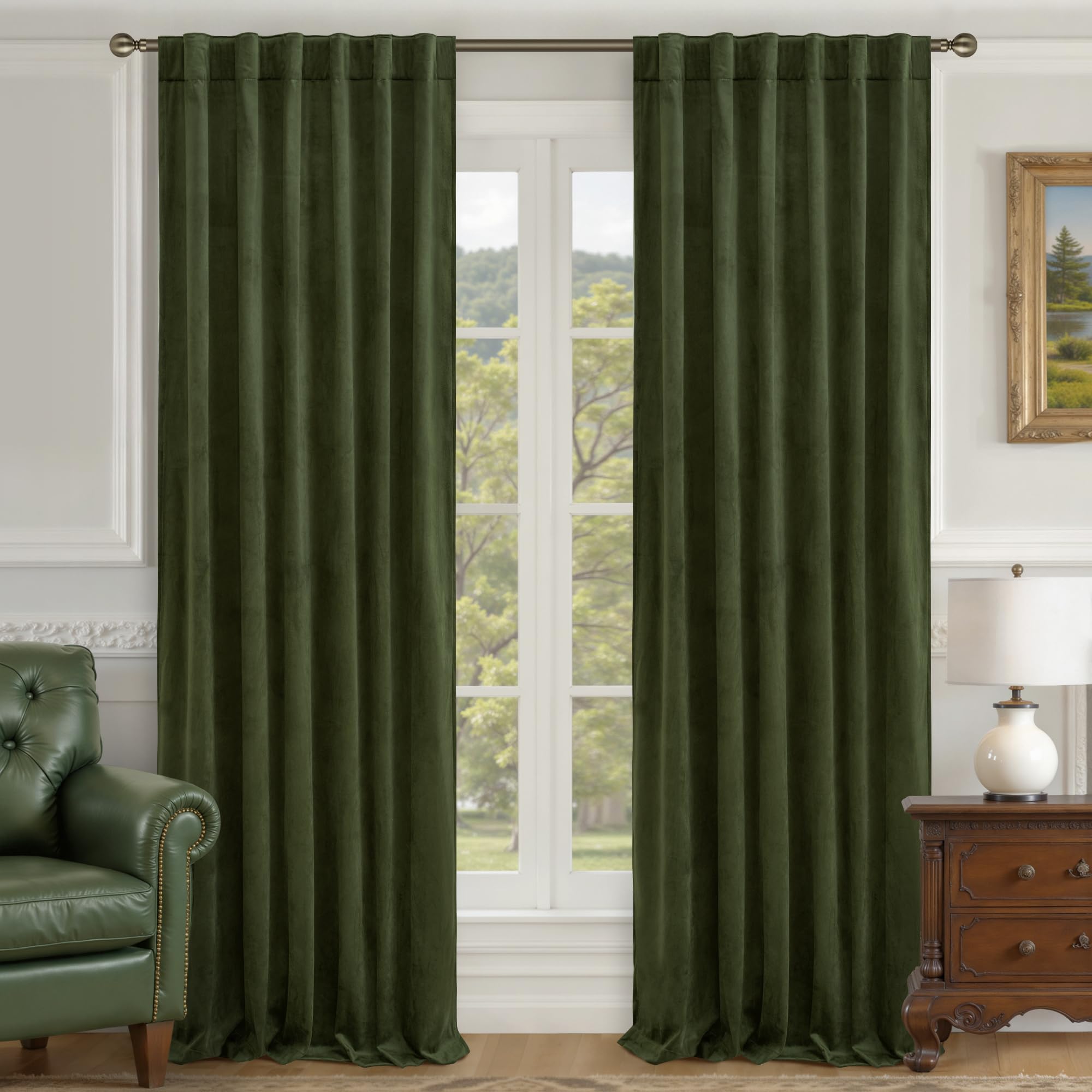
Velvet curtains trade total blackout for a luxurious texture that filters light into a soft, warm glow. The LAMIT panels use a dense 200-gram polyester velvet that blocks 65 to 80 percent of sunlight—enough to cut glare and UV damage but not enough to turn a room pitch black. For heat control, the tight velvet weave creates a dense barrier that slows solar gain, though the lack of a dedicated thermal lining means it will not match the performance of a lined or quilted panel.
The olive green color is rich and saturated, and the velvet catches light in a way that flat fabrics cannot. Customers describe the feel as silky and heavy without being stiff. The back-tab and rod-pocket options let you choose between a modern curtain-wall look or a traditional gathered drape. Users note that the fabric is not wrinkle-prone out of the package, which saves time on setup. For privacy, the dense weave ensures that no one can see into the room at night, even with interior lights on.
The 65-80 percent blackout rating means that if you need complete darkness for sleep or home theater, this is not the best choice. The unlined construction also means less thermal resistance compared to the two-layer options in this guide. For a living room or dining area where you want heat reduction plus a piece of visual drama, this curtain delivers a unique balance.
Why it’s great
- Luxurious velvet texture adds visual depth that plain polyester cannot match
- Dense weave cuts glare and UV while maintaining a soft ambient glow
- No wrinkles out of the package—hang and go
Good to know
- Only blocks 65-80% of light, so not suitable for total darkness needs
- Unlined construction offers less thermal resistance than lined alternatives
- Velvet attracts pet hair and dust more readily than smooth fabrics
7. NICETOWN Thermal Insulated Grommet Curtains
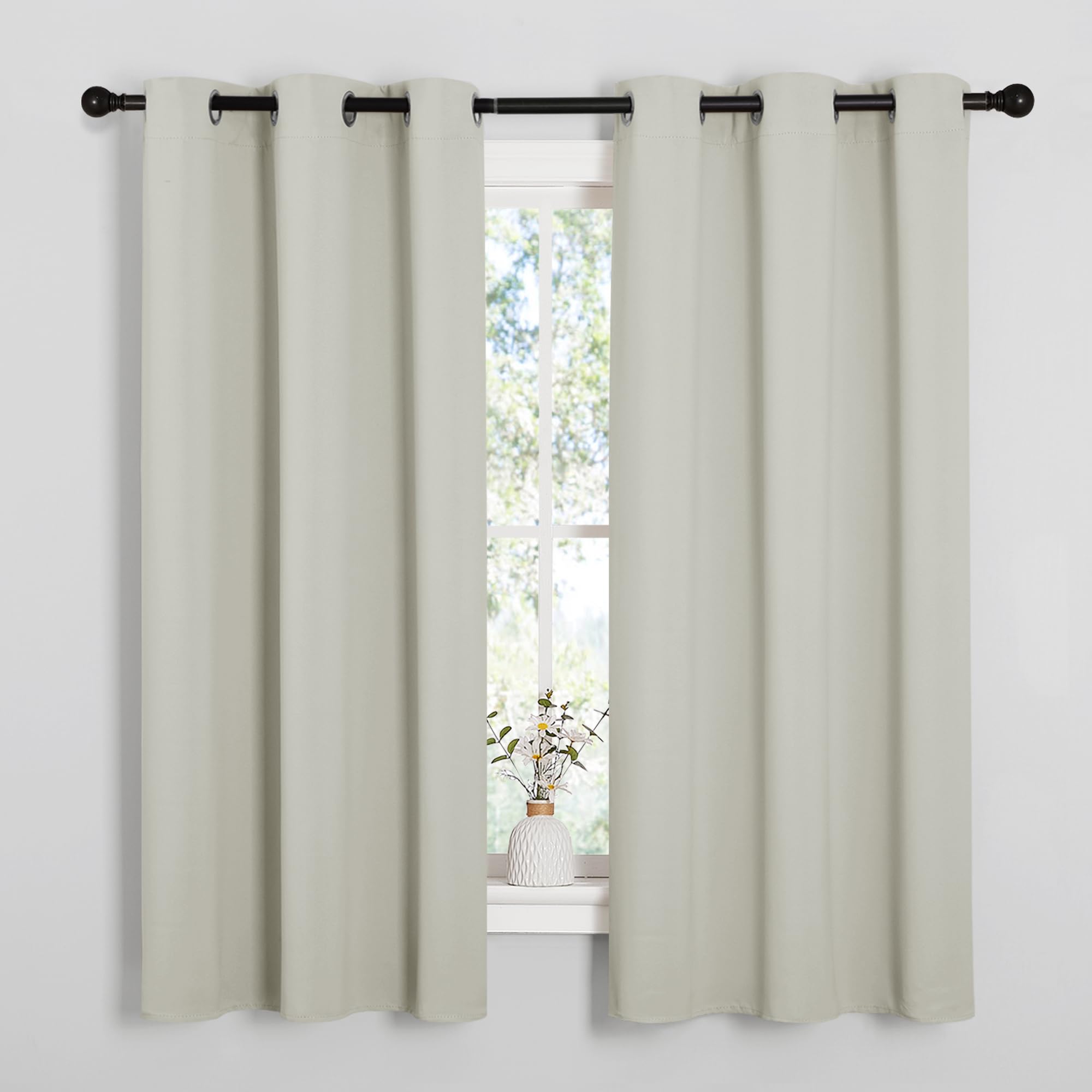
NICETOWN’s entry-level thermal curtain uses triple-weave polyester to achieve 85-99 percent light blockage without a separate lining layer. The fabric feels soft and substantial—customers consistently note that it does not look or feel cheap despite the low cost. The bone white color tested here lets you get strong heat rejection while keeping the room feeling bright and open, because the triple weave blocks light but does not absorb it the way a dark color would.
The grommet top uses a 1.6-inch inner diameter ring that fits standard rods easily and allows smooth sliding. The triple-weave construction creates a built-in dead-air layer that resists both summer heat and winter chill. Users in hot climates report that the curtains reduce morning sun heat noticeably, and the dark color options push the blockage closer to 99 percent. The fabric is machine washable cold and tumble-dry safe, which is important for curtains that collect window dust and pollen.
The bone white color may let through a sliver of light around the edges if the rod is not mounted close to the window frame. The 63-inch length is shorter than the standard 84-inch option, so measure your window drop carefully before ordering. Some buyers found that the triple weave, while effective, is slightly thinner than a dedicated lined curtain—it trades absolute insulation mass for easier handling and a lighter feel.
Why it’s great
- Triple-weave construction blocks 85-99% of solar radiation at a budget-friendly price
- Soft fabric feel that punches above its price bracket
- Machine washable without special care requirements
Good to know
- Bone white lets through a sliver of edge light if not mounted flush to window
- 63-inch length is shorter—verify window drop height before buying
- Triple weave is slightly thinner than dedicated lined curtain panels
FAQ
Do dark curtains block more heat than light curtains?
How wide should thermal curtains be relative to the window?
Can thermal curtains reduce noise as well as heat?
Should I use a curtain liner or buy integrated blackout curtains?
Final Thoughts: The Verdict
For most users, the curtains to keep heat out winner is the NICETOWN Grey Full Shade Curtain Panels because they combine genuine two-layer heat blocking with excellent noise dampening at a mid-range price that works for most standard windows. If you need to cover a wide sliding glass door, grab the KOUFALL Extra Wide Linen Thermal Curtain. And for a drafty entry door that needs maximum thermal resistance, nothing beats the RYB HOME Quilted Insulated Curtain.

Mo Maruf
I created WellFizz to bridge the gap between vague wellness advice and actionable solutions. My mission is simple: to decode the research and give you practical tools you can actually use.
Beyond the data, I am a passionate traveler. I believe that stepping away from the screen to explore new environments is essential for mental clarity and physical vitality.