Our readers keep the lights on and my smoothie glass nicely filled. As an Amazon Associate, I earn from qualifying purchases.
You have a stack of t-shirts, yoga pants, or jersey dresses waiting for a professional hem, but your regular sewing machine simply cannot handle the stretch. The solution is a dedicated machine that creates a clean, flexible stitch that moves with the fabric without popping or puckering.
I’m Mohammad Maruf — the founder and writer behind WellFizz. I’ve spent hundreds of hours analyzing the mechanics, threading systems, stitch formations, and real-world user reports of every relevant model to build a guide you can trust.
After comparing nine of the top models based on stitch quality, ease of threading, speed, and durability, I have compiled this definitive guide to the best coverstitch machine available right now.
How To Choose The Best Coverstitch Machine
A coverstitch machine is a very specific tool. Unlike a serger (which cuts and overcasts the edge of the fabric), a coverstitch creates a parallel stitch line on the fabric’s top side and a chain-stitch pattern on the underside. This structure allows the hem to stretch without snapping the thread. The key buying decisions revolve around your expected workload, fabric types, and thread path complexity.
Throat Space and Free Arm Access
The most overlooked spec is the “throat space” — the distance between the needle and the machine body to the right. A wider throat space lets you feed a pair of jeans legs or a sleeve without bunching. Most home machines offer 6 to 8 inches; industrial-style models can exceed 10 inches. If you plan to hem a lot of pant legs or tubular garments, prioritize a machine with an open free arm and generous neck clearance.
Threading Simplicity vs. Stitch Versatility
Coverstitch machines are notorious for finicky threading paths, especially through the loopers. Models with color-coded guides, numbered thread paths, or air-threading (using compressed air to feed thread through the tubes) drastically reduce setup time. However, more complex threading often comes with wider stitch variety — such as a 3-needle 4-thread option for heavy-duty knit seams or a chain stitch for basting. Decide whether you need maximum versatility or a machine you can re-thread in under two minutes.
Presser Foot Pressure and Differential Feed
Not all coverstitch machines let you adjust the presser foot pressure. This adjustment is vital for lightweight knit fabrics that tend to “tunnel” (pucker in a ridge between the needle lines) or for thick seams where the foot needs to lift higher. Differential feed, more common on combo serger-coverstitch machines, controls how the fabric feeds through to prevent stretching or gathering. For sheer to medium-weight knits, a machine with adjustable presser foot pressure alone is often sufficient; for extremely slick or difficult fabrics, seek out differential feed.
Quick Comparison
On smaller screens, swipe sideways to see the full table.
| Model | Category | Best For | Key Spec | Amazon |
|---|---|---|---|---|
| Juki MCS-1500 | Mid-Range | Industrial-quality home use | 1,350 SPM max speed | Amazon |
| Janome Cover Pro 1000CPX | Mid-Range | Wide free arm & easy threading | 19.5″ wide free arm | Amazon |
| Janome CoverPro 900CPX | Mid-Range | Reliable starting point | 15 lb lightweight build | Amazon |
| Bernette b42 Funlock | Mid-Range | Separate looper threading | 2.8mm / 5.6mm stitch width | Amazon |
| Bernette B48 Funlock | Premium | Versatile serger + coverstitch combo | 1300 SPM, 23 stitch functions | Amazon |
| Brother SE700 | Mid-Range | Sewing + embroidery combo | 4″ x 4″ embroidery field | Amazon |
| Brother Innov-ís Airflow 3000 | Premium | Easiest threading available | Air threading technology | Amazon |
| Janome 1600P-QC | Premium | Heavy-duty quilting straight stitch | 38.6 lb, all-metal construction | Amazon |
| Juki DDL-8700 | Premium | Full industrial setup | 48″W table, servo motor | Amazon |
In‑Depth Reviews
1. Juki MCS-1500 Cover Stitch and Chain Stitch Machine
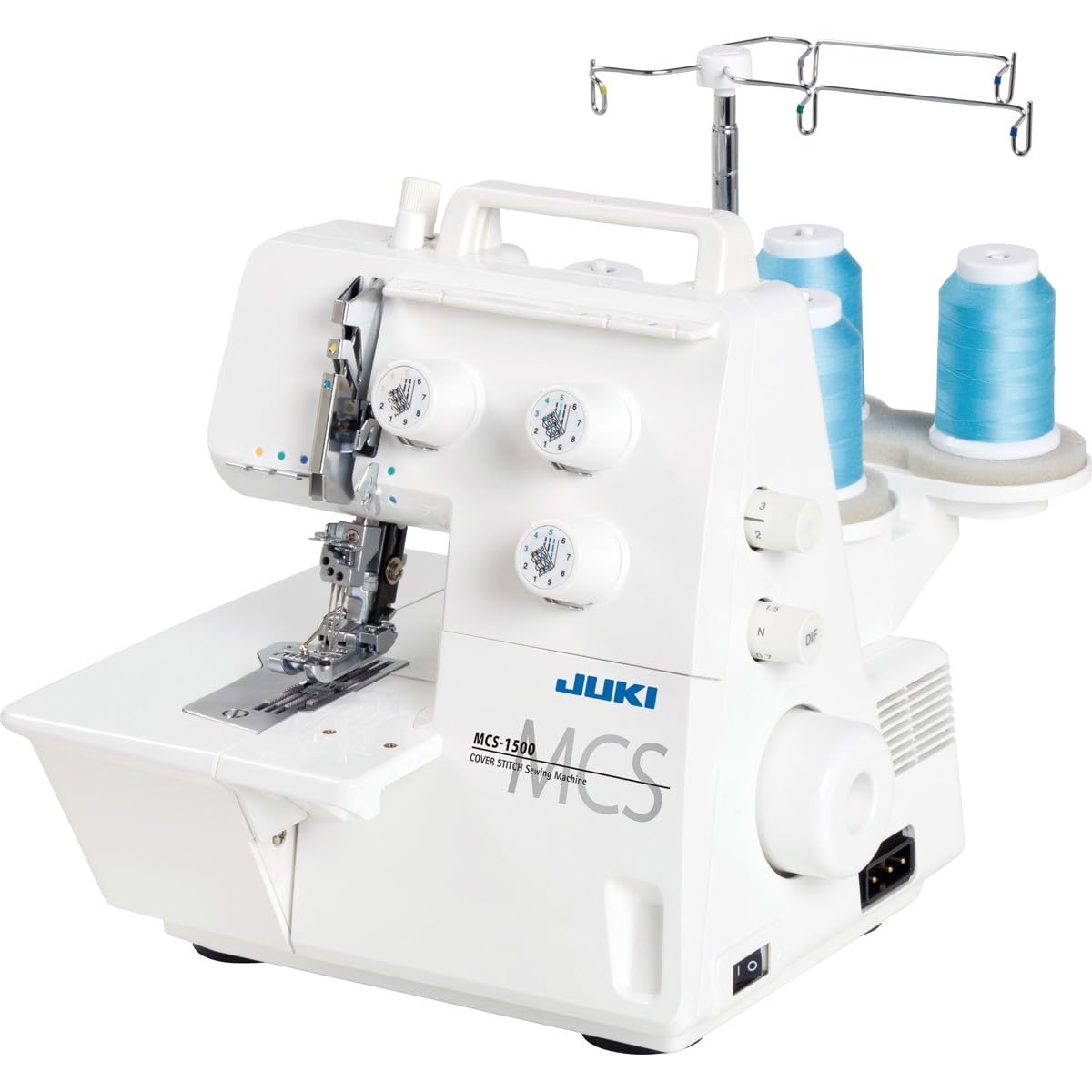
The Juki MCS-1500 occupies a sweet spot — it offers industrial-grade stitch quality with a home-user-friendly footprint. With a max speed of 1,350 stitches per minute, it can power through a stack of knit hems quickly, and its all-metal internal construction gives it a long service life. The color-coded guides make threading easier than many similarly priced models, although it still requires patience for the looper paths. Users consistently praise the machine’s ability to produce flawless, skipped-stitch-free hems on stretchy materials like jersey and lycra, even over thick seams.
The machine’s 3-needle 3-thread and 4-thread chain stitch capabilities give you flexibility for both narrow twin-needle hems and wider, more secure seams. However, the included manual is sparse, and many users find the threading diagrams confusing. A few YouTube tutorials are essential. The Juki comes pre-threaded from the factory, but once you have to re-thread your first time, expect a learning curve. The machine runs smoothly and quietly — a notable advantage over some lower-end options. For the serious home sewer who wants to avoid skipping stitches and tension headaches, the MCS-1500 delivers consistent performance that justifies its position as the top all-around choice.
The free arm is adequate for most sleeve and pant hemming tasks, though it is not quite as wide as the Janome 1000CPX. The stitch length and differential feed adjustments are straightforward and effective. With a 5-year mechanical warranty from Juki, this machine is built to last. The 16-ounce weight in the spec sheet is likely a data error; the machine has substantial heft, contributing to its stability during high-speed use. Overall, for those seeking a dedicated coverstitch machine that prioritizes stitch formation and durability, the MCS-1500 is the clear winner.
Why it’s great
- Produces professional, even hems with no skipped stitches on knits
- High speed and quiet operation for efficient workflow
- Solid metal construction with a generous warranty
Good to know
- Threading is challenging without external video tutorials
- Instruction manual is thin and lacks detail
2. Janome Cover Pro 1000CPX Coverstitch Machine

The Janome Cover Pro 1000CPX is a fantastic choice if you frequently hem circular items like pant legs and sleeves. Its free arm is noticeably more spacious than the Brother or Juki equivalents, measuring 19.5 inches wide and allowing you to slide bulky garments on and off with ease. It arrives pre-threaded and ready to stitch, and the thread path is logically laid out, making re-threading easier than on many competing models. The machine uses a sturdy metal chassis and has a solid feel that inspires confidence.
Users report that the 1000CPX handles a wide range of knits from lightweight to medium-heavy without tunneling or puckering, once you dial in the tension. The machine includes a needle threader and an adjustable seam guide, which is a nice bonus for achieving straight hems. Many owners specifically mention that this Janome model produces a more professional-looking hem than their previous serger or sewing machine could achieve. The 3-thread and 2-needle coverstitch is perfect for most apparel applications, and the machine also offers a 3-needle topstitch for a more decorative look.
One minor downside is the lack of a clear presser foot; you may want to purchase one separately for better visibility on tricky seams. Some users note that lightweight knits can tunnel if you do not take the time to adjust the presser foot pressure correctly. The machine does not have a built-in chain stitch option, unlike the Juki MCS-1500, but for pure coverstitch work, this is rarely a drawback. The included bonus bundle of Schmetz needles and a seam guide adds value. For sewers who prioritize a spacious free arm and an easier threading experience, the 1000CPX is an excellent investment.
Why it’s great
- Exceptional free arm clearance for hemming sleeves and legs
- Logical, easy threading path for a coverstitch machine
- Solid metal build and beautiful stitch quality
Good to know
- May require an aftermarket clear presser foot for best visibility
- Lightweight knits can tunnel with incorrect presser foot pressure
3. Janome CoverPro 900CPX Coverstitch Machine

The Janome CoverPro 900CPX is the predecessor to the 1000CPX and offers many of the same core strengths in a slightly more compact and budget-friendly package. Weighing in at only 15 pounds, it is one of the most portable dedicated coverstitch machines on the market. Users who transition from a standard sewing machine find the 900CPX intuitive, with a short learning curve for threading and operation. The machine uses a combination of an industrial-style cover hem mechanism and a convenient home-machine layout, giving you the best of both worlds.
This machine produces excellent, professional stitch quality on stretch fabrics right out of the box. Hemming yoga pants, t-shirts, and tote bags is easy and results in a clean, flat finish. The manual includes a method for finishing stitches using the hand wheel and a pin, which makes chain-end-securing straightforward. The 900CPX runs quieter and smoother than many Brother-brand alternatives at similar price points. One user reported successfully hemming a pair of yoga pants without any skipped stitches — a common headache with lower-end or generic machines.
A small frustration is that the machine does not have a standard metal plate for accessory attachments, which can limit some decorative options. Some users also find that the machine tends to skip on very thick seams, though this can be mitigated by using a hem tape or adjusting the presser foot. The machine accepts small spools without issue, but larger cones may require a separate spool holder. For the price, the 900CPX delivers dependable performance and is a fantastic entry point into dedicated coverstitching for hobbyists who want to start without breaking the bank.
Why it’s great
- Lightweight and easy to store
- Intuitive threading for a 3-thread coverstitch machine
- Creates beautiful, professional hems on knits
Good to know
- No metal plate for accessory attachments
- May skip on very thick seams without adjustment
4. Bernette b42 Funlock Coverstitch Machine

The Bernette b42 Funlock is a dedicated coverstitch and chain-stitch machine from the Swiss brand known for quality engineering. It distinguishes itself with a separate needle threading and looper threading mechanism that makes the setup process more logical than systems where both share the same path. The b42 delivers three coverstitch options with widths of 2.8mm and 5.6mm, plus a basic chain stitch. The bright LED light is genuinely excellent for working in low light, illuminating the needle area to help you catch errors before they become visible in the finished garment.
Owners report that the b42 is smooth and powerful, handling both stretchy fabrics and thicker materials like denim with equal composure. The onboard tool storage is a practical touch, keeping the included screwdrivers, spool nets, and seam ripper organized. The machine also features a differential feed for controlling fabric feeding, which is a huge advantage when working with lightweight, slippery knits that tend to stretch during hemming. For a home coverstitch machine, this is a feature typically reserved for higher-priced models.
However, there are notable compromises. The presser foot lever has a weird, stiff action that some users find annoying. The foot clearance is low, measuring only about 1/8 inch, which means it cannot handle bulky layered fabrics like fleece without jamming. The left-hand threading space is cramped, and a protruding wire can catch the looper thread. While these issues are relatively minor for standard apparel hemming, they prevent the b42 from being a truly versatile machine. It is best suited for a user who primarily works with thin to medium-weight knits and wants a brand with a reputation for longevity.
Why it’s great
- Separate looper threading simplifies the most dreaded step
- Differential feed and bright LED light enhance precision
- Onboard storage for accessories keeps everything organized
Good to know
- Stiff presser foot lever and low foot clearance
- Not suitable for thick layers or bulky fabrics
5. Bernette B48 Funlock Serger Coverstitch Overlock Machine
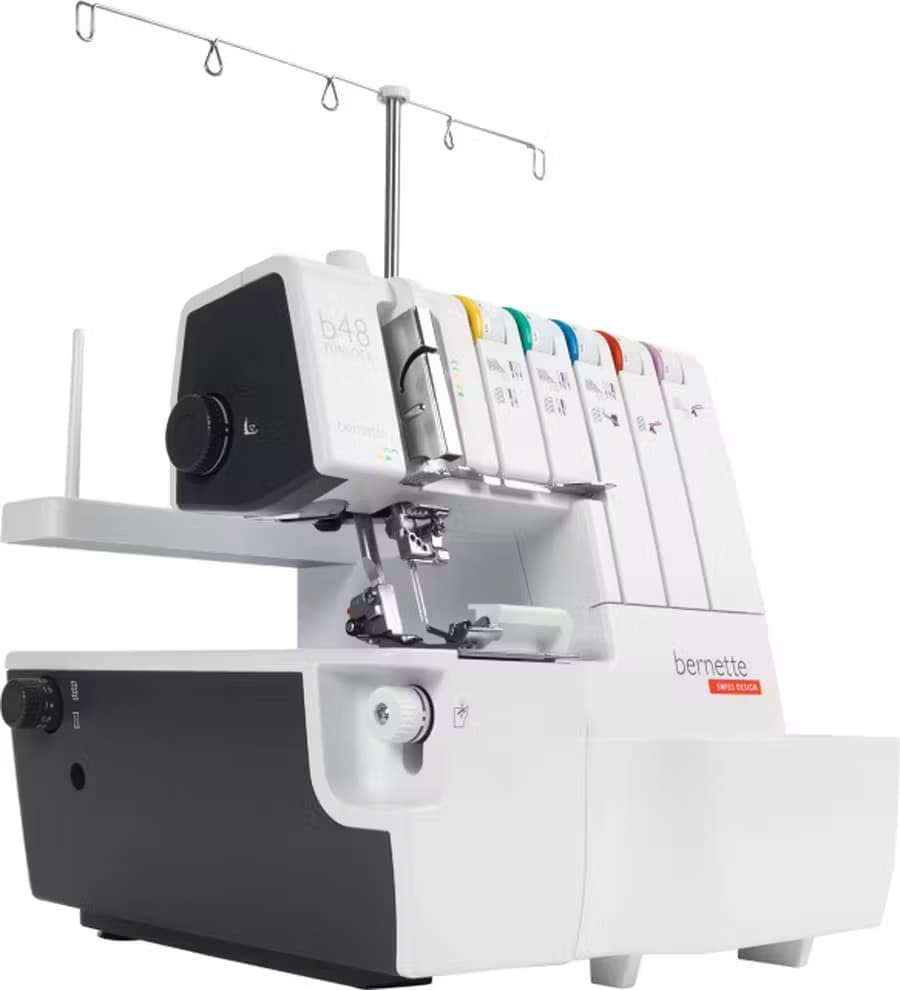
The Bernette B48 is a combination serger and coverstitch machine, offering enormous versatility in one chassis. With 23 built-in stitches including overlock, coverstitch, chain stitch, and various combos, you can switch from finishing raw edges to hemming knits without moving to a different machine. It runs at up to 1,300 stitches per minute and has a powerful, quiet motor that handles heavy-duty quilting and thick fabrics with ease. The interior is all-metal for durability, while the exterior has a modern, compact footprint.
Users who take the time to learn the threading and tension adjustments report that the B48 produces excellent stitch quality. The coverstitch function, in particular, is praised for its even tension and flawless loop formation. The machine is built on the same platform as Bernina’s more expensive models but at a lower price point. A clear presser foot is included, which helps visibility. It is a well-engineered machine that inspires confidence, and it runs much quieter than many other combo machines in this class.
The trade-off is complexity. The threading path for the coverstitch function is more complicated than a dedicated coverstitch machine, and the tension adjustments are fiddly. Beginners will likely need a tutorial or an online class. Some users reported missing accessories in the package (a specific needle set), which is frustrating for a machine at this price point. Additionally, the machine’s 16-inch depth and 21-pound weight mean it is not really portable. If you want a single machine that can do both overlocking and coverstitching and you are willing to invest the learning time, the B48 is a top contender. If you only need a coverstitch, a dedicated model might be simpler.
Why it’s great
- Powerful motor and high stitch speed for demanding projects
- Versatile 23-stitch functions eliminate the need for a separate serger
- Quiet, sturdy build with industrial-level components
Good to know
- Threading and tension adjustments are complex and require study
- Missing accessory reports suggest careful unboxing is needed
6. Brother SE700 Sewing and Embroidery Machine

The Brother SE700 is not a coverstitch machine, but it is frequently mislabeled or cross-categorized on Amazon as a coverstitch machine due to its “103 built-in sewing stitches” description. It is actually a very capable all-in-one sewing and embroidery machine. It features a 4 by 4 inch embroidery field, wireless LAN connectivity, and a 3.7-inch color touchscreen for design editing. It includes 135 built-in embroidery designs and 10 lettering fonts for personalization. The machine also has an automatic needle threader and a jam-resistant drop-in top bobbin system.
For sewers interested in both standard sewing and embroidery, this machine is a fantastic beginner-to-intermediate option. The stitch quality is excellent, with the auto-needle threader and thread cutter working reliably. Users appreciate the quiet operation and the ability to transfer embroidery files from a PC or iPad via the Artspira app. The included eight sewing feet cover everything from zippers to buttonholes. It is light enough for a small craft room, weighing just 15.6 pounds.
The critical point to understand is that this machine cannot create a true coverstitch or chain stitch. Its “stretch stitch” functions are built-in sewing stitch patterns, not a multi-needle coverstitch structure. If you need to hem a pair of knit leggings, this machine will not give you the professional, flexible hem you are looking for. For that, you need one of the dedicated coverstitch machines on this list. However, if your primary interest is garment construction with standard seams and adding embroidery decoration, the SE700 is a very good value.
Why it’s great
- Combines advanced sewing and embroidery in one compact machine
- Large color touchscreen and wireless file transfer ease workflow
- Excellent value for a combo unit with 135 built-in designs
Good to know
- This is a sewing/embroidery machine, NOT a coverstitch machine
- Does not produce true coverstitch or chain stitch seams
7. Brother Innov-ís Airflow 3000 Air Serger Sewing Machine

The Brother Innov-ís Airflow 3000 is a serger, not a dedicated coverstitch machine. It uses a unique air-threading system that pushes thread through the needle and looper tubes with a burst of compressed air, making re-threading dramatically faster than any manual system. This is a godsend for anyone with arthritis, vision issues, or a low tolerance for serger tension battles. The machine creates beautiful, consistent overlock and coverstitch seams, and it runs very quietly and smoothly.
For many sewers, the convenience of air threading alone justifies the premium price point. You can switch colors in seconds without a struggle. The machine includes a differential feed that works well on both knits and denim, and the stitch quality is excellent. The workspace is bright, with ample lighting. Users praise the machine’s stability and consistent performance, with several calling it a “dream machine” for the ease of use. The included gathering foot, blind stitch foot, and piping foot add practical functionality.
The main drawback is reliability. Some users have reported that the air threading system is prone to clogging over time, requiring professional service that can cost hundreds of dollars. The manual provides limited guidance for troubleshooting this specific issue. Also, as a serger, the Airflow 3000 cuts and finishes simultaneously; it is not a pure coverstitch machine. If you need a pure, dedicated coverstitch, you might be paying for overlock functions you do not need. If you want a serger that makes the most annoying part of serging (threading) a breeze, this is an excellent choice, but it is not a replacement for a dedicated coverstitch machine.
Why it’s great
- Air threading eliminates the most frustrating part of serger setup
- Produces smooth, quiet, and consistent overlock stitches
- Excellent differential feed control for various fabrics
Good to know
- Air tubes can clog and require professional repair
- This is a serger, not a dedicated coverstitch machine for hemming
8. Janome 1600P-QC Straight-Stitch Machine and Kit

The Janome 1600P-QC is a powerful, heavy-duty straight-stitch machine designed for extreme quilting and garment assembly. It is not a coverstitch machine. This machine uses an industrial-style drop feed mechanism and a powerful motor for high-speed, consistent sewing. It weighs 38.6 pounds and is built almost entirely of metal, ensuring stability even at top speed. The machine offers a massive throat space, perfect for quilting large projects, and also handles heavy fabrics like denim and canvas easily.
Users who have owned the 1600P-QC for years report it as a reliable workhorse. The machine is simple in its function (straight stitch only), but it performs that function flawlessly. The needle threader is a bit awkward but functional. The machine includes a thread cutter and a knee lift, both of which speed up workflow. For anyone running a small business making quilts, bags, or simple garments, this machine can reduce construction time dramatically compared to a standard home machine.
However, for the purpose of this guide, it is critical to note that this machine cannot sew a coverstitch or chain stitch. It cannot handle knit hemming. Its purpose is straight stitching on woven fabrics or for quilting piecing. If you need a stretchable hem, this machine will snap the thread immediately. While it is a fantastic machine for its intended use, it is listed here as a comparison point for sheer power and build quality. For coverstitch specific tasks, you will want the Janome 1000CPX or Juki MCS-1500 instead.
Why it’s great
- Extremely durable all-metal construction for heavy daily use
- Huge throat space ideal for large quilting projects
- High-speed, consistent straight stitching for efficient assembly
Good to know
- This is a straight-stitch only machine — no coverstitch function
- Heavy and not portable; requires a dedicated workspace
9. DDL-8700 Juki Industrial Lockstitch DDL8700 w/IKonix Servo Motor

The Juki DDL-8700 with the IKonix servo motor is a complete industrial sewing solution. It includes the machine head, motor, table, and an LED lamp. This is an industrial lockstitch machine — it is not a coverstitch machine. It is designed for high-volume production of straight stitches on woven fabrics. The servo motor provides smooth, controlled piecing power and reduces energy consumption compared to clutch motors. The 48-inch wide table gives you ample workspace.
Users who assemble their own garments or run home tailoring businesses find the DDL-8700 to be a massive upgrade over any domestic machine. The precision and speed are unmatched for straight stitching. The machine maintains perfect tension at high speeds and handles thick materials like leather and multiple layers of denim effortlessly. The IKonix motor is quiet and allows for very low-speed control (one stitch at a time), which is useful for pivoting and precise corners.
The biggest drawback is the assembly and setup. The machine arrives unassembled in multiple boxes, and the instructions are notoriously poor. You will need to watch online tutorials or have prior experience assembling industrial machines. Additionally, this setup takes up significant square footage — it is not for a small apartment craft space. Finally, it is essential to repeat: this is NOT a coverstitch machine. It cannot sew knits with stretch. For pure, heavy-duty apparel production of woven goods, this is an unbeatable value. For coverstitch hemming, look to the Juki MCS-1500 or Janome 1000CPX.
Why it’s great
- True industrial lockstitch performance for high-volume production
- Complete package with table, motor, and lamp ready for assembly
- Unmatched speed and durability for woven fabrics and leather
Good to know
- This is an industrial lockstitch machine — no coverstitch capability
- Difficult assembly with poor instructions ; requires significant space
FAQ
Can I use a serger to do a coverstitch?
Why does my coverstitch machine skip stitches on thick seams?
What is the difference between a 2-needle and 3-needle coverstitch?
How do I secure the chain stitch at the end of a coverstitch seam?
Final Thoughts: The Verdict
For most users, the best coverstitch machine winner is the Juki MCS-1500 because it combines industrial-grade stitch quality with a manageable home-user footprint and high speed. If you prioritize a spacious free arm for hemming sleeves and pant legs, grab the Janome 1000CPX. And for a versatile serger-coverstitch combo that excels in tight workspaces, the Bernette B48 is a strong contender worth your consideration.

Mo Maruf
I created WellFizz to bridge the gap between vague wellness advice and actionable solutions. My mission is simple: to decode the research and give you practical tools you can actually use.
Beyond the data, I am a passionate traveler. I believe that stepping away from the screen to explore new environments is essential for mental clarity and physical vitality.