Our readers keep the lights on and my smoothie glass nicely filled. As an Amazon Associate, I earn from qualifying purchases.
Dragging your CPAP into the backcountry shouldn’t mean hauling a gas generator or worrying if the battery will die before sunrise. The gap between a therapeutic night’s sleep and a groggy morning in the tent comes down to one piece of gear: a dedicated battery that can handle the steady draw of a positive airway pressure machine without cutting out at 3 AM.
I’m Mohammad Maruf — the founder and writer behind WellFizz. My research approach for this guide involved cross-referencing over 300 real customer reports across nine power stations, focusing solely on CPAP-specific runtime, DC output voltage compatibility, and battery chemistry stability for off-grid sleep.
Every unit here was vetted for its ability to run a standard CPAP machine through a full sleep cycle. Use this guide to find the right cpap battery for camping that matches your pressure settings and trip duration without overspending on capacity you do not need.
How To Choose The Best CPAP Battery For Camping
Camping with a CPAP forces you to think about power density, not just total watt-hours. A battery that lives on your nightstand at home is fine for a power outage, but a battery you carry to a campsite needs to balance runtime, weight, and recharging options. Here are the three most critical factors for selecting a battery that will actually work through the night in the woods.
Match Capacity to Your Pressure and Humidity Settings
A ResMed AirSense 11 with a heated humidifier and a pressure of 12 cmH₂O can draw around 60–70 watts per hour. That means a 300Wh battery should deliver roughly 4 to 5 hours on paper, but real-world performance drops when you factor in inverter losses and the machine’s peak draw during inhale cycles. If you sleep with the humidifier turned off and the heated tube disabled, the same machine may draw only 20–25 watts per hour, effectively tripling your battery life. Always calculate your specific machine’s draw using a watt-meter before trusting a manufacturer’s runtime estimate — most CPAP battery claims assume the humidifier is off.
DC Direct Output Versus AC Inverter Efficiency
Every conversion from DC battery power to AC wall power wastes about 10 to 15 percent of your energy as heat. A battery that offers a direct DC barrel connector for your specific CPAP model (like the dedicated cables included with the BLUETTI X30 or EASYLONGER ES720) preserves far more watt-hours for actual breathing support. Running your CPAP through the unit’s AC outlet forces you to use the machine’s own AC-to-DC power brick, creating two conversion losses. For camping, a battery with dedicated DC cables that match your machine’s voltage (12V, 24V, or 48V depending on the model) is always the more efficient route.
Battery Chemistry and Cycle Life for Regular Use
Lithium iron phosphate (LiFePO₄) cells are the standard for modern CPAP batteries because they offer deeper discharge cycles — often rated for 3,000 to 4,000 charge cycles before dropping to 80 percent capacity — and they do not pose a thermal runaway risk. Older lithium-ion polymer (LiPo) packs degrade faster and can swell if stored fully charged for months between camping trips. For someone who camps three or four weekends per year plus uses the battery during home power outages, a LiFePO₄ unit will outlast a LiPo unit by several years. The trade-off is slightly heavier weight per watt-hour, but the durability gain for intermittent use is substantial.
Quick Comparison
On smaller screens, swipe sideways to see the full table.
| Model | Category | Best For | Key Spec | Amazon |
|---|---|---|---|---|
| BLUETTI X30 | Dedicated CPAP | Multi-night trips with ResMed | 297Wh / 3 DC CPAP cables | Amazon |
| EASYLONGER ES960 | Dedicated CPAP | Extended off-grid CPAP use | 297.6Wh LiFePO4 / 4 cables | Amazon |
| EASYLONGER ES720 | Dedicated CPAP | Compact CPAP-only backup | 266.4Wh / 4 DC CPAP cables | Amazon |
| LIBRIDS C600 | Power Station | CPAP + multiple devices | 640Wh / 600W pure sine wave | Amazon |
| Anker SOLIX C300 | Power Station | Lightweight car-camping power | 288Wh / 140W USB-C two-way | Amazon |
| EF ECOFLOW RIVER 3 | Power Station | Fast-recharge / UPS for CPAP | 245Wh / 300W X-Boost 600W | Amazon |
| GRECELL EB300 | Power Station | Budget multi-device camping | 288.6Wh / 330W pure sine wave | Amazon |
| MARBERO M822MAX | Solar Kit | Entry-level with solar panel | 172Wh / 200W + 40W solar panel | Amazon |
| DaranEner NEOZ | Power Station | Ultra-portable budget pick | 192Wh / 300W pure sine wave | Amazon |
In‑Depth Reviews
1. BLUETTI X30

The BLUETTI X30 is engineered specifically for CPAP users, not general device charging. Its 297Wh LiFePO₄ battery delivers three dedicated DC output ports at 12V, 15V, and 24V, which means you can plug a ResMed AirSense 10 or Philips DreamStation directly in without an AC inverter. Users report running a System One for five nine-hour nights with only 80 percent total draw, leaving a 20 percent reserve.
Weighing just 3.9 pounds with a built-in handle and included padded accessory bag, this unit is designed to move from a car trunk to a tent floor without strain. The five color-coded DC cables cover the vast majority of ResMed, Philips, Transcend, and HDM Z1 models. The LCD screen shows remaining capacity as a percentage, which is more useful than vague bar graphs when you are planning multi-night stays.
The key limitation is the 60W AC adapter — a full recharge takes roughly 5 to 6 hours from a wall outlet. There is no USB-C PD port for fast topping off during a lunch stop. For campers who need solar recharging during the day, the X30 accepts panel input but does not include the solar cable in the box. This battery shines brightest for anyone who wants a dedicated, no-guesswork CPAP power source for weekend to week-long trips.
Why it’s great
- Dedicated DC ports match CPAP voltages directly, eliminating inverter losses.
- Rated for 2,000+ recharge cycles with LiFePO₄ chemistry.
- Compact 4-pound form factor with padded carrying case.
Good to know
- No USB-C PD input for fast car or solar top-ups.
- AC recharging is slow at roughly 5 to 6 hours.
- Only one device can draw power from the CPAP DC ports simultaneously.
2. EASYLONGER ES960

The EASYLONGER ES960 is the next step up in CPAP-specific power stations, offering the same 297.6Wh capacity as the BLUETTI X30 but adding a few key convenience features. It includes a 15W wireless charging pad on top, so you can drop your phone on the battery and charge it without digging for cables. The four included CPAP cables cover ResMed S9, AirSense 10 and 11, AirCurve 10 and 11, AirMini, Philips DreamStation 1 and 2, and Luna G3.
Real-world testing with an AirSense 11 using a heated tube and humidifier showed 52 percent battery consumption over four hours, meaning a full night with comfort features enabled is realistic. With humidifier and heat off, users reported more than 35 hours of runtime, which translates to three to four nights of camping per charge. The ES960 supports pass-through charging, so you can run your CPAP from the battery while the battery itself recharges from solar or AC.
At roughly 7 pounds, it is heavier than the X30, and the brown color scheme is not for everyone. The unit also exceeds the 160Wh TSA limit, so it cannot fly in a carry-on. For car campers and RV users who want wireless charging convenience and the longest possible CPAP runtime from a single dedicated battery, the ES960 justifies the premium with its multi-night stamina and cable versatility.
Why it’s great
- 15W wireless charging pad eliminates phone cable clutter.
- Pass-through charging allows simultaneous CPAP use and battery top-up.
- Four color-coded DC cables cover most major CPAP brands.
Good to know
- Heavier than comparable 300Wh units at roughly 7 pounds.
- Not TSA-compliant for carry-on airline travel.
- No direct 12V car charging cable included in the package.
3. EASYLONGER ES720

The ES720 from EASYLONGER is the sibling product to the ES960 but with a slim, almost laptop-battery profile that measures just 1.7 inches thick and weighs 3.3 pounds. Its 266.4Wh capacity is 10.5 percent lower than the ES960, but for many CPAP users, that still translates to two full nights with the humidifier off. The unit includes four DC cables specifically for ResMed and Philips machines, plus a handy bag for organized storage.
Users running an AirSense 11 with no heated tube or humidifier reported two nights of use with more than 50 percent charge remaining, suggesting a third night is achievable. The integrated LED light with SOS mode is a practical addition for campsite setup after dark. The ES720 also delivers four recharging options — AC adapter, USB-C PD at 60W, solar panel up to 100W, and car outlet — making it one of the most versatile CPAP batteries for field recharging.
The main caveat is that without a cigarette lighter adapter, pass-through charging is limited to the DC port directly, and the unit lacks the UPS capability of larger power stations. A small number of users experienced battery drain after several months, so testing the unit immediately upon purchase is wise. For campers who prioritize packability and want a dedicated CPAP battery that slides into a duffel bag corner, the ES720 is a strong, travel-friendly option.
Why it’s great
- Slim 1.7-inch profile packs easily into any camp bag.
- Four recharging methods including USB-C PD 60W.
- LED flashlight with SOS mode for campsite emergencies.
Good to know
- 266Wh capacity may not last a full night with heated humidity on.
- Some units reported premature battery degradation after 4 to 5 months.
- No pass-through charging via cigarette lighter.
4. LIBRIDS C600
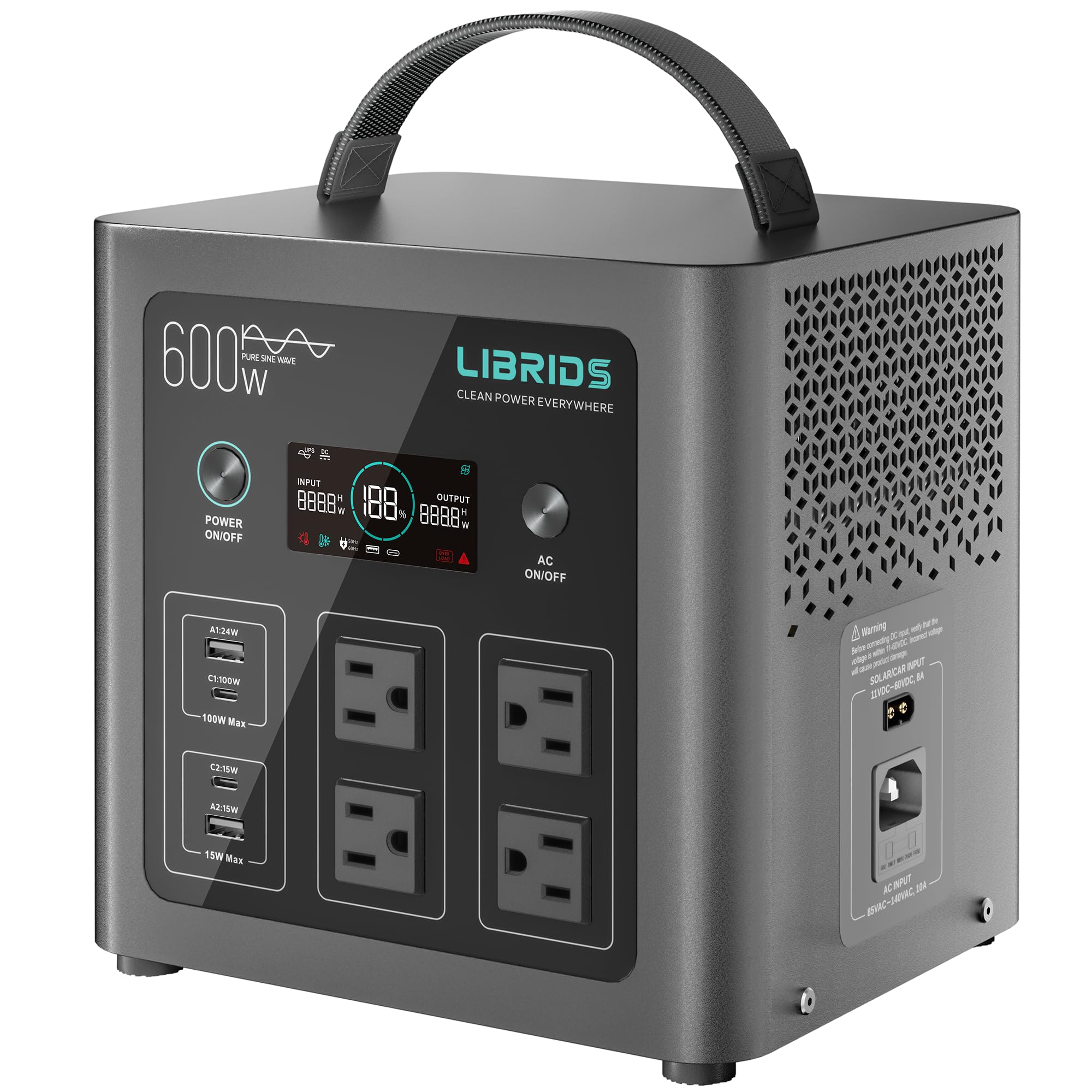
The LIBRIDS C600 is a 640Wh power station that serves double duty as a CPAP battery and a general camp power hub. Its 600W pure sine wave inverter (1,200W peak) can run a CPAP machine through the AC outlet while simultaneously powering a 12V cooler, phone charger, and camp lights. A real user report showed a ResMed AirSense 11 running for 7 hours with only 24 percent battery drain — meaning the full 640Wh could deliver nearly 30 hours of CPAP time without humidity.
The built-in 10ms UPS function is a standout feature for home use: during a power outage, the C600 switches to battery power before your CPAP even registers the interruption. The metal enclosure improves heat dissipation and feels substantially more durable than plastic-shelled competitors. The smart LCD screen shows real-time input and output wattage, which helps you track exactly how much power your CPAP is drawing in different scenarios.
At roughly 15 pounds, this is not a backpacking battery. The manufacturer explicitly labels it for indoor use only, though it can operate in dry, well-ventilated outdoor environments. The 1.5-hour full recharge from AC is the fastest in this lineup. For RV campers or car campers who need a single power station to manage CPAP, fridge, and electronics simultaneously, the C600 offers unmatched capacity and utility.
Why it’s great
- 640Wh capacity offers three-plus nights of CPAP use.
- 10ms UPS automatic switch for seamless home backup.
- Fast 1.5-hour AC recharge gets you ready for the next trip quickly.
Good to know
- At 15 pounds, it is too heavy for backpacking.
- Labeled for indoor use only despite camping suitability.
- No dedicated CPAP DC cables — you need to use the AC inverter.
5. Anker SOLIX C300

The Anker SOLIX C300 brings premium build quality and whisper-quiet operation to the campsite, emitting just 25dB of fan noise from 3.3 feet away — quieter than a typical CPAP machine itself. Its 288Wh LiFePO₄ battery is enclosed in a compact frame that is 15 percent smaller than comparable units, and the three AC outlets provide enough flexibility to run a CPAP while charging a phone and a camera simultaneously.
The standout feature is the dual 140W two-way USB-C ports. You can charge the C300 itself from a USB-C PD charger, reaching 80 percent capacity in just 50 minutes, or use the same port to fast-charge a laptop or tablet. This makes the C300 uniquely convenient for campers who want to top off the battery during a brief stop at a cafe or RV park. Users report the unit holds a full charge for months in storage, so it is ready when you need it.
On the downside, the 288Wh capacity is moderate, and running a CPAP with a heated humidifier through the AC outlet will drain the battery in about 4 to 5 hours. There is no dedicated DC output for CPAP, so you are forced to use the inverter. The C300 is best suited for campers who run their CPAP without humidity, need ultra-quiet operation, and want the convenience of USB-C fast recharging over a lunch break.
Why it’s great
- 25dB noise level is among the quietest power stations tested.
- 140W USB-C two-way charging reaches 80% in 50 minutes.
- Compact footprint with three AC outlets in a portable chassis.
Good to know
- No dedicated DC output for direct CPAP connection.
- 288Wh capacity limits runtime with humidifier on.
- USB-C ports are fragile — avoid side-loading pressure on cables.
6. EF ECOFLOW RIVER 3

EF ECOFLOW’s RIVER 3 is the most technologically advanced small power station in this lineup, using gallium nitride (GaN) transistors to achieve double the runtime for appliances under 100W compared to conventional inverters. For CPAP users, that is a direct efficiency gain: a machine drawing 50W will last significantly longer on the RIVER 3’s 245Wh battery than it would on a standard inverter unit of the same capacity.
The X-Stream fast charging technology refills the battery from 0 to 100 percent in just one hour via AC, which is the fastest recharge rate among all the units covered here. The built-in UPS switches in under 20 milliseconds, making the RIVER 3 a viable home CPAP backup that also travels well. At only 7.8 pounds with IP54 weather resistance, it withstands splashes and dust better than any other battery in this review.
The trade-off is capacity: 245Wh is on the lower end, and a CPAP with humidification will exhaust the battery in under four hours. The 300W continuous output (600W with X-Boost) is adequate for most CPAP machines, but the single USB-C PD port caps at 100W, not the 140W found on the Anker C300. For campers who prioritize fast charging and weather resistance over raw capacity, and who sleep with humidity turned off, the RIVER 3 is a high-tech, highly efficient choice.
Why it’s great
- GaN inverter doubles efficiency for appliances under 100W.
- 1-hour full AC recharge is the fastest in class.
- IP54 dust and splash resistance for outdoor confidence.
Good to know
- 245Wh capacity is low for CPAP with humidifier.
- No dedicated CPAP DC cable included.
- Single 100W USB-C port is slower than competing 140W units.
7. GRECELL EB300
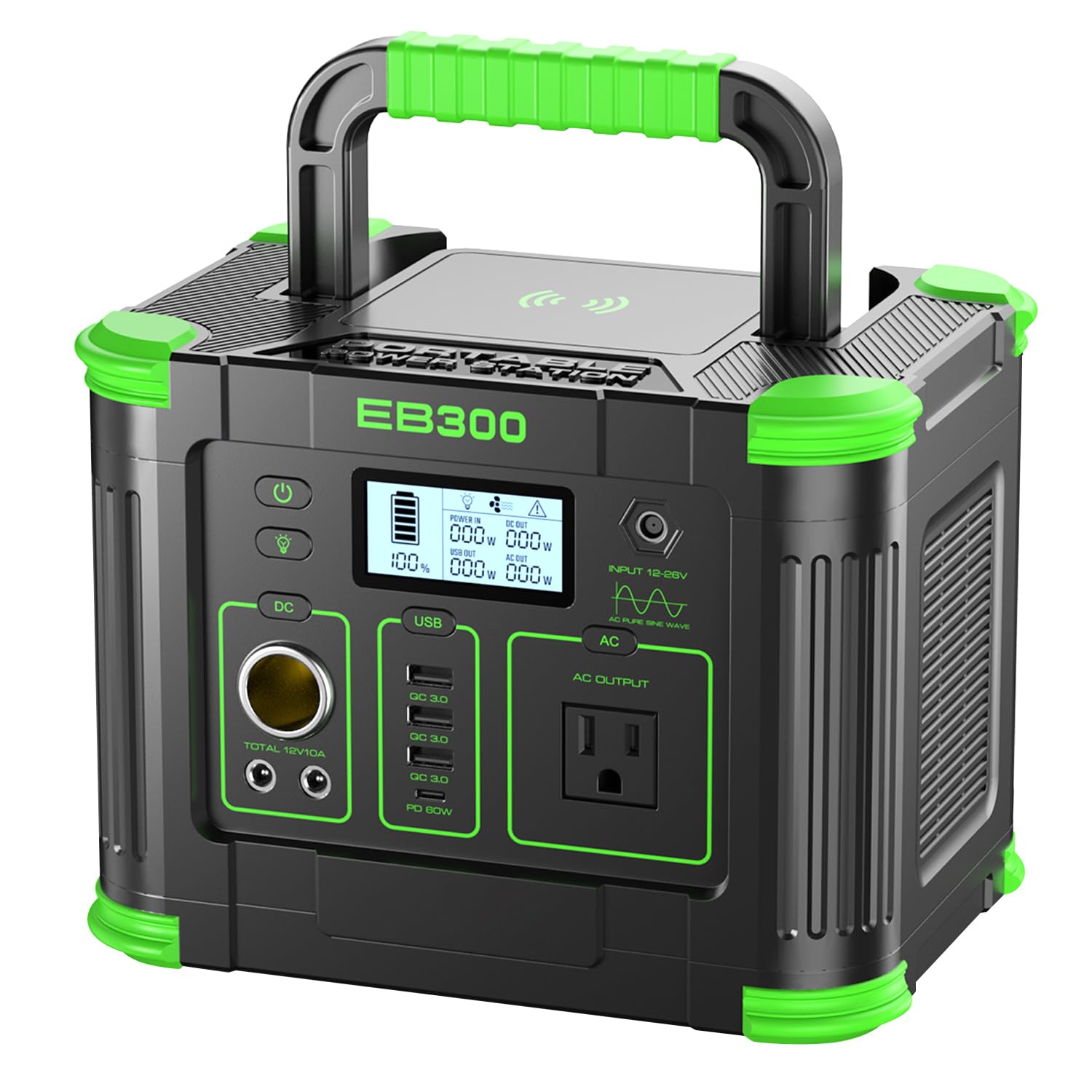
The GRECELL EB300 strikes a practical balance between capacity and cost, offering 288.6Wh of pure sine wave power through a 330W AC outlet, plus a 5W wireless charging pad on top. The integrated dual quiet cooling fans keep the electronics safe during long CPAP sessions without becoming annoyingly loud inside a tent. Its reinforced carrying handle and 7.94-pound weight make it easy to move between car and campsite.
Tri-mode recharging — AC wall adapter, 12V car charger, and up to 120W solar panel — means you can top off the battery during the day at camp or en route. The MC4 solar input connector is included in the box, which many competitors charge extra for. Users who dry camped reported the unit held a charge for five days while powering phones, fans, and a headlamp, suggesting the standby power draw is minimal.
The EB300 does not include any CPAP-specific DC cables, so you will need to run your machine through the AC outlet and its own power brick. For campers who want a general-purpose power station that can handle CPAP duty plus charge all their other devices, the EB300 offers solid mid-range performance at a competitive price point.
Why it’s great
- 5W wireless charging pad adds convenience for compatible phones.
- MC4 solar connector included, no extra purchase needed.
- Low standby drain keeps charge for days of dry camping.
Good to know
- No CPAP-specific DC cables force AC inverter use.
- Cooling fans, while quiet, are audible in a silent tent.
- Solar recharge is slow at the 60W input maximum.
8. MARBERO M822MAX with 40W Solar Panel
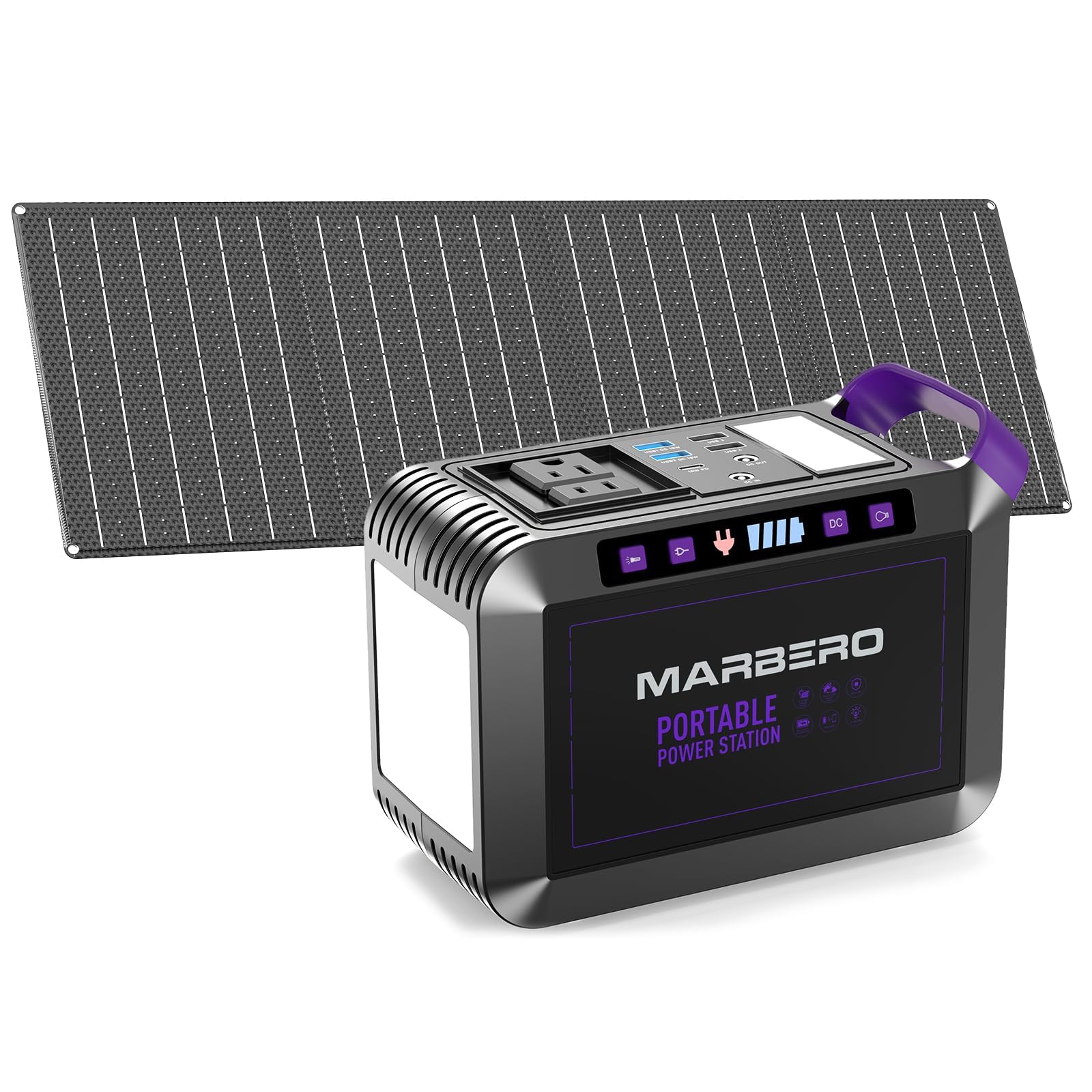
The MARBERO M822MAX is the lightest power station in this guide at just 3.3 pounds, and it comes bundled with a 40W foldable solar panel that weighs another 2.3 pounds. For ultralight car campers or hikers who need just enough power for a single night of CPAP without humidity, this combination is hard to beat in terms of weight-to-watt-hour ratio. The 172Wh capacity is adequate for roughly 6 to 8 hours of CPAP use at a moderate pressure setting with the humidifier off.
The solar panel features a conversion rate of 21.5 to 23.5 percent, and the built-in smart chip adjusts charging to prevent overloading. In good direct sunlight, the panel can replenish the battery in about 5 to 6 hours, allowing you to recharge during the day for the next night. The power station itself offers two AC outlets (200W continuous, 270W peak), two USB-A QC3.0 ports, one USB-C PD 18W port, and a DC port.
Long-term reliability is the main concern here — several users reported the battery losing capacity or failing after four to five months, and the unit struggled to maintain consistent power output for laptops after extended use. The 172Wh capacity also limits you to a single night of CPAP, with no reserve for a second night. For occasional car campers who want a lightweight, entry-level solar kit for one-night trips, the MARBERO M822MAX works as a budget-friendly starter solution, but it is not a buy-it-for-life product.
Why it’s great
- Extremely light power station at 3.3 pounds.
- Includes a 40W foldable solar panel for off-grid recharging.
- Multiple output ports for phones, tablets, and lights.
Good to know
- 172Wh capacity barely covers one CPAP night.
- Reported battery degradation and failures after a few months.
- No dedicated CPAP cable — must use AC inverter.
9. DaranEner NEOZ
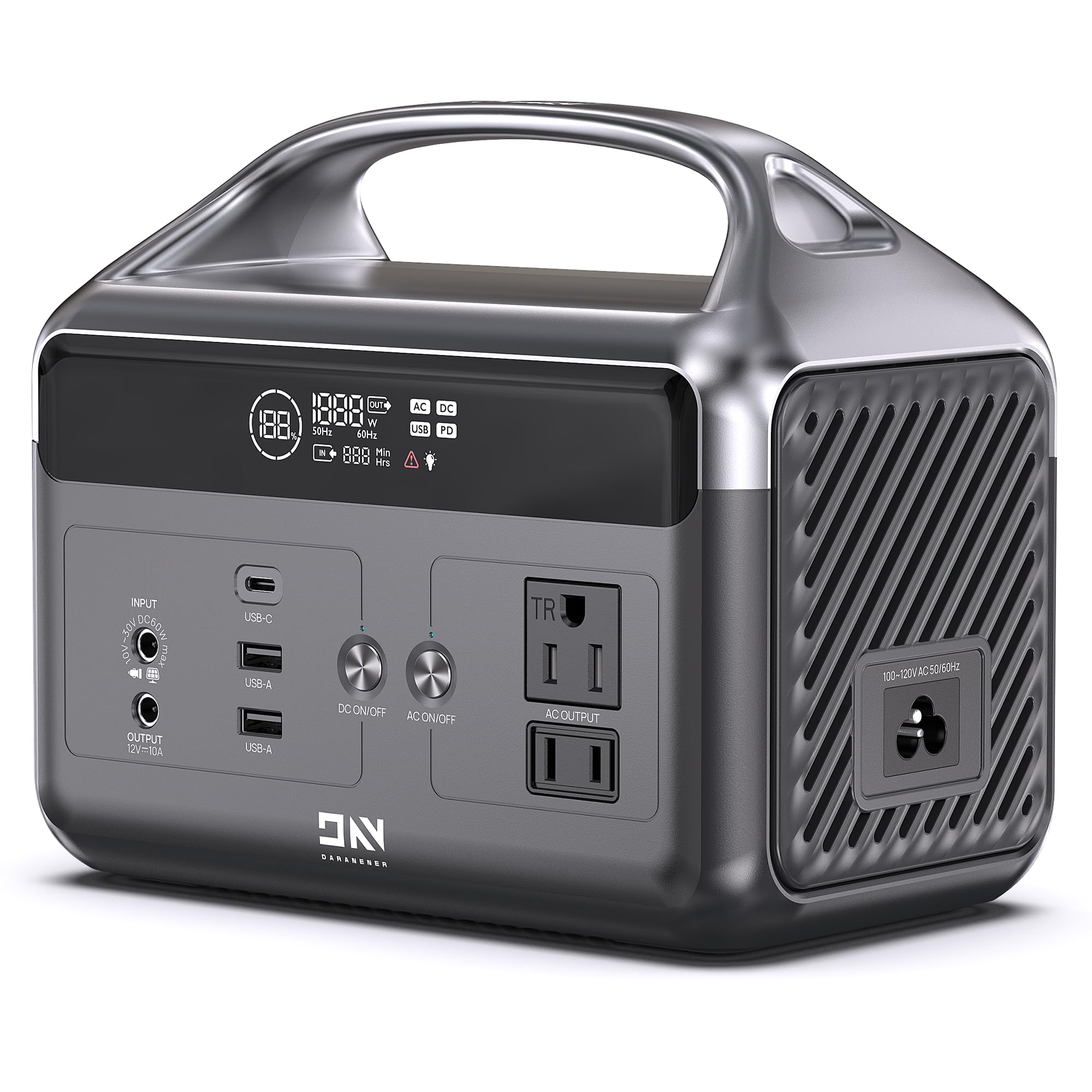
The DaranEner NEOZ packs 192Wh of LiFePO₄ capacity into a toaster-sized chassis that weighs just 5.73 pounds, making it both smaller and lighter than many power stations with less capacity. The 300W pure sine wave AC output is clean enough for sensitive CPAP electronics, and the 60W USB-C PD port charges a phone or tablet quickly while the CPAP runs. Users specifically reported running their CPAP machine most of the night during a power outage, confirming that the 192Wh rating translates to real-world overnight use.
The battery management system (BMS) protects against overcharging, overheating, and short circuits, which is critical when the device is running unattended while you sleep. The built-in LED flashlight with four brightness modes including SOS adds emergency utility. The MPPT controller optimizes solar charging up to 60W, and the unit can be recharged via AC, car, or solar panel, though the solar cable and car cable are not included in the box.
The primary drawback is the lack of CPAP-specific DC cables — you must use the AC inverter, which wastes 10 to 15 percent of the capacity. Some users reported the battery gauge never synced accurately with the remaining charge, making it difficult to know exactly when the battery will die. For campers who want an inexpensive, compact LiFePO₄ power station that can handle a single night of CPAP with humidity off, the DaranEner NEOZ offers good value in a small footprint.
Why it’s great
- LiFePO₄ cells rated for 3,500+ recharge cycles.
- 5.73 pounds and smaller than a toaster for easy packing.
- 60W USB-C PD port for fast device charging.
Good to know
- No CPAP DC cables force AC inverter use.
- Battery gauge can be inaccurate for remaining capacity.
- Solar and car charging cables not included.
FAQ
How many nights will a 300Wh CPAP battery last while camping?
Can I use a regular power station like the Jackery or EcoFlow for my CPAP?
What does pass-through charging mean for a CPAP battery?
Final Thoughts: The Verdict
For most users, the cpap battery for camping winner is the BLUETTI X30 because it combines dedicated DC cables for ResMed and Philips machines with a lightweight 3.9-pound LiFePO₄ pack that delivers true multi-night runtime when humidity is turned off. If you want a single unit that powers both your CPAP and your camp fridge, grab the LIBRIDS C600 for its 640Wh capacity and 10ms UPS. And for the lightest possible setup that fits in a small duffel pocket, nothing beats the EASYLONGER ES720 with its slim profile and four included CPAP cables.

Mo Maruf
I created WellFizz to bridge the gap between vague wellness advice and actionable solutions. My mission is simple: to decode the research and give you practical tools you can actually use.
Beyond the data, I am a passionate traveler. I believe that stepping away from the screen to explore new environments is essential for mental clarity and physical vitality.