Our readers keep the lights on and my smoothie glass nicely filled. As an Amazon Associate, I earn from qualifying purchases.
A standard twist drill bit grabs acrylic like a crowbar, cracking or chipping the workpiece before the cut even begins. The geometry that works for wood and metal causes instant stress fractures in rigid plastics, turning a simple hole into a ruined project. Specialized drill bits for acrylic solve this with a ground point angle and flute design that peel material away rather than tear it.
I’m Mohammad Maruf — the founder and writer behind WellFizz. I’ve spent hundreds of hours cross-referencing cutting angles, flute geometries, and coating technologies across dozens of brands to find which bits actually spare your acrylic sheet from disaster.
Whether you fabricate display cases, machine custom parts, or repair household items, the difference between a smooth finish and a cracked panel comes down to one decision: choosing the right drill bit for acrylic. This guide breaks down the five best options ranked by performance and value.
How To Choose The Best Drill Bit For Acrylic
Acrylic is brittle and melts under friction. The right drill bit compensates for both weaknesses through specific geometry. Ignore the marketing flash and focus on the three variables that actually determine whether you walk away with a clean bore or a cracked panel.
Point Angle and Tip Design
A standard 118-degree point angle pushes material outward, creating stress that fractures acrylic. The ideal point for plastics sits between 60 and 90 degrees, or uses a stepped-point design that centers the bit and distributes cutting force in stages. Stepped-point tips eliminate the need for a pilot hole entirely, reducing the chance of chatter that causes cracks.
Flute Geometry and Chip Evacuation
Acrylic chips are long, stringy, and prone to melting back onto the cut surface. A bit with wide, polished flutes — preferably two flutes with a slow helix — gives those chips room to escape without clogging. If chips pack in the flutes, heat builds, the plastic softens, and the hole surface turns hazy or melts shut.
Material and Coating
High-speed steel is sufficient for occasional acrylic use. Titanium nitride or gold oxide coatings reduce friction and help prevent the bit from welding itself to the plastic, but they primarily benefit hardened metals. For frequent acrylic work, cobalt steel offers the best edge retention without the cost of carbide. Avoid carbide unless you are drilling production volumes — it chips easily on the entry and exit of thin acrylic sheets.
Quick Comparison
On smaller screens, swipe sideways to see the full table.
| Model | Category | Best For | Key Spec | Amazon |
|---|---|---|---|---|
| SOURCEONE 1/4-inch | Single Bit | Precision 1/4″ holes in thin plexiglass | 90° point angle, hand-ground | Amazon |
| Bosch RotoZip SC4 | Spiral Saw Bit | Freehand cutting in fiberglass and plastic | 120° cutting angle, 4-flute | Amazon |
| HIGHFIRE 30-Piece | Stepped Point Set | Multi-material drilling with impact drivers | Stepped tip, titanium coating | Amazon |
| Pro Edge 29-Piece | Stepped Point Set | Precision work in acrylic and steel | M2 HSS, titanium-coated stepped tip | Amazon |
| Drill America 29-Piece Cobalt | Cobalt Stepped Set | Industrial-grade drilling in hard metals and acrylic | Cobalt steel, 135° split point | Amazon |
In‑Depth Reviews
1. SOURCEONE 1/4-inch Premium Acrylic Drill Bit
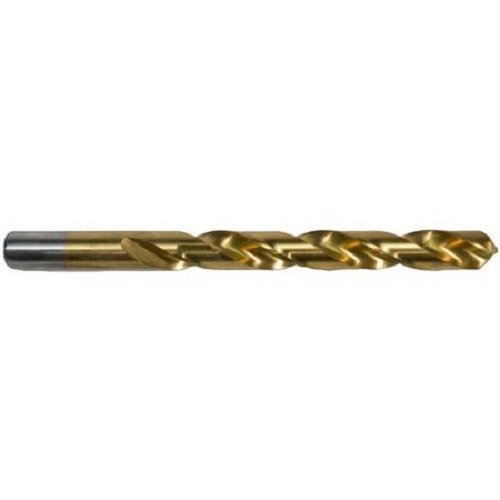
The SOURCEONE bit is hand-ground specifically for acrylic, plexiglass, and Lucite, with a point angle that sits close to the 90-degree sweet spot. Unlike off-the-shelf twist bits that grab and fracture, this geometry slices into the plastic with minimal downward force. The straight shank and 2-flute design provide enough chip clearance for small-diameter work in sheets up to 1/8-inch thick.
Multiple verified users report drilling clean 1/4-inch holes in thin plexiglass without cracking, provided the material is clamped with space underneath. The aluminum finish resists corrosion and the bit stays sharp through several dozen holes in hobbyist setups. One critical user noted receiving a bit with an over-ground rake and a point angle closer to 135 degrees, which caused immediate failure — a quality-control variance to watch for on the first use.
At its price point, this is the most targeted acrylic-specific bit you can buy without stepping up to a full set. It solves the specific stress-fracture problem that makes generic bits unusable on plexiglass, and it does so with a design philosophy that prioritizes the material over universal compatibility.
Why it’s great
- Hand-ground geometry tuned for acrylic eliminates cracking
- Works cleanly on thin 1/8-inch plexiglass when properly clamped
- Straightforward single-bit solution for users who need one size
Good to know
- Quality control varies — inspect point angle before use
- Only one size (1/4-inch) limits versatility
- Slow feed required to avoid melting on thicker material
2. Bosch RotoZip SC4 1/8-Inch Zip Bit 4-Pack
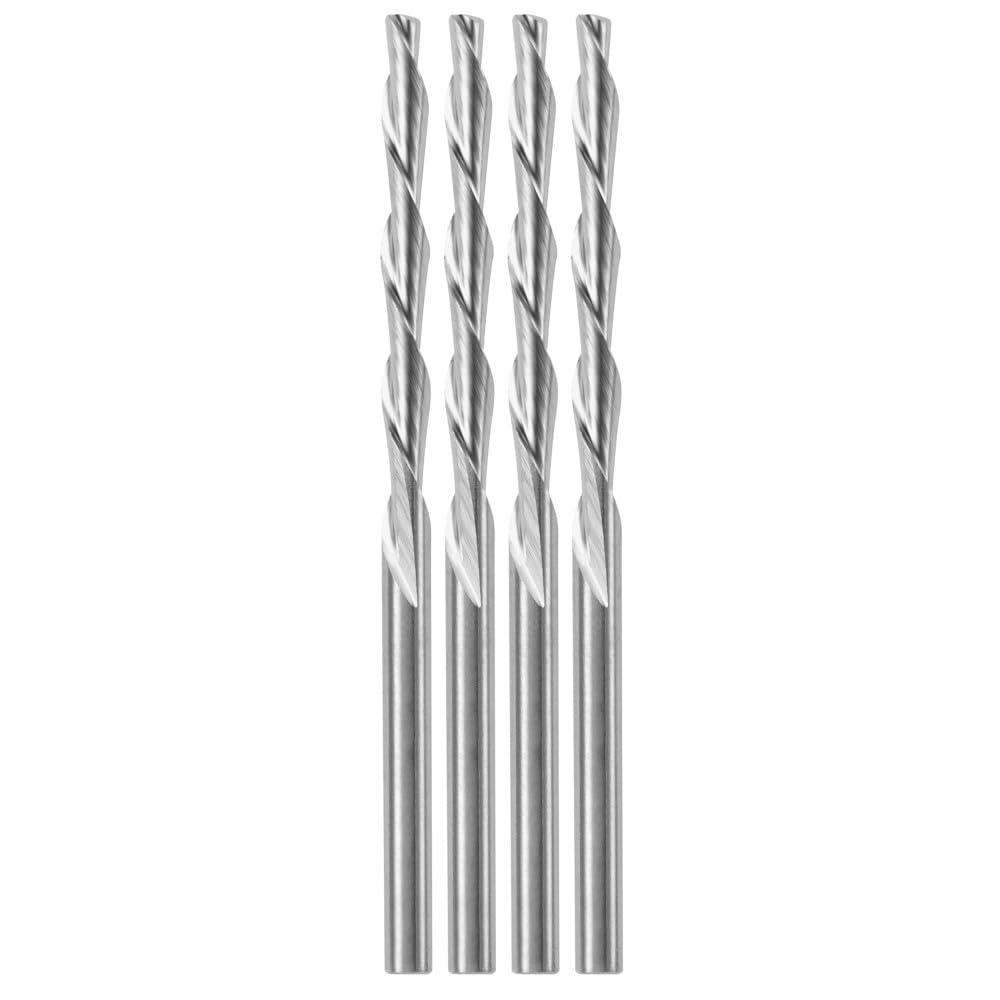
The RotoZip SC4 is not a conventional drill bit — it is a spiral saw bit designed for a RotoZip or compatible rotary tool. With a 120-degree cutting angle and 4-flute configuration, it cuts through fiberglass, plastic, and wood up to 1-inch thick. The 1/8-inch shank fits all RotoZip spiral saws and makes it ideal for cutting channels, enlarging holes, or freehand slotting in acrylic panels.
Verified users note that these bits work well on thin materials and soft plastics, but the low-cost HSS construction means they overheat quickly under heavy use. Several reviewers reported the bit snapping when pushed too hard into solid wood. For acrylic specifically, the high cutting angle and multi-flute design help prevent chipping, but the bit is best suited for light-duty or hobby projects where a full drill press setup is not available.
The 4-pack offers good utility for the price, treating the bits as consumables for small repair jobs. If your primary use is freehand cutting in plastic sheets rather than drilling precise holes, this set fills a gap that standard drill bits cannot cover.
Why it’s great
- Designed for spiral saws to cut through plastic cleanly
- 4-flute geometry reduces chipping on entry
- Multi-pack offers good value for consumable use
Good to know
- Not a standard drill bit — requires RotoZip tool
- HSS construction overheats in continuous use
- Brittle under load; can snap in thick material
3. HIGHFIRE 30-Piece Hex Shank Stepped Point Drill Bit Set
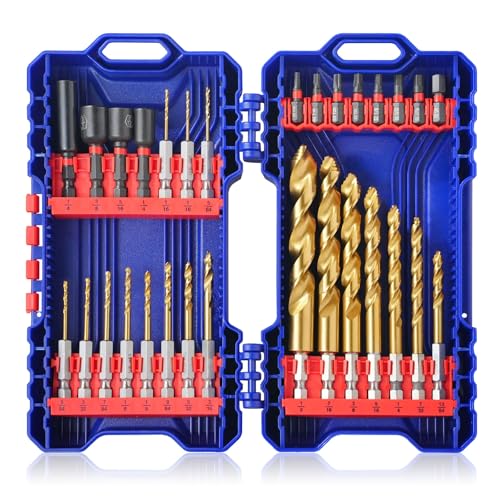
The HIGHFIRE 30-piece set uses a stepped-point tip design that eliminates the need for a pilot hole, making it equally effective on acrylic, metal, and wood. The hex shank locks into impact drivers without slipping, and the titanium gold coating adds durability against heat buildup during extended drilling sessions. Sizes range from 1/16-inch to 1/2-inch, covering the most common hole diameters for fabrication and repair work.
Users consistently report that these bits drill pilot holes in mild steel faster than comparable DeWalt bits, and the stepped tip centers itself on contact, reducing walk and chatter on smooth acrylic surfaces. A few users did snap bits during aggressive drilling, but the overall consensus is that the set outperforms its price tier. The color-coded case helps organize the 30 pieces, and the extension rod adds versatility for hard-to-reach spots.
For acrylic specifically, the stepped-point design is the critical advantage — it distributes cutting force across two stages, preventing the sudden bite that cracks thin sheets. If you need a single set that handles acrylic plus steel and wood, this is the most practical mid-range option available.
Why it’s great
- Stepped point eliminates pilot holes in acrylic and metal
- Hex shank prevents slip in impact drivers at high torque
- 30-piece range covers common sizes for shop use
Good to know
- Some bits may break under heavy side load
- Titanium coating primarily benefits metal rather than plastic
- Not optimized exclusively for acrylic point angle
4. Pro Edge 29-Piece HSS Stepped Point Drill Bit Set
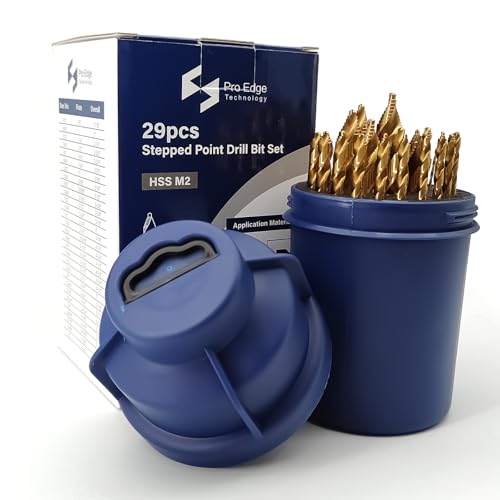
Pro Edge uses M2 high-speed steel with a titanium coating, paired with a stepped-point tip that centers on contact and eliminates the need for a pilot hole. The 29-bit set spans 1/16-inch to 1/2-inch in 64th-inch increments, giving you precision sizing for acrylic fabrication where hole diameter matters down to a fraction of a millimeter. The double spiral flutes evacuate chips efficiently, reducing the heat that melts acrylic edges.
Verified buyers highlight that these bits drill through galvanized steel and stainless steel without crumbling, and several users compared the quality favorably to name-brand sets costing significantly more. The stepped-point design provides enough centering force to prevent walking on smooth acrylic, and the titanium coating keeps the cutting edge cool during extended runs. One user noted that while the bits are not as durable as top-tier industrial sets, the value per bit far exceeds what you get from big-box retail packs.
For acrylic drilling, the combination of stepped-point geometry, M2 steel edge retention, and spiral flutes makes this set a strong choice for serious hobbyists and light commercial work. It bridges the gap between entry-level sets and industrial cobalt without forcing a compromise on point design.
Why it’s great
- Stepped point centers automatically and prevents chatter on acrylic
- M2 HSS with titanium coating maintains edge through repeated use
- Double spiral flutes evacuate hot chips before they melt plastic
Good to know
- Round shank can slip in some impact driver chucks
- Not as durable as cobalt for high-volume stainless steel drilling
- Storage case is functional but not heavy-duty
5. Drill America 29-Piece Cobalt Stepped Point Drill Bit Set

Drill America’s GSC series brings a 135-degree split point and cobalt steel construction to the stepped-point drill bit category. The 135-degree angle is steeper than the ideal acrylic point, but the stepped-point geometry compensates by distributing cutting force gradually, making this set capable of drilling acrylic, steel, and hardened metals with equal authority. The gold oxide finish reduces friction and helps the bit run cooler under continuous use.
Professional mechanics and fabricators report drilling through 1/4-inch steel plate in under three seconds with these bits, and several noted that the set outperforms every other bit they have used on stainless steel. The 29 sizes cover the full 1/16-inch to 1/2-inch range, and the 3-flat shank prevents spinning in the chuck even at high torque. A minority of users received bits with dull tips or broken points out of the box, indicating that quality control at this premium price point should be verified upon delivery.
For acrylic work, the cobalt construction and stepped point make this the most durable option for production environments where sheets are drilled repeatedly. The higher upfront cost is offset by the edge life — these bits hold their grind far longer than HSS or titanium-coated alternatives, making them the right choice for users who drill plastic as part of a daily workflow.
Why it’s great
- Cobalt steel holds edge longer than HSS for production drilling
- Stepped point with 3-flat shank prevents spinning at high torque
- 135-degree split point reduces walking on smooth acrylic
Good to know
- 135-degree point is not ideal for thin acrylic; stepped tip helps
- Quality control issues reported — inspect bits on arrival
- Requires high-torque drill to reach full potential in steel
FAQ
Can I use a regular wood drill bit on acrylic?
What speed should I use when drilling acrylic?
Do I need a pilot hole for acrylic drill bits?
Is titanium coating necessary for drilling acrylic?
Final Thoughts: The Verdict
For most users, the drill bit for acrylic winner is the SOURCEONE 1/4-inch Premium Acrylic Drill Bit because its hand-ground 90-degree point angle directly solves the cracking problem that plagues standard bits on plexiglass. If you want a stepped-point set that handles acrylic plus steel and wood without needing a pilot hole, grab the HIGHFIRE 30-Piece Set. And for professional-grade production drilling in acrylic and hardened metals, nothing beats the edge life of the Drill America 29-Piece Cobalt Set.

Mo Maruf
I created WellFizz to bridge the gap between vague wellness advice and actionable solutions. My mission is simple: to decode the research and give you practical tools you can actually use.
Beyond the data, I am a passionate traveler. I believe that stepping away from the screen to explore new environments is essential for mental clarity and physical vitality.