Our readers keep the lights on and my smoothie glass nicely filled. As an Amazon Associate, I earn from qualifying purchases.
Cross country skiing demands a boot that balances forward flex for efficient kick-and-glide with lateral stiffness for edge control on descents and tracks. The wrong boot turns a perfect groomed trail into a fight against your own gear, while the right one makes every stride feel fluid and every downhill predictable.
I’m Mohammad Maruf — the founder and writer behind WellFizz. I’ve spent countless hours analyzing boot geometries, sole compatibility standards, insulation ratings, and lacing systems across the full spectrum of nordic footwear to build this cross country ski boot buying guide.
Whether you are an experienced skier upgrading your gear or a beginner looking for the right starting point, this guide ranks the most reliable options available for the best cross country ski boots based on real world feedback and technical specifications.
How To Choose The Best Cross Country Ski Boots
Cross country ski boots are not interchangeable. The sole type determines which bindings they work with, the insulation level dictates comfort on cold days, and the boot height affects ankle support for off-trail terrain. Ignoring these factors leads to poor power transfer or cold feet within the first kilometer.
Binding Compatibility — The Non-Negotiable First Check
Most modern cross country boots use a NNN (New Nordic Norm) sole with a single longitudinal ridge that clicks into compatible bindings. Backcountry boots often use NNN-BC with a wider, more rugged sole for greater stability. Older 75mm three-pin boots offer a traditional feel favored by telemark skiers but require binding-specific hardware. Always match the boot sole to your existing skis before purchasing.
Insulation and Climate Management
Boots rated with Thinsulate or a breathable waterproof membrane like Alpitex or Fischer Triple-F keep feet warm without trapping sweat. Lace covers and neoprene cuffs prevent snow entry, which is critical for maintaining warmth during multi-hour outings. For temperatures below freezing, look for boots with dedicated thermal insulation in the toe box and forefoot area.
Fit Profile and Stiffness
Touring boots prioritize a roomy toe box and upright comfort for long days on flat trails. Backcountry models use stiffer soles and higher cuffs for edge control on variable snow. Performance boots sacrifice some walking comfort for more direct energy transfer during aggressive striding. A 104mm last width suits wider feet, while narrower lasts around 100mm provide a more locked-in feel for racing or fitness skiing.
Quick Comparison
On smaller screens, swipe sideways to see the full table.
| Model | Category | Best For | Key Spec | Amazon |
|---|---|---|---|---|
| Fischer Men’s XC PRO | Performance | Fitness skiing and groomed tracks | Thermoformable heel support | Amazon |
| Fischer Men’s XC Comfort PRO | Fitness | All-day comfort on groomed trails | Comfort Guard toe insulation | Amazon |
| Rossignol Evo 70 (30.5) | Alpine Touring | Downhill control with relaxed fit | 104mm last with GRIPWALK | Amazon |
| Rossignol Evo 70 (26.5) | Alpine Touring | Downhill control with relaxed fit | 104mm last with GRIPWALK | Amazon |
| Rossignol Kelia 50 | Women’s Recreational | All-day comfort for wider feet | 104mm last / tulip cuff | Amazon |
| Alpina Sports Alaska Leather 75mm | Backcountry | Telemark and off-trail skiing | Full-grain leather / Vibram sole | Amazon |
| Alpina Sports Alaska Leather NNN-BC | Backcountry | Backcountry touring with NNN bindings | Alpitex membrane / Thinsulate | Amazon |
| Nordica The Cruise | Alpine Recreational | Beginner/intermediate downhill use | 104mm last / dual soft flap | Amazon |
| Rossignol XC-2 | Touring | Groomed trail touring and fitness | Tech Grip sole / Thinsulate | Amazon |
In‑Depth Reviews
1. Fischer Men’s XC PRO

The Fischer XC PRO sits at the top tier of fitness-oriented nordic boots thanks to its molded internal heel cap and full-length lace system. The thermoformable heel support molds to your foot over the first few outings, eliminating the heel lift that ruins energy transfer during powerful strides. Fischer Fresh odor management is a practical touch for skiers who train multiple days per week.
The lace cover adds meaningful protection against wet snow, while the Sport Fit Concept balances a snug heel pocket with enough forefoot volume for medium-width feet. This boot delivers a direct, responsive flex that works well on groomed tracks and packed snow, but the relatively stiff sole makes walking on pavement more awkward than softer touring alternatives.
One reviewer reported premature wear on the interior heel lining after about ten uses, which is a durability concern worth noting if you plan heavy mileage. The majority of users praise the comfort and secure fit for all-day sessions, but the heel lining issue means you should inspect the boot interior regularly during the first season.
Why it’s great
- Thermoformable heel cap creates a locked-in fit that reduces power loss
- Fischer Fresh odor control keeps boots fresh after repeated use
- Lace cover prevents snow entry during deep powder conditions
Good to know
- Some users experienced heel lining wear after moderate use
- Stiff sole makes walking on hard surfaces less comfortable
2. Fischer Men’s XC Comfort PRO
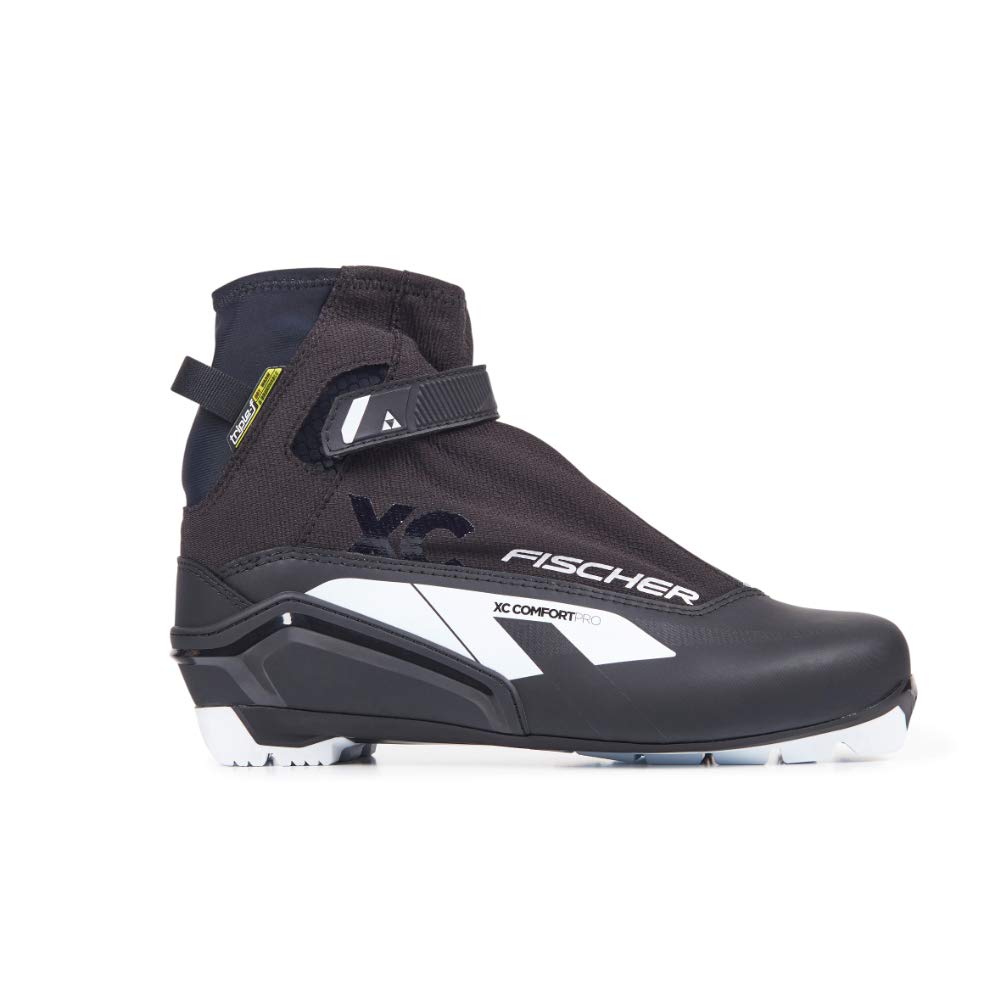
The XC Comfort PRO is Fischer’s best-selling nordic boot for a reason — the Comfort Guard insulation in the forefoot and toe area keeps your feet warm without the bulk of a fully lined winter boot. The breathable Triple-F membrane sheds moisture effectively, which is critical when you work up a sweat on long uphills and need to avoid freezing on the descent.
A Velcro power strap across the ankle improves lateral stability during edging without restricting forward flex for the kick-and-glide motion. The wide-opening system with practical entry loops makes getting in and out easy even with cold, gloved hands. Users consistently report that these boots fit true to size for medium-width feet with a roomy toe box.
This model prioritizes comfort over absolute performance, so advanced skiers who want maximum energy transfer may prefer the stiffer XC PRO. But for all-day touring on groomed trails where warmth and ease of use matter more than race-day response, the Comfort PRO is a top contender. The neoprene outer material holds up well to repeated flex cycles.
Why it’s great
- Comfort Guard insulation provides targeted warmth where feet get coldest
- Breathable Triple-F membrane keeps moisture out without trapping sweat
- Entry loops and wide opening make the boot easy to put on and remove
Good to know
- Softer flex than performance-oriented boots may limit heel hook stability
- Not ideal for aggressive racing or hardpack carving
3. Rossignol Evo 70 (30.5)
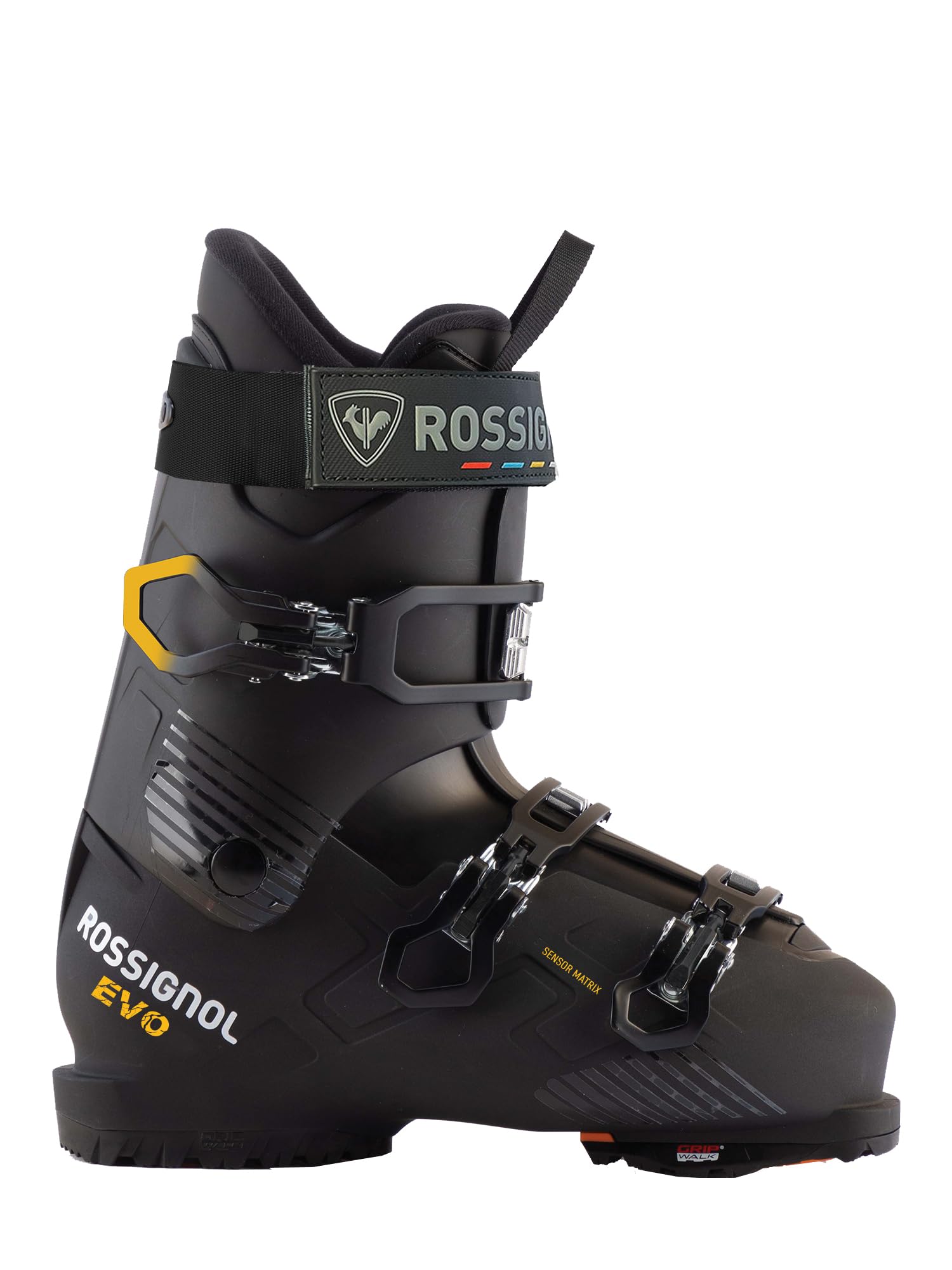
The Rossignol Evo 70 is an alpine ski boot, not a traditional cross country boot, but it earns a spot here for skiers who use downhill or hybrid setups and want a relaxed fit with modern tech. The 104mm last is generous enough for wide feet, and the Sensor Matrix shell reduces overall boot weight while maintaining direct energy transfer to the ski.
The custom fit liner has adjustable zones with softer padding around the ankle and instep to prevent pressure points during all-day descents. Users who replaced twenty-year-old boots reported that the same size clipped into their existing bindings without adjustment — a sign that Rossignol maintains consistent sizing across generations. The GRIPWALK sole compatibility adds traction for walking to the lift.
These are not NNN or NNN-BC boots, so they only work with alpine bindings. If you need a boot for groomed nordic tracks, look elsewhere on this list. But for skiers who primarily do downhill runs with occasional touring sections, the Evo 70 delivers a comfortable, easy-entry experience that outperforms many traditional alpine boots in walking comfort.
Why it’s great
- 104mm last accommodates wider feet without sacrificing heel hold
- Sensor Matrix shell reduces weight for less leg fatigue at the end of the day
- Easy overlap opening makes entry and exit simpler than traditional alpine designs
Good to know
- Only compatible with alpine bindings — not for NNN or 75mm systems
- Softer flex may not satisfy advanced skiers seeking maximum response
4. Rossignol Evo 70 (26.5)
This is the same Rossignol Evo 70 model in a smaller size option (26.5), sharing the 104mm relaxed fit last and Sensor Matrix shell construction. For skiers with foot size 26.5 who want a spacious toe box and easy entry, this version eliminates the shin pain that narrower alpine boots often cause during long days on the mountain.
User feedback highlights how the GRIPWALK-compatible rubber sole improves traction on icy parking lots and lodge floors compared to standard alpine soles. The water-repellent outer material adds a layer of protection against slush, though it is not fully waterproof. The custom fit liner allows heat molding for a more personalized fit if needed.
The same caveat applies — this is an alpine boot, not a nordic cross country boot. It will not work with NNN or NNN-BC bindings. But for skiers who do resort-based skiing with some off-piste exploring, the Evo 70 in size 26.5 offers the same relaxed, high-value package as the larger size with consistent sizing feedback from owners.
Why it’s great
- GRIPWALK rubber sole provides secure footing on ice and snow between runs
- Wide 104mm last reduces pressure points for skiers with wider feet
- Custom liner with heat-moldable zones improves fit over time with use
Good to know
- Not compatible with any nordic binding standard
- Water resistance is limited — not suitable for wet deep snow touring
5. Rossignol Kelia 50

The Rossignol Kelia 50 is built specifically for women with a relaxed 104mm last that accommodates wider feet and a tulip-shaped cuff that eliminates pressure around the calf muscle. This design addresses a common pain point for female skiers who find standard unisex boots too tight through the shin and calf area. The Sensor Matrix shell reduces overall boot weight without sacrificing power transmission.
Heat-moldable custom liners allow you to dial in the fit for your specific foot shape, and users consistently report being able to ski all day without discomfort after heat molding. The softer plastic around the instep makes the overlap easier to open, which simplifies entry and exit compared to stiffer alpine designs. Reviewers with thicker calves specifically recommend this boot for its generous cuff circumference.
Like the Evo 70, the Kelia 50 is an alpine boot and requires alpine bindings. It is not a cross country nordic boot and will not work with NNN or 75mm systems. But for women who ski resort terrain and prioritize comfort over aggressive performance, this boot delivers a solution to the heel lift and calf pinch problems that plague many standard models.
Why it’s great
- Tulip-shaped cuff eliminates calf pressure common in unisex boots
- 104mm last provides generous space for wider forefeet and toes
- Custom liner can be heat molded for a truly personalized fit
Good to know
- Alpine only — not compatible with NNN or 75mm nordic bindings
- Soft flex limits performance for advanced aggressive skiers
6. Alpina Sports Alaska Leather 75mm
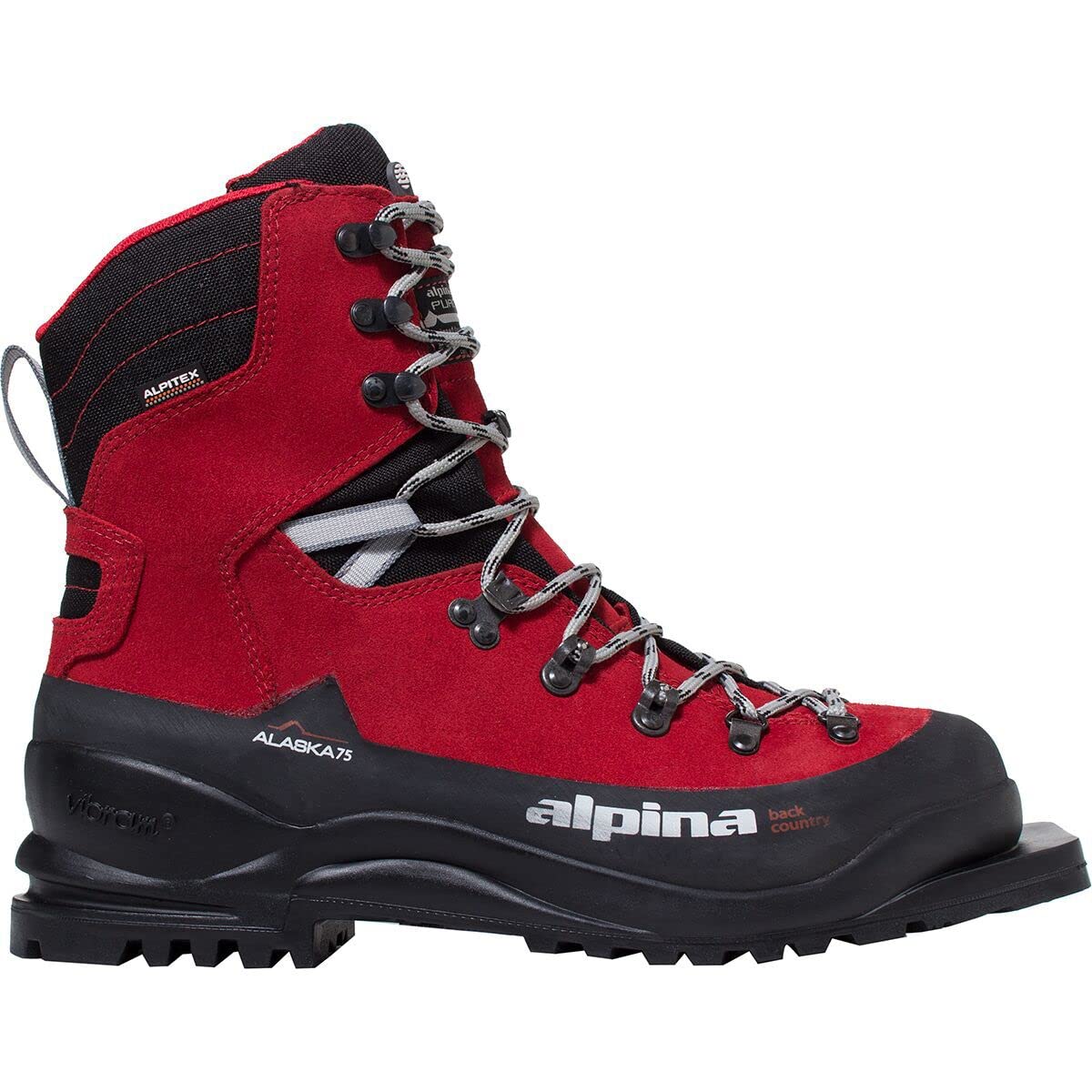
The Alpina Alaska 75mm boot is the benchmark for traditional backcountry skiing. Full-grain leather uppers provide exceptional durability and support over rough terrain, and the Vibram rubber sole offers reliable traction when you need to hike up or walk across icy surfaces. The 75mm three-pin sole works with older telemark bindings, making this a go-to choice for skiers who prefer the freedom of a free-heel setup.
Alpitex waterproof breathable membrane and Thinsulate insulation work together to keep feet warm and dry in temperatures as low as zero degrees Fahrenheit. The lacing system allows independent tension control for the foot and upper cuff, so you can lock down the heel without crushing your instep. Users report these boots lasting hundreds of miles over several seasons with proper care.
This is a stiff, supportive boot compared to soft touring models. The leather construction requires a break-in period and does not offer the instant out-of-box comfort of synthetic boots. Sizing tends to run large — reviewers recommend ordering a full size smaller than your US shoe size. The 75mm sole also limits binding options compared to NNN-BC systems, so verify your bindings can accommodate a 12-20mm under-bail clearance.
Why it’s great
- Full-grain leather construction offers unmatched durability for multi-season backcountry use
- Vibram sole provides superior traction on snow and ice during hikes
- Independent lacing zones allow a customized fit for foot and calf
Good to know
- Stiff leather requires break-in period before achieving peak comfort
- 75mm sole limits binding compatibility compared to NNN-BC systems
7. Alpina Sports Alaska Leather NNN-BC

The NNN-BC version of the Alpina Alaska boot offers the same full-grain leather build and Alpitex waterproof membrane as the 75mm model but with a modern NNN-BC sole that works with Rottefella NNN-BC bindings in both manual and automatic modes. This is the better choice for skiers who want backcountry durability without being locked into the older three-pin standard.
Thinsulate insulation keeps feet warm in sub-freezing conditions, and the supportive full-grain leather provides enough rigidity for moderate telemark turns while still allowing natural walking motion on flat approaches. Users who ski both tracked and untracked terrain report that these boots offer a clear step up in support compared to entry-level NNN touring boots. The dual-zone lacing system lets you tighten the lower foot section independently from the upper cuff.
These boots are heavier than synthetic touring models, which is the trade-off for the leather durability. Sizing runs large — a Euro 43 fits roughly a US size 10 shoe with a medium sock. The NNN-BC sole provides better binding availability than 75mm but still limits you to backcountry-specific bindings rather than standard NNN race or fitness bindings.
Why it’s great
- Full-grain leather and Thinsulate provide exceptional warmth and durability for backcountry conditions
- NNN-BC sole offers wider binding compatibility than 75mm while retaining off-trail stability
- Independent lacing system allows precise tension control across the foot and cuff
Good to know
- Leather construction adds significant weight compared to synthetic boots
- NNN-BC sole does not work with standard NNN fitness or race bindings
8. Nordica The Cruise

Nordica’s The Cruise is built for beginner and intermediate alpine skiers who want an easy entry boot with a forgiving flex. The 104mm last provides high-volume comfort for wider feet, and the dual soft flap instep opens the boot throat exceptionally wide so you can slide your foot in without fighting the shell. Micro-adjustable aluminum buckles on the cuff and shell let you fine-tune the closure pressure.
The Infrared Technology allows heat customization at the most sensitive points of the boot, which is a feature typically found at higher price points. Users report that these boots eliminate the shin pain and toe pinch they experienced with narrower models. The polyurethane outer material holds its shape well across temperature swings, and the streamlined anatomical shape improves response compared to boxy beginner boots from a decade ago.
This is an alpine boot — not a cross country boot — and requires alpine bindings. The soft flex that makes it comfortable for intermediate skiers will be too forgiving for advanced skiers who need quick edge-to-edge response. But for its target audience of casual resort skiers and progressing intermediates, The Cruise delivers a comfortable, confidence-building ride at a reasonable entry point.
Why it’s great
- Wide 104mm last and dual soft flap make entry exceptionally easy
- Infrared Technology allows targeted heat customization at pressure points
- Micro-adjustable buckles provide precise closure control
Good to know
- Soft flex limits performance for advanced or aggressive skiers
- Alpine binding only — not compatible with nordic binding systems
9. Rossignol XC-2

The Rossignol XC-2 is a practical touring boot for skiers who spend most of their time on groomed trails and want a reliable, budget-friendly option. The Sport Sole with Tech Grip provides decent traction for walking, and the central insert cleats improve precision when transferring power to the ski during the kick phase.
3M Thinsulate insulation adds warmth in damp and cold conditions, though the polyester outer material is not as durable as leather or higher-end synthetics. The heat-moldable liner allows some custom fit adjustment, and the FW Fit version offers reduced instep volume for a more secure hold on narrower feet. Users generally find these boots comfortable for moderate touring sessions.
Two durability concerns appear in user feedback: the heel padding tends to collapse and bunch after moderate use, rendering the boot uncomfortable in some cases. This is a known risk at this tier. These boots use the NNN sole standard and work with standard NNN bindings, making them compatible with most modern rental and recreational cross country skis.
Why it’s great
- Thinsulate insulation provides effective warmth in cold damp conditions
- Tech Grip sole offers decent traction for walking between trails
- Heat-moldable liner allows some customization for a better fit
Good to know
- Heel padding prone to collapse after moderate use according to multiple reviews
- Polyester outer material is less durable than leather or premium synthetics
FAQ
Can I use alpine ski boots with cross country skis?
How should cross country ski boots fit compared to regular shoes?
Final Thoughts: The Verdict
For most users, the best cross country ski boots winner is the Fischer Men’s XC PRO because it delivers the best combination of thermoformable heel support, Fischer Fresh odor management, and responsive flex for fitness skiing on groomed tracks. If you want all-day warmth and easy entry for touring, grab the Fischer Men’s XC Comfort PRO. And for backcountry terrain where leather durability and waterproof protection matter most, nothing beats the Alpina Sports Alaska Leather NNN-BC.

Mo Maruf
I created WellFizz to bridge the gap between vague wellness advice and actionable solutions. My mission is simple: to decode the research and give you practical tools you can actually use.
Beyond the data, I am a passionate traveler. I believe that stepping away from the screen to explore new environments is essential for mental clarity and physical vitality.