Our readers keep the lights on and my smoothie glass nicely filled. As an Amazon Associate, I earn from qualifying purchases.
A diamond tennis bracelet is a single line of stones spanning your wrist—no charms, no pendants, just pure, repeating brilliance. The buying decision, however, is rarely simple: you are choosing between lab-grown and mined diamond supply chains, between prong counts and metal karats, between a clasp that holds and one that drops a significant investment onto a department store floor. Every millimeter of chain and every tenth of a carat in total weight shifts both the visual impact and the structural integrity of the piece.
I’m Mohammad Maruf — the founder and writer behind WellFizz. I’ve spent hundreds of hours cross-referencing gemological appraisals, clasp failure reports, and metal-weight benchmarks across the leading tennis bracelet listings to separate what actually sparkles without falling apart.
best diamond tennis bracelet reviews often boil down to one honest question: does the clasp hold reliably under daily movement, and does the stone quality match the listing’s color and clarity claims — which is exactly what this guide was built to confirm.
How To Choose The Best Diamond Tennis Bracelet
A tennis bracelet’s longevity and brilliance hinge on three variables that are rarely made obvious in product listings: the clasp’s mechanical hinge, the prong gauge holding each stone, and the actual color/clarity grade versus what the title advertises. A 4-carat bracelet that loses a stone because the prongs are too delicate becomes an expensive repair—not a gift. Focus on these points before comparing total carat weight or stone count.
Clasp Architecture and Safety Catch
The most frequent failure point in a tennis bracelet is the clasp. Standard fold-over clasps without a secondary safety latch are prone to pop open when the bracelet flexes during typing, driving, or sleeping. Look for a double-locking clasp with a visible safety catch—a small curved lever that must be manually lifted before the main clasp can open. Houston Diamond District and Diamond2Deal units frequently include this secondary latch in their premium and mid-range lines.
Prong Count and Stone Setting Security
Prong settings come predominantly in 3-prong or 4-prong configurations per stone. A 4-prong setting offers superior stone retention per individual diamond—if one prong loosens, three remain to hold the diamond. A 3-prong setting exposes more of the stone’s surface and allows more light entry, increasing sparkle, but each missing prong removes one-third of the holding force. For daily wear, prefer 4-prong. For maximum brilliance on special-occasion pieces, 3-prong is acceptable.
Lab-Grown vs. Mined Diamonds and Certification
Lab-grown diamonds are chemically identical to mined diamonds—same carbon lattice, same refractive index, same hardness. The difference is supply chain: lab-grown costs 40–60% less per carat for equivalent color and clarity. The risk is that some sellers label moissanite (a silicon carbide simulant) as diamond. A verifiable grading report from an independent lab (IGI, GIA, or GSI) is the only reliable defense. If the listing does not offer a certificate upon request, consider that a red flag.
Quick Comparison
On smaller screens, swipe sideways to see the full table.
| Model | Category | Best For | Key Spec | Amazon |
|---|---|---|---|---|
| Houston Diamond District 3–30ct Lab Grown Luxury | Premium Lab | Maximum sparkle with security | D-E Color, VS1-VS2, 14K Gold | Amazon |
| Houston Diamond District 3–22ct Natural Diamond | Premium Mined | Natural stone with full appraisal | Natural Mined, 4-Prong, 14K | Amazon |
| Madina Jewelry 3.00ct 14K White Gold | Premium Mined | Classic mined diamond with appraisal | 3.00ct, 14K White Gold, SI1 | Amazon |
| Diamond2Deal 14K Lab Grown 1–20ct | Premium Lab | High color D, VS clarity on a budget | D Color, VS Clarity, Lab-Grown | Amazon |
| Houston Diamond District 2–20ct Natural Value | Mid-Range Mined | Best value natural diamonds with gold weight | Natural Mined, IGI Certified | Amazon |
| Houston Diamond District 3–22ct Natural 4-Prong | Mid-Range Mined | Dual-latch security for daily wear | Natural Mined, Double Clasp, 14K | Amazon |
| Houston Diamond District 3–22ct Natural 4-Prong | Mid-Range Mined | Natural stone, classic design | Natural Mined, 4-Prong, 14K WG | Amazon |
| Diamond2Deal 14K Lab Grown 1–20ct (Silver) | Mid-Range Lab | Entry-level lab diamond in silver or 14K | D Color, VS, Sterling/14K Option | Amazon |
| Original Classics 1.0ct Miracle Set | Mid-Range Mined | Budget-friendly mined diamond look | I-J Color, I3 Clarity, Bezel Set | Amazon |
| Belacqua Lab Grown 2–5ct Sterling Silver | Budget Lab | Affordable lab-grown brilliance | G Color, SI Clarity, Sterling | Amazon |
| Houston Diamond District 2–28ct Lab Grown 14K WG | Premium Lab | High carat lab with safe clasp | E-F Color, VS2-SI1, 14K WG | Amazon |
In‑Depth Reviews
1. Houston Diamond District 3–30 Carat Lab Grown Diamond Tennis Bracelet, 3-Prong Luxury Collection
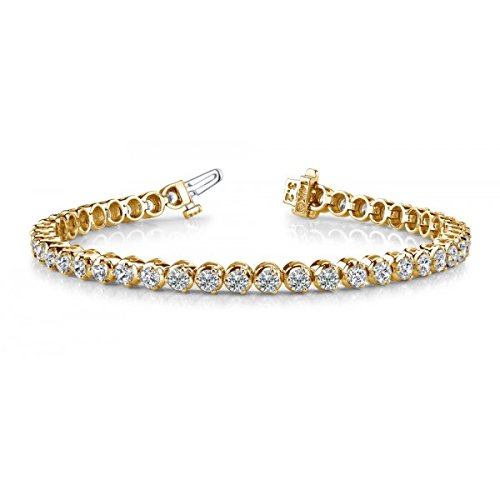
This 3-prong luxury collection from Houston Diamond District uses lab-grown diamonds graded D-E color with VS1-VS2 clarity—the highest color and clarity tier in this roundup. The 3-prong setting exposes more of each stone’s surface, maximizing light refraction and fire, which is the primary reason buyers who value maximum brilliance choose this configuration over a 4-prong design. The clasp includes a safety catch, and the 14K gold setting provides sufficient heft to prevent the bracelet from flipping during wear.
Buyers consistently report that the diamonds appear whiter and brighter than standard G-H stones, and several reviews note that the appraisal value significantly exceeds the purchase price. The double-locking clasp is strong enough for daily wear despite the delicate-looking 3-prong profile. At higher carat weights, the bracelet maintains good flexibility without visible gaps between stones.
The tradeoff is that 3-prong settings leave each stone slightly more exposed to impact or snagging than a 4-prong equivalent. One buyer reported a break within three days of wear—a reminder that even premium units should be inspected immediately upon arrival. The 14K gold weight feels substantial, and the safety clasp is a genuine improvement over cheaper fold-over latches.
Why it’s great
- Premium D-E color with VS1-VS2 clarity delivers exceptional sparkle
- Safety catch clasp adds security for daily wear
- 14K gold provides good weight and durability
Good to know
- 3-prong setting is less stone-secure than 4-prong alternatives
- One buyer reported a break within three days of wear
2. Madina Jewelry 3.00 ct Ladies Round Cut Diamond Tennis Bracelet in 14K White Gold
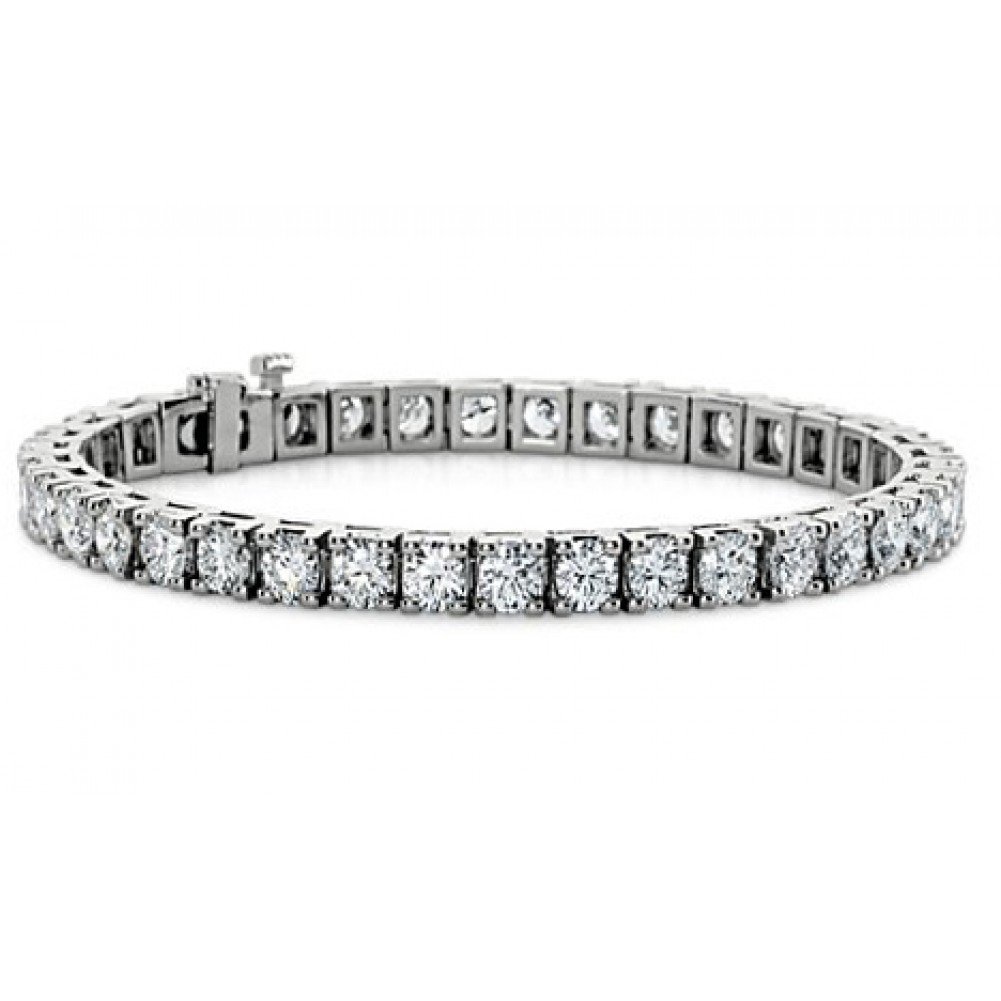
Madina Jewelry’s 3.00-carat tennis bracelet in 14K white gold is one of the longest-tenured listings in this category, and for good reason: it includes an independent appraisal and a lifetime warranty, which addresses the number-one trust gap in online diamond purchases. The SI1 clarity diamonds are described by informed buyers as passing for VS under 10x magnification—meaning the inclusions are virtually invisible to the naked eye. The white gold setting is solid, with a weight that feels appropriate for a 3-carat piece.
One experienced buyer compared this bracelet directly to a Costco offering at J-K color and found the Madina piece to have noticeably whiter stones and better fire. The bracelet ships in a gift box with the appraisal document, making it ready for presentation. Customer service answers sizing questions quickly, which is critical given that a tennis bracelet should sit snugly without sliding over the hand bone.
The clasp feedback is mixed—several buyers report that it is very difficult to open and close, which could become a frustration for someone who removes the bracelet daily. The SI1 clarity grade means some stones may have visible inclusions under close inspection, though most wearers never notice. The 3.00-carat total weight may feel too delicate for buyers who prefer a bolder wrist presence.
Why it’s great
- Includes independent appraisal and lifetime warranty for buyer confidence
- SI1 clarity diamonds appear VS-level under casual inspection
- 14K white gold setting provides solid, non-flimsy weight
Good to know
- Clasp is very tight and difficult to open for some users
- 3-carat total weight may look small for buyers wanting substantial wrist coverage
3. Houston Diamond District 2–20 Carat Natural Diamond Tennis Bracelet Value Collection

The Value Collection from Houston Diamond District delivers natural mined diamonds in a 14K gold setting at a price point that undercuts traditional jewelers by a substantial margin—buyers report paying roughly less than comparable retail chains for equivalent carat weight and metal quality. The diamonds are described as having better clarity than advertised, with only one tiny inclusion visible under magnification in some stones. The 14K gold is substantial, not hollow, giving the bracelet a weight that feels appropriate for its carat class.
Customers consistently praise the sparkle and the secure clasp mechanism. The bracelet comes with a certificate that matches the stones’ actual specs rather than inflating them. The flexible link design allows the bracelet to sit flat on the wrist without twisting, which is a common complaint with cheaper settings where the links are too loose or too tight. Sizing at 7 inches fits most wrists without needing a jeweler adjustment.
One buyer noted that the 3-carat version appears significantly smaller than the product photography suggests—a common issue across this entire category. The clasp, while secure, is not a double-latch system, so the safety margin is lower than premium Houston Diamond District models. The natural stones at this price point may have visible inclusions under close inspection.
Why it’s great
- Natural mined diamonds at a fraction of retail jewelry store pricing
- 14K gold setting feels substantial and well-constructed
- Flexible links prevent bracelet twisting during wear
Good to know
- Product photos may exaggerate stone size relative to actual appearance
- Single-latch clasp is less secure than double-lock alternatives
4. Houston Diamond District 3–22 Carat Natural Diamond Tennis Bracelet 4-Prong Value Plus Collection

This 4-prong Value Plus Collection uses natural mined diamonds with a double-latch clasp, making it one of the most mechanically secure options in the mid-to-premium tier. The 4-prong configuration per stone provides superior retention—if one prong loosens, three remain to hold the diamond in place. Buyers report that the bracelet comes with its own appraisal document, which is especially valuable for those who have been burned by misrepresented stones elsewhere.
The bracelet is described as fluid and well-articulated—meaning the links move naturally with the wrist rather than feeling stiff or rigid. The double latch requires two deliberate actions to open, significantly reducing the chance of accidental release. The diamonds are clear and sparkly, and the 14K gold setting is appropriately weighted for daily wear. Several buyers mention that the perceived value is double the purchase price based on independent jeweler appraisals.
The weakness flagged by one jeweler-reviewed unit: the links lacked proper tension, causing the setting to roll or appear flimsy, which could lead to snapping over time. Customer service responsiveness was inconsistent—the warranty card’s contact line went unanswered, though the appraisal contact was helpful. This bracelet is best suited for light-to-moderate daily wear rather than heavy-duty activity.
Why it’s great
- 4-prong setting per stone offers excellent diamond retention security
- Double-latch clasp provides two-step protection against accidental opening
- Comes with independent appraisal confirming stone quality
Good to know
- Some units have loose link tension causing a flimsy feel
- Customer service communication can be inconsistent
5. Diamond2Deal 14K Lab Grown Diamond Tennis Bracelet 1–20ct (Color-D, Clarity-VS)
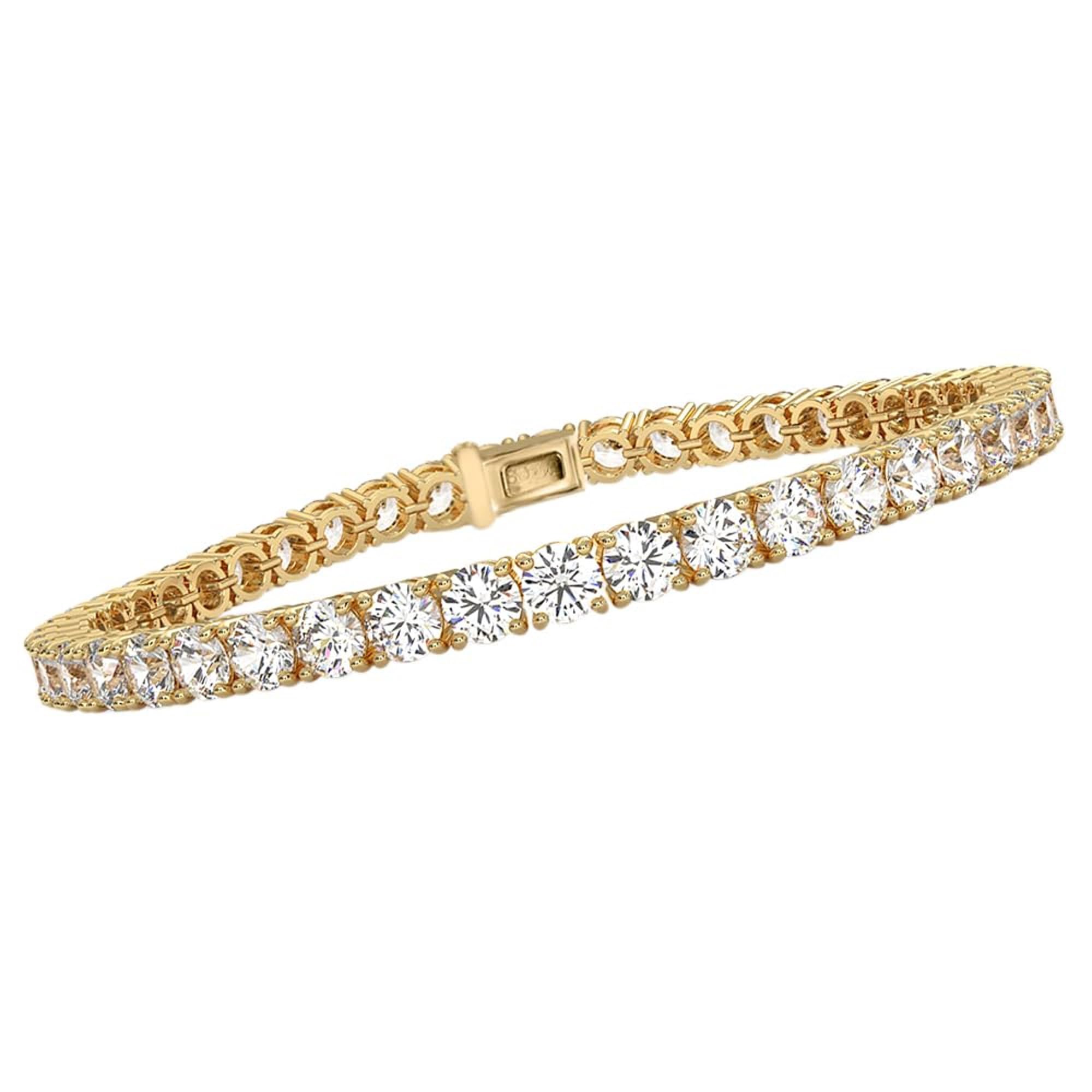
Diamond2Deal offers lab-grown diamonds at Color D (the highest color grade on the diamond scale) with VS clarity, in a 14K gold setting. This combination is normally found only in premium-priced mined diamond pieces. The lab-grown stones are chemically identical to natural diamonds, and a gemologist verified one buyer’s unit as 14K gold with 5 carats of correctly graded stones. The bracelet includes a secondary safety latch on the clasp, addressing the single biggest failure point in this category.
Buyers report that the 5-carat version pairs well with other bracelets and that the redesigned clasp is reliable—a clear improvement over earlier iterations. The stones sparkle brilliantly, and the flexible design allows the bracelet to drape naturally rather than sitting as a rigid circle. The vendor provides certification upon request, which is critical for verifying the D-color and VS-clarity claims.
The clasp on some units differs from the product photos—buyers received a different locking mechanism than pictured. Customer service contact information (email and phone) was reported as invalid by one buyer, and initial certification was missing but later provided after contacting through Amazon. One buyer reported uncontrollable clasp opening, causing the bracelet to fall off during light activity.
Why it’s great
- Highest color grade (D) with VS clarity at a lab-grown price
- Secondary safety latch improves clasp reliability
- Flexible, natural drape on the wrist
Good to know
- Clasp design may differ from product listing photos
- Customer service contact info reported as invalid by some buyers
6. Diamond2Deal 14K Gold Lab Grown Diamond Tennis Bracelet 1–20ct (Silver Option)
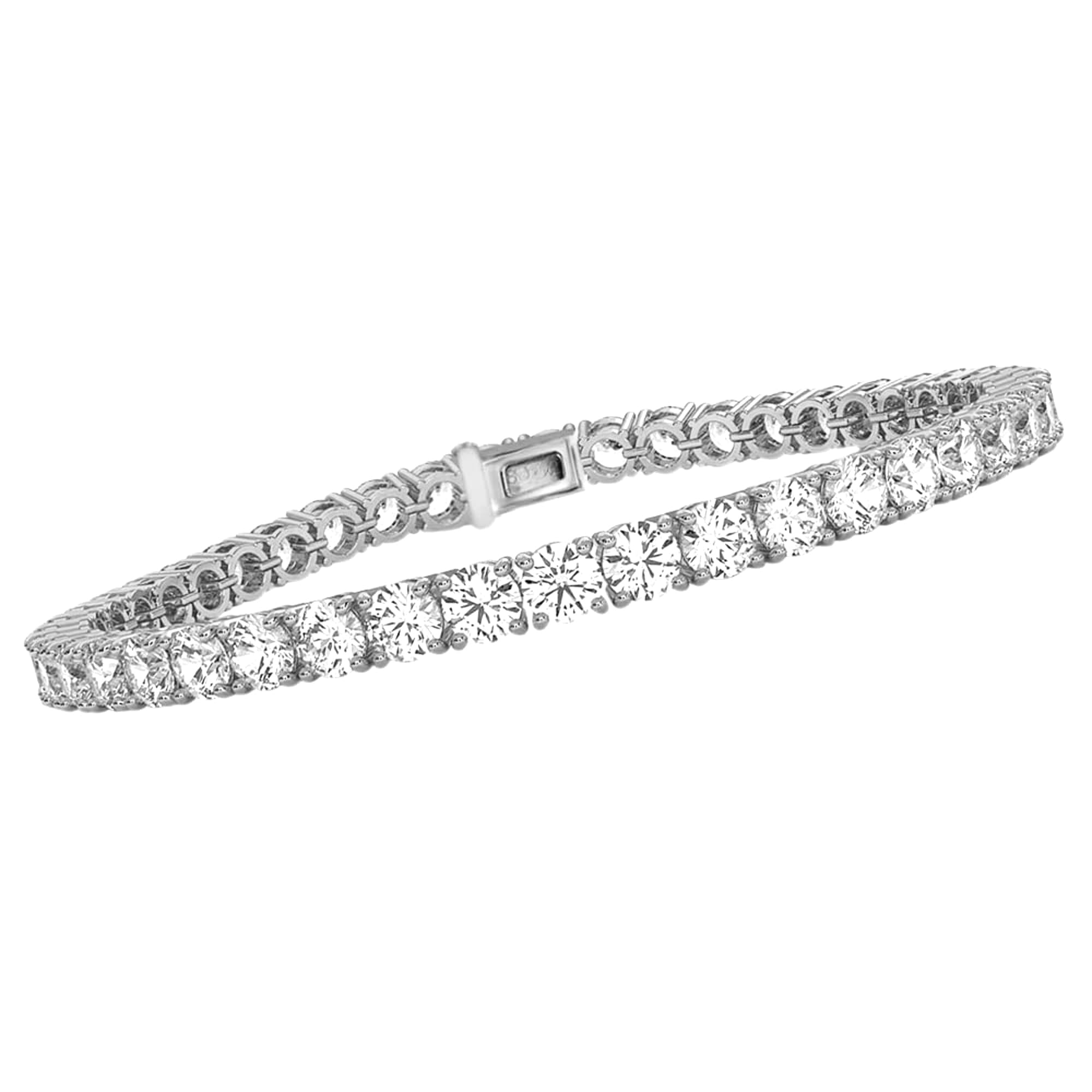
This Diamond2Deal model mirrors the same lab-grown D-color and VS-clarity stone quality as its premium sibling but offers an entry point through sterling silver or 14K gold options, letting buyers choose the metal based on budget. The lab-grown stones are verified by a gemologist in one review: correct 14K gold stamp, accurate carat weight, and stones that match the advertised color and clarity. The bracelet arrives in a gift box with the option to request a certificate.
The 5-carat stone weight is described as ideal for buyers with smaller frames, and the clasp includes a secondary latch for security. The design is flexible rather than a rigid solid circle, which helps the bracelet sit comfortably against the skin without pinching. One buyer remarked that the bracelet feels like silk on the wrist, praising its brilliance against natural and artificial light.
The clasp design has been redesigned compared to product photos, leading to confusion about what locking mechanism will actually arrive. One buyer reported the bracelet falling off their wrist repeatedly despite having a jeweler tighten both clasps—a deal-breaker for anyone who plans to wear this daily. The certificate is not automatically included and must be requested after purchase.
Why it’s great
- Versatile metal options (sterling silver or 14K gold) for budget flexibility
- D-color and VS clarity lab diamonds produce brilliant sparkle
- Flexible link design sits comfortably without twisting
Good to know
- Certificate must be requested after purchase—not included automatically
- Clasp reliability is inconsistent across units
7. Houston Diamond District 3–22 Carat Natural Diamond Tennis Bracelet 4-Prong Value Plus
This second listing for the Houston Diamond District Value Plus collection maintains the same natural mined stone sourcing and 4-prong setting as its sibling, with a focus on the 14K white gold finish. The double-latch clasp is a consistent highlight across reviews—buyers describe it as secure and well-constructed. The natural diamonds are described as comparable in quality to David Yurman pieces but at a fraction of the retail price.
The bracelet comes with an appraisal document, which several buyers mention was critical for insurance purposes. The stones are well-matched in color and clarity, avoiding the patchy look that happens when a seller mixes grades within the same bracelet. The 7-inch length fits a standard 6.5-inch wrist without feeling loose. The packaging is gift-ready, though the outer presentation could be more polished.
A jeweler’s assessment of one unit noted that the links lacked proper tension, causing the bracelet to roll or feel flimsy in hand. This structural issue could lead to link snapping under repeated stress. The warranty card’s contact information was unanswered in one case, leaving the buyer with no clear path to repair. This model is best for occasional wear rather than constant daily use.
Why it’s great
- Double-latch clasp provides robust security against accidental opening
- Natural diamonds with appraisal document for insurance purposes
- Well-matched stone color across the entire bracelet
Good to know
- Some units have loose link tension affecting structural feel
- Warranty card contact information not always responsive
8. Houston Diamond District 2–28 Carat Lab Grown Diamond Tennis Bracelet 4-Prong 14K White Gold

This 4-prong lab-grown tennis bracelet from Houston Diamond District uses E-F color diamonds with VS2-SI1 clarity—a tier that balances whiteness with minor inclusions that are typically invisible without magnification. The 4-prong setting provides the stone retention security that 3-prong designs lack, making this a strong choice for women who intend to wear the bracelet daily. The 14K white gold setting is described as heavy and well-made by multiple buyers.
The safety clasp is a double-locking mechanism, and buyers consistently note that the bracelet does not flip or twist during wear. The slender, minimal setting allows the diamonds to take center stage without metal distraction. At higher carat weights, the bracelet maintains even spacing between stones, avoiding the gapping problem that cheaper settings produce. One buyer wished they had purchased a larger carat weight, indicating that the quality exceeded expectations and made a bigger stone desirable.
One verified buy received a heart-shaped diamond bracelet instead of the round stones pictured—a substitution error that suggests quality control could be tighter. The bracelet is relatively new to the market, so long-term durability data is limited compared to the longer-running Houston Diamond District models. The VS2-SI1 clarity means some stones may contain small inclusions visible under 10x magnification.
Why it’s great
- 4-prong setting provides strong stone retention for daily wear
- E-F color stones appear bright white with minimal yellow tint
- Double-locking clasp adds security over standard fold-over latches
Good to know
- One buyer received wrong stone shape (heart vs round)
- Limited long-term durability data due to recent market introduction
9. Original Classics 1.0 Cttw Miracle Set White Diamond Round Faceted Bezel Tennis Bracelet
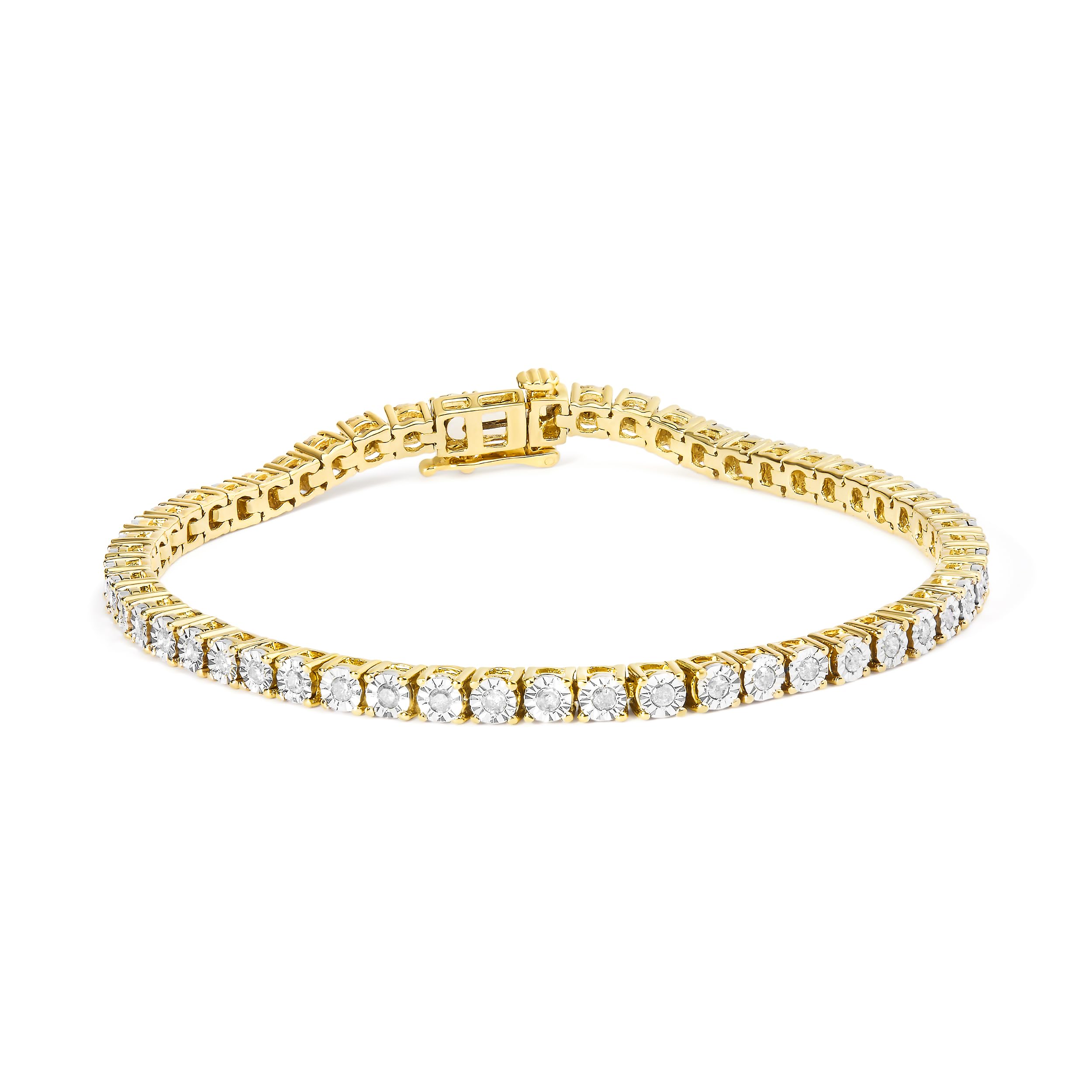
The Original Classics bracelet uses a bezel setting rather than prongs, which means each diamond is encased in a metal rim rather than held by claws. This is a distinct advantage for security: bezel-set stones are significantly harder to dislodge than prong-set ones, and the smooth edge is less likely to snag on clothing. At 1.0 carat total weight in I-J color with I3 clarity, the stones will exhibit noticeable warmth and inclusions, but the bezel wraps hide edge imperfections effectively.
Buyers describe the bracelet as beautiful and a great value for the price. The clasp is described as secure but slightly stiff to engage and release—a common trait in this price range. The packaging includes a cloth bag, though some buyers note that an inner plastic bag cheapens the presentation. The bracelet comes in multiple metal color options, allowing matching to existing jewelry sets.
One buyer took the bracelet to a jeweler after a stone fell out and was told the stones were moissanite (silicon carbide), not diamonds—a categorical quality claim violation if true. The I3 clarity grade means even casual inspection can reveal visible inclusions, cloudiness, or dark spots in individual stones. The bezel setting reduces light entry compared to a prong setting, so the bracelet will not sparkle as intensely as prong-set equivalents.
Why it’s great
- Bezel setting offers superior stone retention and snag-free wear
- Multiple metal color options for personalization
- Secure clasp with satisfying closure feel
Good to know
- One buyer reported stones were moissanite, not diamond
- I3 clarity means visible inclusions in many stones
10. Belacqua Lab Grown Diamond Tennis Bracelet in Sterling Silver, Round Cut, 2–5 Carat
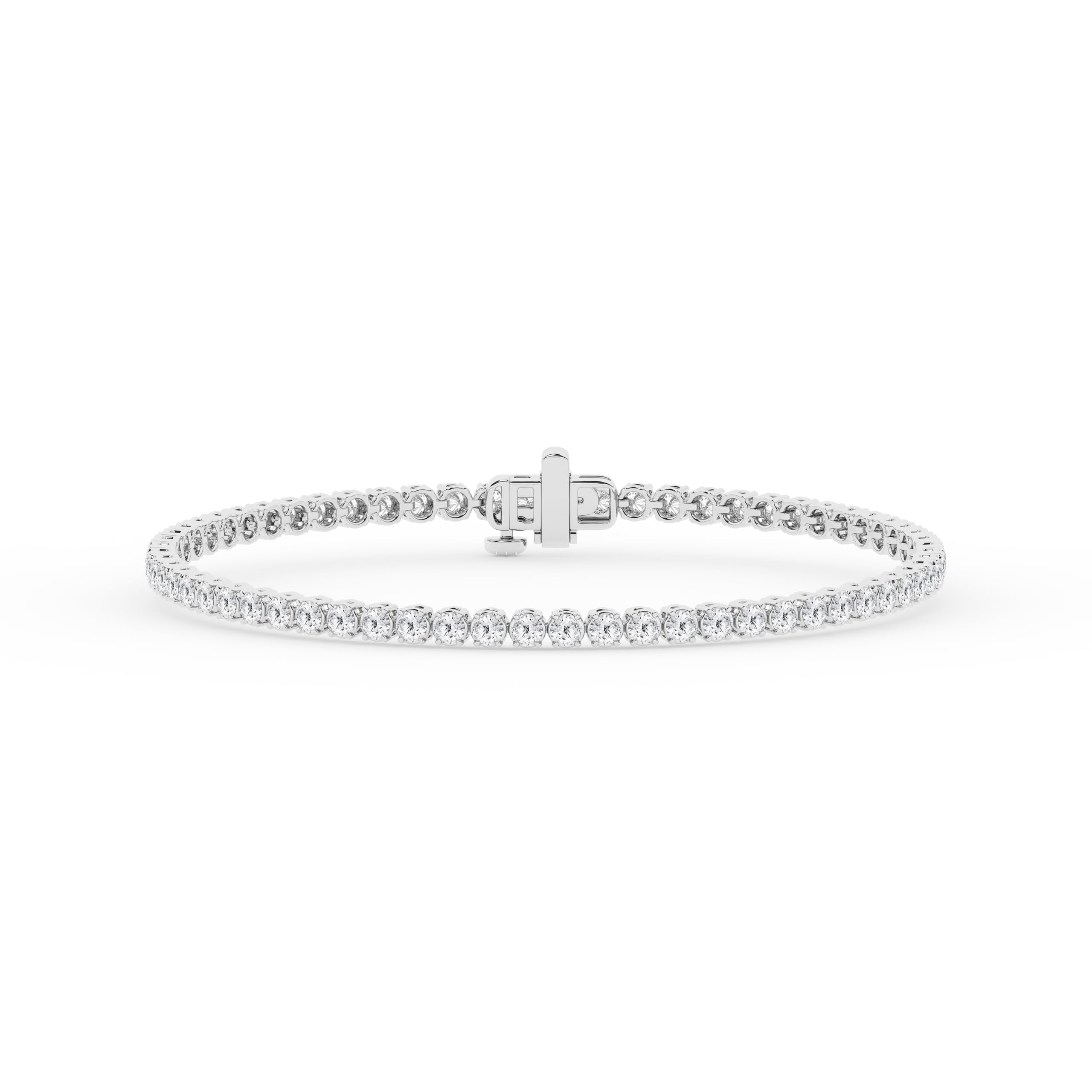
The Belacqua tennis bracelet uses lab-grown diamonds in G color with SI clarity, set in sterling silver rather than gold. The sterling silver setting is the main cost driver here—it reduces the overall weight and value retention of the piece compared to 14K gold, but it also brings the entry price down significantly for buyers who want the look of a diamond tennis bracelet without the gold premium. The stones are prong-set, and the bracelet comes in 2 to 5 carat total weight options.
Buyers describe the bracelet as very sparkly and having excellent build quality for the price point. The clasp is reported as good and the bracelet includes an authenticity certificate. At 3 carats, one buyer found the bracelet too fragile and delicate, exchanging for the 4-carat version which felt more substantial. The cuff-style construction means the stones sit close to the skin without heavy metal interference.
One verified buyer reported that the bracelet broke at the clasp after two months of regular use, causing it to fall off completely. This is a pattern consistent with sterling silver clasps that lack the tensile strength of gold-alloy hardware. The silver metal will also tarnish over time and requires regular polishing to maintain its shine. The included gift box is a nice touch for gifting, but the bracelet itself may not hold up to daily wear.
Why it’s great
- Lab-grown G-color SI-clarity stones deliver good sparkle at a low entry price
- Multiple carat weight options from 2 to 5 carats
- Includes authenticity certificate for buyer confidence
Good to know
- Clasp failure reported after two months of daily use
- Sterling silver will tarnish and requires regular maintenance
11. Houston Diamond District 2–28 Carat Lab Grown Diamond Classic Tennis Bracelet, 4-Prong Setting
This 4-prong lab-grown tennis bracelet from Houston Diamond District offers E-F color with VS2-SI1 clarity in a 14K white gold setting, backed by the same builder’s track record for robust clasp design. The 4-prong setting provides superior stone retention compared to 3-prong options, making it a better choice for women who plan to wear the bracelet during activities that involve frequent hand movement. The safety clasp is a double-locking mechanism that prevents accidental opening.
Buyers consistently praise the weight of the 14K gold setting and the even spacing between stones. The bracelet does not flip or twist during wear, which is a common complaint with cheaper tennis bracelets that use thinner metal. The lab-grown diamonds are chemically identical to mined stones, and several buyers note that the sparkle is indistinguishable from natural diamonds they own. The warranty and customer service from Houston Diamond District are frequently cited as reliable.
One buyer reported receiving a heart-shaped diamond bracelet after ordering round stones—a clear quality control issue that should be checked upon delivery. The VS2-SI1 clarity means some stones may have minor inclusions, though they are typically not visible without magnification. The 2-carat floor weight may feel too delicate for buyers who prefer a bolder wrist presence, and the 28-carat ceiling weight may require a more substantial wrist to support it comfortably.
Why it’s great
- 4-prong setting offers robust stone retention for active daily wear
- E-F color diamonds appear bright white with minimal yellow warmth
- Double-locking clasp provides reliable security against accidental opening
Good to know
- One buyer received wrong stone shape due to quality control gap
- VS2-SI1 clarity may include minor inclusions visible under magnification
FAQ
How many prongs should a tennis bracelet have for daily wear?
What is the difference between lab-grown and mined diamonds in a tennis bracelet?
Why do some tennis bracelets flip or roll on the wrist?
Can I wear a diamond tennis bracelet every day?
How do I verify that a tennis bracelet listing’s diamond grading is accurate?
Final Thoughts: The Verdict
For most users, the best diamond tennis bracelet winner is the Houston Diamond District 3–30 Carat Lab Grown Luxury Collection because it combines top-tier D-E color and VS1-VS2 clarity with a safety-catch clasp and 14K gold weight at a price that undercuts natural diamond equivalents by thousands. If you want a natural mined stone with a proven clasp and independent appraisal, grab the Madina Jewelry 3.00ct 14K White Gold. And for a lab-grown option with maximum stone retention security, nothing beats the 4-prong Houston Diamond District 2–28 Carat Lab Grown 4-Prong.

Mo Maruf
I created WellFizz to bridge the gap between vague wellness advice and actionable solutions. My mission is simple: to decode the research and give you practical tools you can actually use.
Beyond the data, I am a passionate traveler. I believe that stepping away from the screen to explore new environments is essential for mental clarity and physical vitality.