Our readers keep the lights on and my smoothie glass nicely filled. As an Amazon Associate, I earn from qualifying purchases.
Snoring disrupts more than just your sleep—it strains relationships, leaves you groggy, and signals airway instability. Finding an effective solution means bypassing gimmicks and choosing a device that targets your specific snoring type, whether it’s mouth breathing, back sleeping, or jaw collapse.
I’m Mohammad Maruf — the founder and writer behind WellFizz. This guide is built on a deep dive into medical literature on positional therapy, mandibular advancement, and airway mechanics, combined with analyzing hundreds of verified user experiences to separate what truly works from what doesn’t.
We’ve researched and compared the most effective options to compile this complete guide to the best device to stop snoring, ensuring you can make an informed choice that leads to restful, quiet nights.
How To Choose The Best Device To Stop Snoring
Selecting the right anti-snoring device starts with identifying your primary snoring trigger. A mouthguard won’t help a back snorer, and a posture trainer won’t fix mouth breathing caused by a weak jaw. Here are the key factors to consider before buying.
Identify Your Snoring Type
If you snore exclusively on your back, a positional device like the Calma Clip is your direct path to relief. If your snoring is driven by mouth breathing or jaw dropping during sleep, a chin strap or mandibular advancement device (MAD) is far more effective. Mouthguards work by holding your lower jaw forward to keep the airway open. Chin straps simply keep your lips closed and encourage nasal breathing. Know your pattern—sleep app recordings or partner observation can clarify this.
Comfort and Material Quality
With mouthguards, material matters. Look for FDA-cleared, BPA-free options that are customizable via a boil-and-bite process. Devices that are too bulky or have sharp edges will cause gagging or sore spots and get abandoned. For chin straps, breathable, non-stick fabrics (like Lycra) and wide, non-slip back straps prevent irritation and shifting during the night. Test jaw-range-of-motion: a device that restricts natural movements will cause jaw pain and neck tension.
Adjustability vs. Fixed Fit
Premium solutions like the SilentZPro and ZQuiet offer multiple jaw advancement settings. This allows you to dial in the minimum effective protrusion—more comfort, less side effect. Fixed-size straps or single-setting mouthguards can either be too aggressive (triggering TMJ pain) or too passive (failing to open the airway). Multi-setting versatility almost always justifies a slightly higher investment up front.
Quick Comparison
On smaller screens, swipe sideways to see the full table.
| Model | Category | Best For | Key Spec | Amazon |
|---|---|---|---|---|
| SilentZPro 2.0 Set | Mouthguard + Nose Clips | Adjustable therapy with nasal breathing support | 5 adjustment settings | Amazon |
| ZQuiet Advance | Mouthguard | Low-profile, adjustable jaw advancement | 4 jaw advancement sizes | Amazon |
| SilentZPro (BlueTech) | Mouthguard | FDA-cleared, BPA-free jaw repositioning | 5 adjustment settings | Amazon |
| PIDOTI Chin Strap | Chin Strap | Non-stretch jaw support for CPAP users | Neoprene, minimal stretch | Amazon |
| Forzacx Chin Strap 2-Pack | Chin Strap | Breathable Lycra, non-stick hair | Lycra fabric, 2-pack | Amazon |
| Carex CPAP Chin Strap | Chin Strap | Inexpensive CPAP mouth leak prevention | 3-inch width, ventilated | Amazon |
| Calma Clip v2 | Positional Trainer | Back snorer side-sleep training | Foam pad + plastic clip | Amazon |
In‑Depth Reviews
1. SilentZPro 2.0 with Magnetic Nose Clips
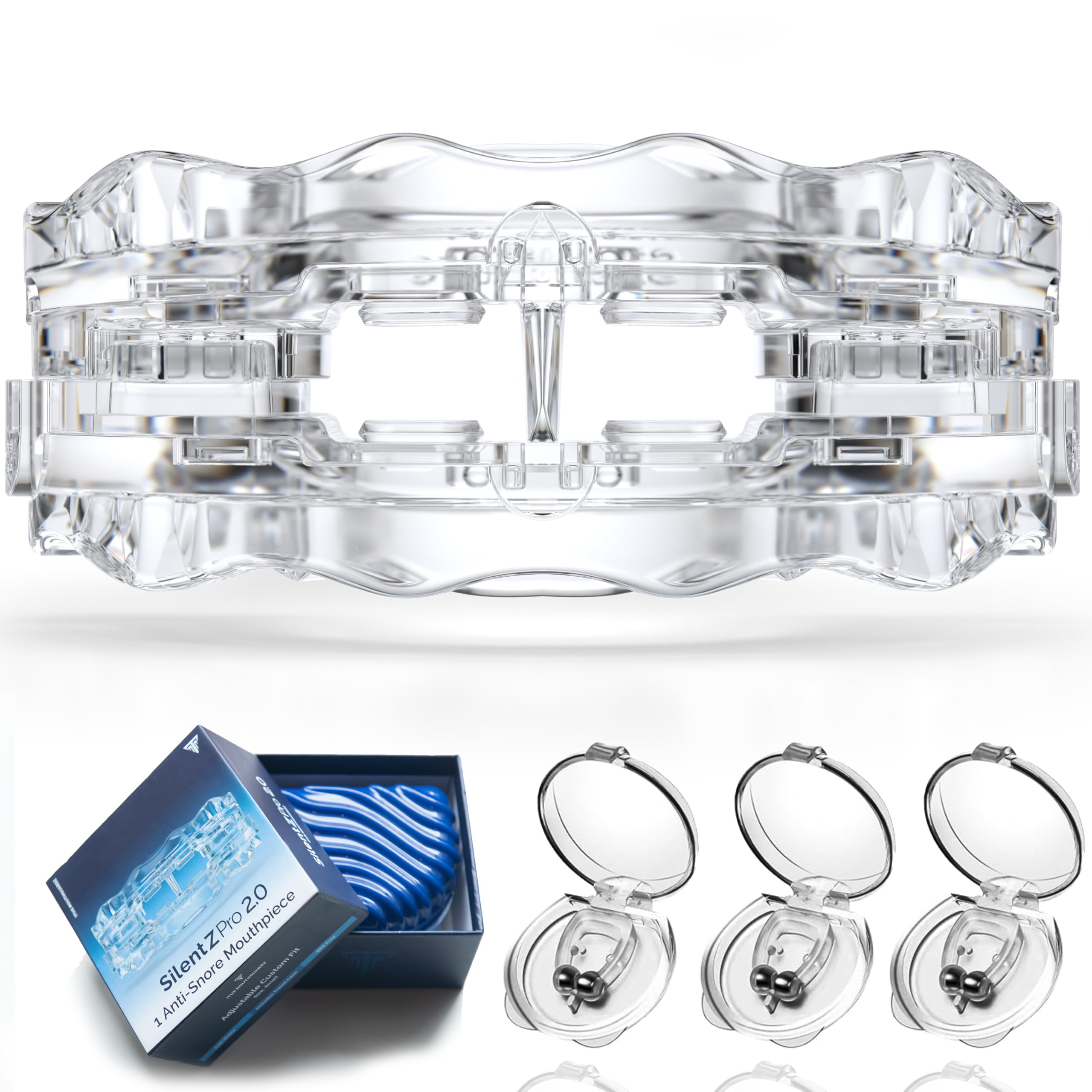
The SilentZPro 2.0 set delivers a complete solution by pairing a fully adjustable mandibular advancement mouthguard with three magnetic nose clip expanders. This dual-action approach targets both jaw position and nasal airflow, making it uniquely suited for users whose snoring involves multiple triggers. The mouthpiece features five discrete advancement settings, allowing you to dial in the minimum jaw protrusion needed to stop airway collapse without overcorrection.
The boil-and-bite molding process creates a custom fit, and the patented design permits both vertical and lateral jaw movement for natural sleep posture. The three nose clips encourage nasal breathing, which reduces mouth dryness and further stabilizes the airway. Made from BPA-free materials with FDA clearance, this set inspires confidence in material safety. Users report a significant reduction in snoring after a 1-2 week adjustment period, with some noting their smartwatch detected zero snoring events while wearing it.
The magnetic nose clips have limited independent effectiveness for severe congestion, but they are a valuable adjunct. The mouthguard itself is medium-sized, and users with very small or very large mouths should contact the U.S.-based support team for guidance. Initial fitting requires careful attention to the centering of the teeth during molding to avoid thickness issues.
Why it’s great
- Five precise jaw advancement settings for tailored therapy.
- Includes three magnetic nose clips to encourage nasal breathing.
- FDA-cleared and BPA-free with responsive U.S. customer support.
- Patented design allows natural vertical and lateral jaw movement during sleep.
Good to know
- Boil-and-bite molding requires careful centering of the teeth.
- Nose clips are less effective for those with chronic nasal congestion.
- Some users report the mouthguard feels bulky during the initial adaptation period.
2. ZQuiet Advance Anti-Snoring Mouthpiece

The ZQuiet Advance stands out for its exceptionally slim, low-profile profile that eliminates pressure on the front teeth. A unique contactless front design and patented living hinge technology allow you to move your jaw freely, which reduces the claustrophobic feeling common with bulkier mandibular devices. The included strap set provides four discrete levels of jaw advancement, from minimal (size 1) to a maximum of +6 mm (size 4), giving you fine-grained control over airway opening.
The boil-and-mold trays are straightforward to shape for both upper and lower teeth. Users specifically praise the lack of sharp plastic edges that plague other mouthguards, and the fact that it stays in place throughout the night. Many users chasing relief from severe snoring found ZQuiet to be their fourth or fifth attempt that finally worked. The protective storage case keeps the device clean between uses.
A notable minority of users report that the molded inserts can detach after weeks of use and require re-gluing. The highest advancement setting (size 4) still fails for a small percentage with severe anatomical collapse. Mouth breathing may still occur with the mouthguard in place, so keep water nearby to manage dryness. The initial adaptation period of 2-3 days can include minor tooth sensitivity.
Why it’s great
- Ultra-slim, low-profile design with contactless front teeth area.
- Four strap-provided advancement levels up to +6 mm.
- Patented living hinge allows free lateral jaw movement.
- Easy boil-and-mold fitting for both upper and lower teeth.
Good to know
- Molded inserts can detach and need occasional re-gluing.
- Less effective for users whose snoring persists despite maximum jaw protrusion.
- Mouth breathing can still cause dryness; a chin strap may be a helpful companion.
3. SilentZPro (BlueTech) Anti Snoring Mouthguard
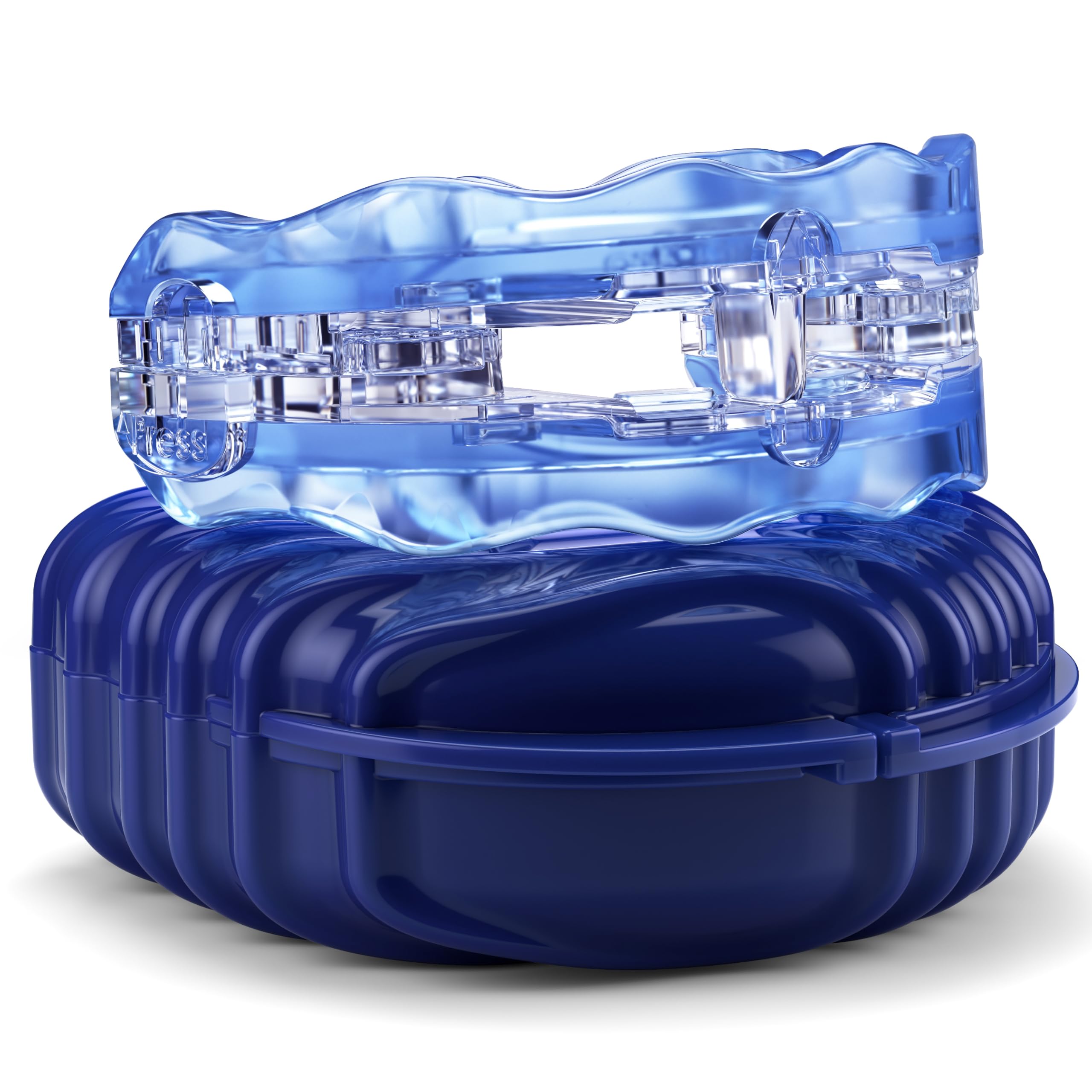
The original SilentZPro (BlueTech edition) strips away the nose clip accessory to focus purely on high-quality mandibular advancement. It uses the same FDA-cleared, BPA-free materials and five-setting adjustment mechanism as the 2.0 version, but at a lower entry point. This makes it the ideal choice for users who know they need jaw repositioning but don’t require nasal dilation support. Its medium size is designed for normal-sized mouths, and heat-molding secures a custom impression.
Users consistently report that after the recommended 3-4 week adjustment period, snoring is dramatically reduced or eliminated. The patented design allows vertical and lateral movement, preventing the locked-jaw sensation that causes TMJ pain in rigid devices. The device is easy to clean with mild soap and water, and the U.S.-based customer support team is responsive to fit questions. Several long-term users have repurchased after 6+ months, indicating durability.
A subset of users find the lower adjustment tab difficult to operate, and some report sharp plastic edges around the perimeter. The overall bulkiness is noted in comparison to the ZQuiet, though the adjustments are more intuitive. Users with known bruxism or jaw clenching should use cautious incremental advancement to avoid waking with soreness. The breathing channels could be more generous for heavy nasal breathers.
Why it’s great
- Five precise jaw advancement settings offer customizable therapy.
- FDA-cleared with BPA-free construction for safe nightly use.
- Permits vertical and lateral jaw movement for natural comfort.
- Responsive U.S.-based customer support for fitting assistance.
Good to know
- Bulky compared to some low-profile alternatives.
- Some users report sharp plastic edges that can irritate gums.
- Lower adjustment tab can be difficult to manipulate during fitting.
4. PIDOTI Chin Strap for CPAP Users
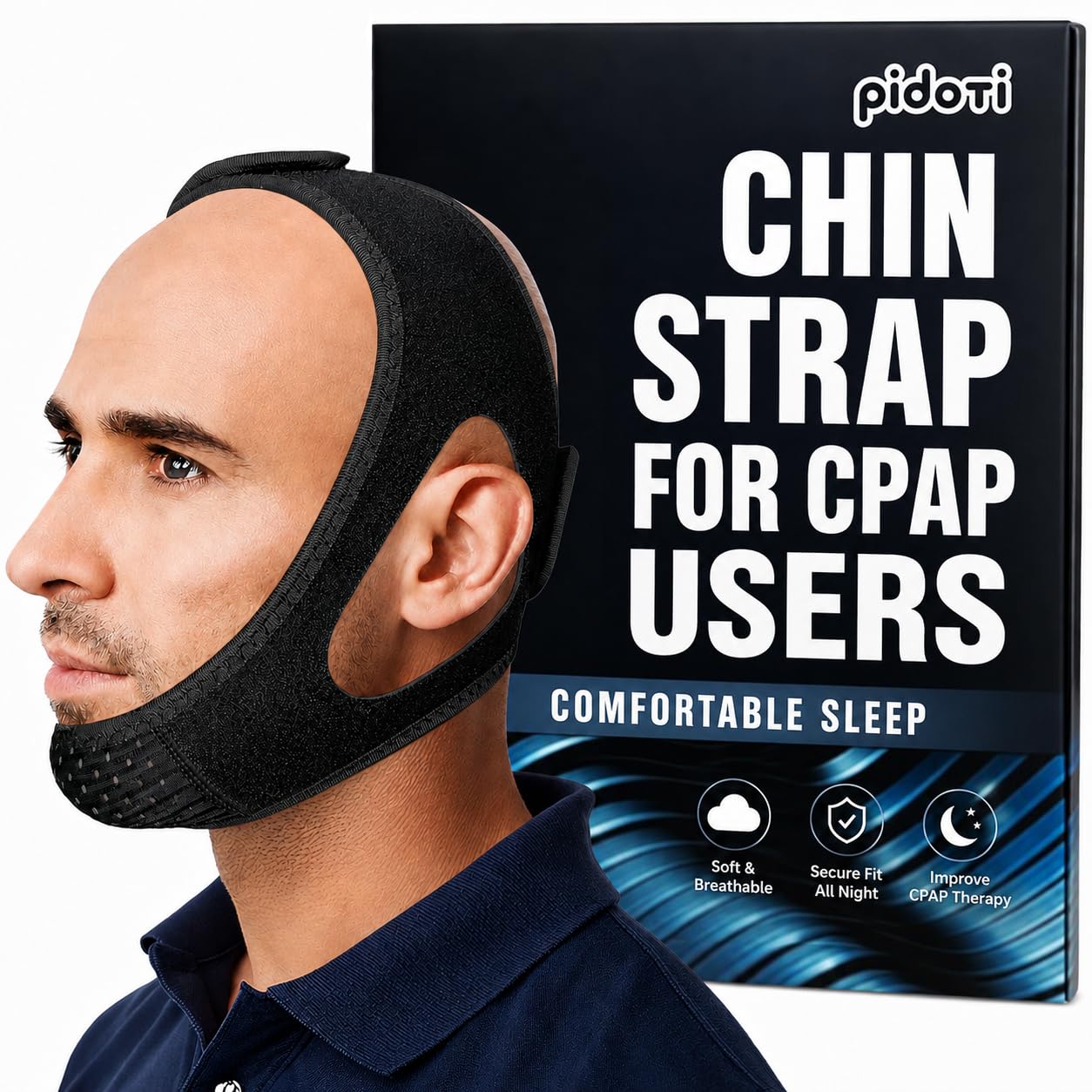
The PIDOTI chin strap differentiates itself through its material strategy: most of the strap fabric has minimal to zero stretch, with elasticity concentrated only on the chin cup portion. This design prevents the device from stretching out over time, a common failure point for all-fabric designs. The neoprene construction is lightweight and breathable, reducing heat buildup. It is explicitly designed to work under a full-face CPAP mask without creating a bulky double layer under the seal.
Users who tried three or more competing straps found PIDOTI to be the “perfect” fit because it holds the jaw closed without causing ear or temple pain. The adjustable Velcro fasteners are non-stick hair designs, and the size range (L-XL) offers generous circumference accommodation. For CPAP users who are mouth breathers, this strap reliably prevents air leak and encourages nasal breathing under the mask. The wide back strap is stitched on one side for stability, so positioning must be precise.
A small number of users report that the material is still too thick to fit seamlessly under their specific full-face mask without breaking the seal. Over-tightening can cause neck tension and jaw pain. Since the strap is primarily non-stretchy, finding the exact right size and fit may take a few nights of adjustment. The closed-cell neoprene can feel warm in hot sleeping environments.
Why it’s great
- Minimal-stretch construction holds its shape and fit over months.
- Breathable neoprene design prevents night-time overheating.
- Works effectively under a full-face CPAP mask without seal disruption.
- Non-slip, non-stick hair Velcro straps stay secure through the night.
Good to know
- Limited stretch means precise sizing adjustment is crucial.
- Some CPAP masks may still be incompatible due to material thickness.
- Over-tightening can cause neck tension and discomfort.
5. Forzacx Chin Strap for CPAP Users (2-Pack)
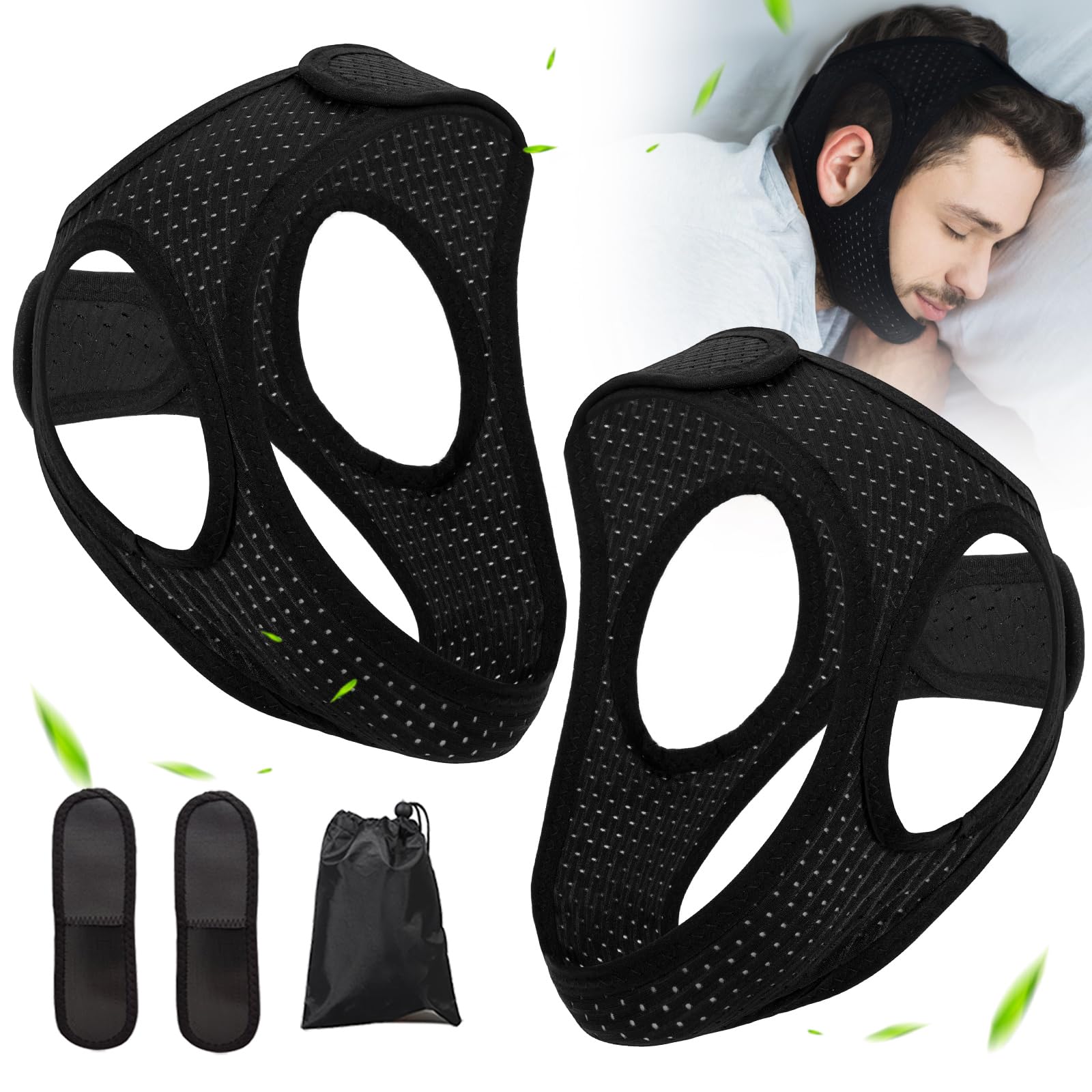
The Forzacx chin strap prioritizes comfort through its high-quality Lycra fabric construction, which is significantly more breathable than neoprene or polyester alternatives. The fabric is soft against the skin, doesn’t leave indentations, and the non-stick hair Velcro patches hold fast without pulling. The triangular ergonomic design wraps under the chin and over the crown, with an extension strap for extra circumference adjustability. It is compatible with CPAP nasal pillows, nose masks, and full-face masks.
This two-pack offers immediate value, providing a backup unit for travel or washing rotation. Users report high satisfaction with the comfort level, noting that they “forget they are wearing it” within a few nights. The extra-wide straps prevent those awful jaw-line indentations common with thinner designs. For CPAP users, the strap reliably prevents mouth leak, allowing the machine to maintain therapeutic pressure and delivering higher sleep scores. The elastic material is durable through dozens of wash cycles.
The primary drawback is that the Lycra material is inherently stretchy, so some users find that the strap loses its tension after several months of nightly use, requiring replacement. Additionally, a small subset of users report that the full-head design pushes the jaw backward, creating a choking sensation or neck tension. The stretchy nature means it can shift position slightly during the night for active sleepers. Machine drying is not recommended as it degrades the elastic.
Why it’s great
- Ultra-breathable Lycra fabric stays cool and comfortable all night.
- Two-pack provides excellent long-term value and a backup unit.
- Wide straps prevent painful indentations and pressure marks.
- Non-stick hair Velcro holds securely without tugging.
Good to know
- Stretchy fabric can lose tension after months of nightly use.
- Full-head design may push the jaw backwards for some users.
- Not machine dryable; hand wash and air dry recommended.
6. Carex CPAP Chin Strap

The Carex CPAP Chin Strap is a no-frills, straightforward option for users who need to prevent mouth breathing during CPAP therapy. The 3-inch wide strap offers generous coverage that stays in place, and the elastic is ventilated with small gaps for breathability. The design is simple: wrap under the chin, adjust the top strap over the head, and secure. Users who prefer the 3-inch width over 3.5-inch alternatives report better fit without slipping off the chin.
It serves as an effective budget-friendly substitute for Medicare-supplied straps, with identical performance for a fraction of the cost. Users consistently report that it keeps the mouth closed without causing a choking sensation. The lightweight design (0.63 ounces) is barely noticeable during sleep, and the minimal profile works well with nasal CPAP masks. For back-sleeping mouth breathers, it reliably prevents air leak and airway drying.
The most significant concern is durability: several users report that the Velcro patches lose adhesion after 2-4 months of nightly use, with the straps detaching during sleep. Product consistency has also been called into question—some units arrive with a separate back strap (original design), while newer versions have the back strap stitched on one side. Washing can temporarily restore Velcro grip, but long-term reliability is inconsistent. For the low entry price, it is best viewed as a consumable device with a 3-6 month lifespan.
Why it’s great
- Very low entry cost; performs equivalently to medical-supply alternatives.
- 3-inch wide strap stays in place without slipping off the chin.
- Lightweight and ventilated for comfort during warm sleep.
- Effective at preventing mouth air leak under a CPAP mask.
Good to know
- Velcro adhesion degrades significantly after 2-4 months of use.
- Product design varies between units (separate vs. stitched back strap).
- Best treated as a short lifespan consumable device.
7. Calma Clip v2 by Whole Nights
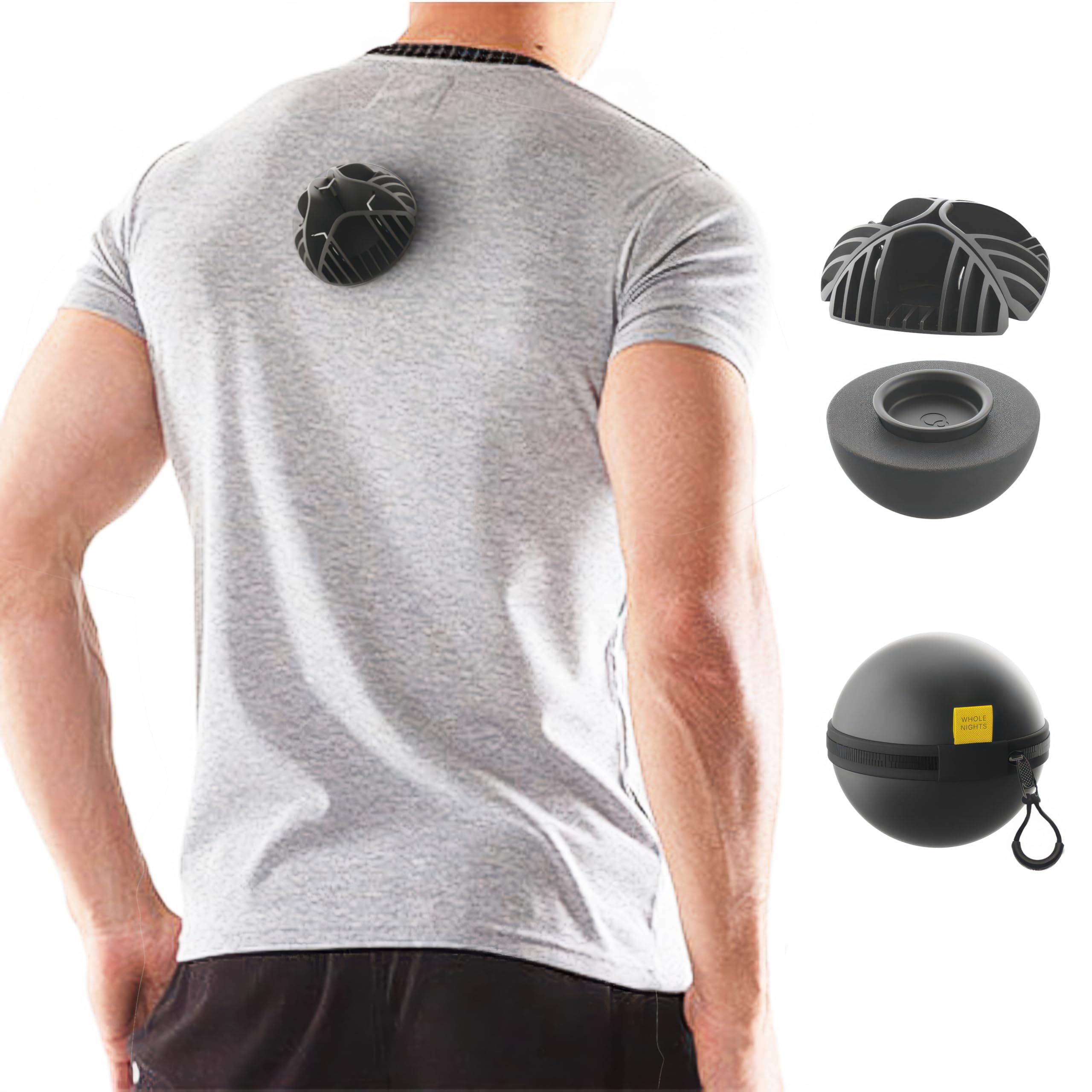
The Calma Clip v2 is a surgical non-invasive positional therapy device: a small foam pad and plastic clip that attaches to the upper back of your shirt. When you roll onto your back during sleep, the ball creates gentle pressure that encourages your body to shift back to a side-sleeping position. It is exclusively for positional snorers—people who only snore on their back. For this specific profile, it is remarkably effective and rivals more complex solutions.
Users with severe positional sleep apnea (up to 47 awakenings per hour) reported complete resolution of snoring after using the device nightly for a week. The device is extremely lightweight (2.3 ounces), travel-friendly, and requires no molding, batteries, or maintenance. The behavioral training aspect means some users develop a permanent side-sleeping habit even after discontinuing use. The clip mechanism is intuitive and works with most shirt fabrics, both with snug and loose fits.
The device is completely useless for anyone who snores on their stomach or side regardless of position, or for snoring caused by mouth breathing or jaw collapse. In the beginning, the ball may fall off during active sleep as the body adjusts to the new sleep posture. It only works when wearing a shirt, so summer sleeping without a top renders it ineffective. If your partner sleeps on the same side you roll toward, the ball’s pressure may not be sufficient to cue you away from back sleeping in a deeply sedated state.
Why it’s great
- Non-invasive, non-electronic positional therapy device.
- Extremely effective for back-only snorers; resolves snoring at the root cause.
- Lightweight, travel-friendly, and requires zero maintenance.
- Can retrain the brain to maintain side-sleeping permanently.
Good to know
- Completely ineffective for non-positional snoring causes.
- May fall off during sleep in the initial adjustment period.
- Requires wearing a shirt; not usable for bare-chested sleepers.
FAQ
Can I use a chin strap and a mouthguard together?
What is the typical adjustment period for a mandibular advancement device?
Will a positional trainer like the Calma Clip help me if I also snore on my side?
Final Thoughts: The Verdict
For most users, the best device to stop snoring winner is the SilentZPro 2.0 Set because it combines a fully adjustable mandibular advancement mouthguard with magnetic nose clips, covering both jaw and nasal breathing triggers in one FDA-cleared package. If you want a low-profile, slim mouthguard with fine-grained advancement control, grab the ZQuiet Advance. And for a pure positional snorer who only needs side-sleep training, nothing beats the simplicity of the Calma Clip v2.

Mo Maruf
I created WellFizz to bridge the gap between vague wellness advice and actionable solutions. My mission is simple: to decode the research and give you practical tools you can actually use.
Beyond the data, I am a passionate traveler. I believe that stepping away from the screen to explore new environments is essential for mental clarity and physical vitality.