Our readers keep the lights on and my smoothie glass nicely filled. As an Amazon Associate, I earn from qualifying purchases.
The line between a casual phone video and a professional-looking production is often drawn by the sensor size and lens mount under your hand. For content creators, the tool you choose dictates not just sharpness, but your entire workflow—from color grading flexibility to audio input options.
I’m Mohammad Maruf — the founder and writer behind WellFizz. I’ve spent over 100 hours dissecting sensor readout speeds, bit depths, and autofocus algorithms to separate the cameras that truly serve creators from those that just look good on paper.
The single best resource to navigate these choices is this curated guide to the best digital camera for content creators, built around real-world performance data and verified user feedback.
How To Choose The Best Digital Camera For Content Creators
Every content creator faces the same dilemma: find a body that balances high-bit video with reliable autofocus, without overspending on lenses you do not need yet. Understanding three core specs will keep your search on track.
Sensor Size and Oversampled 4K
A full-frame sensor delivers superior dynamic range and shallower depth of field, but an APS-C sensor with 6K oversampling can produce 4K that rivals larger sensors in sharpness. The key spec is whether the camera bins pixels or oversamples—oversampled 4K retains more detail and resists moiré patterns.
Autofocus and Subject Tracking
For talking-head vlogs, product showcases, and run-and-gun shoots, phase-detect autofocus with Eye-AF is non-negotiable. Look for systems that track human and animal eyes in real-time and can lock onto a face even when the subject turns away temporarily.
Log Profiles and Audio Input
10-bit 4:2:2 internal recording with a log gamma profile (S-Log, Canon Log, Blackmagic RAW) gives you room to correct exposure and color in post. A clean microphone input with a windscreen is equally critical—bad audio drives viewers away faster than soft focus.
Quick Comparison
On smaller screens, swipe sideways to see the full table.
| Model | Category | Best For | Key Spec | Amazon |
|---|---|---|---|---|
| Sony ZV-1 II | Premium Compact | Vlogging & live streaming | 1-inch sensor, 18-50mm F1.8-4.0 | Amazon |
| Sony Alpha a6700 + 18-135mm | Mid-Range Mirrorless | Hybrid photo & video | 26MP APS-C, 4K 120p, IBIS | Amazon |
| Sony a7 III + 28-70mm | Full-Frame Workhorse | Low-light and pro video | 24.2MP full-frame BSI, 693 phase-detect AF | Amazon |
| Canon EOS RP + RF 24-105mm | Entry Full-Frame | Travel and portrait work | 26.2MP full-frame, 4K UHD, 0.4x macro | Amazon |
| Sony ZV-E10 + 16-50mm | All-in-One Vlog Kit | Beginners and vloggers | 24.2MP APS-C, 4K oversampled, vari-angle screen | Amazon |
| Sony Alpha ZV-E10 Body | Compact Vlogger | Dedicated podcast/vlog body | 24.2MP APS-C, 4K 30p, product showcase mode | Amazon |
| Sony ZV-1F Vlogging Bundle | Budget Point-and-Shoot | Ultra-wide selfie vlogging | 1-inch sensor, 20mm F2.0, 20.1MP | Amazon |
| Nikon Z50 II + 16-50mm + 50-250mm | Versatile Kit | Travel and hybrid stills/video | 20.9MP APS-C, 4K 60p, 31 Picture Controls | Amazon |
| Blackmagic Pocket Cinema 6K | Cinema Camera | Narrative filmmaking | Super 35 sensor, 6K RAW up to 50fps | Amazon |
| Canon EOS R5 Body | Flagship Hybrid | 8K video and 45MP photos | 45MP full-frame, 8K RAW, 20fps silent | Amazon |
In‑Depth Reviews
1. Sony a7 III + 28-70mm Lens

The a7 III remains a benchmark for content creators who need a single body that handles low-light, fast-paced shooting, and full-frame depth of field. Its 24.2MP back-illuminated sensor delivers a 15-stop dynamic range, meaning you can recover shadow detail in S-Log without introducing noise—crucial for talking-head interviews and product close-ups where lighting changes unpredictably.
The 693 phase-detection points cover 93 percent of the frame, and with Eye-AF tracking, the camera locks onto a presenter’s eye even when they move off-center. In real-world use, the kit 28-70mm lens yields clean footage at F5.6 for medium shots, while the 10fps mechanical shutter captures stills for thumbnails and social posts without skipping a beat.
Battery life is among the best in its class at roughly 710 shots per charge, a serious advantage for all-day shoots without swapping cells every hour. Some users note the menu system is dense, but the custom button mapping lets you create a streamlined workflow for video settings once configured.
Why it’s great
- Exceptional 15-stop dynamic range for log grading
- Reliable Eye-AF and 693-point phase detection
- Incredible battery life for day-long shoots
Good to know
- Complex menu navigation requires initial setup time
- Kit lens aperture is slow at F3.5–F5.6
2. Sony Alpha a6700 + 18-135mm

The a6700 brings a dedicated AI processor that dramatically improves subject recognition compared to earlier APS-C models. Its 26MP Exmor R sensor coupled with BIONZ XR processing enables 4K 60p oversampled from 6K, producing crisp output with minimal aliasing. For creators who switch between vlogging, product demos, and cinematic b-roll, the 4:2:2 10-bit recording in S-Log provides the latitude needed for professional color grading.
In-body image stabilization is a standout feature here—you can shoot handheld walking shots without a gimbal, and the Active stabilization mode smooths out micro-jitters effectively. The 18-135mm kit lens covers wide to telephoto ranges, making it a one-lens solution for run-and-gun content. Autofocus tracking for human eyes, animal eyes, and even vehicles is fast enough to keep a moving subject in sharp focus.
The body is compact enough for a small camera bag, but the single SD card slot is a limitation for professional backup needs. Some users report the camera heats up after 40 minutes of 4K 60p recording, so you may need to take short breaks on long shoots.
Why it’s great
- AI-based autofocus with excellent subject tracking
- 4K 120p and 10-bit 4:2:2 internal recording
- Effective IBIS for smooth handheld footage
Good to know
- Single SD card slot limits redundancy
- Overheating can occur during extended 4K 60p recording
3. Sony ZV-1 II Vlog Camera

The ZV-1 II is purpose-built for the creator who wants an ultra-wide perspective for arm’s-length selfies and tight interior shots. Its 18mm wide-angle lens at F1.8 lets you blur the background while keeping your face in focus, and the large 1-inch sensor captures cleaner footage in moderate low light than any smartphone. The side-articulating touchscreen makes framing your own shot simple, and the directional 3-capsule mic records clear voice audio with the included windscreen reducing plosive sounds.
Real-time Eye-AF and subject tracking work reliably for talking-head content, and the Background Defocus button gives you instant control over depth of field without diving into menus. The ZV-1 II also supports USB-C streaming as a high-quality webcam, so you can switch from vlogging to live streaming without extra hardware. Battery life is decent for a compact, often lasting 45-60 minutes of continuous recording.
The removal of Optical SteadyShot is a disappointment—you lose some stabilization compared to the original ZV-1. Also, the camera does not come with a USB-C cable or charger in the box, so budget for those separately if you are starting from scratch.
Why it’s great
- Ultra-wide 18mm lens is ideal for selfie vlogging
- Fast F1.8 aperture creates pleasing background blur
- Built-in directional mic with windscreen
Good to know
- No optical stabilization—relies on digital correction
- No USB-C cable or charger included in the box
4. Canon EOS RP + RF 24-105mm

The EOS RP offers an accessible path into full-frame mirrorless photography and video for content creators who prioritize still image quality alongside 4K footage. Its 26.2MP CMOS sensor produces sharp, color-accurate images with pleasing skin tones straight out of the camera—saving time in post for quick social media turnaround. The RF 24-105mm F4-7.1 STM kit lens covers a versatile zoom range, from wide-angle room shots to medium telephoto for tight product details.
Dual Pixel CMOS AF with face detection is responsive for vlogging, and the vari-angle touchscreen allows selfie framing with ease. Optical image stabilization at up to 5 stops helps keep handheld video steady, and the 4K UHD capture from the full-frame sensor yields cinematic depth. The camera body is remarkably light at 1.07 pounds, making it easy to pack for travel content.
The 4K video does have a 1.7x crop factor and a 30-minute recording limit, which can be restrictive for longer interviews or livestreams. Battery life is adequate with one spare, but expect around 250 shots per charge on the original battery.
Why it’s great
- Full-frame sensor delivers superior still image quality
- Lightweight and compact for travel vlogging
- Excellent color science out of camera
Good to know
- 4K footage has a 1.7x crop and 30-minute limit
- Battery life is modest—budget for a spare
5. Sony ZV-E10 + 16-50mm Lens Kit

This bundled ZV-E10 kit packs the camera body with the 16-50mm power zoom lens, plus a 64GB memory card, bag, tripod, and cleaning kit—everything you need to start recording immediately. The 24.2MP APS-C Exmor CMOS sensor oversamples 4K from 6K, producing sharp and detailed video that surpasses typical entry-level cameras. The vari-angle touchscreen makes it easy to frame yourself, and the product showcase mode smoothly transitions focus from your face to objects held up to the lens.
Built-in three-capsule directional microphone captures clear voice audio, and the included windscreen cuts down on outdoor wind noise. USB-C support allows you to use the ZV-E10 as a high-quality webcam for streaming or video calls. The lightweight body weighs just over 340 grams with the lens, ideal for all-day handheld use.
The lack of in-body image stabilization means you need to rely on the lens OSS or a gimbal for smooth walking shots. Some users report the battery life is short—around 30 minutes of continuous 4K recording—so pick up extra NP-FW50 cells for longer sessions.
Why it’s great
- Oversampled 4K video delivers high sharpness
- Product showcase mode for effortless demo transitions
- Complete kit with lens, card, bag, and tripod
Good to know
- No in-body stabilization—gimbal recommended for walking
- Battery life is short for continuous recording
6. Sony Alpha ZV-E10 Body
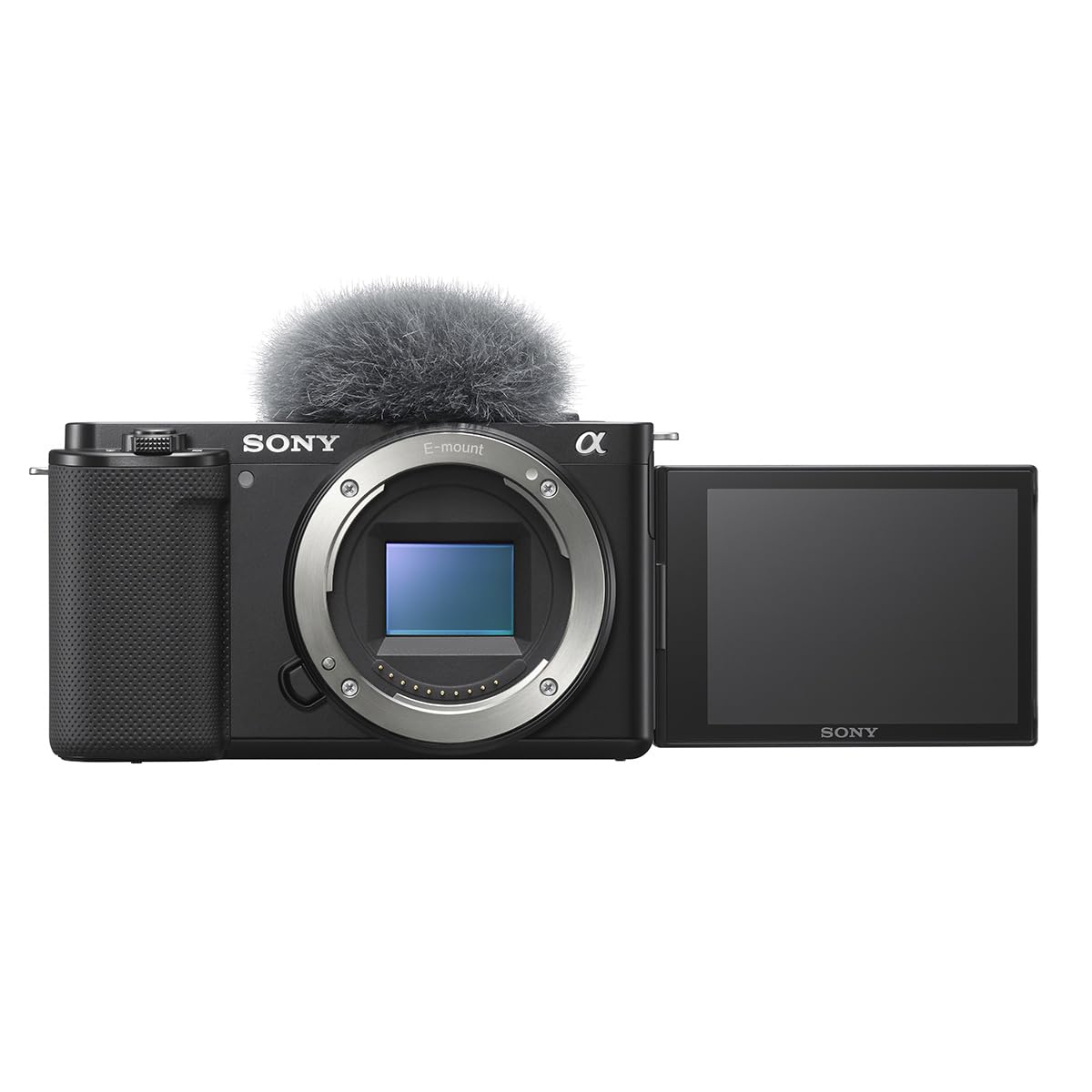
The body-only ZV-E10 gives creators the flexibility to pair it with their preferred lens, such as a fast prime for clean backgrounds or a wide-angle for selfie framing. It shares the same core imaging DNA as the kit version—24.2MP APS-C sensor, oversampled 4K, and the same Clear Voice microphone system—but leaves lens choice open. For podcast setups, this body combined with a Sigma 16mm F1.4 or a Sony 11mm F1.8 creates a shallow depth of field that elevates the interview aesthetic.
The Background Defocus button and Product Showcase setting are retained, making it easy to toggle between a blurred background and a sharp object on the desk. Eye-AF and autofocus tracking are fast and reliable, even with third-party lenses, which matters when the subject moves around the frame. The USB-C live-streaming feature works without extra hardware, so you can go live in seconds.
This body shares the same battery limitations as the kit version—expect roughly 25 minutes of 4K recording per charge. The rolling shutter is noticeable in fast pans, and the small LCD screen may feel cramped for precise manual focus without an external monitor.
Why it’s great
- Body-only allows custom lens selection
- USB-C streaming without additional hardware
- Reliable Eye-AF and product showcase mode
Good to know
- Strong rolling shutter in fast pans
- Battery life is limited—requires frequent swapping
7. Sony ZV-1F Vlogging Bundle
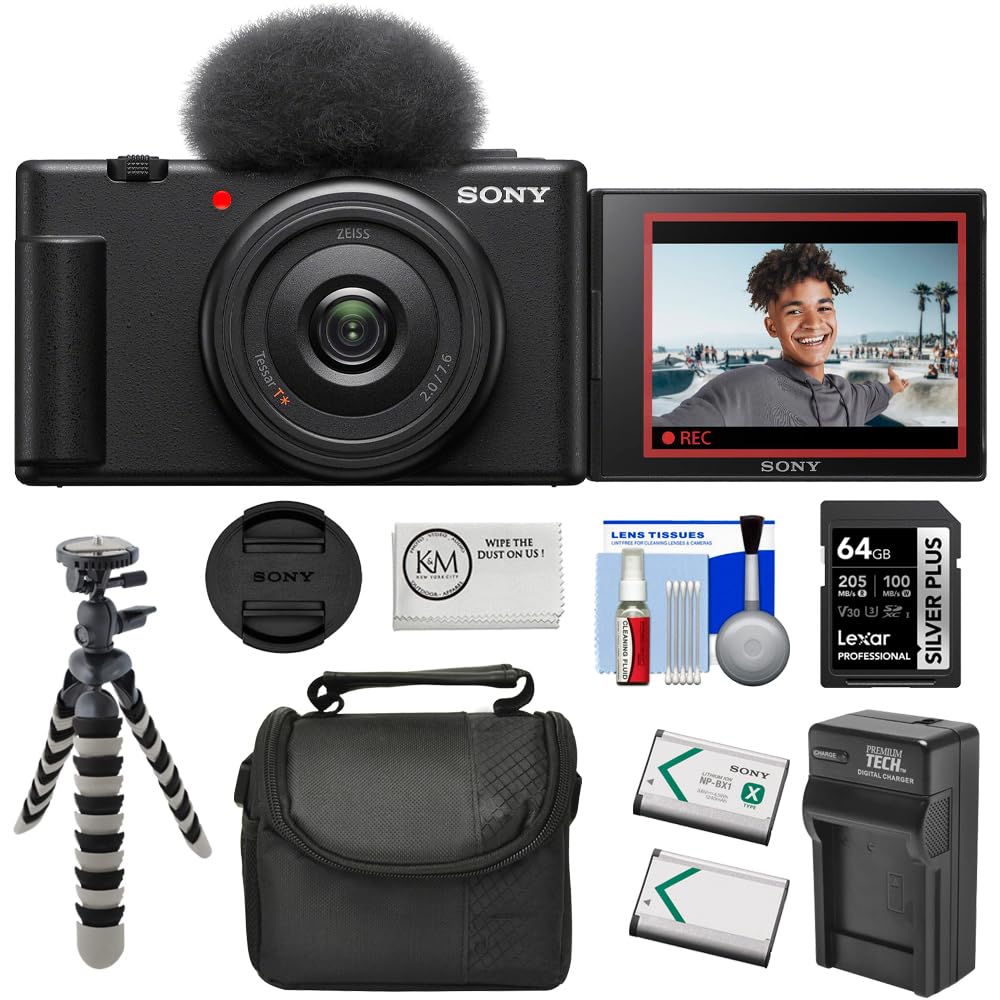
For those on a tight budget who still want a dedicated camera better than a phone, the ZV-1F bundle delivers an ultra-wide 20mm F2.0 lens and a 1-inch 20.1MP sensor. The wide angle ensures you and your background fit in the frame easily, even at arm’s length, which is a common pain point for smartphone shooters. The bundle includes a 64GB memory card, flexible tripod, spare battery, charger, and cleaning kit—reducing the total upfront investment in accessories.
The directional 3-capsule mic with the included windscreen captures clear vocal audio, and the side-articulating touchscreen lets you compose selfie shots without guesswork. Eye-AF and autofocus tracking help keep your face sharp while moving, though the camera does occasionally hunt for focus when the subject moves quickly in and out of the center zone.
Some users report that the focus plane can feel erratic even on a tripod, and the camera’s battery lasts about two hours of moderate use. The package may include generic accessories that vary in quality—such as a lens cleaning wipe that leaked in one report—so check the bundle contents carefully.
Why it’s great
- Ultra-wide 20mm lens for effortless selfie framing
- Complete bundle with card, tripod, and extra battery
- Clear Voice microphone for spoken content
Good to know
- Autofocus can be erratic in some scenarios
- Bundle accessories may have variable quality
8. Nikon Z50 II + Dual Lenses

The Nikon Z50 II stands out with its dual-lens kit—the 16-50mm VR for wide to standard shots and the 50-250mm VR for telephoto reach—making it a complete travel companion. The 20.9MP APS-C sensor is several times larger than a typical smartphone sensor, producing richer colors and better low-light performance. The Picture Control button offers 31 built-in presets that you can preview in real time, which helps when you want a specific look without post-processing.
Autofocus detects and tracks nine subject types, including people, dogs, cats, birds, and vehicles, with dedicated bird and airplane modes for extra precision. The 4K UHD 60p capture and in-camera 120p slow-motion at Full HD give you creative flexibility without extra gear. Built-in electronic VR helps stabilize handheld video, and the product review mode is useful for desk-based demonstrations.
The menu system takes some time to learn compared to Sony’s offerings, and the lens selection for the Z mount is still expanding. Video-focused creators may find the Nikon less specialized than the Sony ZV or Blackmagic lines, but for hybrid stills and video, it is a versatile choice.
Why it’s great
- Two-lens kit covers wide to telephoto ranges
- 31 built-in Picture Control presets for instant looks
- Subject detection for birds and vehicles included
Good to know
- Menu system has a learning curve
- Z mount lens selection is still maturing
9. Blackmagic Pocket Cinema 6K
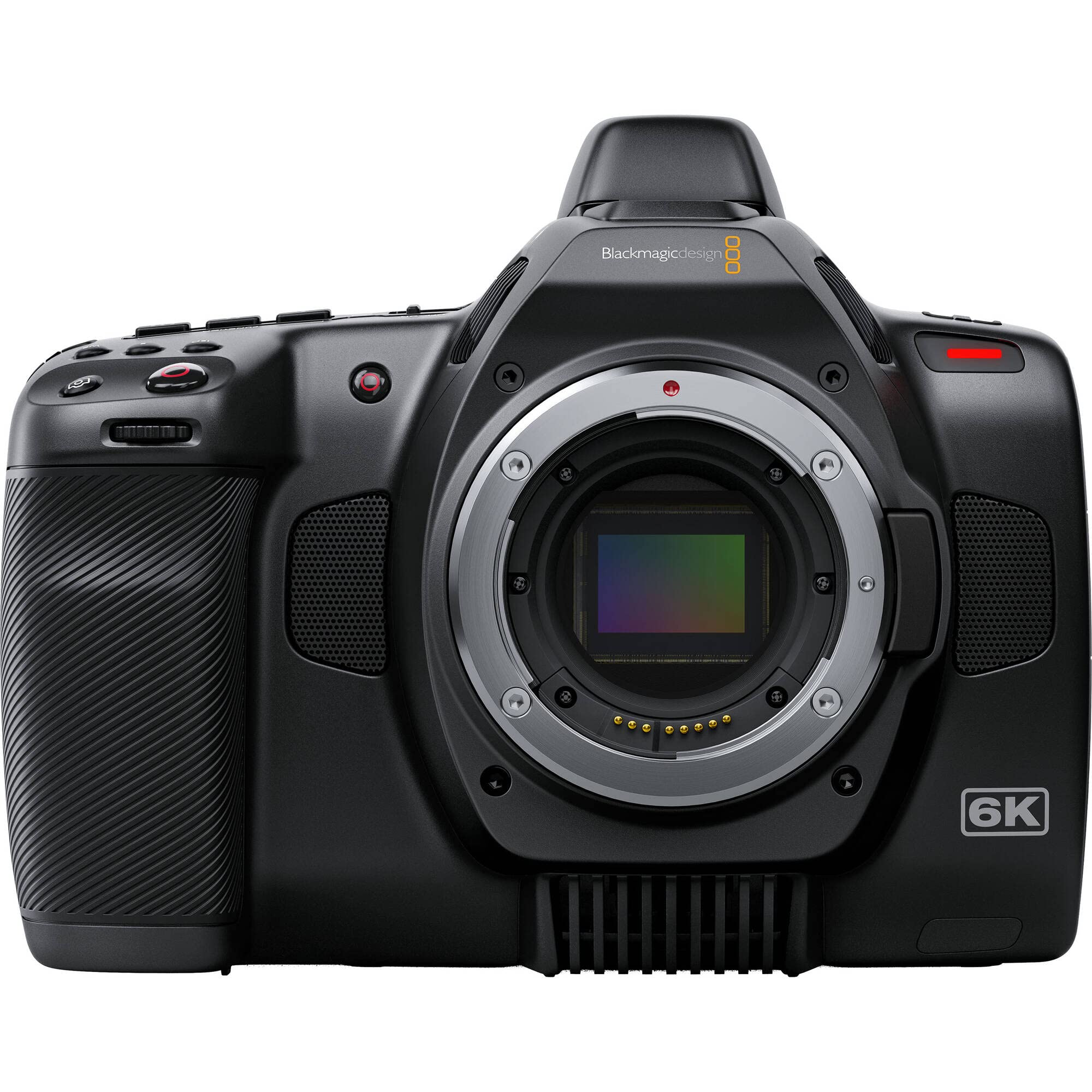
The Blackmagic Pocket Cinema Camera 6K is purpose-built for filmmakers who prioritize RAW capture and color grading flexibility. With a Super 35 sensor and an EF lens mount, it records 6K 6144 x 3456 resolution up to 50fps and 2.8K up to 120fps, giving you ample resolution for cropping and stabilization in post. The 13 stops of dynamic range match professional cinema cameras, allowing you to retain highlight and shadow detail in high-contrast scenes.
Recording to CFast 2.0 or SSD media keeps costs manageable compared to proprietary cinema cameras, and the included DaVinci Resolve license covers professional color grading. The well-organized menu system simplifies setting changes in the field, and the camera’s compact body (by cinema standards) makes it practical for gimbal and shoulder rig setups. Users who pair it with sharp prime lenses consistently report results that rival much more expensive systems.
The LCD screen is not fully color-accurate; most creators use an external monitor for critical focus and exposure. The camera has no autofocus to speak of, so you must pull focus manually or use a follow-focus rig. Some units have experienced overheating issues, though Blackmagic support typically handles defects under warranty.
Why it’s great
- RAW recording with 13-stop dynamic range
- Affordable CFast/SSD media workflow
- Includes DaVinci Resolve for editing and grading
Good to know
- No built-in autofocus—manual focus only
- LCD screen not accurate for color grading
10. Canon EOS R5 Body

The EOS R5 is the ultimate hybrid body for creators who need both highest-resolution stills and cinema-grade video in one package. Its 45MP stacked CMOS sensor captures stunning detail with 14-bit RAW output, and the DIGIC X processor enables 8K internal recording at up to 30fps with full autofocus. The Dual Pixel CMOS AF II with 1,053 points covers nearly 100 percent of the frame, and Eye Control AF lets you select focus points by looking at them—a game-changer for live event and interview shooting.
In-body image stabilization provides up to 8 stops of shake correction, giving you handheld stability for 4K and even 8K footage that was previously impossible without a tripod. The body is weather-sealed and built to professional standards, with a comfortable grip that supports heavy RF glass. 4K 120fps high-frame-rate capture at 10-bit 4:2:2 internal is perfect for slow-motion b-roll, and the 20fps electronic shutter covers fast action.
Overheating during extended 8K recording has been widely discussed—practical sessions usually allow about 20 minutes of 8K before thermal shutdown. The battery life is lower than the a7 III, typically around 320 shots per charge, so professionals will need several spare LP-E6NH cells. This is a premium investment best suited for established creators who need the absolute best in-resolution and codec options.
Why it’s great
- 45MP sensor and 8K internal RAW recording
- Dual Pixel AF with Eye Control Focus
- 8-stop IBIS for ultra-steady handheld video
Good to know
- 8K recording limited to ~20 minutes before overheating
- Battery life requires multiple spares for all-day shoots
FAQ
What is the minimum bit depth I need for professional color grading?
Should I choose APS-C or full-frame for content creation?
Does in-body stabilization matter for vlogging?
Final Thoughts: The Verdict
For most users, the best digital camera for content creators winner is the Sony a7 III because it balances full-frame image quality, reliable autofocus, and tremendous battery life into a package that covers interviews, b-roll, and stills without compromise. If you want a lighter APS-C body with advanced AI autofocus and internal 10-bit video, grab the Sony Alpha a6700. And for narrative filmmaking where RAW grading and resolution are non-negotiable, nothing beats the Blackmagic Pocket Cinema 6K.

Mo Maruf
I created WellFizz to bridge the gap between vague wellness advice and actionable solutions. My mission is simple: to decode the research and give you practical tools you can actually use.
Beyond the data, I am a passionate traveler. I believe that stepping away from the screen to explore new environments is essential for mental clarity and physical vitality.