Our readers keep the lights on and my smoothie glass nicely filled. As an Amazon Associate, I earn from qualifying purchases.
For anyone managing diabetes, foot pain isn’t just an inconvenience — it’s a warning system. A missed hotspot, a poorly padded step, or an ill-fitting arch can quickly escalate into a serious complication. Diabetic insoles are specifically engineered to reduce pressure points, minimize friction, and provide a protective layer between your feet and the unforgiving ground, making every step safer and more comfortable.
I’m Mohammad Maruf — the founder and writer behind WellFizz. I’ve spent hundreds of hours analyzing the material composition, shock absorption ratings, and podiatric certifications of insoles designed for diabetic neuropathy, plantar fasciitis, and arthritic feet to understand exactly what separates a protective insole from a dangerous one.
This guide cuts through the noise to highlight the most effective solutions for sensitive, neuropathy-prone feet, helping you find the best pair for your unique needs. After comparing foam densities, arch support designs, and customer feedback across dozens of models, I’ve built a clear ranking of the best diabetic insoles available right now.
How To Choose The Best Diabetic Insoles
Selecting the right insole for diabetes goes beyond basic comfort. You need a product that actively reduces friction, evenly distributes pressure, and provides a seamless, non-irritating surface. Here are the three most critical factors to evaluate before buying.
Layer Construction and Foam Density
Single-density EVA foam insoles are too firm for neuropathy-prone feet and can create new pressure points. Look for a multi-layered system that combines a soft, conforming top layer (like Plastazote or proprietary open-cell foam) with a shock-absorbing mid-layer and a supportive base. This sandwich construction dissipates impact force and prevents the “bottoming out” that causes heel and metatarsal pain.
Arch Support and Footbed Geometry
Insoles with a pronounced, rigid arch can dig into the foot and cause irritation for diabetics with neuropathy. The ideal design includes gentle, graduated arch support — enough to stabilize the foot and correct overpronation, but soft enough to avoid creating a high-pressure ridge. A deep heel cup also helps center the foot and reduces shear forces during walking.
Top Cover Material and Antimicrobial Properties
Diabetic skin is fragile and prone to infection. The top cover should be smooth, seamless, and moisture-wicking to prevent blisters and maceration. Materials with antimicrobial properties — such as those infused with silver or treated with bacteriostatic agents — add an extra layer of protection against odor and fungal growth. Avoid any insole that has raised seams, stitching, or a rough texture.
Quick Comparison
On smaller screens, swipe sideways to see the full table.
| Model | Category | Best For | Key Spec | Amazon |
|---|---|---|---|---|
| Spenco Medics Diabetics Plus | Full-Length | Pressure point reduction | Plastazote top cover + SpenCore heel pad | Amazon |
| FrankFoot Amazing Inserts | Triple-Layer | Soft shock absorption | Three-layer foam, trim-to-fit design | Amazon |
| PowerStep Pinnacle | Full-Length | Pronation control and PF relief | Dual-layer cushioning, firm arch | Amazon |
| pedag Sensitive | Therapeutic | Diabetic neuropathy and arthritis | NORA material, APMA approved | Amazon |
| Redi-Thotics Ultra | Orthotic | Podiatrist-recommended rigidity | Firm arch, metatarsal pad included | Amazon |
| Redi-Thotics Slim 3/4 | 3/4 Length | High arches, transferable fit | 3/4 length, excellent for high arch | Amazon |
| TECRUN Plantar Fasciitis Insoles | Arch-Specific | 4 arch type customization | 4 arch heights, no trimming needed | Amazon |
In‑Depth Reviews
1. Spenco Medics Diabetics Plus Full Length Arch Support Insole
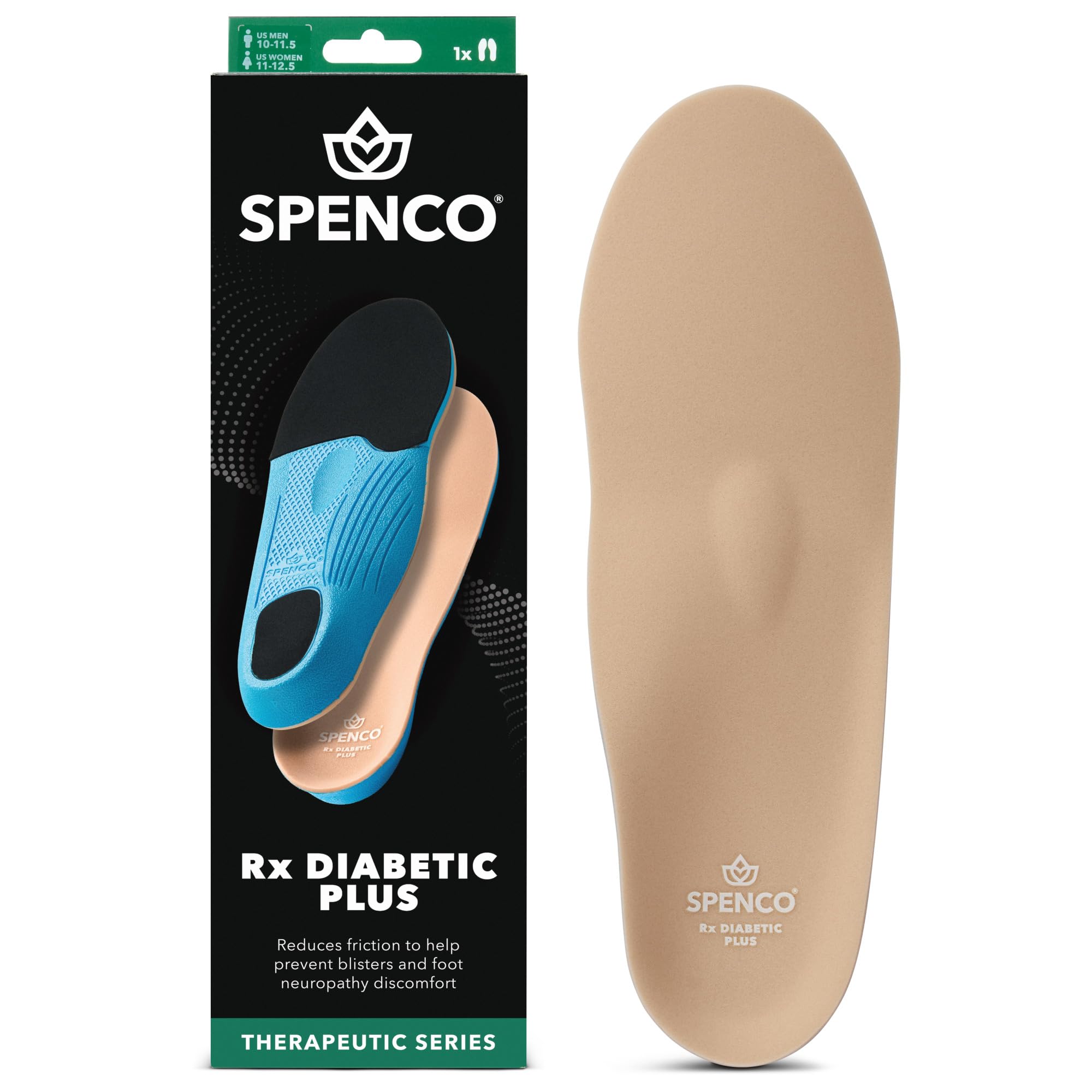
The Spenco Medics Diabetics Plus is purpose-built for sensitive feet, using a soft Plastazote top layer that molds to the foot’s unique contours to minimize rubbing and reduce hot spots. This is critical for diabetic users who cannot afford friction injuries. The SpenCore heel pad and forefoot crash pad work together to absorb impact from heel strike through toe-off, creating a uniform ride that reduces pressure on the metatarsal heads.
With APMA acceptance and a gentle arch support that delivers structure without rigidity, this insole hits the sweet spot for all-day wear. The extra-deep heel cup centers the foot effectively, which helps prevent the sliding and shearing that can lead to blister formation. Many reviews note its compatibility with long standing shifts — up to 12 hours on steel grates — without causing foot or back pain.
The full-length, sized-to-fit design requires minimal trimming, and the neoprene construction offers a balance of durability and pliability. Some users with very narrow feet report a slight oval ridge along the arch, but for most diabetic and neuropathy sufferers, the pressure point reduction and seamless top cover make this the top choice overall.
Why it’s great
- Plastazote top cover reduces friction and hot spots for sensitive feet.
- Three-zone cushioning system (heel, arch, forefoot) absorbs impact evenly.
- APMA accepted — trusted by podiatrists for diabetic foot care.
Good to know
- Some users find the arch support ridge too firm for flat feet.
- Consumable foam may wear faster than rigid plastic orthotics if used barefoot daily.
2. FrankFoot Amazing Inserts
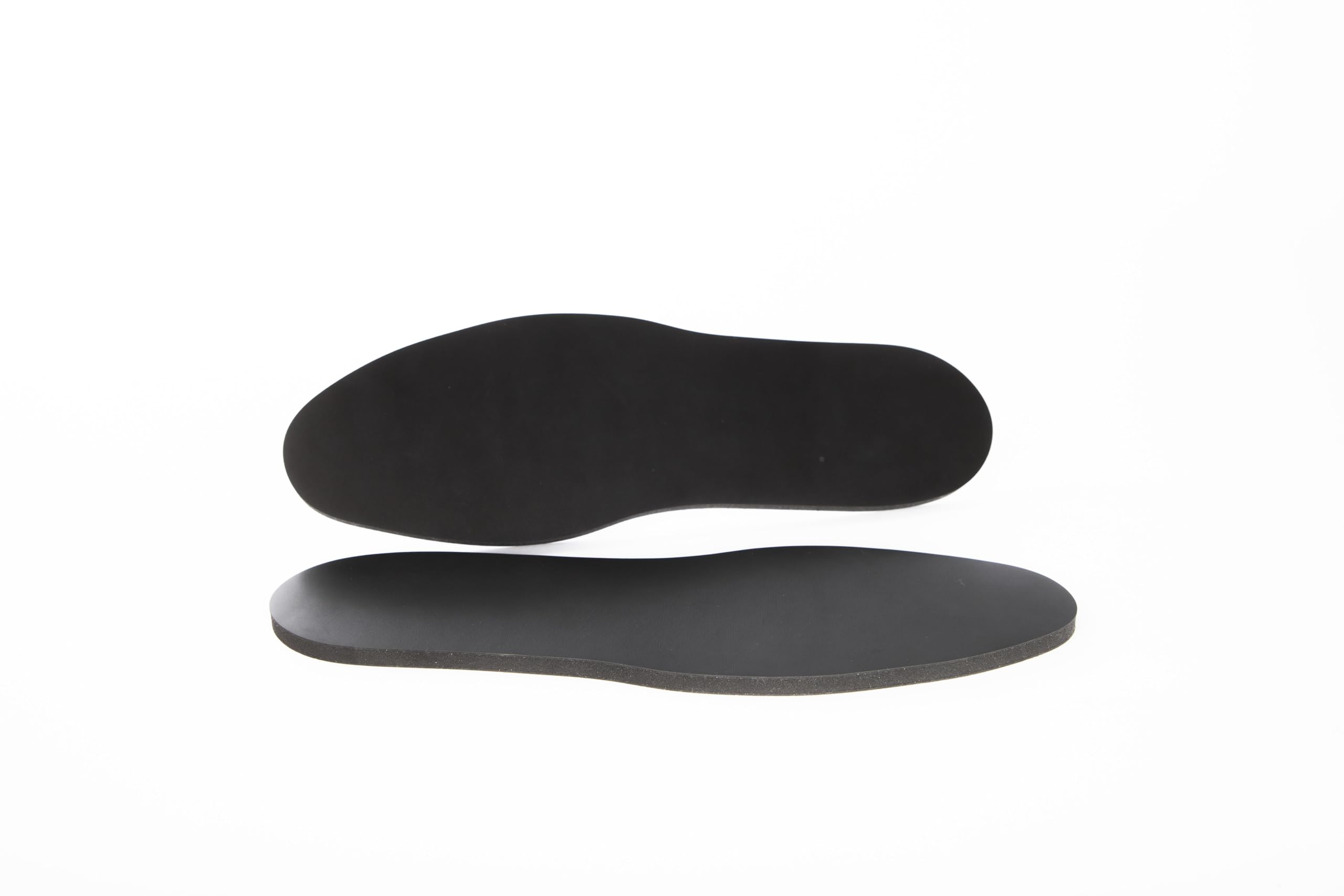
FrankFoot sets itself apart with a scientifically developed three-layer foam system that deliberately avoids low-cost materials like rubber, latex, vinyl, and EVA. Instead, it uses varying densities of premium shock-absorbing foam bonded with a durable adhesive and protective coating. The result is an extremely soft, smooth surface with no seams or ridges — exactly what neuropathic feet need.
Users report immediate relief from neuropathy pain and plantar fasciitis, with several calling it “magical” after trying multiple other brands. The trim-to-fit design ensures versatility across boots, sneakers, and even slippers. The flat cushion profile makes it ideal for those who find contoured arch supports too aggressive or uncomfortable.
The reversible nature of the insole adds flexibility, though some users noted a reduced lifespan — reports of tearing after 3 months of heavy use suggest the ultra-soft foam may sacrifice durability for comfort. The plastic-like coating on the top can also cause foot sweating for some. For mid-range pricing, the comfort-to-durability tradeoff is worth considering.
Why it’s great
- Triple-layer foam construction avoids common low-friction materials.
- Seamless surface prevents irritation for neuropathy-sensitive feet.
- Highly effective for immediate pain relief, per verified customer reviews.
Good to know
- Some users report accelerated wear and tearing after 3 months of daily use.
- The surface can cause foot sweating for some wearers.
3. PowerStep Pinnacle Insoles

The PowerStep Pinnacle is a full-length orthotic insole that delivers maximum cushioning combined with a firm, stabilizing arch support. Its dual-layer cushioning reduces stress and fatigue, while the structured arch shape helps correct moderate overpronation — a common issue that exacerbates metatarsal and heel pain in diabetic patients.
Verified users report dramatic reductions in plantar fasciitis pain and lower back discomfort, with some calling it the first insole that provided “real relief” after years of suffering. The no-trim design (ordered by shoe size) ensures a precise fit without the guesswork of cutting, and the polyester top cover is breathable and irritation-free for most users.
Heel posting is noticeably firm, which provides excellent control but may be too aggressive for users who require ultra-soft cushioning. Some reviewers noted the heel posting was too rigid for daily 15,000-step routines. Made in the USA and FSA/HSA eligible, the PowerStep is a reliable choice for those who need structured support and are willing to trade some softness for stability.
Why it’s great
- Dual-layer cushioning reduces fatigue during prolonged standing and walking.
- Firm arch support corrects overpronation and stabilizes the foot.
- No trimming required and FSA/HSA eligible.
Good to know
- Heel posting may feel too firm for high-mileage daily wear.
- Not ideal for those seeking an ultra-soft, plush feel.
4. pedag Sensitive German Made Insoles

The pedag Sensitive is specifically engineered for diabetic neuropathy and arthritic feet, using orthopedic NORA material that is both antibacterial and extremely lightweight. The top layer offers a soft, cloud-like cushion that feels plush underfoot, while the bottom layer provides gentle arch support without any hard plastic or rigid posts.
With the American Podiatric Medical Association Seal of Acceptance, this insole has passed rigorous testing for diabetic foot care. The full individual sizing (no half-size guesswork) and washable construction make it a hygienic, long-term option for users who need to maintain a sterile environment for their footwear. Reviews consistently praise its fit and quality for sensitive feet.
Some users note that the arch support is mild — better suited for low to medium arches than high insteps. A few reviewers reported the insoles running one size short, recommending ordering the next whole size up. The surface can also cause socks to cling, which may be annoying for those who prefer to wear insoles without shoes at home.
Why it’s great
- NORA material is antibacterial and skin-friendly for diabetic foot hygiene.
- APMA approved specifically for diabetic and arthritis foot care.
- Washable and ultra-lightweight for easy maintenance.
Good to know
- May run one size short; ordering a size up is recommended.
- Sock clinging can occur; a plastic bag trick helps with insertion.
5. Redi-Thotics Ultra Orthotic Insoles

The Redi-Thotics Ultra is a podiatrist-recommended orthotic that provides strong arch support and a rigid heel cup, making it an excellent choice for users who need corrective alignment rather than just soft cushioning. It includes a metatarsal pad to help offload pressure from the ball of the foot, which can be beneficial for diabetic patients with forefoot neuropathy.
User feedback consistently highlights its effectiveness for plantar fasciitis and foot pain, with many relying on it as a lower-cost alternative to custom orthotics. The support is notably firmer than budget-friendly inserts, and the durable construction typically lasts a full 12 months before needing replacement — a reasonable lifespan for the premium tier.
The metatarsal pad placement lacks instructions, so some users may need trial and error to position it correctly. A few reviewers also note that the rigidity makes it better suited for everyday sneakers than for jogging or high-impact activities. For those requiring strong, corrective support in a durable package, this remains a top choice.
Why it’s great
- Strong arch support and rigid heel cup for corrective alignment.
- Metatarsal pad offloads forefoot pressure for neuropathy relief.
- Long-lasting construction — typically lasts 12 months before replacement.
Good to know
- Metatarsal pad positioning has no user guide — may require adjustment.
- Rigid feel not ideal for high-impact running or jogging.
6. Redi-Thotics Slim 3/4 Orthotic Insoles
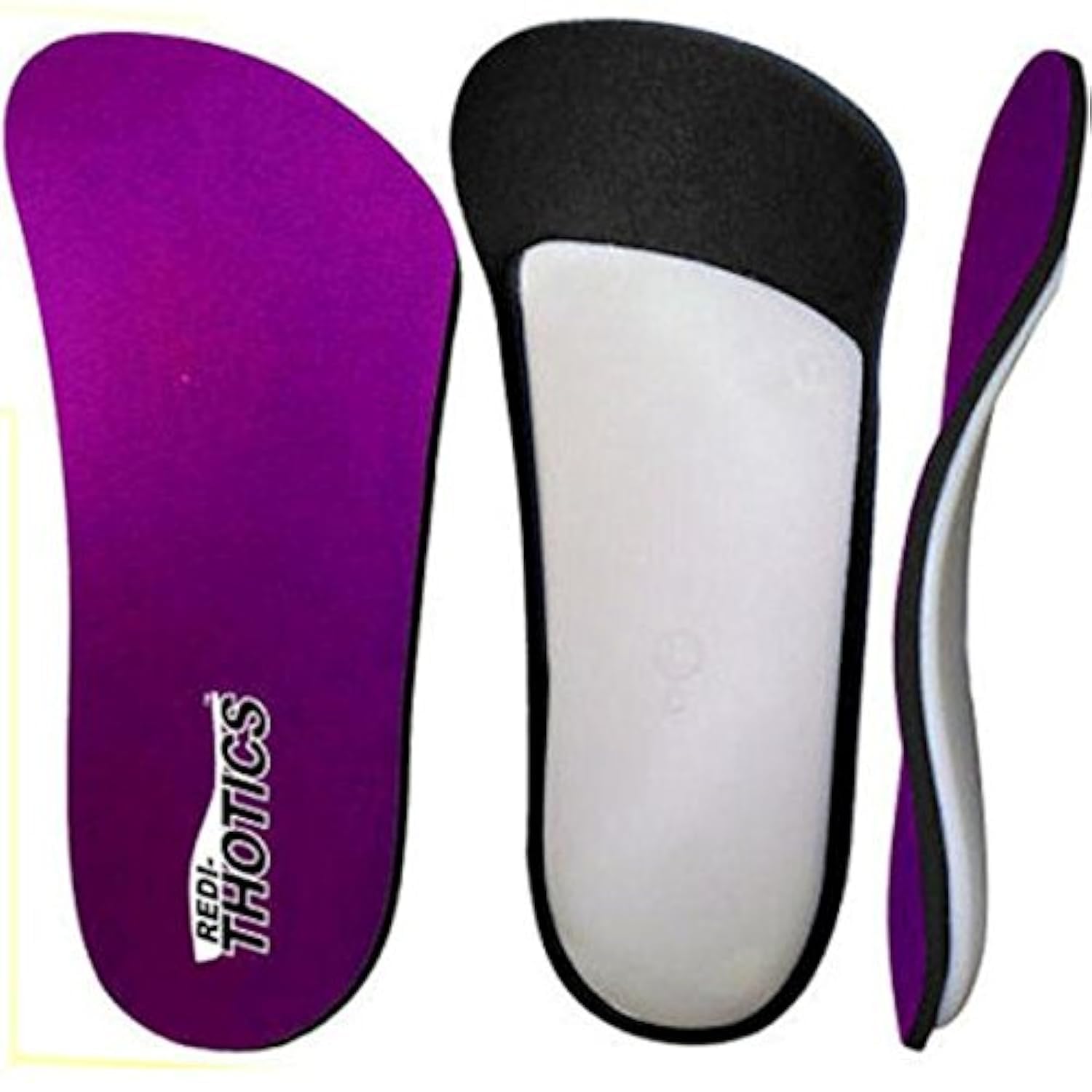
The Redi-Thotics Slim 3/4 is a trimless orthotic designed for users who need arch support without the bulk of a full-length insole. Its 3/4 length means it stops before the toes, making it ideal for shoes where full-length inserts feel too tight or crowded. It provides excellent support for high arches, stabilizing the foot without adding volume in the toe box.
Podiatrist-recommended for plantar fasciitis and flat feet, it has a loyal following of users who swear by it for transferring between multiple pairs of shoes. One user noted it fit perfectly in Vans without any modification, enabling pain-free walking for the first time. The stable, cushioned design outperforms competitors like Powerstep SlimTech, which some found too narrow or prone to shifting.
At the premium end of the pricing spectrum, these insoles cost roughly per pair and last about a year with regular use. Some users find them less cushioned than full-length alternatives, particularly lacking in heel padding. For high-arched feet needing structural support in a non-bulky form factor, these remain a strong contender.
Why it’s great
- Excellent arch support for high arches without toe crowding.
- Easily transferable between shoes — fits Vans, sneakers, and casual footwear.
- Podiatrist-recommended and proven for plantar fasciitis relief.
Good to know
- Less heel cushioning compared to full-length alternatives.
- Premium pricing may not fit every budget.
7. TECRUN Plantar Fasciitis Relief Insoles
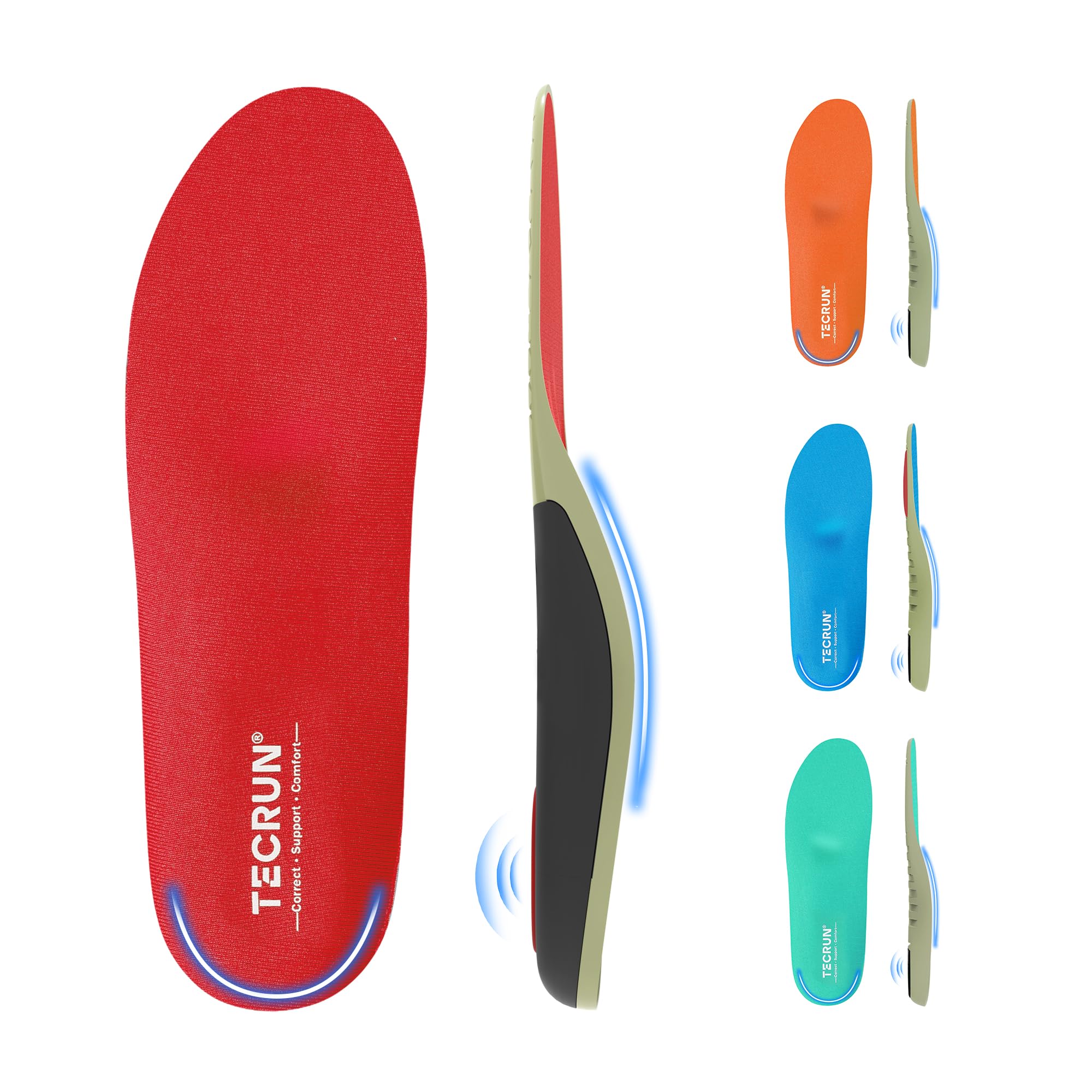
TECRUN’s insoles offer a unique, beginner-friendly approach: four distinct arch height options (high, normal, low, flat) across ten shoe sizes, meaning no trimming is required. This is a major advantage for users who want a precise fit without the hassle of cutting. The honeycomb cushioning combined with high-density PU foam provides solid shock absorption for standing all day.
The 8-in-1 pain relief claim covers plantar fasciitis, heel spurs, back, knee, hip, ankle pain, Achilles tendonitis, and foot fatigue. User feedback is largely positive, with many reporting immediate reduction in foot pain and solid arch support. The slim forefoot design prevents toe crowding, making it compatible with work boots, sneakers, and dress shoes.
Some users with low arches found the support mild rather than firm, and the forefoot cushioning may not be sufficient for metatarsal-specific pain. A few also noted that the materials can cause foot sweating in enclosed shoes. As a budget-friendly option that prioritizes fit customization, it’s a solid entry-level choice for those still dialing in their arch type.
Why it’s great
- Four arch height options ensure a personalized fit without trimming.
- Honeycomb cushioning and PU foam provide good shock absorption for standing all day.
- Slim forefoot design prevents toe crowding in tight shoes.
Good to know
- Forefoot cushioning may be insufficient for metatarsal pain.
- Material can cause foot sweating in enclosed footwear.
FAQ
Can I use regular orthotic insoles for diabetic neuropathy?
How often should I replace my diabetic insoles?
Are washable insoles safe for diabetic feet?
Final Thoughts: The Verdict
For most users, the best diabetic insoles winner is the Spenco Medics Diabetics Plus because it combines a friction-free Plastazote top layer, multi-zone cushioning, and an APMA-accepted design specifically for sensitive feet. If you want a triple-layer soft shock absorption with a seamless surface, grab the FrankFoot Amazing Inserts. And for a podiatrist-recommended, firm orthotic with a metatarsal pad for neuropathy relief, nothing beats the Redi-Thotics Ultra.

Mo Maruf
I created WellFizz to bridge the gap between vague wellness advice and actionable solutions. My mission is simple: to decode the research and give you practical tools you can actually use.
Beyond the data, I am a passionate traveler. I believe that stepping away from the screen to explore new environments is essential for mental clarity and physical vitality.