Our readers keep the lights on and my smoothie glass nicely filled. As an Amazon Associate, I earn from qualifying purchases.
Capturing a crisp image of a distant bird or a detailed moon crater through your spotting scope or telescope usually ends with a blurry mess. The culprit isn’t your optics — it’s the gap between your phone’s camera lens and the eyepiece. A solid adapter bridges that gap, and the right one makes the difference between a keeper and a delete.
I’m Mohammad Maruf — the founder and writer behind WellFizz. I’ve spent hundreds of hours analyzing the mechanical specs, user feedback, and real-world performance data of digiscoping adapters to separate the tools that lock in alignment from those that introduce wobble.
The goal of this guide is to help you identify the most reliable options available today, providing clear analysis on build quality, ease of alignment, and compatibility so you can confidently choose the best digiscope adapter for your specific kit.
How To Choose The Best Digiscope Adapter
Digiscoping adapters seem simple, but a wrong choice means fighting with alignment every time you swap phones or eyepieces. Focus on these three factors to avoid frustration.
Eyepiece Diameter Compatibility
The first spec to check is the outer diameter range of your eyepiece. Adapters typically clamp onto eyepieces between 20 mm and 64 mm. Measure your spotting scope or telescope eyepiece with calipers before buying — guessing frequently leads to returns, especially with microscope or compact monocular eyepieces.
Phone Clamping Mechanism
There are two main approaches: magnetic MagSafe-style rings and traditional spring-loaded clamp jaws. Magnetic adapters are faster to attach and remove but require a MagSafe case or included metal ring. Clamp-style adapters grip any phone but need careful alignment each time. If you shoot with multiple phones or share your scope, a magnetic system saves time. For maximum stability with heavy phones, a rigid clamp paired with a tripod-mounted remote shutter wins.
Adjustment Axis Count
A basic adapter offers only X and Y (left/right, up/down) movement. The critical third axis is Z — forward/backward adjustment that controls the distance between your phone’s camera lens and the eyepiece. This Z-axis control eliminates black vignetting around the image, especially with long eye relief eyepieces. If you shoot with a phone that has multiple lenses, Z-axis adjustment is non-negotiable for aligning the correct camera.
Quick Comparison
On smaller screens, swipe sideways to see the full table.
| Model | Category | Best For | Key Spec | Amazon |
|---|---|---|---|---|
| tridaptor | Premium | Precision shooters needing fine alignment | 3-axis, all-aluminum, 233g weight | Amazon |
| Celestron NexYZ DX | Premium | Travel-friendly digiscoping with included remote | 3-axis, polymer body, 283g weight | Amazon |
| FANAUE Magnetic | Mid-Range | Quick phone attachment with MagSafe | Magnetic mount, aluminum, 80g weight | Amazon |
| Zelnoox Magnetic | Mid-Range | Large eyepiece compatibility up to 2.5 inch | Magnetic mount, 6061-T6 aluminum, 123g | Amazon |
| Evil eye 360° | Budget | Entry-level digiscoping with rotating head | 360° rotatable, polymer body, 150g weight | Amazon |
In‑Depth Reviews
1. tridaptor – Universal Digiscoping Adapter

The tridaptor from MOVE SHOOT MOVE is the reference standard for serious digiscopers who demand micron-level alignment. Its all-aluminum and steel chassis eliminates the flex found in polymer adapters, and the three independent fine-threaded adjustment augers let you dial in X, Y, and Z positions without the knob slipping or skipping. At 233 grams, it feels solid in the hand, and the rubber pads protect both your eyepiece and phone from scratches during repeated setups.
Users report that the Z-axis red knob is the standout feature — it allows you to adjust the phone’s distance from the eyepiece to eliminate black vignetting, a problem that plagues cheaper adapters. The clamp opens to 87.5 mm, meaning it accommodates even large phones with thick protective cases. Reviewers specifically note its compatibility with Vortex, Swarovski, Celestron, and Leupold spotting scopes, and several confirm it resolved issues they had with adapter alternatives.
The trade-off is bulk. This adapter is not a pocket companion — you will want a gear bag or case to carry it. Additionally, the fine-threaded adjusters require a few extra turns during setup compared to magnetic systems, but the stability payoff is immediate. For tripod-mounted, shake-free digiscoping with a Bluetooth remote shutter, this is the most capable adapter available in its class.
Why it’s great
- All-metal construction eliminates flex and phone sag
- Three-axis independent fine-thread adjustment for exact alignment
- Z-axis (red knob) control erases vignetting on long eye relief eyepieces
- Fits phones up to 87.5 mm wide, including most hard cases
Good to know
- Heavier and bulkier than magnetic or polymer adapters
- Setup takes more time than quick-attach magnetic systems
- May require occasional lubrication on adjustment threads per user reports
2. Celestron NexYZ DX Universal Smartphone Adapter

The Celestron NexYZ DX strikes the best balance between precision and portability for most digiscopers. It offers the same three-axis (X, Y, Z) adjustment as the tridaptor, but in a lighter polymer-and-metal hybrid frame that weighs 283 grams. The coaxial knobs are easy to reach even when the adapter is mounted on a tight-spaced tripod head, and the Z-axis adjustment effectively clears black edges, especially on 1.25-inch and 2-inch telescope eyepieces.
This kit comes with a Bluetooth shutter release remote, which eliminates camera shake from tapping the screen at high magnification — a critical feature for capturing sharp moon shots or distant wildlife details. The spring-loaded claw clamp securely holds phones as large as the iPhone 16 Pro Max, and users report it works with most cases still on. Celestron’s reputation and 2-year US warranty add confidence for field use.
The polymer frame is the main point of debate. While it makes the unit lighter and travel-friendly, some users note plastic flex under the weight of a heavy phone, which can introduce parallax error when the phone isn’t perfectly centered. A few reviewers added shims to correct this. If you shoot exclusively from a tripod with the included remote, the practical impact is minimal. It’s the easiest-to-use adapter among dedicated shooters who tested multiple options side by side.
Why it’s great
- Three-axis precision adjustment with easy-to-reach coaxial knobs
- Includes Bluetooth remote for hands-free shake-free capture
- Fits eyepieces from 35 mm to 60 mm, including 1.25-inch and 2-inch
- Lightweight polymer body ideal for packing in a gear bag
Good to know
- Polymer frame can flex under heavy phones, causing parallax error
- Bluetooth remote uses a CR2032 battery with no power-off switch
- Plastic construction feels less durable than all-metal alternatives
3. FANAUE Magnetic Telescope Phone Adapter
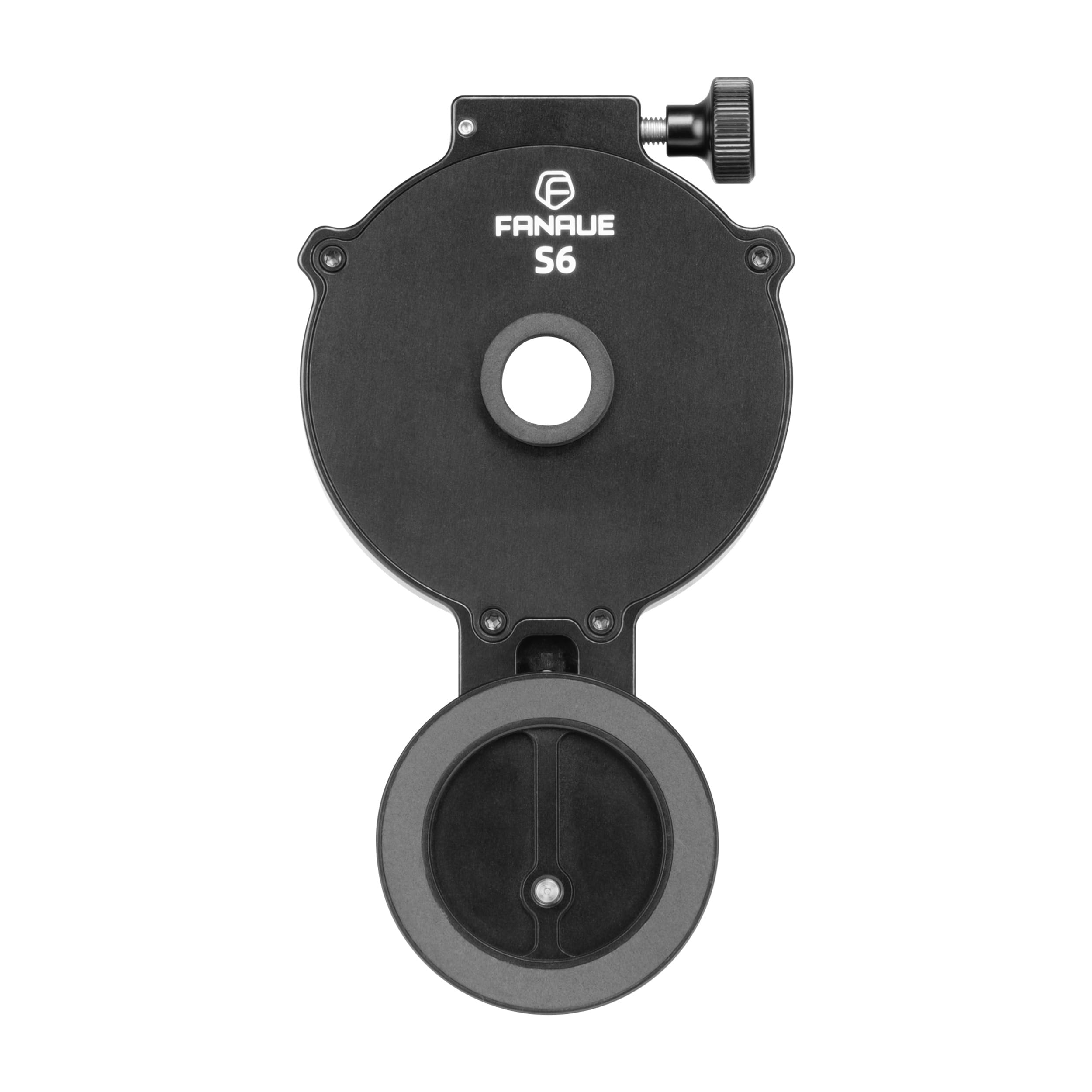
The FANAUE adapter solves the biggest friction point of digiscoping: the slow attach-and-align process. Its magnetic mount uses strong neodymium rings to snap your phone onto the adapter base in one second, provided you are using a MagSafe case or the included metal ring. The precision-machined aluminum frame is lightweight at 80 grams, and the eyepiece clamp grips outer diameters from 30 mm to 60 mm, covering most spotting scopes and Celestron Newtonian telescopes.
Users consistently praise how much faster it is than bulkier clamp-style adapters. The trick, as multiple reviews note, is to center your phone’s camera over the adapter hole before attaching it to the scope — then the MagSafe grip holds alignment securely. The three covered pins grip the eyepiece without scratching, and the magnet holds even the heavy iPhone 16 Pro Max without slipping during normal rotation.
The trade-off is sensitivity. If your phone shifts even slightly off-center, the image goes black at modest zoom levels (around 3.5x on newer iPhones). This isn’t a flaw in the adapter but a limitation of magnetic systems — they trade absolute positional stability for speed. A few users reported that the adjustment screw felt gritty out of the box and required lubrication. For casual digiscopers who prioritize speed over micrometer precision, this is the most convenient option.
Why it’s great
- Fast magnetic attachment — snap phone on in seconds
- Lightweight aluminum construction at only 80 grams
- Fits eyepieces 30 mm to 60 mm, covering most scopes and telescopes
- MagSafe grip rated 5/5 by users for holding heavy phones securely
Good to know
- Alignment is sensitive; slight phone shift blacks out the image at zoom
- Adjustment screw may feel gritty and benefit from lubrication
- Requires MagSafe case or included metal ring for magnetic attachment
4. Zelnoox Digiscoping Adapter (MagSafe)

The Zelnoox adapter is built for shooters who use spotting scopes with oversized eyepieces. Its clamp accepts outer diameters from 28 mm up to 64 mm — notably wider than many competitors — making it one of the few adapters that fit Leupold spotting scopes with 2.5-inch eyepieces without modification. The body is precision-machined from 6061-T6 aircraft-grade aluminum with beveled edges and an anodized finish for durability.
The 20 N52 neodymium magnet rings provide strong holding force, and users shooting at distances of 425 to 1000 yards report that the magnetic connection stays stable even when swapping phones quickly. The included metal ring sticker converts non-MagSafe phones for magnetic attachment. The Z-axis adjustment helps dial in eye relief, and the 123-gram weight is a reasonable middle ground between the featherlight FANAUE and the heavier tridaptor.
The main caveat is that the magnetic mount is designed primarily for the main wide-angle lens. iPhone 15 Pro Max and 17 Pro Max users report that the adapter does not reach the 5x telephoto lens position without creative repositioning. Additionally, a thin gap between the phone and the adapter housing can let in stray light that distorts the image — some users fixed this with a DIY rubber washer. It’s a great choice for large-eyepiece scopes, but check your phone’s lens layout first.
Why it’s great
- Widest eyepiece clamp range — fits eyepieces up to 64 mm outer diameter
- Aircraft-grade 6061-T6 aluminum with long-lasting anodized finish
- Strong 20 N52 neodymium magnets hold phone securely during use
- Works for long-range digiscoping up to 1000 yards per user reports
Good to know
- May not align with telephoto lenses on iPhone Pro Max models
- Small gap between phone and housing can let in stray light
- Does not support MagSafe charging while attached
5. Evil eye Upgraded 360° Rotatable Adapter

The Evil eye adapter is the entry-level option that simplifies the mounting process to four quick steps. Its 360-degree swivel bearing lets you switch between horizontal and vertical shooting orientation without re-clamping the eyepiece — a genuine time-saver for birders who frame shots in both formats. The polymer body and metal frame weigh only 150 grams, and the non-slip eyepiece clamp with 6.6 pounds of spring force keeps the adapter connected to optics securely.
The kit includes a Bluetooth shutter release, which is welcome at this tier and helps reduce shake. The adapter fits phone widths from 66 mm to 95 mm, covering most modern smartphones including iPhone SE and Samsung Galaxy models. The shortened exit pupil distance (10 mm reduction vs earlier versions) is a meaningful design change that reduces black edges, giving a wider effective field of view.
Build quality is this adapter’s limitation. The polymer components flex under load, and users report that the spring-loaded phone grips only make contact on two-thirds of the phone surface when the camera is positioned at an upper corner, making fine-tuning alignment difficult. Several reviews note that the adapter is fickle with phones that have closing flap cases or off-center viewfinders. It’s a capable starter adapter for casual use on a spotting scope, but serious shooters will want to upgrade to a 3-axis metal unit.
Why it’s great
- 360-degree rotation enables quick landscape/portrait switching
- Four-step quick-install design minimizes setup time
- Includes Bluetooth remote shutter for hands-free capture
- Lightweight and compact for pocket or backpack carry
Good to know
- Polymer frame flexes, making fine alignment difficult
- Phone grips may not fully contact phones with corner-positioned cameras
- Not suitable for phones with flap cases or heavy off-center lenses
FAQ
Can a digiscope adapter work with any phone and scope combination?
Why do I see black edges or a dark ring around my photos with a digiscope adapter?
Which lens on my multi-camera phone should I use for digiscoping?
Final Thoughts: The Verdict
For most users, the best digiscope adapter winner is the Celestron NexYZ DX because it combines essential 3-axis adjustment with a travel-friendly weight and an included Bluetooth remote at a mid-range investment. If you want maximum stability and micrometer-level fine-tuning, grab the tridaptor. And for quick handheld sessions where speed matters more than absolute alignment precision, nothing beats the FANAUE Magnetic for its instant MagSafe attachment.

Mo Maruf
I created WellFizz to bridge the gap between vague wellness advice and actionable solutions. My mission is simple: to decode the research and give you practical tools you can actually use.
Beyond the data, I am a passionate traveler. I believe that stepping away from the screen to explore new environments is essential for mental clarity and physical vitality.