Our readers keep the lights on and my smoothie glass nicely filled. As an Amazon Associate, I earn from qualifying purchases.
The digital rangefinder camera is a unique tool built for seeing and capturing the decisive moment without the bulk of a DSLR or the sterile feel of a standard mirrorless body. Its distinct optical viewfinder, which overlays framelines on the scene, offers a direct, uncompressed view that many photographers find more intuitive and less fatiguing for all-day shooting.
I’m Mohammad Maruf — the founder and writer behind WellFizz. This guide is built from hundreds of hours analyzing market data, user reports, sensor readouts, and viewfinder specifications to find the real performers in this niche category.
Whether you value the classic film-era ergonomics of a retro-styled body or the cutting-edge resolution of a full-frame sensor, the best digital rangefinder camera for you hinges on how you balance sensor size, viewfinder quality, and lens ecosystem.
How To Choose The Best Digital Rangefinder Camera
Choosing a digital rangefinder-style camera is a different process than buying a standard mirrorless system or a bulky DSLR. You are selecting for a specific shooting experience that prioritizes direct visual feedback, compact handling, and thoughtful composition over sheer zoom range or continuous burst speed. The camera’s viewfinder, sensor format, and the availability of compact lenses are the three pillars that define the category. A wrong pick in any of these areas can turn a dream setup into a frustrating compromise.
Viewfinder Type and Magnification
The most defining feature of any rangefinder-style camera is its viewfinder. An optical viewfinder (OVF) shows you the scene directly, without electronic latency, and displays bright framelines that shift with focus distance. This allows you to see outside the frame, helping you anticipate subject movement. An electronic viewfinder (EVF) offers a WYSIWYG preview of exposure, white balance, and film simulations, but it can add a slight lag. Some premium cameras, like the Fujifilm X100VI, offer a hybrid system that lets you toggle between the two. For serious street or travel photography, the OVF experience is often the primary reason to choose this category over a standard mirrorless body.
Sensor Size and Lens Ecosystem
Rangefinder-style bodies are built on two main sensor formats: APS-C and full-frame. APS-C sensors (like those in Fujifilm X-mount bodies) allow for smaller, lighter lenses and bodies, making them ideal for daily carry. Full-frame sensors (found in Leica Q series and Sony RX1 series) deliver superior dynamic range, shallow depth of field, and low-light performance, but they demand larger lenses and command a higher price. For interchangeable-lens options, the lens mount determines your future system. Fujifilm’s X-mount has a rich catalog of compact, high-quality primes that feel natural on a rangefinder body, while Leica’s M-mount and L-mount offer premium, often manual-focus glass that is a draw in itself.
Autofocus Performance and Manual Focus Ergonomics
While many shooters in this category prefer manual focusing, autofocus (AF) speed and accuracy can make or break the experience when capturing fleeting moments. Look for phase-detection AF points that cover a wide area of the frame, especially if you shoot action or moving subjects. Contrast-detection-only systems can hunt in low light. Equally important is the focus ring feel — smooth, damped manual focus rings with hard stops are a hallmark of premium rangefinder lenses. A focus peaking or split-image simulation in the EVF can significantly improve manual focus accuracy for critical shots, such as when shooting wide open at f/1.7 or f/2.0.
Quick Comparison
On smaller screens, swipe sideways to see the full table.
| Model | Category | Best For | Key Spec | Amazon |
|---|---|---|---|---|
| Leica Q3 | Premium Fixed-Lens | Ultimate Image Quality & Versatility | 60MP full-frame BSI CMOS sensor | Amazon |
| Fujifilm X100VI | Premium Compact Fixed-Lens | Hybrid Viewfinder & Film Simulations | 40.2MP X-Trans CMOS 5 HR sensor | Amazon |
| Sony RX1R II | Premium Fixed-Lens Full-Frame | Pocketable Full-Frame 42MP Detail | 42.4MP full-frame Exmor R CMOS | Amazon |
| Leica Q2 | Premium Fixed-Lens Full-Frame | Weather-Sealed Luxury Travel Camera | 47MP full-frame CMOS sensor | Amazon |
| Fujifilm X-E2S | Interchangeable Lens APS-C | Classic Rangefinder Feel on a Budget | 16MP APS-C X-Trans CMOS II | Amazon |
| Nikon Z fc | Retro Mirrorless APS-C | Modern Mirrorless in a Retro Body | 20.9MP DX CMOS sensor | Amazon |
| OM SYSTEM OM-5 Mark II | Rugged Travel Mirrorless | Weather-Sealed Outdoor Adventure | 20MP Micro Four Thirds sensor | Amazon |
| Panasonic G85 | Mid-Range Hybrid Mirrorless | Value 4K Video with IBIS | 16MP Micro Four Thirds sensor | Amazon |
| OM SYSTEM E-M10 Mark IV | Entry-Level Mirrorless | Beginner-Friendly Compact System | 20MP Live MOS Micro Four Thirds | Amazon |
| Sony RX100 II | Premium Compact 1-Inch | Pocket-Sized Travel with 1-Inch Sensor | 20.2MP 1-inch Exmor R CMOS | Amazon |
| Panasonic ZS99 | Travel Superzoom Compact | Long Zoom Reach in a Pocket Body | 20.3MP 1/2.3-inch sensor | Amazon |
In‑Depth Reviews
1. Leica Q3 Digital Camera (19080) Black
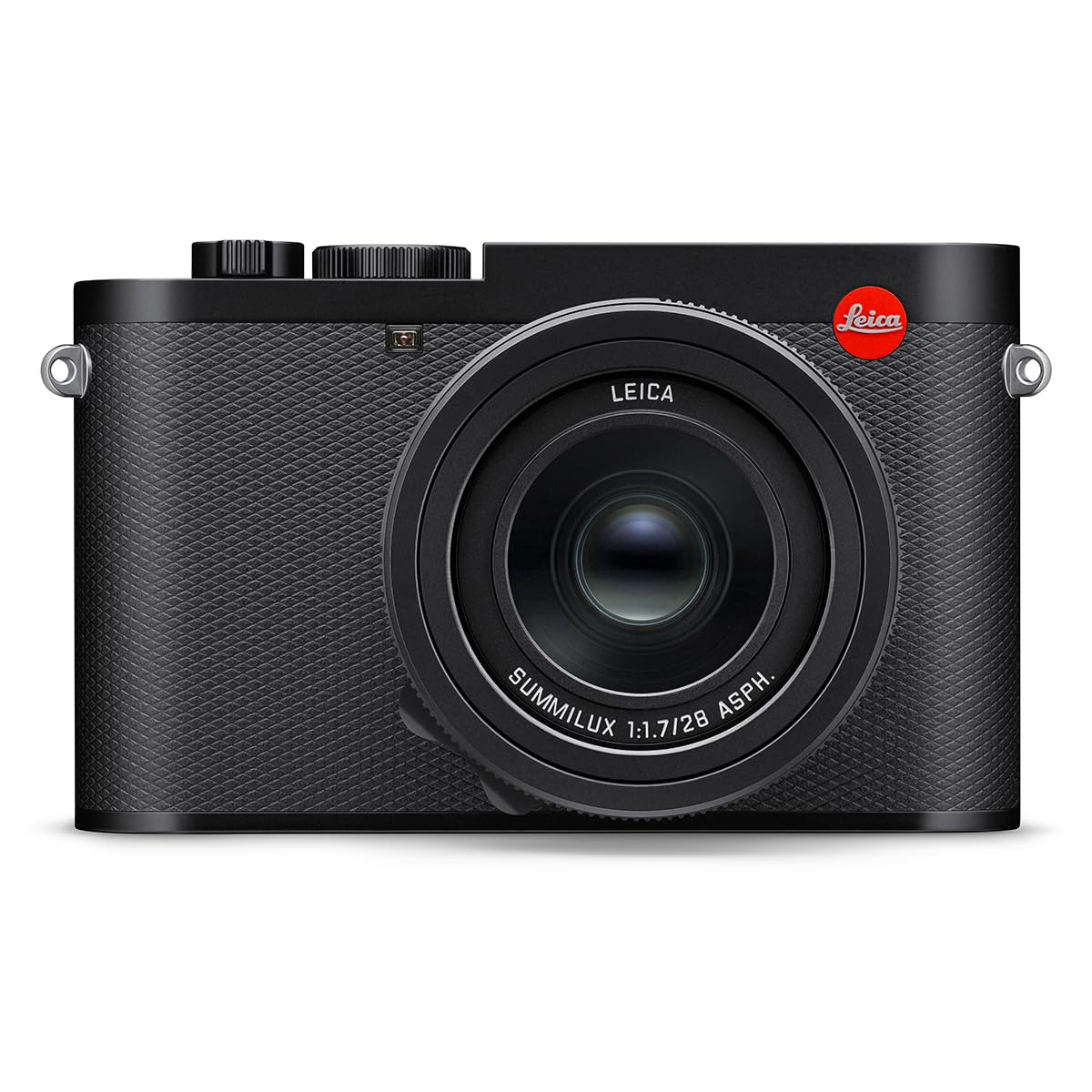
The Leica Q3 establishes the benchmark for what a fixed-lens digital rangefinder can achieve. Its 60MP backside-illuminated full-frame sensor paired with the Maestro IV processor captures exceptional dynamic range and color depth, delivering files that rival medium-format systems. The 28mm f/1.7 Summilux lens is optically superb, offering sharpness wide open that only improves when stopped down. The Triple Resolution Technology lets you shoot at 60MP for maximum detail, 36MP for faster workflow, or 18MP for quick sharing without changing lenses.
The hybrid autofocus system combines contrast and phase detection with subject tracking, making it more capable for moving subjects than older Leica models. The 3.68M-dot OLED viewfinder is bright and accurate, though the camera relies on a digital viewfinder rather than a true optical rangefinder. Built quality is typically Leica — a single aluminum block, weather-sealed, and designed to last decades. The camera offers digital zoom steps up to 90mm, which is a useful framing tool but cannot replace optical reach for professional work.
Battery life is a known limitation, and the price positions it firmly at the top end of the market. For photographers who value ultimate portability without sacrificing full-frame sensor performance, the Q3 is the single most accomplished compact camera available. It is the Swiss Army knife of premium digital cameras, suitable for street, travel, and documentary work where carrying multiple lenses is not an option.
Why it’s great
- Industry-leading 60MP full-frame BSI sensor with triple resolution option.
- Extremely sharp 28mm f/1.7 Summilux lens with minimal distortion.
- Weather-sealed magnesium alloy body built for years of use.
Good to know
- Fixed lens limits focal length flexibility permanently.
- Battery life is below average for the category; spares are essentials.
- Premium price that far exceeds most competing mirrorless systems.
2. Fujifilm X100VI Digital Camera – Black

The Fujifilm X100VI is the sixth generation of this cult-classic fixed-lens camera, and it brings a significant sensor upgrade to 40.2 megapixels on the X-Trans CMOS 5 HR APS-C sensor. The biggest addition is the 5-axis in-body image stabilization, which provides up to 6 stops of compensation, making it viable for handheld low-light shots that were challenging on previous models. The 23mm f/2 lens (35mm equivalent) is sharp and compact, offering a classic street photography field of view.
The hybrid viewfinder remains the camera’s unique draw — it lets you switch between an optical viewfinder with framelines and a high-resolution electronic viewfinder with exposure preview and focus peaking. The inclusion of 20 film simulations, including the new REALA ACE, produces vibrant straight-out-of-camera JPEGs that reduce the need for post-processing. The built-in 4-stop neutral density filter adds creative flexibility for daytime long exposures or shooting wide open in bright conditions.
Autofocus performance is solid but not class-leading; it can hunt briefly in very low contrast scenes. The lack of weather sealing in the original design means you should consider a filter adapter for protection. The external controls — dedicated shutter speed, ISO, and exposure compensation dials — provide a tactile, mechanical feel that encourages deliberate shooting. For photographers who prioritize the rangefinder experience and film aesthetics, the X100VI is a near-perfect everyday companion.
Why it’s great
- Hybrid OVF/EVF viewfinder lets you choose the shooting style per scene.
- New IBIS dramatically improves low-light hand-held stability.
- Industry-best film simulations for stunning SOOC JPEGs.
Good to know
- Fixed 23mm lens offers no optical zoom or wider angles.
- Autofocus can be inconsistent in very low contrast environments.
- Not weather-sealed out of the box; an adapter and filter add bulk.
3. Sony Cyber-Shot DSC-RX1R II Digital Still Camera

The Sony RX1R II remains a unique proposition: a full-frame 42.4MP camera that fits in a jacket pocket. Its back-illuminated Exmor R CMOS sensor is paired with a fixed 35mm f/2.0 Zeiss Sonnar T* lens that is capable of macro focus down to 0.2 meters. The world’s first user-selectable optical variable low-pass filter lets you switch between sharpest detail (no filter) and anti-moiré mode, giving you control over final output quality.
The retractable 2.36M-dot OLED Tru-Finder is a clever space-saver, sliding into the body when not in use. The 35mm f/2 lens is incredibly sharp, even wide open, with beautiful micro-contrast that makes photos look dimensional right out of camera.
The largest compromises are battery life and the lack of in-body image stabilization. You will need multiple spare batteries for a full day of shooting, and handheld low-light shots require careful technique. The RAW files also show significant barrel distortion from the lens, which requires correction in post. The RX1R II is a specialist tool for photographers who insist on full-frame image quality in the smallest possible package, accepting the trade-offs in battery and stabilization.
Why it’s great
- Pocketable full-frame body with 42.4MP sensor delivers professional quality.
- Zeiss 35mm f/2 lens with macro capability produces stunning micro-contrast.
- Variable optical low-pass filter gives creative control over sharpness vs. moiré.
Good to know
- No in-body stabilization makes low-light handheld shooting challenging.
- Battery life is poor; carry at least two spares for a day out.
- Significant barrel distortion in RAW files requires lens profile correction.
4. Leica Q2 Digital Camera (19050)

The Leica Q2 is the predecessor to the Q3, but it remains a highly capable fixed-lens camera with a 47MP full-frame CMOS sensor and a fixed 28mm f/1.7 Summilux ASPH lens. Its defining advantage over many rivals is the IP52-rated weather sealing, which allows use in light rain and dusty environments — a genuine asset for travel and outdoor photography. The 3.68M-dot OLED electronic viewfinder is large and clear, with a 0.76x magnification that makes manual focusing precise.
The 28mm lens is optically excellent, offering sharp results across the frame with beautiful rendering of out-of-focus areas. The camera includes digital zoom steps up to 75mm (cropping into the 47MP file), which is practical for everyday use but reduces resolution accordingly. The minimalist user interface — a single front dial, aperture ring on the lens, and rear button layout — rewards photographers who prefer working without menus.
The Q2 lacks the Q3’s higher resolution sensor, faster processor, and improved autofocus, but it delivers essentially the same shooting experience at a lower entry point. Battery life is moderate, and the lens’s macro mode is useful but manually engaged. The Q2 is a strong choice for shooters who want Leica’s signature color science and build quality with weather protection, but who do not require the absolute latest sensor technology.
Why it’s great
- Full IP52 weather sealing makes it a true all-conditions camera.
- Excellent 28mm f/1.7 Summilux lens with smooth manual aperture ring.
- 47MP sensor provides plenty of resolution for large prints and crops.
Good to know
- Autofocus is slower and less reliable than the newer Q3 model.
- Battery life is average; a spare is needed for extended shoots.
- Digital zoom crops into the sensor, lowering effective resolution quickly.
5. Fujifilm X-E2S Mirrorless Camera w/XF18-55 Lens Kit (Silver)

The Fujifilm X-E2S is a compact, interchangeable-lens camera that embodies the traditional rangefinder form factor at a mid-range price point. Its 16MP APS-C X-Trans CMOS II sensor delivers outstanding color rendition and low noise up to ISO 6400, making it a capable performer for its generation. The body is built around a metal chassis, giving it a sturdy, premium feel that surpasses the plastic construction of many entry-level mirrorless cameras.
The 2.36M-dot OLED electronic viewfinder has a 0.005-second display lag time, which makes it feel nearly instant during shooting. The camera includes 11 film simulation modes, including Classic Chrome, which Fujifilm users prize for their straight-out-of-camera JPEG quality. The Intelligent Hybrid AF system combines phase-detection and contrast-detection, and it performs well for single-shot AF but struggles with continuous tracking of moving subjects. The included XF18-55mm lens is an excellent kit lens, offering optical stabilization and sufficient sharpness for general use.
The X-E2S lacks the higher resolution and faster processing of newer models, and its raw files use the RAF format, which is not universally supported in all editing software without conversion. The continuous autofocus is not suitable for action or sports photography. For street and travel photographers who value the tactile ergonomics and film-like output, the X-E2S offers exceptional value as an entry point into the Fuji rangefinder ecosystem.
Why it’s great
- Metal chassis provides a premium, durable feel at a mid-range price.
- Excellent out-of-camera JPEGs with 11 film simulation modes.
- Fast electronic viewfinder with low lag for real-time composition.
Good to know
- Continuous autofocus is not suitable for tracking moving subjects.
- Native X-mount lenses can be expensive relative to the body cost.
- RAF raw files require extra steps for editing in some software suites.
6. Nikon Z fc with Wide-Angle Zoom Lens

The Nikon Z fc combines a heritage-inspired design with the modern capabilities of the Nikon Z mirrorless system. Its 20.9MP DX-format CMOS sensor and EXPEED 6 processor deliver sharp, clean images with accurate colors straight from the camera. The retro body features mechanical dials for shutter speed, ISO, and exposure compensation, giving photographers a tactile control interface that matches the aesthetic of classic Nikon film cameras from the 1980s.
The large electronic viewfinder has a 0.99x magnification that makes it one of the most immersive in its class. The vari-angle LCD screen flips out for vlogging, selfies, and low-angle shooting. The 209-point hybrid phase-detection autofocus system offers reliable subject tracking and eye detection for both stills and 4K video. The kit lens is a 16-50mm f/3.5-6.3 retractable zoom that collapses for storage, making the whole package compact enough for daily carry.
The Z fc is larger than a true rangefinder-style body like the Fujifilm X-E4, and its retro dials can be stiff initially. Wireless image transfer via SnapBridge can be unreliable, and many users prefer a direct SD card reader. The Z fc is a versatile hybrid camera that appeals to photographers who want the classic look without sacrificing modern image quality and autofocus performance. It is an excellent choice for travel and everyday photography where you want the option of zoom flexibility.
Why it’s great
- Mechanical dials for shutter, ISO, and exposure compensation provide tactile control.
- Large 0.99x magnification electronic viewfinder is bright and immersive.
- Reliable 209-point phase-detection AF with eye tracking for stills and video.
Good to know
- Body is larger than true rangefinder-style APS-C competition.
- Wireless photo transfer via SnapBridge app can be unreliable.
- Retro dials can feel stiff and less precise than dedicated camera controls.
7. OM SYSTEM OM-5 Mark II w/ M.ZUIKO Digital 14-150mm
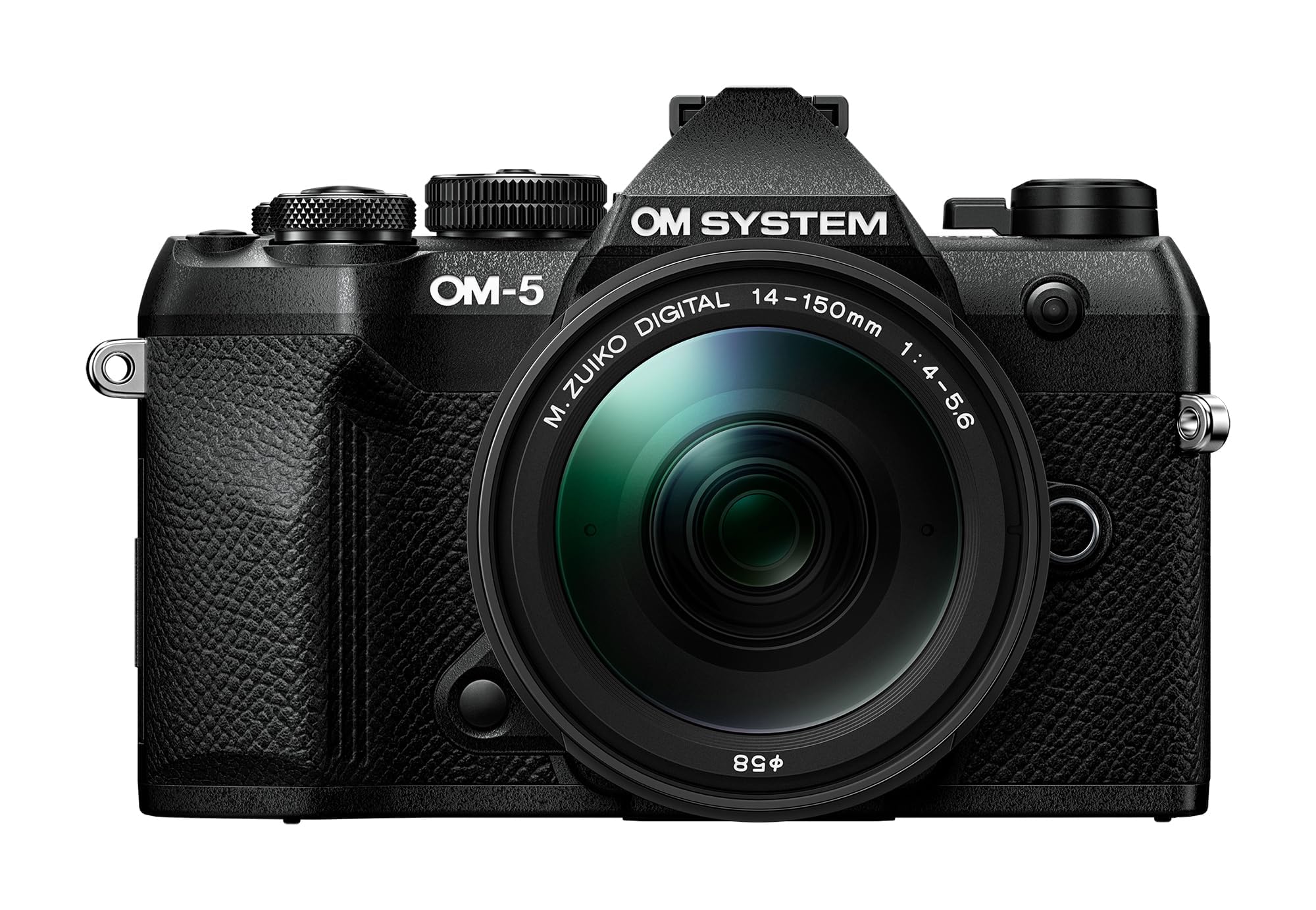
The OM SYSTEM OM-5 Mark II is a ruggedized Micro Four Thirds camera built for outdoor adventures and travel. Its 20MP Live MOS sensor is paired with a 5-axis in-body image stabilization system rated for up to 6.5 stops of compensation, making it highly effective for handheld low-light shooting. The body is compact, weather-sealed, and freeze-proof, capable of operating in rain, dust, and sub-zero conditions without hesitation.
The included 14-150mm f/4.0-5.6 II lens provides a versatile zoom range from wide-angle to telephoto in a single lens, making it ideal for hiking and travel where you want to avoid swapping lenses. The camera features 242-point hybrid autofocus that locks on quickly in good light. The computational photography button provides quick access to features like focus bracketing, high-res shot mode, and a live ND filter effect, which are particularly useful for landscape and outdoor photography.
The OM-5 Mark II is essentially an evolution of the Olympus E-M5 III, adding USB-C charging and a slightly revised menu system. The body is small, but the grip is tight for users with larger hands. Battery life is sufficient for a day of shooting but requires a spare for intensive use. The Micro Four Thirds sensor has a 2x crop factor, which limits the ability to achieve shallow depth of field compared to APS-C or full-frame cameras.
Why it’s great
- Weather-sealed, freeze-proof body ideal for outdoor and travel photography.
- Excellent 5-axis IBIS with up to 6.5 stops of stabilization.
- Versatile 14-150mm zoom lens covers wide to telephoto in one package.
Good to know
- Micro Four Thirds 2x crop factor limits shallow depth of field potential.
- Grip is small and uncomfortable for users with larger hands.
- Essentially an incremental update over the older Olympus E-M5 III.
8. Panasonic LUMIX G85 4K Digital Camera, 12-60mm Power O.I.S.

The Panasonic LUMIX G85 is a classic value proposition in the Micro Four Thirds system, offering excellent 4K video features and robust image stabilization at a mid-range price. Its 16MP sensor lacks a low-pass filter, which enhances fine detail resolving power by nearly 10% compared to previous generation sensors. The body features a magnesium alloy chassis and weather sealing, delivering a durable build that is uncommon in this price bracket.
The 5-axis in-body dual image stabilization works in conjunction with the lens-based OIS to deliver exceptionally smooth handheld footage. The 4K QFHD video recording at 30p is complemented by 4K Photo mode, which allows you to extract 8MP still frames from video at 30fps. The 49-point contrast-detection autofocus is reliable for stills but can hunt in low light during video recording. The 2.36M-dot OLED viewfinder is clear, and the 3-inch tilt-and-touch LCD provides good articulation for video work.
The G85 is a strong hybrid camera for users who want a single system for both stills and video without spending heavily. The battery life is below average, and the camera lacks a headphone jack for audio monitoring. The autofocus for video can be sluggish in dim scenarios, which may frustrate event shooters. For its price tier, the G85 offers an unbeatable combination of build quality, stabilization, and video features that rivals more expensive bodies.
Why it’s great
- Magnesium alloy body with weather sealing at a competitive price.
- Class-leading 5-axis dual image stabilization for smooth handheld video.
- Excellent 4K video features including 4K Photo burst mode.
Good to know
- Contrast-detect AF can struggle to lock in low-light video conditions.
- Battery life is short; a spare is essential for a full day of shooting.
- No headphone jack for monitoring audio during video recording.
9. OM SYSTEM E-M10 Mark IV w/ 14-42mm EZ Kit

The OM SYSTEM E-M10 Mark IV is a beginner-friendly Micro Four Thirds camera that delivers a surprisingly capable feature set for its size and price. The 20MP Live MOS sensor paired with the TruePic VIII processor provides excellent image quality with accurate colors and good dynamic range. The 5-axis in-body image stabilization offers up to 4.5 stops of compensation, allowing you to shoot at shutter speeds as slow as 1 second handheld with a steady technique.
The flip-down monitor and dedicated selfie mode are unique touches that make the camera appealing for content creators and casual users. The built-in flash and 16 art filters provide creative options without needing external accessories. The 121-point contrast-detection autofocus system is quick for static subjects and reliable in good light, but it lacks the tracking capability found in higher-end OM SYSTEM bodies. The 4K video records at 30p with good stabilization for casual footage.
The E-M10 Mark IV is compact enough to fit in a jacket pocket with the retractable 14-42mm pancake lens. The camera uses a charging-only USB port (not USB-C), and the Wi-Fi app experience is slow compared to competitors. The lack of phase-detection autofocus means it is not ideal for fast-moving subjects. As a lightweight entry point into the Micro Four Thirds system for travel, family, and everyday photography, the E-M10 Mark IV provides excellent value and ease of use.
Why it’s great
- Very compact body with retractable lens that fits in a jacket pocket.
- Effective 5-axis IBIS allows stable handheld shots at slow shutter speeds.
- Flip-down monitor with dedicated selfie mode for vloggers.
Good to know
- Contrast-detect autofocus struggles with moving subjects and tracking.
- Wi-Fi image transfer app is slow and unreliable.
- USB charging only, no USB-C port for faster data transfer.
10. Sony RX100 II 20.2 MP Premium Compact Digital Camera

The Sony RX100 II is a second-generation premium compact camera that set a high standard for pocket-sized image quality. Its 20.2MP 1-inch Exmor R CMOS sensor is far larger than typical smartphone sensors, delivering better dynamic range, color depth, and low-light performance. The bright f/1.8 Carl Zeiss Vario-Sonnar T* lens provides a 28-100mm equivalent zoom range, giving you flexibility in a body that slips into a pants pocket.
The camera features 1080p video at 60fps with full exposure control, making it a capable pocket camcorder for its time. The tiltable 3-inch LCD with 1.229 million dots provides good clarity for composing shots. Built-in Wi-Fi and NFC allow easy image sharing and remote control via smartphone. The customizable front control ring and rear control dial give experienced shooters a degree of manual control that most compact cameras lack.
The RX100 II is an older model, so its autofocus speed and continuous shooting rate (10fps) are outclassed by newer 1-inch sensor compacts. The lack of a built-in viewfinder is a significant omission for shooting in bright sunlight, where the rear LCD becomes hard to read. Battery life is limited to about 220 shots per charge. For its current price point, the RX100 II offers a compelling introduction to the premium compact category, but enthusiasts should consider newer RX100 models for improved performance and a viewfinder.
Why it’s great
- 1-inch sensor delivers image quality far beyond any smartphone.
- Bright f/1.8 lens provides good low-light capability and zoom versatility.
- Pocket-sized body with customizable control dials for manual operation.
Good to know
- Lacks any viewfinder; the rear LCD is hard to use in bright daylight.
- Autofocus is slower than newer 1-inch sensor compact models.
- Rechargeable battery is small; expect to carry a spare for full-day shoots.
11. Panasonic LUMIX TZ/ZS99 Point and Shoot Camera

The Panasonic LUMIX ZS99 is a travel-friendly superzoom compact camera that packs a 24-720mm equivalent Leica DC Vario-Elmar lens into a pocketable body. The 30x optical zoom range is its primary feature, allowing you to go from wide-angle landscapes to tight telephoto compositions without changing lenses. The 20.3MP 1/2.3-inch sensor is small by modern standards, but it provides usable results in good light and its compact size enables the massive zoom range.
The 4K video recording at 30p and 4K Photo burst mode at 30fps give you flexibility for capturing fast moments. The tiltable 3-inch touchscreen with 1.84 million dots is sharp and responsive, making composition easier for overhead shots or group photos. Built-in Bluetooth 5.0 and a dedicated Send Image button streamline wireless image transfer to a smartphone, which is a practical feature for sharing on the go.
The weak points are the small sensor, which produces noisy images in low light, and the slower maximum aperture at the telephoto end (f/6.4). The autofocus can be sluggish and can hunt in dim conditions. The lens also exhibits color fringing at the edges of the frame at extreme zoom lengths. The ZS99 is best used as a dedicated daytime travel companion for family trips, concerts, and outdoor excursions where zoom reach is the priority over image quality in low light.
Why it’s great
- 30x optical zoom range (24-720mm equivalent) is unmatched in compact bodies.
- Bluetooth 5.0 and dedicated Send Image button streamline phone sharing.
- Sharp, high-resolution tiltable touchscreen for flexible composition.
Good to know
- Small 1/2.3-inch sensor produces noisy, soft images in low-light conditions.
- Autofocus can be slow and unreliable in dim environments.
- Lens shows chromatic aberration at full telephoto extension.
FAQ
What makes a camera a rangefinder-style camera?
Is it better to get a fixed-lens or interchangeable-lens rangefinder camera?
Are rangefinder cameras suitable for video recording?
How important is weather sealing in a rangefinder camera?
Final Thoughts: The Verdict
For most users, the best digital rangefinder camera winner is the Leica Q3 because it combines a 60MP full-frame sensor, a superb 28mm f/1.7 lens, and a weather-sealed body in a compact form, setting the benchmark for image quality and versatility. If you want a hybrid viewfinder and the magic of Fujifilm’s film simulations, grab the Fujifilm X100VI. And for a budget-friendly entry into the interchangeable-lens rangefinder style with excellent out-of-camera JPEGs, nothing beats the Fujifilm X-E2S.

Mo Maruf
I created WellFizz to bridge the gap between vague wellness advice and actionable solutions. My mission is simple: to decode the research and give you practical tools you can actually use.
Beyond the data, I am a passionate traveler. I believe that stepping away from the screen to explore new environments is essential for mental clarity and physical vitality.