Our readers keep the lights on and my smoothie glass nicely filled. As an Amazon Associate, I earn from qualifying purchases.
Potatoes demand a specific soil environment — loose, well-draining, and slightly acidic — to form large, healthy tubers. The wrong mix compacts around developing spuds, restricting growth and inviting rot, making the choice of planting medium the single most critical decision for a successful harvest.
I’m Mohammad Maruf — the founder and writer behind WellFizz. I spent countless hours analyzing soil texture, drainage rates, and certified organic amendments to separate the average mixes from those that actually support vigorous tuber development.
Commercial potato growers rely on loose, fertile loam, and home gardeners can achieve the same results with carefully selected bagged soil. This guide cuts through the marketing to identify the best dirt for potatoes available today for raised beds, containers, and in-ground planting.
How To Choose The Best Dirt For Potatoes
Potatoes are heavy feeders that grow below the soil surface, so the texture and nutrition of your planting medium directly determine yield and tuber quality. A few key characteristics separate excellent potato soil from common garden blends.
Soil Texture and Drainage
Potatoes require a loose, friable soil that allows tubers to expand without resistance. Heavy clay compresses around developing spuds, leading to misshapen potatoes and increased rot risk. Look for mixes containing perlite, vermiculite, or coarse sand that create air pockets and ensure water flows through quickly rather than pooling around the root zone.
Organic Matter and Nutrient Content
Composted manure, kelp meal, and earthworm castings provide the steady supply of potassium and phosphorus potatoes need for tuber formation. Avoid soils with high nitrogen levels, which push excessive leafy growth at the expense of underground production. A balanced, slow-release organic amendment is ideal for sustained development over the growing season.
pH Level and Acidity
Potatoes prefer a slightly acidic pH between 5.0 and 6.0. Higher pH levels encourage common scab, a bacterial disease that leaves rough, corky patches on the skin. Many premium potting mixes include sphagnum peat moss, which naturally lowers pH and helps maintain the acidic conditions potatoes need for clean, smooth-skinned tubers.
Quick Comparison
On smaller screens, swipe sideways to see the full table.
| Model | Category | Best For | Key Spec | Amazon |
|---|---|---|---|---|
| Coast of Maine Bar Harbor Blend | Premium Organic | Container-grown potatoes | 16 Qt, lobster/crab meal, perlite | Amazon |
| Espoma Organic Potting Mix | Premium All-Purpose | Large container gardens | 2 Cu Ft, Myco-Tone, earthworm castings | Amazon |
| Coast of Maine Tomato & Vegetable | Mid-Range Organic | In-ground potato beds | 20 Qt, composted manure, peat moss | Amazon |
| Espoma Vegetable & Flower Garden Soil | Mid-Range In-Ground | Amending native garden soil | 1 Cu Ft, earthworm castings, Myco-Tone | Amazon |
| Midwest Hearth Premium Potting Mix | Budget-Friendly | Seed starting and small pots | 8 Qt, peat moss, perlite, vermiculite | Amazon |
In‑Depth Reviews
1. Coast of Maine Bar Harbor Blend Potting Soil
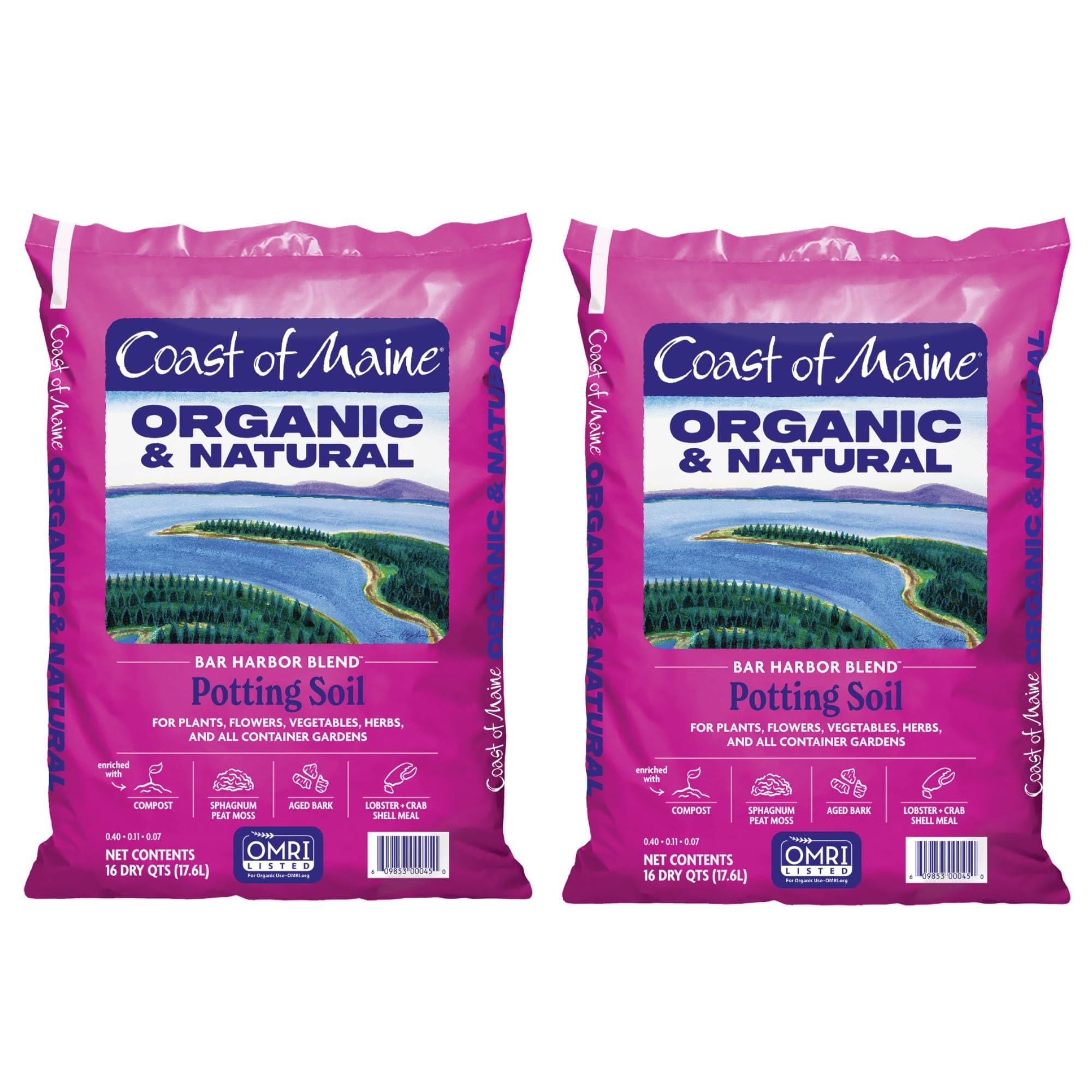
This 16-quart blend packs sphagnum peat moss, compost, perlite, and a unique mix of lobster and crab shell meal alongside kelp meal for sustained nutrition. The marine-derived amendments provide calcium and chitin, which naturally suppress soil-borne pathogens while delivering a steady release of nutrients that support root and tuber development through the entire growing season.
Customer reports confirm exceptional results with container potatoes, noting that two bags mounded up eight potato plants with vigorous top growth and impressive below-ground yields. The darker color indicates a high compost content with lower peat moss, which helps retain just enough moisture without becoming waterlogged around sensitive developing spuds.
The natural slow-release nitrogen from the kelp meal prevents the leafy overgrowth common with synthetic fertilizers, directing energy into tuber production instead. The bag arrives free of sticks, large wood chunks, and weed seeds, so you spend time planting rather than picking debris out of your containers.
Why it’s great
- Marine-based organic amendments provide calcium and trace minerals potatoes need
- Excellent drainage and aeration for container potato mounds
- No fillers, sticks, or weed seeds in the mix
Good to know
- Premium price compared to standard garden soils
- High compost content may require more frequent watering in hot, dry weather
2. Espoma Organic Potting Soil Mix

The 2-cubic-foot bag from Espoma is the largest option reviewed, making it the practical choice for gardeners managing multiple raised beds or substantial container plantings. The blend includes sphagnum peat moss, humus, perlite, earthworm castings, alfalfa meal, kelp meal, and feather meal, creating a nutrient profile specifically designed to sustain heavy-feeding crops like potatoes through their full growth cycle.
Espoma’s proprietary Myco-Tone introduces both endo and ecto mycorrhizae, beneficial fungi that form a symbiotic relationship with potato roots and expand the effective root zone for accessing water and nutrients. This biological component gives plants a measurable advantage in nutrient uptake, particularly in container environments where root space is limited.
Users consistently praise the chunky, loamy texture that resists crusting and compaction even after repeated watering. The organic certification guarantees no synthetic chemicals, and the bag contains minimal filler material — fewer sticks and woody bits than competing large-volume options. It serves as a versatile base that can be amended with additional perlite or sand for even better drainage around potatoes.
Why it’s great
- Large 2-cubic-foot volume covers multiple raised beds or large containers
- Myco-Tone mycorrhizae improve nutrient and water uptake for potatoes
- Loamy texture stays loose and avoids surface crusting
Good to know
- Heavier bag may be cumbersome to move and handle
- Some users report occasional small wood bits in the mix
3. Coast of Maine Tomato & Vegetable Planting Soil

This 20-quart organic blend combines composted manure and sphagnum peat moss into a lightweight mix that balances moisture retention with drainage. The compost component adds beneficial microbial life that breaks down organic matter into plant-available nutrients, while the peat moss helps maintain the slightly acidic pH potatoes prefer for scab-free growth.
The formulation includes cedar and aromatic wood fines, which act as a natural insect deterrent in the root zone — a practical bonus for organic growers dealing with wireworms or grubs that can damage developing tubers. Customers growing heirloom tomatoes and potatoes report excellent drainage and vigorous growth with this mix, though a few noted that indoor containers required monitoring for fungus gnats.
OMRI-listed for organic use, this soil works for both in-ground beds and container planting. The 20-quart size is generous enough for several potato grow bags or a small raised bed without committing to the higher cost of a premium marine-blend option. It is an excellent middle-ground choice for gardeners who want organic performance at a reasonable investment.
Why it’s great
- Composted manure provides rich organic nutrients for tuber development
- Aromatic wood fines naturally deter soil pests
- Lightweight texture works well in containers and in-ground beds
Good to know
- Some users experienced fungus gnats in indoor applications
- Premium-priced relative to standard vegetable soils
4. Espoma Organic Vegetable & Flower Garden Soil

This 1-cubic-foot bag is formulated specifically for amending native in-ground garden soil rather than filling containers. The rich blend of earthworm castings and Myco-Tone mycorrhizae improves the structure and fertility of existing dirt, making it ideal for gardeners who want to enhance their native soil rather than replace it entirely before planting potatoes.
The organic ingredients include no synthetic plant foods or chemicals, aligning with organic gardening practices. Users consistently report that plants grown with this amendment significantly outperform those planted in untreated soil or generic bagged alternatives. The earthworm castings provide a gentle, slow-release nutrient source that supports steady tuber expansion without the nitrogen surge that causes excessive leaf growth.
For the best results with potatoes, work this mix thoroughly into the top 8 to 10 inches of your garden bed before planting. The Myco-Tone mycorrhizae need direct contact with root systems to establish the symbiotic relationship that improves phosphorus uptake — a critical nutrient for tuber formation. This product is best suited for gardeners with existing in-ground beds who want to boost soil quality organically.
Why it’s great
- Earthworm castings deliver gentle, sustained nutrition for tuber growth
- Myco-Tone mycorrhizae improve phosphorus availability for potato roots
- Works well blended with native in-ground soil
Good to know
- Designed as an amendment, not a standalone container mix
- Some users reported soil gnats when used indoors
5. Midwest Hearth Premium Potting Soil Mix

This 8-quart bag provides a straightforward three-part mix of peat moss, perlite, and vermiculite at an entry-level price point. The peat moss maintains moisture and acidity, while perlite creates drainage channels and vermiculite holds water and nutrients for slow release to plant roots. The pH is balanced for a broad spectrum of plant types, including potatoes.
Customers praise the light, fluffy texture that resists compaction and allows delicate seedling roots to spread freely — a useful trait for starting potato slips in small containers before transplanting. The resealable bag design is a thoughtful touch for gardeners who use soil incrementally rather than all at once. Reviewers note the mix arrived free of visible weed seeds or pests.
For potato growers, this mix works best as a seed-starting medium or for small container plantings of fingerling or new potatoes. The 8-quart volume is limited for larger projects, and the nutrient content is leaner than compost-heavy blends, so you will need to supplement with an organic fertilizer partway through the growing season for optimal yields. It is a competent budget option for small-scale or beginner potato growers.
Why it’s great
- Light, fluffy texture promotes strong root development in early growth
- Balanced pH suitable for potatoes without additional adjustment
- Resealable bag keeps unused soil fresh between uses
Good to know
- Small 8-quart bag requires multiple purchases for larger plantings
- Leaner nutrient profile needs supplemental organic fertilizer for full-season potatoes
FAQ
Can I use regular garden soil for potatoes in containers?
What pH level should potato soil have?
How often should I water potatoes in loose soil?
Final Thoughts: The Verdict
For most users, the best dirt for potatoes winner is the Coast of Maine Bar Harbor Blend because its marine-based organic amendments, perlite for drainage, and compost-rich texture create the ideal loose, nutrient-dense environment for vigorous tuber expansion. If you want large-volume coverage for multiple raised beds, grab the Espoma Organic Potting Mix. And for a budget-friendly option that still delivers good performance for small container plantings, nothing beats the Midwest Hearth Premium Potting Mix.

Mo Maruf
I created WellFizz to bridge the gap between vague wellness advice and actionable solutions. My mission is simple: to decode the research and give you practical tools you can actually use.
Beyond the data, I am a passionate traveler. I believe that stepping away from the screen to explore new environments is essential for mental clarity and physical vitality.