Our readers keep the lights on and my smoothie glass nicely filled. As an Amazon Associate, I earn from qualifying purchases.
The search for a down jacket is a search for the perfect ratio of warmth to weight. You want insulation that locks in body heat without locking down your range of motion, a shell that cuts the wind without leaving you soaked in sweat. The wrong choice leaves you either shivering or stuffed — neither option works for daily commutes, weekend hikes, or sub-zero errands.
I’m Mohammad Maruf — the founder and writer behind WellFizz. I’ve spent hundreds of hours analyzing fill power ratings, shell fabrics, baffle construction, and weight-to-warmth ratios across dozens of models to separate the jackets that actually perform from those that just look warm on a hanger.
Whether you need a packable midlayer for alpine starts or a do-it-all coat for city winters, this guide helps you find the best down jacket for your specific use case, budget tier, and activity level.
How To Choose The Best Down Jacket
Selecting a down jacket is not about picking any puffy coat off the rack — it’s about matching insulation type, fill power, shell durability, and intended use to your climate and activity level. A lightweight midlayer for alpine climbing has almost nothing in common with a heated commuter coat for city winters.
Fill Power — The Core Metric of Warmth Efficiency
Fill power measures the cubic inches one ounce of down occupies. A 600-fill jacket traps less air per ounce than an 800-fill jacket, meaning the latter provides more warmth for the same weight. Higher fill power (800+) allows manufacturers to use less down to achieve the same warmth, resulting in lighter, more packable jackets. For casual urban use, 600-fill is perfectly adequate. For backcountry travel where every gram matters, 800-fill or higher is the gold standard.
Shell Fabric — Denier and DWR Determine Durability
Denier (D) measures the thickness of the nylon or polyester yarns. A 10D shell is ultralight and packs tiny but tears easily. A 30D to 40D shell stands up to brush and backpack straps but adds weight. Durable Water Repellent (DWR) finish is essential — without it, moisture soaks through the shell, collapses the down loft, and leaves you cold. Non-PFC DWR coatings are now standard on premium models.
Heat Source — Passive Down vs Active Heated Systems
Pure down jackets rely entirely on loft to trap body heat. They excel when you are moving or layering but lose effectiveness if wet. Heated down jackets add carbon-fiber heating elements powered by rechargeable batteries, providing active warmth independent of your body’s heat production. The tradeoff is added battery weight and the need to charge, but the benefit is instant warmth in extreme cold or when standing still.
Quick Comparison
On smaller screens, swipe sideways to see the full table.
| Model | Category | Best For | Key Spec | Amazon |
|---|---|---|---|---|
| Rab Neutrino Pro Hoody | Premium Down | Extreme cold / Mountaineering | 800-fill, 1.29 lbs | Amazon |
| Rab Electron Pro 800-Fill | Premium Down | Alpine climbing in deep cold | 800-fill, 1.16 lbs | Amazon |
| ORORO Women’s Heated 800-Fill Down | Heated Down | Urban commuters in bitter cold | 800-fill, USB-C heating | Amazon |
| The North Face Men’s Aconcagua 3 | Mid-Range Down | Versatile everyday cold weather | 600-fill, WindWall fabric | Amazon |
| The North Face Women’s Aconcagua 3 | Mid-Range Down | Everyday cold weather for women | 600-fill, recycled shell | Amazon |
| Columbia Delta Ridge II Down Jacket | Mid-Range Down | Stylish warmth with a trim fit | Down insulation, tailored | Amazon |
| Columbia Men’s Powder Lite II | Budget Down | Budget-friendly winter warmth | Omni-Heat reflective lining | Amazon |
| Columbia Women’s Powder Lite II Hooded | Budget Down | Affordable warmth with a hood | Omni-Heat reflective lining | Amazon |
| Columbia Men’s Voodoo Falls 590 Turbodown | Budget Down | Entry-level down without sticker shock | 590 Turbodown, Omni-Heat | Amazon |
In‑Depth Reviews
1. Rab Men’s Neutrino Pro Hoody
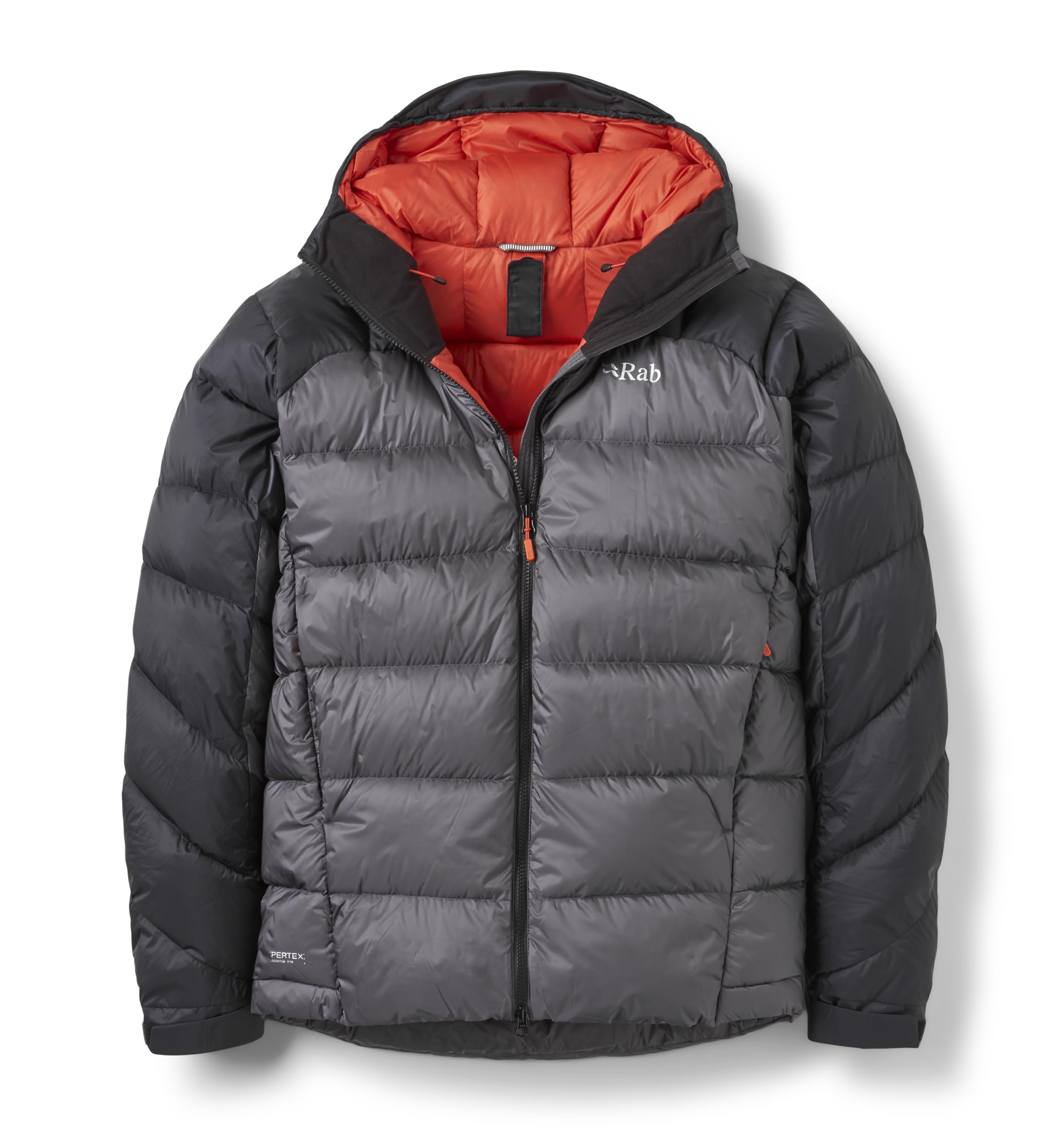
The Rab Neutrino Pro Hoody is built for the coldest conditions you will intentionally walk into. Its 800-fill European goose down and Pertex Quantum Pro shell deliver an extraordinary warmth-to-weight ratio that makes it a favorite among alpinists and winter campers who need to stay warm when stationary at sub-zero temperatures. The jacket is exceptionally light for its warmth class, packing down small enough to stash in a summit pack.
The hood is cavernous and helmet-compatible, which is great for climbing but can feel oversized for casual use. Reviewers note that the hood is not removable and rolls into a bulky collar when not in use. The fit is athletic and trim — if you plan to wear this over a thick baselayer and a midweight fleece, sizing up one size is a common recommendation. Several users mentioned that brown down feathers can show through lighter shell colors, giving the jacket a slightly splotchy appearance.
This is not a jacket for mild winter days. The Neutrino Pro is designed for deep cold where active warmth generation is minimal. Buyers consistently report being comfortable in just a t-shirt underneath at 20°F, and with a fleece added, the jacket handles 0°F without complaint. It is overkill for casual 30°F city use — you will overheat the moment you start walking uphill.
Why it’s great
- Exceptional warmth for its weight thanks to premium 800-fill down
- Pertex Quantum Pro shell offers reliable wind resistance and DWR protection
- Packs surprisingly small for its warmth rating
Good to know
- Hood is non-removable and adds bulk around the collar when stowed
- Fit is very trim — requires sizing up for layering over thick midlayers
- Dark down feathers may be visible through light-colored shell fabrics
2. Rab Men’s Electron Pro 800-Fill Down Hooded Jacket
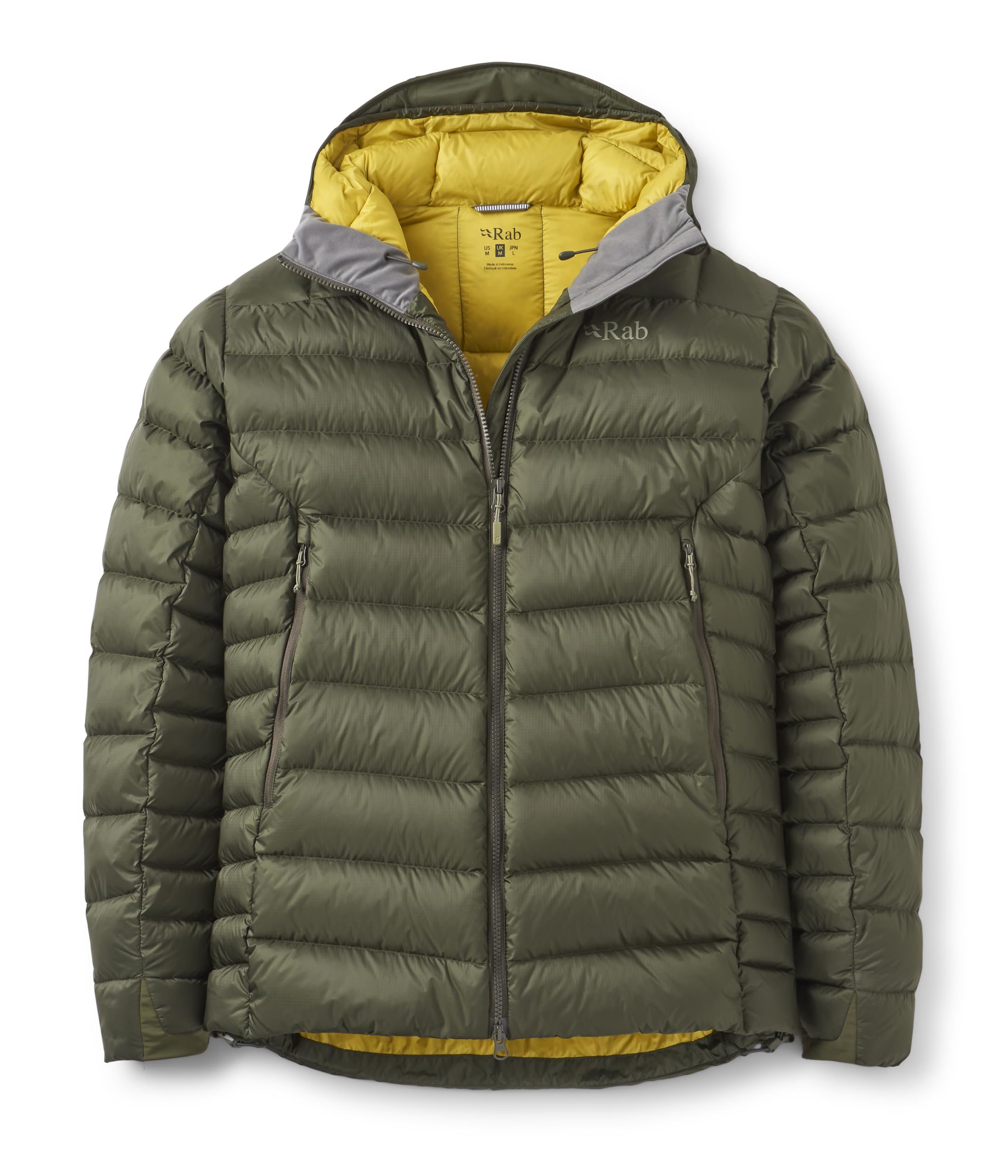
The Rab Electron Pro fills the gap between the ultralight Neutrino and a heavy expedition parka. It uses 800-fill down in a Pertex Quantum Pro shell with a fluorocarbon-free DWR finish, giving it the same premium wind resistance and water beading as its bigger sibling but in a slightly less aggressive package. The jacket is designed for climbing and mountaineering where you need dependable warmth without sacrificing mobility.
Reviewers consistently highlight the jacket’s extreme warmth relative to its weight, but several noted that it is almost too warm for high-output activities like hiking uphill. If you are generating metabolic heat from steady movement, this jacket will quickly become a sauna. The fit is trim and athletic — the Large is snug on a 6’1″, 190-pound frame, and the elastic cuffs are well-reviewed for sealing out drafts. Some buyers found the cuffs could be tighter for a more secure seal in strong winds.
A recurring point of consideration is sizing. The jacket runs small enough that several buyers who normally wear XL found the fit restrictive, and the brand’s largest size is XL. For taller individuals with long arms, the sleeve length is good, but the overall cut is tailored enough that layering a thick fleece underneath requires sizing up one full size from your normal street size. The helmet-compatible hood provides excellent coverage for alpine use.
Why it’s great
- Outstanding warmth-to-weight ratio for alpine climbing and mountaineering
- Pertex Quantum Pro shell provides excellent wind resistance
- Trim athletic fit layers well under a hardshell
Good to know
- Runs small — sizing up is recommended for most users
- Too warm for moderate activity; best for static or low-output cold exposure
- Maximum size is XL, limiting options for larger body types
3. ORORO Women’s Heated 800-Fill Down Jacket
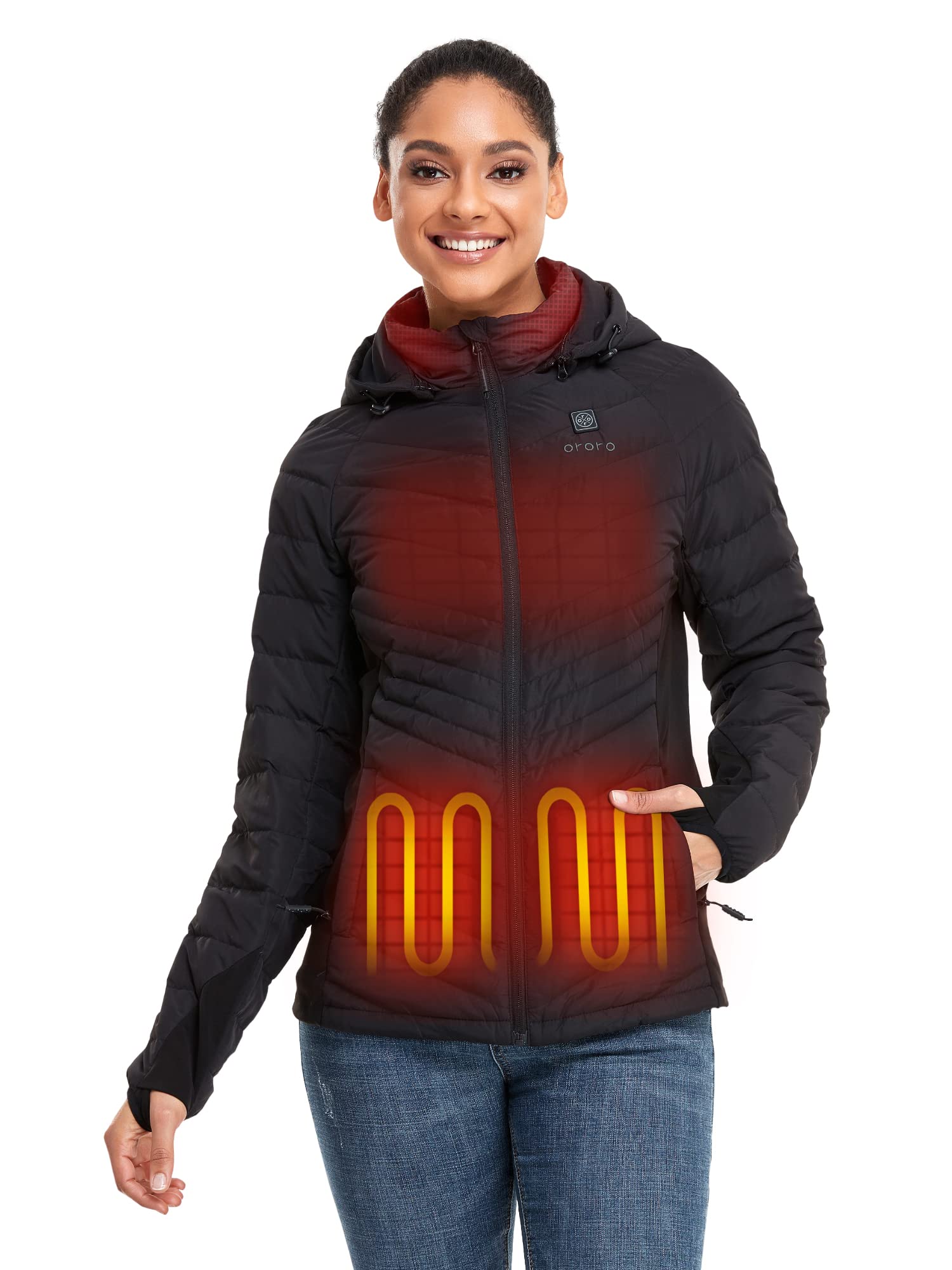
The ORORO Women’s Heated Down Jacket combines 800-fill down insulation with carbon-fiber heating elements for a hybrid warmth solution that passive down alone cannot match. The down layer provides excellent baseline insulation, while the three-zone heating system (high, medium, low) delivers targeted warmth to the chest, back, and pockets. The USB-C rechargeable battery is compact and fits into the included pocket without creating a noticeable bulge.
Reviewers consistently praise the jacket’s warmth even with the heating system turned off — the 800-fill down alone is sufficient for mild winter days. When the heat is activated, the jacket transforms into a serious cold-weather tool for standing at bus stops or walking the dog in single-digit temperatures. The battery life is strong on the low setting, lasting through a full commute, though the high setting drains noticeably faster. Side stretch panels improve range of motion, and thumbhole cuffs keep sleeves from riding up.
The convenience of active heating comes with tradeoffs. The battery adds noticeable weight in the pocket, and the jacket does run large — most reviewers recommend sizing down. The heating elements are concentrated on the upper body, so your arms rely entirely on the down insulation. This is not a jacket for high-output activities where you would sweat into the electronics, but for stationary or low-activity cold exposure, it is a category-defining product for urban commuters.
Why it’s great
- Combines premium 800-fill down with active carbon-fiber heating for extreme versatility
- USB-C rechargeable battery provides controllable warmth on demand
- Side stretch panels and thumbhole cuffs enhance comfort and fit
Good to know
- Runs large — sizing down is recommended for a proper fit
- Battery weight is noticeable in the pocket
- Heating coverage is limited to upper body; arms rely solely on down
4. The North Face Men’s Aconcagua 3 Hooded Jacket
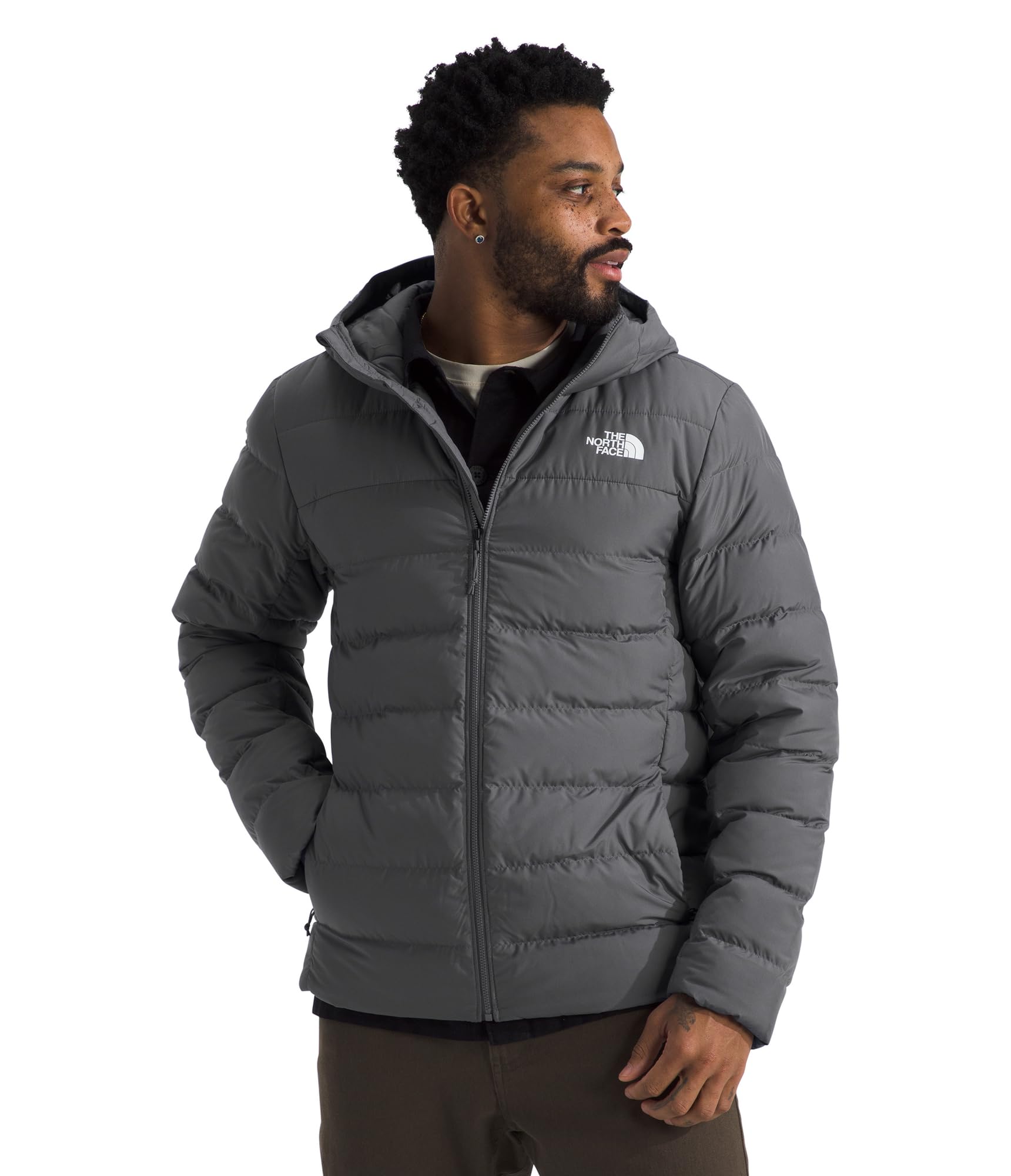
The North Face Men’s Aconcagua 3 is a third-generation update to a proven silhouette, now using 600-fill recycled down blended with recycled polyester insulation for improved performance in damp conditions. The WindWall fabric provides a significant upgrade in wind resistance compared to standard woven shells, making this jacket a strong choice for blustery city winters where wind chill is the primary enemy. The attached three-piece hood with cinch cord seals out drafts without requiring a separate hat.
Reviewers consistently report that the jacket is true to size and offers a comfortable, standard fit that layers well under a heavier shell or over a fleece. The jacket is warm enough for most winter conditions down to about 20°F with a midlayer, but it is not designed for extreme cold. The cuffs feature a comfortable elastic binding that seals out cold air without restricting circulation. Several users noted minor feather leakage through the shell after extended use, which is common for jackets in this fill-power range and does not affect performance.
Price-to-performance ratio is where this jacket shines. It delivers reliable warmth, good wind protection, and a polished look at a mid-range price point that undercuts many competitors with similar specs. The recycled materials and non-PFC DWR finish also appeal to buyers looking for more sustainable outerwear. If you need one jacket for commuting, errands, and moderate outdoor activity without breaking the bank, this is a top contender.
Why it’s great
- WindWall fabric provides exceptional wind resistance for urban wear
- 600-fill recycled down with synthetic blend performs well in damp cold
- Classic standard fit works for a wide range of body types and layering needs
Good to know
- Minor feather leakage reported after extended use
- Not warm enough for deep sub-zero temperatures without heavy layering
- Hood is functional but not helmet-compatible for climbing use
5. The North Face Women’s Aconcagua 3 Jacket
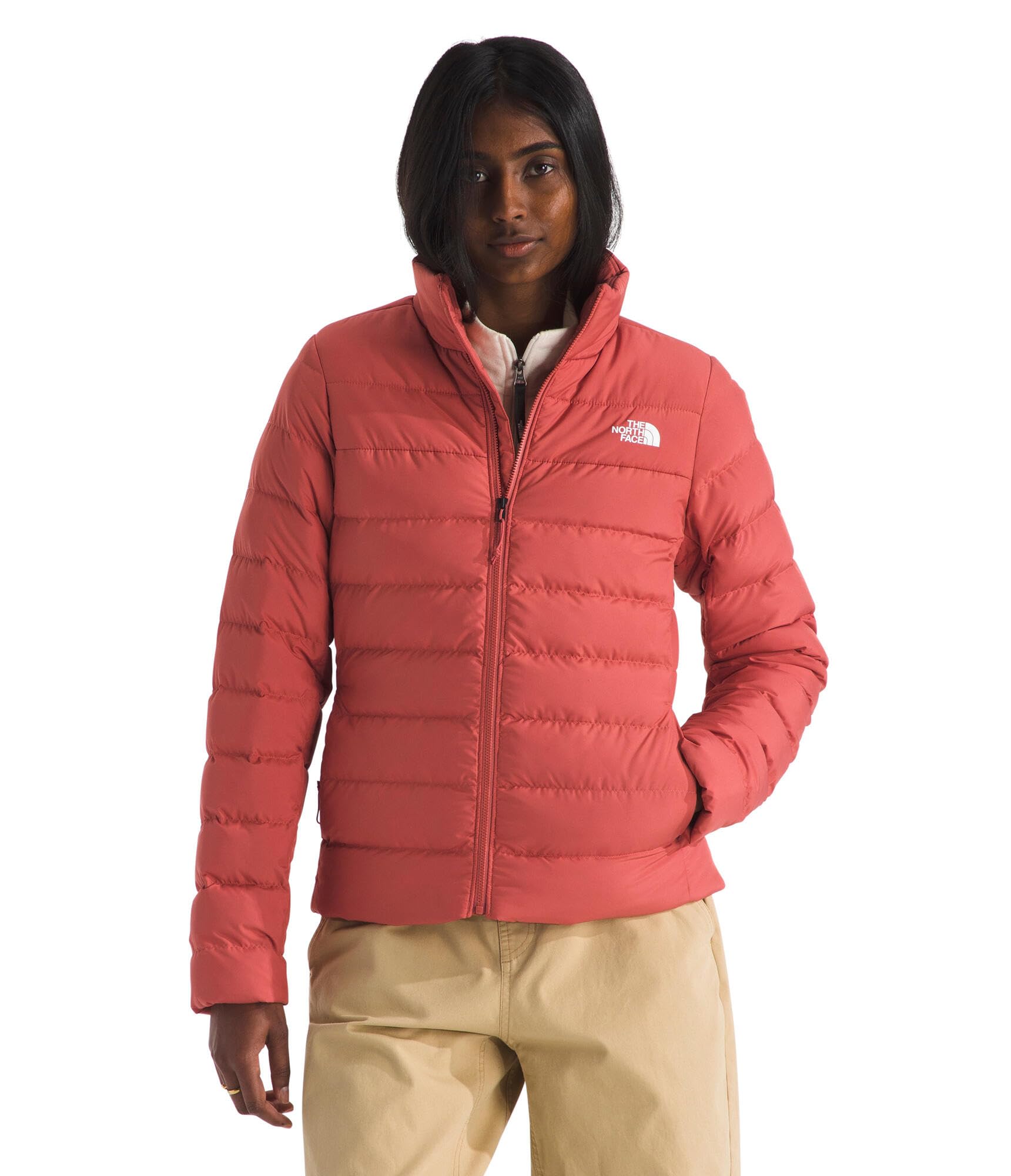
The North Face Women’s Aconcagua 3 mirrors the men’s version’s formula but is tailored specifically for a woman’s fit, with a flattering silhouette that accommodates layering without looking puffy. It uses the same 50/50 blend of 600-fill recycled down and recycled polyester insulation, ensuring warmth holds up even when conditions turn damp. The recycled polyester shell with non-PFC DWR finish offers respectable water repellency for light snow and drizzle.
Customer reviews consistently describe the jacket as warm, lightweight, and true to size, though a common recommendation is to size up if you plan to wear this over thicker sweaters or midlayers. The jacket performs beautifully in the 20°F to 40°F range but is not a substitute for a heavy parka in sub-zero conditions. Several reviewers noted that the WindWall fabric effectively blocks wind, though the jacket did wet out in heavier snow or prolonged rain exposure, so it is not ideal for skiing or wet-weather hiking.
The Aconcagua 3 stands out for its sustainable construction — 100% recycled body fabric and fully recycled down insulation. For buyers who prioritize eco-conscious materials without sacrificing day-to-day performance, this jacket delivers. The zoned sheet insulation in the arms improves freedom of movement compared to full-baffle designs, making it a comfortable choice for driving and daily errands.
Why it’s great
- 100% recycled body fabric and 600-fill recycled down for sustainable warmth
- WindWall fabric provides effective wind protection for daily commutes
- Tailored women’s fit with zoned insulation for better arm mobility
Good to know
- Sizing up is recommended if layering over thick midlayers
- DWR finish is not sufficient for heavy snow or prolonged wet exposure
- Best performance is limited to moderate cold; not a sub-zero parka
6. Columbia Delta Ridge II Down Jacket

The Columbia Delta Ridge II Down Jacket bridges the gap between a technical puffy and a fashion-forward everyday coat. Its tailored fit hugs the body without being restrictive, creating a clean silhouette that looks more like a stylish quilted jacket than a bulbous down puff. The down insulation is warm and lightweight, making it a go-to choice for fall through early winter where temperatures hover in the 30s to 40s Fahrenheit.
Customer feedback is overwhelmingly positive on warmth and build quality, with multiple reviewers noting that the jacket warms up quickly and maintains heat well. The fit is true to size, though several users reported that the armholes are tight, limiting overhead range of motion. This is a deliberate design choice for a trim profile, but if you need to raise your arms frequently or wear this over thick fleece, the restriction becomes noticeable. The zipper and outer fabric feel durable, with no snagging or loose threads reported even after extended use.
Where this jacket excels is in aesthetic appeal. Reviewers describe it as fashionable and cool-looking, which is a rare compliment for a down jacket that is also genuinely warm. It does not have a hood, so plan to pair it with a beanie or scarf for full coverage. The jacket is machine washable and holds up well to regular cleaning, a practical advantage for daily wear.
Why it’s great
- Tailored fit offers a stylish, non-bulky silhouette that looks great
- Warms up quickly and maintains heat efficiently
- Durable construction with smooth zippers and no loose threads
Good to know
- No hood — requires separate headwear for full warmth
- Armholes are tight, limiting overhead arm movement
- Best suited for moderate cold; not ideal for sub-zero temperatures
7. Columbia Men’s Powder Lite II Jacket
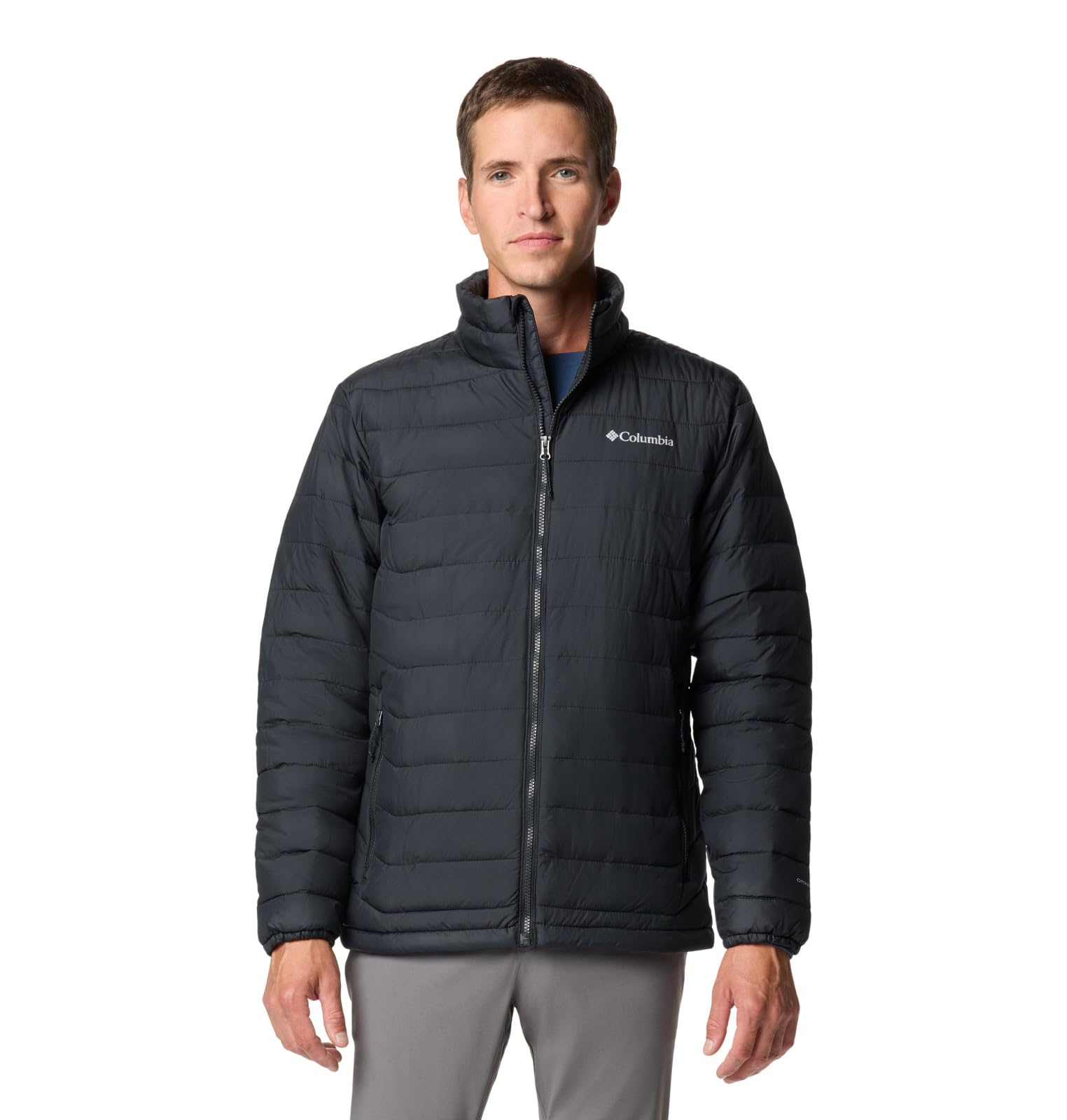
The Columbia Men’s Powder Lite II Jacket has built a loyal following over the years through consistent performance at a reasonable price. It uses Columbia’s Omni-Heat reflective lining, a pattern of tiny metallic dots designed to reflect body heat back toward the core. The result is a jacket that feels noticeably warmer than its thin profile suggests. It is lightweight, compresses easily into a bag or suitcase, and machine washes without losing loft.
Reviewers highlight the jacket’s versatility across climates. Tall users (6’4″) report that the XL fits well with comfortable sleeve length, and the jacket holds up in wind-chilled conditions around 8°F when paired with a midlayer. The fit is true to size, and the long sleeves are a welcome feature for taller builds. The jacket has no hood, which is a clean look for casual wear but does require a separate hat for windy days. The neck opening is large, so a scarf or balaclava is recommended for full coverage.
The main limitation is aesthetic — multiple reviewers describe the look as “decent but not great.” The jacket prioritizes function over fashion, with a slightly boxy cut and basic color options. The Omni-Heat lining is effective but works best when the jacket is worn against the body rather than over multiple thick layers, as the reflective dots need proximity to your core to work efficiently.
Why it’s great
- Omni-Heat reflective lining provides surprising warmth for the jacket’s weight
- Lightweight and highly packable for travel
- Long sleeve length accommodates taller individuals well
Good to know
- No hood — wind protection requires a hat or scarf
- Aesthetic is functional but not stylish for fashion-conscious buyers
- Reflective lining works best when worn close to the body
8. Columbia Women’s Powder Lite II Hooded Jacket
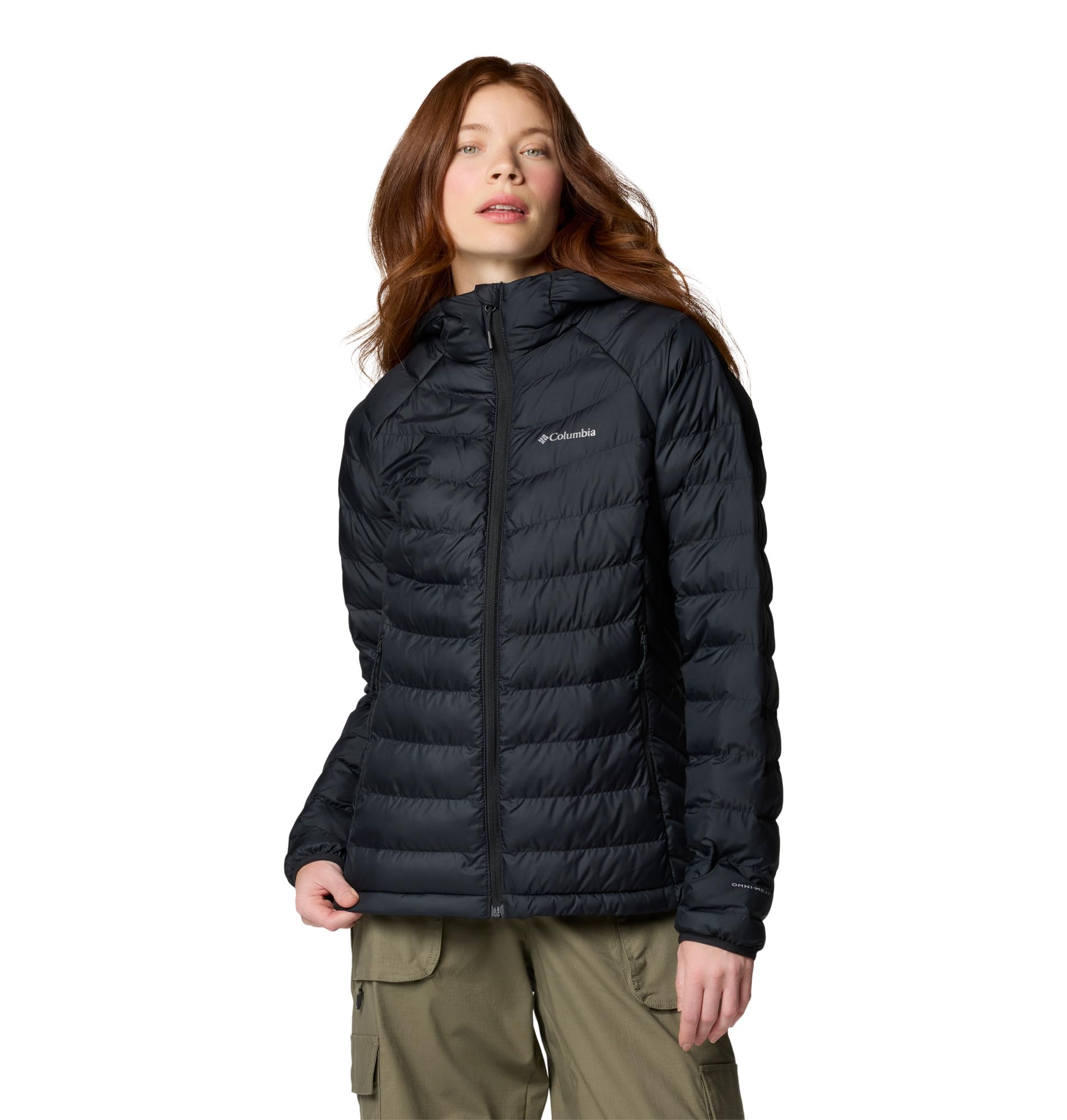
The Columbia Women’s Powder Lite II Hooded Jacket brings the same Omni-Heat reflective technology to a women’s-specific cut with the addition of a hood for better wind coverage. The hood adds significant warmth on blustery days, eliminating the need for a separate hat. The jacket is lightweight and comfortable, performing well in the 30°F and above range that covers most average winter days in temperate climates.
Customer reviews frequently mention that the jacket runs small, recommending sizing up for a comfortable fit especially if you plan to layer a fleece underneath. The jacket is flattering and true to Columbia’s reputation for quality construction. Multiple repeat buyers noted that they own several Columbia jackets and trust the brand’s consistency. The Hooded version is ideal for Midwest winters where temperatures hover in the 20s to 30s Fahrenheit — warm enough for daily errands and walks without overheating.
The Omni-Heat reflective lining enhances warmth, but the jacket is not designed for extreme cold. Below 20°F, you will need to add a heavy midlayer or use this as a midlayer under a shell. The hood provides good coverage but does not cinch down tightly, so strong winds can still sneak in around the face. For the price range, however, this jacket delivers reliable performance that punches above its cost class.
Why it’s great
- Omni-Heat reflective lining adds warmth without bulk
- Attached hood provides convenient wind and cold protection
- Lightweight and comfortable for everyday wear in moderate winter
Good to know
- Runs small — sizing up is recommended for layering
- Hood cinch is not adjustable enough for strong winds
- Not warm enough below 20°F without additional layers
9. Columbia Men’s Voodoo Falls 590 Turbodown II Jacket
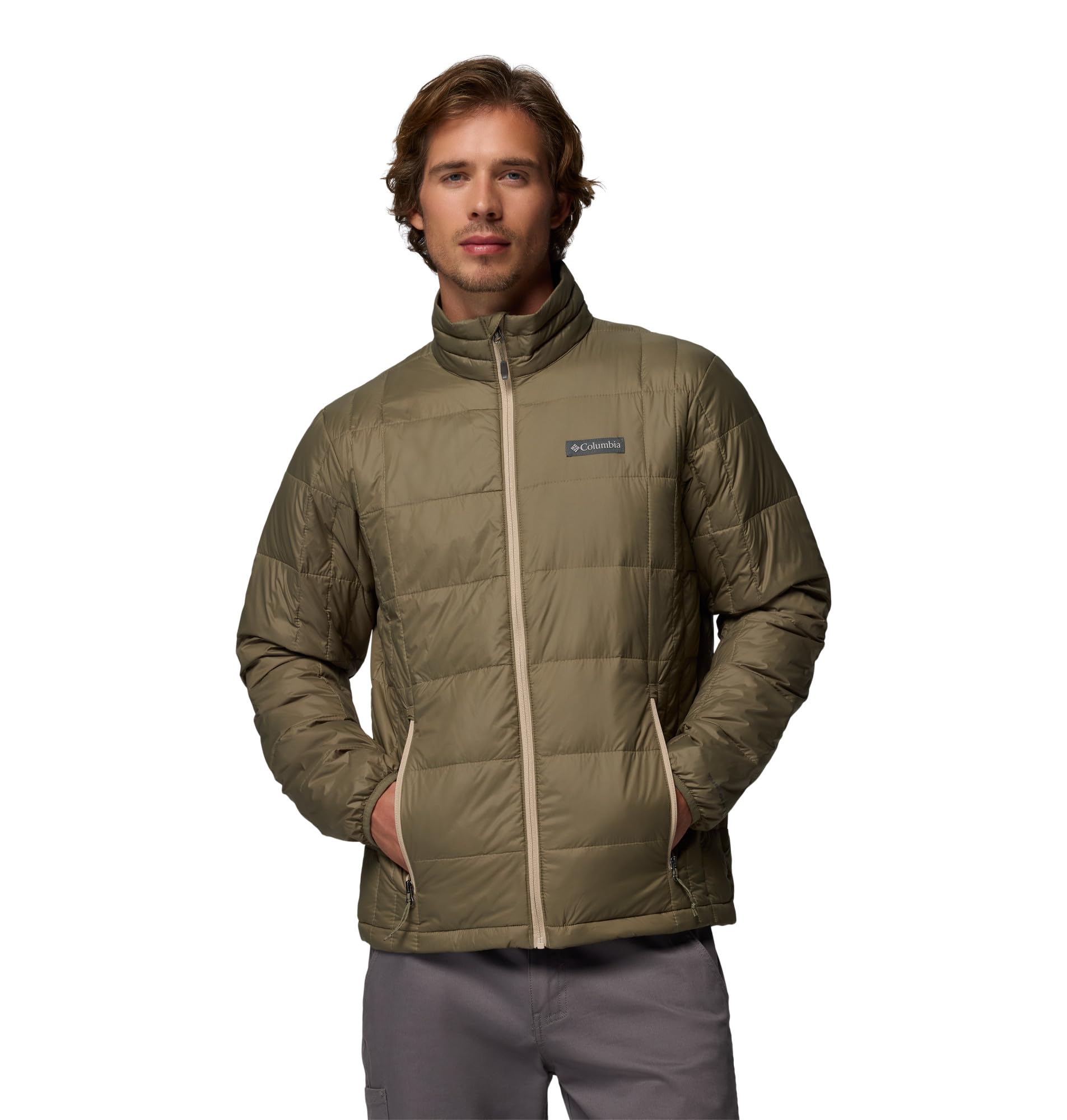
The Columbia Men’s Voodoo Falls 590 Turbodown II Jacket is the most affordable entry point into genuine down insulation on this list. It uses Columbia’s proprietary Turbodown technology — a blend of down and synthetic fibers — paired with Omni-Heat reflective dots to maximize warmth retention in a lightweight, non-bulky package. The jacket is surprisingly warm for its thin profile, making it an excellent first down jacket for budget-conscious buyers.
Customer reviews highlight the jacket’s incredible value proposition: it performs like jackets costing significantly more. The fit is true to size, and multiple reviewers note that the short length works well for shorter individuals. The jacket layers effectively under a heavier shell for extreme cold, and on its own, it is comfortable down to around freezing with a light midlayer. The jacket is machine washable and holds up well to regular cleaning without losing loft.
The primary drawback is that the light-colored shell is prone to visible staining — sweat, dirt, and collar marks show up readily and require frequent spot cleaning. The jacket also runs slightly warm for active use; the combination of Turbodown and Omni-Heat can trap more heat than expected during walking or errands in 40°F weather. For pure value, however, this jacket is hard to beat for someone who wants down performance without the high price tag.
Why it’s great
- Exceptionally affordable entry into down insulation with genuine warmth
- Lightweight, packable, and non-bulky design is easy to wear daily
- Layers well under a heavier shell for deeper cold
Good to know
- Light-colored shell shows stains and collar marks easily
- Combination insulation can feel too warm for active use in mild conditions
- Sizing may run slightly trim for some body types
FAQ
What does 600-fill down mean exactly?
Can a down jacket get wet and still keep me warm?
How do I wash and dry a down jacket without ruining it?
Is a heated down jacket worth the extra weight?
Why do some down jackets leak feathers?
Final Thoughts: The Verdict
For most users, the best down jacket winner is the The North Face Men’s Aconcagua 3 Hooded Jacket because it delivers reliable 600-fill warmth, WindWall wind resistance, and a classic standard fit at a mid-range price that fits a wide range of budgets and body types. If you want extreme warmth for alpine or deep-cold conditions, grab the Rab Neutrino Pro Hoody. And for urban commuters who need active heat in bitter cold, nothing beats the ORORO Women’s Heated 800-Fill Down Jacket.

Mo Maruf
I created WellFizz to bridge the gap between vague wellness advice and actionable solutions. My mission is simple: to decode the research and give you practical tools you can actually use.
Beyond the data, I am a passionate traveler. I believe that stepping away from the screen to explore new environments is essential for mental clarity and physical vitality.