Our readers keep the lights on and my smoothie glass nicely filled. As an Amazon Associate, I earn from qualifying purchases.
A door pull up bar promises total upper-body transformation from the privacy of your home, but the wrong one can leave you with a bruised doorframe, a nagging sense of instability, or worse—a sudden crash mid-rep. The tension between a secure anchor and a scratch-free trim is the core design challenge every buyer must navigate.
I’m Mohammad Maruf — the founder and writer behind WellFizz. I’ve spent hundreds of hours analyzing the mechanical lock systems, steel-gauge thicknesses, and pad densities that separate a rock-solid bar from one that wobbles, slips, or damages your home.
This guide cuts through the noise to rank the safest, most durable models on the market, focusing on real-world weight limits and door-frame compatibility so you can confidently choose the best door pull up bar for your home gym setup.
How To Choose The Best Door Pull Up Bar
Selecting a doorway pull-up bar isn’t just about picking the one with the highest numbers. You need to match the bar’s physical design to your door frame’s exact dimensions and material, while also accounting for your body weight and the type of movements you plan to perform.
Measure Your Door Frame Twice
The most critical spec is the width range the bar can span. Most bars fit standard interior doors between 27 and 37 inches wide, but your trim depth (the distance from the doorstop to the edge of the molding) matters just as much. Bars with top brackets or J-hooks require a specific trim thickness to sit flush. If your trim is too shallow or too ornate, a tension-mount bar without top hardware is the safer bet.
Locking Mechanism: Friction vs. Gear vs. Hook
Basic bars rely entirely on a twisting motion to jam the ends against the frame. This works but can loosen over time. More advanced models use a dual-gear or ratcheting lock that prevents the bar from rotating loose under load. Hook-style bars bypass tension entirely by resting on the top of the door frame, which is inherently more stable but requires a door thick enough to support the hooks and a ceiling high enough to clear the hardware during a rep.
Weight Capacity and Real-World Dynamics
Advertised max capacities often use static, evenly distributed loads. Dynamic movements—explosive pull-ups, kipping, or leg raises—create forces two to three times your body weight. A bar rated for 400 pounds may feel perfectly safe for a 180-pound user doing slow dead hangs, but the same bar could shift if used for fast, jerky reps. Look for a 2.5x or higher safety factor in the product documentation to ensure a real-world margin.
Quick Comparison
On smaller screens, swipe sideways to see the full table.
| Model | Category | Best For | Key Spec | Amazon |
|---|---|---|---|---|
| Sportneer Pull Up Bar | Premium | Dual-gear stability for heavy dynamic training | 2mm outer steel pipe thickness | Amazon |
| KAKICLAY Foldable Pull Up Bar | Premium | Zero assembly, foldable storage, wide door compatibility | Foldable hook design, max 36.22” width | Amazon |
| ProsourceFit Pull Up Bar | Mid-Range | Foldable, no-assembly portability for travel or office | 200 lb weight limit, foldable to 10.25” height | Amazon |
| BouPower Pull-Up Bar | Mid-Range | Users wanting an integrated level meter for perfect setup | 660 lb max static weight, 27.6”-36.2” range | Amazon |
| RHINOSPORT Door Pull Up Bar | Mid-Range | Extra foam pads for maximum door frame protection | Triple-gear lock mechanism, 440 lb static capacity | Amazon |
| Yes4All Heavy Duty Pull Up Bar | Value | Multi-grip positions with top bracket reinforcement | Fits 30”-38” width, 6.25” max frame thickness | Amazon |
| leikefitness Pull-Up Bar | Budget | Simple, lightweight bar for basic dead hangs on a tight budget | 330 lb static capacity, 28.3”-37.8” width range | Amazon |
In‑Depth Reviews
1. Sportneer Pull Up Bar
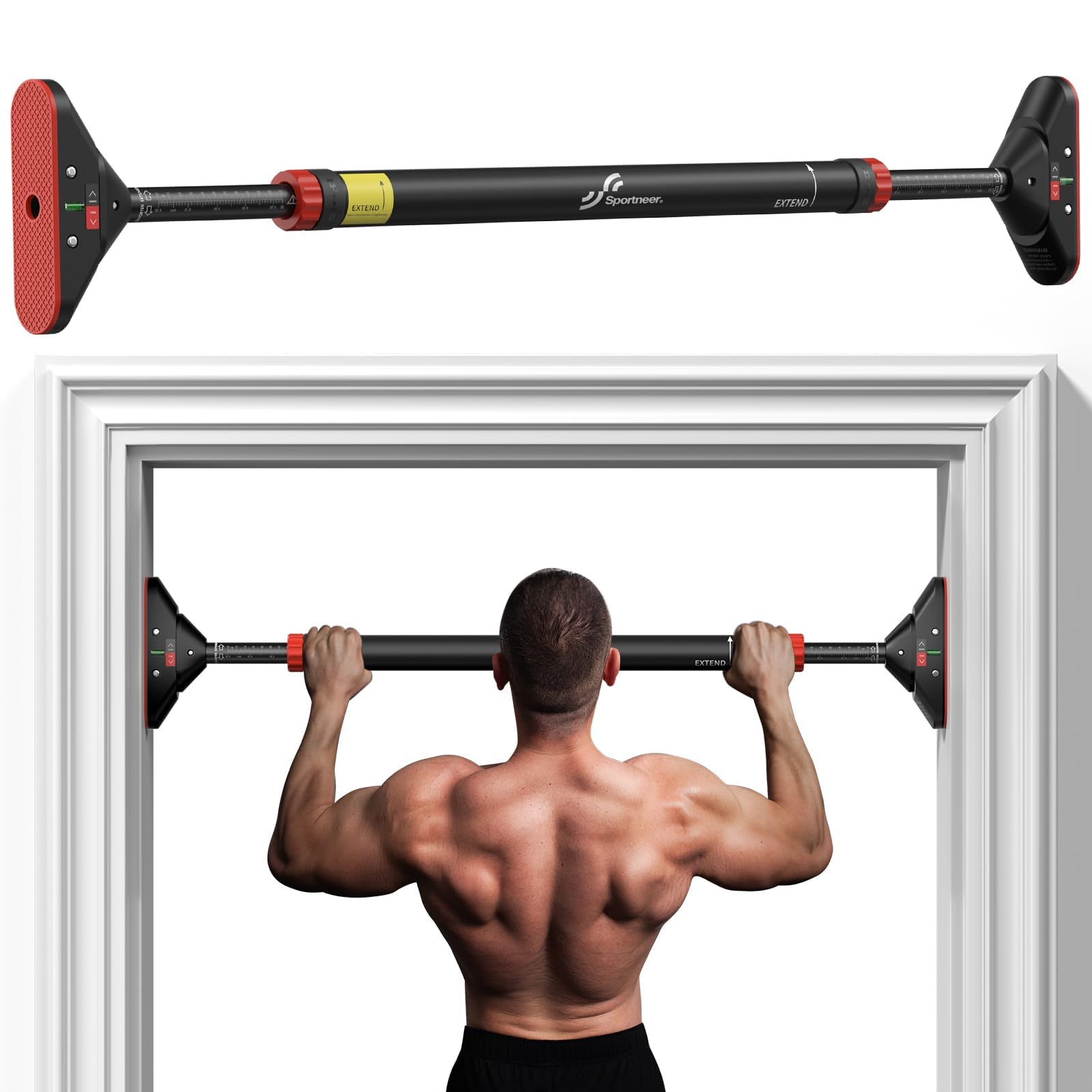
The Sportneer stands apart for its 360-degree rotatable dual-gear lock on each end, a mechanism that actively prevents the bar from loosening during a workout. Unlike simpler tension-based bars that can twist free over time, this system clicks into a positive lock that feels solid from the first rep. The 2mm outer steel pipe with a 1.5mm inner wall gives it a reassuring heft, and the manufacturer’s 2.5x safety factor—tested to 744 pounds instantaneous load—means the 297-pound safe working limit has a real engineering margin behind it.
Two large 6.5 x 1.8-inch PVC mats provide the friction surface, and built-in spirit levels on both ends let you confirm the bar is perfectly horizontal before you start pulling. The anti-slip handlebar runs the full length of the bar, which means you can slide your hands into any grip width without hitting a seam or a foam gap. The bar adjusts from 29.5 to 37 inches, which covers most standard interior doors, though it is explicitly designed for solid wood frames only—the strong adhesion of the PVC pads can peel paint on plaster walls.
Installation takes under two minutes with no tools. You simply extend the bar to the correct length, verify the arrow markers on the locking mechanism point the right way, and twist until the level bubbles center. Several long-term reviewers note that the bar stays rock-solid even during explosive pull-ups and kipping movements, and that it leaves no marks on their door trim when removed. The bar can also be lowered in the doorframe for dips and push-ups, adding versatility beyond standard vertical pulling.
Why it’s great
- Dual-gear lock system provides superior anti-rotation compared to basic friction mounts.
- Integrated spirit levels on both ends ensure perfect horizontal alignment every time.
- Full-length continuous grip handlebar allows seamless wide-to-narrow hand transitions.
Good to know
- Not suitable for painted or plastered walls; designed exclusively for solid wood door frames.
- Locking mechanism requires you to verify the correct rotation direction during setup to avoid a false lock.
- At just over 4.4 pounds, it’s lighter than some competing bars, which some users may interpret as less durable.
2. KAKICLAY New Upgrade Pull Up Bar
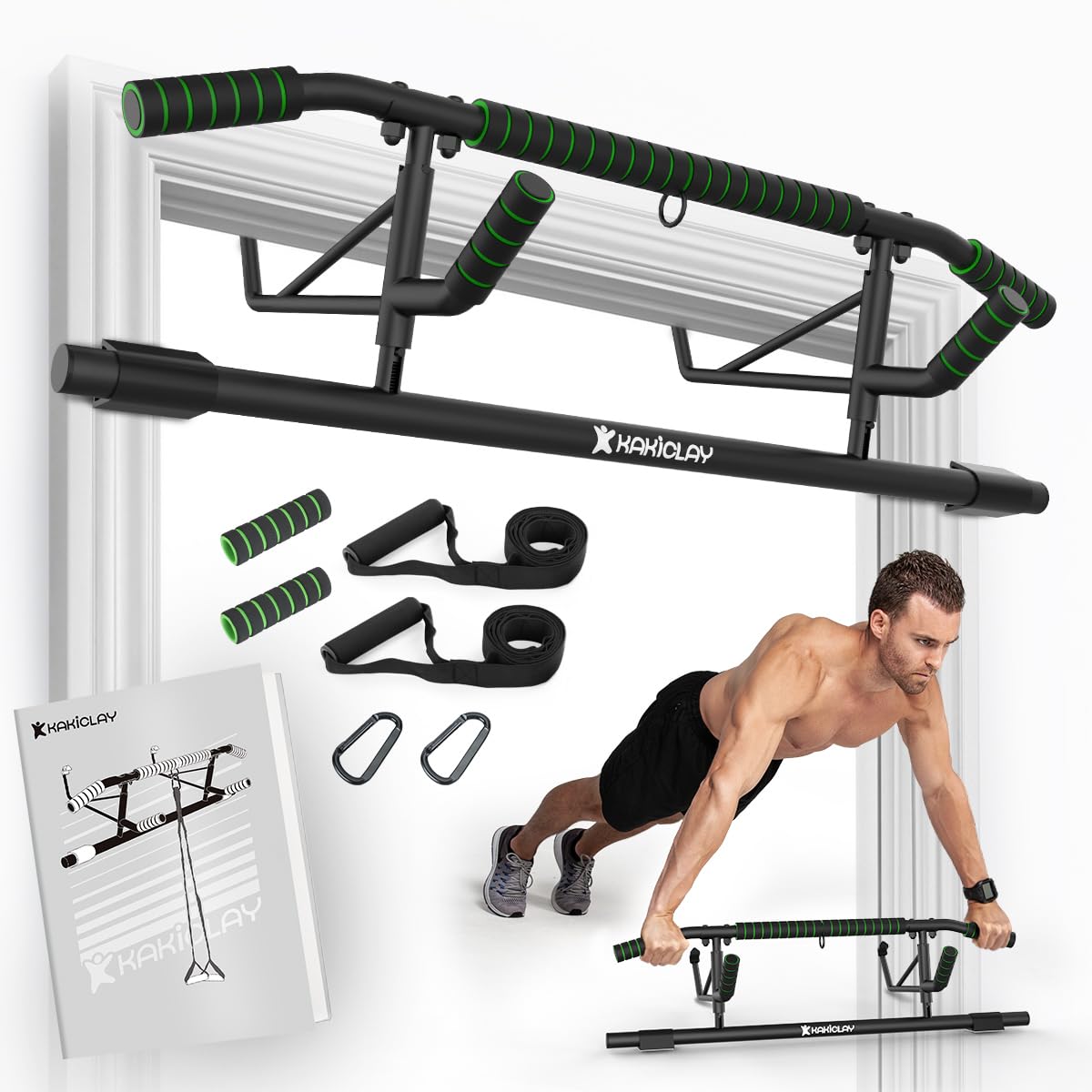
The KAKICLAY takes a completely different approach from tension-mount bars: it hooks over the top of the door frame, relying on gravity and body weight rather than friction to stay put. This hook-over design is inherently more stable because any downward force only drives the hooks deeper into the top of the door. The bar’s U.S. patent (US 11,484,746) covers the specific foldable arm geometry that lets the unit collapse flat for storage in a closet or under a bed—a genuine space-saving feature for apartment dwellers.
KAKICLAY redesigned the hooks for this “New Upgrade” version to be larger, which increases the contact surface area and reduces the risk of denting the top of the door frame. Cushioned rubber pads line the contact points, and the bar accommodates door widths from 27.56 to 36.22 inches with a maximum trim depth of 8.27 inches. The 440-pound weight capacity is among the highest in this guide, and the soft foam grip rod is thick enough to prevent hand fatigue during longer sets of dead hangs or pull-ups.
Zero assembly is required—you take it out of the box, unfold the arms, and hook it over the door. Suspension straps are included for adding resistance bands or doing triceps pushdowns, which expands the bar’s utility beyond just pulling. Several verified buyers mention that their door closes fully with the bar installed, a detail many tension-mount bars can’t match because their top brackets protrude into the door swing. The bar requires an 8-foot ceiling for full range-of-motion pull-ups, so measure your ceiling height before committing.
Why it’s great
- Hook-over design is inherently more stable than friction mounts; weight drives the bar tighter into the frame.
- Foldable arms collapse flat for ultra-compact storage behind furniture or in a closet.
- Suspension straps included for band-assisted workouts and triceps isolation exercises.
Good to know
- Requires a door trim depth of up to 8.27 inches to hook properly; shallow modern trims may not work.
- 8-foot ceiling height minimum is necessary for full pull-up range; lower ceilings will limit movement.
- Some users report the bar won’t fit non-standard door frames wider than 36.22 inches, requiring a return.
3. ProsourceFit Pull Up Bar

The ProsourceFit is the only bar in this lineup that ships fully assembled and folds flat without any tools. It uses a two-hook-over design similar to the KAKICLAY, but the construction is a single welded steel piece with folding arms that tuck inward for storage. At 7.5 pounds, it’s the heaviest bar here, which contributes to the solid feel users describe—no rattling or creaking during reps. The bar is rated for 200 pounds, which is lower than many competitors, but the one-piece unibody frame means there are no joints or fasteners to work loose over time.
Installation is as simple as flipping the hooks outward and placing the bar on top of your door frame. The foam grips are stitched into a continuous sleeve, and the grip diameter is slightly thicker than average, which helps users with larger hands maintain a secure hold. The bar can also be used for push-ups by flipping it over and placing the flat side on the floor, adding an extra exercise option without any add-ons. Several long-term reviews report three-plus years of daily use with no structural degradation.
A common complaint centers on the rubber pads that contact the door frame—some users note that the pads leave scuff marks or light indentations on painted trim over time. Placing a thin cloth between the pad and the frame solves this, but it’s an extra step to remember. The bar works best on doors with trim depths between 1 and 2 inches; deeper or more ornate molding may prevent the hooks from seating fully. The foldable design makes it the strongest candidate if you travel or need to stash the bar in an office drawer between workouts.
Why it’s great
- One-piece welded steel frame with zero assembly required out of the box.
- Folds completely flat to 10.25 inches high for storage under furniture or in a carry-on.
- Can be used for both pull-ups and push-ups by flipping the bar over.
Good to know
- 200-pound weight limit is significantly lower than other premium bars; not for heavy kipping.
- Rubber pads can mark painted door frames without a protective cloth layer.
- Thick or ornate trim may prevent the hooks from seating correctly, reducing stability.
4. BouPower Pull-Up Bar

The BouPower bar differentiates itself with an integrated bubble level meter embedded into the central housing—a simple but genuinely useful feature that eliminates guesswork during installation. A bar that is even slightly off-level distributes force unevenly across the two end pads, increasing the chance of one side slipping or the bar rotating during a rep. The level ensures the bar is dead flat before you load your body weight. The bar fits door widths between 27.6 and 36.2 inches and uses an anti-reverse rotation locking structure that the manufacturer claims is twice as safe as a standard buckle-type mechanism.
The steel tube construction feels dense, and the maximum static weight rating of 660 pounds is the most generous of any bar on this list, though the real safe working load for dynamic movements will be lower. Large PVC pads with a textured surface provide the friction grip, and the bar can be lowered in the frame for dips, crunches, and stretching. Users consistently mention that the bar holds fast at weights up to 215 pounds, but multiple reviews also note that the strong clamping force can crack old or fragile door trim if the bar is overtightened.
Setup is tool-free: you twist the bar to extend it into the frame, check the level, and secure the screw caps on each end to lock the length. The red finish is distinctive and easy to spot. Some buyers report that the instructions are sparse and the arrow-direction markers on the locking mechanism are easy to misinterpret on the first try, which can lead to a false sense of security if installed backward. Once correctly mounted, the bar stays put for months without needing readjustment.
Why it’s great
- Integrated bubble level eliminates guesswork and ensures even force distribution across both pads.
- Anti-reverse rotation locking mechanism is mechanically safer than basic buckle or friction designs.
- 660-pound static weight rating provides a generous safety margin for most users.
Good to know
- Strong clamping force can crack or dent old, dry, or thin wooden door trim if overtightened.
- Installation instructions are unclear and the direction arrows can be confusing for first-time users.
- Large PVC pads may leave paint residue or light marks on some door frames after prolonged use.
5. RHINOSPORT Door Pull Up Bar
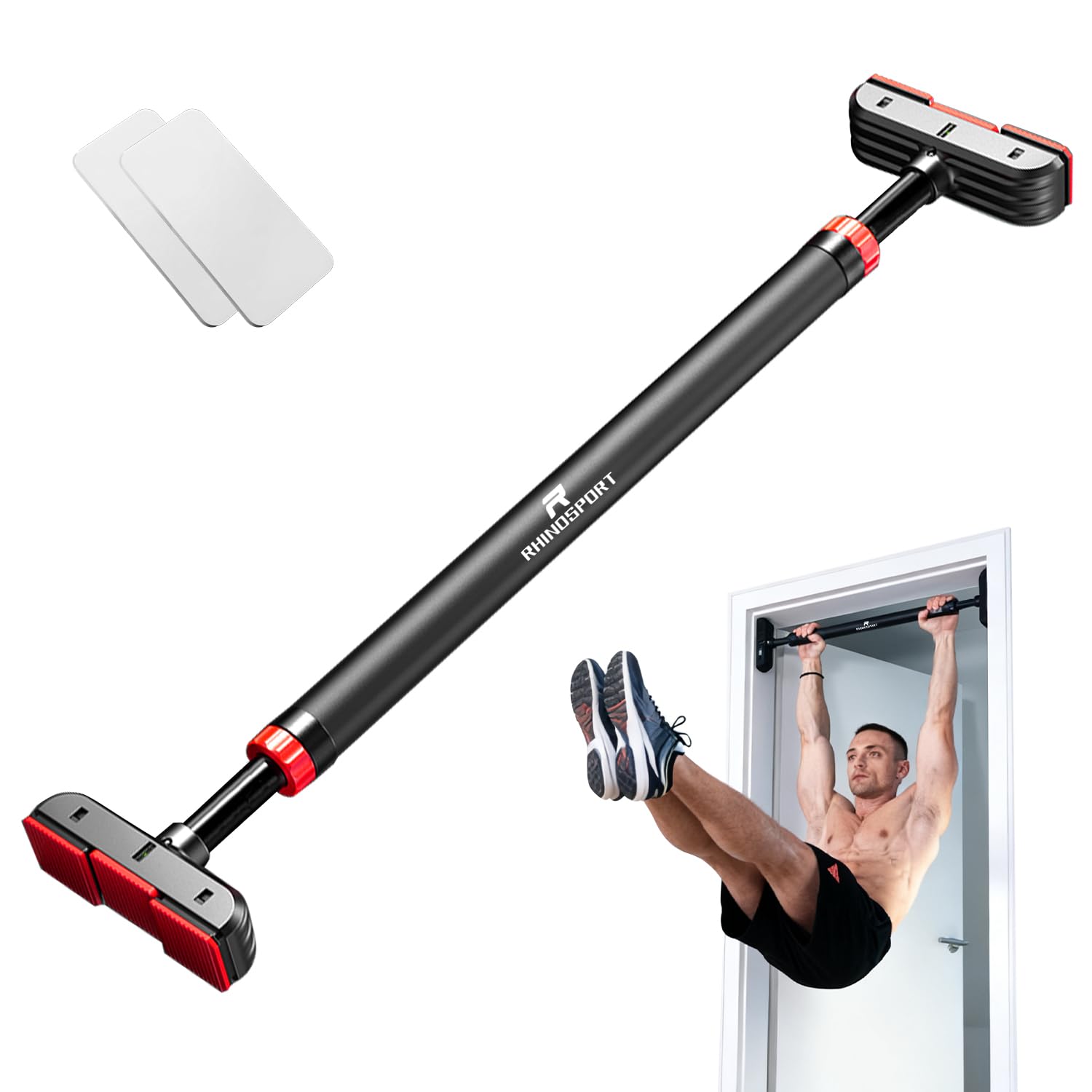
The RHINOSPORT addresses the single most common complaint about tension-mount bars—door frame damage—by including two extra high-density foam pads that create a dual-layer cushion between the bar and your trim. The bar itself uses a triple-gear lock mechanism on both ends, which is one level beyond the dual-gear systems found on many competitors. This mechanism uses spring-loaded automatic extrusion: when you apply downward force, the upper and lower springs squeeze the contact pads tighter against the wall, creating a self-reinforcing grip that actually gets more secure as you pull.
The bar fits door widths from 27.1 to 36.2 inches and is constructed from thickened stainless steel tube. The advertised 440-pound static capacity is backed by user reports that the bar shows zero flex during dead hangs at over 200 pounds. The EVA foam handles are full-coverage, meaning there are no plastic end caps or exposed metal sections to dig into your hands during close-grip work. A built-in bubble level on the central housing mirrors the BouPower’s convenience, ensuring you can level the bar without a separate tool.
Setup is a five-minute process requiring no tools. The bar’s compact footprint means it can be left installed with the door closed, and the soft PVC contact points combined with the included foam pads virtually eliminate the risk of scuffs or dents on standard painted trim. Some users note that the bar’s spring mechanism can be stiff to compress when first adjusting the width, but it loosens up after a few installations. The red finish is the only color option, which won’t match every home aesthetic, but the build quality justifies the mid-range price point.
Why it’s great
- Triple-gear lock with spring-loaded extrusion provides self-reinforcing grip under load.
- Two extra high-density foam pads create a dual-layer protection system against door frame damage.
- Full-coverage EVA foam handles eliminate exposed metal for a comfortable close-grip experience.
Good to know
- Spring mechanism is stiff initially and requires some force to compress during width adjustment.
- Only available in red, which may clash with certain room color schemes.
- May shift slightly on door frames with very shallow trim depths if the foam pads aren’t positioned perfectly.
6. Yes4All Heavy Duty Pull Up Bar

The Yes4All Elite bar takes a hybrid approach: it uses a tension-mount main bar for quick installation, but it also includes a J-hook bracket system that mounts to the top of the door frame for additional stability. This dual-anchor design is ideal for users who want the simplicity of a no-screw setup but need the extra peace of mind of a physical top support. The bar fits door widths from 30 to 38 inches and accommodates frame thicknesses up to 6.25 inches, making it one of the most width-tolerant models in this guide.
The main bar is constructed from stainless steel and features multiple ergonomic handles—not just a single foam tube. These molded handles are wrapped in high-density NBR foam and are positioned at neutral, wide, and close-grip angles to target different muscle groups without requiring the user to slide their hands along a slippery surface. The 300-pound weight capacity is lower than some premium bars, but the top bracket reinforcement means the bar is unlikely to rotate or tilt during use, even under dynamic loads. The bar comes with TPR spacers that prevent the metal brackets from scratching the top of the door frame.
Assembly requires a socket wrench (the included tool is a throwaway) and involves attaching the J-hooks to the main bar with lock nuts. The instruction manual has been flagged by users as unclear, and several reviews mention that the U-shaped bracket is not perfectly symmetrical, requiring some trial-and-error alignment. The foam handles can arrive squashed flat from packaging, though they regain their shape after a few days. Despite these minor build-quality quirks, the Yes4All remains a strong choice for wide or non-standard door frames where a basic tension bar may not fully span the opening.
Why it’s great
- Hybrid tension-mount with top J-hook brackets provides dual-anchor stability without screws.
- Multiple ergonomic NBR foam handles allow neutral, wide, and close grip positions.
- Fits exceptionally wide door frames up to 38 inches and trim depths up to 6.25 inches.
Good to know
- Assembly is more involved than other bars and requires a 10mm socket wrench—the included tool is inadequate.
- Instructions are unclear and the U-bracket hardware can be misaligned during initial setup.
- Foam grips may arrive compressed from vacuum packaging and need a few days to recover their shape.
7. leikefitness Pull-Up Bar
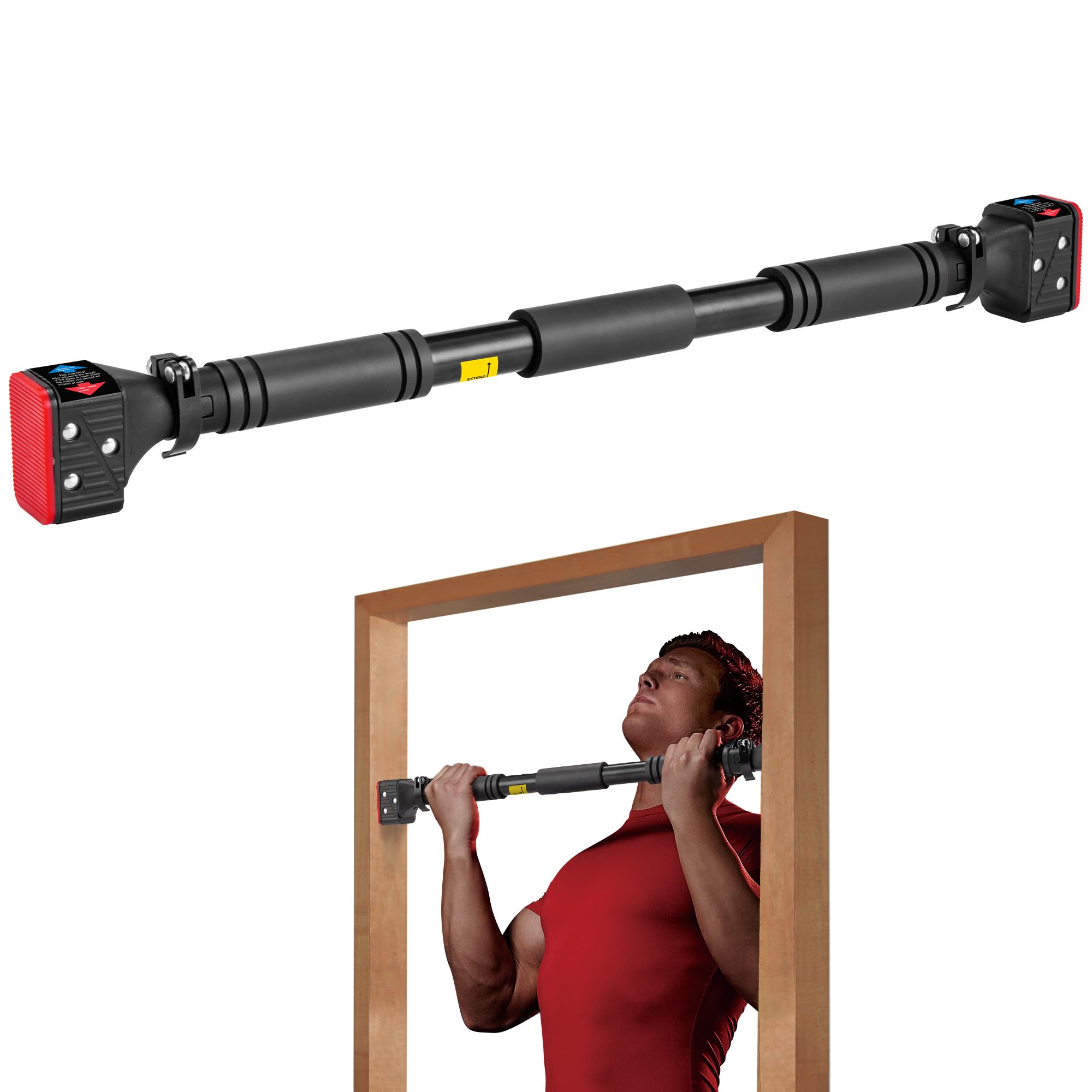
The leikefitness bar is the most straightforward entry-level option in this guide. It uses a simple adjustable-width tension mount with no additional brackets or gear-lock mechanisms. The bar is made from alloy steel and has a maximum weight recommendation of 330 pounds, which is respectable for its price tier. It fits door frames from 28.3 to 37.8 inches, giving it one of the widest adjustment ranges here. The anti-skid pads on both ends are designed to protect the door frame without leaving marks, and the installation is genuinely tool-free—you extend the bar, position it at the desired height, and twist to tension.
The foam grip covers the entire central section, allowing for both wide and close hand placements. The bar is lightweight and easy to remove when not in use, making it a good choice for renters who need a temporary setup. Customer feedback is mixed but informative: users under 150 pounds report that the bar holds securely for dead hangs and controlled pull-ups, while heavier users and those performing dynamic leg raises note that the bar can shift or, in one case, catastrophically fail after several weeks of use. A few reviewers also mention that overtightening the bar can crack old door trim.
This bar is best suited for lighter users who plan to perform slow, controlled movements like dead hangs, negatives, and strict pull-ups. It lacks the locking redundancy of the dual or triple-gear systems found on higher-priced models, so explosive movements or kipping are not recommended. If your body weight is under 180 pounds and you want a simple, no-fuss bar for basic upper-body conditioning without spending much, the leikefitness will get the job done—just keep your expectations aligned with its price point.
Why it’s great
- Widest adjustment range of any bar in this guide (28.3 to 37.8 inches), fitting nearly any interior door.
- Genuinely tool-free installation that takes under 30 seconds to mount or remove.
- Lightweight and portable, ideal for renters or users who need to store the bar between workouts.
Good to know
- No secondary locking mechanism; the bar relies solely on friction and can rotate or shift under dynamic loads.
- Several user reports of failure during leg raises at moderate body weights, raising safety concerns for heavier users.
- Overtightening to prevent slipping can damage dry or thin wooden door trim, leaving cracks or dents.
FAQ
Will a door pull up bar damage my door frame?
Can I use a door pull up bar if I weigh over 250 pounds?
Which type of door pull up bar is the most stable?
How do I measure my door frame before buying a pull up bar?
Can I do kipping pull-ups on a door pull up bar?
Final Thoughts: The Verdict
For most users, the best door pull up bar winner is the Sportneer Pull Up Bar because its dual-gear lock system, thick 2mm steel wall, and integrated level meters offer the highest level of safety and stability in a tension-mount design. If you want a foldable, zero-assembly bar that stores flat and works on wider doors, grab the KAKICLAY New Upgrade Pull Up Bar. And for a budget-friendly but reliable option that handles basic dead hangs and strict pull-ups without breaking the bank, nothing beats the leikefitness Pull-Up Bar.

Mo Maruf
I created WellFizz to bridge the gap between vague wellness advice and actionable solutions. My mission is simple: to decode the research and give you practical tools you can actually use.
Beyond the data, I am a passionate traveler. I believe that stepping away from the screen to explore new environments is essential for mental clarity and physical vitality.