Our readers keep the lights on and my smoothie glass nicely filled. As an Amazon Associate, I earn from qualifying purchases.
The door speaker upgrade is the single highest-return modification for any daily driver, yet most buyers get it wrong by focusing exclusively on wattage numbers that bear no relation to real-world volume. A 6.5-inch driver lives inside a hostile metal cavity full of road noise, temperature swings, and moisture — specs like sensitivity and cone material determine whether your investment actually sounds louder or just distorts faster.
I’m Mohammad Maruf — the founder and writer behind WellFizz. I’ve analyzed over 200 car audio product pages, cross-referenced thousands of verified owner reviews, and mapped frequency response claims against real-world listening conditions to separate the speakers that overpromise from those that genuinely deliver.
This guide ranks the best 6.5 inch door speakers by balancing power handling, sensitivity ratings, cone durability, and installation ease so you can match the right set to your vehicle and your listening habits without wasting money on mismatched specs.
How To Choose The Best 6.5 Inch Door Speakers
Door speakers endure a uniquely punishing environment: temperature swings from below freezing to direct summer sun, moisture intrusion from rain and car washes, and constant vibration. Choosing the right set means looking past the flashy wattage number on the box and focusing on four metrics that actually determine whether the upgrade satisfies or disappoints.
Sensitivity — The Real Volume Spec
Measured in decibels (dB), sensitivity tells you how loud a speaker will play with a given amount of power. A 91 dB speaker sounds roughly twice as loud as an 88 dB speaker on the same factory head unit — no amplifier needed. This is the single most important spec for buyers keeping the stock radio. Look for 90 dB or higher.
Power Handling — RMS Over Peak
Manufacturers plaster peak wattage numbers because they look big, but the RMS (continuous) figure is what matters during real listening. A speaker rated 30W RMS that peaks at 300W will distort and potentially blow if fed sustained power. Match the RMS to your head unit or amplifier’s actual output per channel.
Cone and Surround Materials
Polypropylene cones resist moisture better than paper, and butyl rubber surrounds outlast foam or cloth in temperature extremes. These materials directly affect longevity inside a door cavity that collects condensation. A paper cone speaker in a humid climate may disintegrate within a year.
Mounting Depth and Fitment
Door cavities vary wildly even among vehicles with the same speaker size. A shallow 2-inch mounting depth clears windows and door panels in compact cars, while full-size trucks often accommodate deeper frames. Check your vehicle’s specific clearance before ordering — adapter brackets solve width issues but cannot fix a depth problem.
Quick Comparison
On smaller screens, swipe sideways to see the full table.
| Model | Category | Best For | Key Spec | Amazon |
|---|---|---|---|---|
| Alpine DM-65C-G | Component | High-fidelity sound with external amp | 92 dB sensitivity | Amazon |
| Alpine EL-E65C-G | Component | Entry-level component upgrade | Polypropylene bass diaphragm | Amazon |
| Pioneer TS-A1671F | 3-Way Coaxial | Factory replacement with included adapters | 37 Hz – 31 kHz response | Amazon |
| CLES ZYZ 60B | Coaxial | Loud output without an amplifier | 90 dB sensitivity / 200W RMS | Amazon |
| ORION CB653 | 3-Way Coaxial | Budget-friendly 3-way clarity | Butyl rubber surround | Amazon |
| Crunch CS-653 2-Pair | 3-Way Coaxial | Replacing all four factory speakers | Neo-Mylar soft dome tweeter | Amazon |
| Kenwood KFC-1666S | 2-Way Coaxial | Entry-level clarity at low volume | 92 dB sensitivity | Amazon |
In‑Depth Reviews
1. Alpine DM-65C-G
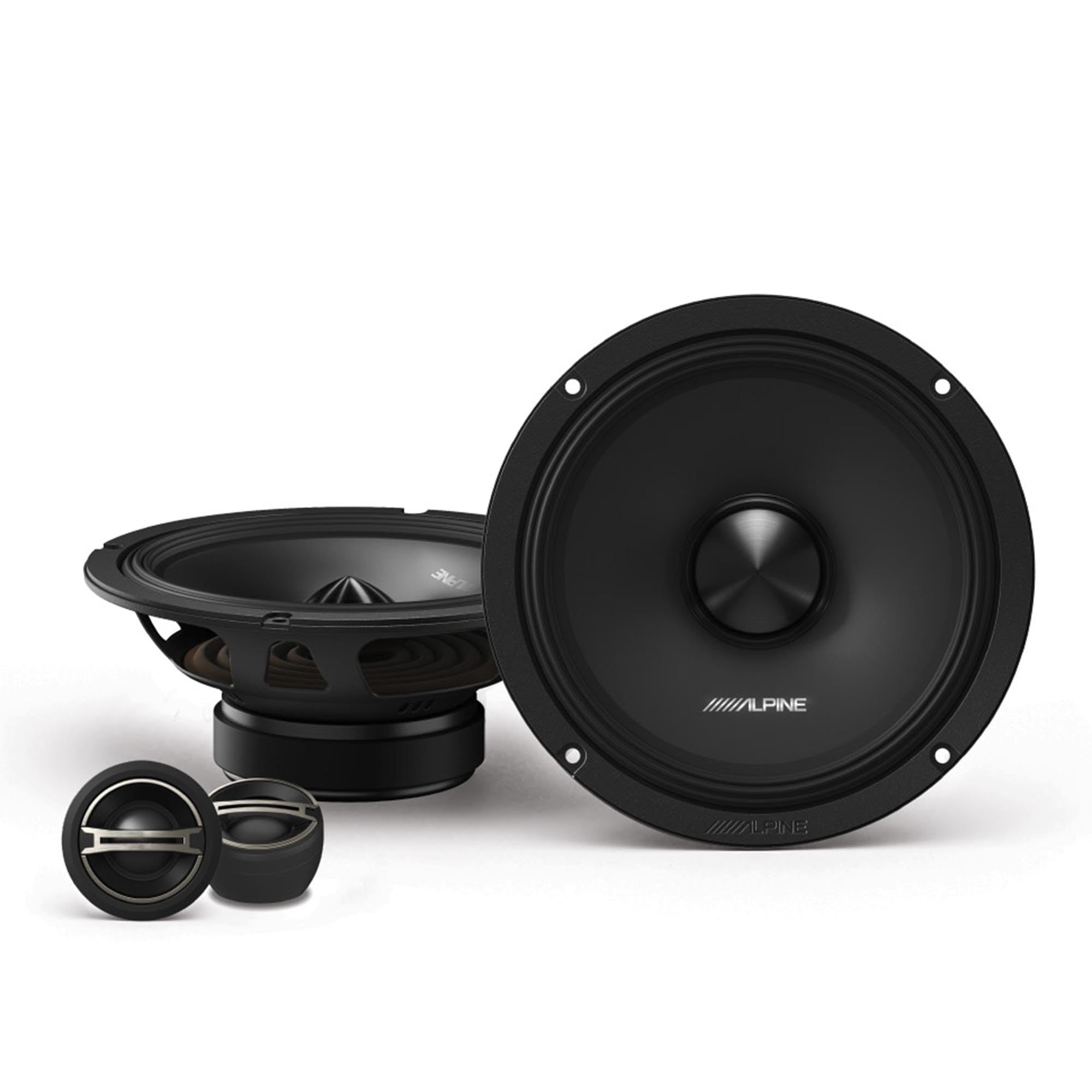
The Alpine DM-65C-G separates a dedicated tweeter from the woofer, allowing you to mount the tweeter higher in the door or dashboard for stage height that coaxial designs cannot match. The Tedoron tweeter diaphragm combined with a neodymium magnet assembly reproduces vocal sibilance and cymbal decay with a smoothness that avoids listener fatigue during long drives. The injection-molded bass diaphragm with rubber surround resists door-cavity moisture while maintaining controlled low-end extension even when driven by a modest external amplifier.
Owner feedback consistently highlights how these speakers perform exceptionally well on stock head units — the high sensitivity means you get substantial volume without an aftermarket amplifier, though adding a small amp unlocks their full dynamic range. The inline filter on the tweeter simplifies installation because no external crossover box is required; you run the full-range signal to the woofer and the tweeter’s filter handles the high-pass cut. Multiple verified purchasers report clean, loud output in vehicles ranging from a 2020 Mazda 6 to an 8th-gen Civic Si without needing to modify door panels.
The weak point for some buyers is bass depth — these are not subwoofer substitutes and will sound thin if you expect door speakers alone to deliver thumping low end. A pair of these paired with even a small powered subwoofer creates a balanced system that rivals far more expensive builds. The overall build quality and driver engineering justify the premium positioning over coaxial alternatives.
Why it’s great
- Separate tweeter placement creates genuine soundstage height above the dashboard
- Tedoron tweeter and neodymium magnet eliminate metallic harshness in high frequencies
- High 92 dB sensitivity delivers loud output on factory head units without an amplifier
Good to know
- Requires cutting or adapting for the tweeter mounting location — not a simple drop-in
- Bass output is limited; a subwoofer is recommended for full-range listening
2. Alpine EL-E65C-G

The Alpine EL-E65C-G enters as the more accessible component option in Alpine’s lineup, retaining the separate tweeter design that elevates imaging above what coaxial speakers can achieve. The polypropylene bass diaphragm provides responsive low-end performance with enough durability to handle temperature extremes inside a door cavity — a meaningful upgrade over paper-cone factory speakers that soften and distort in humid climates. The tweeter’s inline filter makes installation straightforward for first-time component buyers who may not be comfortable wiring standalone crossover networks.
Verified owners report that these speakers install cleanly into Nissan Frontier rear door positions using aftermarket adapter brackets, and the sound quality immediately resolves detail that factory speakers mask. The tweeters deliver smooth high-frequency extension without the piercing character that plagues budget component sets. Reviewers driving Ford Transit vans note that even on the stock radio, the EL-E65C-G produces noticeably better clarity than coaxial alternatives at a similar price tier, especially for mid-range vocal frequencies that matter most during podcasts and talk radio.
One reviewer found the overall output level underwhelming compared to expectations, reporting that maximum volume on the factory head unit produced less perceived loudness than the factory speakers. This suggests the EL-E65C-G responds best to amplifier power — buyers keeping a low-wattage stock radio may find the performance muted until they add an external amp. The component design also demands more installation effort than a direct coaxial swap, so factor in time for running tweeter wires through the door boot.
Why it’s great
- Component design with separate tweeter delivers soundstage height coaxial speakers cannot achieve
- Polypropylene cone resists moisture and temperature damage better than paper drivers
- Inline tweeter filter eliminates need for bulky external crossover components
Good to know
- Perceived loudness on very low-power head units may disappoint without an amplifier
- Component installation requires routing tweeter wires through door boots — not a simple drop-in
3. Pioneer A-Series Standard TS-A1671F

Pioneer’s A-Series TS-A1671F hits the sweet spot between sensible engineering and real-world usability thanks to a 91 dB sensitivity rating that extracts maximum volume from even low-power head units. The 3-way coaxial design uses separate drivers for bass, mid-range, and treble — the dedicated mid-range driver fills a frequency gap that 2-way speakers leave to the woofer, resulting in more natural vocal reproduction. The frequency response stretches from 37 Hz to 31 kHz, an unusually wide range that captures sub-bass rumble and high-frequency air that cheaper speakers simply cannot reproduce.
The included multi-application mounting adapters and wiring harnesses significantly simplify installation — verified owners report fitting these into a 2012 Kia Optima and a Chevy Cobalt with no bracket purchases needed. The bronze-colored cone and grille design resists corrosion better than untreated metal, and the rubber surround withstands the temperature swings common inside door cavities. Multiple reviewers note that the high-frequency output remains smooth and non-fatiguing during long highway drives, a critical trait for daily commuters who spend hours in the car.
Bass performance is adequate for door speakers but will not satisfy listeners expecting subwoofer-level thump. Several owners recommend adding foam tape around the included plastic mounting adapters to prevent buzz and rattle at higher volume levels — the adapter’s rigid plastic can resonate against the door panel if not damped. The speakers reward amplifier power but perform admirably on a quality aftermarket head unit rated around 22W RMS per channel.
Why it’s great
- 91 dB sensitivity delivers high volume from factory and aftermarket head units without an amplifier
- Multi-fit mounting adapters included in the box simplify installation across many vehicle fits
- Wide 37 Hz to 31 kHz frequency response captures bass extension and high-frequency detail
Good to know
- Plastic mounting adapters may cause buzz at high volume without foam damping applied
- Deep low-end bass output is limited without pairing with a dedicated subwoofer
4. CLES ZYZ 60B
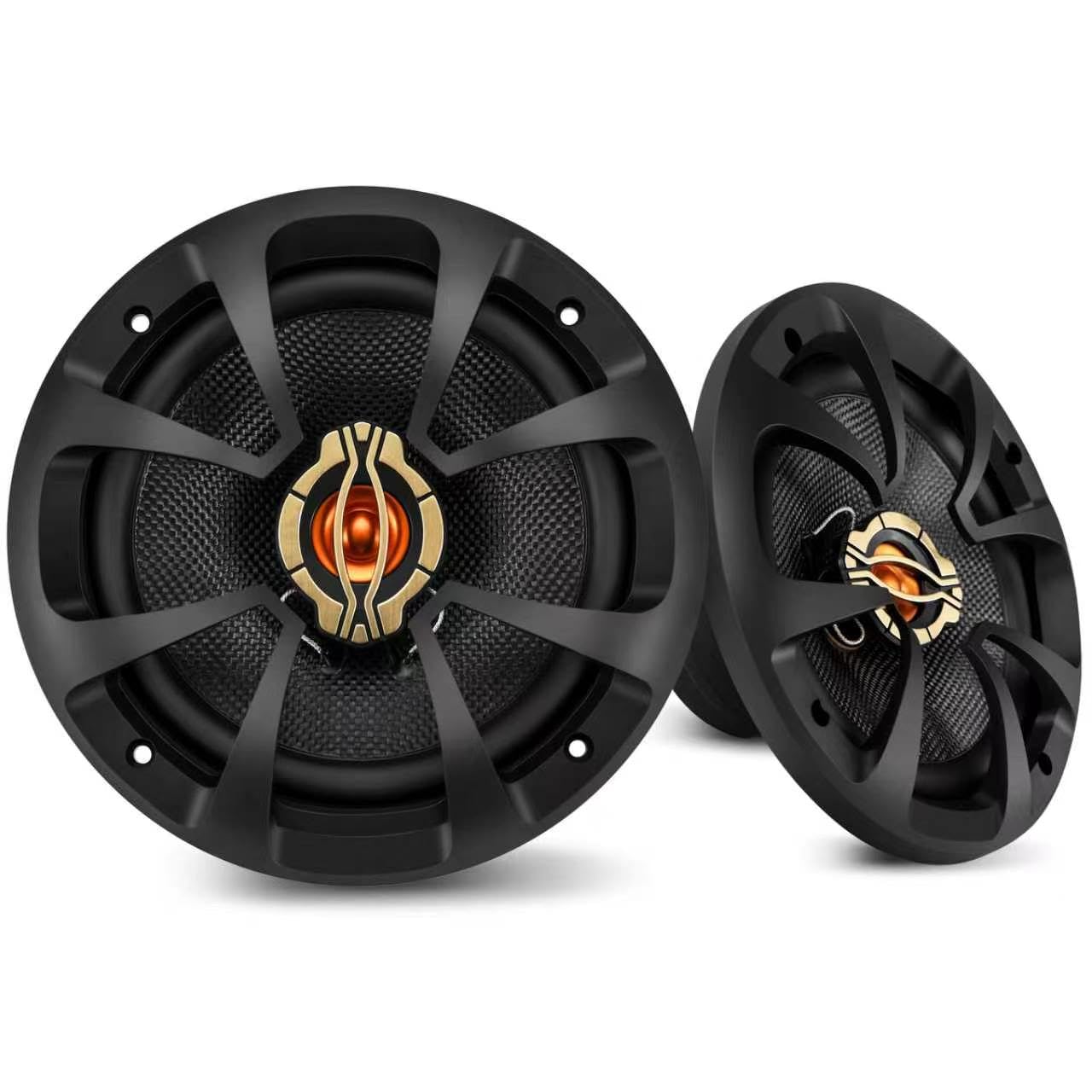
The CLES ZYZ 60B stands out for its unusually shallow mounting depth, which solves a common frustration: many 6.5-inch speakers simply do not fit into compact car doors because the magnet assembly hits the window mechanism. This shallow design clears tight clearances in vehicles like Nissan Hardbody pickups while still allowing the original speaker grille to snap back into place. The PEI dome tweeter and glass-fiber woven woofer deliver high-frequency clarity and low-end punch that outperforms what most entry-level coaxial speakers can produce.
At 90 dB sensitivity, these speakers play loud on stock head units without needing an amplifier — verified owners report them being “loud as hell” and producing deep tone and bass even in shallow door cavities. The push-in terminal connectors with clear polarity markings make installation a genuinely 30-minute job using only basic hand tools. The rubber surround resists cracking in both hot summer and freezing winter conditions, addressing the primary failure mode of budget car speakers that use foam surrounds.
The packaging situation requires attention: the speakers ship in boxes that may display the ZYZCLES logo due to factory branding agreements, and this cosmetic inconsistency has confused some buyers verifying authenticity. While performance is solid, the long-term reliability data is thinner than for established brands like Pioneer or Alpine — the three-month window of reported reviews suggests durability beyond a year remains unverified. The included speaker grille and installation bracket add convenience but the overall build finish does not match the fit-and-finish of mid-range competitors.
Why it’s great
- Shallow mounting depth fits tight door cavities where standard speakers hit the window track
- 90 dB sensitivity and push-in terminals enable fast installation without amplifier or soldering
- PEI tweeter and glass-fiber woofer produce clear highs and distortion-free low-end for the price
Good to know
- Packaging may display a different brand logo (ZYZCLES) which causes buyer confusion
- Long-term reliability beyond one year is not yet confirmed by extensive user feedback
5. ORION Cobalt Series CB653
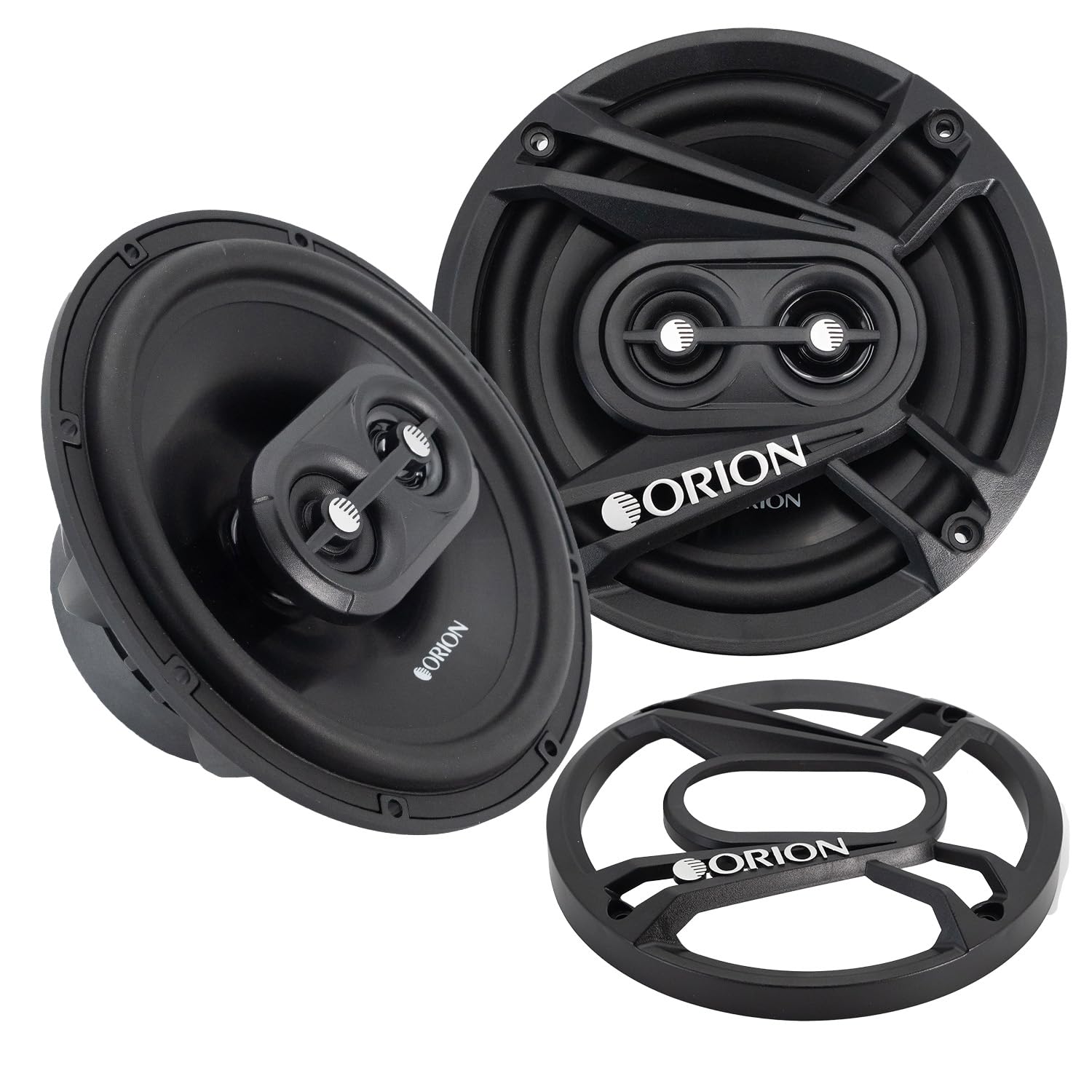
Orion’s Cobalt series CB653 uses a butyl rubber surround — the same material found in many high-end home audio drivers — to extend the speaker’s lifespan inside damp door cavities. The polypropylene cone resists the warping that paper cones suffer in humid environments, making these a solid choice for vehicles in rainy climates or coastal regions. The 3-way design splits audio across a dedicated mid-range driver, a woofer, and a tweeter, creating cleaner separation between instruments than a 2-way driver can manage at the same price point.
Verified owners who have installed these in multiple vehicles over seven months report consistent performance without degradation, an indicator that the material choices hold up over time. The 88 dB sensitivity is slightly lower than the top contenders in this guide, meaning they require slightly more amplifier power to achieve the same volume — buyers keeping a factory head unit may notice they need to turn the volume dial a few notches higher. One reviewer tested these across 13 different cars and ranked them as the best-sounding speakers under the midrange threshold when properly tuned with the head unit’s equalizer.
Reliability concerns appear in a small subset of user reports — one owner experienced speaker failure within a short period and noted that current Orion quality does not match the brand’s reputation from two decades ago. The 75 Hz low-end cutoff means these do not produce deep sub-bass; they are designed for clear mid-range and high-frequency reproduction, not for rattling door panels. The included hardware is basic — you get the speakers, screws, and a paper manual — with no adapter brackets, so check your vehicle’s mounting hole pattern before ordering.
Why it’s great
- Butyl rubber surround and polypropylene cone resist moisture damage better than cloth or paper alternatives
- 3-way driver design produces clearer instrument separation than 2-way coaxial speakers
- Verified long-term owners report consistent sound quality over seven months of daily use
Good to know
- Lower 88 dB sensitivity requires more amplifier power for the same perceived volume as competitors
- Occasional quality control issues reported — one owner experienced early driver failure
6. Crunch CS-653 2-Pair
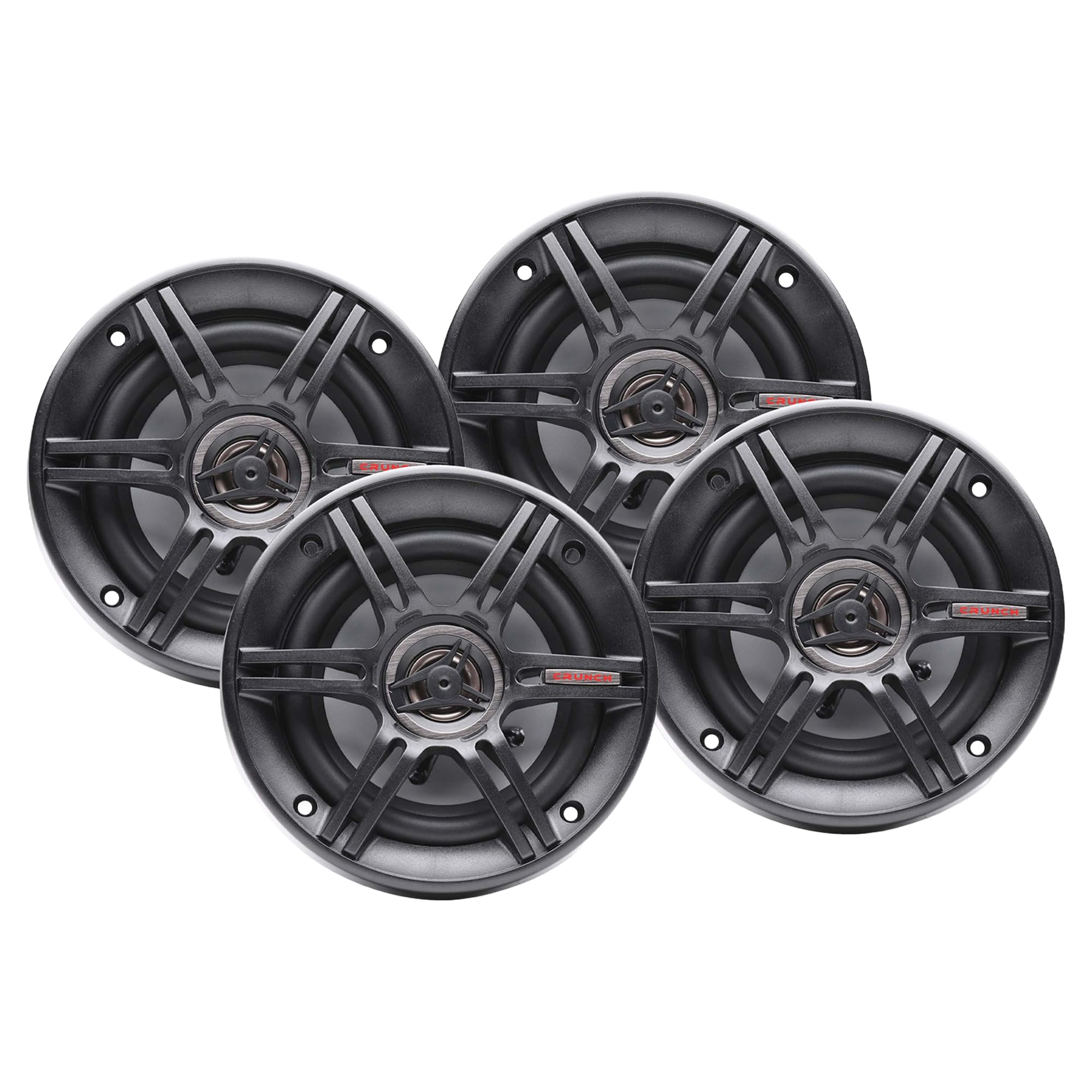
The Crunch CS-653 pack delivers two pairs of 3-way 6.5-inch speakers in a single box, making it the most economical option for anyone planning to replace all four factory door speakers simultaneously. The impact-resistant Neo-Mylar soft dome tweeter aims to smooth out high-frequency harshness that cheap metal-dome tweeters produce, while the Silver Alpha-Cellulose cone provides a mid-range response that exposes detail the factory paper cones were masking. The anti-resonant steel basket reduces vibration noise that thin stamped-steel frames transmit into the door panel at higher volumes.
Owner feedback positions these as a direct replacement for blown factory speakers at roughly the cost of a single mid-range driver — “can’t beat the price” appears in multiple verified reviews. The 89 dB sensitivity is serviceable but not exceptional; you will notice these play slightly quieter than a 91 dB speaker on the same head unit setting. The moisture-resistant rubber surrounds protect against the condensation that accumulates inside door cavities, and the included mounting hardware makes installation straightforward for anyone comfortable removing door panels.
High-frequency performance is the primary compromise — multiple reviewers note that the tweeters produce acceptable but not impressive highs, and one owner reports that overall sound quality degrades when the factory tweeters are removed because the CS-653’s tweeter cannot fully replace a dedicated dash-mounted tweeter. The bass response is adequate for spoken-word content and casual music listening but lacks the punch needed for bass-heavy genres. A seasoned car audio builder rated these as decent budget replacements rather than true upgrades — they outperform blown factory speakers but do not approach the clarity of mid-range options like the Pioneer TS-A1671F.
Why it’s great
- Two pairs in one box make this the most economical way to replace all four door speakers
- Anti-resonant steel basket and rubber surround reduce vibration noise and resist moisture
- Neo-Mylar soft dome tweeter avoids the piercing harshness of cheap metal-dome designs
Good to know
- High-frequency performance is acceptable but mediocre — does not match dedicated tweeter setups
- 89 dB sensitivity means lower volume than higher-rated speakers on the same head unit
7. Kenwood KFC-1666S

The Kenwood KFC-1666S is a no-frills 2-way coaxial speaker that leverages a 92 dB sensitivity rating to deliver high volume even from entry-level head units — the highest sensitivity in this guide. The 1-inch balanced dome tweeter extends high-frequency response to 22 kHz, and the 6.5-inch polypropylene cone woofer handles mid-range and bass duties without the moisture absorption issues that plague paper cones. Kenwood’s Sound Field Enhancer technology widens the perceived soundstage, creating a more spacious presentation than typical 2-way designs produce in the confined door location.
The 30W RMS rating is the lowest continuous power handling in this lineup, meaning these speakers will reach their limit quickly if paired with a powerful aftermarket amplifier — they are designed for factory radio replacement, not high-SPL builds. Verified owners report successful installation in a 2017 Kia Sorento and a 2006 Chevy Express 3500, though a Subaru Crosstrek owner notes that the mounting pattern required drilling new holes because the stock speaker mounts were incompatible. Several reviewers emphasize that these speakers require a break-in period — sound starts flat and lifeless but develops crisp highs and deeper bass after several hours of play.
The metal flush-mount frame feels solid for the entry-level price tier, but the lack of a dedicated mid-range driver means vocal frequencies can sound recessed compared to 3-way designs. Owners who replaced factory speakers report clear improvement in clarity, but also note that the KFC-1666S does not produce significant bass — a limitation of its modest 30W RMS rating. These suit buyers who want noticeably better sound than factory speakers for casual radio listening and do not plan to add an amplifier.
Why it’s great
- 92 dB sensitivity is the highest in this guide — delivers maximum volume on low-power head units
- Polypropylene cone resists moisture and temperature damage better than paper cone alternatives
- Sound Field Enhancer improves perceived soundstage width in tight door-cavity locations
Good to know
- 30W RMS rating limits output ceiling if you later add an amplifier for higher power
- Requires a break-in period before sound quality reaches its full potential
FAQ
Can I run 6.5 inch door speakers off my factory radio without an amplifier?
What is the difference between coaxial and component 6.5 inch speakers?
How do I know if 6.5 inch speakers will fit my car’s door cavities?
Do I need to install a separate amplifier for 6.5 inch door speakers to sound good?
Final Thoughts: The Verdict
For most users, the 6.5 inch door speakers winner is the Alpine DM-65C-G because its component design and 92 dB sensitivity deliver genuine soundstage improvement even on stock radios while leaving room to grow with amplifier power. If you want easy drop-in installation with included mounting adapters, grab the Pioneer TS-A1671F. And for the most efficient all-four-doors upgrade on a tight budget, nothing beats the Crunch CS-653 2-Pair.

Mo Maruf
I created WellFizz to bridge the gap between vague wellness advice and actionable solutions. My mission is simple: to decode the research and give you practical tools you can actually use.
Beyond the data, I am a passionate traveler. I believe that stepping away from the screen to explore new environments is essential for mental clarity and physical vitality.