Our readers keep the lights on and my smoothie glass nicely filled. As an Amazon Associate, I earn from qualifying purchases.
Cutting a hinge mortise by hand with a chisel is a slow, inconsistent process that often leaves gaps or an uneven depth, ruining the fit of the door. A dedicated guide transfers the router’s power into a precise, repeatable cut every time, turning a frustrating job into a swift, professional-grade operation.
I’m Mohammad Maruf — the founder and writer behind WellFizz. My research involves comparing the build materials, clamping mechanisms, and bit compatibility across dozens of jigs to find the models that deliver accurate cuts without flex or drift.
Whether you are hanging a single slab or working through a renovation, the right tool saves you hours of rework. This guide breaks down the specs and real-world performance of the top models to help you find the best door hinge jig for your workflow.
How To Choose The Best Door Hinge Jig
Selecting a hinge jig comes down to the materials you work with, the variety of hinge types you install, and how much precision you need. A flimsy jig introduces side-to-side movement that makes a mortise wider than the hinge leaf, defeating the purpose of using a guide.
Build Material Stability
Aluminum alloy and steel frames resist flexing under router pressure, maintaining a consistent mortise depth and width. Plastic jigs are lighter and cheaper but can deform over time or vibrate loose during a cut, especially on dense door cores.
Adjustability Range
Look for a jig that adjusts to accommodate hinge lengths from 2.5 inches up to at least 5 inches. Models with a sliding mechanism and laser-etched scales let you dial in the exact hinge length and corner radius (square, 1/4-inch, or 5/8-inch) without separate templates.
Clamping System
Hand-tightened screws with rubber pads provide quick grip without marring the door surface. A jig that requires screwing into the workpiece adds extra holes and setup time, while a dedicated clamp or twist-knob system can be repositioned instantly between cuts.
Quick Comparison
On smaller screens, swipe sideways to see the full table.
| Model | Category | Best For | Key Spec | Amazon |
|---|---|---|---|---|
| Milescraft 1220 Hinge Mate 350 | Premium | Door and jamb mortising | Steel frame, 2.5–4.5 in. hinges | Amazon |
| GOINGMAKE Concealed Hinge Jig | Premium | Cabinet hinge drilling | All-metal, 35mm bit, dust port | Amazon |
| DUEBEL Aluminum Alloy Jig | Mid-Range | Universal door slotting | Aluminum, 6 holes, 18cm opening | Amazon |
| Sebupar Hinge & Latch Kit | Mid-Range | Hinge plus latch installation | 2-piece kit, 7.8 in. length | Amazon |
| BOXmime Door Hinge Jig | Budget | Entry-level DIY work | Aluminum, 2.5–5 in. range | Amazon |
In‑Depth Reviews
1. Milescraft 1220 Hinge Mate 350
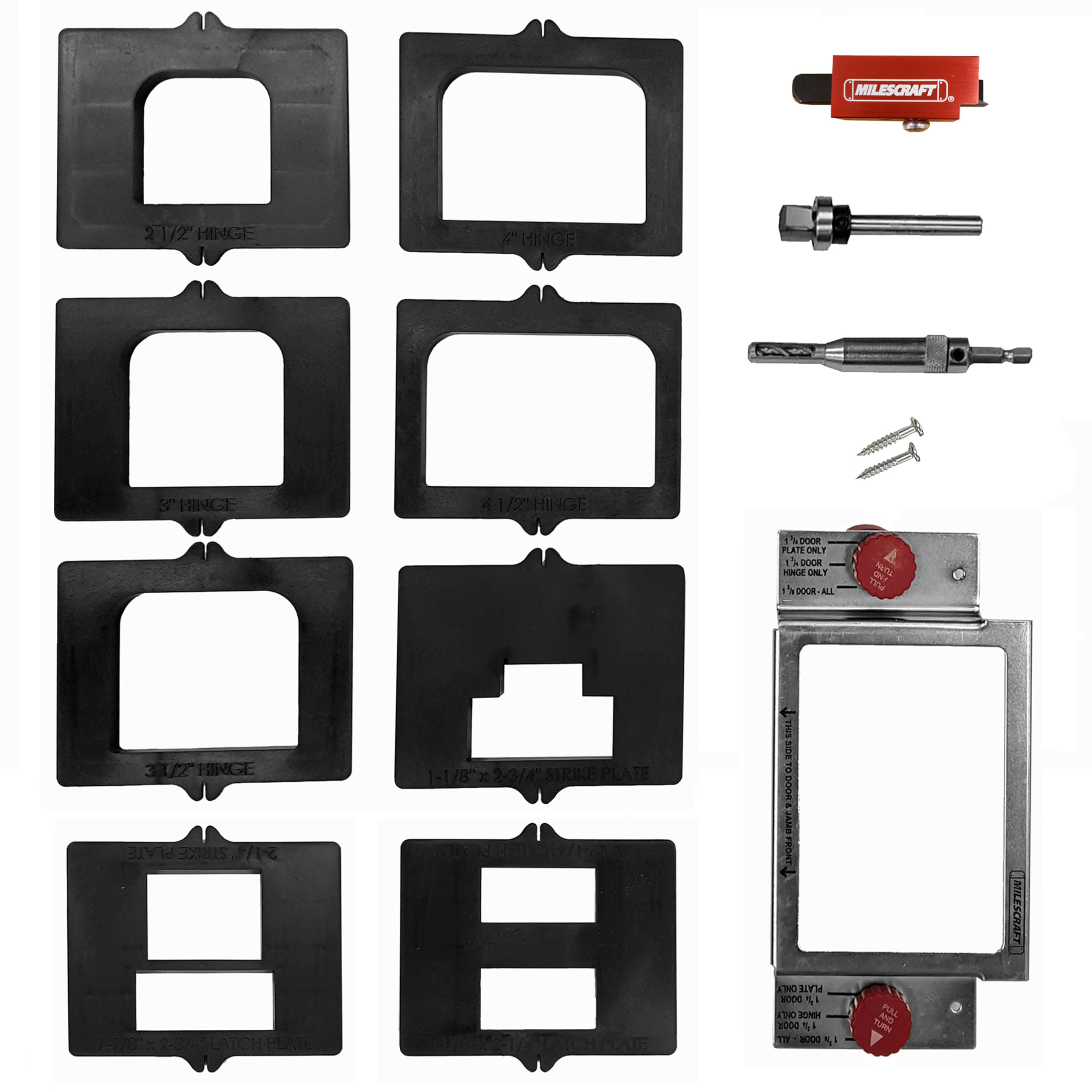
The Milescraft 1220 is a complete installation system that cuts mortises on both the door and the jamb, plus handles latch plates and strike plates. Its steel frame provides a rigid base that resists vibration, and the adjustable cams automatically align the template for 1-3/8-inch or 1-3/4-inch doors without separate spacers. Included templates cover hinge lengths from 2.5 to 4.5 inches, and the self-centering hinge bit drills pilot holes in the exact center of the mortise every time.
The kit includes a 90-degree self-aligning corner chisel that squares off router-cut corners, eliminating the need for hand pairing. Users report that the ability to recut mortises on existing jambs in situ sets it apart from simpler jigs. The included tungsten carbide 1/2-inch router bit stays sharp through multiple doors, and the steel base keeps the template from shifting mid-cut.
Some users note that the jig requires screwing into the workpiece for mounting, which leaves small holes that need filling. The lack of a storage case is a minor inconvenience for a kit this size. Overall, the Hinge Mate 350 replaces three separate shop jigs, making it a space-saving powerhouse for pros and serious DIYers.
Why it’s great
- Steel frame provides maximum rigidity and prevents flex during cuts.
- Works on both door and jamb in one setup.
- Includes corner chisel and self-centering bit for complete mortise finishing.
Good to know
- Requires screwing the jig into the workpiece; no quick-clamp option.
- Does not come with a storage case for the many included pieces.
2. GOINGMAKE Metal Concealed Hinge Jig

The GOINGMAKE jig is purpose-built for drilling 35mm cup holes for concealed cabinet hinges. Its all-metal body—including the dust bracket and quick-clamp mechanism—eliminates the flex found in plastic alternatives. The built-in double bearings keep the drill bit aligned while the carbide-tipped bit cuts through cabinet doors cleanly. Depth stops are adjustable from zero to 0.6 inches, making it simple to set the exact cup depth without measuring.
A key differentiator is the integrated dust vacuum adapter that fits 1-3/8-inch hoses, capturing nearly all chips at the source. This keeps your work surface clear and your breathing air cleaner during repetitive drilling. The quick-clamp design secures the jig to the workpiece in seconds, and the offset adjustment plates support 2mm through 6mm hinge offsets for nearly any concealed hinge brand, including Blum.
Reviewers consistently praise the build quality and the speed it brings to production work—some completed 18 cabinet doors in two hours. A minor drawback is that wood chips can clog the bore if you drill without the vacuum running; a quick cleanout before removing the jig solves the issue. The knurled knobs can mar finished surfaces if over-tightened, so a layer of tape is a smart precaution.
Why it’s great
- All-metal construction with double bearings for straight, repeatable holes.
- Built-in dust port connects to standard vacuum hoses for near-zero cleanup.
- Quick-clamp mechanism saves time on high-volume cabinet installations.
Good to know
- Wood chips can accumulate in the bore; vacuum before removing the jig.
- Knurled clamp knobs may damage finished surfaces—use protective tape.
3. DUEBEL Aluminum Alloy Door Hinge Jig

The DUEBEL jig uses a one-piece aluminum alloy body with an integrated design that stays lightweight yet rigid. It supports four-directional positioning adjustments, allowing you to fine-tune the slot location for various hinge sizes. The maximum opening of 18 centimeters provides ample room for larger hinges, and the built-in scale on the puncher delivers accurate depth stops without needing separate measuring tools.
Stainless steel threaded inserts in the screw holes protect the softer aluminum threads from stripping over repeated tightening. The rubber anti-skid clamping pads grip the door securely without denting or scratching the surface. This model is best suited for woodworkers who already have a trim router and want a reliable template for standard door hinge slotting and lock body guide plate grooves.
Several users noted that the measurement scale can be inconsistent and requires calibration on a test piece before committing to the final door. The lack of detailed instructions is a recurring complaint, so a basic understanding of router template setup is helpful. After grooving, corners will need manual squaring, as the jig does not include a corner chisel.
Why it’s great
- One-piece aluminum body provides a solid, lightweight platform.
- Stainless steel threaded inserts prevent wear on critical adjustment points.
- Four-directional positioning flexibility accommodates many hinge layouts.
Good to know
- Measurement scale can be inconsistent—always test on scrap wood first.
- Instructions are sparse; prior router template experience is beneficial.
4. Sebupar Door Hinge & Door Latch Installation Kit
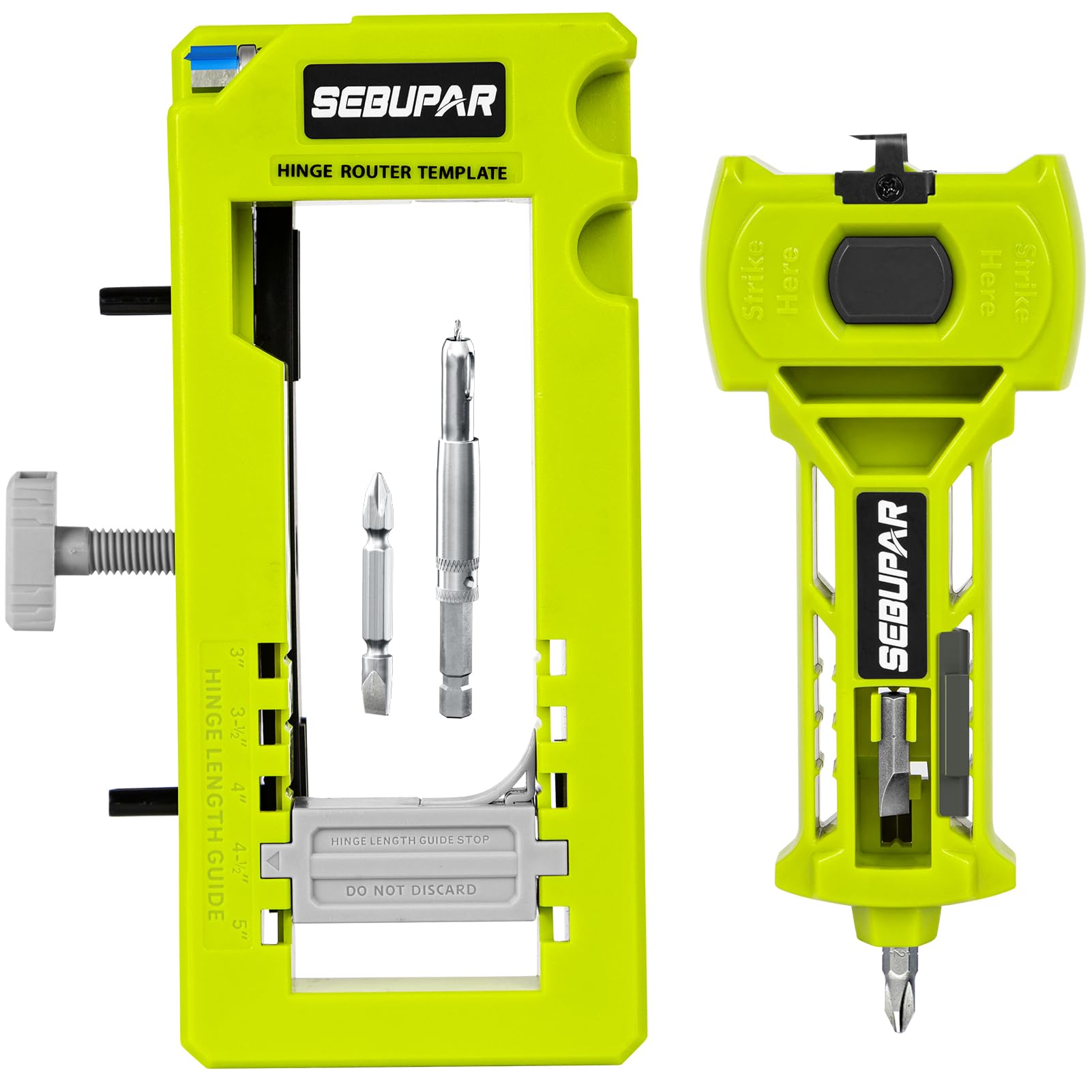
The Sebupar kit bundles a hinge mortiser template and a dedicated latch installation tool, making it a two-in-one solution for hanging doors. The hinge template adjusts for lengths from 2.5 to 5 inches and supports square, 1/4-inch radius, and 5/8-inch radius corners. The latch tool features built-in scoring and chisel mechanisms with switchable round and square blades, eliminating the need for a separate hammer and chisel for the latch faceplate.
Both tools come with the required drill bits: a router bit, a self-centering hinge bit, and a double-ended screwdriver bit for the hinge jig, plus a router bit, 90-degree fence, and PH2/SL bits for the latch kit. Users report that the kit cuts mortises cleanly and reduces a door installation to roughly ten minutes total. The metal and plastic construction provides adequate stiffness for standard interior doors, though the plastic components may not withstand heavy daily use on a job site.
The hinge jig is designed to work on the door only, not the jamb, so you will need a separate solution for jamb mortises. Some reviewers caution that the included router bit is basic and recommend upgrading to a carbide equivalent for longer life. For the DIYer hanging a handful of doors, this kit delivers good value by combining two essential tools in one package.
Why it’s great
- Combines hinge mortiser and latch installation tools in one affordable kit.
- Latch tool built-in scoring and chiseling eliminates separate hand tools.
- Includes all required bits for a complete door installation setup.
Good to know
- Hinge jig works on the door only, not on the jamb.
- Included router bit is basic; consider upgrading to carbide for longevity.
5. BOXmime Door Hinge Jig
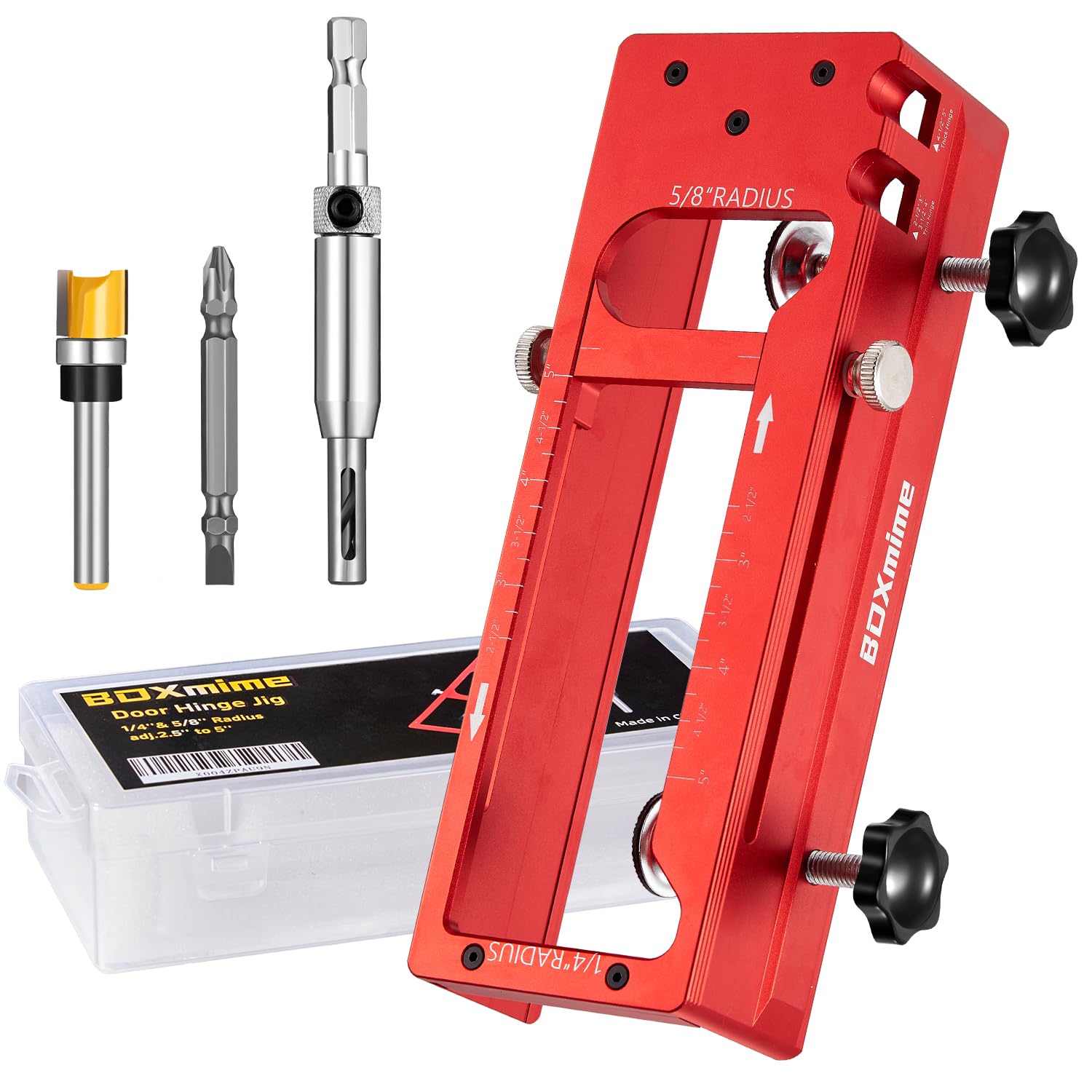
The BOXmime jig is an entry-level option built from CNC-machined 6061 aluminum with an anodized surface for corrosion resistance. It supports hinge lengths from 2.5 to 5 inches and accepts square, 1/4-inch radius, and 5/8-inch radius corner types. The slide adjusts with a built-in scale and locks in place with hand-tightened screws, and the rubber anti-slip clamping pads protect the door surface from damage.
The kit includes a router bit, a self-centering hinge bit, and a double-ended screwdriver bit, plus a tool box for storage. Laser-etched grooves on the scales are permanent and easy to read even in low-light shop conditions. Users describe the jig as a massive upgrade over plastic alternatives, noting that the aluminum body stays rigid and improves safety by reducing the chance of the jig slipping during a cut.
While the build quality is solid for the price, the clamping screws rely on hand tightening only—there is no quick-clamp mechanism for rapid repositioning. A few reviewers mention that the included router bit is functional but not high-end, so extended use on hardwood doors may warrant a replacement. For one-off DIY projects or learning the basics of hinge mortising, this jig delivers reliable performance without a big investment.
Why it’s great
- CNC-machined 6061 aluminum body resists flex and corrosion.
- Laser-etched scales are permanent and easy to read.
- Rubber anti-slip pads prevent door surface damage during clamping.
Good to know
- No quick-clamp mechanism—hand-tightened screws only.
- Included router bit is basic; upgrading to a carbide bit improves longevity.
FAQ
Can I use a door hinge jig on the jamb as well as the door?
What is the difference between a radius corner and a square corner hinge jig?
Do I need a trim router to use a door hinge jig?
Why does my mortise come out wider than the hinge leaf?
Final Thoughts: The Verdict
For most users, the door hinge jig winner is the Milescraft 1220 Hinge Mate 350 because its steel frame and comprehensive template set handle both door and jamb mortising with professional accuracy. If you are installing concealed cabinet hinges and want dust-free drilling, grab the GOINGMAKE Concealed Hinge Jig. And for a budget-friendly entry point that still delivers aluminum rigidity, nothing beats the BOXmime Door Hinge Jig.

Mo Maruf
I created WellFizz to bridge the gap between vague wellness advice and actionable solutions. My mission is simple: to decode the research and give you practical tools you can actually use.
Beyond the data, I am a passionate traveler. I believe that stepping away from the screen to explore new environments is essential for mental clarity and physical vitality.