Our readers keep the lights on and my smoothie glass nicely filled. As an Amazon Associate, I earn from qualifying purchases.
The struggle is real: unevenly cooked, burnt-on-the-outside-raw-on-the-inside rotis that take forever to roll and never come out round. A dedicated chapati maker removes the guesswork, delivering consistent thickness and even heat across the entire flatbread surface, turning a laborious chore into a quick, repeatable process.
I’m Mohammad Maruf — the founder and writer behind WellFizz. For this guide, I’ve analyzed thermal plate distribution, pressure mechanics, and material construction across dozens of models to identify the units that actually produce soft, puff-able chapatis without cracking or burning.
Whether you need a manual press for authentic texture or an electric unit for speed, finding the right best chapati maker depends on understanding how heat consistency, plate alignment, and pressure mechanics interact with your specific dough type.
How To Choose The Best Chapati Maker
Not all roti makers are created equal. The biggest mistake buyers make is choosing based on price or brand popularity without checking the plate alignment and material. A misaligned top plate produces thick, uneven rotis that won’t puff. A low-wattage unit takes forever to recover heat between batches. And poor non-stick coatings peel within months. Here are the three specs that actually matter.
Plate Material and Heat Distribution
Cast iron holds heat longer and delivers better crust texture but requires seasoning and weighs significantly more. Aluminum heats faster and is lighter but can create hot spots if not machined precisely. Non-stick aluminum plates are the most common in electric roti makers—look for units where the top and bottom plates align flush when closed, as even a 1mm gap creates a thick, doughy final product.
Adjustable Thickness vs. Fixed Press
Manual presses with adjustable thickness gaskets (common sizes: 1/8, 1/6, 1/4 inch) let you control the final roti thickness precisely—critical for multi-flour recipes. Fixed press electric units are faster for high-volume daily use but lock you into a single thickness. If you switch between whole wheat, millet, and gluten-free flours, adjustability becomes the deciding factor.
Wattage and Heat Recovery Time
For electric roti makers, 1000 watts is the minimum to maintain consistent cooking temperature across back-to-back batches. Drop below that and the plate struggles to recover heat between chapatis, leading to sticking and undercooking. Higher wattage units (1200-1500W) handle continuous use better but consume more electricity—a trade-off worth making if you’re cooking for a family of four or more.
Quick Comparison
On smaller screens, swipe sideways to see the full table.
| Model | Category | Best For | Key Spec | Amazon |
|---|---|---|---|---|
| Joydeem HMJ-A351 | Electric Dough Maker | Hands-free dough prep + fermentation | 304 SS bowl, 3.7Qt capacity | Amazon |
| Joydeem JD-HMJ7L | Electric Dough Maker | Large batch families, multiple loaves | 7.4Qt, 250W motor, 2-stage ferment | Amazon |
| Bear HMJ-A35M1 | Electric Dough Maker | Compact kitchens, small batch dough | 120W motor, 304 SS blade, 3.7Qt | Amazon |
| Victoria 10-Inch Cast Iron | Manual Press | Authentic texture, one-time investment | 10.5 lb cast iron, pre-seasoned | Amazon |
| Uno Casa Cast Iron Press | Manual Press | Quality flatbreads with parchment paper | 10-inch press, pre-seasoned, 100 paper rounds | Amazon |
| ABUSA Thickness Adjustable | Manual Press | Variable thickness for multi-flour cooking | Aluminum, 6 thickness settings | Amazon |
| Brentwood TS-127 | Electric Maker | Budget-friendly, simple electric roti making | 8-inch plates, 1000W, non-stick | Amazon |
In‑Depth Reviews
1. Joydeem HMJ-A351 Electric Dough Maker
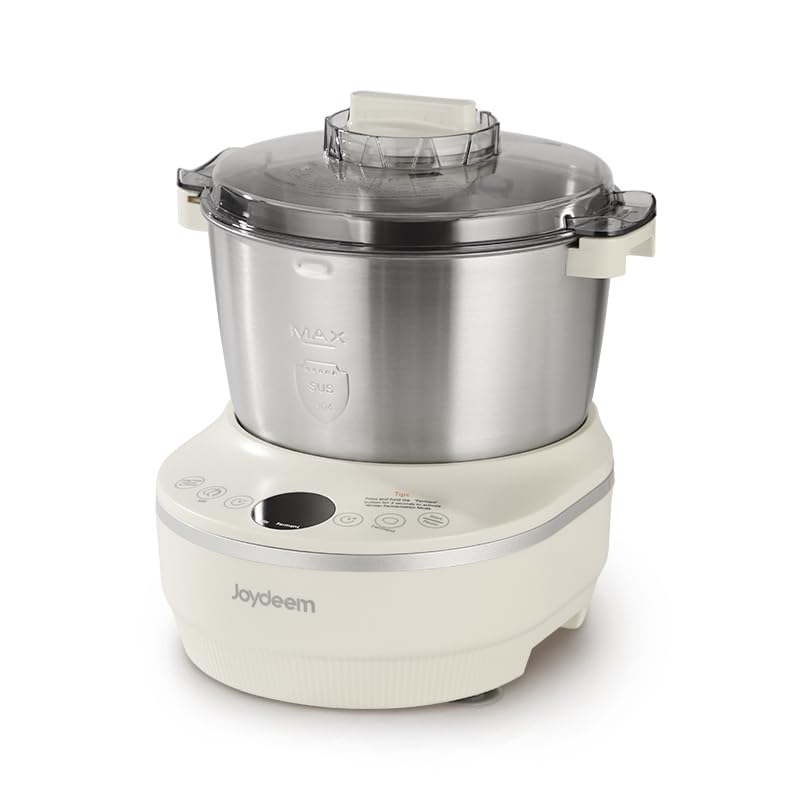
The Joydeem HMJ-A351 takes the top spot because it solves the real problem: dough prep. With a 150W motor that operates in intermittent kneading cycles (mimicking hand-kneading), it handles everything from soft roti dough to stiff pizza and sourdough bases. The 3.7-quart 304 stainless steel bowl accommodates up to 1100g of flour, and the dual-mode fermentation system (summer/winter settings between 95-113°F) ensures consistent proofing year-round—something most chapati makers completely ignore.
What seals the deal is the suction-cup base that keeps the unit planted during the stop-start mixing pattern. The noise level sits around 50 decibels, which is quiet enough for early-morning dough prep without waking the house. Users report that the constant 10-second stop-start cycle takes a moment to get used to, but the resulting gluten development rivals a commercial spiral mixer for a fraction of the investment.
The only real friction point: the stainless steel bowl tends to collect dough residue unless oiled beforehand. A quick spritz of cooking spray before adding ingredients eliminates the sticking issue entirely. For anyone making roti dough from scratch more than twice a week, this unit pays for itself in saved arm labor within a month.
Why it’s great
- Dual-mode fermentation adapts to summer and winter kitchen temperatures for consistent dough rise.
- Suction-cup feet keep the machine stable during intermittent kneading cycles.
- 304 stainless steel bowl handles up to 1100g of flour without warping or rusting.
Good to know
- Dough can stick to the stainless steel bowl unless you pre-oil the surface lightly.
- The timer only stops when unplugged—no cancel button on the panel.
- Maximum flour weight for fermented dough drops to 900g to allow for expansion.
2. Joydeem JD-HMJ7L Electric Dough Maker

When you need to prep dough for a family gathering or weekly meal prep, the JD-HMJ7L delivers 7.4 quarts of capacity with a 250W motor that handles 2kg of flour without breaking a sweat. The microcomputer-controlled timer lets you set mixing (default 15 minutes, adjustable) or a combined mix-and-proof cycle that finishes in 45 minutes with a beep alert. The vertical design with a face-up touch panel saves counter space and allows easy ingredient additions mid-cycle through the top feed opening.
User reports confirm this unit produces excellent pizza dough at 60-70% hydration and handles 60-minute proofing cycles effectively. The internal heating element maintains fermentation temperature, though a small percentage of users note that the bottom of the dough can get slightly warm if the fermentation mode runs too long—a minor quirk solved by switching to a natural room-temperature rise for yeast doughs.
Noise output sits at 70 decibels—noticeably louder than the HMJ-A351 but still quieter than a stand mixer running on high. The weighted body and rubber feet keep it planted during kneading. One caveat: the bubble-type push buttons feel less robust than a toggle switch, so treat the panel gently. For anyone making four loaves at once or prepping dough for a large family, this is the most efficient option available.
Why it’s great
- 7.4-quart capacity processes up to 2kg of flour—enough for four loaves in one batch.
- Internal heating element ensures consistent fermentation temperature in cold kitchens.
- Combined mix-and-proof cycle finishes in 45 minutes with a drip alert.
Good to know
- Bubble-type buttons may wear faster than mechanical switches over years of daily use.
- Fermentation mode can overheat the bottom of the dough if left running unattended.
- Noise level at 70 dB is louder than smaller dough makers.
3. Bear HMJ-A35M1 Electric Dough Maker

The Bear HMJ-A35M1 proves that small can still be mighty. Its 120W motor drives a three-dimensional 304 stainless steel mixing blade that increases the kneading area, producing pliable, elastic dough from as little as 200g up to 1077g of dry flour. The compact footprint (12.4 x 11.6 inches) fits easily on a tight counter, and the conical top cover distributes pressure evenly across the dough ball during the mixing cycle.
The control panel is refreshingly straightforward: add water and flour, select mix or ferment (or both), and walk away. Default mixing is 15 minutes with manual adjustment up to 40 minutes. The constant-temperature fermentation system holds between 77-100°F, which works perfectly for yeasted doughs but won’t help with sourdough starters that prefer cooler environments. Users consistently report the unit mixes circles around a KitchenAid for dough-only tasks, with much easier cleanup.
Durability concerns center on the snap-fit lid design—it’s secure during operation but feels lightweight compared to the stainless steel bowl. The suction feet do a solid job of reducing vibration, but the unit can still migrate on a smooth counter if the dough is particularly stiff. For the home cook who bakes 2-3 times per week and wants a dedicated dough machine that doesn’t dominate the kitchen, this is the sweet spot.
Why it’s great
- Three-dimensional blade design increases kneading area for better gluten development in short cycles.
- Compact footprint fits tight kitchens without sacrificing dough capacity up to 2.4 lb of flour.
- Snap-fit lid and top feed opening let you add ingredients mid-cycle without lifting the cover.
Good to know
- The instruction manual is sparse—most users learn faster by watching a video tutorial.
- Suction feet reduce but don’t fully eliminate movement on smooth surfaces with stiff dough.
- Fermentation temperature range (77-100°F) may run too warm for some sourdough starter routines.
4. Victoria 10-Inch Cast Iron Tortilla Press
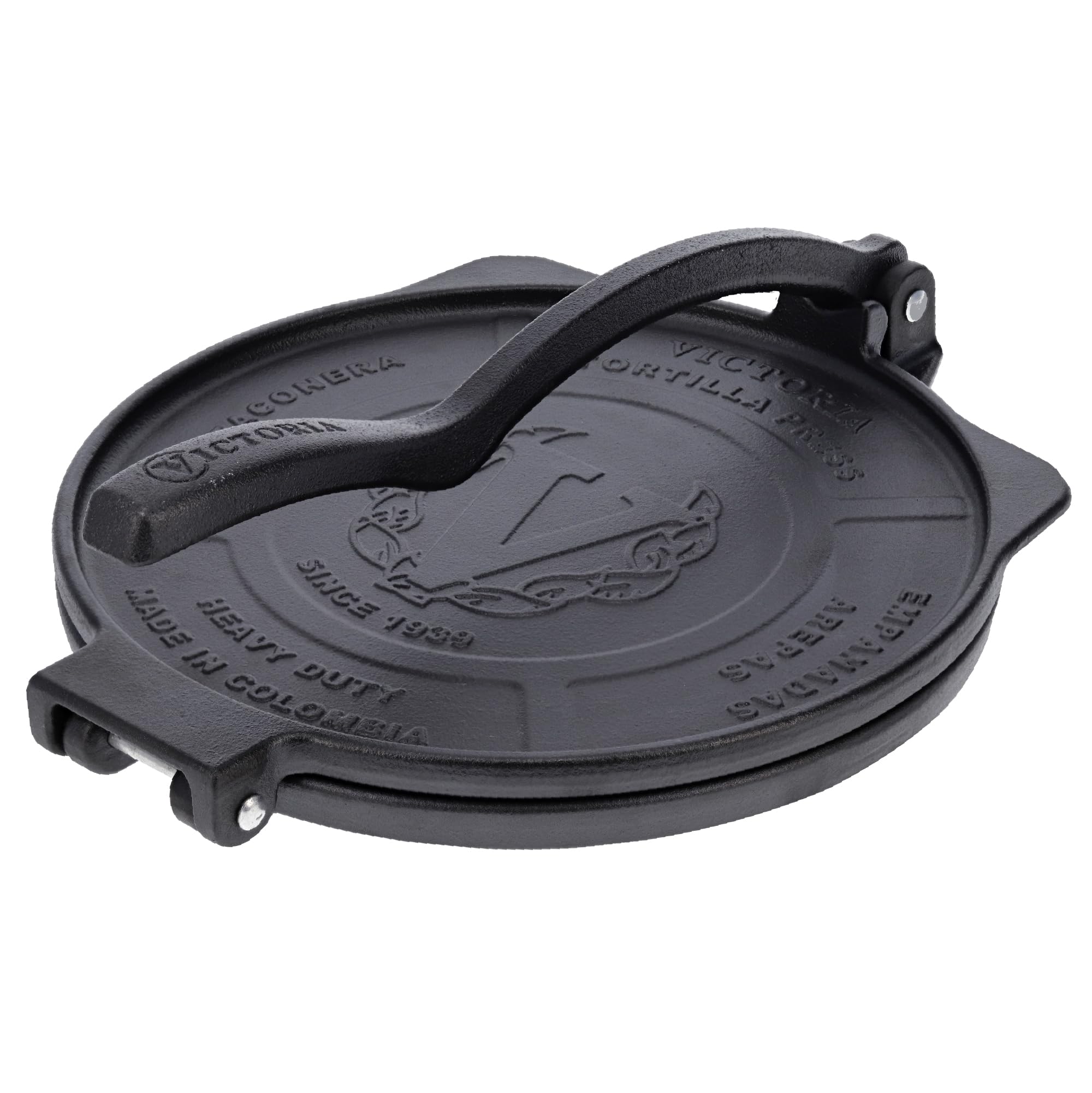
The Victoria press represents the gold standard for manual roti and tortilla making. Made in Colombia from high-density cast iron, the 10.5-pound weight provides the gravity necessary to press dough into uniformly thin flatbreads with a single lever action. The pre-seasoning with non-GMO, kosher-certified flaxseed oil means it’s ready to use out of the box—no curing step required, unlike raw cast iron competitors.
The reinforced hinge design and engineered plates avoid the pinching issue common on cheaper presses. Users report consistent 1/8-inch thick rotis with minimal effort, and the heavy base stays planted on the counter without needing suction cups or clamping. The 10-inch surface accommodates standard roti sizes easily, and the cast iron retains enough heat from the stovetop to give a brief pre-sear before the final cook on a tawa.
The main maintenance requirement: cast iron demands drying and oiling after every wash. Users who forget this step report flash rust within hours, especially if water pools on the pressing surface. The hinge pin is replaceable but may eventually need swapping after heavy use. For the cook who values texture and evenness over speed and convenience, this press delivers restaurant-quality rotis that no electric maker can match.
Why it’s great
- 10.5-pound cast iron provides the weight needed for uniform thin rotis with minimal lever pressure.
- Pre-seasoned with flaxseed oil—ready to use immediately without additional curing.
- Reinforced hinge design prevents pinching and misalignment during pressing.
Good to know
- Cast iron requires thorough drying and oiling after every wash to prevent rust.
- Hinge pin may need eventual replacement after years of heavy daily use.
- At 10.5 pounds, it’s too heavy for frequent storage—best left on the counter.
5. Uno Casa Cast Iron Tortilla Press
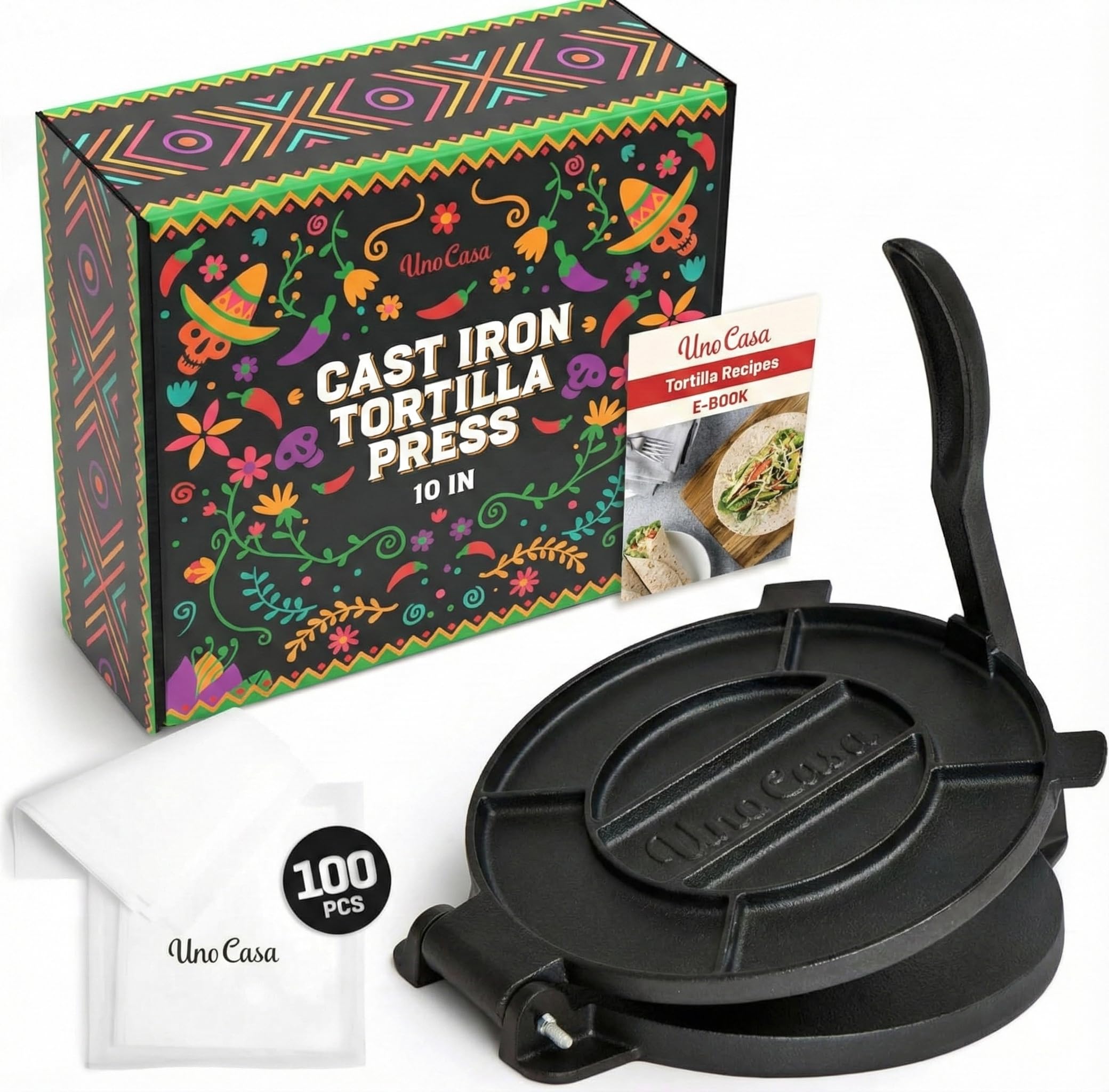
Uno Casa’s press leans into the “everything but the kitchen sink” philosophy—you get the pre-seasoned cast iron press, 100 parchment paper rounds, an extra screw set, and a digital e-book with dozens of flatbread recipes. The 10-inch surface is larger than most competing manual presses, giving you room to make oversized burrito-sized tortillas or multiple small rotis from a single dough ball by repositioning the press.
The cast iron construction weighs in at a substantial 5.3 kg (11.7 pounds), and users report that the press creates evenly thin rotis after a two-step method: press, rotate 180 degrees, and press again. The included parchment paper eliminates sticking entirely—crucial for beginners who haven’t perfected dough moisture balance. Standard cast iron care applies: season with flax or vegetable oil, never soak, and dry immediately after cleaning.
The handle mechanism works with normal hand pressure for standard soft doughs, but users modifying the press with longer bolts and a 2×4 lever achieve tortilla thicknesses as thin as 1/16 inch. The stock hardware is adequate for most home cooks, though some may find the handle requires more downward force than expected for very firm doughs. For the bundle value alone—especially the 100 pre-cut parchment rounds—this press edges out similarly priced competitors.
Why it’s great
- Larger 10-inch surface handles oversized tortillas and multiple small rotis per session.
- 100 pre-cut parchment paper rounds included—eliminates sticking and speeds up cleanup.
- Extra screw set and digital recipe e-book add immediate value for new flatbread cooks.
Good to know
- Heavy at 11.7 pounds—requires dedicated counter space or strong cabinet storage.
- Standard handle may need significant force for very stiff or dense doughs.
- Cast iron maintenance (dry immediately, oil regularly) is non-negotiable for rust prevention.
6. ABUSA Thickness Adjustable Tortilla Press

The ABUSA press solves the single biggest limitation of manual presses: fixed thickness. By including four gaskets (1/8, 1/6, 1/4, and 3/8 inch) plus a no-gasket option for 1/16 inch ultra-thin rotis, this US-patented aluminum press gives you six distinct thickness settings. This flexibility is critical for cooks who switch between soft whole wheat rotis, crispy corn tortillas, and thick masa arepas—each flour type demands a different starting thickness for optimal texture.
The aluminum construction weighs just 2.95 pounds—about a quarter of the cast iron alternatives—making it easy to store in a drawer or move between counters. The bearing structure at the adjustment column allows the pressing plate to rotate smoothly and quietly during the pressing motion. Users report that the aluminum body leaves no black marks on dough or parchment paper (a common complaint with unseasoned cast iron).
However, quality control is inconsistent. Multiple user reports mention bearings breaking on first use and paint flaking off the adjustment screws. The green coating on some units can chip into food. Using silicone mats or parchment paper is mandatory—not optional—to avoid direct contact with the aluminum pressing surface. For budget-conscious cooks who need thickness adjustability and are willing to accept some assembly quality variance, the ABUSA delivers flexibility no other manual press at this price tier offers.
Why it’s great
- Six thickness settings from 1/16 to 3/8 inch—suited for everything from paper-thin rotis to thick masa patties.
- Lightweight 2.95 lb aluminum design stores easily and doesn’t burden weak cabinets.
- Bearing-assisted handle pivot enables smooth, quiet pressing without metal-on-metal grinding.
Good to know
- Bearing failure on first use reported by multiple users—quality control is inconsistent.
- Green paint coating on adjustment screws has been known to flake off into food.
- Parchment or silicone mats are required every use to prevent direct food contact with aluminum.
7. Brentwood TS-127 Electric Tortilla Maker

The Brentwood TS-127 is the simplest on-ramp to electric chapati making. The 1000-watt non-stick aluminum plates heat up quickly, with power and pre-heat indicator lights that take the guesswork out of when to load the dough. The adjustable heat setting lets you toggle between soft rotis and crispy tortillas from the same plate—useful for family meals where preferences differ. The 8-inch diameter is smaller than most manual presses but perfectly sized for standard chapati and puri portions.
User reviews highlight fast heat-up times and non-stick performance that genuinely works for soft, rested dough. The compact footprint (10 x 6 x 7 inches) and 2.6-pound weight make this the most portable option in this list—easy to store vertically or take to a potluck. The silver stainless steel exterior wipes clean quickly and resists fingerprints better than glossy plastic alternatives.
The downsides are significant at this budget tier. Multiple users report the upper plate handle loosening over time, causing misalignment that produces thick, uneven rotis and steam leaks. Some units arrive with loose hardware out of the box. The 1-year warranty covers defects, but the failure rate on electrical components (units dying within weeks) is higher than mid-range alternatives. This is best viewed as a starter machine—once you outgrow it, you’ll know which upgraded features matter most.
Why it’s great
- 1000W heating element preheats quickly and recovers fast between consecutive batches.
- Adjustable heat setting accommodates both soft rotis and crispy tortilla preferences.
- Compact 2.6 lb design stores easily in small kitchens and is portable for gatherings.
Good to know
- Upper plate handle tends to loosen with use, causing misalignment and thick rotis.
- Electrical failure reported by some users within the first few weeks of ownership.
- 8-inch plate size limits you to smaller rotis and puris—not suitable for large tortillas.
FAQ
Can I use a chapati maker for gluten-free flours like millet or chickpea?
Why do my rotis come out hard and brittle from an electric maker?
Is a cast iron press better than an electric roti maker for daily use?
Final Thoughts: The Verdict
For most users, the best chapati maker winner is the Joydeem HMJ-A351 because it eliminates the hardest part of roti making—dough preparation—with consistent kneading and temperature-controlled fermentation. If you want pure manual control and restaurant-quality rotis from a press that will outlive your kitchen, grab the Victoria 10-Inch Cast Iron Press. And for large families who need four loaves worth of dough every week with minimal hands-on time, nothing beats the Joydeem JD-HMJ7L.

Mo Maruf
I created WellFizz to bridge the gap between vague wellness advice and actionable solutions. My mission is simple: to decode the research and give you practical tools you can actually use.
Beyond the data, I am a passionate traveler. I believe that stepping away from the screen to explore new environments is essential for mental clarity and physical vitality.