Our readers keep the lights on and my smoothie glass nicely filled. As an Amazon Associate, I earn from qualifying purchases.
The struggle to keep a classroom tidy while ensuring every student has immediate access to their supplies is a daily reality for teachers everywhere. Chair pockets solve this by turning unused seat-back space into a dedicated, organized caddy for books, folders, and pencil cases, freeing up desk surfaces and reducing floor clutter.
I’m Mohammad Maruf — the founder and writer behind WellFizz. I’ve spent countless hours analyzing classroom storage hardware, from fabric durability and seam reinforcement to fit specifications, so you can find the right organizer without wasting time on trial and error.
Whether you outfit a single kindergarten chair or an entire elementary wing, the right chair pockets for classrooms will transform your daily workflow and reduce the chaos of misplaced supplies.
How To Choose The Best Chair Pockets For Classrooms
Not all chair pockets are built alike. The wrong choice can mean a bag that sags, tears, or simply won’t stay on the chair. Focus on these three factors to get it right the first time.
Fabric Strength and Seam Quality
A chair pocket in a classroom gets pulled, stuffed, and yanked multiple times a day. Look for heavyweight denim or canvas with reinforced stitching at the bottom gusset and top attachment points. Lighter poly-cotton blends work for calm use but may rip under the weight of a three-ring binder if a student leans back.
Pocket Configuration and Capacity
A single large pocket works for storing a few workbooks, but a multi-pocket design with one deep section and two smaller pockets keeps supplies separated—pencils in one, headphones in another, notebooks in the main slot. The pocket depth (typically 12 to 15 inches) determines whether a binder slides in fully or sticks out.
Chair Fit and Attachment Style
Measure the top width of your chair back before buying. Most standard classroom chairs accommodate pockets designed for up to 15 inches, but wider or curved backs need a specific fit. The sleeve that slides over the chair back should be snug enough to prevent the pocket from slipping off when a student stands up.
Quick Comparison
On smaller screens, swipe sideways to see the full table.
| Model | Category | Best For | Key Spec | Amazon |
|---|---|---|---|---|
| Seat Sack 17″ Single | Single Pocket | Kindergarten to 2nd grade | 17″x10″ pocket with 2″ gusset | Amazon |
| Seat Sack Medium 15″ | Single Pocket | Kindergarten to 2nd grade | 15 lb max weight capacity | Amazon |
| moopok 3-Pocket Denim | Three Pockets | Full organization with separation | 15″x12″ book pocket + 2 small | Amazon |
| Pacon Blue & Red Chart | Multi-Pocket | Pre-K and lower elementary | 2 large + 4 small pockets | Amazon |
| Maitys 24-Pack Canvas | Classroom Pack | Full classroom bulk order | 20″x17″ large canvas pocket | Amazon |
In‑Depth Reviews
1. Seat Sack 17″ Single Pocket

This is the chair pocket that teachers keep coming back to, often year after year. The 17-inch-wide main pocket with a 2-inch gusset provides enough depth to hold a standard three-ring binder, a few folders, and a pencil case without bulging. Real customer reports confirm a single unit surviving from kindergarten through second grade with only minor wear.
The poly-cotton laminated fabric feels heavier than typical classroom supply bin material, and the double-stitched bottom seam adds genuine tear resistance. The built-in name card insert on the front saves you from buying separate labels. It’s also machine washable, which matters when glue sticks or markers leak.
On the downside, it only has a single pocket, so everything stacks together. If you need separate compartments for supplies, you will have to add a small pencil pouch inside. The red color is vibrant but may show dirt faster than darker shades.
Why it’s great
- Certified flame resistant for school safety compliance
- Double-stitched bottom and reinforced seams for extended durability
- Machine washable for easy end-of-year cleaning
Good to know
- Single pocket design lacks supply separation
- 17-inch width may be tight on small preschool chairs
2. Seat Sack Medium 15″ Green
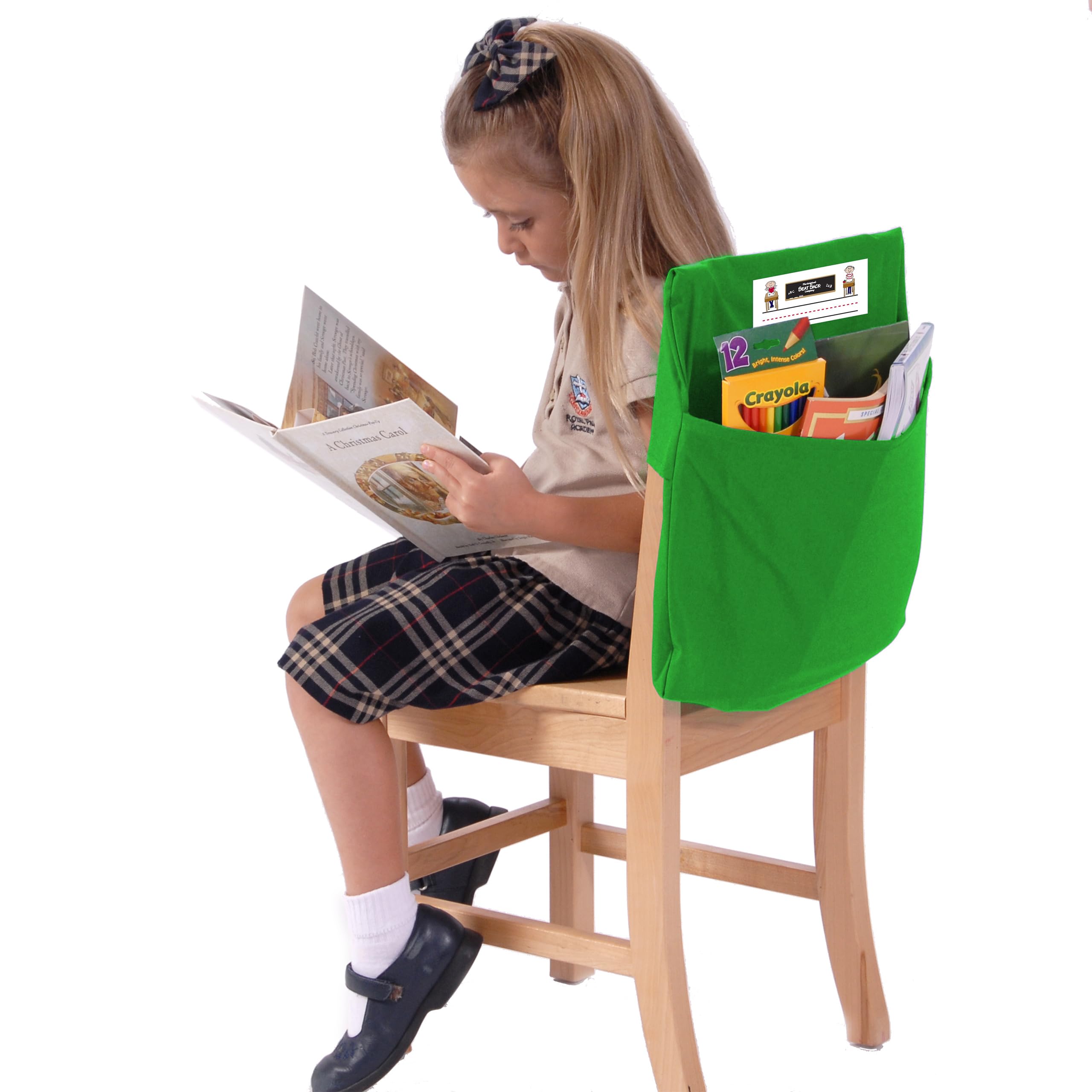
Think of this as the slightly trimmed version of the 17-inch model, purpose-built for chairs with narrower backs. At 15 inches wide, it fits standard elementary plastic and wood chairs without overhang, and the single pocket still holds a binder, pencil bag, and several spirals. The laminated poly-cotton fabric resists spills and can be wiped clean.
The official 15-pound weight capacity is a practical benchmark: it tells you this pocket can hold a typical daily load without the bottom seam pulling away. Customer feedback confirms the material stays intact after seven months of daily use in a kindergarten room. The clear name slot on the front helps students quickly identify their own organizer.
The main limitation is again the single-compartment design. Kids with lots of loose supplies will need an additional pouch or the pocket will become a jumbled mess. The green color is pleasant but the laminated finish can develop creases over time if folded during storage.
Why it’s great
- Rated to hold up to 15 pounds of student materials
- Clear name card slot eliminates lost bags
- Flame-retardant fabric meets classroom safety requirements
Good to know
- Single pocket limits organization options
- Laminated finish may crease when stored folded
3. moopok 3-Pocket Denim Purple
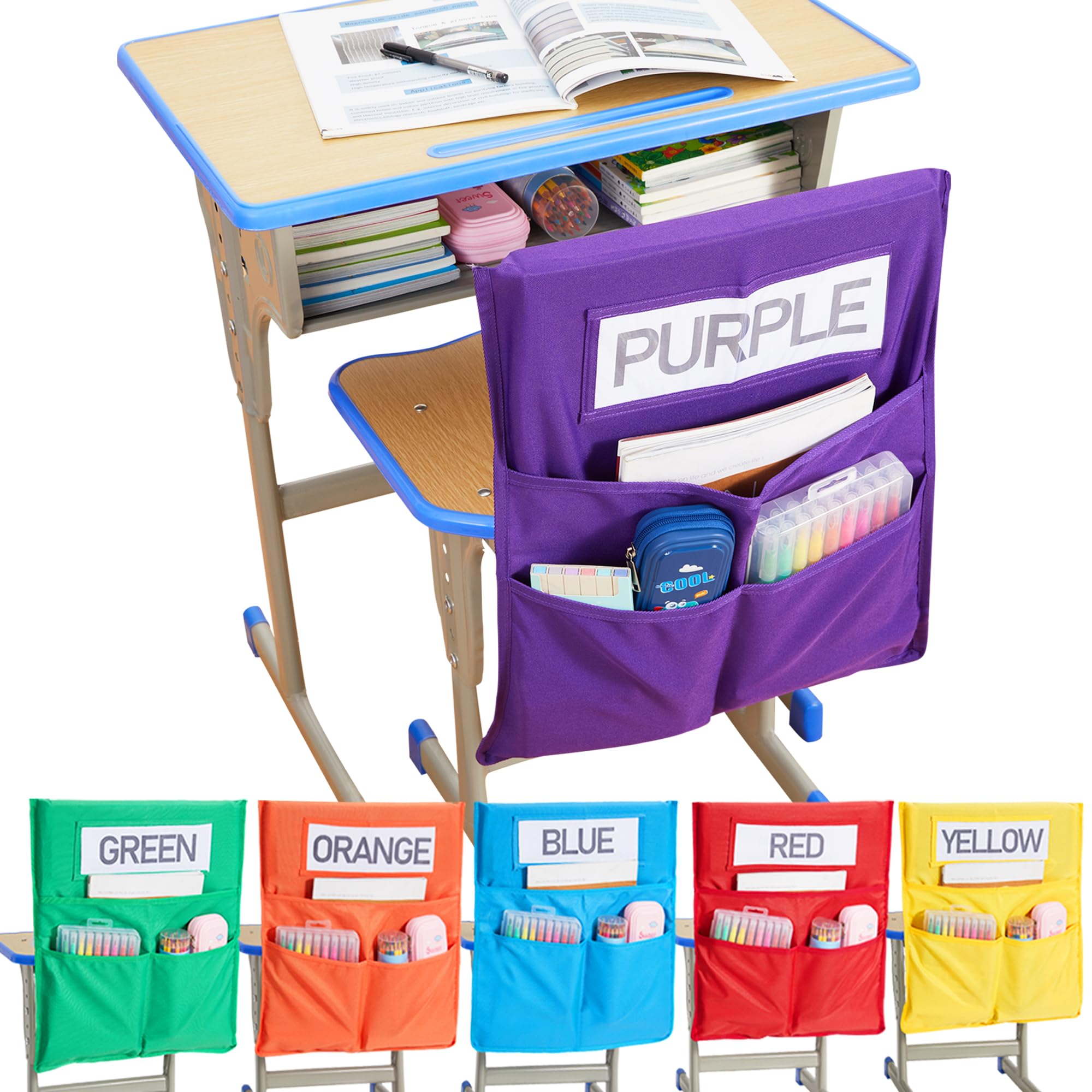
The biggest upgrade here is the three-pocket layout: a large 15-by-12-inch main pouch for books and binders, plus two medium 7.6-by-8-inch pockets for smaller items like calculators, phones, or pencil pouches. This separation is exactly what teachers need when students carry headphones, a whiteboard, and a folder simultaneously.
The denim fabric feels substantial and wears well. Real users report no tearing after five months of heavy use in a first-grade classroom. The bright color options help younger children quickly locate their storage, and the non-trace installation simply slides over the chair back without any ties or buckles. The clear name slot is generous enough for clearly printed labels.
One caveat: the denim material is machine washable but can shrink slightly if dried on high heat. The manufacturer recommends air drying. Also, the pocket fits chairs with seat backs up to 15 inches wide; wider or curved backs may make the sleeve feel tight.
Why it’s great
- Three-compartment design separates books from small supplies
- Durable denim fabric with reinforced stitching
- Machine washable for easy maintenance
Good to know
- May shrink in the dryer — air dry recommended
- Does not fit chair backs wider than 15 inches well
4. Pacon Pocket Chart Blue & Red

With two large pockets and four small pockets, this is the most compartmentalized option in the lineup. The two deep pockets are perfect for workbooks and notebooks, while the four smaller slots handle pencils, markers, index cards, and the occasional eraser. The 18.5-inch height means the chart extends higher than typical chair pockets, giving it a full cubby appearance.
The protective name card window with a blank insert is a thoughtful detail for teachers who rotate seating. The fabric feels high-quality, and the chart has been a classroom staple since 2014, suggesting durable design. It works well in Pre-K, kindergarten, and first-grade classrooms where children need visual cues to find the right pocket.
A few users noted that the seams can split after several months, particularly along the inside edges of the larger pockets. Out of a 19-unit order, some teachers reported 5 to 6 failing within one school year. The chart is also wider than some chair backs, so measure your chair top before purchasing.
Why it’s great
- Six total pockets provide best-in-class organization
- Protective name card window reduces replacement effort
- Deep 2.5-inch gusset holds bulky items
Good to know
- Seam durability varies — some can split within months
- Fits wider chairs better than narrow back models
5. Maitys 24-Pack Canvas Black

Designed for teachers outfitting an entire classroom at once, this bulk pack delivers 24 canvas chair pockets with matching name tags. The 20-by-17-inch pockets are the largest on this list, providing enough room for workbooks, folders, a pencil box, and even a small whiteboard. The canvas material is noticeably thick and survives multiple years of heavy use — some users report pockets lasting three years in kindergarten without significant damage.
Installation is straightforward: slide the sleeve over the chair back without needing ties or straps, and the pocket stays in place. The included name tag is larger than many competitors at 7 by 3.1 inches, making it easy to identify at a glance. The black color hides dirt well compared to lighter options.
The main drawback is that the canvas material, while durable, can sustain cuts from scissors or sharp objects. A few units may develop small tears along the bottom edge after extended use. The pack also lacks multi-pocket designs, so everything shares the single large storage space.
Why it’s great
- Extra-large 20×17-inch pocket fits oversized materials
- Canvas fabric stands up to years of classroom abuse
- Bulk pack of 24 saves money for full-room orders
Good to know
- Single pocket offers no internal organization
- Fabric can tear if snagged on sharp objects
FAQ
Can chair pockets fit every classroom chair?
How do I clean chair pockets without damaging them?
How many pockets do elementary students actually need?
What is the best way to attach a name tag to a chair pocket?
Final Thoughts: The Verdict
For most users, the chair pockets for classrooms winner is the Seat Sack 17″ Single Pocket because it balances certified flame resistance, reinforced seams, and a proven multi-year lifespan at a price that works for individual classroom purchases. If you want separation between books and supplies for each student, grab the moopok 3-Pocket Denim. And for a full-classroom solution that can survive three years of kindergarten wear, nothing beats the Maitys 24-Pack Canvas.

Mo Maruf
I created WellFizz to bridge the gap between vague wellness advice and actionable solutions. My mission is simple: to decode the research and give you practical tools you can actually use.
Beyond the data, I am a passionate traveler. I believe that stepping away from the screen to explore new environments is essential for mental clarity and physical vitality.