Our readers keep the lights on and my smoothie glass nicely filled. As an Amazon Associate, I earn from qualifying purchases.
A bright dog left with nothing to do is a recipe for chewed baseboards, dug-up flower beds, and a pantry raided with surgical precision. Mental stimulation is not a luxury for high-IQ breeds—it is a daily requirement. The right puzzle turns that boundless brainpower into focused problem-solving rather than destructive creativity, giving your dog a job that actually tires them out faster than a long run.
I’m Mohammad Maruf — the founder and writer behind WellFizz. This guide is built on hundreds of hours spent analyzing treat-dispensing mechanics, difficulty progression, material safety certifications, and real-world durability reports across the most engaging puzzle platforms available.
Whether you own a Border Collie that solves Level 3 puzzles in under a minute or a Terrier who needs a fresh challenge every week, finding the best dog puzzles for smart dogs means understanding difficulty scaling, material toughness, and engagement longevity.
How To Choose The Best Dog Puzzles For Smart Dogs
Not every puzzle is built for a dog that figures out basic flaps and sliding lids in under a minute. Smart dogs need layered challenges that force sequential thinking, not just brute-force pawing. The difference between a puzzle that engages for 30 minutes and one that gets abandoned in five comes down to difficulty architecture, material resilience, and how many ways the dog can actually cheat the system.
Difficulty Progression and Level Scaling
Flat puzzles with single-action compartments stop being interesting after the second solve. Look for puzzles with at least three distinct mechanical actions—sliding, rotating, flipping, or dispensing—arranged in a sequence. The best systems let you lock or remove easier elements as your dog improves, so the same toy stays challenging for months rather than hours.
Material Grade and Chew Resistance
Thin ABS plastic with sharp edges cracks under excited paws. Food-grade ABS with a wall thickness above 2 millimeters survives repeated drops and determined nosing. If your dog applies force with their teeth, even the best plastic will eventually show wear—prioritize puzzles with replaceable components or solid one-piece bases that don’t rely on friction-fit tabs that pop loose under pressure.
Dispensing Reliability and Treat Size Compatibility
A puzzle that jams on every third treat frustrates both dog and owner. Mechanisms with gravity-fed chutes or spin-to-release chambers handle kibble sizes from 5 millimeters to 15 millimeters most consistently. Adjustable dispensing slots let you switch between tiny training treats and full-sized kibble without disassembling the puzzle, which keeps the difficulty curve smooth rather than punishing.
Quick Comparison
On smaller screens, swipe sideways to see the full table.
| Model | Category | Best For | Key Spec | Amazon |
|---|---|---|---|---|
| KADTC Dog Puzzle Toy | Premium | Vertical 3-level challenge | Spin-to-release, 4 play modes | Amazon |
| Potaroma Dog Puzzle Feeder | Premium | Electronic treat dispensing | 280ml capacity, remote control | Amazon |
| Outward Hound MultiPuzzle | Mid-Range | Expert-level sliding tiles | Level 4, holds 1 cup kibble | Amazon |
| ZippyPaws SmartyPaws Puzzler | Mid-Range | 3-in-1 slide/rotate/flip | 6 treat pockets, dishwasher safe | Amazon |
| Outward Hound Hide-A-Squirrel | Budget | Plush hide-and-seek play | 6 squeaky squirrels, XL trunk | Amazon |
In‑Depth Reviews
1. KADTC Dog Puzzle Toy
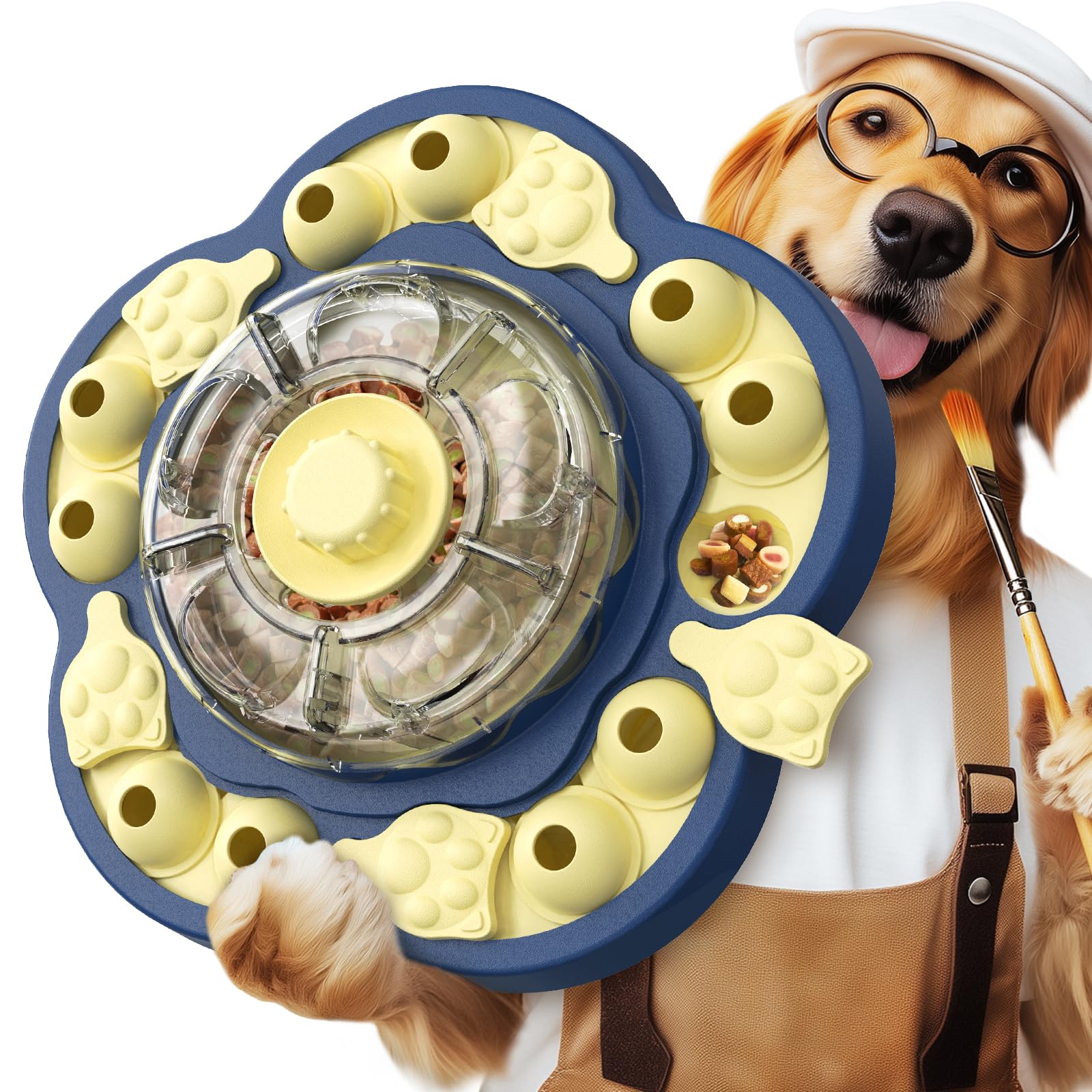
The KADTC Puzzle Toy breaks away from flat board designs by stacking three difficulty levels vertically. Dogs spin the center mechanism to drop treats into lower pods, then slide compartments to access the rewards—a layered sequence that takes smart dogs several sessions to fully solve instead of seconds. The sunflower-shaped base with integrated structure reduces loose pieces that excited paws might scatter across the floor.
Four distinct play modes let you adjust the challenge as your dog improves, moving from beginner spin-to-release up to complex multi-step sequences. Owners of Aussiedors, German Shepherds, and Labs consistently report that this toy slows fast eaters from 30-second bowl gulps to 6-minute meal challenges, reducing regurgitation risks while providing genuine mental workout.
Food-grade ABS construction resists cracking under repeated drops on tile and hardwood. The clear food pods rinse clean easily, and the non-slip base keeps the puzzle stable even when a determined 70-pound dog paws at the spinning mechanism. No assembly is required—fill, set down, and let the problem-solving begin.
Why it’s great
- Three difficulty levels in one vertical system prevent quick solves
- Spin-to-release mechanism effectively slows fast eaters
- Food-grade ABS with integrated base reduces loose parts
Good to know
- Moving parts can dislodge under very forceful pawing
- Best suited for dogs 10 pounds and up
2. Potaroma Dog Puzzle Feeder Toy

The Potaroma Puzzle Feeder introduces an electronic dimension to mental enrichment. A rechargeable treat dispenser responds to a remote control with an 80-foot range, letting you dispense kibble from across the room while your dog learns to press the activation button. Nine preset sound options plus a voice recording feature create a personalized training loop that strengthens paw coordination and impulse control.
The 280-milliliter container accommodates dry kibble up to 15 millimeters in size, with adjustable dispensing amounts that prevent overload. French Bulldog owners report their puppies mastered the button within five days, while larger breeds up to 75 pounds engage enthusiastically without breaking the ABS housing. The intermittent dispensing pattern—treats release at variable intervals—reinforces persistence rather than rewarding frantic pawing.
USB rechargeable batteries power both the button and the dispenser, eliminating disposable battery waste. The unit works indoors and outdoors, making it a reliable boredom buster during bad weather when walks aren’t possible. Occasional treat jams happen with irregularly shaped kibble, but most owners consider the problem-solving challenge a feature rather than a bug.
Why it’s great
- Remote control dispensing builds training into play
- Adjustable treat portion sizes for different kibble grades
- USB rechargeable with excellent battery life
Good to know
- Occasional treat jams with irregularly shaped kibble
- Best used with dry food only
3. Outward Hound by Nina Ottosson MultiPuzzle

The Nina Ottosson MultiPuzzle is the fourth tier in the Outward Hound difficulty ladder, designed specifically for dogs that have breezed through Level 3. The puzzle combines sliding tiles, a rotating wheel, and movable sliders that must be manipulated in sequence to release hidden treats. A 15-minute session on this puzzle provides mental exertion equivalent to 30 minutes of physical exercise, making it invaluable for high-energy breeds that need more than just a walk.
The one-cup kibble capacity turns mealtime into a 20-minute problem-solving session that slows down gulpers and engages obsessive thinkers. Husky and pit mix owners report their dogs staying entertained for 45 minutes on first exposure, with no visible tooth marks after repeated use. The pull-out treat tray makes reloading quick, and the square base stays put on smooth floors.
Some small-breed owners note that determined chewers can pry tile sections loose after repeated aggressive play. The plastic walls are thinner than premium-tier puzzles, so supervising initial interactions is wise until you gauge your dog’s force tolerance. The difficulty can be adjusted upward by hiding treats deeper in the slider tracks or adding more obstacles between layers.
Why it’s great
- True Level 4 difficulty with multi-step mechanics
- Holds a full cup of kibble for complete meal puzzles
- Pull-out tray simplifies refilling between rounds
Good to know
- Some dogs can cheat by flipping tiles instead of sliding
- Plastic walls may not survive determined heavy chewers
4. ZippyPaws SmartyPaws Puzzler
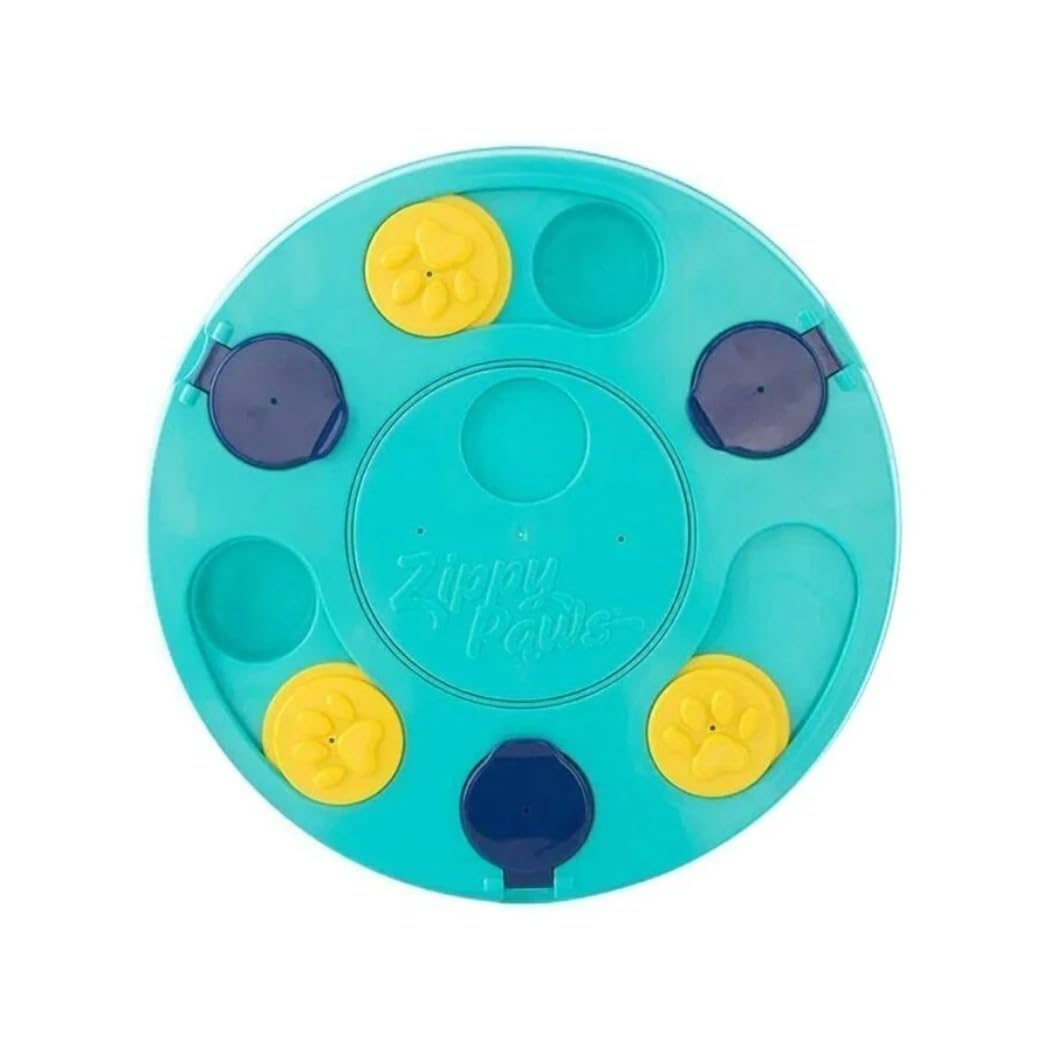
The ZippyPaws SmartyPaws Puzzler introduces three mechanical actions—slide, rotate, and flip—in a lightweight 1.42-inch tall frame that fits easily into a crate or travel bag. Six treat pockets distribute rewards across the square surface, encouraging dogs to work methodically rather than paw randomly. The teal plastic is visually distinct from standard beige puzzle boards, which helps dogs differentiate the puzzle from their regular feeding bowl.
Owners of puppies and small breeds report this puzzle works well as a first introduction to problem-solving toys, with most dogs mastering the basic slide function within a few minutes. The lightweight design means excited dogs can push the puzzle around the floor, which adds an extra coordination challenge. Dishwasher-safe construction simplifies cleanup after wet treat residue builds up.
Durability is the main trade-off at this tier. Pitbull owners report that lid tops get chewed off if left unsupervised, and experienced puzzle dogs solve the three actions in under a minute. This is an excellent starter puzzle or travel companion, but high-IQ breeds will need something more complex within the first week of ownership.
Why it’s great
- Three distinct actions teach foundational problem-solving skills
- Dishwasher safe for easy daily cleaning
- Lightweight and portable for travel or crate use
Good to know
- Too easy for advanced or very smart dogs
- Not suitable for unsupervised heavy chewers
5. Outward Hound Hide-A-Squirrel Dog Toy

The Hide-A-Squirrel combines a plush tree trunk with six squeaky squirrels that dogs must root out and retrieve. This isn’t a cognitive puzzle in the traditional sense—it’s a hunting simulation that engages prey drive rather than logical sequencing. The XL trunk measures 12.25 by 7 by 7 inches, providing enough depth that dogs must work to extract each squirrel rather than just tipping the toy over.
Mini dachshund owners report that the individual squirrel toys last over three years while the trunks get destroyed more quickly. The squeakers motivate dogs to keep digging, and the variety of colors and textures adds visual interest. The soft plush construction makes this toy safe for dogs that prefer carrying and shaking over gnawing on hard plastic.
Durability is limited for aggressive chewers—determined dogs can rip through the trunk stitching and stuffing within minutes. The squirrels themselves lose tails and fur attachments with rough play. This is best suited for gentle players or as a supervised enrichment toy where you control the interaction time.
Why it’s great
- Engages natural hunting and digging instincts
- Squeaky squirrels hold up well for gentle players
- XL size works for small and medium mouth sizes
Good to know
- Plush trunk is not durable for determined chewers
- Squirrel fur and tails shed quickly with rough play
FAQ
How do I know if a dog puzzle is too easy for my smart dog?
Can dog puzzles cause frustration instead of mental stimulation?
How often should I rotate puzzles to keep my dog challenged?
Final Thoughts: The Verdict
For most users, the dog puzzles for smart dogs winner is the KADTC Dog Puzzle Toy because its vertical three-level design prevents quick solves and offers the most replay value through four distinct play modes. If you want electronic dispensing with remote training capability, grab the Potaroma Dog Puzzle Feeder. And for a budget-friendly hide-and-seek experience that taps into prey drive, nothing beats the Outward Hound Hide-A-Squirrel.

Mo Maruf
I created WellFizz to bridge the gap between vague wellness advice and actionable solutions. My mission is simple: to decode the research and give you practical tools you can actually use.
Beyond the data, I am a passionate traveler. I believe that stepping away from the screen to explore new environments is essential for mental clarity and physical vitality.