Our readers keep the lights on and my smoothie glass nicely filled. As an Amazon Associate, I earn from qualifying purchases.
You track your workouts, count calories, and monitor your sleep—yet the most powerful metabolic lever of all remains a mystery. Your blood glucose dictates whether your body burns fat or stores it, and for anyone serious about weight loss, knowing how your meals impact that signal is the missing piece. A continuous glucose monitor (CGM) designed for metabolic insight changes everything, turning invisible post-meal spikes into actionable data that helps you choose foods that keep your energy steady and your fat-burning engine running.
I’m Mohammad Maruf — the founder and writer behind WellFizz. My research into this guide involved cross-referencing hundreds of verified customer reports and analyzing the specific sensor technology, app ecosystems, and accuracy benchmarks that separate a useful weight-loss CGM from a clinical diabetes tool that happens to get marketed differently.
Whether you’re navigating prediabetes or simply want to optimize your nutrition for fat loss, the right sensor provides the feedback loop you need. Choosing the best cgm for weight loss means balancing real-time accuracy, app-driven insights, and the total cost of ownership over several months of use.
How To Choose The Best CGM For Weight Loss
A CGM designed for weight loss prioritizes different features than one meant for daily insulin dosing. You care less about alarm thresholds for dangerous lows and more about post-meal curve shapes, glucose variability, and how quickly your body returns to baseline. Here’s what to evaluate.
Sensor Lifespan and Replacement Policy
Most biosensors last 10 to 14 days. A longer wear time reduces the per-day cost, which is critical because CGMs are an ongoing expense. Beyond the rated lifespan, check the manufacturer’s free replacement guarantee—some brands will replace a failed sensor at no cost regardless of the reason, while others require lengthy support calls. A generous policy protects your investment if an early sensor fails or detaches.
App Analytics for Nutritional Insight
The hardware is useless without smart software. The best weight-loss CGMs sync to apps that log meals, exercise, and sleep alongside glucose data, then present correlations you can actually use. Look for apps that highlight which meals cause prolonged spikes, calculate time-in-range, and offer trend summaries over 7, 14, or 30 days. A simple number display isn’t enough—you need pattern recognition.
Accuracy vs. Blood Glucose Meters
All CGMs measure interstitial fluid, not blood, so you should expect a delay of 5 to 15 minutes compared to finger-stick readings. Some consumers report variance of 10 to 20 points. That’s acceptable for trend tracking. For weight loss, you care about direction and magnitude of change, not a single precise number. Any CGM that claims to match lab values within 8% is performing at the top of the category.
Quick Comparison
On smaller screens, swipe sideways to see the full table.
| Model | Category | Best For | Key Spec | Amazon |
|---|---|---|---|---|
| Lingo CGM | Continuous | Optimizing nutrition | 14-day sensor, no finger sticks | Amazon |
| Easy@Home Wireless | Blood Test | High-value kit with app | 100 test strips included | Amazon |
| Precision Xtra | Dual Meter | Glucose + ketone tracking | Ketone test capability | Amazon |
| CONTOUR NEXT ONE | Blood Test | Bluetooth meal logging | SmartLIGHT target indicator | Amazon |
| Trackstar Blood Glucose | Blood Test | Bundle with 50 strips | 0.8 µL sample, 5-second result | Amazon |
| Ascensia CONTOUR NEXT | Blood Test | Everyday accuracy | Second-Chance sampling | Amazon |
| Embrace Talk | Blood Test | Voice-guided testing | 300-test memory | Amazon |
In‑Depth Reviews
1. Lingo Continuous Glucose Monitor (CGM)
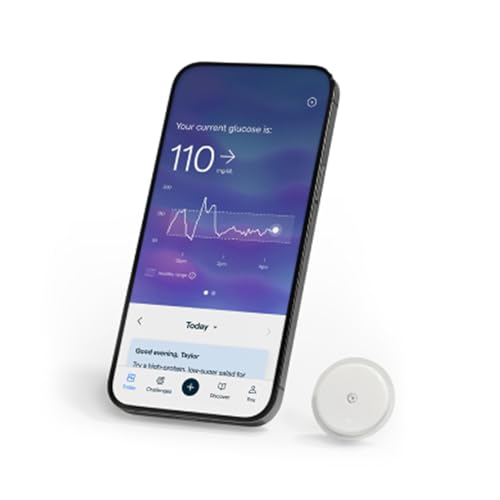
The Lingo CGM, manufactured by Abbott, is the only true continuous monitor in this lineup and the most direct fit for someone seeking a dedicated weight-loss metabolic tracker. The biosensor attaches painlessly to the back of your arm and delivers minute-by-minute glucose data for up to 14 days without a single finger prick. The companion app shows how specific meals, exercise, and sleep impact your glucose curve, helping you identify which foods spike you and which keep your levels steady—exactly the feedback loop a weight-conscious user needs.
The user experience is mixed. Many find the application straightforward and the data genuinely insightful, citing better food choices and improved time-in-range. However, a meaningful fraction of customers report sensor pairing failures with certain iOS versions, app instability, and a 20-minute support hold time that sometimes ends without resolution. Some users also note a 10 to 20 point variance compared to traditional finger-stick meters, which is expected for interstitial fluid measurement but frustrating for those expecting lab-level precision.
For weight loss, the trend data is valuable despite the occasional connection hiccup. The free replacement policy is a strong safety net, and the HSA/FSA eligibility removes a financial barrier. If you’re ready to stop guessing and start seeing real-time metabolic responses, the Lingo is the most category-appropriate option here—just be prepared for a potentially rocky app setup.
Why it’s great
- True continuous monitoring without finger sticks
- Direct nutritional insight via meal-linked glucose curves
- Free replacement for any failed sensor within 14 days
Good to know
- App pairing failures reported on some iOS versions
- Readings are interstitial fluid, may vary 10-20 pts from blood
- Customer support can be slow and unhelpful
2. Easy@Home Wireless Glucose Monitor Kit
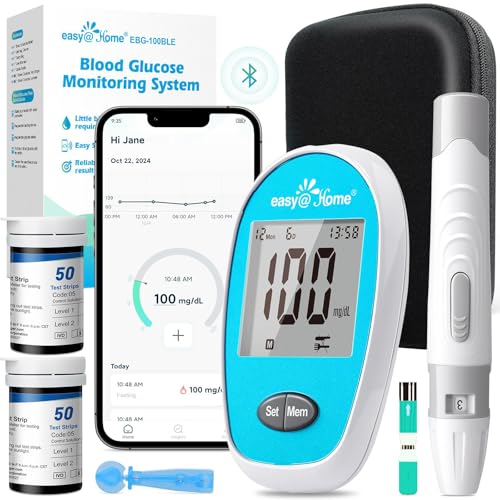
The Easy@Home kit combines a Bluetooth-enabled meter with a generous bundle of 100 test strips and 100 lancets, making it the most supply-rich option for users who want to test multiple times daily without worrying about reordering. The GlucoseEase app tracks pre- and post-meal values and generates 7, 14, 30, and 90-day summaries—enough historical data to spot patterns that inform meal timing and portion choices for weight loss.
Accuracy is a strong point here. The meter exceeds ISO 15197 standards with a 97.5% compliance rate within ±15% of lab values. The auto-on feature when a strip is inserted and auto-off after three minutes of inactivity make daily use frictionless. Some customers report initial confusion about where to apply the blood sample—drawing it to the white middle section near the black stripe rather than the strip’s end—but that learning curve is short.
A small number of users experienced battery failure within days and discovered the battery isn’t user-replaceable, which is a durability concern for long-term use. Bluetooth pairing instructions also drew criticism for being insufficiently clear, with some taking days to sync. For a mid-range investment that includes a full first month of supplies and strong accuracy, this kit delivers reliable data for dietary experiments—just keep an eye on the battery.
Why it’s great
- 100 test strips included right out of the box
- Excellent accuracy with 97.5% compliance within ±15%
- App-based trend summaries over 7-90 days
Good to know
- Battery is not user-replaceable if it fails early
- Bluetooth setup instructions could be clearer
- Blood sample must be placed on the middle section, not the strip end
3. Precision Xtra Blood Glucose and Ketone Monitoring Meter Kit
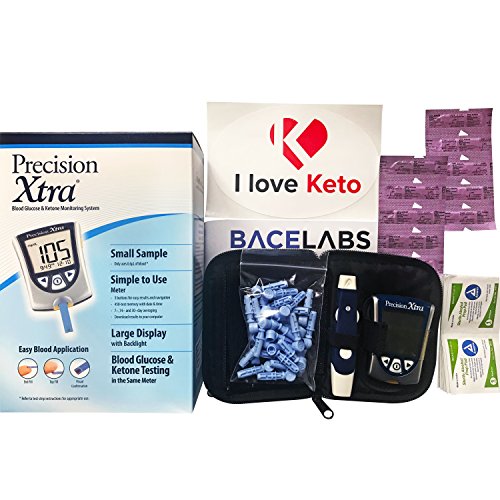
The Precision Xtra bundle stands apart because it measures both blood glucose and blood ketones, making it the only option here for users on a ketogenic diet who want to confirm they’re in nutritional ketosis. The kit includes the Precision Xtra meter, a starter pack of ketone test strips, Abbott FreeStyle lancets, and alcohol wipes—everything for a clean, confident test. The unit itself is compact, and users consistently report that the lancets are nearly painless.
The dual-function capability gives you a complete metabolic picture: glucose tells you how your last meal affected your blood sugar, and ketones confirm whether your body is burning fat for fuel. That combination is directly useful for weight loss, especially during the transition into keto adaptation. The glucose readings are reported as accurate, and the ketone testing option is praised as a reliable way to validate dietary compliance.
The major gripe is the lancet device, which multiple users describe as poorly built—one broke after about 15 uses, forcing precise manual positioning to avoid discomfort. Replacement strips for both glucose and ketones are also notably expensive, so the total ongoing cost is higher than a standard glucose-only meter. The bundle provides excellent insight for keto dieters, but budget for recurring strip purchases.
Why it’s great
- Measures both glucose and blood ketones in one meter
- Painless lancets for comfortable daily testing
- Ideal for confirming ketosis during weight loss
Good to know
- Lancet device is flimsy and may break within weeks
- Ketone and glucose test strips are expensive
- Ongoing supply costs are higher than standard meters
4. CONTOUR NEXT ONE Blood Glucose Monitoring System

The CONTOUR NEXT ONE pairs a high-accuracy meter with Bluetooth wireless sync to the mySugr app, which logs your readings, tracks meal tags, and displays trends over time. The standout feature is SmartLIGHT, a color-coded target range indicator that tells you immediately whether your reading is above, below, or within your healthy zone. That instant visual feedback helps you connect meal choices to glucose outcomes without digging into data later.
Accuracy is within ±8.4% of lab values, placing it among the most precise options available. The 60-second Second-Chance Sampling window is generous—if you didn’t get enough blood on the strip the first time, you can add more without wasting the strip. The meter runs on a CR2032 coin battery, which some users found has shorter life than standard AAA batteries, and the micro-USB port for data transfer doesn’t come with a cable included.
Complaints center on the E20 error that appears if the test strip isn’t fully inserted, which can waste strips if you’re not careful. The slim design also makes the meter feel slightly unstable for users with dexterity challenges. For someone integrating glucose tracking into a broader weight-loss app ecosystem, the mySugr integration and SmartLIGHT feedback are valuable enough to justify the trade-offs.
Why it’s great
- SmartLIGHT color indicator for instant range feedback
- High accuracy within ±8.4% of lab values
- 60-second Second-Chance Sampling saves strips
Good to know
- CR2032 battery has shorter lifespan than AAA options
- Micro-USB data cable not included
- Frequent E20 error if strip misaligned
5. Trackstar Blood Glucose Kit
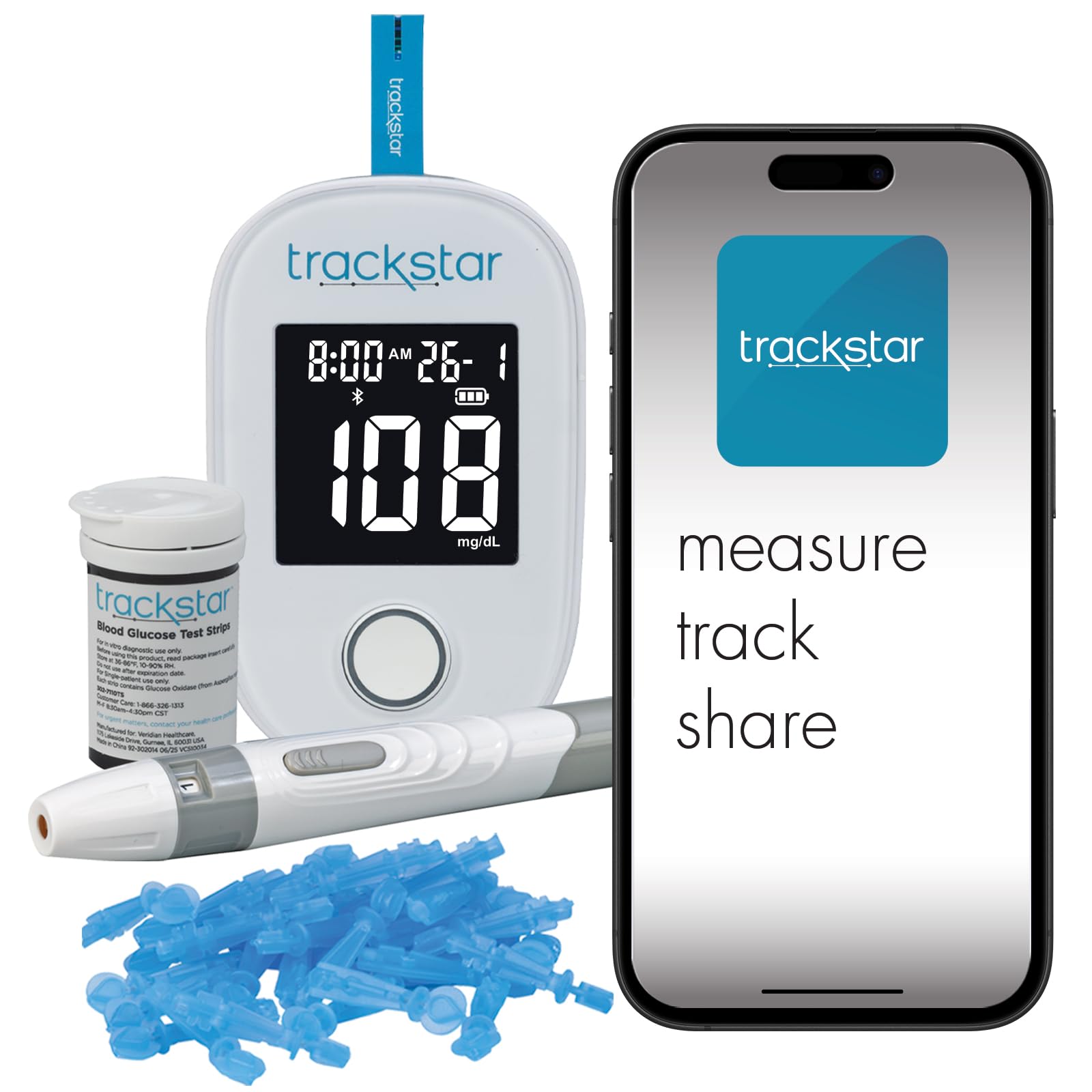
The Trackstar kit arrives with 50 test strips, 50 lancets, a lancing device, carrying case, and a charging cable—everything needed to begin testing immediately. The meter delivers results in roughly 5 seconds using a tiny 0.8 microliter blood sample, and the extra-large illuminated display makes readings easy at a glance. The top-load test strip design is more intuitive than some competitors, reducing the chance of insertion errors.
Bluetooth syncs with the Trackstar app, which stores your history and integrates with Apple Health. Some customers found the app basic—it lacks detailed trend analysis and data export options—which limits its usefulness for deep pattern analysis. The kit includes a micro-USB rechargeable battery, eliminating the hassle of coin cell replacements, but the case design has no zipper pocket for lancets, creating a minor organization issue.
Accuracy matches other insurance-covered meters, and the lancet’s sharp click ensures a clean first-stick experience nearly every time. A few users reported difficulty with initial setup and app pairing, but most found the Quick Start Guide clear enough. For someone who wants a complete starter kit with a rechargeable meter and doesn’t need elaborate analytics, this is a solid entry point for weight-loss monitoring.
Why it’s great
- Includes 50 strips and lancets for immediate use
- Rechargeable battery via micro-USB, no coin cells
- Large, bright display for quick reading
Good to know
- App lacks trend review and data export features
- Carrying case has no zipper pocket for lancets
- Some users found initial app setup confusing
6. Ascensia CONTOUR NEXT Blood Glucose Monitoring System

The CONTOUR NEXT is a no-fuss, high-quality meter manufactured in Japan that prioritizes accuracy and simplicity. It includes 20 test strips, a lancing device, lancets, a logbook, and a carrying case—everything you need to start testing immediately. The 5-second countdown and No Coding Technology mean you simply insert a strip and test, with no manual calibration or user-entered codes that could introduce errors.
The Second-Chance Sampling window allows you to apply more blood within 30 seconds if the initial sample was insufficient, reducing wasted strips. Users consistently praise its accuracy—many report readings within 1 point of lab results. The meter also provides 7, 14, and 30-day averages, giving you a simple trend picture without a smartphone app. That may be a pro for users who don’t want app clutter, but it limits the depth of analysis for weight-loss pattern spotting.
The kit is entry-level in strip count, so you’ll need to reorder soon if testing multiple times daily. The microlet lancet device is comfortable and nearly painless, but the overall design feels straightforward rather than feature-rich. For someone who wants a reliable, low-complexity meter for tracking fasting and post-meal glucose, the CONTOUR NEXT delivers consistent performance at an accessible cost.
Why it’s great
- Superb accuracy within 1 point of lab values
- Second-Chance Sampling saves wasted strips
- No coding required—insert and test
Good to know
- Only 20 test strips included; reorder quickly
- No Bluetooth or app integration for detailed analysis
- Basic design lacks advanced weight-loss insights
7. Embrace Diabetes Testing Kit

The Embrace Talk kit is built around a meter that provides voice guidance in English and Spanish, making it the most accessible option for users with visual impairments or anyone who prefers audible test confirmation. The bundle includes 300 test strips, 300 lancets, a lancing device, control solution, and a carrying case—enough supplies for several months of frequent testing without reordering.
The voice feature reads your result aloud and can be muted if you prefer silence. The large screen display and auto-coding simplify the testing process, and the 300-test memory with time and date stamps helps you track your history. Results appear in about 6 seconds with a small blood sample, and multiple customers confirm the readings are accurate when checked against other monitors.
The main drawbacks are tactile and build-related. The on/off buttons are stiff, dark, and require significant pressure to press, which some users find frustrating. The lancing device is also described as flimsy—one fell apart on first use, and customer service required a full kit return for a replacement. The test strips themselves feel thin and can split if inserted at an awkward angle. For the massive strip count and voice guidance, the Embrace Talk offers strong supply value, but the hardware quality is inconsistent.
Why it’s great
- 300 test strips and lancets for extended use
- Voice guidance in English and Spanish
- Large screen and auto-coding simplify testing
Good to know
- Buttons are stiff and difficult to press
- Lancing device is flimsy and may break early
- Test strips feel thin and can split during insertion
FAQ
Can I use a standard diabetes CGM for weight loss?
How often should I test to see weight loss patterns?
Will insurance cover a CGM for weight loss?
Final Thoughts: The Verdict
For most users, the best cgm for weight loss winner is the Lingo Continuous Glucose Monitor because it provides real-time, no-prick trend data that directly connects your food choices to your glucose response. If you prefer a high-value blood test kit with generous supplies and app-based trend summaries, grab the Easy@Home Wireless Monitor. And for anyone on a ketogenic diet who needs to confirm both glucose and ketone levels, nothing beats the Precision Xtra.

Mo Maruf
I created WellFizz to bridge the gap between vague wellness advice and actionable solutions. My mission is simple: to decode the research and give you practical tools you can actually use.
Beyond the data, I am a passionate traveler. I believe that stepping away from the screen to explore new environments is essential for mental clarity and physical vitality.