Our readers keep the lights on and my smoothie glass nicely filled. As an Amazon Associate, I earn from qualifying purchases.
Managing a dog with pancreatitis means obsessing over every gram of fat that enters their bowl. A single misstep can trigger hours of discomfort, vomiting, and costly vet visits. The right food acts as a daily safeguard, keeping digestive enzymes calm and allowing the pancreas to heal without constant irritation.
I’m Mohammad Maruf — the founder and writer behind WellFizz. This guide is built on hundreds of hours analyzing veterinary nutritional protocols, ingredient panels, and clinical feeding trials to find the safest low-fat options for sensitive canine digestive systems.
After reviewing veterinary-exclusive formulas and over-the-counter alternatives, these are the safest and most effective choices for the best dog food pancreatitis recovery and long-term management.
How To Choose The Best Dog Food Pancreatitis
Pancreatitis in dogs demands a nutritional approach that minimizes fat-triggered enzyme release while still delivering complete protein and essential fatty acids for overall health. The wrong food can send a recovering dog back to the emergency room within hours.
Crude Fat Percentage — The Absolute Ceiling
For dogs with a history of pancreatitis, crude fat should never exceed 10% on a dry matter basis. Ideally, you want formulas landing between 6% and 8%. Anything higher risks stimulating the pancreas to release digestive enzymes prematurely, causing self-digestion of the organ and acute pain. Check the guaranteed analysis on every bag or can before buying.
Protein Source and Digestibility
Highly digestible animal proteins — such as chicken, whitefish, or egg — place less metabolic demand on the pancreas. Avoid red meats and rendered by-products, which are harder to break down and often carry higher fat content. Single-protein formulas reduce the risk of cross-reactivity and make it easier to identify triggers during a flare-up.
Prescription vs. Over-the-Counter Formulas
Veterinary-exclusive diets like Hill’s i/d Low Fat and Royal Canin Gastrointestinal Low Fat undergo strict feeding trials and contain prebiotic blends tailored for dogs with compromised digestion. Over-the-counter options like SquarePet and Dave’s offer lower fat percentages without requiring a prescription, making them useful for maintenance or mild cases. Always consult your vet before switching, especially during active episodes.
Quick Comparison
On smaller screens, swipe sideways to see the full table.
| Model | Category | Best For | Key Spec | Amazon |
|---|---|---|---|---|
| SquarePet Low Fat Whitefish | Dry Kibble | Long-term maintenance without prescription | Crude Fat 8% max | Amazon |
| Hill’s i/d Low Fat Stew | Wet Food | Active recovery and picky eaters | ActivBiome+ prebiotic technology | Amazon |
| Royal Canin GI LF Dry | Dry Kibble | Vet-prescribed strict low-fat protocol | Crude Fat 5.5% | Amazon |
| Dave’s Bland Diet Pate | Wet Pate | Budget-friendly bland diet for flare-ups | Crude Fat 6% | Amazon |
| KOHA Chicken & Rice | Wet Food | Convenient vet-style bland diet at home | Single protein chicken recipe | Amazon |
In‑Depth Reviews
1. SquarePet Low Fat Whitefish Dry Dog Food

SquarePet bridges the gap between a prescription diet and a premium over-the-counter formula. Made with Pacific cod and ocean whitefish meal certified by the Marine Stewardship Council, this dry kibble delivers a low-fat profile of 8% crude fat — safely under the 10% ceiling for pancreatitis management. The proprietary dietary fiber blend combines prebiotics and probiotics to support regular bowel movements and reduce the gas and loose stool that often accompany pancreatic issues.
This formula is free from chemical preservatives, fillers, and ingredients sourced from China, which gives owners peace of mind during long-term feeding. The bird protein base avoids poultry allergens that can trigger secondary inflammation in some dogs. Owners of mini schnauzers and other breeds prone to pancreatitis report consistent appetite and zero digestive setbacks after switching to SquarePet as a daily maintenance food.
The feeding guide on the Amazon listing shows 3.5 cups for an 80-pound dog, while the bag itself recommends 4.5 to 5 cups for the same weight. Check the bag’s instructions first to avoid underfeeding. Some dogs sensitive to fish-based diets may find the natural fish aroma stronger than chicken-based kibble.
Why it’s great
- No prescription required despite veterinary-grade formulation
- 8% crude fat is among the lowest for non-prescription dry foods
- Sustainable wild-caught fish reduces inflammatory potential
- Prebiotic and probiotic blend aids digestion
Good to know
- Feeding guide discrepancy between listing and bag
- Fish-based odor may be strong for some dogs
- Only available in a 4.4lb bag
2. Hill’s Prescription Diet i/d Low Fat Stew
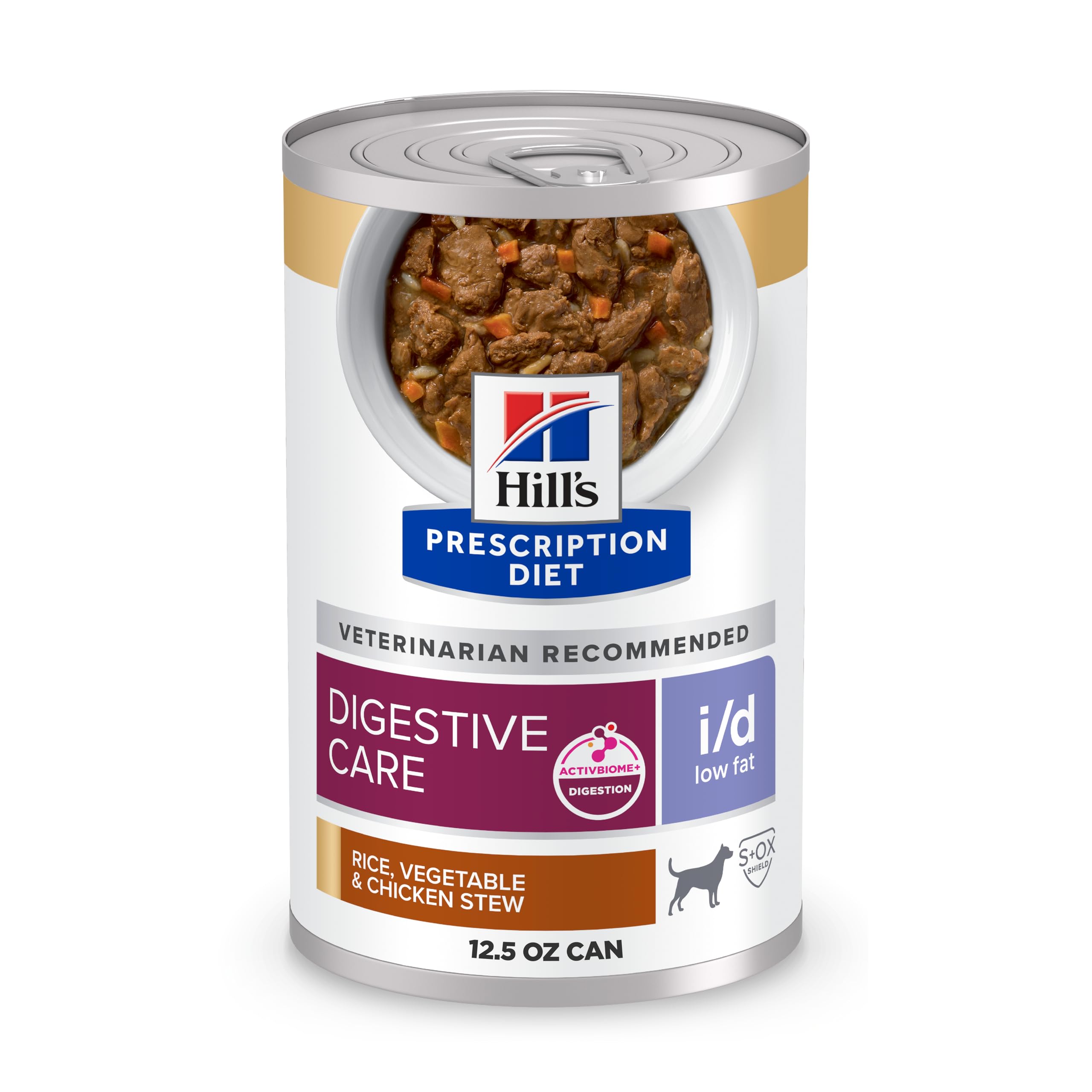
Hill’s i/d Low Fat is the gold standard in clinical pancreatitis recovery, used by veterinarians nationwide as the first-line nutritional intervention. The stew texture combines rice, vegetables, and chicken in a low-fat formula that delivers highly digestible protein while keeping crude fat to a minimum. The proprietary ActivBiome+ technology rapidly activates beneficial gut bacteria, restoring microbiome balance within days of starting the diet.
Each 12.5-ounce can provides a moisture-rich meal that supports hydration during recovery when dogs may be reluctant to drink water. The omega-3 fatty acid blend helps manage systemic inflammation that often accompanies pancreatitis. Owners of Yorkies, toy poodles, and other small breeds with chronic pancreatic sensitivity report that this wet food keeps fat-processing issues under control for months without flare-ups.
This is a prescription-only diet, so you will need to consult your veterinarian before purchasing. The 12-pack of large cans takes up significant refrigerator space after opening. Some dogs accustomed to raw or organic food may need a gradual transition period.
Why it’s great
- #1 US vet-recommended therapeutic diet for digestive care
- ActivBiome+ technology rapidly restores gut microbiome
- High moisture content aids hydration during recovery
- Clinically proven antioxidants support immune function
Good to know
- Requires prescription from a veterinarian
- Large cans need refrigeration after opening
- Premium price point compared to non-prescription options
3. Royal Canin Veterinary Diet GI Low Fat Dry
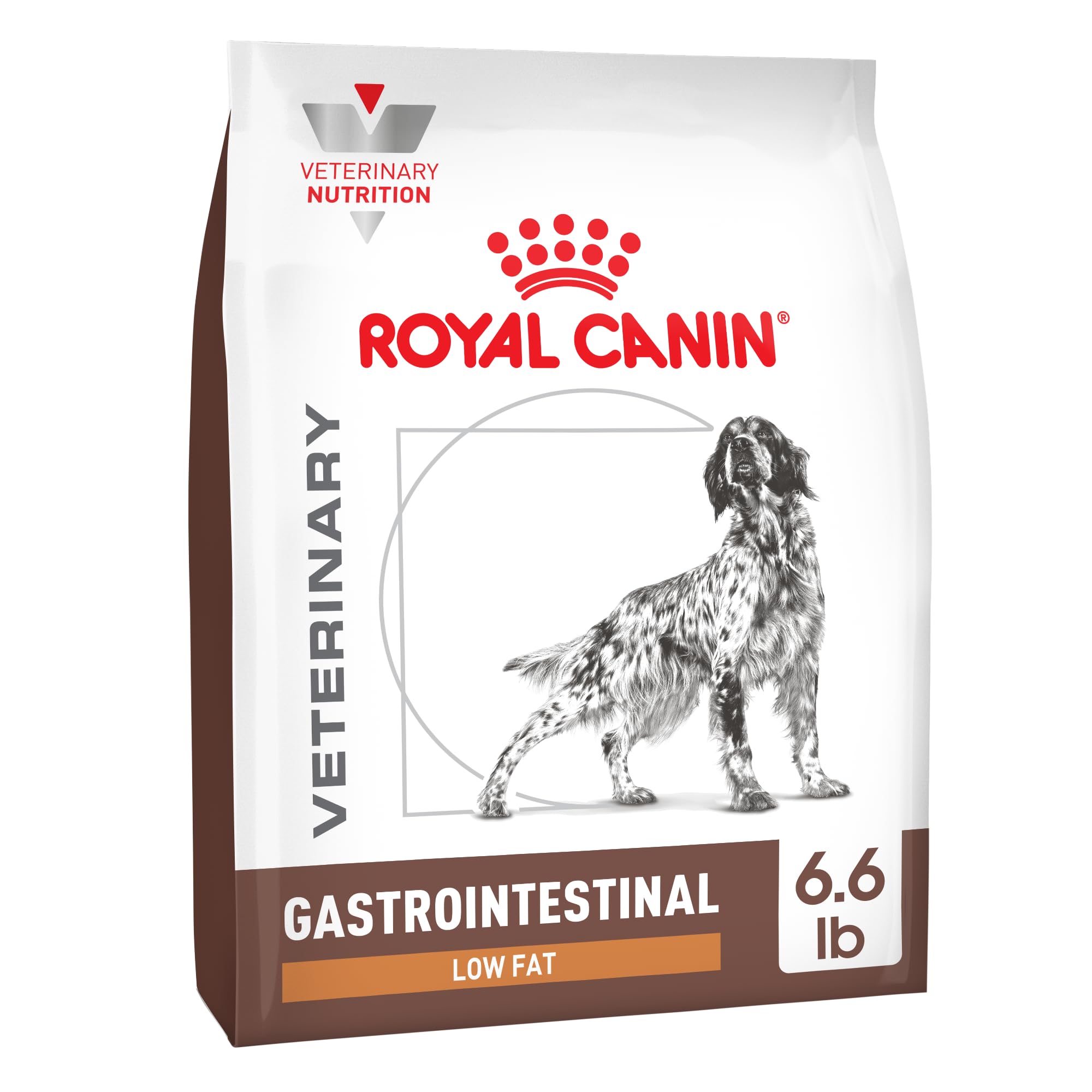
Royal Canin Gastrointestinal Low Fat is engineered for dogs that require the strictest fat restriction possible while still receiving complete nutrition. At just 5.5% crude fat, this is the lowest fat percentage among all the products reviewed here, making it the go-to choice for dogs with severe or recurrent pancreatitis episodes. The kibble is infused with prebiotics to support beneficial gut bacteria and a precise blend of dietary fibers that optimize stool quality even during active digestive distress.
The kibble texture is designed to be highly palatable, appealing even to dogs with reduced appetite during flare-ups. The chicken-based protein is highly digestible, placing minimal enzymatic demand on the pancreas. Owners of Yorkies, mini schnauzers, and other breeds genetically predisposed to pancreatitis report that this food, combined with a probiotic supplement, eliminates vomiting episodes and stabilizes their dog’s digestive system for months at a time.
This is a veterinary-exclusive prescription diet, so you will need your vet’s approval to purchase. Some customers report that Amazon’s pricing can be significantly higher than what local veterinary clinics charge. The dry kibble format may not be ideal for dogs that refuse to eat during acute pancreatitis episodes.
Why it’s great
- 5.5% crude fat — the lowest available for pancreatitis management
- Prebiotic blend promotes healthy gut bacteria balance
- Dietary fiber blend improves stool quality
- Highly palatable kibble encourages picky eaters
Good to know
- Veterinary prescription required
- May contain wheat, which could be a trigger for some dogs
- Price fluctuation on Amazon compared to vet clinic pricing
4. Dave’s Bland Diet Chicken & Rice Pate
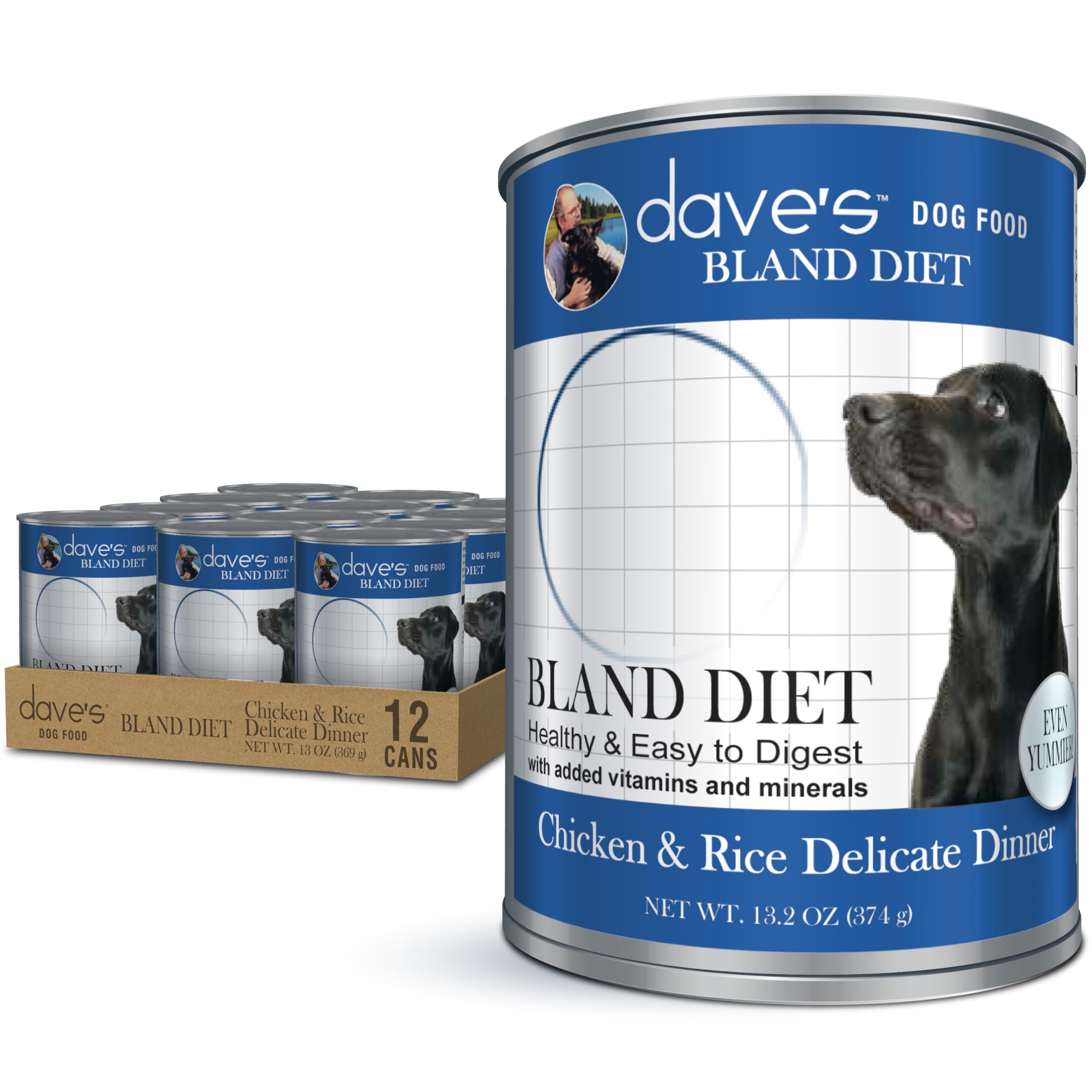
Dave’s Bland Diet Pate hits the sweet spot between cost and clinical efficacy for dogs with mild to moderate pancreatitis. At 6% crude fat and a limited ingredient list featuring only chicken, white rice, and essential vitamins, this wet food provides an accessible alternative to prescription-only formulas. The smooth pate texture requires no chewing effort, making it ideal for senior dogs or those recovering from surgery who need easy-to-digest nutrition.
Each can is complete and balanced under AAFCO guidelines for adult maintenance, meaning it can be fed as a long-term diet rather than just a short-term flare-up solution. Owners of French Bulldogs and other brachycephalic breeds with chronic digestive sensitivities report that their dogs fully recover from vomiting and diarrhea episodes within 4 to 5 days on this food. Over 5 million cans sold and widespread veterinary recommendation support its reliability in the field.
The 13.2-ounce cans are large; leftovers must be refrigerated and used within 2 to 3 days. Some dogs may find the chicken flavor less exciting than the stew-style textures from premium brands. Not formulated for growing puppies.
Why it’s great
- 6% crude fat at a budget-friendly price point
- Limited ingredient formula reduces trigger risk
- Smooth pate texture easy for seniors and dental-sensitive dogs
- Complete and balanced for long-term feeding
Good to know
- Large cans require refrigeration after opening
- Not suitable for puppies
- Some dogs may prefer stew texture over pate
5. KOHA Limited Ingredient Bland Diet Chicken & Rice
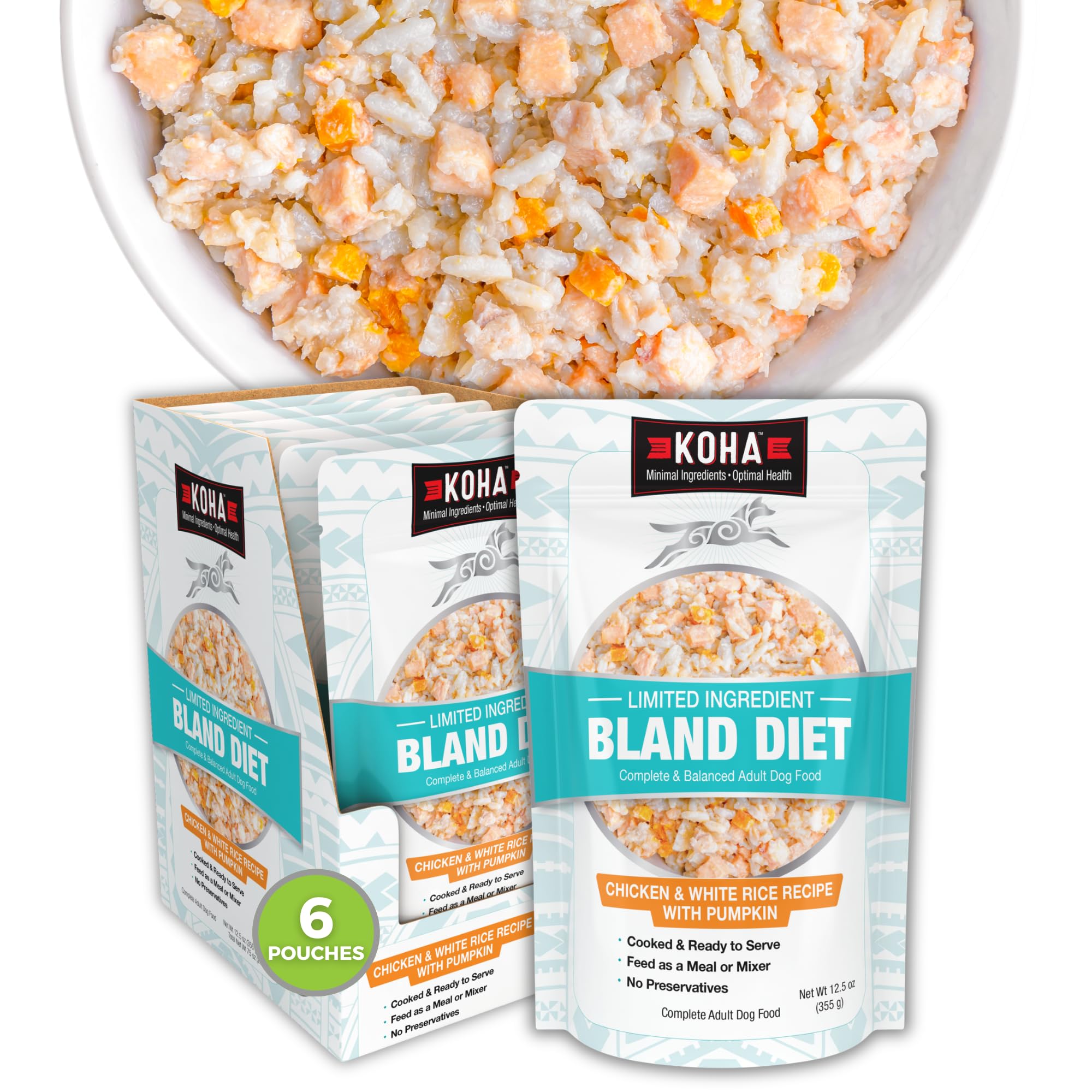
KOHA Bland Diet eliminates the need to prepare chicken and rice from scratch during a pancreatitis flare-up. Each pouch is a ready-to-serve, AAFCO-balanced meal that mirrors what your veterinarian would recommend as a bland diet, freeing you from cooking and portioning during stressful recovery periods. The single protein source — chicken — combined with white rice and pumpkin supports healthy stool formation and reduces digestive load on the pancreas.
Sold in over 5,000 vet clinics, this formula is specifically designed for chronic digestive issues, stress-related upset, and post-medication recovery. The pouches are shelf-stable, making them ideal for travel, boarding, or emergency stockpiling. Owners of toy poodles and other small breeds find that the ready-to-use format simplifies the transition back to regular food when done half-and-half for several days.
The pouches contain no peas, potatoes, corn, soy, or artificial preservatives, but the fat content is not explicitly listed on the label as low as some clinical competitors. Some dogs recovering from acute pancreatitis may need a stricter fat ceiling than this formula provides. A small number of owners report that their dogs had loose stool during the initial transition phase.
Why it’s great
- No cooking required — ready to serve from the pouch
- Sold in over 5,000 vet clinics for digestive care
- Pumpkin and white rice support normal stool formation
- Shelf-stable and portable for travel use
Good to know
- Fat percentage not explicitly stated as low as clinical diets
- May not be strict enough for severe acute pancreatitis
- Some dogs experience loose stool during transition
FAQ
Can I feed my dog homemade chicken and rice instead of commercial low-fat food?
How quickly will my dog’s pancreatitis symptoms improve on a low-fat diet?
Is a grain-free diet better for pancreatitis in dogs?
Final Thoughts: The Verdict
For most users, the best dog food pancreatitis winner is the SquarePet Low Fat Whitefish Dry Dog Food because it combines a low 8% crude fat with wild-caught, sustainable protein and a prebiotic fiber blend — all without needing a prescription. If you want the strictest fat restriction possible with veterinary-backed clinical rigor, grab the Royal Canin GI Low Fat. And for active recovery when your dog refuses dry kibble, nothing beats the Hill’s i/d Low Fat Stew.

Mo Maruf
I created WellFizz to bridge the gap between vague wellness advice and actionable solutions. My mission is simple: to decode the research and give you practical tools you can actually use.
Beyond the data, I am a passionate traveler. I believe that stepping away from the screen to explore new environments is essential for mental clarity and physical vitality.