Our readers keep the lights on and my smoothie glass nicely filled. As an Amazon Associate, I earn from qualifying purchases.
Recovering from back surgery transforms every simple action into a calculated risk — and sitting, something you cannot avoid, becomes the most critical variable in your recovery equation. The wrong chair can undo weeks of healing, while the right one actively supports your spine’s natural alignment and reduces pressure on surgical sites.
I’m Mohammad Maruf — the founder and writer behind WellFizz. I’ve spent hundreds of hours analyzing ergonomic specifications, lumbar support mechanisms, and real patient feedback to identify the chairs that truly support post-surgical recovery.
Whether you need a firm seat that prevents pelvic rotation or a reclining design that offloads your lumbar discs, this guide examines nine models that meet the specific demands of recovery. Finding the right chair after back surgery means prioritizing adjustability, spinal support, and long-term comfort over style or cost.
How To Choose The Best Chair After Back Surgery
Choosing a chair for post-surgical recovery is fundamentally different from choosing an everyday office chair. You need features that actively protect your spine, reduce stress on healing tissues, and allow you to change positions without pain. Here are the critical factors to evaluate.
Lumbar Support Adjustability
Static lumbar pillows are not enough for post-surgical needs. Look for chairs offering both vertical and horizontal lumbar adjustment so you can dial in support exactly where your surgeon cleared movement. A 2-way adjustable lumbar support lets you shift pressure away from the surgical site and maintain the natural curve of your lower back.
Seat Depth and Tilt Mechanism
A seat that is too long forces your lower back to round backward, increasing intradiscal pressure. A shallow seat or one without depth adjustment leaves your thighs unsupported. Look for a seat depth range of at least 1.5 inches of travel, with a waterfall edge that reduces pressure behind the knees. A synchro-tilt mechanism that keeps your feet flat on the floor while reclining is ideal.
Recline Range and Locking Positions
The ability to recline beyond 110 degrees offloads your lumbar discs by transferring weight to your upper back. A chair that locks at multiple angles (90°, 110°, 130°) allows you to work upright, read in a neutral posture, or rest in a supported recline without slouching. Avoid chairs that only offer a single tilt lock.
Armrest Adjustability
When rising from a seated position, your arms bear a significant portion of your body weight. Armrests that adjust in height, width, and pivot angle let you push off without twisting your torso. Chairs with 3D or 4D armrests give you the precision needed to protect your shoulders and upper back during every sit-to-stand transition.
Quick Comparison
On smaller screens, swipe sideways to see the full table.
| Model | Category | Best For | Key Spec | Amazon |
|---|---|---|---|---|
| Steelcase Leap | Premium | Customizable spinal support | 3D LiveBack + lower back firmness dial | Amazon |
| Ergohuman ME7ERG GEN2 | Premium | Durable lumbar support | 8 ergonomic adjustments | Amazon |
| Hbada X7 Smart | Premium | Auto-adjusting lumbar tracking | 3D auto-adjusting lumbar + 8D massage | Amazon |
| FLEXISPOT ErgoX-PRO | Premium | Full adjustability and cooling mesh | 5D lumbar + 7D armrests + 12-level recline | Amazon |
| Branch Ergonomic Chair | Mid-Range | Balance of features and value | 8 adjustment points, breathable mesh | Amazon |
| ProtoArc EC200 | Mid-Range | Seat depth adjustability | 5-position sliding seat (1.97″ travel) | Amazon |
| GABRYLLY Ergonomic | Mid-Range | Reclining with footrest support | 135° recline, retractable steel footrest | Amazon |
| COLAMY High Back Executive | Mid-Range | Thick cushion comfort | 6.7″ thick high-density foam seat | Amazon |
| COMHOMA Big and Tall | Budget | Budget-friendly reclining | 150° recline, pocket spring lumbar | Amazon |
In‑Depth Reviews
1. Steelcase Leap Office Chair

The Steelcase Leap is widely considered the gold standard for post-surgical seating because of its Natural Glide System, which lets the seat glide forward as you recline. This keeps your spine in a neutral position and prevents the shirt-pulling effect that most chairs cause. The 3D LiveBack technology mimics the natural movement of your spine, contouring to your shape without forcing a single fixed curve.
What truly sets the Leap apart is the lower back firmness dial, a rare feature that lets you increase or decrease lumbar resistance independently of the backrest angle. This means you can dial in the exact level of support your surgeon recommends without sacrificing recline freedom. The 4D adjustable arms move in height, width, depth, and pivot angle, giving you precise support when pushing yourself up from the chair.
The seat features a waterfall edge that reduces pressure behind the knees, and the high-density foam resists sagging over years of daily use. While the Leap requires a premium investment, its adjustability is unmatched for recovery scenarios. The chair arrives fully assembled, which eliminates any risk of improper setup.
Why it’s great
- Natural Glide System keeps spine neutral during recline
- Lower back firmness dial allows precise lumbar customization
- 4D adjustable armrests support safe sit-to-stand transitions
Good to know
- Premium pricing places it beyond budget buyers
- Seat cushion may feel firm initially before breaking in
2. Ergohuman Eurotech ME7ERG GEN2

Its dynamic lumbar support flexes with your body rather than remaining static, which reduces the risk of pressure buildup at the surgical site. Multiple customer reviews from post-surgery users report being able to sit 8 to 10 hours daily without back pain returning.
The chair features eight independent adjustments including back height, seat depth, seat height, synchro tilt, tilt lock, back angle, arm height, and tilt tension. This level of adjustability allows you to fine-tune the chair to your exact dimensions — critical when your body’s tolerance for poor positioning is near zero. The US-manufactured mesh back is sturdier than typical imports and provides airflow that keeps your skin dry during long sits.
The seat depth adjustment is particularly valuable for post-surgery users with shorter legs who need to maintain full thigh support without compressing the back of the knees. The headrest provides neck support during reclined breaks, which helps reduce overall spinal load. Assembly takes about 15 minutes with the included hex wrench.
Why it’s great
- Proven long-term support for disc recovery patients
- Lifetime warranty protects your investment
- Dynamic lumbar flexes with natural movement
Good to know
- Armrest width may feel wide for smaller users
- Seat tilt does not recline independently of back angle
3. Hbada X7 Smart Ergonomic Chair
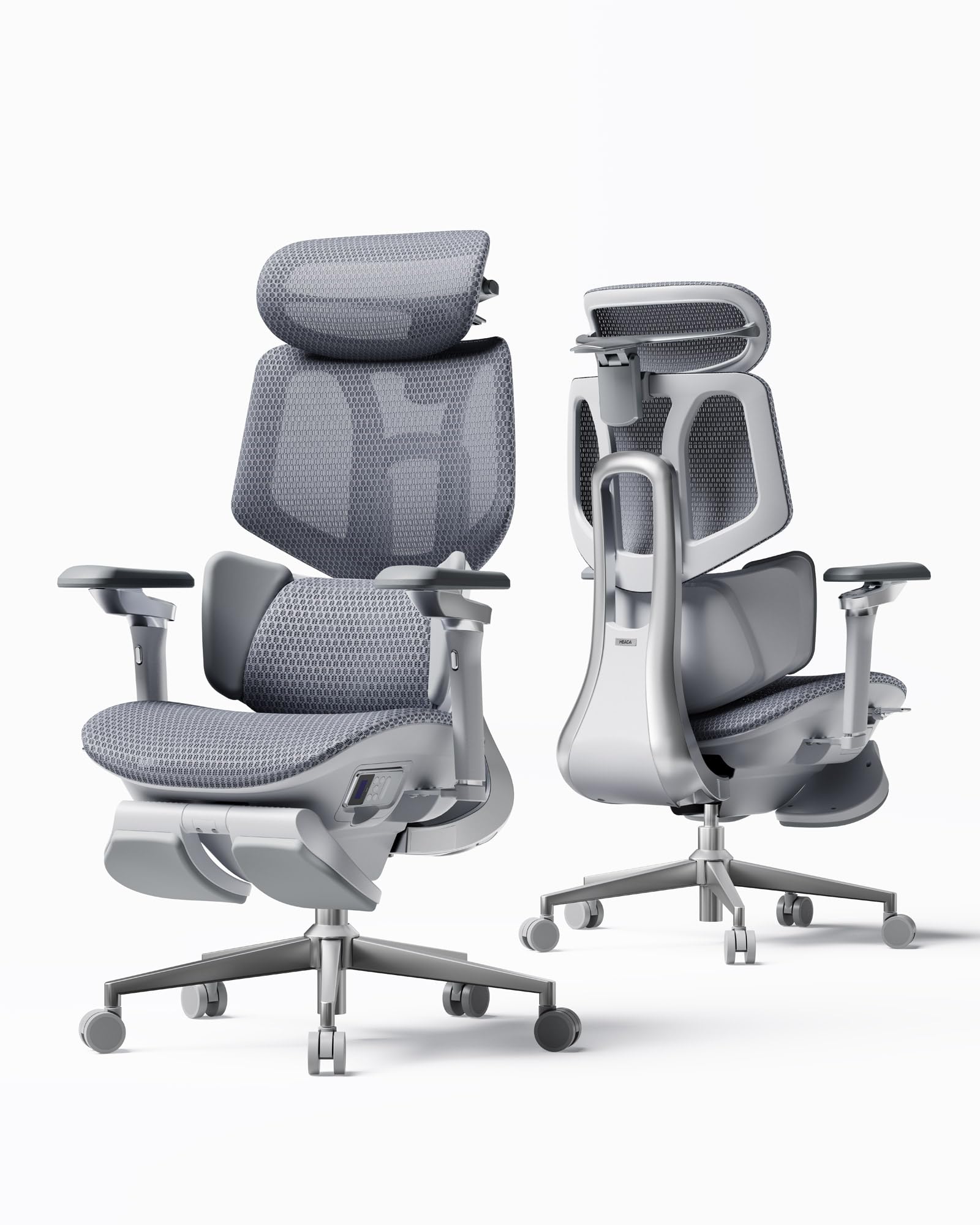
The Hbada X7 introduces active lumbar support that adjusts automatically using a gravity-sensing base, which means the chair responds to shifts in your posture without requiring manual knob-twisting. This is a significant advantage during recovery when even small movements can cause discomfort and you may not have the flexibility to reach for adjustment controls. The 8D massage rollers with three-level heating provide therapeutic relief that can help reduce muscle spasms common after surgery.
The dual-fan cooling system integrated into the 3D mesh seat operates at three speeds, preventing the heat buildup that often accompanies extended sitting on foam cushions. The 4D headrest offers 70° rotation, 55mm sliding, and 45mm height adjustment, making it easy to maintain proper cervical alignment. The 720° omnidirectional armrests feature dual-axis rotation with 110mm extension, allowing you to adjust arm support in any plane.
The aluminum frame and 5-star nylon base support up to 330 pounds, providing stability for heavier users during sit-to-stand movements. The major limitation is the cylinder height — users above 6 feet may need to replace the gas lift to achieve proper ergonomic positioning, which adds complexity for taller individuals.
Why it’s great
- Auto-adjusting lumbar reduces need for manual tweaking
- Massage and heat functions aid muscle recovery
- Dual-fan cooling prevents sweat buildup
Good to know
- Cylinder may be too short for users over 6 feet
- Premium price point similar to high-end ergonomic brands
4. FLEXISPOT ErgoX-PRO Ergonomic Chair
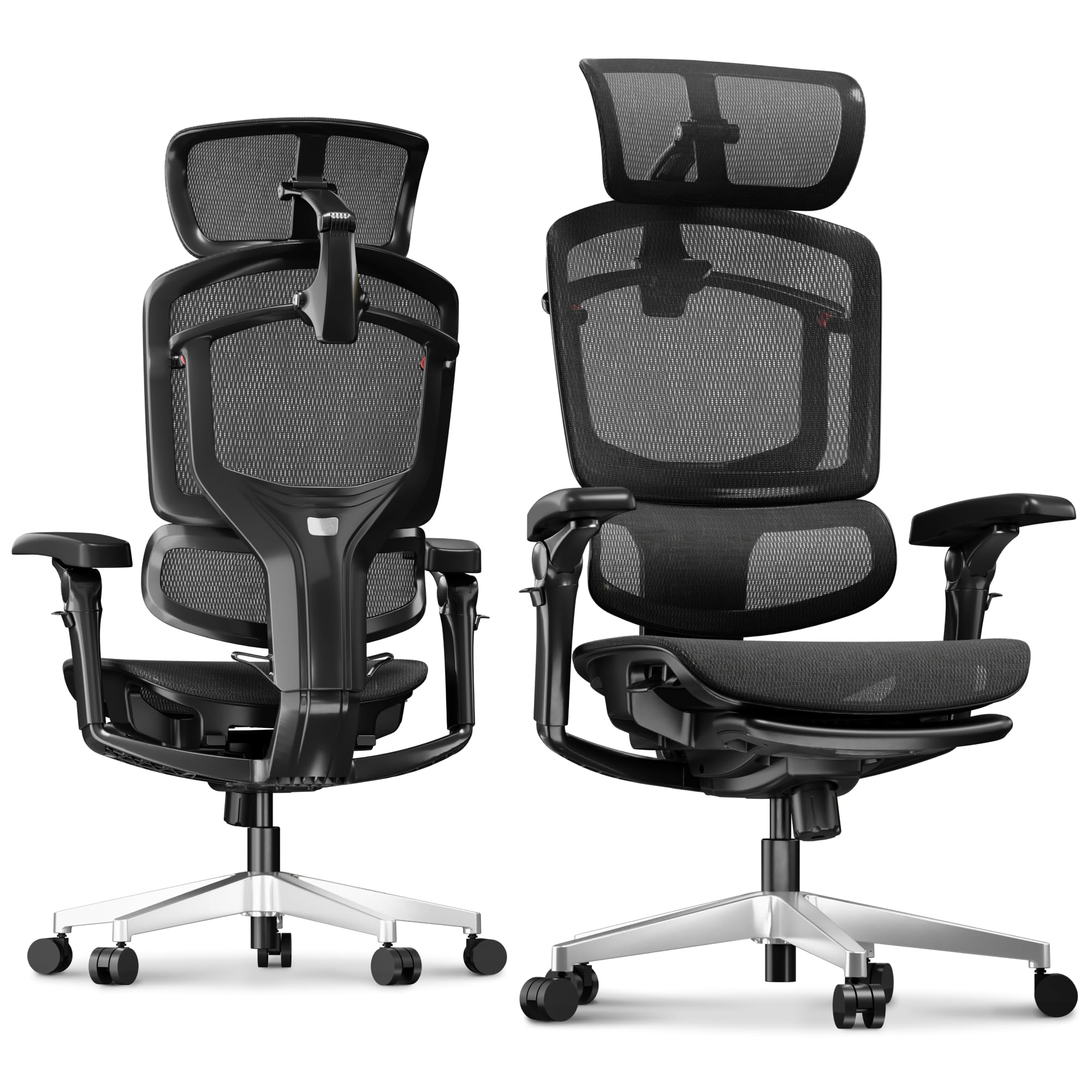
The FLEXISPOT ErgoX-PRO packs an extraordinary amount of adjustability into its frame — the 5D lumbar support extends in five directions, which means you can independently control height, depth, angle, pressure, and curvature. For post-surgery users, this granularity allows you to create a support pocket that precisely avoids the surgical site while maintaining spinal alignment everywhere else.
The 7D linkage armrests move with your body, ensuring continuous support during typing, reclining, and transitions. The 12-level fine-tuned backrest with spring cushioning lets you find the exact recline tension that feels safe and supported. The three-position tilt base locks at 90°, 115°, and 135°, giving you defined posture zones for focused work, relaxed reading, and rest.
Users praise the AeroWeave 5.0 mesh seat for its cooling properties and the included footrest for relieving lower back pressure during breaks. The reinforced nylon and fiberglass frame supports up to 551 pounds, making it one of the most weight-capable chairs on this list. The 4D headrest doubles as a back cushion when reversed, adding versatility for different post-surgery positions.
Why it’s great
- 5D lumbar allows surgical-site avoidance positioning
- 12-level recline tension for precise offloading
- Extra-high weight capacity for larger users
Good to know
- Leg rest may feel impractical for short users
- Assembly requires some mechanical comfort
5. Branch Ergonomic Chair
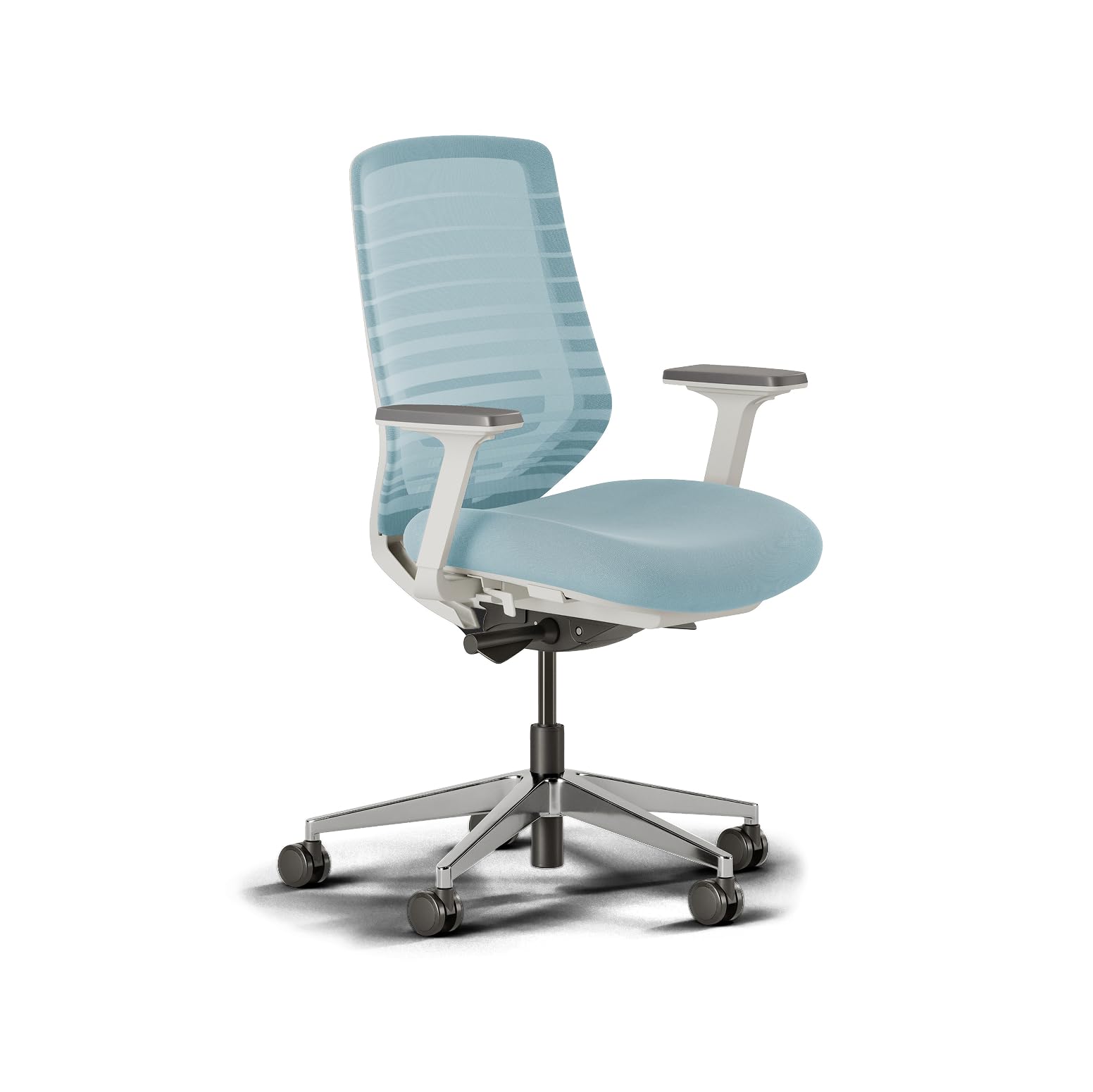
The Branch Ergonomic Chair brings a clean, adjustable design to the mid-range tier with eight points of adjustment including seat height, seat depth, backrest angle, and lumbar positioning. The seat depth adjustment is especially useful for post-surgery recovery because it allows users between 5’0″ and 6’0″ to find a position where their thighs are fully supported without their knees pressing into the seat edge.
The breathable mesh backrest prevents heat buildup during long sits, and the contoured foam cushion provides a balanced firmness that supports the pelvis without sinking. Users report the chair being comfortable for 8-plus-hour workdays, and petite users find the seat height range accommodates shorter legs without dangling. The aluminum frame adds stability while keeping the overall weight manageable for relocation.
One design trade-off is that the armrests slide forward with pressure, which can be a frustration when using them to push yourself upright. The lack of seat tilt adjustment means you cannot independently angle the seat pan, which may limit positioning options for some recovery protocols.
Why it’s great
- Adjustable seat depth accommodates varied leg lengths
- Breathable mesh reduces sweat and pressure
- Lightweight aluminum frame is easy to move
Good to know
- Armrests slide forward under pressure
- No independent seat tilt adjustment
6. ProtoArc EC200 Ergonomic Office Chair
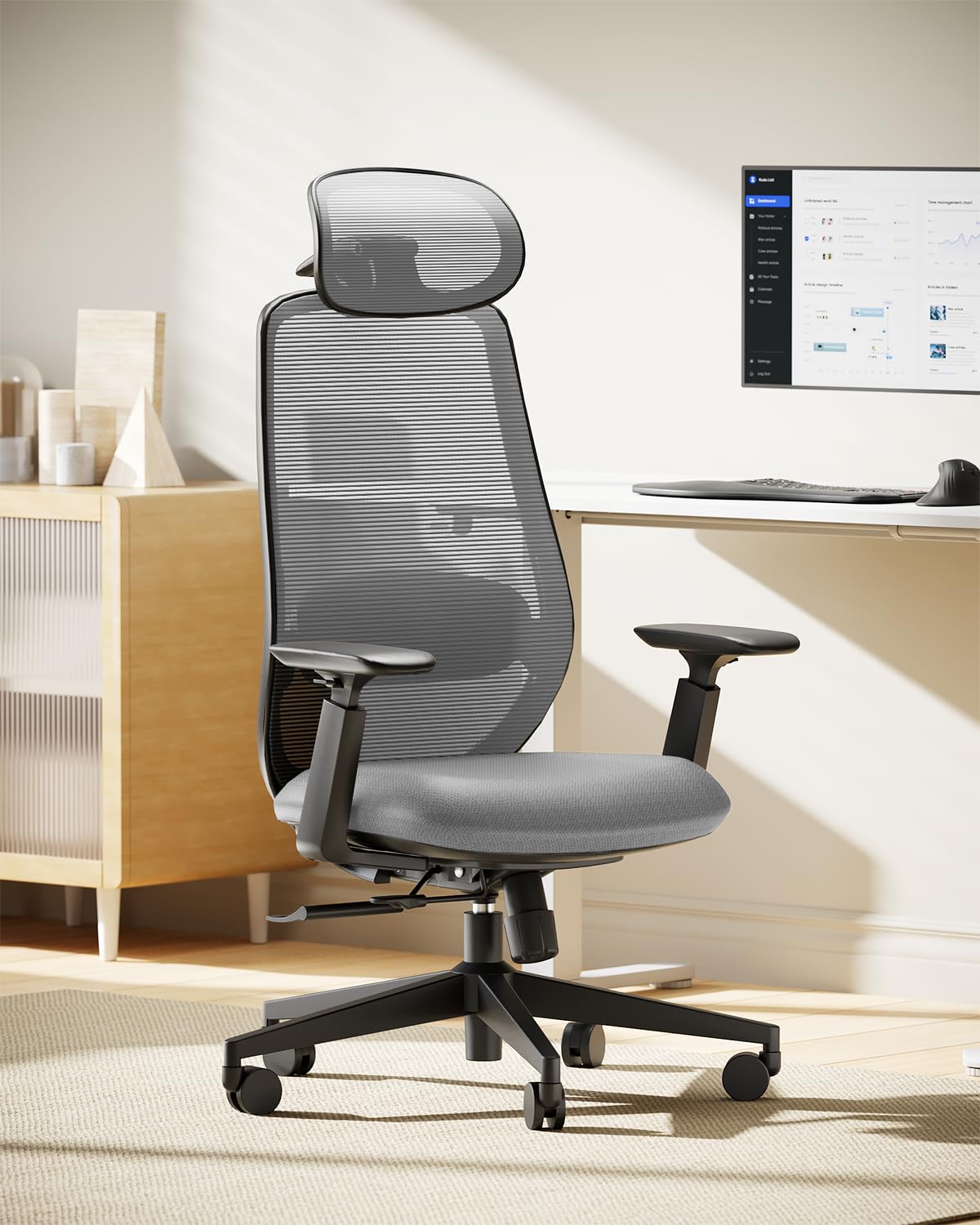
The ProtoArc EC200 addresses one of the most overlooked post-surgery needs: proper leg support. The 5-position sliding seat offers 1.97 inches of travel with instant locking, allowing users between 5’4″ and 6’0″ to rest their entire thigh on the cushion. This eliminates the dangling leg and knee pressure that can pull on the lower back and create compensatory pain patterns.
The 55D high-density foam seat cushion is deliberately firm to prevent bottoming out, which is critical for post-surgery users who cannot tolerate sinking into a soft seat that misaligns the pelvis. The 3-point ergonomic support aligns the head, back, and lumbar, with 2.36 inches of vertical lumbar adjustment and 0.8 inches of depth adjustment to fill the gap behind your lower back.
The 4-stage recline locks at 90°, 105°, 120°, and 130°, with a tilt tension knob to fine-tune the resistance. The 3D wider headrest adjusts in height, depth, pivot, and rotation, providing cervical support without pushing the head forward. Assembly is straightforward with labeled parts and visual instructions.
Why it’s great
- 5-position seat depth prevents leg dangle and pelvic tilt
- Firm 55D foam resists sagging and maintains pelvic alignment
- Excellent lumbar adjustability in height and depth
Good to know
- Feet may contact wheel arms in some positions
- Not recommended for users over 220 pounds
7. GABRYLLY Ergonomic Office Chair with Footrest
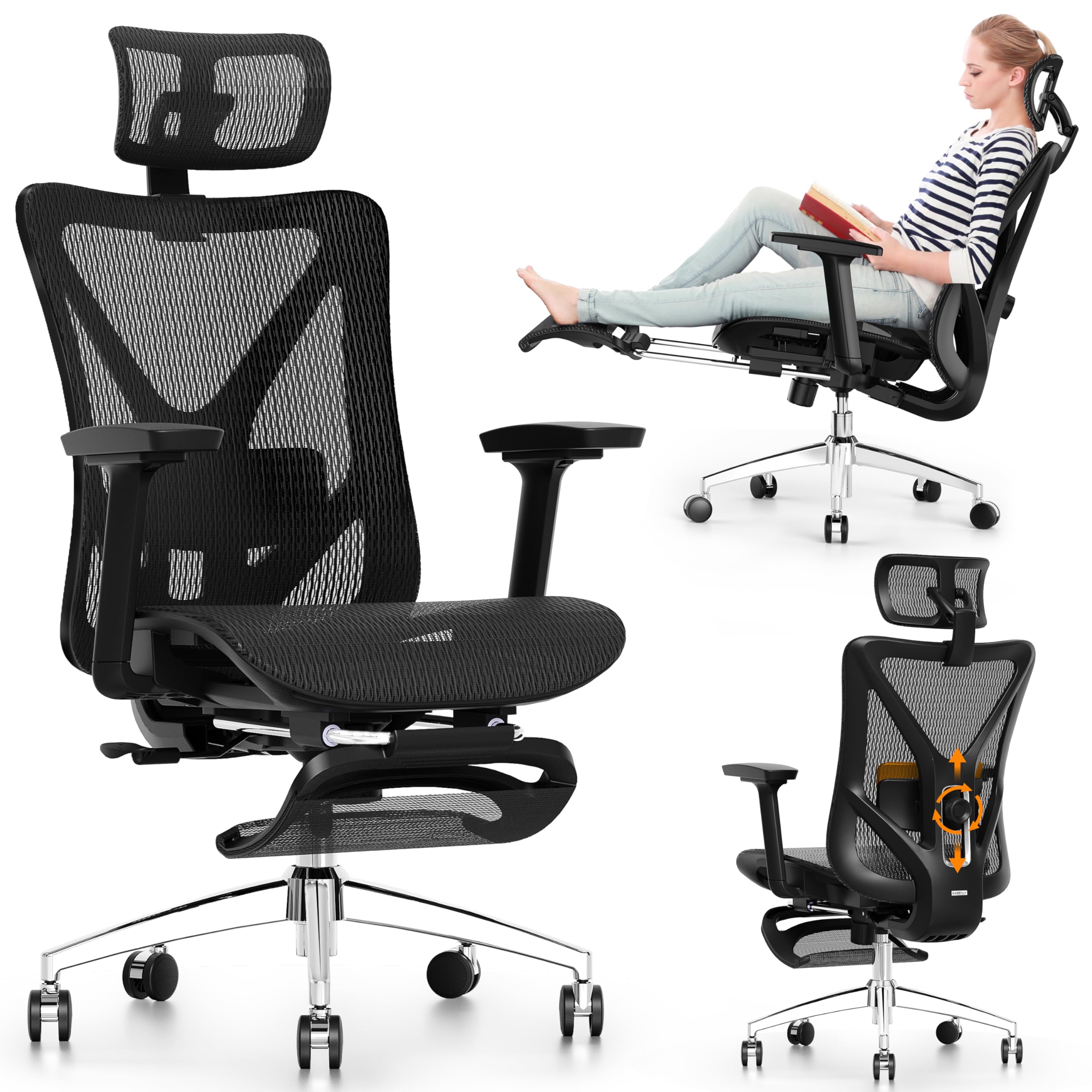
The GABRYLLY Ergonomic Chair combines a 135° recline with a retractable steel footrest, making it a strong option for post-surgery users who need to alternate between upright work and fully supported rest positions. The footrest extends to 18.1 inches, providing stable leg elevation that reduces lumbar disc pressure during breaks. SGS and BIFMA certification ensures the structure can handle daily use without failure.
The 2-way adjustable lumbar support moves 3 inches vertically and 1.6 inches horizontally, giving you enough range to target support where you need it. The 3D armrests adjust in height, width, and depth, providing the push-off support needed during sit-to-stand transitions. The large mesh headrest offers three adjustment points for personalized neck support.
The all-mesh design promotes airflow and keeps you cool during extended sits, while the 27.5-inch steel base provides stability even when fully reclined. Users note that the mesh can feel taut initially and that the armrests may shift under pressure, but the overall value for the price is strong for a budget-friendly recovery chair.
Why it’s great
- Steel footrest allows leg elevation for lumbar offloading
- Breathable mesh keeps you cool during long sits
- 3D armrests support safe sit-to-stand transitions
Good to know
- Mesh may feel too taut for users preferring soft cushioning
- Armrests can shift unintentionally during use
8. COLAMY High Back Executive Chair

The COLAMY Executive Chair prioritizes cushion comfort with a 6.7-inch thick high-density foam seat that provides a plush, luxurious feel. The pop-out lumbar support deploys with a button push, adding lower back support without requiring complex adjustments. The waterfall seat edge reduces pressure behind the knees, which helps maintain circulation during long recovery sits.
The flip-up arms are a unique feature that allows the chair to be tucked under a desk, saving space in small recovery rooms. The adjustable headrest and seat height provide basic ergonomic customization. Users consistently praise the thick cushion for all-day comfort and the smooth quiet casters for easy movement on hard floors.
However, the lumbar support is relatively flat and lacks the aggressive contour that some post-surgery users need. Some users report that the seat lift range is limited (less than 3 inches), and the armrests may sit too low for comfortable desk work. The chair works best as a secondary resting chair rather than a primary workstation seat.
Why it’s great
- Extra-thick cushion provides plush comfort for sensitive sit bones
- Pop-out lumbar support is easy to engage without reaching
- Flip-up arms save space in tight recovery spaces
Good to know
- Lumbar support is flat and may not provide enough contour
- Limited seat height range and low armrest positions
9. COMHOMA Big and Tall Office Chair
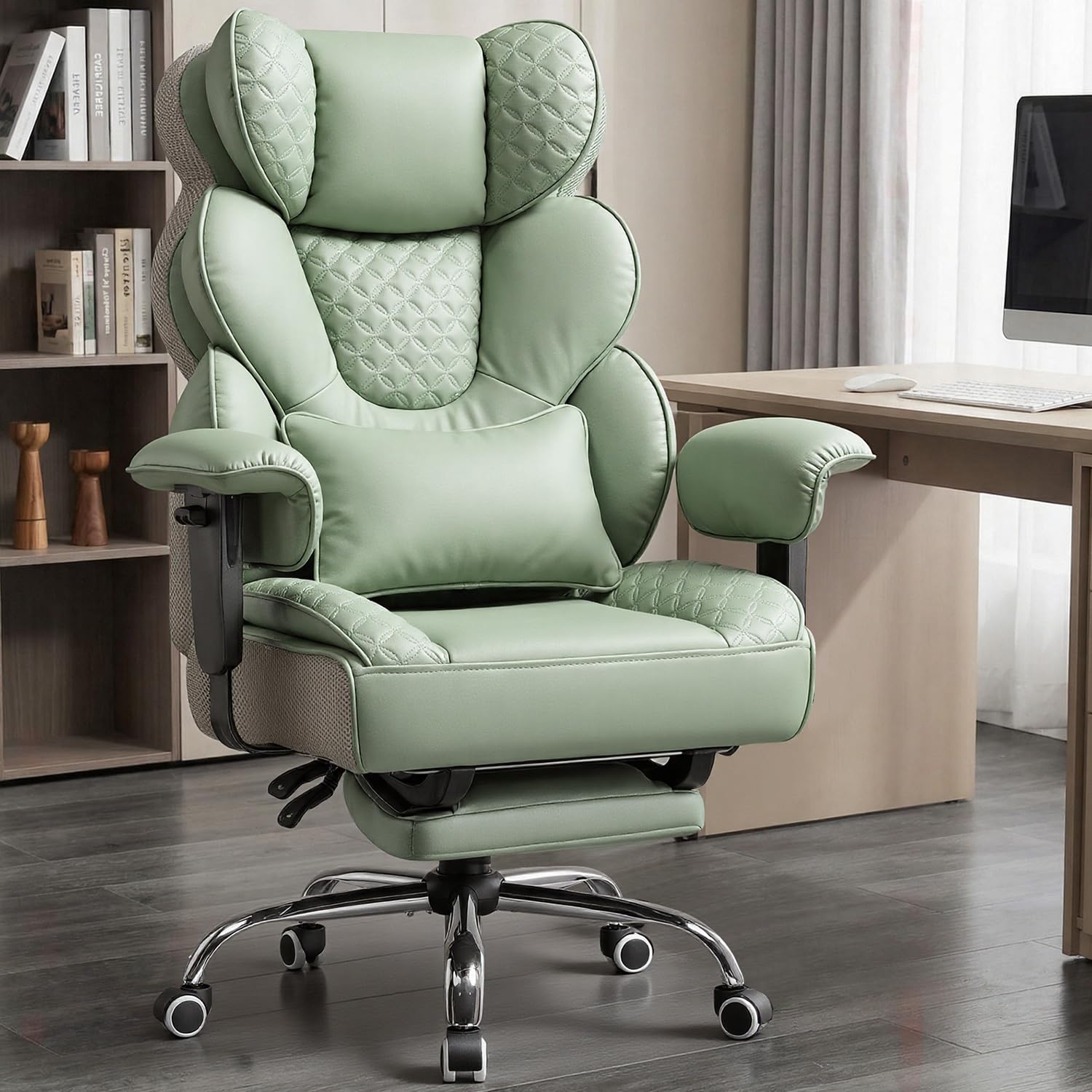
The COMHOMA Big and Tall Chair offers the most aggressive recline of any chair on this list at 150 degrees, allowing near-flat rest positions that offload the lumbar spine. The built-in pocket spring lumbar support adapts to your movements, providing a dynamic surface that distributes pressure across a wider area than traditional foam pads. The hybrid design combines diamond-stitched leather with breathable mesh panels to prevent overheating.
The extra-wide seat and prominent backrest side wings provide a supportive hug for larger body types, and the hidden footrest deploys for complete leg elevation during rest breaks. Users report the chair is easy to assemble with clear instructions and that the back support is effective for long sits. The SGS-certified Class 4 gas lift supports up to 300 pounds.
The footrest feels flimsy under pressure and flexes noticeably during use, which can be distracting for users who rely on it for leg elevation. The armrests are skinny and may not adjust high enough for comfortable desk work. The seat cushion also tends to feel firm, leading some users to add an aftermarket cushion.
Why it’s great
- 150° recline provides near-flat offloading for the lumbar spine
- Pocket spring lumbar adapts dynamically to movement
- Class 4 gas lift ensures long-term stability
Good to know
- Footrest feels fragile and flexes under weight
- Armrests are narrow and lack sufficient height adjustment
FAQ
How soon after back surgery can I start sitting in a desk chair?
Should I choose a mesh or cushioned seat for post-surgery recovery?
Does a chair need to recline for back recovery?
Final Thoughts: The Verdict
For most users, the chair after back surgery winner is the Steelcase Leap because its Natural Glide System, 3D LiveBack technology, and lower back firmness dial provide the most customizable spinal support available. If you want automated lumbar tracking and therapeutic massage features, grab the Hbada X7 Smart. And for a balanced mid-range option with seat depth adjustability that prevents leg dangle, nothing beats the ProtoArc EC200.

Mo Maruf
I created WellFizz to bridge the gap between vague wellness advice and actionable solutions. My mission is simple: to decode the research and give you practical tools you can actually use.
Beyond the data, I am a passionate traveler. I believe that stepping away from the screen to explore new environments is essential for mental clarity and physical vitality.