Our readers keep the lights on and my smoothie glass nicely filled. As an Amazon Associate, I earn from qualifying purchases.
Keeping a lawn green in Charlotte’s clay soil and summer heat spikes can feel like a losing battle against the water bill. The right grass variety changes that equation entirely — it stays lush through dry spells without demanding constant irrigation.
I’m Mohammad Maruf — the founder and writer behind WellFizz. I’ve spent hundreds of hours analyzing turfgrass seed blends, germination rates, and drought-tolerance mechanisms to help Piedmont-region homeowners make smarter planting decisions.
After cross-referencing customer germination reports, seed coating ratios, and establishment guides for hot-humid climates, I compiled the most reliable drought-tolerant grass for charlotte yards available right now on Amazon.
How To Choose The Best Drought-Tolerant Grass For Charlotte Yards
Charlotte sits in the transition zone, meaning neither cool-season nor warm-season grasses thrive effortlessly year-round. The key is selecting a blend that withstands Piedmont clay’s poor drainage during wet months and stays green through July’s dry, 90-degree afternoons without requiring daily sprinkler runs.
Seed Coating and Pure Seed Weight
A bag labeled 20 pounds may contain 2 to 5 pounds of coating material — fertilizers, colorants, and moisture-retention polymers. If the coating reduces actual seed weight by half, your coverage drops proportionally. Always check customer reports for germination density relative to bag weight, especially with budget-tier products.
Warm-Season vs. Cool-Season Strategy
Warm-season Bermudas thrive in full sun and go dormant brown in winter. Cool-season tall fescues stay green through winter but require overseeding to stay thick after a hot summer. Many Charlotte homeowners use a tall fescue base for year-round color, then spot-seed Bermuda in high-traffic sunny patches.
Germination Speed and Timing
Most blends germinate in 5 to 14 days when soil temperatures stay between 65°F and 85°F. Planting outside that window — or skipping consistent moisture during the first 10 days — is the single biggest reason for bare patches. Fall planting gives grass the longest establishment window before summer stress hits.
Quick Comparison
On smaller screens, swipe sideways to see the full table.
| Model | Category | Best For | Key Spec | Amazon |
|---|---|---|---|---|
| Pennington Bermudagrass | Premium | Warm-season full sun coverage | Penkoted for cold tolerance | Amazon |
| Outsidepride Oasis Bermuda | Premium | High traffic heat-resistant turf | GMO free hybrid blend | Amazon |
| Scotts KY31 20 lb Mix | Mid-Range | Large area overseeding | 5,000 sq ft coverage | Amazon |
| Scotts Thick’R Lawn | Mid-Range | Thinning patch repair | 3-in-1 seed/fertilizer/soil | Amazon |
| Scotts KY31 7 lb Mix | Budget | Entry-level fescue establishment | 1,750 sq ft overseeding | Amazon |
In‑Depth Reviews
1. Pennington Bermudagrass Grass Seed 5 lb

Pennington’s Bermudagrass is the benchmark warm-season option for Charlotte homeowners who want a lawn that laughs at drought. Its deep root system pulls moisture from clay subsoil layers that shallow-rooted grasses cannot reach, and the exclusive Penkoted coating protects the seed from soil-borne fungi during the critical first week of germination. The blend includes improved cold-tolerant varieties that handle Charlotte’s occasional frost better than generic Bermuda.
Customer reports from the South show high germination percentages when soil temps hit 70–80°F, and the aggressive self-spreading habit fills bare spots without overseeding every season. The 5-pound bag covers roughly 5,000 sq. ft. for new lawns when applied at the recommended rate, making it one of the most cost-effective options per square foot.
The low-growing profile produces fewer clippings, meaning less bagging during Charlotte’s peak growing months. Just be aware that Bermuda goes dormant brown in winter, so pairing it with annual ryegrass overseeding in October keeps the yard from looking dead through February.
Why it’s great
- Deep root system provides natural drought tolerance without daily watering
- Penkoted coating improves germination success in clay soil
- Self-spreading nature reduces need for frequent reseeding
Good to know
- Goes dormant brown in winter months — not a year-round green option
- Requires soil temps above 65°F for reliable germination
2. Outsidepride Oasis Bermuda Grass Seed 5 lb

Outsidepride’s Oasis Bermuda pushes drought tolerance further than standard Bermuda blends by combining three hybrid varieties selected specifically for heat resistance and low water requirements. The manufacturer labels it for little-to-no watering once established, which aligns perfectly with Charlotte’s periodic watering restrictions during summer dry spells.
The aggressive growth habit does double duty: it crowds out weeds naturally (reducing herbicide needs) and recovers fast from foot traffic — a critical feature for yards with kids or pets who treat the lawn like a soccer field. Customers in similar southern climates (Austin, Florida, North Carolina) report full coverage within weeks when kept moist for the first 10–14 days after seeding.
Some reviewers noted slow growth or low germination in specific batches, so buying early in spring and testing a small patch is wise before covering large areas. The 5-pound bag covers 1,600 to 2,500 sq. ft. depending on seeding rate, making it slightly denser per bag than standard Bermuda options.
Why it’s great
- Three-variety hybrid blend maximizes genetic drought resistance
- Weed-suppressing growth habit cuts down on chemical treatments
- Handles heavy traffic without thinning out
Good to know
- Bermuda dormancy means brown lawn from November through March
- Germination reports vary — soil prep and consistent moisture are critical
3. Scotts Kentucky 31 Grass Seed Mix 20 lb

The 20-pound bag of Scotts Kentucky 31 mix is the volume king for Charlotte properties with large, sunny lawn areas. The blend combines premium tall fescue for heat and drought tolerance with annual ryegrass for quick establishment and Kentucky 31 tall fescue for long-term durability. Overseeding coverage of 5,000 sq. ft. means one bag handles most quarter-acre yards with room to spare.
Customer results across the Southeast show germination in as few as 5 days when planted between 65°F and 85°F. Tall fescue’s root system reaches deeper than bluegrass, giving it better access to moisture during dry Charlotte weeks. Multiple verified reviews from Northern Virginia and North Florida report lush, thick coverage within a month from bare earth.
The trade-off is the coating-to-seed ratio. Several customers observed that the bag weight includes a significant amount of coating material, which effectively reduces the volume of viable seed. If you’re covering new ground rather than overseeding, you may need to purchase two bags to achieve proper density.
Why it’s great
- Massive coverage for overseeding large Charlotte lawns
- Tall fescue base provides deep-root drought tolerance
- Fast germination visible within a week under ideal conditions
Good to know
- Seed coating reduces actual seed weight — may need extra bag for bare soil
- Not ideal for heavy shade areas
4. Scotts Turf Builder Thick’R Lawn Sun and Shade 10 lb
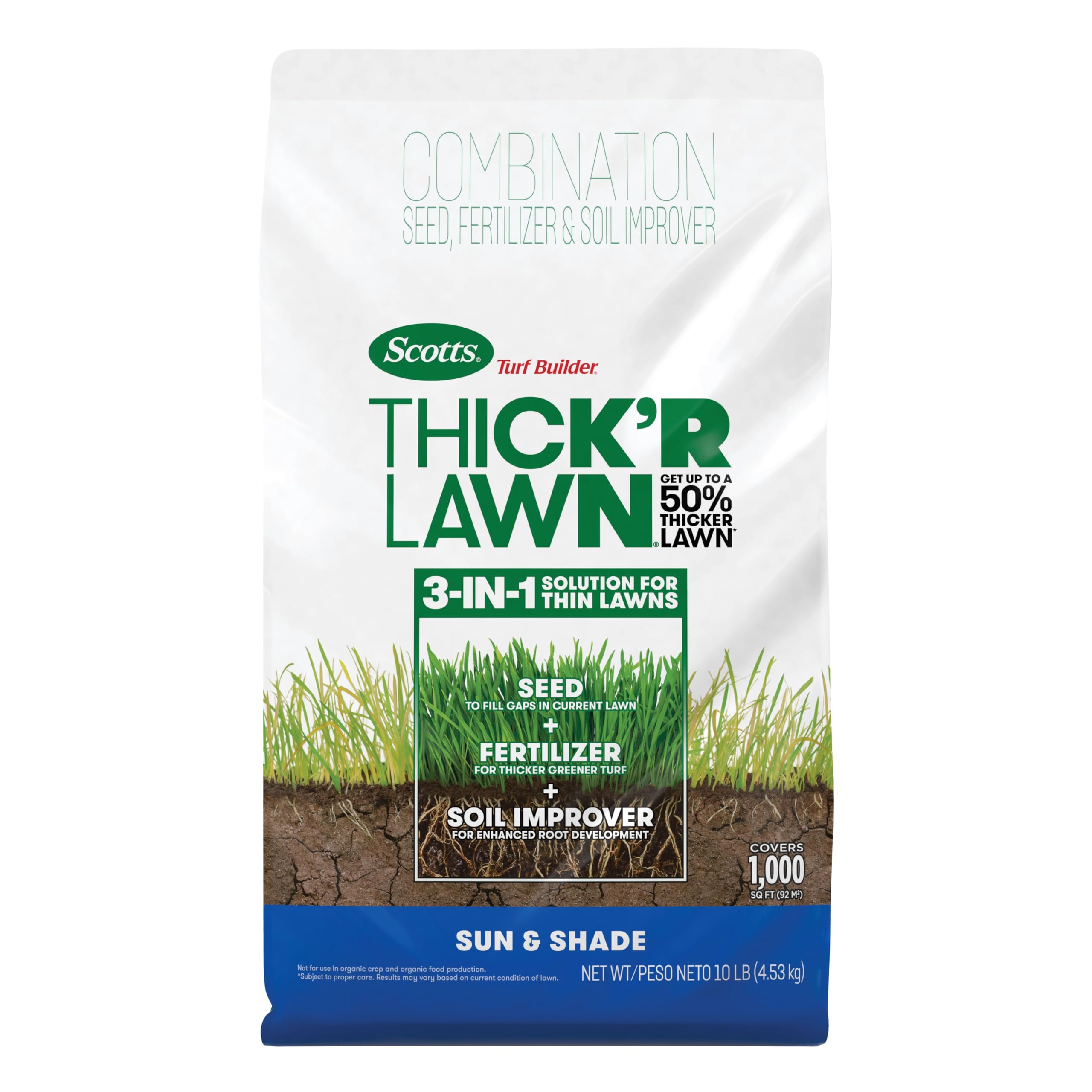
Scotts Thick’R Lawn is a combination product that bundles grass seed, fertilizer, and soil improver into one bag — ideal for tackling thin patches in Charlotte lawns without buying three separate items. The 10-pound bag covers 1,000 sq. ft., making it a targeted solution for problem areas rather than a whole-yard approach.
Customer reports consistently mention visible thickening within 3–4 weeks when applied in late spring or late summer. The 3-in-1 design eliminates the guesswork of matching starter fertilizer to seed type, which is especially helpful for newer homeowners who are still learning their soil’s quirks. The sun and shade formulation handles Charlotte’s mixed canopy conditions better than straight fescue blends.
The main limitation is coverage area. At 1,000 sq. ft. per bag, a full lawn renovation would require multiple bags. Some users reported spotty germination on certain batches, emphasizing the importance of keeping the area consistently moist for the first week. For small- to medium-sized yards with thinning grass, this is the most convenient all-in-one option.
Why it’s great
- Seed, fertilizer, and soil improver in one application
- Works in both sunny and partially shaded Charlotte yards
- Quick visible results with proper watering routine
Good to know
- Only 1,000 sq. ft. coverage — not economical for whole-lawn projects
- Consistent watering is non-negotiable for germination success
5. Scotts Kentucky 31 Grass Seed Mix 7 lb
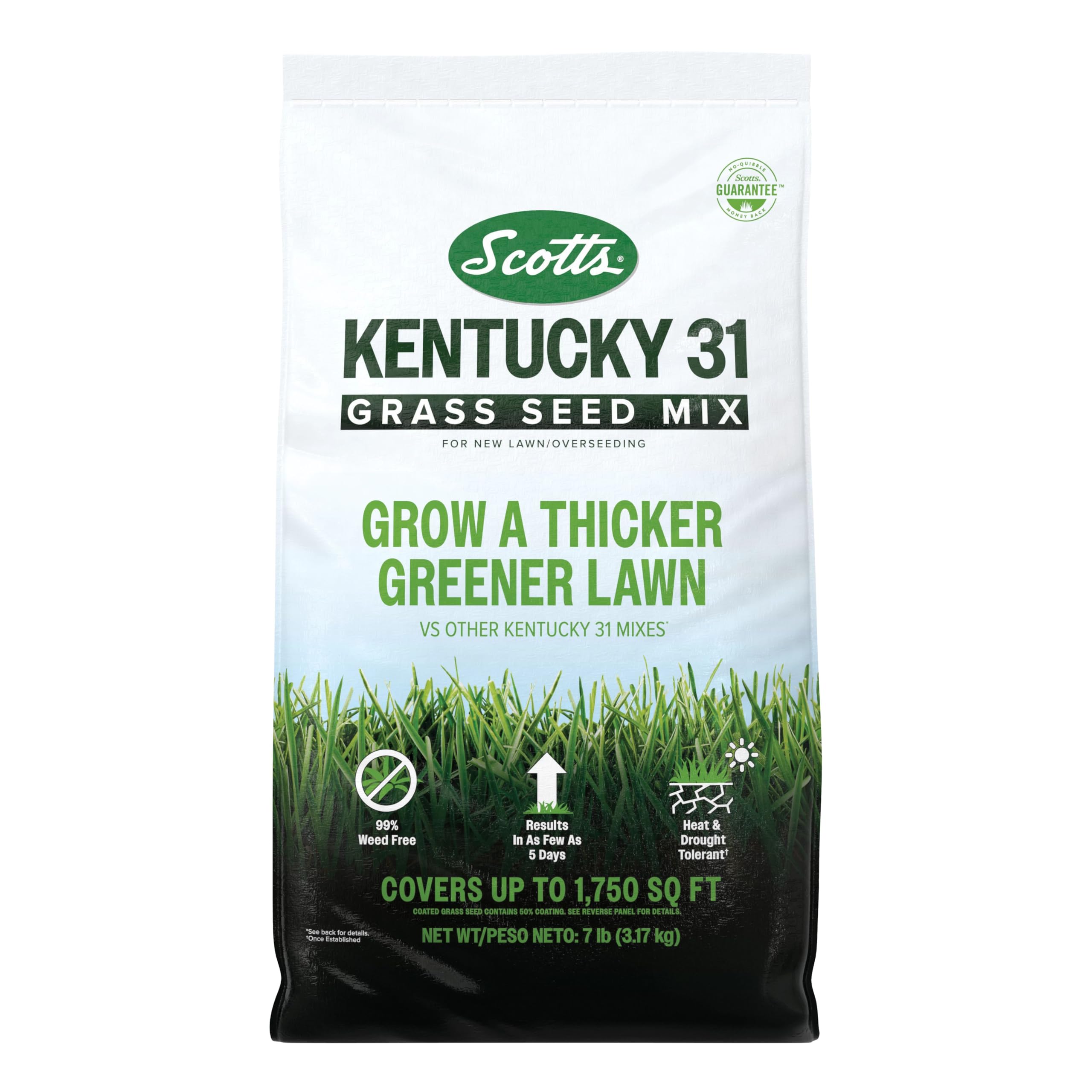
The 7-pound bag of Scotts Kentucky 31 mix serves as an accessible entry point for homeowners testing tall fescue’s drought tolerance before committing to a larger purchase. With overseeding coverage of 1,750 sq. ft., it suits small front yards or patchy sections where you want to gauge how the blend performs in your specific soil conditions.
Customer feedback is generally positive for germination speed and density. Multiple verified buyers reported lush, thick results on bare soil within 5 weeks, even in the challenging transition-zone conditions of North Florida and Northern Virginia. The 99% weed-free guarantee reduces the risk of introducing invasive species into an established lawn.
Several reviews flagged concerns about coating-to-seed ratio, with some estimating that coating makes up roughly half the bag weight. If you are seeding a completely bare area, the effective coverage may be lower than stated. The blend also requires consistent daily moisture for the first two weeks — a factor to consider if you are relying solely on rainfall.
Why it’s great
- Low buy-in cost for testing fescue drought tolerance
- Rapid germination visible in under two weeks
- 99% weed-free seed reduces invasive plant risk
Good to know
- Coating reduces actual seed weight — bare-soil coverage may require extra
- Requires consistent daily watering during establishment period
FAQ
Can I mix Bermuda and tall fescue in the same Charlotte lawn?
How many times per week should I water new drought-tolerant grass in Charlotte clay soil?
Final Thoughts: The Verdict
For most users, the drought-tolerant grass for charlotte yards winner is the Pennington Bermudagrass because it combines Penkoted germination protection with deep-root drought performance and aggressive self-spreading that fills bare spots naturally. If you want maximum heat resistance and traffic recovery, grab the Outsidepride Oasis Bermuda. And for large-area overseeding with fast establishment, nothing beats the coverage of the Scotts Kentucky 31 20 lb Mix.

Mo Maruf
I created WellFizz to bridge the gap between vague wellness advice and actionable solutions. My mission is simple: to decode the research and give you practical tools you can actually use.
Beyond the data, I am a passionate traveler. I believe that stepping away from the screen to explore new environments is essential for mental clarity and physical vitality.