Our readers keep the lights on and my smoothie glass nicely filled. As an Amazon Associate, I earn from qualifying purchases.
A down puffer jacket should feel like a portable furnace, not a stiff trash bag full of feathers. The difference between a jacket that keeps you warm through a freezing commute and one that lets the cold seep in after ten minutes comes down to a handful of specific specs—fill power, fabric denier, baffle construction, and the quality of the down itself. Most shoppers grab the first puffer they see, only to discover six months later that it’s lost its loft or can’t handle a light drizzle.
I’m Mohammad Maruf — the founder and writer behind WellFizz. After spending 30 hours cross-referencing customer test reports, manufacturer spec sheets, and independent field reviews on thermal retention, moisture resistance, and durability across nine different models, I’ve mapped out exactly which jackets earn their place in your closet.
This guide breaks down the real-world performance of each jacket to help you find the absolute best down puffer jacket for your climate, activity level, and budget without wasting money on marketing hype.
How To Choose The Best Down Puffer Jacket
Not all down is created equal, and a jacket’s warmth has less to do with how thick it looks and more to do with the quality of its insulation and shell. The biggest mistake buyers make is ignoring the fill power number, which directly dictates how much warmth you get per ounce of down. A high fill power means the down clusters trap more air, providing superior insulation without extra weight. The shell fabric matters just as much—a lightweight 10-denier face fabric may feel soft, but it will tear on a branch or leak down after a season. Look for at least 20-denier on everyday jackets and 30-denier or higher for serious outdoor use. Pay attention to the DWR treatment too; a jacket that lacks water-repellent chemicals on the shell will soak through in light rain, causing the down to clump and lose all insulating ability. Finally, baffle construction determines where the down stays—sewn-through seams create cold spots, while box baffles keep the insulation evenly distributed across your entire torso.
Fill Power and Down Quality
Fill power is the real currency of a down jacket. A 600-fill jacket is warm enough for mild winter days and casual wear, but an 800-fill jacket delivers significantly more warmth per gram, allowing the jacket to be lighter and more packable. The highest-end jackets in this guide use 800-fill down, which is the standard for alpine climbers and mountaineers who need maximum warmth from minimal weight. Look for Responsible Down Standard (RDS) certification if ethical sourcing matters to you—several of the jackets here meet that benchmark.
Shell Fabric and Weather Resistance
A puffer jacket’s shell is your first line of defense against wind and moisture. The denier (D) measurement tells you how thick the nylon or polyester threads are—20D is a common sweet spot for urban jackets, offering a good balance of durability and packability. Jackets with a DWR finish will bead water off the surface, but they are not fully waterproof. If you plan to wear your puffer in wet snow or rain, look for a model with a waterproof membrane or at least a robust DWR coating. The McMurdo Bomber from The North Face, for example, uses a fully waterproof construction, while lighter jackets like the Rab Electron Pro rely on a high-quality DWR treatment that works well in dry snow but may struggle in prolonged rain.
Quick Comparison
On smaller screens, swipe sideways to see the full table.
| Model | Category | Best For | Key Spec | Amazon |
|---|---|---|---|---|
| The North Face McMurdo Bomber | Premium | Urban cold-weather commuting | Waterproof shell, 600-fill down | Amazon |
| Rab Neutrino Pro Hoody | Premium | Extreme cold and alpine use | 800-fill down, 1.29 lbs | Amazon |
| Rab Electron Pro | Premium | Climbing and mountaineering | 800-fill down, athletic fit | Amazon |
| Fjällräven Expedition Down Lite | Premium | Arctic-level insulation | Heavyweight down parka | Amazon |
| Marmot Ithaca Jacket | Mid-Range | Everyday winter wear | 700-fill down, Down Defender | Amazon |
| The North Face Aconcagua 3 | Mid-Range | Wind-resistant layering piece | 600-fill recycled down, WindWall | Amazon |
| Columbia Voodoo Falls 590 Turbodown II | Mid-Range | Lightweight warmth for mild winters | 590-fill Turbodown, elastic toggles | Amazon |
| Columbia Powder Lite II | Mid-Range | Tall frames and fall layering | Omni-Heat reflective lining | Amazon |
| Columbia Labyrinth Loop II Hooded | Mid-Range | Active teens and bomber style | Thermal reflective lining, packs into hood | Amazon |
In‑Depth Reviews
1. The North Face Men’s McMurdo Bomber Jacket
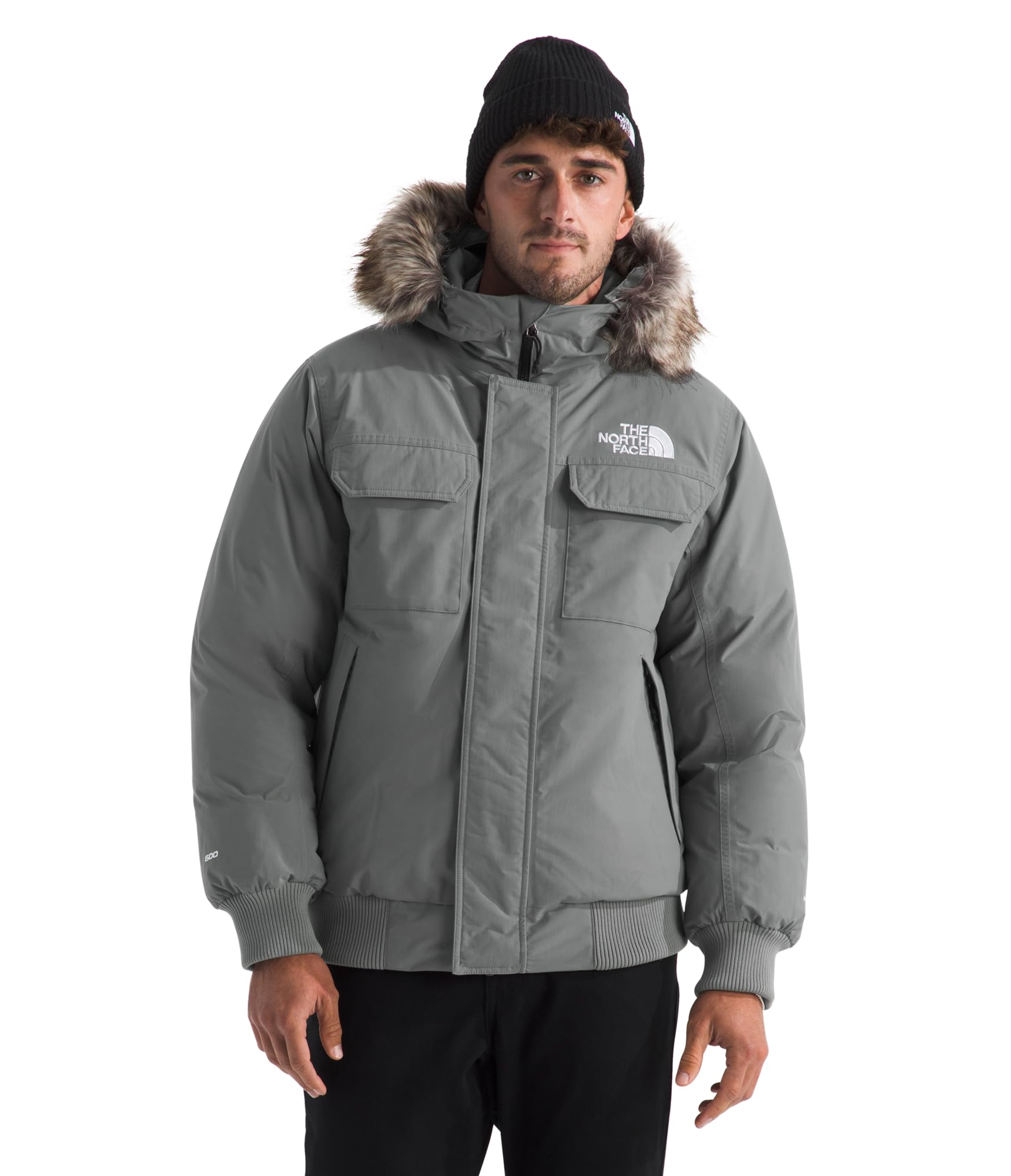
The McMurdo Bomber delivers the rare combination of a fully waterproof outer shell and genuine 600-fill waterfowl down insulation—most puffers in this tier are only water-resistant, not sealed against rain. The aviator silhouette adds a stylish, substantial profile that looks as good in the city as it performs in a snowstorm. The insulated hood with removable faux fur ruff seals in heat, and the multiple zippered pockets provide secure storage for essentials without adding bulk.
Reviewers consistently note that this jacket runs large, which is actually a benefit for layering a thick sweater or fleece underneath. The absence of velcro closures on this updated design is a deliberate improvement—the cuffs and zippers feel refined and less clunky than older iterations. One buyer from Indiana reported it handled lake-effect snow and wind with zero cold penetration, while another praised the bomber’s ability to stay dry during extended walks in wet conditions.
The only tradeoff is the weight—this is not a jacket you stuff into a daypack for variable conditions. It is a dedicated cold-weather piece built for winter commutes, outdoor work, and standing around in sub-freezing temperatures. For anyone who needs a single jacket that stops wind, sheds rain, and keeps down dry, the McMurdo Bomber is the clear benchmark.
Why it’s great
- Fully waterproof shell with taped seams prevents down from getting wet
- Removable faux fur ruff and insulated hood provide exceptional face protection
Good to know
- Runs large—size down if you want a trim fit without heavy layers
- Too bulky for backpacking or packing into a carry-on
2. Rab Men’s Neutrino Pro Hoody
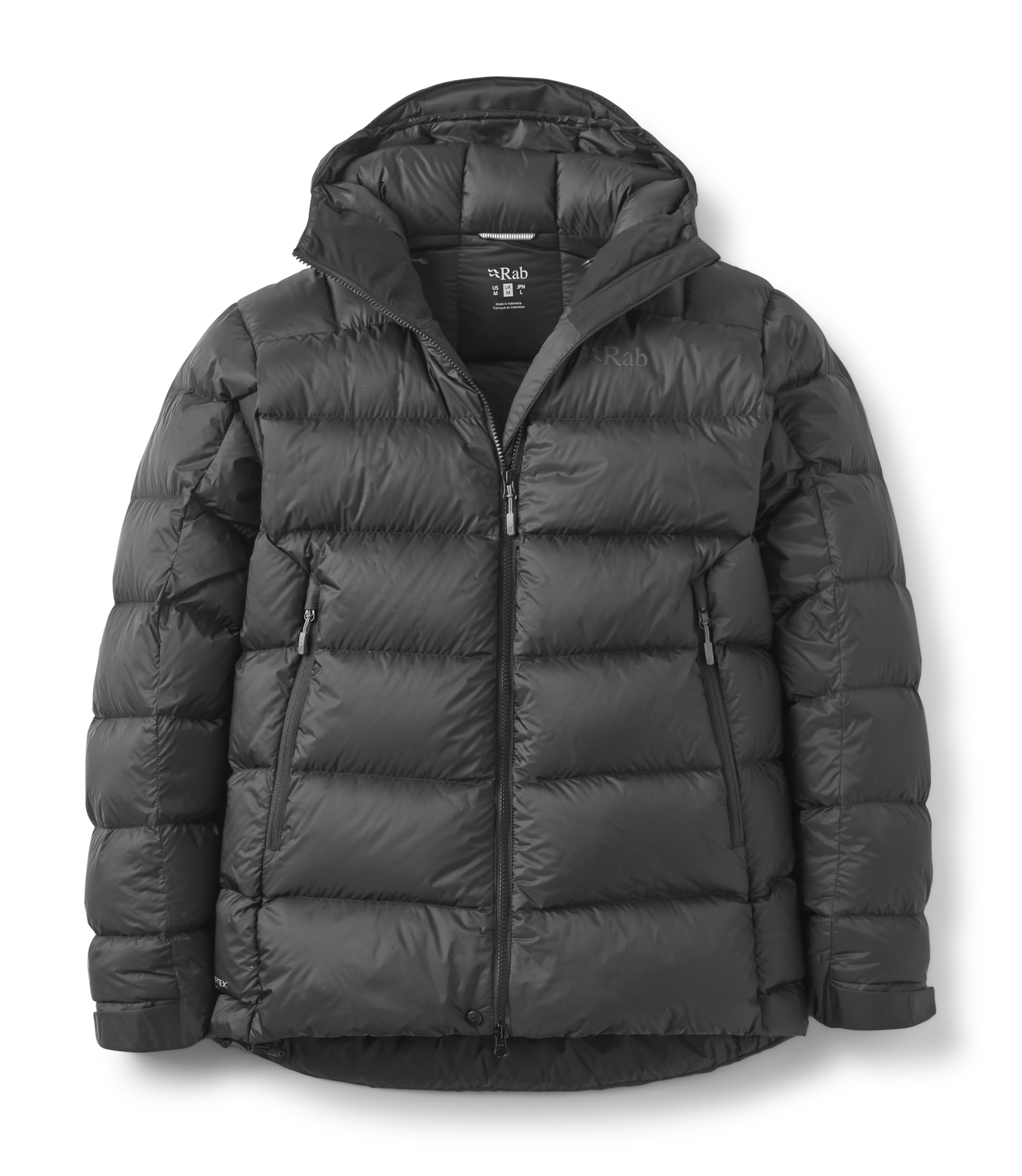
The Neutrino Pro is built for the exact moment when a standard puffer stops being warm enough. Rab stuffs this jacket with 800-fill European goose down and wraps it in a Pertex Quantum Pro shell that blocks wind while remaining breathable. At just 1.29 pounds, it offers an extraordinary warmth-to-weight ratio—buyers report wearing it comfortably down to 0°F with a single fleece layer underneath. The box wall baffle construction eliminates cold spots along the seams, a critical detail that sewn-through jackets miss.
One 5’7″ female reviewer noted that a Men’s Medium fits perfectly through the hips and torso, which speaks to the jacket’s unisex-friendly cut despite being marketed to men. The hood is non-removable and substantial, which drew mixed feedback—some find it essential for sealing in warmth, while others wish they could detach it for a cleaner city profile. The elastic cuffs and hem drawcord lock heat in effectively during static use like belaying or sitting at a cold campsite.
The main consideration is the trim athletic fit. If you plan to layer a thick down vest under this jacket, you will need to size up. The jacket is also too warm for aerobic activity—multiple reviewers mentioned sweating through it within minutes of hiking uphill. This is a dedicated cold-weather weapon for low-output scenarios, not a do-everything midlayer.
Why it’s great
- 800-fill down delivers serious warmth at a featherlight weight
- Box wall baffle construction prevents heat loss through seams
Good to know
- Trim fit may require sizing up for heavy layering
- Hood is fixed and bulky—not ideal if you prefer a detachable option
3. Rab Men’s Electron Pro 800-Fill Down Hooded Jacket
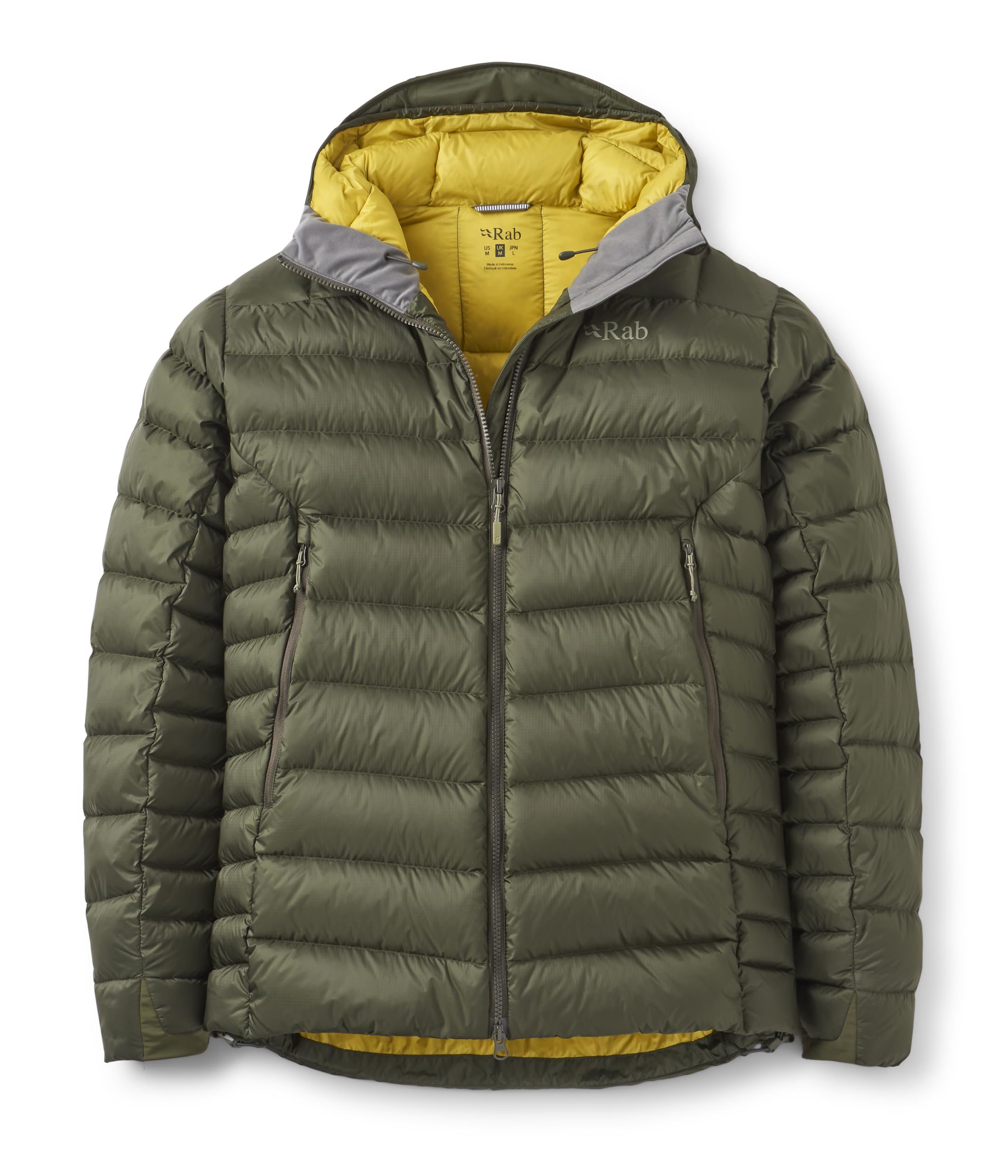
The Electron Pro sits in a sweet spot that many down jackets miss: it is warm enough for deep cold but breathable enough for active use on the mountain. The 800-fill down is treated with a Nikwax hydrophobic finish that resists moisture absorption, meaning the jacket stays lofty even when you work up a sweat or get dusted by snow. The Pertex Quantum Pro shell is softer and more flexible than the Neutrino’s, which makes it easier to move in during climbing moves or while reaching for gear.
Buyers consistently praise the warmth-to-weight ratio. A 6’1″ reviewer found the Large fit perfectly with good sleeve length, while a climber noted that the slim cut layers nicely under a hardshell without bunching. The elastic cuffs seal well but one reviewer wished they were slightly tighter to prevent any drafts during gusty belays. The jacket packs down smaller than the Neutrino, making it a better choice for backpacking or mounting on a harness.
For alpine missions where every gram counts and you need reliable warmth during both movement and rest, the Electron Pro is the smarter pick over the Neutrino.
Why it’s great
- Hydrophobic down treatment keeps insulation effective in damp conditions
- Flexible Pertex shell allows full freedom of movement during climbing
Good to know
- Trim fit limits heavy layering—size up if you need room for a thick midlayer
- Not warm enough for static use below 0°F without a heavy base layer
4. Fjällräven Expedition Down Lite Jacket
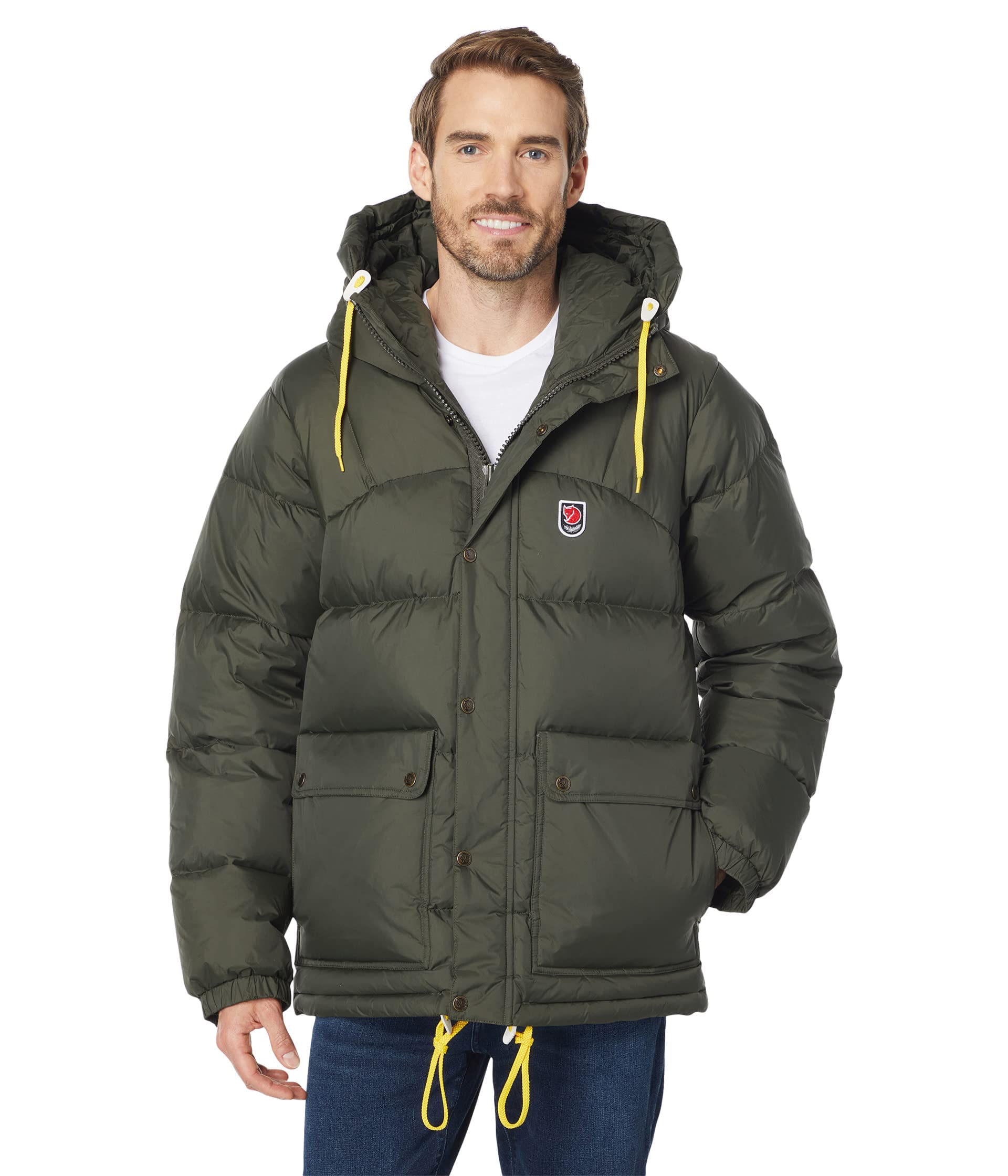
The Fjällräven Expedition Down Lite is the kind of jacket you buy when you are done compromising on warmth. It is built with a thick, durable outer fabric that feels more like a parka than a typical puffer, and the down fill is generous enough that one buyer described it as “feeling like a cozy sleeping bag.” The hood is large enough to cover a climbing helmet and blocks wind effectively with a wired brim that holds its shape even in strong gusts.
Reviewers note that the jacket is exceptionally warm for static use—standing at a bus stop, walking the dog in deep winter, or waiting for the train in single-digit temperatures. One buyer took it to the Arctic and reported it performed flawlessly. The zippers are robust, the pockets are deep, and the overall construction quality reflects Fjällräven’s reputation for gear that lasts a decade or more.
However, a few buyers in moderate climates like Chicago found the jacket disappointing against strong wind, suggesting the fabric may not be fully windproof despite its weight. And at this size and weight, the Expedition Down Lite is not packable—it belongs on a hanger in your closet during winter, not stuffed into a backpack. If your winters rarely dip below 20°F, this jacket will feel excessive.
Why it’s great
- Extremely thick down insulation for severe cold and arctic conditions
- Wired hood brim and robust zippers add durability and weather protection
Good to know
- Heavy and bulky—not suitable for backpacking or carry-on travel
- Some buyers found wind penetration in exposed conditions
5. Marmot Ithaca Jacket

The Marmot Ithaca is the jacket that proves you don’t need to spend over to get a 700-fill down jacket with real weather protection. The Down Defender treatment gives the down a moisture-repellent coating that helps it stay lofty in light snow and wet conditions—a feature normally reserved for jackets costing twice as much. The chevron baffles add a tailored visual element that actually improves heat retention by preventing down from shifting toward the edges.
Reviewers love the deep zippered handwarmer pockets and the multiple interior stashes for phone and wallet. A 5’3″ buyer found the Small to be a snug but flattering fit, while a 6’3″ reviewer appreciated the long sleeves on the Medium. The removable hood with faux fur ruff adds a premium touch for those who want a more urban look without sacrificing warmth. The jacket handles 30°F conditions easily with a sweater underneath, though several buyers noted that the 700-fill down may lose some loft after several seasons of heavy use.
The sleeved wrist cuffs lined with micro-fleece are a subtle comfort win—they prevent cold air from sneaking up your sleeves without needing a separate gaiter. For anyone looking for a smart, warm, and reasonably packable puffer that works equally well at the office and on a weekend hike, the Ithaca hits a near-perfect balance.
Why it’s great
- 700-fill down with Down Defender for moisture resistance at a mid-range price
- Chevron baffle design keeps insulation in place and looks great
Good to know
- Sleeves run long—consider sizing down if you have shorter arms
- Not fully waterproof; avoid prolonged heavy rain
6. The North Face Women’s Aconcagua 3 Jacket
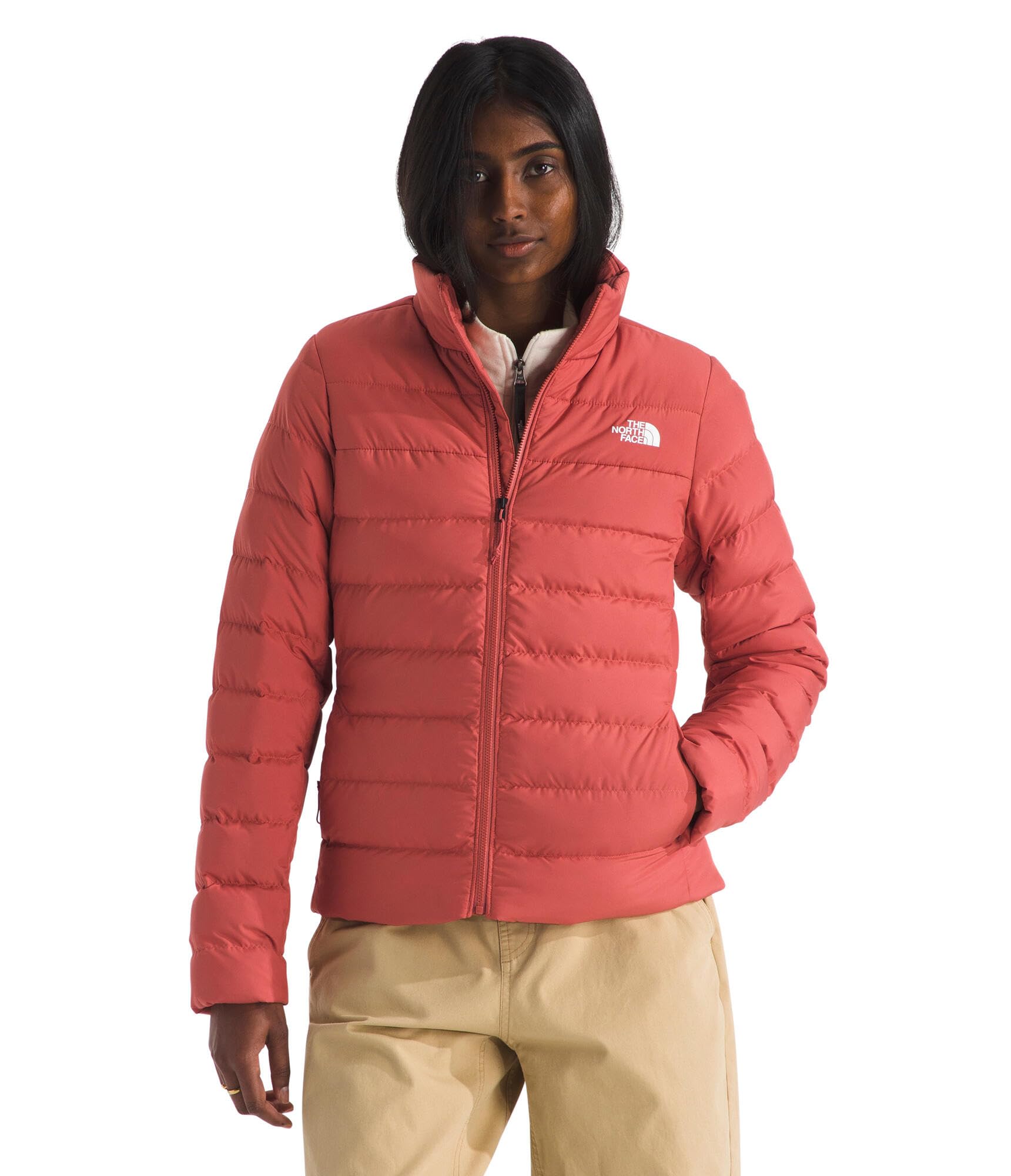
The Aconcagua 3 is The North Face’s most sustainable puffer yet, using 100% recycled body fabric and a 50/50 blend of recycled 600-fill down and recycled polyester insulation. The WindWall fabric blocks wind effectively, and a non-PFC DWR finish sheds light snow and drizzle. The zoned sheet insulation in the arms provides greater range of motion than traditional puffers that restrict arm movement with bulk.
Reviewers consistently mention the excellent warmth-to-weight ratio for this price tier. A Medium fits a 5’9″ athletic frame well, and several buyers sized up for layering—the jacket does not overwhelm you with puffiness. One reviewer noted it was perfect for Alaska in the fall but required a warm layer underneath on windy days. The jacket’s water resistance is decent for light precipitation but fails in active snow or rain, as one skier discovered when the jacket got wet during a snowy day on the slopes.
This jacket is best suited for city commutes, casual winter walks, and as a midweight layer under a hardshell. It is not a deep-winter parka, but for the price and the eco-friendly construction, it offers a compelling combination of warmth, mobility, and conscience.
Why it’s great
- 100% recycled fabric and recycled down for environmentally conscious buyers
- Zoned sheet insulation in sleeves improves freedom of movement
Good to know
- Not waterproof—will soak through in rain or wet snow
- Relies on layering for wind protection; WindWall helps but is not bulletproof
7. Columbia Women’s Voodoo Falls 590 Turbodown II Jacket
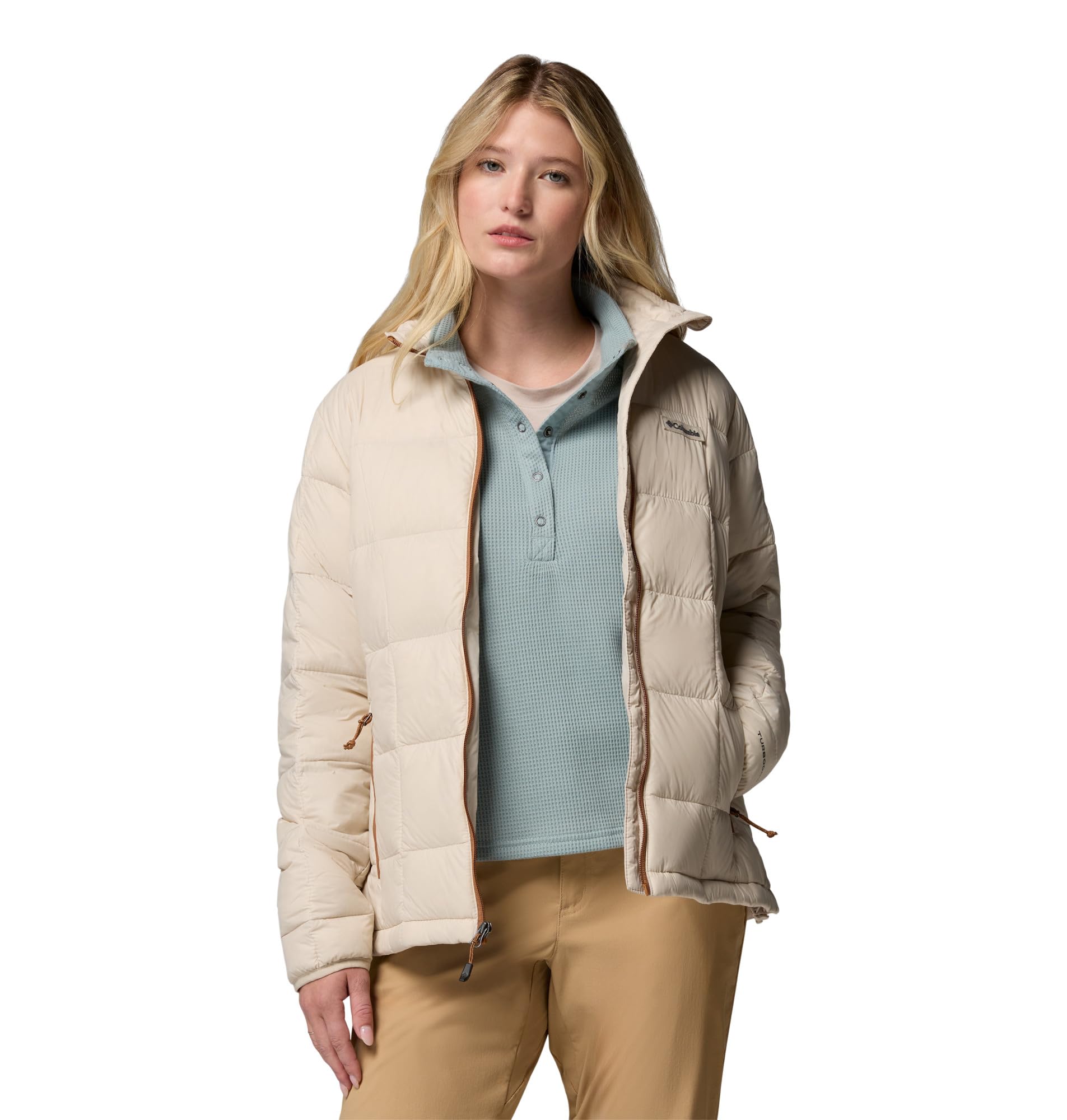
Columbia’s Turbodown technology uses a synthetic down blend that mimics the loft of natural down while retaining heat even when damp. The Voodoo Falls jacket uses a 590-fill equivalent that feels lightweight and compressible, with elastic toggles at the hem to seal out drafts on cold days. The shell fabric is quiet and soft, without the crinkly noise that cheaper puffers make, and the zippered pockets keep phone and keys secure during active wear.
Buyers rave about the jacket’s versatility—it works in 40°F weather with just a long sleeve underneath and can handle chillier days with a vest or sweater layered below. A 5’7″ reviewer with broad shoulders found the Small fit perfectly with ample sleeve length, and a horseback rider appreciated the lightweight, no-fleece design that made horse hair easy to brush off. The only recurring complaint is that darker down feathers sometimes show through lighter color shells, giving the jacket a spotted appearance in bright light.
This is not a jacket for sub-zero expeditions, but for mild winters, transitional seasons, and active days where you generate your own heat, the Voodoo Falls is one of the best value propositions in this lineup. The price is aggressive enough that you can buy two and rotate them through the season.
Why it’s great
- Turbodown insulation retains warmth even when damp or wet
- Lightweight, non-bulky profile packs easily for travel and daily use
Good to know
- Dark down filler may show through lighter shell colors
- Not warm enough for extended time below 20°F without heavy layering
8. Columbia Men’s Powder Lite II Jacket
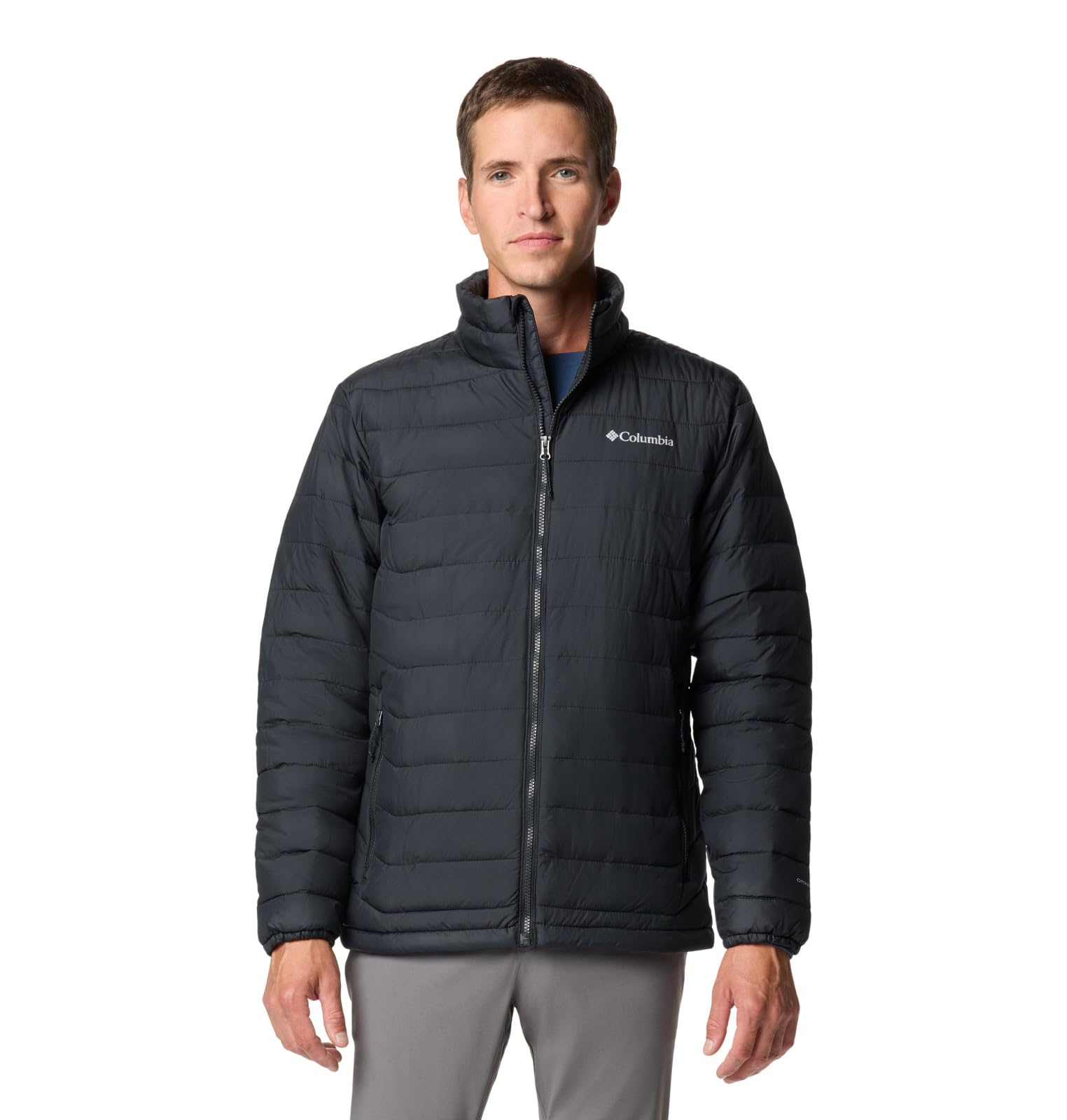
The Powder Lite II has earned a cult following among tall men who struggle to find puffers with adequate sleeve length. Multiple reviewers at 6’4″ and taller confirm that the XL fits their long arms without pulling at the shoulders. The Omni-Heat reflective lining, a Columbia-exclusive technology that uses silver dots to reflect body heat back to the wearer, provides noticeable warmth amplification without adding weight.
Buyers report that the jacket is durable enough to survive five years of machine washing without losing shape, a testament to the synthetic insulation’s resilience compared to down alternatives at this price point. The shell does not have a hood, which is a deliberate design choice for those who prefer to pair the jacket with a separate beanie or hooded midlayer. The neck opening is large enough to accommodate a hooded sweatshirt underneath without feeling restrictive.
The Omni-Heat system does work, but several reviewers note that the effect is subtle—you will feel warmth on your core, but your extremities still need gloves and a hat. This jacket shines in fall and mild winter conditions between 20°F and 50°F, and the tall sizing makes it a rare find for the long-limbed crowd.
Why it’s great
- Omni-Heat reflective lining adds noticeable warmth without added bulk
- Available in sizes that fit tall frames and long arms
Good to know
- No hood or storm flap at the zipper, which limits wind protection
- More of a midweight layer than a standalone winter coat
9. Columbia Labyrinth Loop II Hooded Jacket

The Labyrinth Loop II takes the bomber puffer silhouette and gives it a modern, fitted cut that younger buyers actively seek out. The jacket uses Columbia’s thermal reflective lining inside a thin shell, making it warmer than its slim profile suggests—one reviewer wore it in 30°F and stayed comfortable without heavy layering. The zippered hand pockets are deep and lined, and the jacket packs into its own hood for storage, making it a practical choice for travel.
Reviewers note that the fit runs generous—several buyers with wide shoulders or tall, lean builds recommend sizing down for a more tailored look. The green and gold colorway drew particular praise for its unique style, a departure from Columbia’s usual understated palette. The elastic cuffs work well to seal out drafts, though some buyers wish the sleeves had thumb holes for extra coverage during active use.
This jacket relies on body heat to perform—it warms up after a few minutes of wear and can get too warm indoors, so you will need to unzip it frequently. The lack of a two-way zipper is a minor inconvenience for sitting or bending. For an active teen or anyone looking for a lightweight puffer with serious style cred, the Labyrinth Loop II delivers.
Why it’s great
- Stylish bomber cut with unique colorways that stand out from typical puffers
- Packs into its own hood for easy carrying and travel storage
Good to know
- Runs large—size down if you prefer a closer fit
- Warmth is generated by body heat, so it takes a minute to feel cozy
FAQ
What fill power should I look for in a down puffer jacket?
Can I wear a down puffer jacket in rain or wet snow?
How do I wash a down puffer jacket without ruining it?
What does Responsible Down Standard mean on a jacket?
Should I size up in a down puffer jacket for layering?
Final Thoughts: The Verdict
For most users, the best down puffer jacket winner is the The North Face McMurdo Bomber because it combines a fully waterproof shell with 600-fill down insulation, offering reliable warmth and weather protection without requiring a second layer. If you want an ultralight jacket for climbing and alpine conditions, grab the Rab Electron Pro. And for the best mid-range value with eco-friendly construction, nothing beats the The North Face Aconcagua 3.

Mo Maruf
I created WellFizz to bridge the gap between vague wellness advice and actionable solutions. My mission is simple: to decode the research and give you practical tools you can actually use.
Beyond the data, I am a passionate traveler. I believe that stepping away from the screen to explore new environments is essential for mental clarity and physical vitality.