Our readers keep the lights on and my smoothie glass nicely filled. As an Amazon Associate, I earn from qualifying purchases.
The drone market is flooded with options that promise cinematic flight but deliver shaky footage, short battery life, and the constant fear of losing your investment to a gust of wind or a lost signal. Finding a quadcopter that balances camera quality, flight time, and beginner-friendly safety features without demanding a professional pilot’s license is the real challenge for most buyers today.
I’m Mohammad Maruf — the founder and writer behind WellFizz. Over the past weeks, I’ve combed through dozens of technical spec sheets, customer flight logs, and transmission frequency data to compile a guide that cuts through the marketing noise and focuses on the concrete performance metrics that actually matter for your purchase.
Whether you are stepping into the hobby for the first time or looking to upgrade from a basic toy model, finding the best drones to purchase requires evaluating flight time, camera stabilization, and safety features like GPS return-to-home to ensure your investment stays in the air and out of the repair shop.
How To Choose The Right Drones To Purchase
Picking the right drone comes down to matching its core specs to your flying style and skill level. You need to focus on camera stabilization, flight time, safety features, and weight regulations to avoid wasting money on a model that doesn’t fit your needs. Here are the four most critical factors to evaluate.
Camera Stabilization: Gimbal vs. EIS
The single biggest factor in video quality is not the megapixel count—it’s how the camera handles vibration and movement. A mechanical 3-axis gimbal physically counteracts the drone’s motion, delivering buttery-smooth footage even in wind. Electronic Image Stabilization (EIS) crops the sensor and tries to fix shake digitally, which can introduce a jelly effect and reduces the field of view. For serious aerial photography, a 3-axis gimbal is non-negotiable. For casual clips where weight and portability are king, EIS can be adequate.
Flight Time and Battery Management
Manufacturers often advertise total flight time by adding up multiple batteries. A single battery’s real-world hover time is what you need to compare. Most drones in this guide offer 25 to 40 minutes per battery in ideal conditions, but wind and aggressive flying cut that by 30 percent. Look for models that come with at least two batteries in the box and check if the charger supports fast charging—nobody wants to wait two hours between flights. The battery capacity in milliamp-hours (mAh) is the raw number, but intelligent battery management (like voltage monitoring and low-battery auto-return) is what protects your investment from over-discharge damage.
Safety and Navigation: GPS and Return-to-Home
A GPS module is the single most important safety feature for a beginner. It locks the drone’s position in the air, prevents drift, and enables the automatic return-to-home function if the signal drops or the battery gets low. Without GPS, a drone will drift with the wind and can easily be lost. The best units also support multiple satellite constellations—GPS, GLONASS, Galileo, and BeiDou—for faster lock times and better accuracy. A “find my drone” beeper or locator buzzer is a bonus that saves hours of searching in tall grass or wooded areas.
Weight and Registration Requirements
The FAA requires registration for any drone weighing over 249 grams (0.55 lbs) for recreational use. Many of the models in this guide are built to hit the sub-250g mark, allowing you to avoid the registration process entirely. This also affects portability—lighter drones are easier to pack for hiking and travel. However, sub-250g drones tend to have smaller sensors and less wind resistance. If you need professional-grade video or fly in breezy coastal areas, a slightly heavier drone with a larger camera sensor and stronger motors might be worth the registration paperwork.
Quick Comparison
On smaller screens, swipe sideways to see the full table.
| Model | Category | Best For | Key Spec | Amazon |
|---|---|---|---|---|
| DJI Mini 5 Pro | Premium | Pro-Level Video & Safety | 1-Inch CMOS, 4K/60fps HDR | Amazon |
| DJI Flip | Premium | All-Around Ease of Use | 1/1.3-inch CMOS, 4K/60fps HDR | Amazon |
| Holy Stone Sentinel HS600D | Premium | Wind Resistance & Range | Sony CMOS, Level-6 Wind Resistance | Amazon |
| Bwine F7MINI 4K | Mid-Range | Built-in Screen Controller | 3-Axis Gimbal, 8K Photo, 249g | Amazon |
| Ruko 4K UHD Drone | Mid-Range | Long Flight Sessions | 3 Batteries, 96 Mins Total | Amazon |
| Bwine F7GB2 Pro | Mid-Range | High-Altitude & Farm Patrols | 2000m Altitude, L6 Wind Resistance | Amazon |
| Potensic ATOM LT | Mid-Range | Entry-Level GPS Learning | EIS Camera, 80 Mins Total Flight | Amazon |
| HOVERAir X1 | Mid-Range | Hands-Free Action Tracking | 125g, Follow-Me, Palm Launch | Amazon |
| REDRIE HK33 GPS Drone | Budget | Budget-Friendly GPS Intro | 45 Mins Flight (2 Batteries) | Amazon |
In‑Depth Reviews
1. DJI Mini 5 Pro Fly More Combo
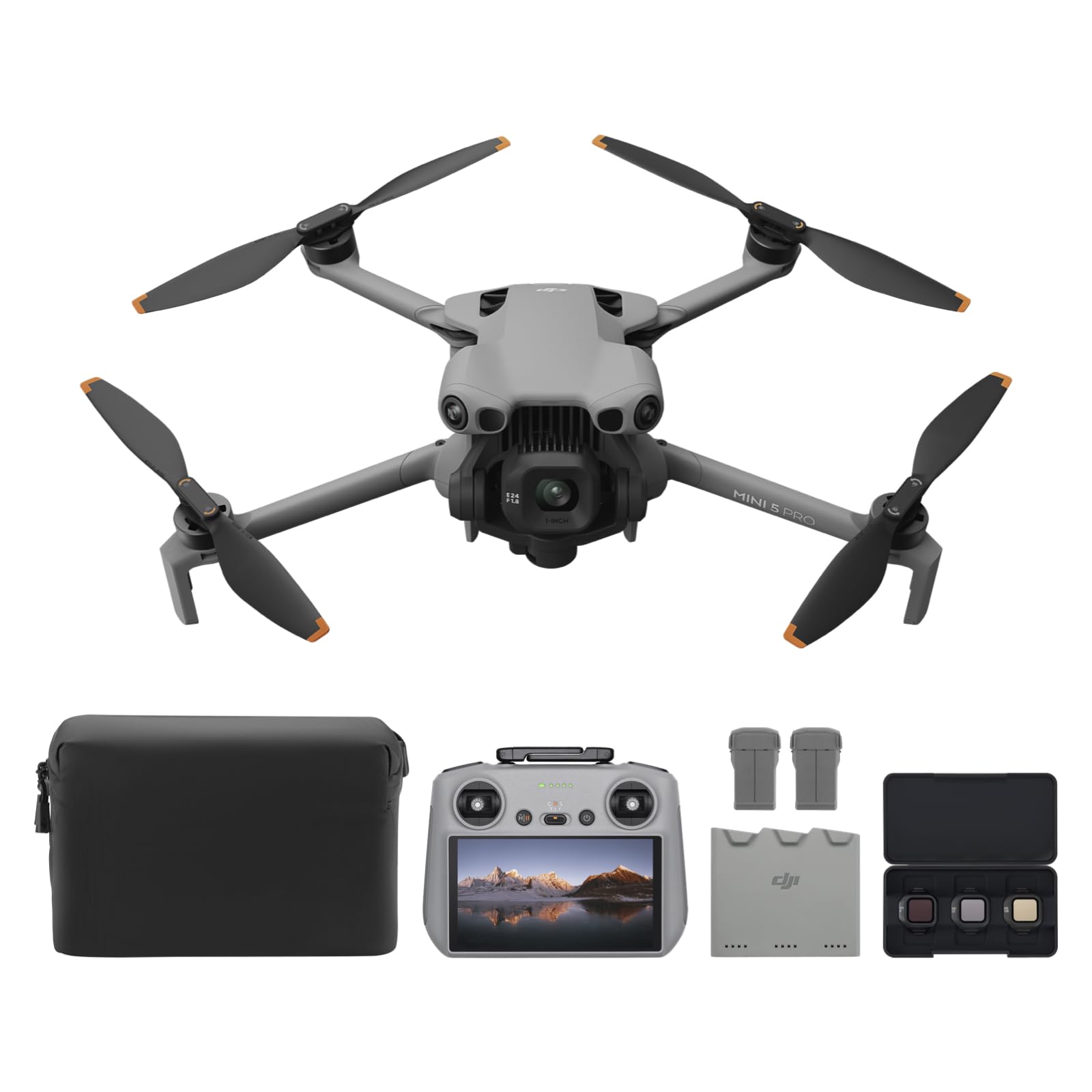
The DJI Mini 5 Pro sets the ceiling for what a sub-250g drone can achieve. Its 1-inch CMOS sensor captures 4K/60fps HDR video with a dynamic range that handles sunrise and shadow detail exceptionally well, a significant leap over the 1/1.3-inch sensors found on most competitors. The 225-degree gimbal rotation allows for true vertical filming without cropping, making it ideal for social media content straight from the camera.
Omnidirectional obstacle sensing, including forward-facing LiDAR, fundamentally changes the safety profile for beginners. It gives you the confidence to fly in tighter spaces and ensures reliable obstacle avoidance during automated return-to-home sequences. The ActiveTrack 360° subject tracking is responsive enough to keep a cyclist in frame around tight bends, and the 36-minute max flight time per battery is competitive even against larger drones.
The Fly More Combo is the only smart choice here—three batteries, a charging hub, and ND filters give you everything you need for a full day of shooting. The RC 2 controller with its built-in screen eliminates the need to fumble with your phone and cables. Remember that you will need to pass the FAA’s TRUST test and check LAANC clearances for controlled airspace; this is a serious piece of equipment, not a toy.
Why it’s great
- Best-in-class 1-inch sensor for rich, detailed footage
- Omnidirectional obstacle avoidance with LiDAR for crash safety
- 225-degree gimbal enables true vertical filming
Good to know
- Requires FAA registration and TRUST test despite sub-250g weight
- Combo kit is the most expensive option in this guide
2. DJI Flip Fly More Combo
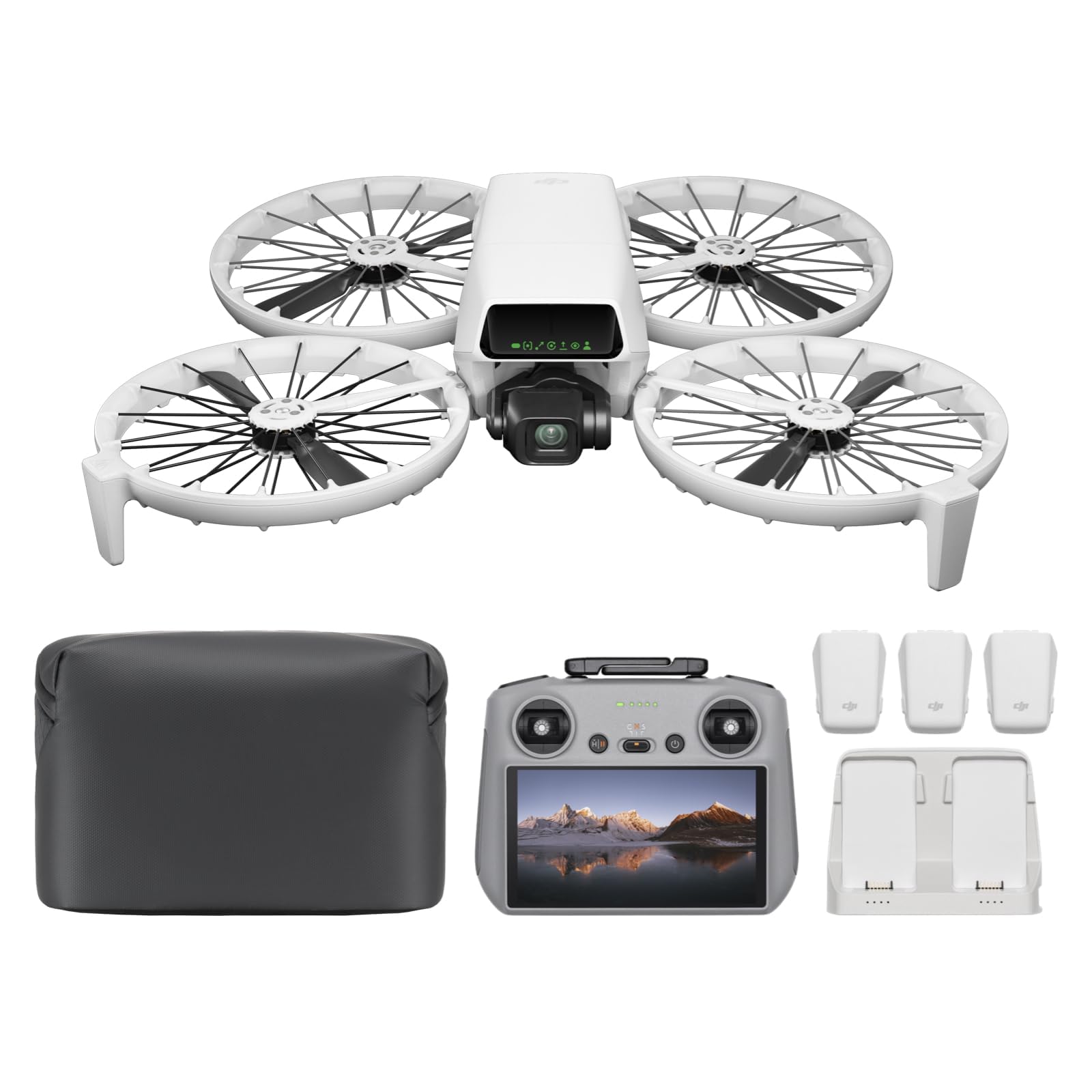
The DJI Flip wears its design philosophy on its sleeve: maximum safety and ease of use without sacrificing camera quality. The full-coverage carbon fiber propeller guards let you fly confidently in tighter spaces—around people, near trees, or even indoors—without the constant anxiety of chopping a branch or a wall. The palm takeoff and landing feature means you never need a flat launch pad, making it the ultimate companion for a spontaneous hike or a beach trip.
Under the hood, it shares the 1/1.3-inch CMOS sensor and 4K/60fps HDR video capability that has made DJI the standard for consumer aerial photography. The gimbal stabilization is rock-solid, and intelligent flight modes like Follow Me and Orbit execute smooth cinematic moves with one tap. The RC 2 screen remote eliminates the phone cable tangle, and the screen remains readable even in direct sunlight, a detail that matters more than you realize mid-flight.
The Fly More Combo is essential here because one battery will leave you wanting more. The three-battery setup gives you about 90 minutes of total flight time, and the parallel charging hub speeds up turnaround between packs. The Flip is not as wind-stable as the heavier Mini 5 Pro in strong gusts, but for casual creators and family adventurers who prioritize launch speed and safety over raw specs, it is the most user-friendly drone on this list.
Why it’s great
- Full propeller guards for safe indoor and close-quarters flying
- Palm takeoff and landing means no launch pad required
- Excellent 4K/60fps HDR footage from a 1/1.3-inch sensor
Good to know
- Less wind-resistant than the heavier Mini 5 Pro
- The DJI Fly app must be downloaded from the official DJI website
3. Holy Stone Sentinel HS600D

The Holy Stone Sentinel HS600D is built for the flyer who wants to stay airborne when the weather turns unfriendly. Its 603-gram reinforced frame and powerful motors deliver genuine Level-6 wind resistance, meaning it can hold position and capture stable footage in conditions that would ground most sub-250g drones. The 1/2-inch Sony CMOS sensor paired with an f/1.8 aperture pulls in enough light for clean 8K photos and 4K HDR video even in overcast or late-afternoon light.
The 3-axis gimbal combined with EIS creates a dual-stabilization system that practically eliminates micro-jitters during fast descents or aggressive yaw turns. The wired relay remote controller replaces flaky Wi-Fi links with a low-latency digital connection, maintaining a smooth HD feed up to 20,000 feet away. In real-world use, several reviewers reported stable control and clear footage at altitudes over 200 feet even in 30-40 mph coastal winds.
Smart features like Follow Me, Time-Lapse, and Orbit execute with minimal input, and the beginner mode limits altitude and speed to help new pilots build confidence. The two 3500mAh batteries deliver a real-world flight time of around 25-28 minutes each, not the advertised 40, but that is typical for this class. The HS600D is an excellent choice for real estate photographers, farm inspectors, and coastal adventurers who cannot afford to be grounded by a breeze.
Why it’s great
- Genuine Level-6 wind resistance for flying in strong gusts
- Sony CMOS sensor delivers excellent low-light and high-detail images
- Wired relay remote for interference-free long-range video feed
Good to know
- Weighs over 249g, requiring FAA registration
- Real flight time is closer to 25-28 minutes per battery in wind
4. Bwine F7MINI 4K Video 8K Photo Drone
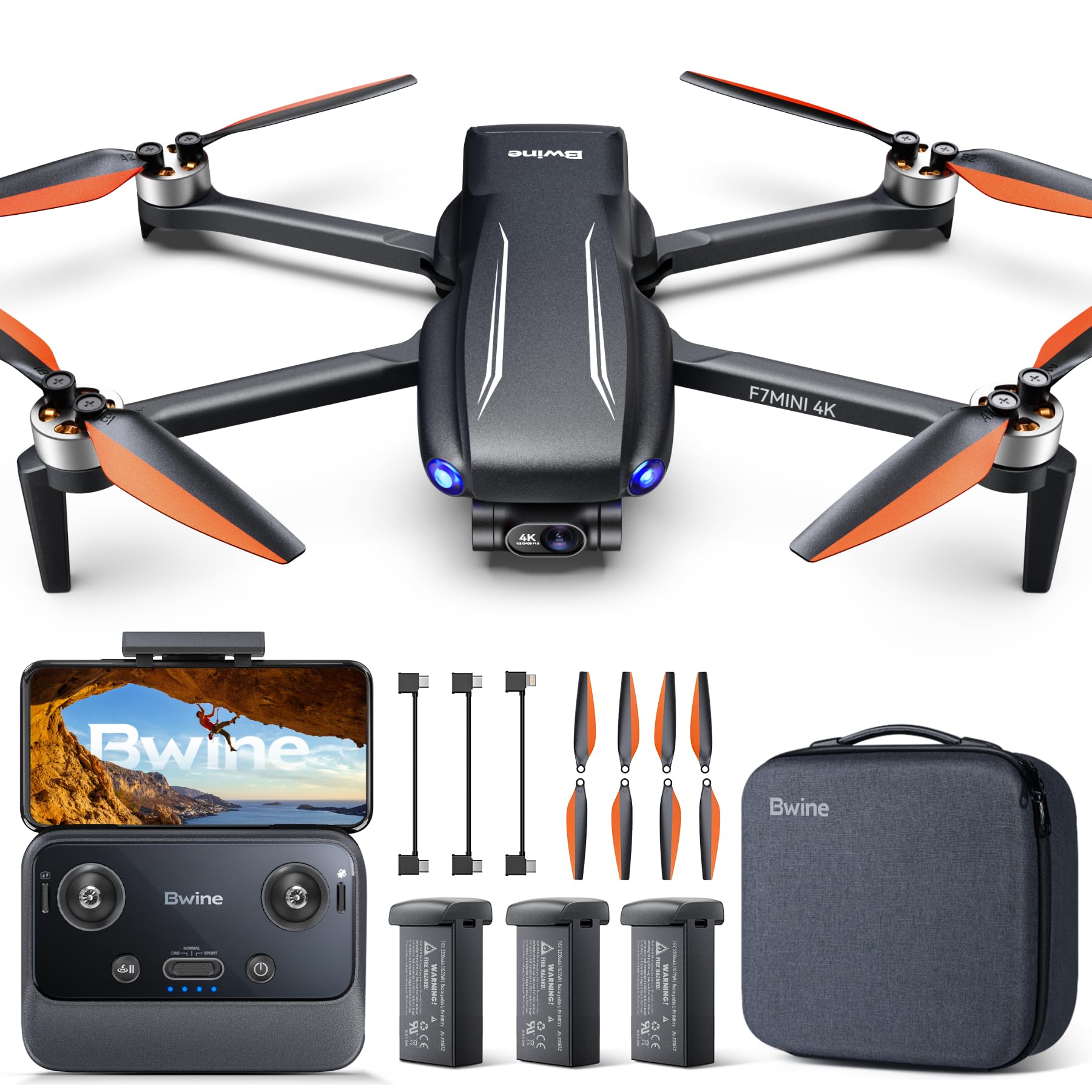
The Bwine F7MINI packs a genuinely impressive feature into a sub-250g airframe: a built-in 5.5-inch touchscreen controller that eliminates the need to connect your phone. This is a massive quality-of-life improvement, especially on sunny days when your phone screen becomes unreadable. The controller screen is responsive and bright enough for outdoor use, giving you a dedicated flying interface with telemetry, camera controls, and an SD card slot for direct media transfer.
The 3-axis gimbal with EIS provides stable 4K/30fps footage, and the 48MP sensor captures 8K stills that hold up well for social media and casual prints. The three included 2200mAh batteries support PD 3.0 fast charging, which brings a depleted pack to full in about 90 minutes—much faster than the standard micro-USB chargers that ship with budget drones. The total flight time of 96 minutes (three batteries) is generous, though each battery delivers closer to 28 minutes in active flying.
GPS features like return-to-home, waypoint missions, and a 120dB locator buzzer make it a safe choice for beginners. The optical flow positioning sensor allows stable hovering indoors when GPS is unavailable. The F7MINI is a fantastic value proposition if you dislike the phone-tether hassle and want a lightweight, travel-friendly drone that still delivers gimbal-stabilized video without breaking the bank.
Why it’s great
- Built-in 5.5-inch screen remote, no phone needed mid-flight
- Under 249g for hassle-free flying without FAA registration
- Fast PD 3.0 charging reduces downtime between batteries
Good to know
- Video maxes out at 4K/30fps, not 60fps like premium DJI models
- Requires a microSD card for saving photos and video
5. Ruko 4K UHD Camera Drone

The Ruko drone addresses the single biggest pain point for new pilots: short flying sessions. By including three 2200mAh intelligent batteries in the box, it delivers a total flight time of up to 96 minutes—enough for a full afternoon of scouting locations or practicing maneuvers without needing to recharge. The 3-axis brushless gimbal keeps the 4K/30fps footage smooth even in moderate winds, and the 48MP sensor captures 8K stills that stand up to cropping.
Setup is genuinely beginner-friendly thanks to one-button takeoff and landing, along with three layers of auto-return safety (low battery, signal loss, and one-key return). The AI-assisted takeoff and landing system, combined with quadruple positioning (GPS, barometric altimeter, TOF, and optical flow), gives the drone a stable hover from the moment it lifts off. The built-in beeper is a lifesaver if you crash in dense foliage, emitting a loud tone to help you locate it.
The wired R2 digital transmission system avoids the interference issues common with Wi-Fi drones, maintaining a reliable 20,000-foot range. Customer reviews consistently praise the responsive support team, which quickly replaces defective batteries or damaged units. The main limitation is the joystick sensitivity, which feels a bit twitchy for precise cinematic moves, but that is a common characteristic in this price tier.
Why it’s great
- Three batteries for marathon 96-minute total flight time
- 3-axis brushless gimbal delivers professional-grade stability
- Loud finder beeper helps locate the drone after a crash
Good to know
- Joystick sensitivity is high and may require practice for smooth moves
- No audio recording in video files
6. Bwine F7GB2 Pro Drone

The Bwine F7GB2 Pro is engineered for high-elevation flying, with a certified altitude rating of 2,000 meters that most consumer drones cannot match. The 1806 brushless motors produce enough thrust to maintain stable flight and responsive control even in thin mountain air, and the Level-6 wind resistance test report means it can handle blustery conditions at altitude. This makes it a strong candidate for hikers, mountain bikers, and rural property owners who fly in challenging terrain.
The 3-axis gimbal paired with a 4K camera and 120-degree FOV lens captures wide cinematic shots with 5x digital zoom for reframing mid-flight. The three 2600mAh batteries deliver a total of around 75 minutes of flight time, enough for extensive mapping or filming sessions. Smart flight modes—GPS Follow, Waypoint, and Orbit—automate complex shots, and the return-to-home function reliably brought the drone back from nearly 3,000 feet in customer tests.
The F7GB2 Pro has already completed FAA Remote ID certification, so you are compliant right out of the box. Some users noted the remote screen is difficult to read in bright sunlight, but the app-based controls on your phone serve as a reliable backup. If you need a drone that can handle altitude, wind, and the cold while delivering stable 4K footage, this is the most dedicated option in the mid-range.
Why it’s great
- Certified for stable flight at 2,000 meters elevation
- 1806 brushless motors with Level-6 wind resistance
- FAA Remote ID compliant right out of the box
Good to know
- Remote screen can be hard to see in direct sunlight
- Video can distort slightly during fast turning maneuvers
7. Potensic ATOM LT GPS Drone

The Potensic ATOM LT is designed to be the perfect learning tool for first-time pilots. Its sub-249g weight means no FAA registration is needed, and the fold-up design packs down to 3.5 x 5.6 x 2.3 inches—small enough to slip into a jacket pocket. The 2.5K EIS camera with a Sony sensor delivers smooth 30fps HD video that is a clear step above the grainy 720p feeds found on true budget toys.
The PixSync 2.0 transmission system uses a wired connection to the remote and delivers a 4-kilometer range with minimal latency. In practice, customers reported clean video feeds up to a mile before any breakup. The two 3000mAh intelligent batteries provide a generous 40 minutes of flight time each, giving you 80 total minutes of airtime. This is a meaningful amount of practice time for learning orientation, trimming, and smooth landing techniques.
The SurgeFly 2.0 control system works well for beginners, with three flight modes that gradually increase responsiveness. GPS-assisted features like Follow Me, Waypoint, and Circle Fly are reliable, though the satellite lock can be slow if you are under heavy tree cover. The ATOM LT is the best entry-level GPS drone for someone who wants to learn the fundamentals without the stress of a high-cost investment.
Why it’s great
- Ultra-portable foldable design fits in a jacket pocket
- 80 minutes of total flight time across two large batteries
- Reliable 4-kilometer HD video transmission via PixSync 2.0
Good to know
- EIS stabilization struggles in low-light conditions, causing shadow artifacts
- GPS satellite lock can take several minutes in tree-covered areas
8. HOVERAir X1 Drone

The HOVERAir X1 redefines the drone category by stripping away the remote controller and the learning curve entirely. At just 125 grams, it is lighter than most smartphones and completely exempt from FAA registration. The drone launches directly from your palm with a single click, then autonomously follows you at up to 15 mph using advanced tracking algorithms. It is not a traditional drone—it is a flying tripod that you wear on your wrist.
Pre-programmed flight paths—Hover, Follow, Zoom Out, Orbit, and Bird’s Eye—execute without any piloting skill. The fully enclosed propeller guards make it safe to use near people and in tight spaces, and the internal 32GB of storage eliminates the need for SD cards. The 2.7K/30fps video with HDR and triple stabilization is impressive for the size, producing social-media-ready clips straight out of the app.
The main trade-off for this simplicity is flight time: each battery lasts about 11 minutes of active flying, so you will need the Combo Plus kit with multiple batteries for a full day out. The X1 refuses to fly over water (it will crash) and cannot handle winds beyond Level 4, so it is best reserved for calm, close-range action sports like hiking, skateboarding, or family gatherings. If you want a drone that acts as your personal cinematographer without any manual flying, this is the pick.
Why it’s great
- Incredibly lightweight at 125g, no registration needed
- One-button palm launch and autonomous follow-me tracking
- Fully enclosed propellers for safe close-range use
Good to know
- Only 11 minutes of flight time per battery
- Will crash over water and struggles in moderate wind
9. REDRIE HK33 GPS Drone
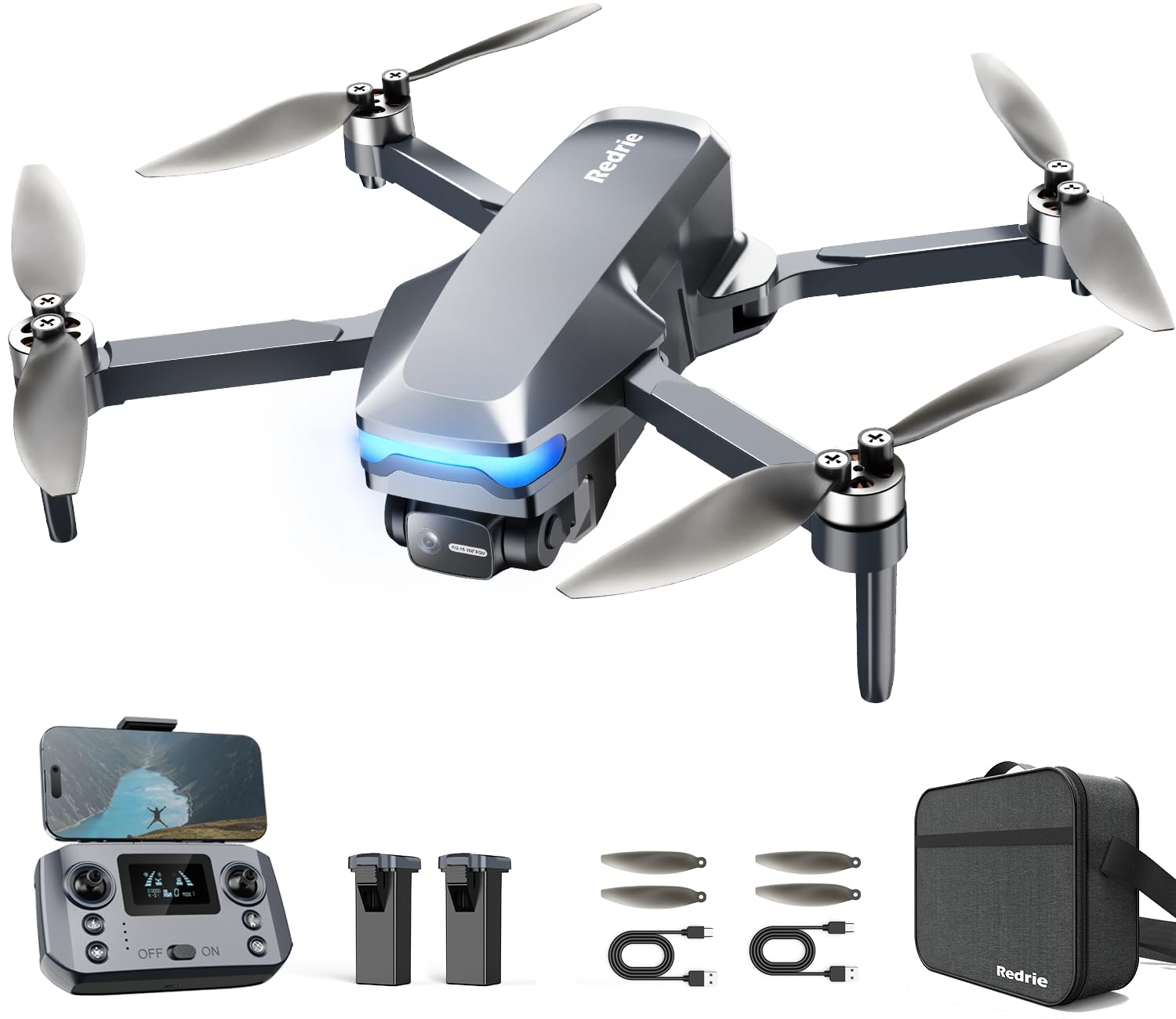
The REDRIE HK33 is the most affordable entry point into GPS-enabled flight on this list. For a very low outlay, you get brushless motors, a GPS module with auto return, and two 1800mAh batteries that deliver a combined 45 minutes of flight time. The 4K camera with physical vibration reduction and a 90-degree adjustable lens captures usable footage, though the stabilization is not as smooth as a gimbal—it is fine for casual sharing but not cinematic work.
The 5G Wi-Fi transmission provides a stable FPV feed up to 985 feet, and the built-in repeater in the remote extends the range to 1,640 feet. The sub-250g weight keeps you clear of FAA registration, and the foldable design with the included carrying case makes it genuinely portable. GPS intelligent functions—Follow, Route Planning, and Circle Fly—work well enough to give you a taste of autonomous flying without the premium price tag.
The brushless motors provide strong wind resistance up to Level 5, which is impressive at this price point and makes the HK33 more flyable in breezy conditions than toy-grade drones with brushed motors. The picture quality is not on par with the 8K stills or 3-axis gimbal units above, and the cell phone holder on the remote feels flimsy. Still, for a beginner on a tight budget who wants to learn GPS-assisted flying safely, the HK33 is a risk-free starting point that delivers surprising value.
Why it’s great
- Budget-friendly entry to GPS-enabled drones with auto return
- Brushless motors provide strong wind resistance up to Level 5
- Comes with two batteries and a hard carrying case
Good to know
- Camera stabilization is basic, not suitable for cinematic work
- Cell phone holder on the remote feels cheap and unstable
FAQ
Is a 3-axis gimbal really worth the extra cost over EIS stabilization?
How many minutes of real flight time can I expect from a drone advertised as having 40 minutes?
Do I need FAA registration if my drone weighs under 249 grams?
Final Thoughts: The Verdict
For most users, the best drones to purchase winner is the DJI Mini 5 Pro Fly More Combo because its omnidirectional obstacle sensing, 1-inch CMOS sensor, and 225-degree gimbal deliver a level of video quality and safety that no other sub-250g drone can match. If you want a drone that launches from your palm and follows you without any flying skill, grab the HOVERAir X1. And for a budget-friendly GPS drone with brushless motors that teaches you the fundamentals without stress, nothing beats the REDRIE HK33.

Mo Maruf
I created WellFizz to bridge the gap between vague wellness advice and actionable solutions. My mission is simple: to decode the research and give you practical tools you can actually use.
Beyond the data, I am a passionate traveler. I believe that stepping away from the screen to explore new environments is essential for mental clarity and physical vitality.