Our readers keep the lights on and my smoothie glass nicely filled. As an Amazon Associate, I earn from qualifying purchases.
Few accessories force as cruel a compromise as the classic dress flat does for anyone managing bunions. The rigid toe cap, the tapered silhouette, the unforgiving insole — most styles are designed to look elegant on a shoe tree, not to accommodate a swollen, painful bunion joint. Every step becomes a negotiation between polishing your outfit and protecting your feet.
I’m Mohammad Maruf — the founder and writer behind WellFizz. I’ve spent hundreds of hours analyzing footbed geometry, outsole flexibility, and width specifications across dozens of brands to separate real bunion-friendly construction from marketing claims.
This guide focuses exclusively on shoes designed to reduce lateral pressure, provide a generous toe box, and still look polished enough for the office or a night out. What follows is my definitive, research-backed list of the best dress flats for bunions.
How To Choose The Best Dress Flats For Bunions
Finding dress flats that genuinely accommodate bunions requires shifting your focus from overall shoe size to the specific geometry of the toe box. Many women buy a size up, only to discover the shoe still squeezes the bunion because the toe taper is unchanged. The correct approach is to prioritize width profile, toe-box volume, and material flexibility before any other feature.
Toe-Box Width and Shape
A round or anatomical toe box that mirrors the natural splay of your toes is non-negotiable. Pointed toes—even “soft” pointed styles—compress the bunion laterally. Look for explicitly wide or wide-toe-box designs where the widest part of the shoe aligns with your metatarsal heads. The internal volume, not just the outer shape, determines real relief.
Sole Drop and Flexibility
Zero-drop platforms keep your foot flat and reduce pressure on the big-toe joint. A flexible outsole allows the shoe to bend with your gait, preventing the rigid lever action that aggravates bunions during push-off. Shoes with thick, stiff soles — even if the toe box is wide — transfer shock directly to the joint.
Closure System and Adjustability
Pull-on ballet flats offer the least adjustability, making them a gamble if your foot volume varies. Mary Jane or T-strap designs with adjustable straps (Velcro or buckle) let you secure the heel while keeping the forefoot loose. This prevents the “slide and squeeze” syndrome where a loose heel forces your toes to grip, compressing the bunion.
Insole and Cushioning
A removable insole lets you swap in custom orthotics or a metatarsal pad. Memory foam insoles provide immediate softness but degrade quickly under the metatarsal heads. Look for molded arch support that reduces pronation — excessive pronation rotates the big toe inward, worsening bunion pain over the course of a day.
Quick Comparison
On smaller screens, swipe sideways to see the full table.
| Model | Category | Best For | Key Spec | Amazon |
|---|---|---|---|---|
| WHITIN Mary Jane | Premium | Zero-drop + wide toe box | Zero Drop Sole | Amazon |
| Arromic Mary Jane | Premium | Washable adjustability | Adjustable Velcro Strap | Amazon |
| Frank Mully Wide Width Knit | Mid-Range | Near-barefoot + arch support | Flexible Knit Upper | Amazon |
| LifeStride Notorious | Mid-Range | Traditional flat with arch support | Arch Support Insole | Amazon |
| CUSHIONAIRE Weston | Mid-Range | Dressy braided Mary Jane | Memory Foam Insole | Amazon |
| Frank Mully Pointed Toe | Mid-Range | Flexible pointed-toe alternative | Flexible Knit Upper | Amazon |
| Veittes Wide Ballet | Budget | Budget-friendly ballet | Lightweight Knit Upper | Amazon |
In‑Depth Reviews
1. WHITIN Women’s Barefoot Mary Jane Flats
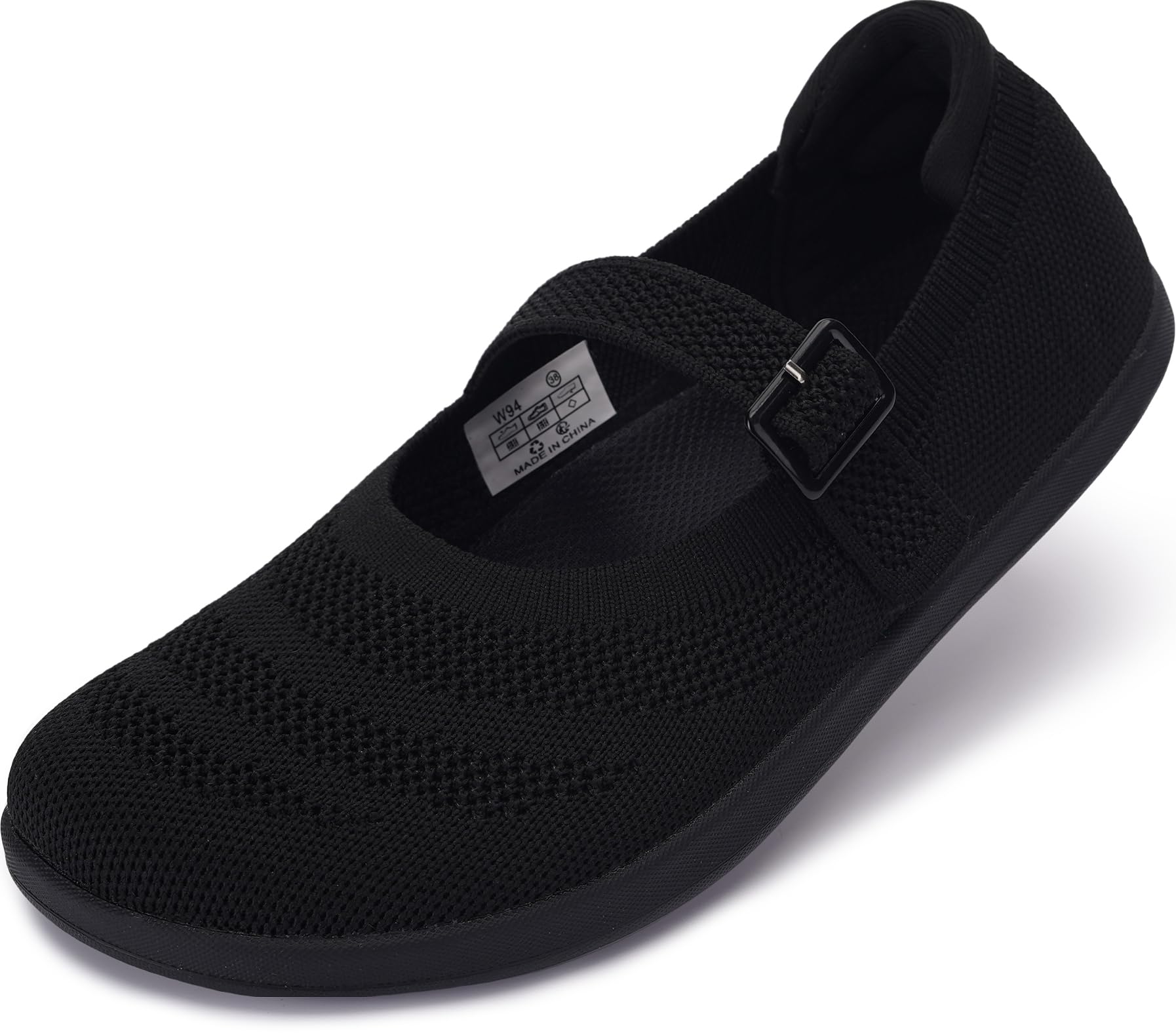
The WHITIN Mary Jane is engineered from the ground up for bunion relief. The zero-drop platform keeps your big-toe joint flat, while the anatomical toe box provides enough width for splaying — a design choice that directly addresses bunion pressure at its source. Multiple reviewers with rheumatoid arthritis, fused toes, and chronic bunions confirm the toe box is genuinely spacious without making the heel slip.
The adjustable strap creates a two-zone fit: a loose forefoot zone where bunions can breathe, and a secured heel zone that prevents the “grip syndrome” where your toes curl to keep the shoe on. The knit upper is machine washable, a practical bonus for everyday wear. Many buyers note the shoe runs slightly large, so sizing down half a step is a common recommendation.
What separates this from other wide-toe options is the sole flexibility. It bends naturally with the foot’s gait cycle, distributing load away from the bunion during push-off. The trade-off is minimal arch support — the barefoot construction leaves that to your own foot muscles or a separate orthotic insert if your arch needs reinforcement.
Why it’s great
- Genuinely wide toe box that fits bunions, hammer toes, and “Greek” foot shapes
- Zero-drop sole reduces big-toe joint flexion strain
- Machine washable for easy maintenance
- Adjustable strap prevents heel slip while keeping forefoot unconstrained
Good to know
- Runs large; most buyers need a half size down from their usual size
- Barefoot design offers minimal arch support
- Not ideal for wet surfaces — the outsole grip is moderate
2. Arromic Wide Toe Box Mary Jane Flat
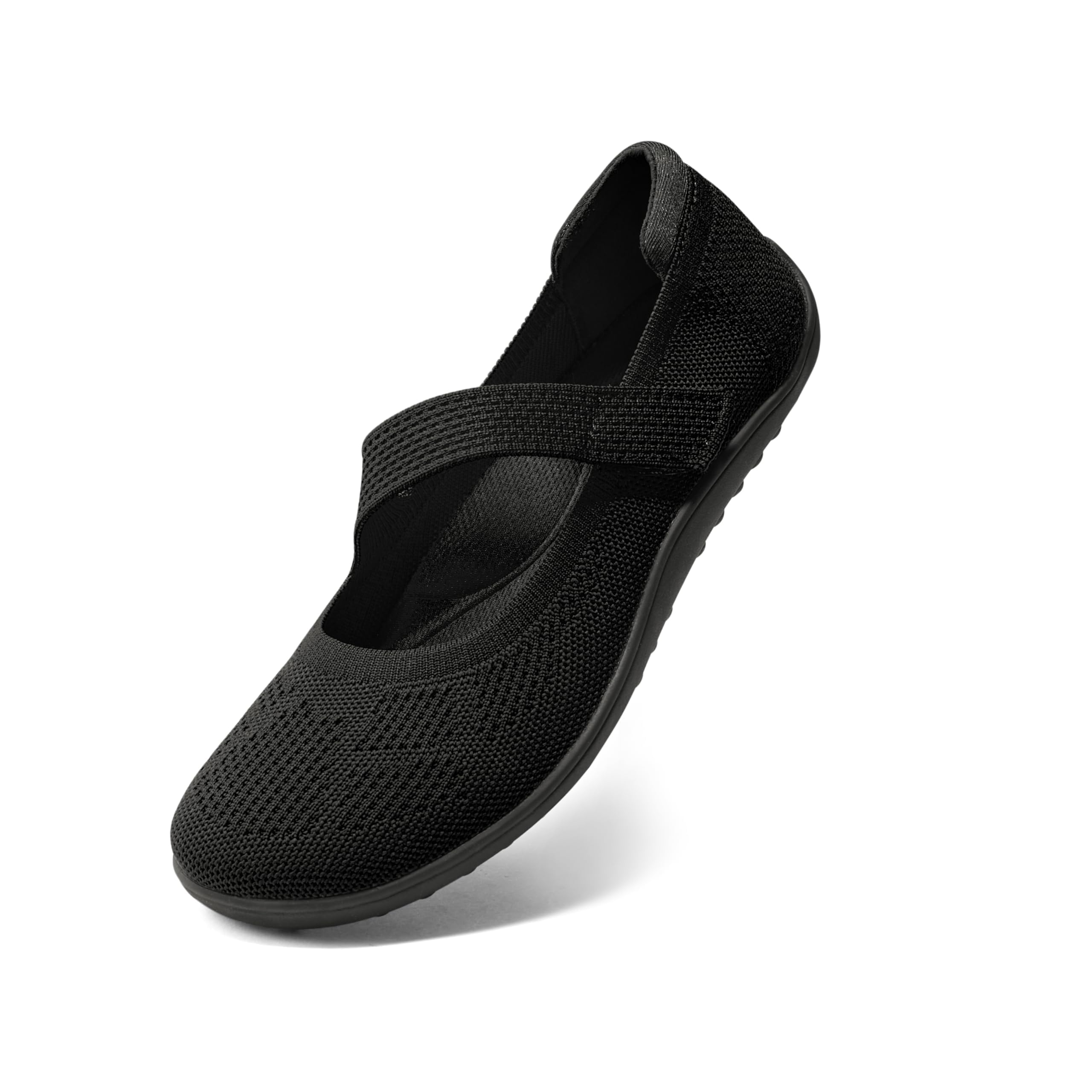
The Arromic Mary Jane delivers a rare combination: a wide toe box that accommodates a seriously splayed forefoot (reviewers with feet 3 3/4 inches wide across the metatarsal heads report zero pressure) and a machine-washable knit construction. The Velcro strap lets you dial in heel tension without compressing the toe area — critical for bunions because a loose overall shoe forces the toes to grip, worsening pain.
Reviewers highlight the roomy toe box as a standout feature for upturned big toes and diabetic neuropathy. The removable insole is a key advantage: you can swap in your own orthotic or metatarsal pad. Several buyers who use custom insoles report that removing the factory insole creates ample vertical space inside the shoe without raising the heel.
The flexible sole offers good traction on dry surfaces, and the shoe is lightweight enough to pack for travel. The main drawback is that the entire shoe is cut wide — not just the toe box. Some wearers with narrow heels found the midfoot and heel too generous, requiring heel pads or low socks to prevent sliding.
Why it’s great
- Extremely wide toe box with room for bunions, hammer toes, and swollen forefeet
- Velcro strap provides micro-adjustable fit
- Machine washable knit upper
- Removable insole for orthotic customization
Good to know
- Runs wide throughout the shoe — not just the toe area
- Thin sole offers minimal ground cushioning
- May feel too loose for narrow-footed users without heel grips
3. Frank Mully Women’s Wide Width Knit Ballet Flat
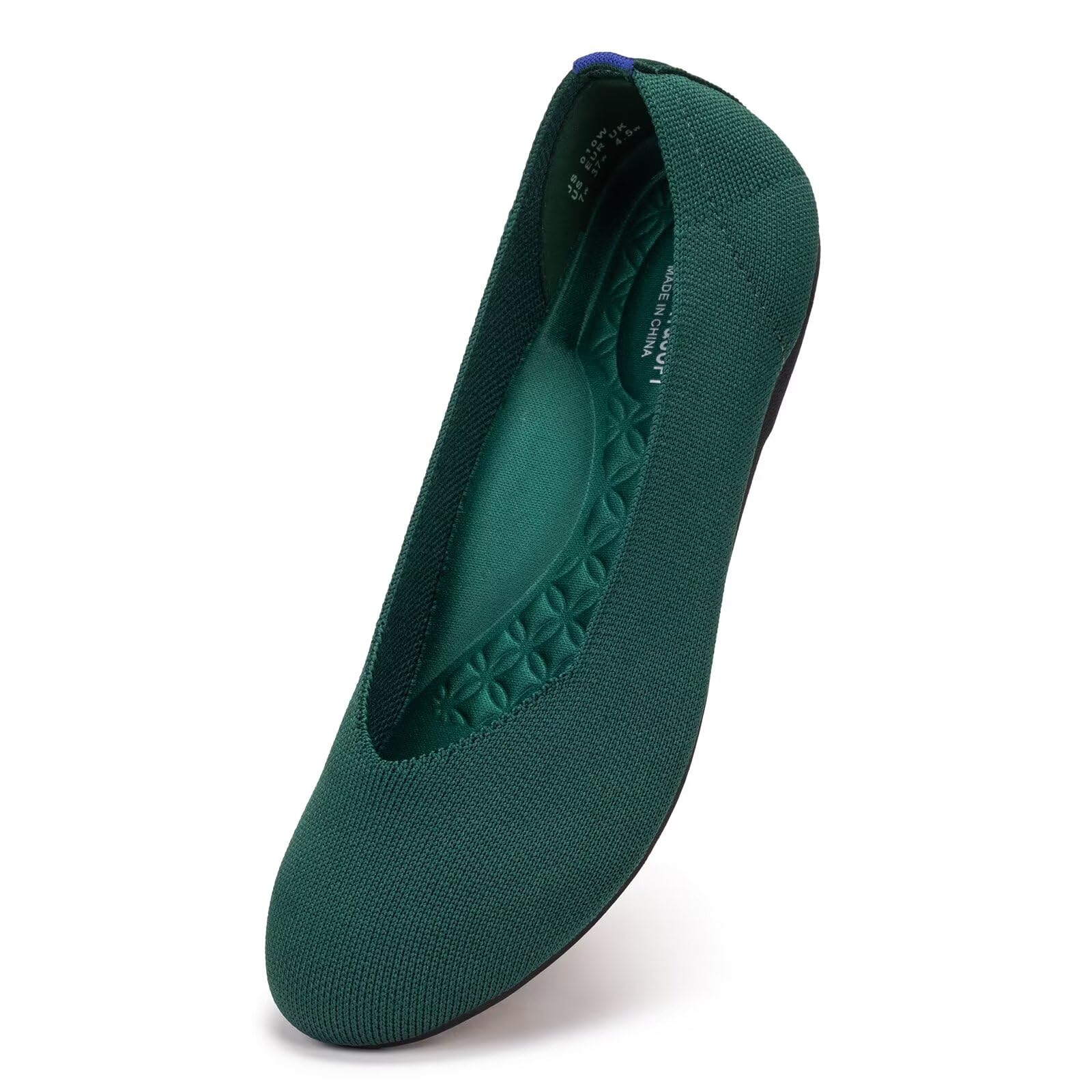
Frank Mully’s knit ballet flat offers something rare in the bunion-friendly market: a wide toe box combined with measurable arch support. Most zero-drop or barefoot shoes leave the arch unsupported, which can aggravate bunions for wearers who pronate. This shoe molds to the foot’s natural shape while providing a subtle lift under the medial arch, reducing the rotational stress that drives bunion progression.
The knit upper is highly flexible, accommodating bunions without lateral pressure. Reviewers with wide feet emphasize that the shoe fits true to size in a wide width — a departure from brands that claim wide sizing but deliver a standard D-width cut. The near-barefoot profile with a minimal heel height keeps the foot in a neutral position during stance and gait.
Multiple buyers with high arches and bunions report all-day comfort from first wear, with no break-in period. The insole is cushioned enough for standing work but thin enough to feel the ground. The trade-off is durability: the knit upper, while comfortable, may show pilling or loose threads over extended use, especially if worn without socks in abrasive environments.
Why it’s great
- Wide toe box combined with genuine arch support
- Flexible knit upper adapts to bunion shape
- True-to-size wide width — no need to size up
- Comfortable from first wear; no break-in period
Good to know
- Knit upper may show wear faster than woven or leather alternatives
- Minimal cushioning on the bottom — not ideal for concrete floors all day
- Pull-on design offers no adjustability for heel fit
4. LifeStride Women’s Notorious Flat
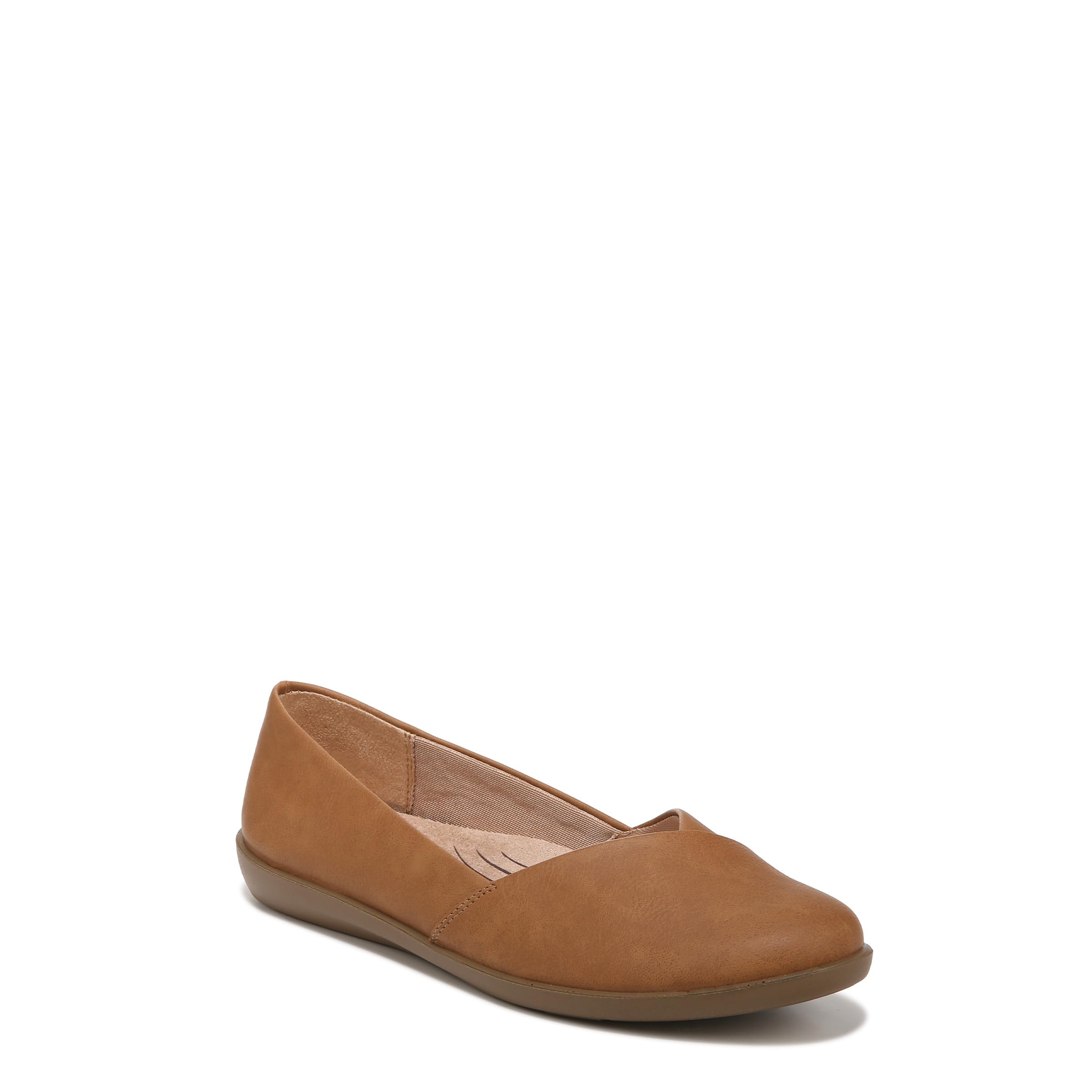
LifeStride’s Notorious flat takes a different approach to bunion comfort than the barefoot-inspired options. Rather than a wide anatomical toe box, it relies on substantial arch support and a contoured footbed to control pronation — the inward rolling of the foot that torques the big toe joint. For women whose bunion pain is driven primarily by overpronation, this design can be more effective than a spacious toe box alone.
The shoe is constructed with a traditional silhouette, so it doesn’t scream “orthopedic.” It works seamlessly with business casual wardrobes and dress pants. Reviewers consistently note the arch support as a standout feature, with several claiming their feet never felt sore after full workdays. The cushioned insole offers more shock absorption than the thin-soled barefoot styles.
The trade-off is width. Several buyers with true wide feet (wider than standard D) found the W width still too narrow, especially in the toe area. This shoe is best suited for women whose bunion pain is mild to moderate and who fall closer to a regular-wide cutoff. The sizing inconsistency across colors — the same size in different colors may fit differently — is a known issue noted in reviews.
Why it’s great
- Excellent arch support reduces pronation-driven bunion pain
- Contoured footbed provides cushioning without bulk
- Classic, office-appropriate style that doesn’t look orthopedic
- Good shock absorption for all-day wear on hard floors
Good to know
- Wide option still fits narrower than expected for true wide feet
- Sizing varies between color batches — consistency is a known issue
- Heel counter may sit below the ankle bone for some wearers
5. CUSHIONAIRE Weston Hand Woven Mary Jane Flat

CUSHIONAIRE’s Weston combines a dressy hand-woven upper with the adjustability of a buckled Mary Jane strap — a combination that’s hard to find in the bunion-friendly segment. The memory foam insole provides immediate cushioning at the metatarsal heads, reducing the impact that radiates through the bunion joint. The woven construction is lightweight and breathable, suitable for warmer months and summer events.
The adjustable buckle lets you loosen the forefoot without sacrificing heel security, but the pointed-toe shape is a compromise. While the woven material is more forgiving than rigid leather, a pointed toe inherently tapers in the zone where bunions sit. Buyers with wide forefeet may find the toe area tighter than expected, even with the strap fully loosened.
Reviewers praise the shoe’s style and comfort for dressy occasions, but manufacturing inconsistency is a real concern — one review noted a pair where the left and right shoes had different toe shapes. The sizing also runs large; multiple buyers recommend sizing down by one full size. The memory foam insole is not removable, so custom orthotic users cannot swap it out.
Why it’s great
- Memory foam insole delivers soft cushioning under the metatarsal heads
- Woven upper is breathable, lightweight, and visually dressy
- Adjustable buckle strap provides a customizable fit
- Ideal for summer weddings and formal office settings
Good to know
- Pointed-toe shape still restricts splay for wide forefeet
- Memory foam insole is not removable for orthotic users
- Manufacturing quality control varies between pairs
6. Frank Mully Classic Pointed Toe Knit Flat
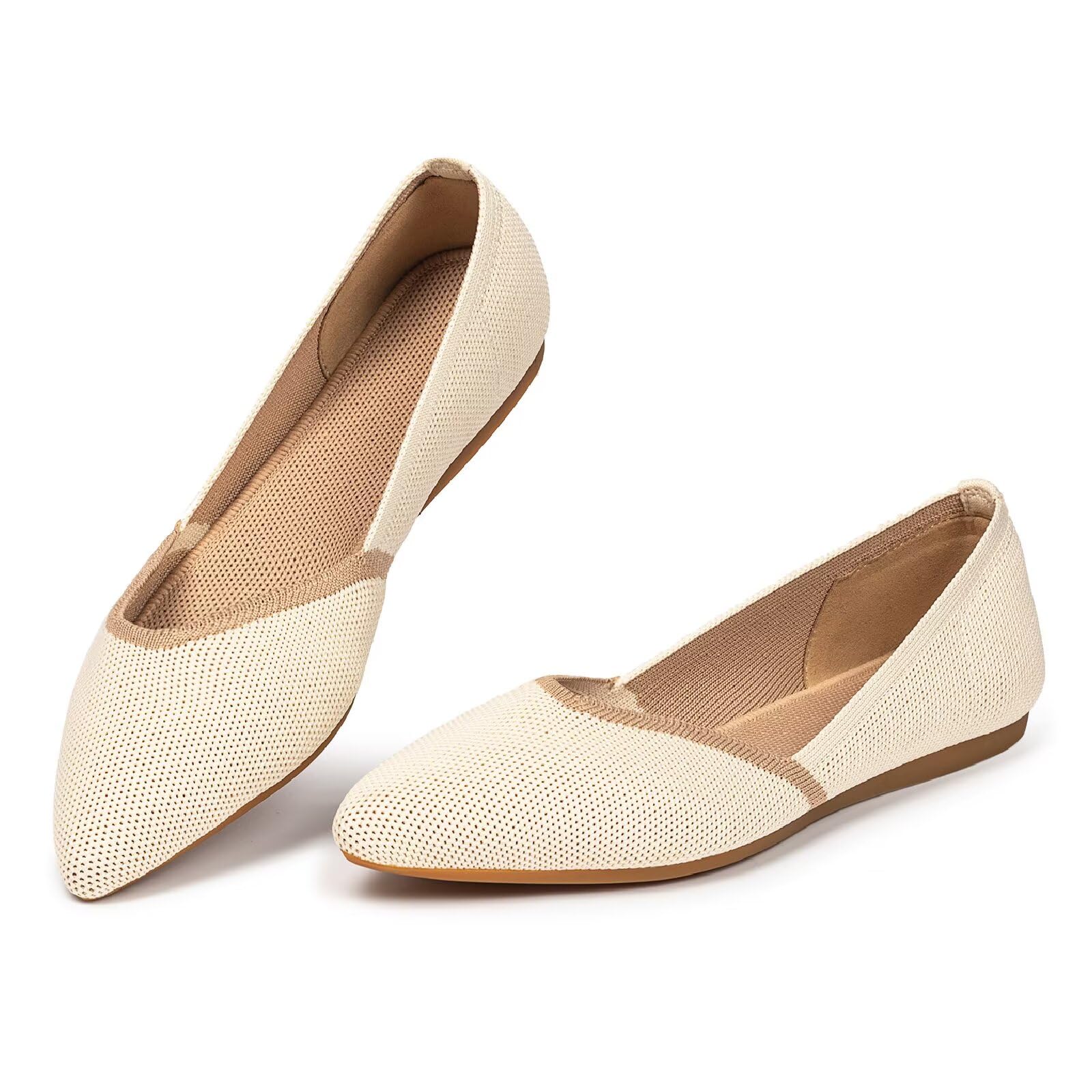
This Frank Mully flat is the pointed-toe exception in the list — and it earns its place through a flexible knit upper that conforms dynamically to foot shape rather than resisting it. The cushioned insole and slip-resistant outsole provide a surprisingly comfortable foundation for a silhouette that normally spells trouble for bunions. Multiple reviewers note it accommodates wide feet and bunions better than any leather pointed flat they’ve tried.
The knit material stretches without pressing against the bunion’s lateral edge, and the lightweight packable design makes it a strong travel companion. Several buyers claim it replaces Rothy’s at a fraction of the price, with the same dressy look but less toe constriction. The shoe runs true to size according to most wearers, though those between sizes should size down, as the knit loosens slightly with wear.
The pointed toe still carries inherent risk for bunion sufferers with a pronounced lateral deviation. If your bunion sits far forward in the toe taper, even a flexible knit may not provide enough room. The insole can feel slightly sweaty in hot weather, and the non-removable design limits orthotic customization. Consider this shoe as a secondary option for milder bunions or occasions where a round toe isn’t an option.
Why it’s great
- Flexible knit upper conforms to bunions without lateral pressure
- Cushioned insole provides good shock absorption
- Lightweight and packable for travel
- Dressy pointed look at a budget-friendly price point
Good to know
- Pointed toe still limits splay for severe bunions
- Insole is not removable for custom orthotics
- Knit material can feel warm or sweaty in hot climates
7. Veittes Women’s Wide Width Ballet Flat
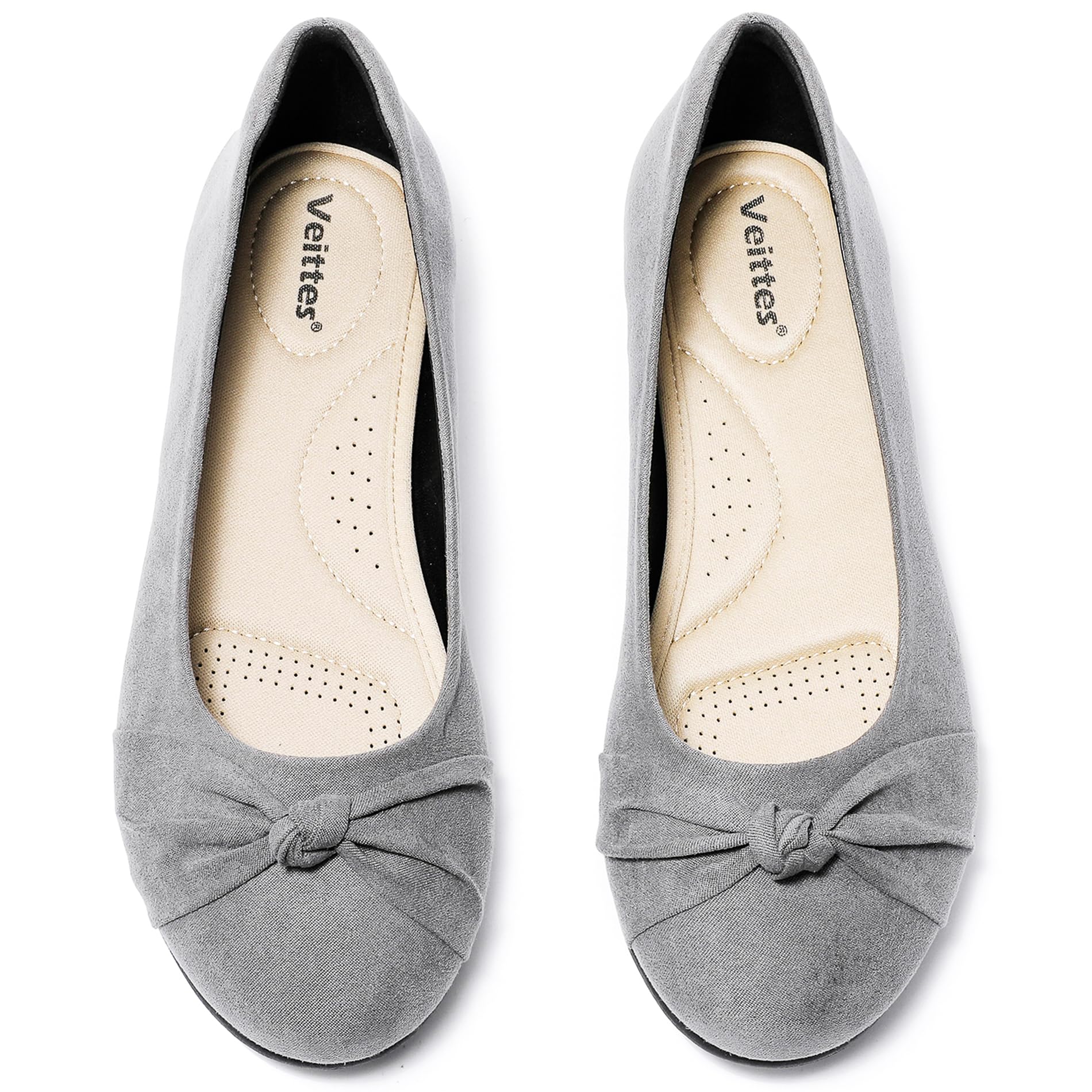
The Veittes ballet flat enters the budget tier with a clear advantage for bunion sufferers: a round, unrestricted toe shape and a soft insole that multiple reviewers describe as comfortable for all-day wear. The lightweight knit upper stretches minimally to accommodate swelling, making it a practical option for days when your bunion flares and you need something roomy without spending premium money.
Buyers with post-surgical feet, including those recovering from bone fusion, have found the fit accommodating — a strong signal that the toe box provides genuine width and not just a slightly looser cut. The pull-on design means no straps or buckles to adjust, which is convenient but also means you cannot modify the fit if the shoe is loose in the heel or tight across the midfoot.
The primary limitation is that the “wide width” cut may not satisfy truly wide feet. Several reviewers note the fit is comparable to a standard D-width rather than an extended wide. The shoe runs true to size overall, but if your bunion requires a dedicated wide toe box (not just a wider heel-to-toe length), you may experience pressure at the joint’s widest point after several hours of wear.
Why it’s great
- Round toe shape provides good forefoot volume
- Soft insole offers comfort for long days on your feet
- Lightweight and breathable knit upper
- Budget-friendly entry point for bunion relief
Good to know
- Wide width may still be too narrow for truly wide feet
- Pull-on closure offers no fit adjustability
- Insole cushioning may compress over time
FAQ
Will a wide-width flat automatically fix bunion pain?
Can I wear orthotics with zero-drop flats?
Why do my bunions hurt more in flats than heels?
Are pointed toe flats ever safe for bunions?
Final Thoughts: The Verdict
For most users, the best dress flats for bunions winner is the WHITIN Women’s Barefoot Mary Jane because its zero-drop sole and genuinely anatomical toe box address the two mechanical causes of bunion pain — pronation and lateral compression — without relying on expensive materials. If you need machine-washable convenience and extreme forefoot room for a swollen joint, grab the Arromic Wide Toe Box Mary Jane. And for classic arch support in an office-ready silhouette where a barefoot look isn’t appropriate, nothing beats the LifeStride Notorious Flat.

Mo Maruf
I created WellFizz to bridge the gap between vague wellness advice and actionable solutions. My mission is simple: to decode the research and give you practical tools you can actually use.
Beyond the data, I am a passionate traveler. I believe that stepping away from the screen to explore new environments is essential for mental clarity and physical vitality.