Our readers keep the lights on and my smoothie glass nicely filled. As an Amazon Associate, I earn from qualifying purchases.
Finding a cheap printer that doesn’t cost a fortune in ink, jam every other page, or force you into a subscription trap is the real challenge. The market is full of entry-level all-in-ones that look like a steal until you factor in cartridge costs and reliability.
I’m Mohammad Maruf — the founder and writer behind WellFizz. I’ve spent hundreds of hours analyzing print speeds, ink yields, software ecosystems, and real-world customer feedback to separate the few functional budget printers from the frustrating ones.
This guide delivers the most honest breakdown of a best cheap all in one printer based on actual specs, real ownership experiences, and long-term running costs instead of marketing claims.
How To Choose The Best Cheap All In One Printer
When you’re shopping on a budget, it’s easy to gravitate toward the lowest upfront price. But with all-in-one printers, the real cost of ownership is determined by ink yield, connectivity features, and paper handling capabilities that many entry-level models skimp on.
Ink Economics: Starter Cartridges vs. Standard Yield
Most cheap printers ship with “starter” cartridges that contain significantly less ink than retail replacements. A printer that looks like a bargain at the register might require a cartridge replacement after just 100 pages. Look for models that accept high-yield (XL) cartridges or offer competitive third-party ink options to keep the cost per page manageable.
Duplex Printing: Manual vs. Automatic
Many ultra-budget all-in-ones only support manual duplex — meaning you flip the paper yourself. An automatic document feeder (ADF) and automatic duplex printing are features typically reserved for slightly higher-tier models. If you regularly scan or print two-sided documents, an ADF and auto duplex become critical differentiators that justify spending a bit more upfront.
Wireless Connectivity and Ecosystem Lock-in
Nearly every cheap printer relies on a 2.4GHz WiFi connection. Modern mesh networks often combine 2.4 and 5GHz bands, which can cause connection headaches. Some manufacturers (HP and Epson, specifically) use firmware updates to block third-party cartridges. A printer that works fine with generic ink today might refuse it after a firmware update tomorrow.
Quick Comparison
On smaller screens, swipe sideways to see the full table.
| Model | Category | Best For | Key Spec | Amazon |
|---|---|---|---|---|
| Brother MFC-J1360DW | Inkjet | Home Office Productivity | 16 ppm Black, 20-sheet ADF | Amazon |
| Epson WorkForce Pro WF-3823 | Inkjet | High-Volume Workloads | 21 ppm Black, 250-sheet tray | Amazon |
| Canon TS5320a | Inkjet | Photo Quality & Voice Control | 4800×1200 DPI, 13 ppm Black | Amazon |
| Epson WorkForce WF-2930 | Inkjet | Compact Home Office | 10 ppm Black, Auto Duplex | Amazon |
| HP DeskJet 4255e | Inkjet | Entry-Level with ADF | 8.5 ppm Black, 60-sheet tray | Amazon |
| Canon PIXMA TR4720 | Inkjet | Basic 4-in-1 Home Use | 8.8 ppm Black, 100-sheet tray | Amazon |
| HP DeskJet 2855e | Inkjet | Lowest Upfront Cost | 7.5 ppm Black, Manual Duplex | Amazon |
In‑Depth Reviews
1. Brother Work Smart MFC-J1360DW
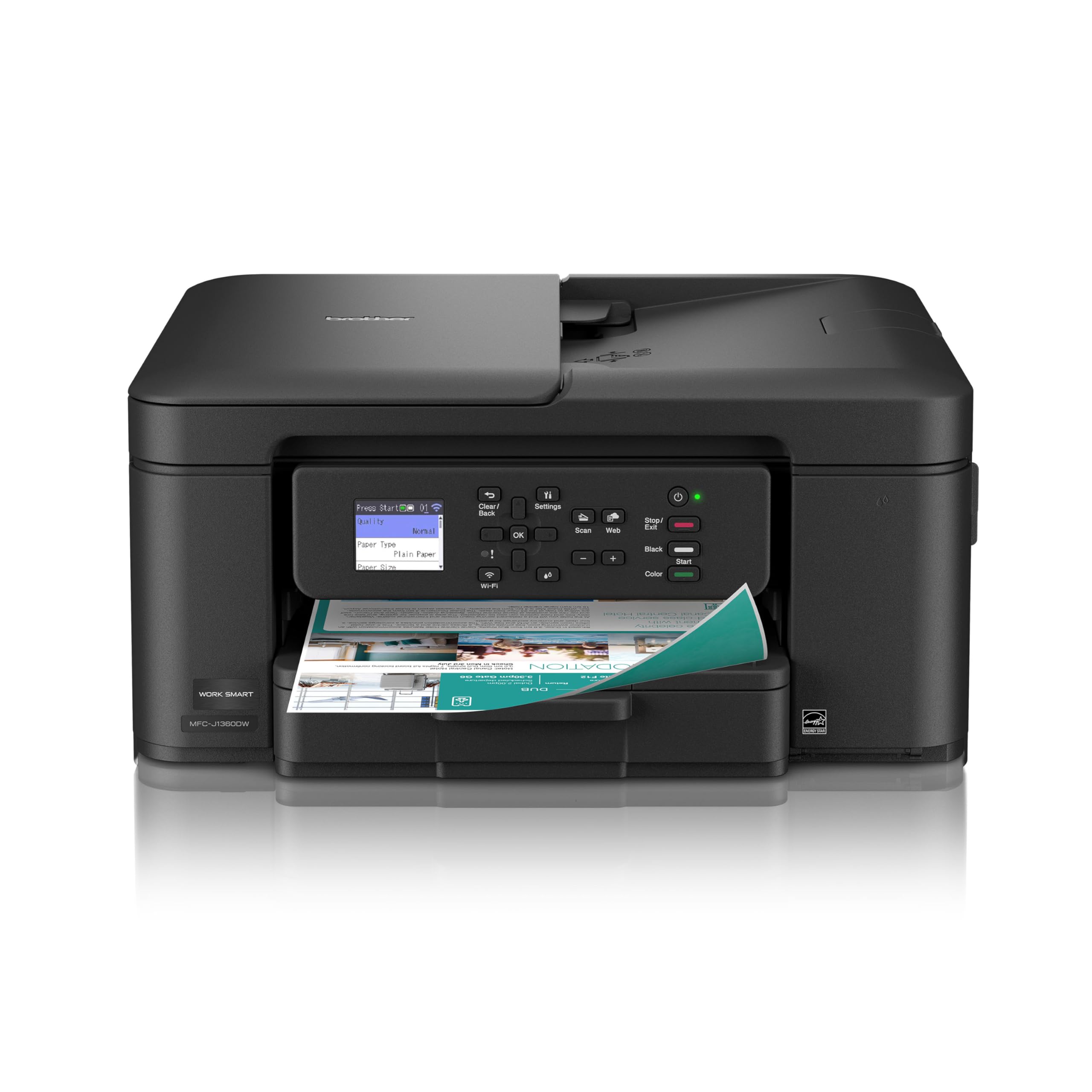
The Brother MFC-J1360DW is the strongest contender in this price tier because it combines automatic duplex printing, a 20-sheet single-sided ADF, and a 150-sheet paper tray without demanding premium money. With print speeds rated at 16 ppm in black and 9 ppm in color, it outpaces most sub- competitors by a wide margin. The first page out in black prints in roughly 6.2 seconds, which makes a noticeable difference when you’re cranking through multi-page documents.
Real-world owners consistently report reliable wireless performance, easy setup through the Brother Mobile Connect app, and convenient scanning that can email documents directly. Multiple long-term reviews highlight its dependable operation over months of regular use, with several users noting they own multiple Brother printers because of the brand’s consistent ink usage and build quality. The automatic duplex feature alone saves significant time compared to similarly priced models that require manual paper flipping.
The primary drawbacks are its somewhat cheap plastic chassis and a small 1.8-inch color display that feels cramped for navigation. Some users experienced a frustrating initial setup requiring a full driver package download rather than the streamlined app route. For anyone printing several times a week from a home office, however, this is the most balanced machine in the group.
Why it’s great
- Fast 16 ppm black print speed outclasses budget rivals
- Automatic duplex printing and 20-sheet ADF save significant time
- Reliable wireless connectivity with easy mobile setup
Good to know
- Plastic build feels less sturdy than premium models
- Setup may require full driver package rather than quick app install
- Small 1.8-inch display is basic for navigation
2. Epson WorkForce Pro WF-3823

The Epson WorkForce Pro WF-3823 is built for speed and volume, delivering an impressive 21 ppm in black and 11 ppm in color using PrecisionCore Heat-Free Technology. Its 250-sheet paper capacity and 35-page ADF are class-leading for this price bracket, making it ideal for a small office or a busy household that prints dozens of pages daily. The 2.7-inch color touchscreen provides intuitive navigation that feels significantly more modern than the button-based panels on cheaper models.
Buyers consistently praise the crisp print quality, especially the DURABrite Ultra instant-dry pigment inks that resist smudging on plain paper. The auto 2-sided printing works reliably, and the ability to print 100+ pages on the included starter cartridges before needing replacements is a welcome touch. Setup via the Epson Smart Panel app and Bluetooth Low Energy connectivity is smooth for most users, helping bypass the more painful wired installation methods.
On the downside, the ADF has been reported to occasionally feed multiple pages at once, and replacement ink cartridges are expensive — the printer is designed to work exclusively with Epson genuine cartridges. Some users experienced paper jams in the cassette, and the unit is fairly large and heavy for a home setup. It is not a true budget printer in running cost, but its speed and build quality justify the higher upfront investment for heavy users.
Why it’s great
- Fastest print speed in this roundup at 21 ppm black
- Large 250-sheet paper tray and 35-page ADF
- Instant-dry pigment inks produce professional-quality prints
Good to know
- Expensive genuine ink cartridges with no third-party support
- ADF can occasionally misfeed multiple pages
- Large footprint for a home office desk
3. Canon TS5320a

The Canon TS5320a stands out in this category because of its print resolution — 4800 x 1200 DPI — which delivers noticeably sharper photos and more vibrant color documents than any other model in this price range. It offers two separate paper paths: a front cassette holding 100 plain sheets and a rear tray for photo paper. This dual-feed design is a genuine advantage when switching between everyday documents and borderless 4×6 or 5×7 prints without reloading.
Wireless connectivity is complemented by AirPrint, Google Cloud Print, and voice assistant support through Amazon Alexa and Google Assistant. Owners who migrated from HP specifically cite the lack of subscription pressure and the automatic duplex printing as major quality-of-life upgrades. The 1.44-inch OLED screen is a small but appreciated touch for checking ink levels and printer status at a glance.
The main concern is ink consumption — several users report burning through cartridges at an alarming rate, with one reviewer needing two XL sets in under 300 pages. The paper tray construction also feels flimsy to some users, and the printer is notably slow compared to the Epson or Brother models. For photo-centric users who value print quality above all else, it’s a capable machine, but heavy document printing will keep you buying ink frequently.
Why it’s great
- Highest print resolution at 4800 x 1200 DPI for rich photo quality
- Dual paper paths for plain paper and photo media
- Voice control via Alexa and Google Assistant
Good to know
- Ink consumption is high, requiring frequent cartridge changes
- Slower print speeds than similarly priced competitors
- Paper trays feel less durable than the rest of the unit
4. Epson WorkForce WF-2930
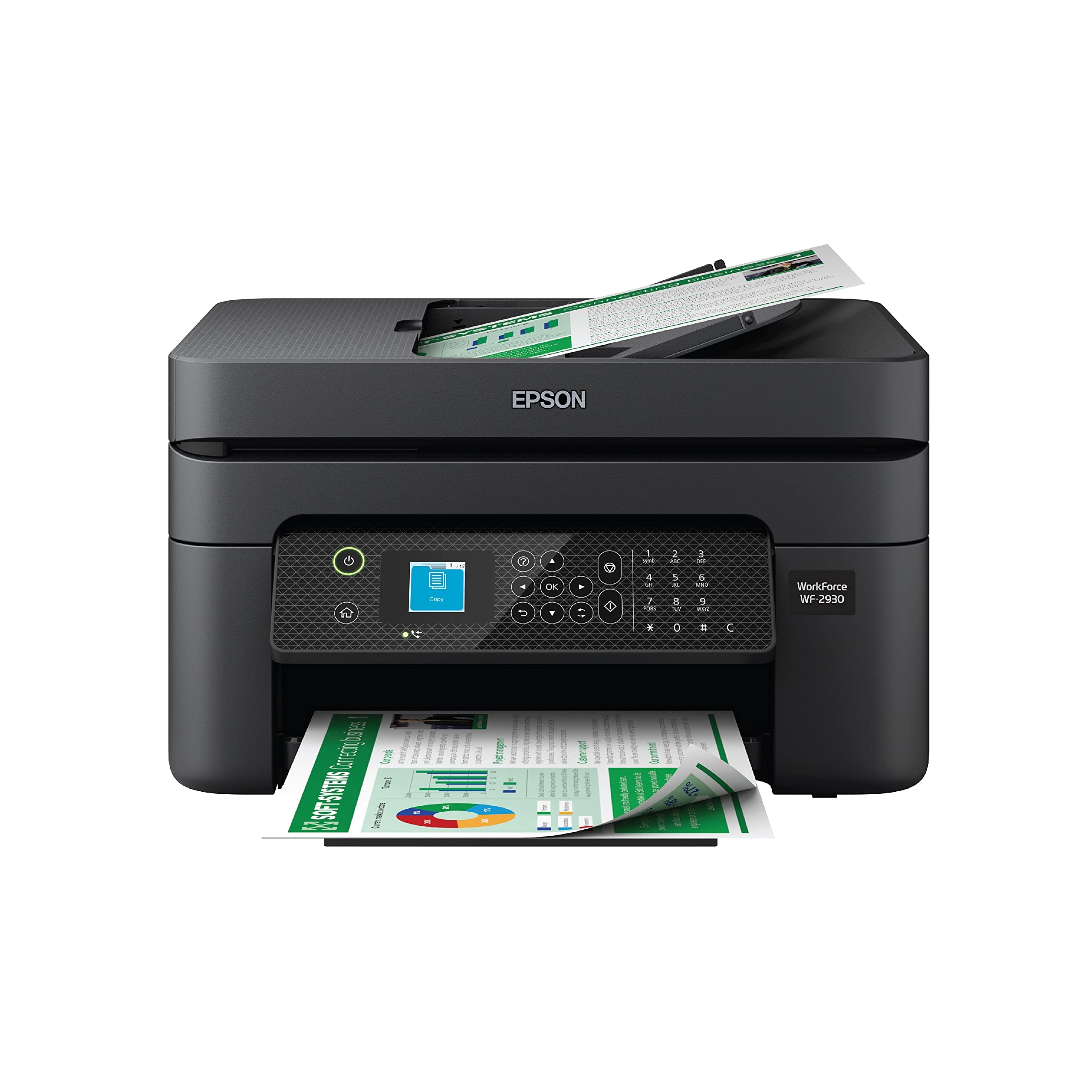
The Epson WorkForce WF-2930 targets the compact home office market with a relatively small footprint while still offering automatic duplex printing, a single-sided ADF, and fax capability. Its print speed of 10 ppm in black and 5 ppm in color is modest, but the permanent printhead design — a heat-free PrecisionCore system — is engineered to last the life of the printer, reducing the risk of premature failure common in ultra-budget inkjets.
Customer feedback highlights the seamless setup via the Epson Smart Panel app, with solid wireless performance and easy cartridge installation. The ability to print using voice commands through Alexa and Siri is a welcome convenience, and the ScanSmart software makes creating searchable PDFs straightforward. Owners who enrolled in Epson’s ink replacement program were particularly satisfied with the convenience of automatic refills.
The biggest drawback is the ink cost — the printer ships with starter cartridges that are less than half full, requiring an immediate purchase of expensive Epson genuine ink. Third-party cartridges are blocked by the printer’s firmware, and several users reported poor color saturation and smudging with the standard ink. The build quality feels flimsy for the price, and some buyers returned the unit due to the high cost-per-page, which can exceed for a full set of cartridges.
Why it’s great
- Compact design fits small desks without sacrificing features
- Automatic duplex printing and ADF for efficient scanning
- Permanent printhead reduces long-term failure risk
Good to know
- Starter ink cartridges are less than half full
- Only works with expensive Epson genuine ink
- Build quality feels cheap and breakable
5. HP DeskJet 4255e
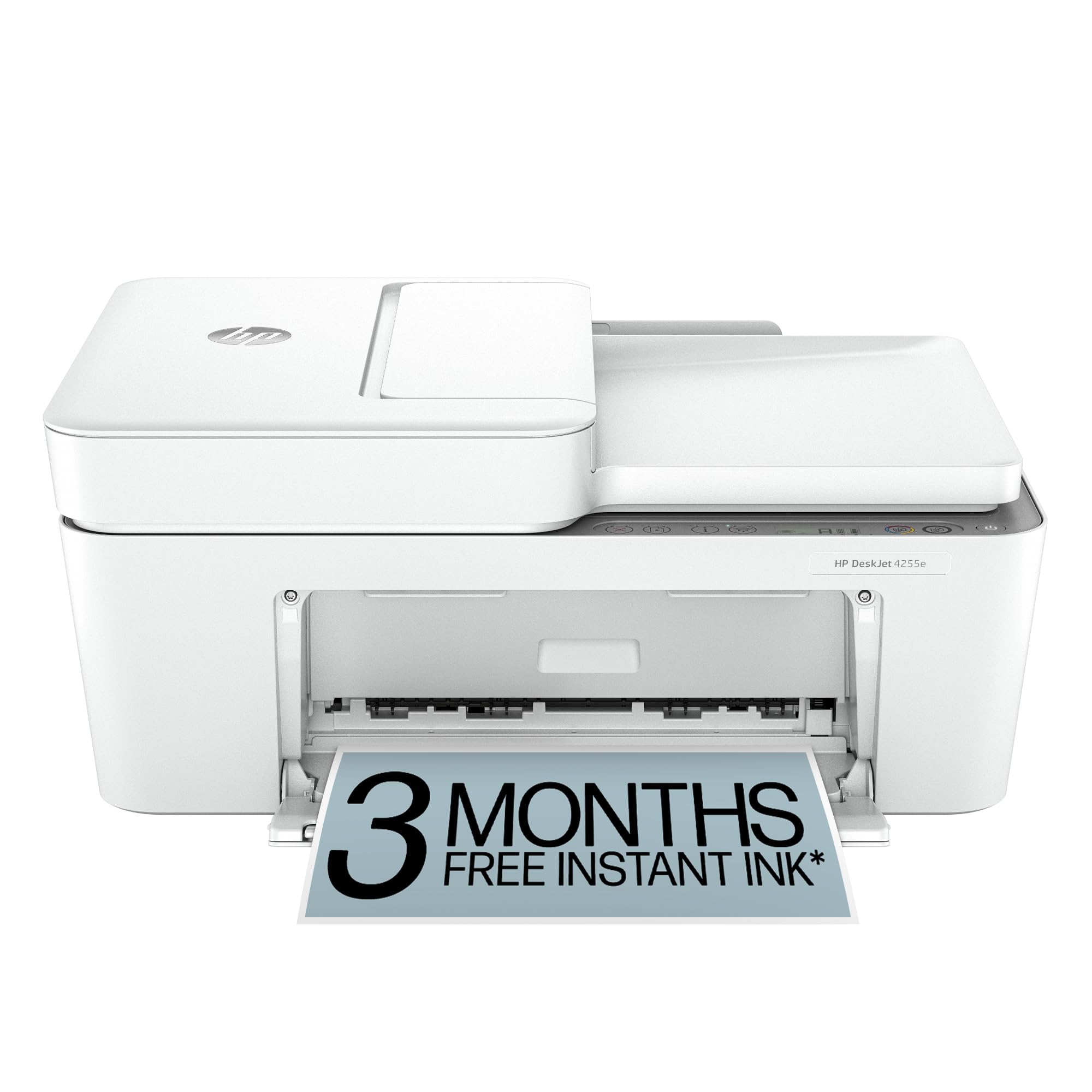
The HP DeskJet 4255e is a step up from the 2855e, adding an auto document feeder for multi-page scanning and copying — a feature often absent at this price tier. Print speeds reach 8.5 ppm in black and 5.5 ppm in color, which is adequate for light home use. The printer uses HP’s AI-powered print optimization to clean up web page layouts, automatically removing ads and sidebars for more efficient printing.
Setup through the HP Smart app is generally straightforward, and the compact white design fits well in a home environment. The included 3-month Instant Ink trial is a nice buffer, though the subscription model locks you into HP cartridges after the trial ends. Owners who value print quality for recipes, forms, and school documents find the output crisp and reliable for the price.
Manual duplex is the most notable omission — you must flip pages yourself for double-sided printing. The printer is also limited to 2.4GHz WiFi, which can cause connectivity headaches on modern dual-band mesh networks. Some users reported Dynamic Security firmware updates that block non-HP cartridges, and a few experienced sudden failures after replacing the starter ink. For basic home tasks where the ADF is essential, it offers solid value, but the ecosystem lock-in is a real concern.
Why it’s great
- Auto document feeder for multi-page scanning at an entry-level price
- AI-powered print cleaning for web pages
- Compact design with 3-month Instant Ink trial included
Good to know
- Manual duplex only — no automatic two-sided printing
- 2.4GHz-only WiFi can struggle with mesh networks
- HP firmware may block third-party cartridges
6. Canon PIXMA TR4720

The Canon PIXMA TR4720 is a true 4-in-1 printer — print, copy, scan, and fax — in a compact chassis that doesn’t require a subscription or account registration to function. With a 100-sheet front paper tray, automatic duplex printing, and a single-sided ADF, it packs a surprising amount of functionality into a package that’s easy to set up through the Canon PRINT app. Owners consistently describe it as a great value for the money, with straightforward ink installation and no pressure to buy proprietary supplies through a mandatory app.
Print speeds of 8.8 ppm in black and 4.4 ppm in color are adequate for low-volume home use. Users report solid print quality for both documents and borderless photos up to 8.5×11 inches. The TR4720 also supports Ethernet connectivity, which is uncommon in this price bracket and provides a more stable network connection than WiFi for those who prefer wired networking.
The printer is noticeably slow compared to higher-end models, and some units arrive pre-opened or with defects due to Amazon returns. A few owners describe the startup sequence as loud and clunky. For a simple, subscription-free printer capable of faxing and basic scanning, it’s a solid entry-level choice.
Why it’s great
- True 4-in-1 functionality with fax support at an entry-level price
- Ethernet port for stable wired connectivity
- No mandatory subscription or account requirements
Good to know
- Slow print speeds even for the budget category
- Some units arrive opened or show signs of return
- Startup noise is loud and mechanical
7. HP DeskJet 2855e
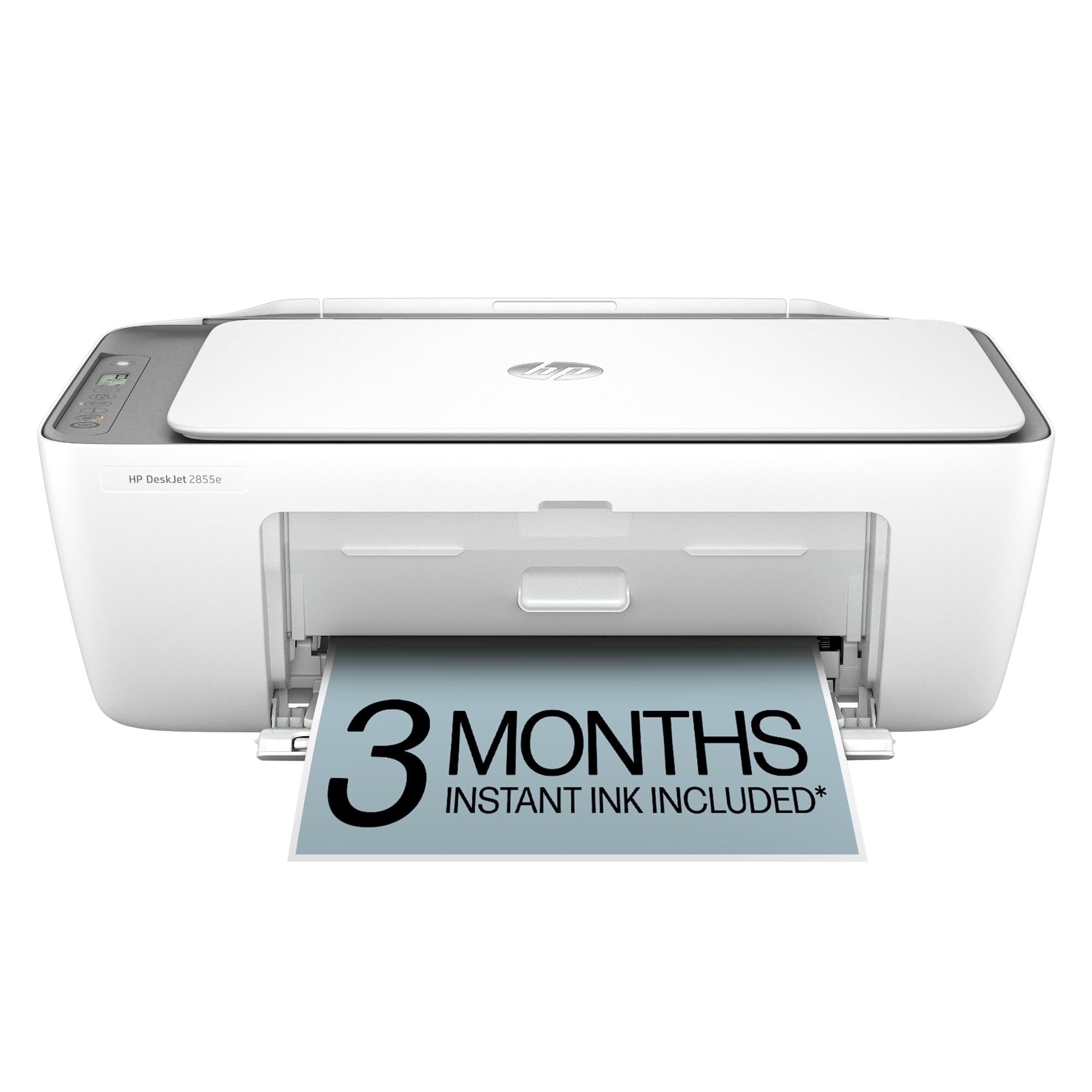
The HP DeskJet 2855e is the absolute cheapest entry point into all-in-one printing, offering basic print, scan, and copy functions for around the cost of a single cartridge. Its 7.5 ppm black and 5.5 ppm color speeds are slow, but for users printing a few pages of recipes, forms, or school assignments per week, it gets the job done. The 60-sheet input tray is small, and duplex printing is manual — you must flip each page — but the machine is compact and fits easily on a shelf or corner desk.
Setup via the HP Smart app is straightforward for most users, though some encountered frustrating software glitches where the printer appeared online but refused to print from Office or PDF applications. The 3-month Instant Ink trial is included, but after the trial, the subscription model locks you into HP’s ink delivery service. Owners who successfully navigated the initial setup praise the print quality for text documents and the overall value relative to the price paid.
The biggest risks are the software ecosystem and the 2.4GHz-only WiFi. Multiple reviews describe a failed setup after discarding the box, with no way to reconnect the printer to the network. HP’s Dynamic Security also blocks non-HP cartridges, meaning you can’t shop around for cheaper ink after the Instant Ink trial ends. For users who understand these limitations and just need the lowest possible upfront cost, it works — but patience with the software is a prerequisite.
Why it’s great
- Lowest upfront cost for a wireless all-in-one printer
- Compact design that fits in small spaces
- Included 3-month Instant Ink trial reduces initial running costs
Good to know
- HP software can be buggy and unreliable for reconnection
- 2.4GHz-only WiFi may not work with modern mesh networks
- Firmware Dynamic Security blocks third-party ink cartridges
FAQ
Why do cheap printers often have expensive ink cartridges?
Can I use third-party ink in my cheap all-in-one printer?
What does automatic duplex printing mean and do I need it?
Is a 2.4GHz-only printer a problem for a modern home?
Final Thoughts: The Verdict
For most users, the best cheap all in one printer winner is the Brother MFC-J1360DW because it offers automatic duplex, an ADF, fast print speeds, and a reasonable ink ecosystem without locking you into a subscription. If you need maximum print speed and high paper capacity for a busy home office, grab the Epson WorkForce Pro WF-3823. And for photo quality with voice control and dual paper paths, nothing beats the Canon TS5320a.

Mo Maruf
I created WellFizz to bridge the gap between vague wellness advice and actionable solutions. My mission is simple: to decode the research and give you practical tools you can actually use.
Beyond the data, I am a passionate traveler. I believe that stepping away from the screen to explore new environments is essential for mental clarity and physical vitality.