Our readers keep the lights on and my smoothie glass nicely filled. As an Amazon Associate, I earn from qualifying purchases.
The view through your goggles defines every split-second decision in a race. A blurry feed, a tangled cable, or a fogged lens turns a winning lap into a crash. Choosing the right pair means prioritizing low latency, comfortable fit, and a clear picture over marketing hype.
I’m Mohammad Maruf — the founder and writer behind WellFizz. After analyzing dozens of drone goggles across digital, analog, and VR-style formats, I’ve broken down what actually matters for racing.
Whether you are upgrading from an all-in-one kit or building your first serious setup, this guide to the best drone racing goggles focuses on real-world performance and compatibility.
How To Choose The Best Drone Racing Goggles
Selecting the right pair of goggles depends on your drone’s video system and the type of flying you do. Digital systems offer sharpness and range, while analog setups are known for low latency and broad compatibility. Beyond the technology type, comfort and the ability to adjust for your vision can make or break long practice sessions.
Analog vs. Digital: Which Video System Fits Your Racing Style?
Analog goggles receive a standard 5.8GHz signal common in nearly every racing drone and Tiny Whoop. The picture is lower resolution than digital, but the latency is rock-bottom and the gear is easier to repair at the field. Digital goggles, such as the Walksnail Avatar Goggles X, deliver a sharp 1080p image with a more reliable link, but they lock you into a single ecosystem. If you race in a mixed group or fly multiple quads, analog still wins on versatility.
Display Resolution and Latency: What Your Eyes Actually See
Box-style goggles like the SoloGood EV800D use a single 5-inch LCD panel with an 800×480 resolution. Higher-end digital goggles use dual 1920×1080 OLED or LCD screens that reduce perceived latency and improve immersion. For racing, sub-30ms latency is critical — anything higher introduces noticeable delay between stick input and what you see. Always check the manufacturer’s latency figure and compare it to your flying style.
IPD Adjustment and Diopter: Can You Fly Without Glasses?
If you wear prescription glasses or have a wide or narrow face, look for goggles with adjustable interpupillary distance (IPD) and diopter correction. The CADDXFPV Walksnail Goggles X offer a generous IPD range of 57–72mm and diopter settings from +2.0 to -6.0, allowing many pilots to fly without wearing corrective lenses underneath. Fixed-lens goggles force you to rely on the small internal space, which can fog up or press uncomfortably against frames.
Quick Comparison
On smaller screens, swipe sideways to see the full table.
| Model | Category | Best For | Key Spec | Amazon |
|---|---|---|---|---|
| CADDXFPV Walksnail Avatar Goggles X | Digital | High-performance digital racing & freestyle | 1080p dual display, 22ms latency | Amazon |
| DJI Neo 2 Motion Fly More Combo | Digital | Beginner-friendly FPV flying with motion control | Goggles N3, 4K recording, head tracking | Amazon |
| DJI FPV Goggles V2 (Refurbished) | Digital | DJI ecosystem pilots & analog hybrid setups | Dual-band, 110 min flight support | Amazon |
| E Tinyhawk 3 RTF Kit | Analog | All-in-one starter kit for new pilots | 5.8GHz goggles, Betaflight configurable | Amazon |
| BETAFPV Cetus Pro FPV Kit | Analog | Absolute beginners learning acro mode | VR02 goggles, altitude hold | Amazon |
| CADDXFPV Walksnail Moonlight Kit | Digital | Low-light night flying & cinematic recording | Starlight sensor, 4K/60fps | Amazon |
| SoloGood EV800D FPV Goggles | Analog | Budget entry-level flying & backup goggles | 5-inch 800×480 display, DVR | Amazon |
| DroneMask 1 VR Headset | VR-style | DJI & GPS drone pilots wanting immersive view | Smartphone-based, 120° FOV | Amazon |
| Havoc Racing Magnetic Frameless Goggles | Analog | Motorsports & action sports use | Magnetic lens swap, UV blocking | Amazon |
In‑Depth Reviews
1. CADDXFPV Walksnail Avatar Goggles X
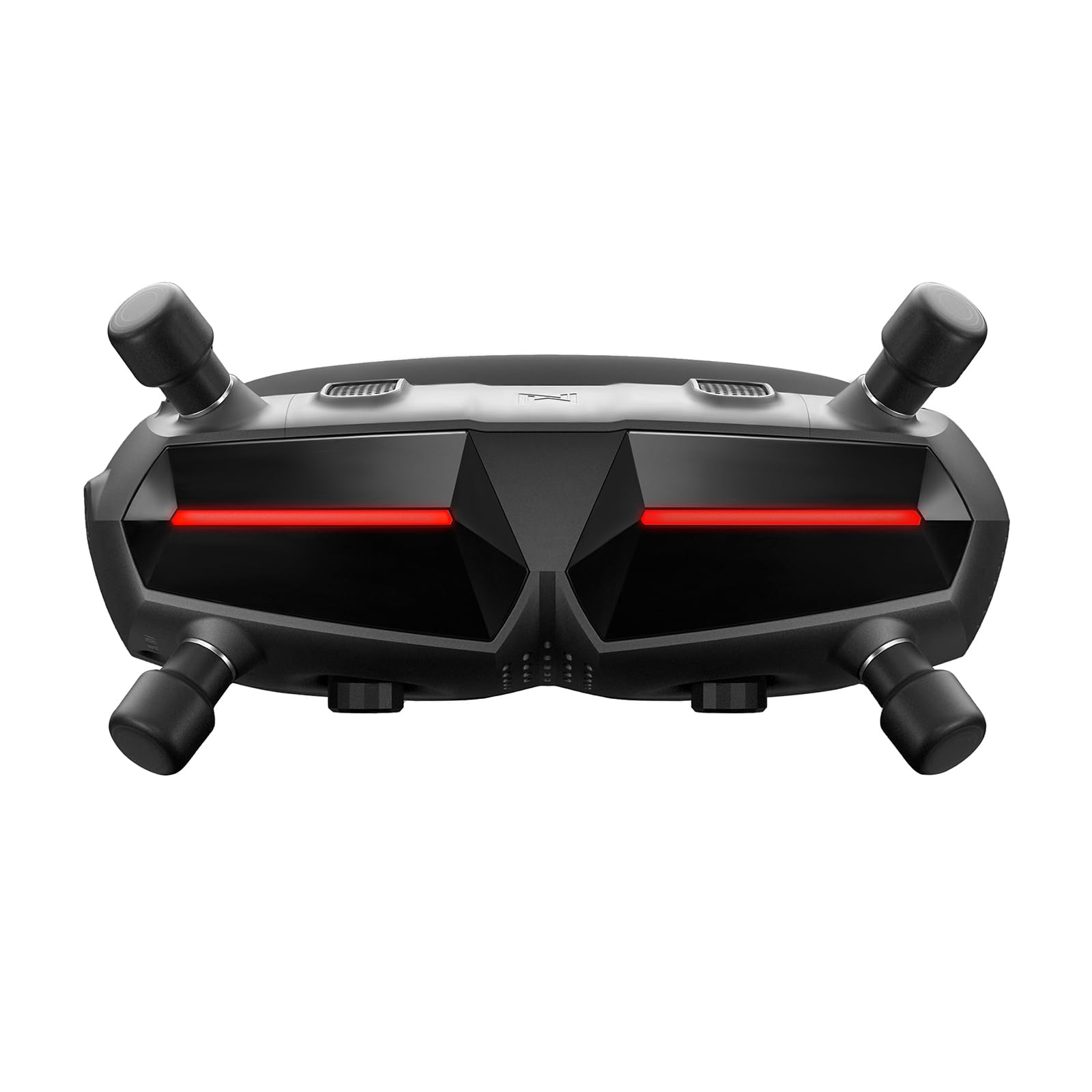
The Walksnail Goggles X represent the current sweet spot in digital FPV. Dual 1920×1080 displays deliver a crisp, vivid image that makes reading OSD telemetry and spotting gates easy even at speed. The 50-degree field of view feels natural without the tunnel-vision effect of narrower goggles, and the 22ms latency keeps the video feed responsive enough for competitive flying. Built-in head tracking adds another layer of immersion when paired with a compatible gimbal.
IPD adjustment spans 57–72mm, and the diopter range from +2.0 to -6.0 lets most pilots fly without glasses — a massive convenience at the field. The modular design supports HDMI and AV input, so you can connect an analog receiver module or a ground station for versatility. Up to 10 kilometers of rated transmission range gives you confidence for long-range freestyle runs, though real-world penetration depends on antenna placement and environment.
One consistent complaint across early adopters is the stock foam gasket: it does not seal well on narrow or average faces, causing light bleed at the screen edges. Many users replace it with an optional smaller foam pad or a third-party alternative. The goggles do not include a battery, so you will need a 2S–6S LiPo or a dedicated FPV battery pack with an XT60 connector to power them.
Why it’s great
- Excellent 1080p resolution and color reproduction for digital racing
- Adjustable IPD and diopter eliminates need for glasses underneath
- Low 22ms latency keeps the feed telemetry-synced with stick inputs
Good to know
- Stock face foam does not seal well for narrow face shapes
- Battery not included — requires a separate 2S–6S LiPo pack
- Compatible only with Walksnail Avatar VTX systems, not DJI or analog
2. DJI Neo 2 Motion Fly More Combo With RC Motion 3 & Goggles N3
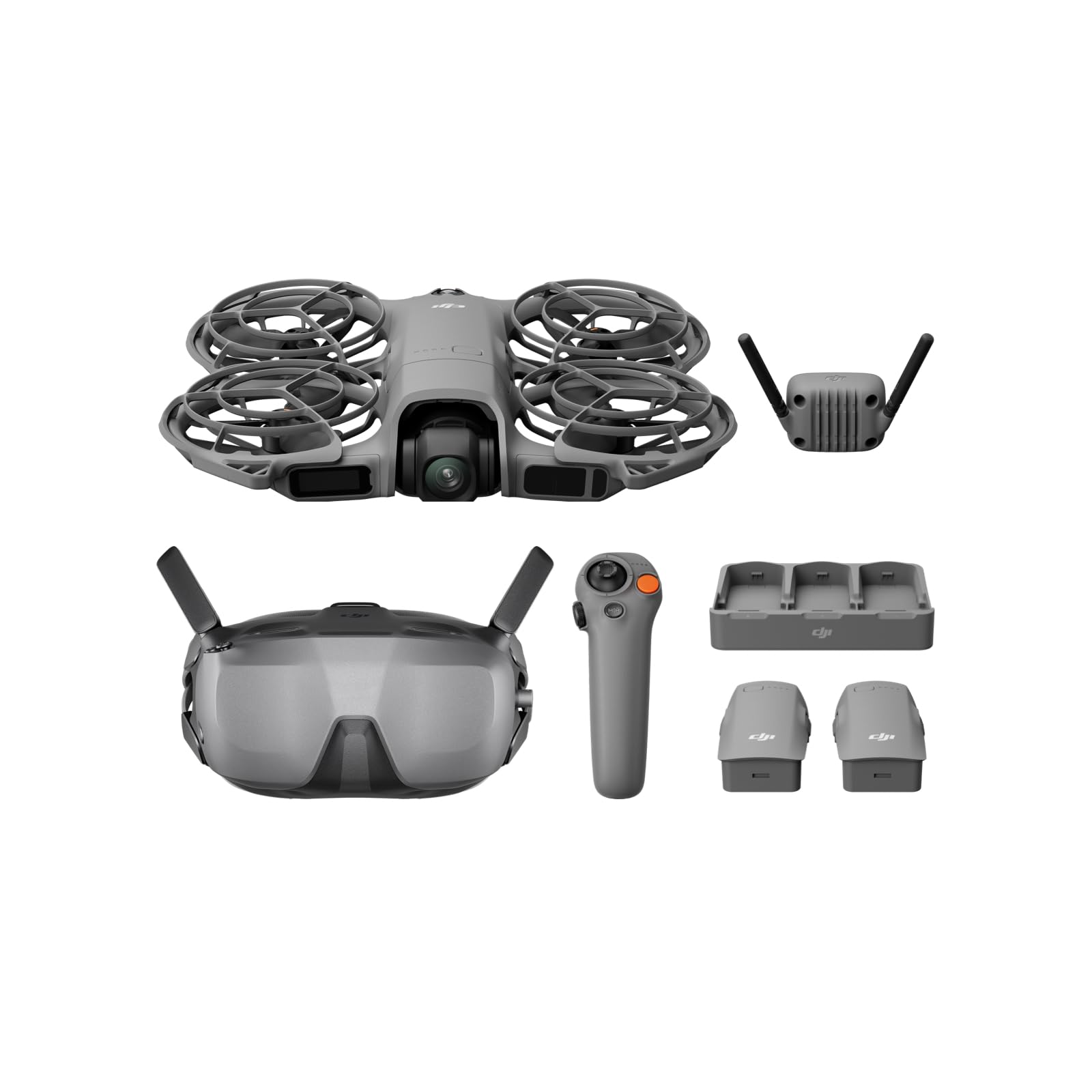
This combo is engineered to lower the barrier to immersive FPV flying. The Goggles N3 integrate seamlessly with the DJI Neo 2 and the RC Motion 3 controller, so a new pilot can be flying within minutes of unboxing — no soldering, no Betaflight tuning, no separate receiver modules. The 4K camera captures stabilized footage that is good enough for social sharing, and the three-battery kit lets you extend flight sessions to about 15–20 minutes total.
The FPV experience is polished: the Goggles N3 provide a clear, low-latency feed, though the resolution is lower than the Walksnail Goggles X. Motion control with the RC Motion 3 is intuitive for beginners but does not offer the stick precision needed for tight racing gates or acro freestyle. The drone itself is lightweight at 151 grams and includes propeller guards, making it safe to fly in tighter spaces.
Flight time per battery is the main pinch — roughly five to seven minutes per pack means you are landing often. The system also locks you into the DJI ecosystem, so upgrading to a custom 5-inch racer later will require a different VTX or goggle setup. For a pilot who wants a complete, polished FPV experience out of the box, this combo is unmatched at this tier.
Why it’s great
- Complete ready-to-fly kit with goggles, motion controller, and drone
- Clear digital feed with low latency for a beginner-friendly experience
- Three batteries and charging hub included for extended practice sessions
Good to know
- Short flight time per battery — plan for 5–7 minutes per pack
- RC Motion 3 is less precise than a traditional radio for tight racing
- Goggles N3 are only compatible with DJI Neo 2 ecosystem
3. DJI FPV Goggles V2 (Refurbished)

Even after its successor arrived, the DJI FPV Goggles V2 remain a capable option for pilots who want a digital experience without paying current-gen prices. The refurbished units from Amazon come with all accessories and often look and function like new. The dual-band receiver (2.4GHz and 5.8GHz) allows flexible frequency selection depending on local regulations, though the 2.4GHz band is only accessible when paired with the DJI FPV aircraft.
The 1440×810 resolution per eye is noticeably sharper than analog, and the low-latency mode keeps the feed race-worthy. Comfort is decent, but the stock foam pad leaves gaps on some face shapes, requiring a replacement pad for a proper light seal. The V2 goggles also accept analog input via a third-party BDI DigiAdapter, so you can switch between flying a digital 5-inch quad and an analog Tiny Whoop using the same headset.
The refurbished nature is the biggest variable. Some users report flawless operation for months, while a small percentage encounter linking or update issues that can be time-consuming to resolve. Buying new gives you warranty peace of mind, but at roughly half the cost of current-generation goggles, the V2 is a pragmatic entry point into digital FPV.
Why it’s great
- Sharp 1440×810 digital feed with low-latency mode for racing
- Dual-band frequency support for flexible legal compliance
- Analog adapter option allows one goggle to cover digital and analog quads
Good to know
- Stock foam does not seal well for all face shapes; aftermarket pad often required
- Refurbished units may have occasional linking or firmware update issues
- 2.4GHz band works only with DJI FPV aircraft, not Air Units
4. Tinyhawk 3 RTF Kit 1s FRSKY

The Tinyhawk 3 RTF Kit is built around a brushless micro quad that can survive hard indoor crashes and outdoor gusts. The frame is flexible plastic that absorbs impacts, and the included goggles and Frsky radio get you flying immediately after charging. Durability is the standout: the drone has survived falls from second-story windows and collisions with branches, still flying with only lost props.
The analog video feed is standard 5.8GHz, so you can fly with other pilots at the field without worrying about proprietary protocols. Betaflight configuration is fully accessible, allowing you to adjust rates, power limits, and accelerometer settings as your skills progress. The included goggles are basic but functional, with a clear enough picture for proximity flying and gate practice.
Quality control is a concern. A notable number of units ship with a dead motor caused by improperly seated wires inside the connector, making the drone unflyable out of the box. EMAX customer service generally replaces the affected parts, but the frustration is real for a first-time pilot. The kit is best suited for someone who already has basic FPV knowledge and can troubleshoot a simple motor connection.
Why it’s great
- Extremely durable frame designed to survive hard indoor and outdoor crashes
- Full Betaflight access lets you tune rates and power as you improve
- Standard 5.8GHz analog works with any other pilot’s goggles at the field
Good to know
- Some units arrive with a dead motor due to loose wire connections inside the plug
- Included goggles have limited range and static-prone video compared to aftermarket sets
- No battery included — you must purchase compatible 1S LiPos separately
5. BETAFPV Cetus Pro FPV Kit

BETAFPV designed the Cetus Pro kit specifically for people who have never flown FPV. The brushless whoop drone includes three flight modes — Normal, Sport, and Manual — plus altitude hold that keeps the quad hovering steady when you release the throttle. The VR02 goggles are integrated into the kit and provide a real-time analog feed that is clear enough to learn line-of-sight and basic acro orientation.
The drone is remarkably durable. Users report surviving full-speed crashes into furniture, dog water bowls, and even being submerged briefly without breaking. Only the props typically need replacement, and the included battery charger shows individual cell voltage, helping you maintain battery health. The BT2.0 battery connector is efficient and reduces voltage sag compared to older PH2.0 plugs.
The VR02 goggles lack diversity and an external antenna port, so range and penetration are limited to around 100–150 feet in ideal conditions. The LiteRadio 2 SE transmitter is basic and does not offer the feel of a full-size radio, but it works for the learning phase. Expect around three to five minutes of flight time per battery, so buying extra packs and a multi-bay charger is almost mandatory for any real practice session.
Why it’s great
- Altitude hold in Normal mode removes the hover challenge for total beginners
- Very crash-tolerant frame that survives submersion and hard impacts
- BT2.0 battery connector maintains higher voltage under load for longer flight feel
Good to know
- VR02 goggles lack diversity and external antenna, limiting range to about 100–150 feet
- Only two batteries included; flying more than ten minutes requires a separate purchase
- LiteRadio 2 SE transmitter feels cheap and is not compatible with other receivers
6. CADDXFPV Walksnail Moonlight Kit
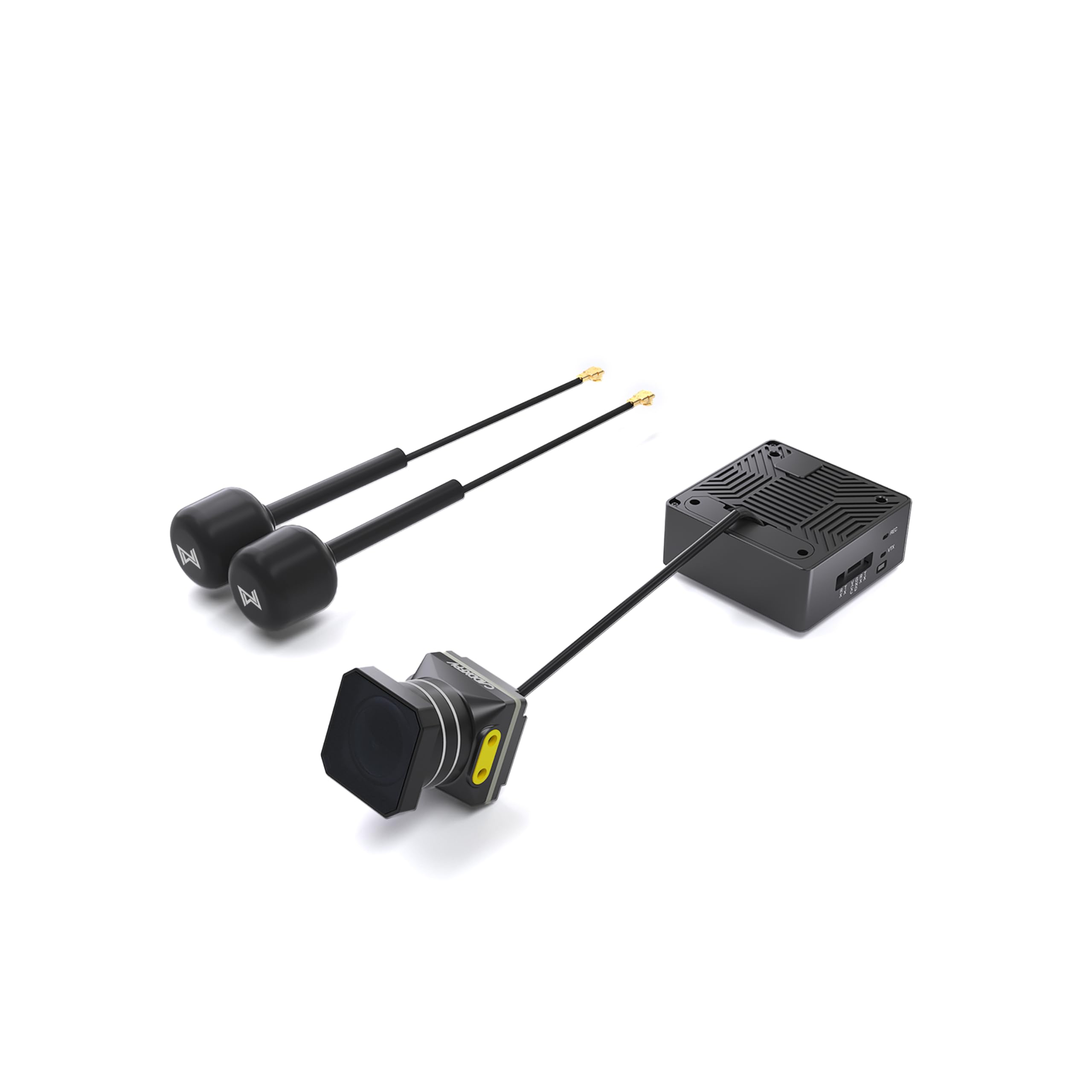
Twilight and night flying demand a camera that can see detail when the sun drops — and the Moonlight Kit delivers with a 1/1.8-inch starlight sensor that captures usable live feed in very low light. The Air Unit Pro records up to 4K/60fps at 150Mbps, and the built-in Electronic Image Stabilization combined with Gyroflow support yields smooth footage that previously required an action cam. An ND8 filter is included for bright daytime flights, making this a versatile choice for pilots who fly at all hours.
Dual antennas and a 1.2-watt transmitter provide a solid 4-kilometer range under good conditions. The VTX runs hot at full power — you need airflow over the unit during flight, which is standard for any high-power transmitter. Integration into a 3.5- to 5-inch build is straightforward, and the included MIPI cable is carefully routed to avoid crush during assembly.
Quality control is the weak link. Multiple reports describe receiving units with damaged MIPI cables or non-functional cameras, effectively bricking the system until replacement is issued. When the system works, the image quality and low-light performance are genuinely impressive for the price point, but the risk of receiving a defective unit is higher than average. Budget some time for potential returns if you draw a bad batch.
Why it’s great
- Starlight sensor delivers clear live feed in very low-light conditions
- 4K/60fps recording with Gyroflow eliminates need for separate action camera
- ND8 filter included for balanced daytime exposure
Good to know
- Reported MIPI cable and camera defects on some units — inspect immediately upon arrival
- VTX runs hot at full 1.2W output; needs good airflow during flight
- Only compatible with Walksnail Avatar goggles and receivers
7. SoloGood EV800D FPV Goggles with DVR

The EV800D is a box-style goggle that has been a staple in the analog FPV community for years. The single 5-inch 800×480 LCD panel is bright and large enough to provide a comfortable viewing experience, and the detachable screen module doubles as a standalone monitor for bench testing or spectator viewing. The built-in DVR records at 720×576, which is sufficient for reviewing race lines and diagnosing video interference.
The unit is lightweight and uses a secure elastic strap that provides good sun isolation. The automatic frequency search works reliably, and the diversity receiver (two antenna ports) helps maintain a stable feed, though some users note it is not a true diversity system — it scans both ports but uses a single receiver chip. The included 2000mAh battery delivers roughly two hours of run time, which covers a full afternoon at the track.
The user interface is clunky: the multi-function button is easy to press accidentally, and the menu navigation feels dated. The micro USB port for power is fragile and may require replacement for reliable connection. Pilots who wear glasses will struggle with fit, as there is no internal space for frames. For the entry-level price, the EV800D offers excellent value as a primary goggle for learning or a dedicated backup goggle for experienced pilots.
Why it’s great
- Detachable screen doubles as a monitor for bench testing and spectator use
- Bright 5-inch 800×480 panel provides comfortable viewing for long sessions
- Lightweight design with good sunlight isolation for outdoor racing
Good to know
- No space for glasses — users with prescription lenses may not fit comfortably
- Button layout makes accidental menu presses common during flight
- Micro USB power connector is prone to failure; may need soldering repair
8. DroneMask 1 Patented Unibody Lens FPV Goggles

The DroneMask 1 takes a different approach — it is a VR-style headset that holds your smartphone and uses a unibody lens to magnify the screen into a 120-degree field of view. It works with any camera drone that streams to a phone via a standard controller, which makes it compatible with DJI Mini and Air series, Autel, Potensic, and many others without requiring a third-party app. The adjustable focal length lets you dial in focus without glasses, and the soft face padding is comfortable for longer sessions.
The image quality depends entirely on your phone’s display resolution and brightness. A phone with a 1600×1200 or higher screen will look sharper than most box goggles, but a lower-resolution phone will introduce visible pixelation. The magnetic phone mount is secure, and the head strap distributes weight fairly well. It is a clever way to get an immersive view without buying a dedicated receiver and display system.
This is not a solution for analog FPV racing. There is no receiver module, no antenna, and no way to connect directly to a 5.8GHz VTX. The DroneMask 1 is strictly for pilots who fly GPS camera drones (DJI Mini, Mavic, Autel) and want a heads-up viewing experience instead of squinting at a phone screen. For that specific use case, it works well, but it does not belong in a racing pilot’s gear bag.
Why it’s great
- Works with any drone that streams to a phone via standard controller and app
- Adjustable focal length eliminates the need to wear glasses underneath
- Wide 120-degree FOV provides a more immersive view than typical box goggles
Good to know
- No 5.8GHz receiver — cannot be used for analog FPV racing or Tiny Whoops
- Image quality is limited by your phone’s screen resolution and brightness
- Not designed for fast-paced racing; best for cinematic cruising and GPS drones
9. Havoc Racing Magnetic Frameless Goggles

The Havoc Racing goggles are built for motocross, snowboarding, and ATV use rather than FPV drone flight. The frameless design is sleek and lightweight, and the magnetic lens system is genuinely impressive — the magnets are strong enough that the lens stays firmly in place during aggressive riding, yet swapping between tinted and clear lenses takes seconds. UV blocking is built into the lens, and the anti-fog coating works well in cold or humid conditions.
Fit is excellent with a helmet, and the goggles look sharp on their own. The face foam is plush and creates a good seal against wind and dust. Users consistently note that the optical clarity is on par with higher-priced brands like Oakley, making these a fantastic entry-level option for action sports without the premium markup.
These goggles do not have a built-in display or any FPV capability. They are included in this list as a category sibling — a physical goggle for pilots who also ride or snowboard and want a quality eye-protection option that shares the same name as FPV gear. For drone racing itself, you need a separate set of electronic goggles. For the action sports enthusiast, these are an excellent buy.
Why it’s great
- Strong magnetic lens retention system makes swapping lenses fast and secure
- Optical clarity and fit rival premium brands at a mid-range price point
- UV blocking and anti-fog treatment effective across varied weather conditions
Good to know
- Not electronic — cannot be used for FPV drone flight
- Does not fit over prescription glasses; users need contact lenses or separate RX inserts
- Frameless design looks sleek but offers less peripheral protection vs. framed models
FAQ
Can I use analog FPV goggles with a digital VTX?
What does IPD adjustment mean for drone goggles?
Final Thoughts: The Verdict
For most users, the best drone racing goggles winner is the CADDXFPV Walksnail Avatar Goggles X because it combines sharp 1080p digital video, adjustable IPD and diopter, and a comfortable modular design at a mid-range price. If you want a polished beginner experience with motion controls and no configuration, grab the DJI Neo 2 Motion Fly More Combo. And for budget-conscious pilots who want a reliable analog goggle with DVR, nothing beats the SoloGood EV800D.

Mo Maruf
I created WellFizz to bridge the gap between vague wellness advice and actionable solutions. My mission is simple: to decode the research and give you practical tools you can actually use.
Beyond the data, I am a passionate traveler. I believe that stepping away from the screen to explore new environments is essential for mental clarity and physical vitality.