Our readers keep the lights on and my smoothie glass nicely filled. As an Amazon Associate, I earn from qualifying purchases.
The myth that serious sound reproduction requires a serious financial commitment is the single biggest barrier to entry for new listeners. The market for budget-friendly audiophile headphones is crowded with compromises, but a handful of models prove that detailed imaging and a balanced frequency response are achievable without a premium price tag. The trick is knowing which specifications actually matter and ignoring marketing fluff.
I’m Mohammad Maruf — the founder and writer behind WellFizz. I’ve spent countless hours analyzing driver materials, impedance curves, and build quality across dozens of affordable models to separate the genuinely neutral-sounding headphones from the ones that just look the part.
This guide provides a focused look at the best cheap audiophile headphones currently available, cutting through the noise to highlight models that deliver real sonic value for critical listening on a budget.
How To Choose The Best Cheap Audiophile Headphones
Selecting an entry-level audiophile headphone requires a shift in priorities. You are not looking for bass boost or noise cancellation; you are prioritizing driver accuracy, impedance matching, and long-term comfort. These three factors define the entire experience.
Open-Back vs. Closed-Back: The First Fork in the Road
Open-back headphones use a vented outer shell that allows air to pass through the driver. This design eliminates internal pressure and standing waves, creating a wider, more natural soundstage that feels like listening to speakers in a well-treated room. The trade-off is significant sound leakage: people nearby will hear your music, and you will hear ambient noise. Closed-back headphones, like the Sony MDR7506 or beyerdynamic DT 770 PRO, isolate the listener from external sound and prevent leakage. This makes them usable in shared spaces, but the sealed nature often results in a slightly less spacious sound and more emphasized bass. For pure critical listening at home, open-back is the standard. For commuting, recording, or shared rooms, closed-back is the practical choice.
Impedance: The Amplifier Requirement
Impedance, measured in Ohms, dictates how much power a headphone requires to reach a given volume. Low-impedance models (under 50 Ohms) are easily driven by smartphones, laptops, and basic dongle DACs. High-impedance models (over 100 Ohms) typically demand a dedicated headphone amplifier to sound their best — without one, they will sound quiet, thin, and lacking in dynamics. The Sennheiser HD 560S, at 120 Ohms, sits right on the borderline: it can run from a laptop but benefits noticeably from a small USB amplifier. The FiiO JT3, with its high-sensitivity 50mm drivers, is far easier to drive despite its size. Always match the headphone impedance to your primary source device.
Driver Material and Size: What to Look For
Larger driver diameters (40mm to 50mm) generally produce more air movement and better bass extension, but material matters more than size. Copper-clad aluminum wire (CCAW) voice coils reduce moving mass, allowing the driver to start and stop faster for better transient detail. Diaphragm materials also vary: PEK+PU composites (found in the FiiO JT3) combine stiffness for clarity with flexibility for smoothness, while rare-earth neodymium magnets improve overall sensitivity and efficiency. Avoid drivers that rely solely on cheap mylar — they often introduce distortion at moderate volumes.
Comfort and Build: The Hidden Spec
An audiophile headphone is often worn for two hours or more at a stretch. Earpad material is critical: velour pads breathe and reduce sweat, while pleather pads isolate better but can become warm over time. Clamping force varies widely — the Audio-Technica ATH-M30x offers a tight fit that improves isolation but can pinch users with wider heads or those who wear glasses. A detachable cable is a sign of thoughtful design because the cable is the most common failure point. Models with attached cables, like the ATH-M20x or Sony MDR7506, require soldering or replacement of the whole unit if the cord fails.
Quick Comparison
On smaller screens, swipe sideways to see the full table.
| Model | Category | Best For | Key Spec | Amazon |
|---|---|---|---|---|
| FiiO JT3 | Open-Back | Best Overall Value | 50mm PEK+PU Driver | Amazon |
| Sennheiser HD 560S | Open-Back | Neutral Reference Sound | 120 Ohm Impedance | Amazon |
| beyerdynamic DT 770 PRO | Closed-Back | Durable Studio Monitoring | 80 Ohm Impedance | Amazon |
| Sony MDR7506 | Closed-Back | Industry-Standard Isolation | 63 Ohm Impedance | Amazon |
| Audio-Technica ATH-M30x | Closed-Back | Mid-Range Detail | 40mm CCAW Drivers | Amazon |
| Audio-Technica ATH-R30X | Open-Back | Spacious Everyday Listening | 36 Ohm Low Impedance | Amazon |
| Audio-Technica ATH-M20x | Closed-Back | Entry-Level Monitoring | 47 Ohm Impedance | Amazon |
In‑Depth Reviews
1. FiiO JT3 Over-Ear Open-Back Headphones
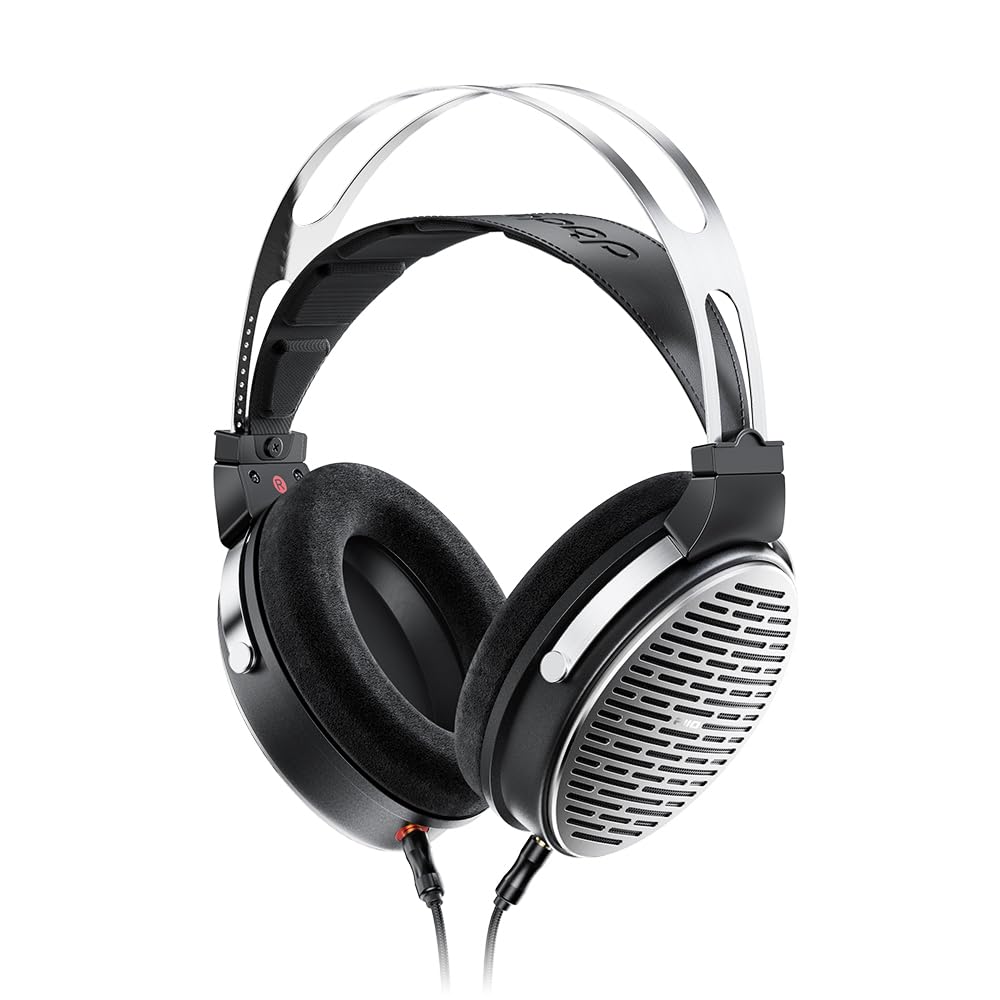
The FiiO JT3 punches well above its price point, largely due to its 50mm dynamic driver paired with a PEK+PU composite diaphragm. This hybrid material approach — using a polyether ketone (PEK) stiffening layer over a polyurethane (PU) base — provides the rigid diaphragm needed for fast, clean transients without sacrificing the flexibility that gives lower frequencies a natural decay. The result is a wide, three-dimensional soundstage that rivals closed-back headphones costing significantly more.
Build quality is equally impressive for the tier. The frame uses an aluminum-magnesium alloy that keeps the weight low while resisting flex, and the soft velvet earpads filled with memory foam conform to the head without excessive clamping pressure. The open-back structure allows air to move freely, eliminating the pressure buildup that causes ear fatigue during long mixing or gaming sessions. The included detachable cable features an inline microphone and a standard 3.5mm termination with a screw-on 6.35mm adapter.
One practical note: because the JT3 is an open-back design, sound leaks considerably — they are not suitable for recording environments or shared quiet spaces. The suspension-style headband can shift on some head shapes, though the light clamp force makes them comfortable for extended wear. For pure critical listening at home, the FiiO JT3 represents the strongest blend of driver sophistication and comfort in this list.
Why it’s great
- Massive 50mm driver with advanced PEK+PU diaphragm for wide soundstage
- Excellent long-wear comfort with memory foam velour pads
- Detachable cable with mic; includes 6.35mm adapter
- Lightweight aluminum-magnesium alloy chassis
Good to know
- Open-back design leaks significant sound
- Suspension headband may slip on some head shapes
- Cable has some microphonics (noise transmitted through the cord)
2. Sennheiser HD 560S Open-Back Wired Headphones
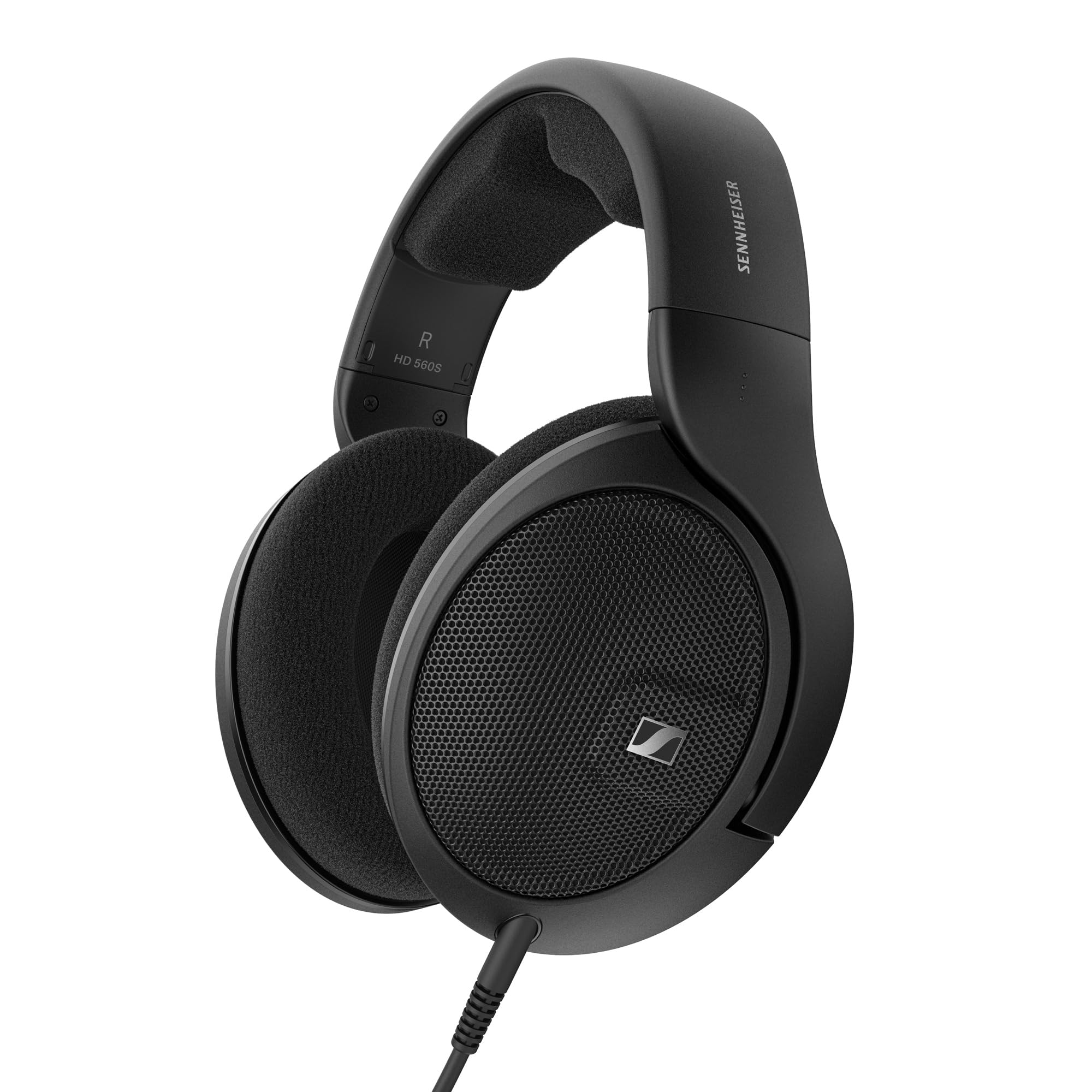
The Sennheiser HD 560S is the definitive entry point for listeners who prioritize flat frequency response and detail retrieval over coloration. The precision-tuned transducers reveal subtle micro-details — reverb tails, breath sounds, string noise — that cheaper drivers smear together. The open-back architecture creates a diffusely spacious soundstage that excels for critical mixing, mastering decisions, and immersive single-player gaming where positional audio matters.
Comfort is a standout feature: the velour earpads and ventilated ear cups significantly reduce heat buildup, and the overall weight of approximately 280 grams makes these among the lightest full-size over-ears available. The clamping force is firm out of the box and loosens over the first week of use. The proprietary 2.5mm locking detachable cable is a double-edged sword — it provides a secure connection, but finding replacement third-party cables is less convenient than standard 3.5mm plugs.
Potential buyers should understand the amplifier requirement. The 120 Ohm impedance means these headphones will sound quiet and compressed when driven directly from a basic laptop jack. A cheap USB dongle DAC or a dedicated headphone amp from FiiO or JDS Labs unlocks their true resolution. The bass extension is clean and tight but light in sheer quantity — listeners seeking heavy sub-bass for electronic music should look toward closed-back alternatives.
Why it’s great
- Exceptionally neutral and detailed sound for critical listening
- Very lightweight at ~280 grams; comfortable for hours
- Wide, open soundstage with strong imaging precision
- Detachable cable with locking 2.5mm connector
Good to know
- Requires an amplifier (DAC/amp) to reach proper volume
- Bass is lean; not ideal for bass-heavy genres
- Plastic build feels less premium than the sound quality suggests
- Proprietary cable connector limits replacement options
3. Sony MDR7506 Professional Large Diaphragm Headphone

The Sony MDR7506 has been a studio staple for decades, and its longevity is earned through a combination of reveal-and-repeat accuracy and rugged simplicity. The 40mm neodymium magnet drivers deliver a slightly bright treble that exposes mixing flaws — sibilance, overlapping frequencies, dynamic compression — making them ideal for critical evaluation. The closed-back design provides excellent passive noise isolation without active electronics, allowing focused listening in moderately noisy environments.
Comfort is divisive: the headband and ear cups are lightweight enough for 8-12 hour sessions, but the stock pleather pads are shallow and can cause sweaty ears in warm rooms. Many users replace them with velour pads (like the Brainwavz or Geekria options) without significant change to the frequency response, which is a testament to the driver’s robustness. The non-detachable 9.8-foot cable is a practical compromise — it is long enough for studio use and terminates in a gold-plated 3.5mm plug with a screw-on 6.35mm adapter, but a cable failure requires professional soldering.
The 63 Ohm impedance sits in a sweet spot: the MDR7506 is loud enough from smartphones and laptops, but benefits noticeably from a clean DAC or audio interface. Treble sensitivity is the main point of contention — listeners sensitive to high frequencies may find the upper register fatiguing after two hours, especially with bright recordings. For anyone seeking a portable, closed-back reference headphone that does not require an amplifier, the Sony MDR7506 remains the standard.
Why it’s great
- Industry-standard studio reference sound used in professional environments
- Great passive noise isolation for a closed-back design
- Easy to drive from phones, laptops, and interfaces
- Collapsible design with included soft carrying case
Good to know
- Non-detachable cable — requires soldering if damaged
- Bright treble can be fatiguing for sensitive listeners
- Stock ear pads are shallow and can get warm
4. beyerdynamic DT 770 PRO 80 Ohm Over-Ear Studio Headphones

The beyerdynamic DT 770 PRO is the closed-back counterpart to the open-back DT 990, and it brings the same German-engineered build philosophy: replaceable parts, robust metal-reinforced headband, and velour ear pads that will not peel or degrade over time. The 80 Ohm version (there are also 32 and 250 Ohm variants) strikes the best balance for home use — it is more resolving than the 32 Ohm model and does not require a high-power amplifier like the 250 Ohm version. A basic audio interface or portable DAC amp (like the FiiO KA1) is sufficient.
Sound signature leans toward a V-shaped curve: elevated sub-bass and treble with slightly recessed mid-range. This makes the DT 770 PRO excellent for electronic music, rock, and gaming where low-end thump and high-frequency sparkle are desired. The bass-reflex system — small vents in the ear cups — extends the low end without sounding boomy, and the treble, while prominent, is well controlled and airy rather than harsh. The closed-back isolation is strong enough for tracking vocals or instruments in a live room.
The greatest long-term advantage of the DT 770 PRO is repairability. Every component — ear pads, headband padding, cable, driver — is available as a genuine replacement part from beyerdynamic. The cable is attached (non-detachable), which is a minor inconvenience, but the 3-meter length and single-sided entry make it suitable for studio rack setups. If you need a closed-back headphone that sounds engaging out of the box and will still be running in ten years, this is the one.
Why it’s great
- Extremely durable construction; all parts are replaceable
- Excellent sub-bass extension and treble detail for closed-back
- Highly comfortable for long sessions with velour pads
- Strong passive isolation ideal for recording and monitoring
Good to know
- Non-detachable cable limits replacement ease
- V-shaped sound may not suit fans of neutral/flat response
- 80 Ohm version still benefits from a dedicated DAC/amp
- Treble can be bright at louder volumes without EQ
5. Audio-Technica ATH-M30x Professional Studio Monitor Headphones
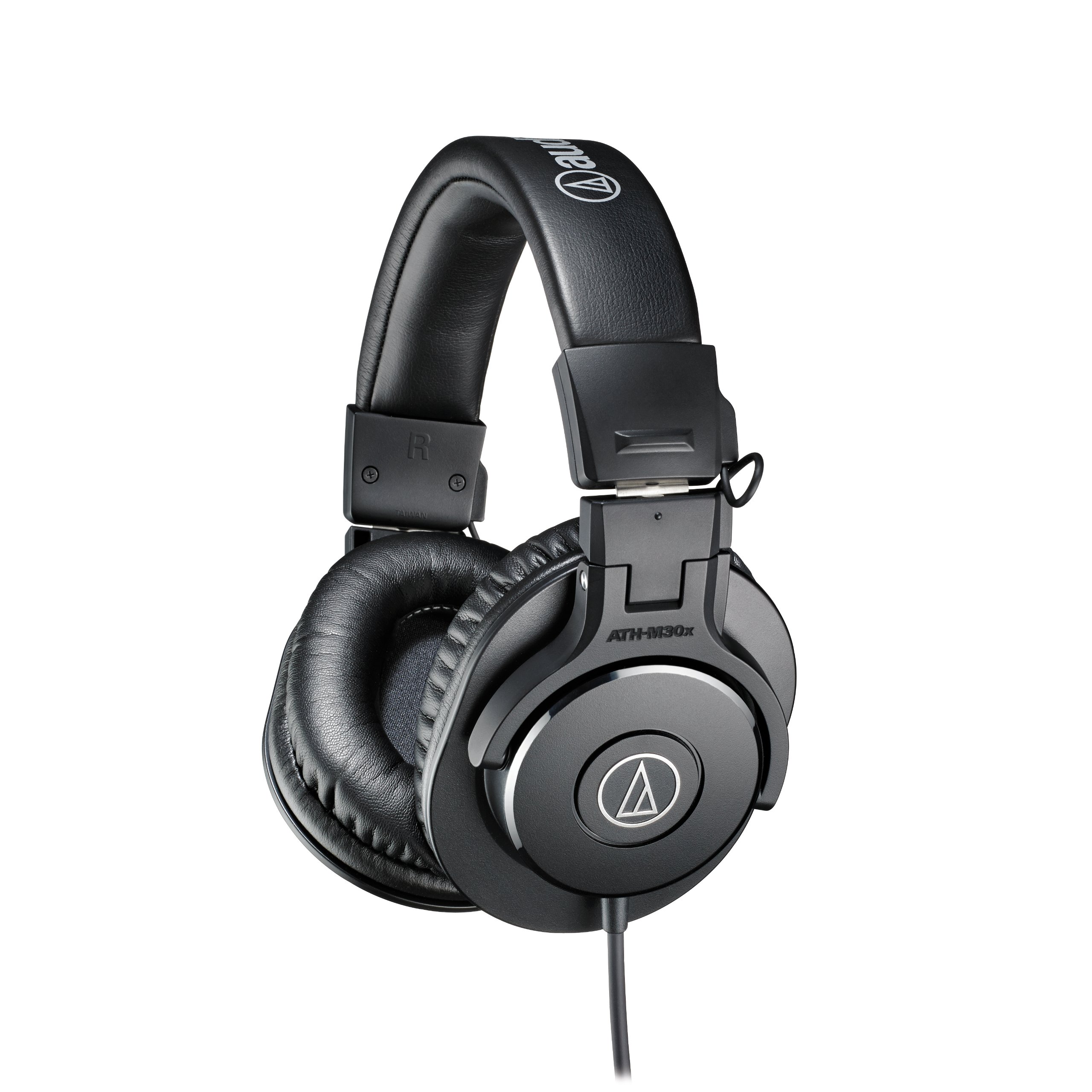
The Audio-Technica ATH-M30x sits in a sweet spot between the entry-level M20x and the professional-grade M50x, offering a noticeable upgrade in mid-range definition and overall clarity for a modest step up in cost. The 40mm drivers use copper-clad aluminum wire (CCAW) voice coils — a lighter mass than standard copper — which reduces the moving weight and improves transient response. This is most audible in vocals and acoustic instruments, where the attack and decay feel more natural and less smeared than the cheaper M20x.
Build quality is a significant differentiator for the M30x. The headband features a metal reinforcement plate, the ear cups fold flat for transport, and the detachable cable (a single-sided cable with a screw-in locking 2.5mm connector) reduces the risk of wire failure. The circumaural pads are deeper than the M20x but still use a pleather material that creates a tight seal for passive isolation. The clamping force is firm, which helps isolation but can become uncomfortable for users with wider head shapes or those who wear glasses.
Sonically, the M30x is tuned with a slight emphasis on the upper mids and lower treble. This makes them excellent for voice work, podcasts, and vocal mixing, where clarity and presence are prioritized over sub-bass impact. The bass is present but controlled — it will not satisfy those looking for a thumping low end. For a listener moving from consumer headphones into audio production or critical listening, the ATH-M30x is the logical first step with a clear upgrade path within the same product line.
Why it’s great
- Detachable cable with locking 2.5mm connector adds durability
- Improved mid-range clarity and transient speed over M20x
- Collapsible design for easy storage and transport
- Metal-reinforced headband is more robust than the plastic M20x
Good to know
- Tight clamping force may cause discomfort for glasses wearers
- Bass is controlled and light; not for bass-heavy genres
- Pleather ear pads can get warm after extended wear
6. Audio-Technica ATH-R30X Open-Back Headphones
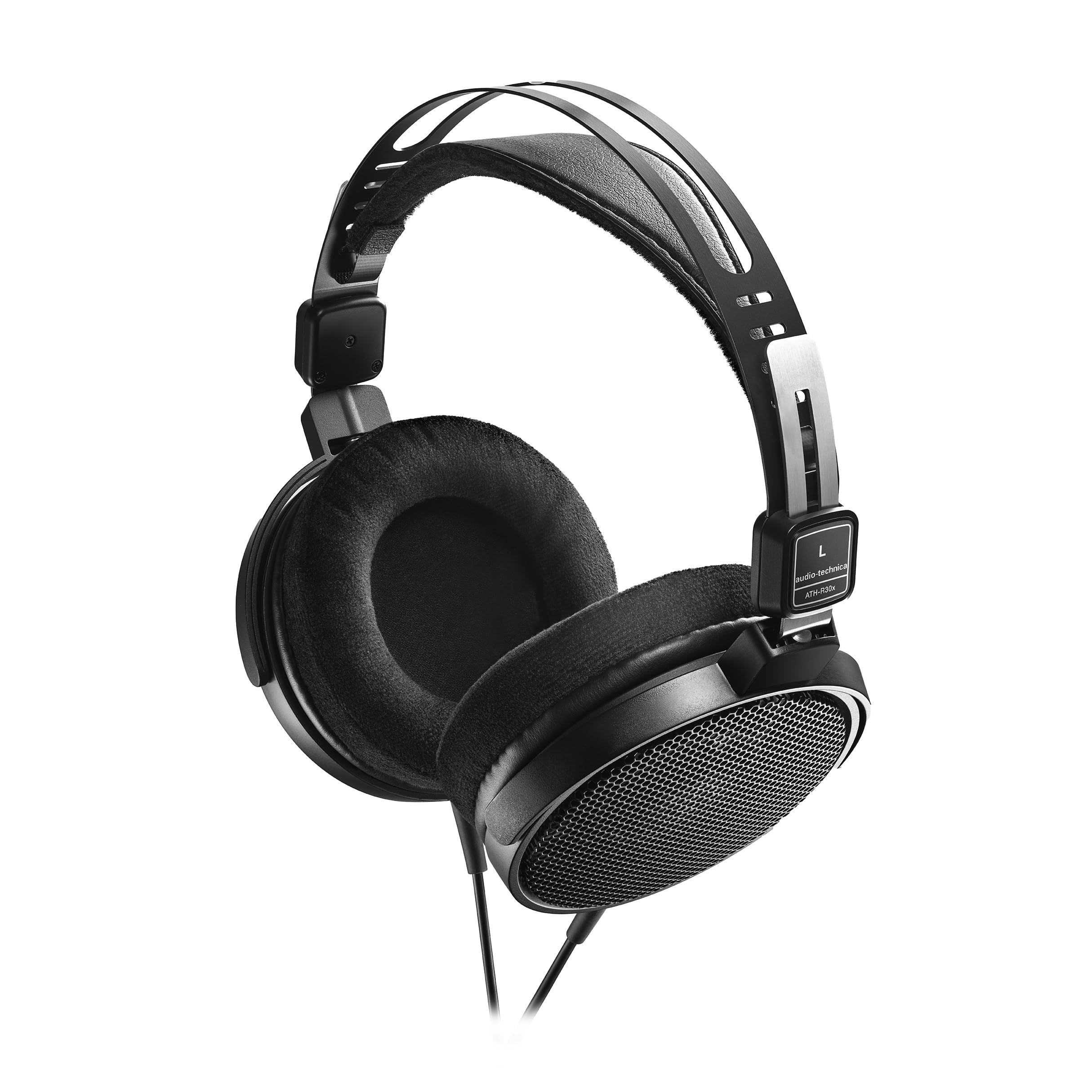
The Audio-Technica ATH-R30X is the most affordable open-back reference headphone in the company’s lineup, specifically designed for home studio production, multimedia creation, and detailed everyday listening. The open-back design allows unrestricted driver movement, which results in a clear, natural sound signature with well-defined lows, transparent mids, and smooth, extended highs that reveal detail in any mix. The 40mm drivers are tuned to avoid the harsh peaks that sometimes plague budget open-back designs.
At 36 Ohms impedance, the R30X is easily driven by laptops, phones, and basic audio interfaces without any additional amplification. This low-impedance design makes them one of the most accessible open-back models for listeners who want to experience the spacious soundstage of open-back headphones without investing in a separate DAC or amp. The ear pads are plush and padded, though some users with larger ears may find the cups slightly shallow — the ears can press against the driver mesh, which becomes uncomfortable after extended periods.
The included accessories are minimal: a non-detachable cable and a set of ear cushions. The cable is long (approximately 3 meters) and attached, which is a drawback for portability but practical for stationary studio or desktop use. The open-back structure means these headphones are not suitable for noisy environments, and the plastic build feels less substantial than the M-series counterparts. However, for the listener who wants to experience open-back clarity at the lowest possible price point without needing extra gear, the ATH-R30X is a capable entry point.
Why it’s great
- Very easy to drive (36 Ohm) — works with phones and laptops
- Natural, spacious open-back soundstage for the price
- Comfortable ear pads for long listening sessions
- Great value for accessing open-back clarity
Good to know
- Non-detachable cable limits flexibility and repairability
- Ear cups are shallow — can press on large ears
- Plastic build feels less premium than studio options
- Open-back design leaks sound and does not isolate
7. Audio-Technica ATH-M20x Professional Studio Monitor Headphones

The Audio-Technica ATH-M20x serves as the most affordable entry point into the M-series lineup, offering a taste of professional monitoring at a price that undercuts nearly every other option in this guide. The 40mm drivers with rare-earth magnets and copper-clad aluminum wire voice coils deliver a frequency response that emphasizes low-frequency performance — the bass is noticeably more elevated than the M30x, which can be appealing for casual listening or tracking beats, though it sacrifices some mid-range transparency and detail retrieval.
Build quality reflects the price reduction: the M20x uses a mostly plastic construction, the headband lacks the metal reinforcement found on the M30x, and the cable is non-detachable and exits from the left ear cup only. The circumaural pads contour around the ears for passive isolation, and the clamp force is moderate — comfortable for users who do not wear glasses, but tight enough to create pressure points after a few hours. There is no included carrying case or adapter, and the ear pads are not user-replaceable without some effort.
For pure price-to-performance ratio, the ATH-M20x is hard to beat. The sound is clear and crisp with adequate range, and the 47 Ohm impedance means they run loudly from any device. The biggest trade-offs are the lack of a detachable cable (the most likely failure point), the plastic build, and the slightly bass-forward tuning that strays from strict neutrality. These are best suited for a student or beginner who needs a durable, good-sounding headphone for home practice or casual mixing without an amplifier.
Why it’s great
- Lowest cost entry into Audio-Technica M-series monitoring
- Easy to drive from any device (47 Ohm impedance)
- Good bass emphasis for tracking and casual listening
- Comfortable for extended wear with moderate clamp force
Good to know
- Non-detachable cable is prone to damage over time
- Plastic build lacks the durability of the M30x or M50x
- Ear pads are not easily replaceable
- Tuning is bass-forward, less neutral than pricier models
FAQ
Do I need a headphone amplifier for cheap audiophile headphones?
What is the difference between open-back and closed-back for critical listening?
Why do some budget audiophile headphones sound harsh in the treble?
Final Thoughts: The Verdict
For most users, the best cheap audiophile headphones winner is the FiiO JT3 because it combines a genuinely advanced 50mm PEK+PU driver with an open-back soundstage and detachable cable at a price that undercuts the competition on raw driver technology. If you want a neutral reference sound with the widest staging and do not mind buying a small amplifier, grab the Sennheiser HD 560S. And for a closed-back, durable professional headphone that isolates noise and works in shared spaces, nothing beats the beyerdynamic DT 770 PRO.

Mo Maruf
I created WellFizz to bridge the gap between vague wellness advice and actionable solutions. My mission is simple: to decode the research and give you practical tools you can actually use.
Beyond the data, I am a passionate traveler. I believe that stepping away from the screen to explore new environments is essential for mental clarity and physical vitality.