Our readers keep the lights on and my smoothie glass nicely filled. As an Amazon Associate, I earn from qualifying purchases.
The sharp, stabbing sensation that radiates from your lower back and hip during a long workday isn’t just discomfort—it’s a direct signal that your spine and pelvis are misaligned. For those managing sacroiliac (SI) joint dysfunction, a standard office chair with a flat seat pan and rigid back is a recipe for aggravation, not relief. The right chair uses targeted lumbar support, a waterfall seat edge to reduce leg pressure, and a stable, non-rocking base to keep the pelvis neutral and pain at bay.
I’m Mohammad Maruf — the founder and writer behind WellFizz. I’ve spent countless hours dissecting the engineering behind ergonomic seating, analyzing build specifications, and cross-referencing biomechanical research to identify the features that actually stabilize the pelvis and reduce SI joint stress.
After evaluating dozens of models on adjustment range, lumbar depth control, and seat-pan geometry, I’ve narrowed the field to the eight most effective contenders. This guide breaks down each option so you can confidently choose the best chair for si joint pain for your specific body type and work habits.
How To Choose The Best Chair For SI Joint Pain
Selecting a chair for SI joint dysfunction requires moving beyond generic ergonomic marketing. You need precise adjustability in three zones: the seat pan, the lumbar support, and the armrests. A chair that can’t dial in these areas forces your pelvis into compensatory postures that aggravate the joint.
Seat Pan Depth and Waterfall Edge
The seat pan must be adjustable forward and backward so your knees sit at a 90-degree angle with your feet flat on the floor. A waterfall front edge—where the foam curves downward—eliminates pressure behind the knees, reducing hamstring tension that pulls on the pelvis and strains the SI joint.
Lumbar Support with Depth Adjustment
Fixed lumbar pads are rarely sufficient. Look for lumbar support that moves both vertically and in pressure depth (inward/outward). This allows you to fill the natural curve of your lower back without pushing your pelvis into anterior tilt—a common trigger for SI joint flares.
Armrest Adjustability
4D or 5D armrests that move in height, width, depth, and pivot angle let you rest your arms without hunching or leaning to one side. Asymmetrical arm positioning—common when typing or mousing—can torque the pelvis. Fully adjustable armrests keep your shoulders relaxed and your spine neutral.
Quick Comparison
On smaller screens, swipe sideways to see the full table.
| Model | Category | Best For | Key Spec | Amazon |
|---|---|---|---|---|
| Secretlab Titan Evo | Gaming/Premium | 4-way lumbar depth control | 4-way built-in adjustable lumbar | Amazon |
| Steelcase Leap | Premium Office | Custom lower back firmness dial | Lower back firmness dial + Natural Glide | Amazon |
| Hbada X7 Smart | High-Tech | Auto-adjusting lumbar tracking | 3D auto-adjusting lumbar + 8D massage | Amazon |
| Branch Ergonomic Chair Pro | Mid-Range | 14 adjustment points including seat depth | 14 points of adjustment | Amazon |
| WorkPro Quantum 9000 | Mid-Range | Ratchet-adjustable back height | Ratchet-adjustable back + seat depth | Amazon |
| HON Wave Big and Tall | Heavy-Duty | 450 lb capacity, reinforced steel frame | 450 lb weight capacity | Amazon |
| ELABEST Ergonomic Mesh | Budget-Friendly | Bionic-curve back & waterfall seat edge | Adjustable lumbar + synchro-tilt | Amazon |
| MOLENTS Ergonomic Mesh | Budget-Friendly | Forward/backward lumbar adjustment | 2-way adjustable lumbar | Amazon |
In‑Depth Reviews
1. Secretlab Titan Evo

The Titan Evo’s 4-way built-in adjustable lumbar support is a standout feature for SI joint pain. Unlike add-on pillows that slip or compress unevenly, this integrated mechanism moves vertically and adjusts pressure depth, letting you precisely fill the lumbar curve without pushing the pelvis forward. The cold-cure foam seat pan is firm enough to prevent bottoming out, which destabilizes the pelvis over long sits.
Its full-metal 4D armrests adjust in height, width, depth, and rotation, allowing you to position your arms symmetrically and reduce torque on the pelvic girdle. The magnetic memory foam head pillow provides additional cervical support, indirectly helping maintain a neutral spine. The leatherette is 12x more durable than standard PU, and the chair comes in three sizes (Regular, XL, XXL) to better match your height and weight.
Some users report the seat cushion feels firm during the break-in period, and the lumbar support can produce minor creaking sounds. The leatherette may attract pet hair. Assembly is straightforward with labeled hardware. A premium choice that prioritizes structural integrity and targeted lumbar control.
Why it’s great
- 4-way adjustable lumbar with depth control
- Three size options for better fit
- Military-grade metal frame, minimal wobble
Good to know
- Leatherette may not breathe as well as mesh
- Firm cushion requires break-in period
- Lumbar mechanism can creak over time
2. Steelcase Leap

The Steelcase Leap is engineered with a lower back firmness dial that lets you adjust the exact pressure against your lumbar spine—a critical feature for SI joint sufferers who need constant, maintainable support without hyperextension. Its Natural Glide System allows the seat to move forward as you recline, keeping your pelvis stable and preventing sacral nutation that triggers joint pain.
The 3D LiveBack technology mimics the spine’s natural curvature, providing dynamic support that contours whether you sit upright or recline. The 4D adjustable arms (height, width, depth, pivot) help maintain symmetrical upper body alignment. The seat depth is adjustable, ensuring the waterfall front edge doesn’t press behind your knees. It arrives fully assembled, so there’s zero setup hassle.
Some owners note the seat foam can feel thin, especially for heavier users. The fabric may feel scratchy against bare legs. Replacement parts can be expensive if purchased through third-party resellers. Despite these drawbacks, its adjustability range is unmatched for medical-grade seating needs.
Why it’s great
- Lower back firmness dial for custom pressure
- Natural Glide System maintains pelvic stability
- Fully assembled out of the box
Good to know
- Seat foam may feel thin for some
- Fabric can feel rough
- Premium price point limits accessibility
3. Hbada X7 Smart

The Hbada X7 uses a gravity-sensing base that automatically adjusts lumbar support intensity as you shift positions. This is a unique approach for SI joint management—instead of requiring manual re-adjustment every time you lean forward or recline, the chair adapts in real time to maintain consistent lower back contact. The 6D adjustable waist pillow adds another layer of custom depth control.
Its 720° omnidirectional armrests rotate and extend to virtually any angle, helping you maintain symmetrical arm positioning whether typing or mousing. The ventilated seat cushion integrates dual fans for active airflow, which prevents heat buildup and reduces pressure point formation in the pelvic area. The aluminum frame keeps the chair lightweight yet stable, with a 150 kg weight capacity.
Some users report the included gas cylinder may be too tall for those over 6 feet, limiting the ability to sit with feet flat. The 8D massage function is a nice bonus but not a substitute for proper lumbar depth adjustability. Assembly is minimal because the chair arrives mostly pre-assembled.
Why it’s great
- Auto-adjusting lumbar adapts to movements
- Dual-fan cooling seat reduces heat buildup
- 720° armrests for precise symmetrical alignment
Good to know
- Gas cylinder may be too tall for very tall users
- Massage function is auxiliary, not primary therapy
- Premium pricing with high-tech features
4. Branch Ergonomic Chair Pro
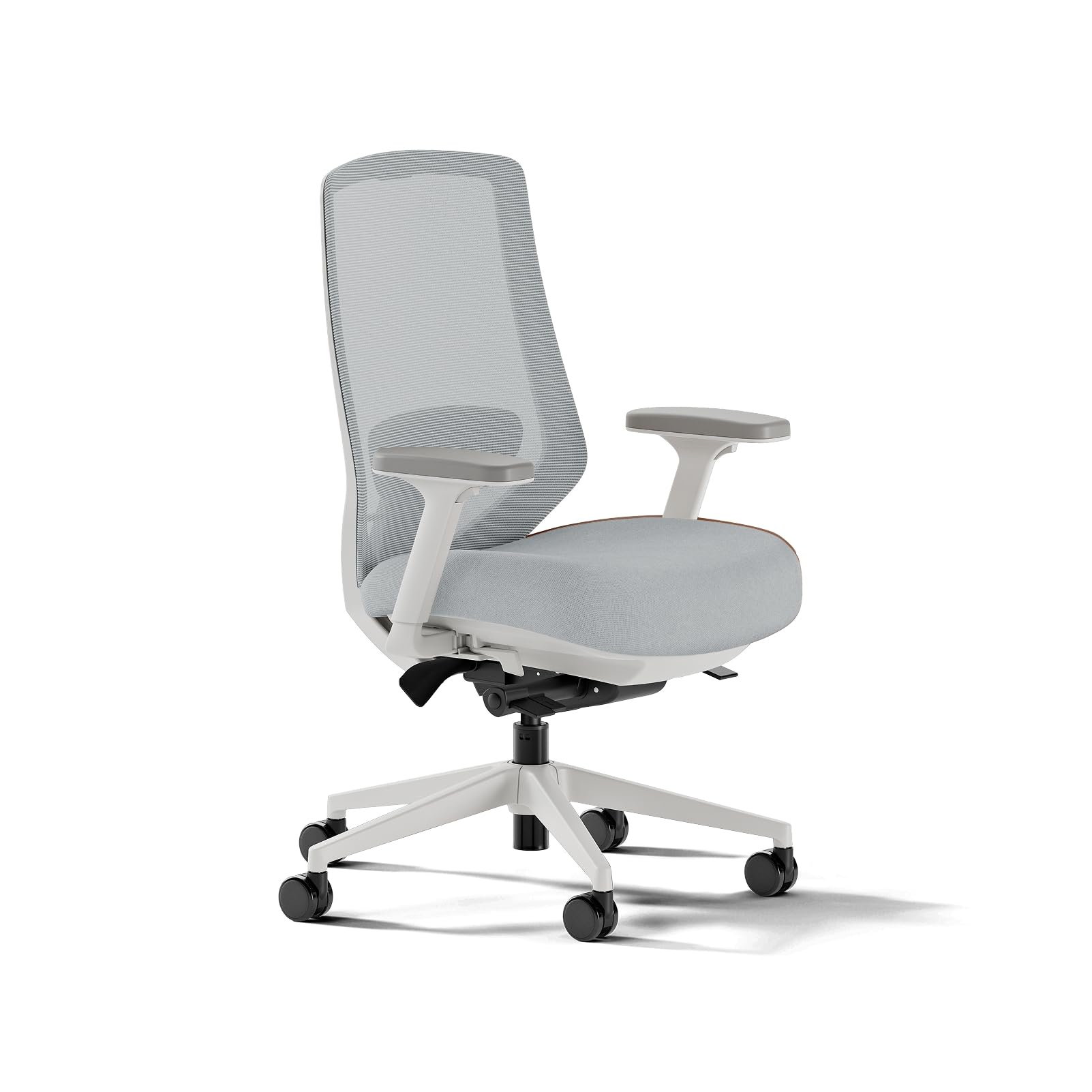
The Branch Ergonomic Chair Pro offers 14 points of adjustment, a figure usually reserved for chairs costing twice as much. For SI joint pain management, the most critical adjustment is seat depth—it slides forward and back to ensure your thighs are fully supported without pressure behind the knees. The two-way lumbar cushion moves vertically and adjusts in depth, allowing you to fill your lumbar curve without pushing the pelvis into tilt.
The 5D armrests adjust in height, width, depth, pivot, and pad angle, giving you the flexibility to keep both arms aligned during desk work. The forward tilt mechanism encourages active sitting, which keeps blood flowing to the pelvic region. The mesh back breathes well, and the molded high-density foam seat cushion distributes weight evenly without sagging.
Some users find the seat cushion could be plusher, especially for those with bony sits bones. The headrest is sold separately, adding to the total cost if you need cervical support. Assembly is straightforward with labeled parts.
Why it’s great
- 14 adjustment points for granular fit
- Adjustable seat depth for proper thigh support
- Forward tilt mechanism for active sitting
Good to know
- Seat cushion may not be plush enough for some
- Headrest sold separately
- Armrests may feel slightly wobbly at full extension
5. WorkPro Quantum 9000

The WorkPro Quantum 9000 uses a ratchet mechanism for the seat back, allowing you to raise or lower the backrest in precise increments to match your torso length. For SI joint sufferers, this ensures the lumbar support hits exactly at the lower curve rather than floating above or below it. The seat also adjusts in depth, and the waterfall front edge reduces hamstring tension that torques the pelvis.
The chair features an integrated mesh seat and back, which promotes airflow and prevents heat retention. The tilt tension is adjustable and locks in multiple positions, so you can recline without losing pelvic stability. The armrests adjust in height, width, and depth, making it easier to keep shoulders relaxed. The base is sturdy and rolls smoothly on hardwood floors.
Some users report the front knee pad (forward seat cushion) feels stiff initially and requires a break-in period of about three weeks. The armrest pivot can be too easy to shift accidentally, and the cylinders may wear after several years of heavy use. A strong value for the adjustment range offered.
Why it’s great
- Ratchet-adjustable back for precise lumbar height
- Seat depth and tilt lock for pelvic stability
- Breathable mesh minimizes heat buildup
Good to know
- Front seat cushion requires break-in period
- Armrest pivot can shift without locking
- Seat cylinder may wear over several years
6. HON Wave Big and Tall

The HON Wave Big and Tall is built around a steel-reinforced frame designed to support up to 450 pounds without sagging or creaking. For SI joint pain, a stable base is non-negotiable—any wobble or frame flex can introduce micro-movements that irritate the joint. The extra-wide seat (30.25 inches) distributes pressure across a larger surface area, reducing localized pelvic pressure.
The padded stretch mesh seat and back allow airflow while providing a firm, supportive surface. The adjustable lumbar support moves vertically, helping you find the low-back contact point that keeps your pelvis neutral. The arms adjust in both height and width, a useful feature for larger frames. The tilt tension is adjustable and lockable, so you can maintain a near-upright posture that keeps the SI joint in a closed, stable position.
Some users note that the seat cushion could be more substantial—the foam is relatively thin compared to premium competitors. The vinyl armrest padding may crack after a few years of use. The tilt lever can loosen over time, leading to accidental recline. Still, a reliable heavy-duty option for larger body types.
Why it’s great
- 450 lb weight capacity with steel-reinforced frame
- Extra-wide seat reduces pelvic pressure points
- Adjustable lumbar and armrests for custom fit
Good to know
- Seat foam may feel thin
- Vinyl armrests may crack over time
- Tilt lever can loosen with use
7. ELABEST Ergonomic Mesh Office Chair

The ELABEST chair incorporates a bionic-curve backrest that mimics the spine’s natural shape, paired with an adjustable lumbar support that moves in height. The waterfall seat edge is a critical detail for SI joint relief—it reduces pressure behind the knees, preventing hamstring tightness that pulls the pelvis into posterior tilt. The synchro-tilt mechanism locks in three positions, giving you a stable recline angle.
The 3D adjustable armrests let you dial in height, width, and angle, helping you avoid leaning to one side. The full-mesh seat is breathable and reduces pressure point formation by eliminating the hard foam edge common in budget chairs. The base is BIFMA 5.1 certified, a commercial-grade durability standard that guarantees structural integrity over daily use.
Some users find the armrests too wide for smaller frames. The mesh seat, while breathable, may feel firm to those accustomed to plush padding. The chair is best suited for users between 5’5” and 5’10”. An excellent entry-level option with features that directly support SI joint health.
Why it’s great
- Waterfall seat edge reduces hamstring tension
- BIFMA 5.1 commercial-grade certification
- Synchro-tilt with 3 lockable positions
Good to know
- Armrests may be too wide for small frames
- Mesh seat feels firm initially
- Best fit for 5’5” to 5’10” users
8. MOLENTS Ergonomic Mesh Desk Chair

The MOLENTS chair stands out in the budget tier because its lumbar support adjusts both up/down and forward/backward—a feature often missing at this price point. For SI joint pain, that forward/backward depth adjustment is crucial for filling the lumbar curve without over-extending the spine. The 3D armrests allow height, width, and angle customization to keep shoulders relaxed and the pelvis square.
The full-mesh seat is highly breathable and prevents heat buildup during long sits. The backrest reclines from 90 to 120 degrees with three lockable positions. The seat dimensions (19.8 inches wide, 18.9 inches deep) provide a generous surface for most body types. The manufacturer offers responsive customer service and sends follow-up emails to ensure fit satisfaction.
Some users note the armrest panels can slide forward/backward or rotate, which may feel less stable than fixed 4D designs. The casters are better suited for hard floors than thick carpet. A capable budget option that doesn’t sacrifice lumbar depth adjustment.
Why it’s great
- Lumbar adjusts forward/backward and up/down
- Generous seat width for pelvic comfort
- Responsive customer follow-up service
Good to know
- Armrest sliding mechanism may feel less stable
- Wheels may struggle on thick carpet
- Recline tension not adjustable
FAQ
Should I choose a mesh or foam seat for SI joint pain?
How much seat depth adjustability do I need?
Can a chair with a headrest help my SI joint?
Final Thoughts: The Verdict
For most users, the best chair for si joint pain winner is the Secretlab Titan Evo because its 4-way built-in lumbar support gives you depth and height control without relying on a separate pillow. If you want a fully customizable lower back firmness dial with a glide system that keeps your pelvis stable while reclining, grab the Steelcase Leap. And for a budget-friendly option that still offers forward/backward lumbar depth adjustment, nothing beats the MOLENTS Ergonomic Mesh Desk Chair.

Mo Maruf
I created WellFizz to bridge the gap between vague wellness advice and actionable solutions. My mission is simple: to decode the research and give you practical tools you can actually use.
Beyond the data, I am a passionate traveler. I believe that stepping away from the screen to explore new environments is essential for mental clarity and physical vitality.