Our readers keep the lights on and my smoothie glass nicely filled. As an Amazon Associate, I earn from qualifying purchases.
That sideling slice into the trees or the weak pop-up that dies short — it’s not your form, it’s your equipment. The average golfer (handicap 15–25) loses strokes not on approach shots but off the tee, where a low-MOI, low-forgiveness driver punishes every off-center strike. The right driver for this player prioritizes a massive sweet spot, low-and-deep center of gravity, and a shaft flex that matches a moderate swing speed — not the stiff, tour-oriented head a scratch player would choose.
I’m Mohammad Maruf — the founder and writer behind WellFizz. I’ve spent hundreds of hours analyzing launch monitor data, MOI figures, and real-user feedback to isolate which drivers genuinely help the majority of recreational golfers hit more fairways and gain consistent yardage.
For the 15-to-25 handicap player, forgiveness is the single metric that matters most — you need a club that turns a toe-strike into a playable fairway finder, not a lost ball. That is what defines the best driver for an average golfer.
How To Choose The Best Driver For An Average Golfer
Picking a driver for a mid-handicap swing is different from selecting a club for a single-digit player. The average golfer generates swing speeds between 85 and 95 mph, rarely hits center-face, and struggles with a slice. The goal isn’t to optimize spin windows by 200 RPM — it’s to maximize the area of the face that produces a playable result. Here’s what to look for.
Moment of Inertia (MOI) — The Forgiveness Number
MOI measures a clubhead’s resistance to twisting on off-center hits. A driver with MOI above 5,000 g-cm² will hold the face square through impact even when you catch the toe or heel. That stability translates directly to straighter ball flight and minimal distance loss. Average golfers should look for drivers in the 5,000 to 10,000 MOI range — the higher the number, the more forgiving the club. The Cobra DS-Adapt MAX-K reaches a combined MOI up to 10,000, which is why it dominates this list.
Shaft Flex — Match Your Swing Speed, Not Your Ego
An average swing speed (85–95 mph) pairs best with a Regular or Senior flex shaft. A Stiff shaft requires a faster tempo to load properly; if you can’t generate that speed, the shaft will feel boardy and you’ll lose both distance and launch angle. The Callaway Mavrik 22 in Ladies flex (essentially a very soft Regular) actually works well for seniors and slower-swing players, as the flex profile helps launch the ball higher with less effort.
Adjustability — Useful Only If It Changes Behavior
Many mid-range and premium drivers include hosel sleeves and removable weights. For the average player, the most useful adjustment is loft: increasing loft (e.g., from 10.5° to 12°) helps close the face angle slightly and promotes a higher, softer-drawing ball flight. Weight tracks that move the CG front-to-back are less important than simply having a straight flight bias. The Cleveland HiBore XL’s 1.5° adjustable hosel is a good example — enough range to fix a slice without overwhelming complexity.
Quick Comparison
On smaller screens, swipe sideways to see the full table.
| Model | Category | Best For | Key Spec | Amazon |
|---|---|---|---|---|
| Cleveland HiBore XL (10.5° Regular) | Mid-Range | Best Overall Forgiveness | 460cc head, 10.5° loft | Amazon |
| TaylorMade Qi35 (10.5° Stiff) | Premium | Adjustable Spin & Trajectory | Two movable weights (13g/3g) | Amazon |
| Cobra DS-Adapt MAX-K (10.5° Stiff) | Premium | Ultra-High MOI Stability | 10,000 combined MOI | Amazon |
| Cleveland Launcher XL 2 (10.5° Graphite) | Mid-Range | Higher Launch with Counterbalance | MainFrame XL face technology | Amazon |
| TaylorMade SIM2 MAX (10.5° Regular) | Premium | Proven Distance & Draw Bias | Speed Injected Twist Face | Amazon |
| Cleveland Launcher XL (10.5° Senior) | Mid-Range | Maximum Forgiveness for Slower Swings | 5,200 g-cm² MOI | Amazon |
| Callaway Mavrik 22 (12° Ladies) | Budget-Friendly | Entry-Level or Senior Players | 12° high-loft configuration | Amazon |
| Cleveland HiBore XL (9° Stiff) | Mid-Range | Low-Loft Option for Faster Swingers | 9° loft, oversize grip | Amazon |
| Cleveland HiBore XL (10.5° Stiff) | Mid-Range | Forgiving with a Standard Swing | 10.5° loft, synthetic rubber grip | Amazon |
In‑Depth Reviews
1. Cleveland Golf HiBore XL Driver (10.5° Regular)
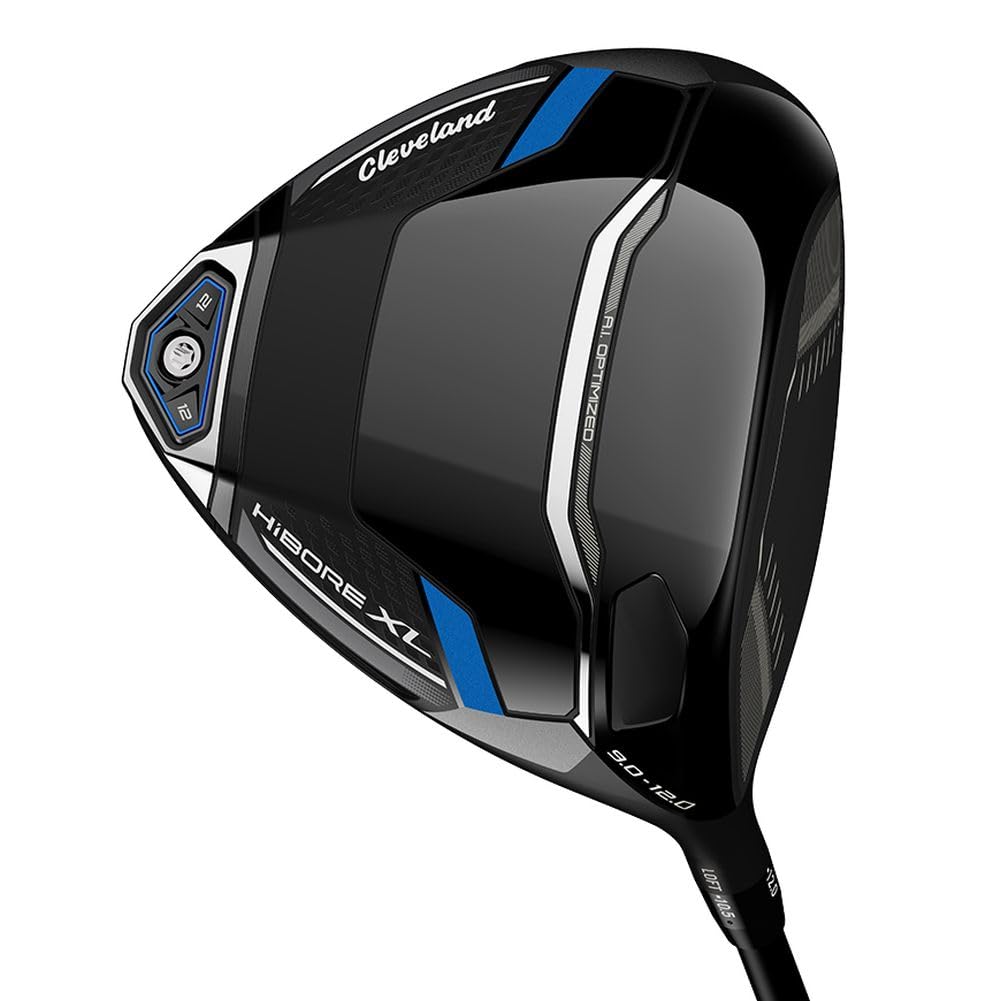
The HiBore XL is the rare driver that actually delivers on its forgiveness promises for the average golfer. Cleveland’s A.I.-shaped chassis creates one of the largest ball-striking areas in the industry, and the MainFrame XL variable-thickness face reshapes the sweet spot to cover a much larger portion of the face. Real-world user data backs this up: players report that toe strikes result in only about 10% distance loss with the ball still holding its line — a massive improvement over older, low-MOI heads that would send a toe-hit 40 yards offline.
The ACTIVWING airfoil stabilizes the head during the downswing by harnessing aerodynamic forces. This is not marketing fluff — the stabilizer actively reduces the clubhead’s tendency to rotate open, which is exactly what causes the slice for mid-handicap players. The adjustable 12g rear weight and 1.5° hosel sleeve give you room to fine-tune swing weight and face angle without needing a fitting bay.
Grip quality is the only area where the club feels entry-level — the standard rubber grip is functional but lacks the tackiness of a Golf Pride Z-Grip. Most users will want to upgrade to a midsize or oversize grip for better hand stability. At this price point, the performance-to-cost ratio is unmatched for the average golfer.
Why it’s great
- One of the largest effective striking areas in the market
- ACTIVWING technology fights slice through aerodynamic stabilization
- Adjustable hosel and rear weight for loft/face tuning
- Users report 15–35 yard gains over a decade-old driver
Good to know
- Stock grip is basic and may need replacement
- Head shape is polarizing, takes a round or two to visually adapt
- Does not entirely fix a severe slice — swing mechanics still matter
2. TaylorMade Qi35 Driver (10.5° Stiff)

TaylorMade’s Qi35 represents the latest generation of the Qi series, and it brings a near-zero CG projection that works beautifully for average swing speeds. The “Quest for Launch” design philosophy pairs an incredibly high MOI with a very low CG, which means the ball launches on an efficient trajectory even when the strike is low on the face. The 4th-generation Carbon Twist Face does more than save weight — the carbon construction redirects energy on off-center hits in a way that titanium alone cannot replicate.
The real differentiator here is the Trajectory Adjustment System: two moveable weights (13g and 3g) allow you to change both spin rate and shot shape bias. An average golfer who fights a slice can position the heavy weight toward the heel to encourage a draw and close the face at impact. The Infinity Carbon Crown and sleek multi-material construction keep the visual clean and confidence-inspiring at address — users consistently mention how good the club looks behind the ball.
One caution: the Stiff flex shaft is demanding. If your swing speed is consistently below 90 mph, the Qi35 in Stiff will feel boardy and you’ll struggle to load the shaft, losing both height and distance. A Regular flex version would better suit the sub-90 mph crowd. At the premium end of the market, this driver offers the most customization for the player willing to tinker.
Why it’s great
- Dual movable weights allow draw-bias or fade-bias setup
- Near-zero CG projection promotes efficient launch across the face
- Carbon Twist Face improves energy transfer on mis-hits
- Users report 30-yard distance gains over older models
Good to know
- Stiff flex is not ideal for sub-90 mph swing speeds
- Premium pricing places it above the mid-range tier
- Adjustability requires some trial and error to dial in
3. Cobra Golf DS-Adapt MAX-K Driver (10.5° Stiff)
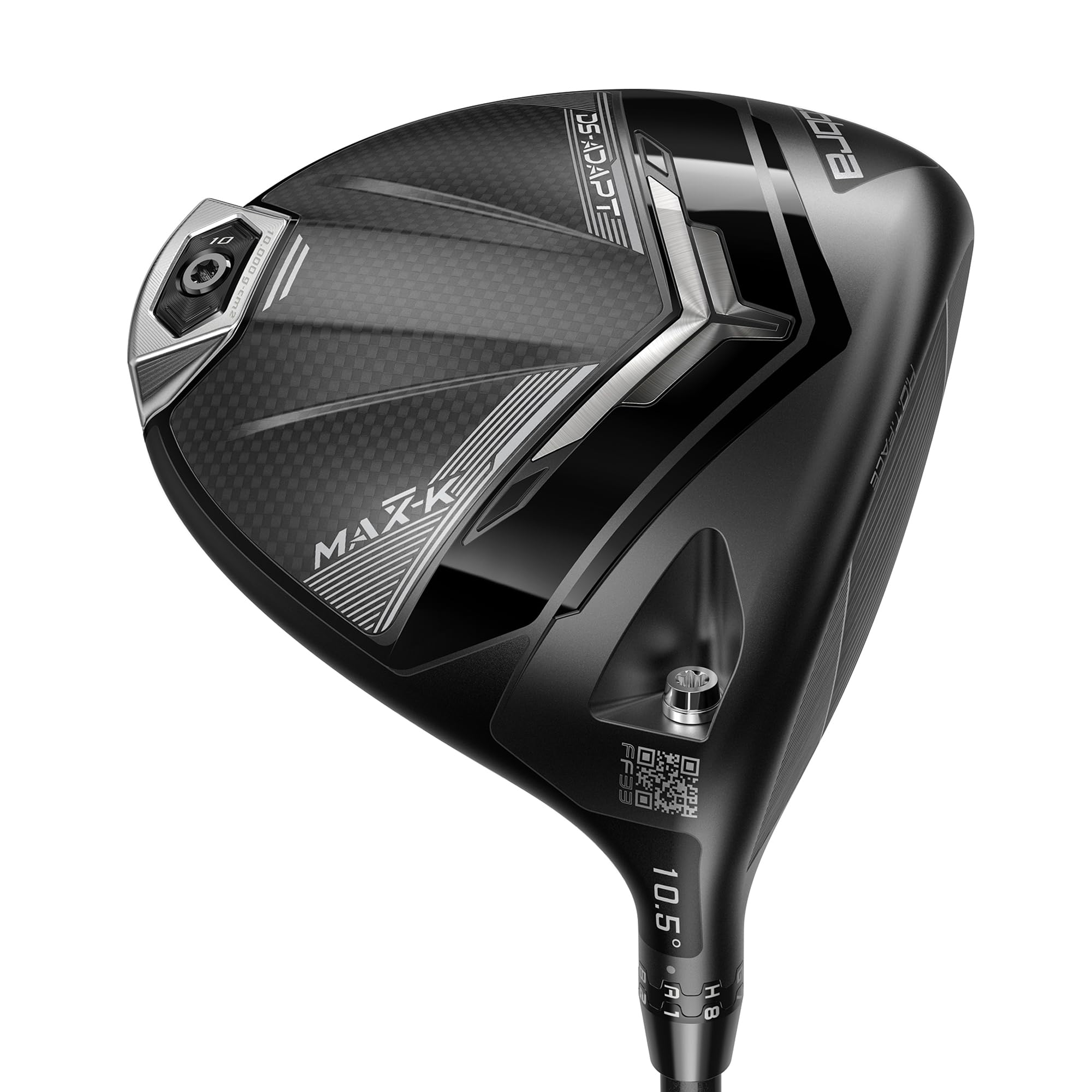
The DS-Adapt MAX-K is a physics-first approach to forgiveness. With a combined MOI up to 10,000 g-cm² — double that of most “forgiving” drivers — this head simply refuses to twist on off-center hits. The MAX-K designation points to the maximum draw bias configuration, positioning the CG low and far back to promote a right-to-left ball flight for right-handed players. For the average golfer whose miss is a slice, this is exactly the geometry that will straighten the ball without a swing change.
The FutureFit33 hosel is the most adjustable system Cobra has ever released, offering 33 distinct loft and lie settings. The key innovation here is that loft and lie can be adjusted independently — you can increase the loft to 12° to get more carry while keeping the face angle square. The SMARTPAD design ensures the club sits flush against the ground regardless of setting, which is a small but significant detail when you’re aligning in the tee box.
One reviewer noted that the club arrived in a plastic bag rather than a proper box, which risks shipping damage. The stock shaft at 45.5 inches and approximately 60 grams is a good middle weight for moderate swing speeds, but faster swingers may need to swap shafts. The adaptive weighting system includes both an external fixed back weight and an internal back weight pad, so there is no user-adjustable weight to lose.
Why it’s great
- Maximum draw bias fights a slice more aggressively than any competitor
- 33-setting independent loft/lie adjustability
- Highest combined MOI in this list (10,000)
- Forged H.O.T. face insert increases ball speed on off-center hits
Good to know
- Packaging complaints — may arrive in a plastic bag
- Faster swingers may need to swap the standard shaft
- No user-adjustable weight port on the MAX-K model
4. Cleveland Golf Launcher XL 2 Driver (10.5° Graphite)

The Launcher XL 2 is the second generation of Cleveland’s most forgiving platform, and the refinements are meaningful. The XL Head Design is larger than the original Launcher XL, packing even more MOI behind the face while maintaining the low-and-deep weighting that helps average golfers launch the ball high and straight. The MainFrame XL face uses a variable thickness pattern that is specifically engineered to maximize flex at impact — the face literally wraps around the ball on mishits to preserve ball speed.
The Action Mass CB — an 8-gram weight inserted into the end of the shaft — is a subtle but critical feature for the average player. Counterbalancing the club makes it feel lighter during the takeaway and more stable through impact, which helps players with inconsistent tempo maintain control. The adjustable hosel provides 12 positions to tweak loft between 9° and 12°, which is enough range to fix both a low-launch slice or a high balloon ball without buying a new club.
Build quality is excellent for the mid-range price tier. The synthetic rubber grip is a step up from the entry-level grips found on the base HiBore XL, with better tack and durability. The main drawback reported by users is that the wrench for the adjustable hosel is sold separately — a minor annoyance that adds cost if you don’t already own one.
Why it’s great
- Counterbalanced shaft (Action Mass CB) stabilizes the swing
- Large XL head with high MOI for maximum forgiveness
- 12-position adjustable hosel (9°–12° loft range)
- MainFrame XL face preserves ball speed on mishits
Good to know
- Adjustment wrench sold separately
- Not as draw-biased as the Cobra MAX-K for slicers
- Senior flex variant is ideal for slower swing speeds
5. TaylorMade Golf SIM2 MAX Driver (10.5° Regular)

The SIM2 MAX is a generation behind the Qi35 but remains one of the best drivers ever made for the average golfer. TaylorMade’s Speed Injected Twist Face is calibrated individually for each head — each driver is tested and the face thickness is adjusted to bring it to the legal COR limit. This means every SIM2 MAX delivers maximum CT (characteristic time) at the factory, not just a theoretical design spec. The Twist Face curvature corrects the gear effect on heel and toe hits, which is the primary cause of hooks and slices on mis-strikes.
The asymmetric Inertia Generator is not just aerodynamic styling — the shape shifts weight to the rear and toe to increase MOI while reducing drag by a measurable amount. Players upgrading from a 10+ year-old driver routinely report 15–30 yard gains. The Thru-Slot Speed Pocket on the sole is essential for low-face strikes, which is exactly where the average golfer tends to hit the ball: thin and low on the face.
One common praise from users is the “draw bias” the SIM2 MAX creates naturally through its sole weighting and face curvature. For the 15-handicap player who hits a weak fade, this driver will flatten the flight and add a gentle draw without any conscious swing manipulation. The Golf Pride Z-Grip is the best stock grip in this list — tacky, durable, and sized correctly for standard hands.
Why it’s great
- Speed Injected face guarantees max legal ball speed
- Twist Face corrects side spin on heel/toe strikes
- Thru-Slot Speed Pocket saves distance on low-face hits
- Stock Golf Pride Z-Grip is superior to competitors’ grips
Good to know
- One generation old — design language is less modern
- Not as adjustable as the Qi35 or Cobra DS-Adapt
- Regular flex is best for swing speeds 85–95 mph
6. Cleveland Golf Launcher XL Driver (10.5° Senior)

The original Launcher XL set the standard for high-MOI, low-stress driver design. With an MOI of 5,200 g-cm² — Cleveland’s highest ever at the time — this head is built for the player who prioritizes fairway-finding over distance. The XL head is visibly larger than average, which psychologically helps the golfer feel more confident over the ball. The low-and-deep weighting produces a high launch that maximizes carry distance for slower swing speeds.
The Rebound Frame technology features alternating flex zones: a flexible inner ring and a rigid outer ring. When you strike the ball, the inner ring compresses and then releases energy back through the rigid ring, creating a slingshot effect that adds ball speed even on low-energy swings. Users recovering from injury or older players with reduced clubhead speed consistently report 20–30 yard gains compared to their previous driver.
The Senior flex shaft in this configuration is a standout for the over-55 or sub-80 mph swing speed player. The graphite shaft loads easily and returns energy consistently, allowing the player to maintain a high launch angle without swinging harder. The only complaint among users is packaging — several reviewers noted the club arrived in a box with no internal protection and no adjustment wrench included.
Why it’s great
- 5,200 g-cm² MOI provides excellent forgiveness for its generation
- Rebound Frame adds ball speed on low-energy swings
- High launch angle helps maximize carry on slower swings
- Senior flex is ideal for older players or injury recovery
Good to know
- Packaging is poor — club may not be wrapped or protected
- No adjustment wrench included
- Harder to work the ball compared to tour-style heads
7. Callaway Golf Mavrik 22 Driver (12° Ladies)

The Mavrik 22 in Ladies flex is a budget-friendly option that punches well above its price point for a specific audience: seniors, absolute beginners, and women with moderate swing speeds. The 12° loft is high enough to produce a balloon-free launch angle for slow swing speeds, and the “speed optimized” head shape reduces aerodynamic drag to maximize clubhead speed through impact. For a golfer who has never broken 100, this club removes the intimidation of a low-loft, low-forgiveness head.
Do not let the “Ladies” label fool you. The flex profile of the Ladies shaft is essentially a softer Regular flex, which is exactly what many male senior golfers need. One reviewer specifically called this out — the Ladies flex works perfectly for men with reduced flexibility or recovery from surgery. The lightweight feel promotes a smoother, more fluid swing motion that reduces the tendency to overpower the club with the upper body.
The trade-offs are predictable: the Mavrik 22 is not as adjustable as the Cleveland or TaylorMade options, and the 12° loft will produce high spin for faster swingers. If you already swing above 90 mph, you would benefit from a lower-loft head. But for the entry-level budget, this is a capable and reliable driver that gets the ball in the air and keeps it relatively straight.
Why it’s great
- High 12° loft ideal for slow swing speeds and beginners
- Lightweight Ladies flex promotes smoother swing tempo
- Aerodynamic head shape maximizes clubhead speed
- Excellent entry-level price point
Good to know
- Not adjustable — no hosel or weight tracks
- 12° loft will produce too much spin for faster swingers
- Limited to Ladies or Senior flex shaft options
8. Cleveland Golf HiBore XL Driver (9° Stiff)
This 9° version of the HiBore XL targets the segment of average golfers who naturally produce a high launch angle — players whose swing generates enough spin that a 10.5° loft would balloon and lose carry. The lower loft trades some carry distance for more roll-out, which can be beneficial on firm fairways or for players who want a piercing trajectory that cuts through wind. The oversize grip is a welcome inclusion for players with larger hands or those who prefer a lighter grip pressure.
Like its 10.5° sibling, this HiBore XL features the same A.I.-shaped chassis, MainFrame XL face, and ACTIVWING stabilizer. The forgiveness is identical — one reviewer noted that even toe strikes produce straight, playable shots carrying 200–230 yards. The reduced loft simply shifts the optimal launch window lower, so the player must have enough clubhead speed (90+ mph) to get the ball airborne effectively.
The oversize grip reduces hand tension and promotes a more relaxed grip pressure, which helps prevent the clubface from closing too early through impact. This is a subtle but real benefit for players who tend to grip too tightly and produce a pull-hook. The stiff flex shaft is appropriate for the 90+ mph swing speed that this loft configuration demands, but slower swingers should avoid this variant.
Why it’s great
- 9° loft provides penetration trajectory for high-spin players
- Oversize grip promotes relaxed hands and straighter shots
- Same A.I. forgiveness technology as the 10.5° model
- Excellent for firm fairways where roll-out is an advantage
Good to know
- Requires 90+ mph swing speed to launch effectively
- Stiff flex is not suitable for slower tempo players
- Oversize grip may feel bulky to standard-sized hands
9. Cleveland Golf HiBore XL Driver (10.5° Stiff)
The standard-loft, stiff-flex variant of the HiBore XL is designed for the player who has graduated from the entry-level game and now swings at 90+ mph but still needs forgiveness. The 10.5° loft is the universal sweet spot for most recreational players: high enough to get the ball in the air, low enough to avoid ballooning. The synthetic rubber grip is a half-step up from basic rubber, offering better moisture resistance on humid days.
The same core technologies apply: MainFrame XL variable thickness face for sweet spot enlargement, ACTIVWING for aerodynamic stability, and the adjustable 12g rear weight for swing weight tuning. The stiff flex shaft in this variant is best suited for players who have a moderate-to-fast transition in their swing — players who load the shaft aggressively will get the best energy return. Users report that even on bad strikes, the ball remains straight and carries 200–230 yards.
One advantage of this configuration is that it is the most widely available HiBore XL variant, meaning Amazon stock is generally reliable. The standard grip size is appropriate for average hand size, and the included head cover is functional if basic. For the player who knows they swing with decent speed but needs forgiveness above all else, this is the configuration to pick from the HiBore XL family.
Why it’s great
- 10.5° loft is a universal sweet spot for most golfers
- Stiff flex suits moderate-to-fast transition swings
- Synthetic rubber grip handles moisture better than basic rubber
- Same A.I. forgiveness as the Best Overall pick
Good to know
- Stiff flex reduces performance for sub-90 mph swing speeds
- Grip is not premium-grade (Golf Pride level)
- No adjustment wrench included for the hosel
FAQ
Should an average golfer use a Stiff or Regular flex shaft?
Does a 12° loftd help fix a slice?
Is a 460cc head always better for forgiveness?
How much distance should an average golfer expect from a new driver?
Final Thoughts: The Verdict
For most users, the best driver for an average golfer winner is the Cleveland Golf HiBore XL (10.5° Regular) because it combines an industry-leading effective striking area, aerodynamic slice correction, and useful adjustability at a mid-range price that outperforms many premium options. If you want maximum forgiveness combined with a strong draw bias, grab the Cobra Golf DS-Adapt MAX-K. And for the player who needs the fastest route to a straight, high-launching tee shot without any fitting complexity, nothing beats the Cleveland Golf Launcher XL (Senior flex) — it is the definition of a fairway finder.

Mo Maruf
I created WellFizz to bridge the gap between vague wellness advice and actionable solutions. My mission is simple: to decode the research and give you practical tools you can actually use.
Beyond the data, I am a passionate traveler. I believe that stepping away from the screen to explore new environments is essential for mental clarity and physical vitality.