Our readers keep the lights on and my smoothie glass nicely filled. As an Amazon Associate, I earn from qualifying purchases.
Finding a dust mask for woodworking that actually seals against your face and allows you to breathe comfortably for hours of sanding, routing, and cutting is the difference between a productive workshop session and a headache-inducing, fogged-up nightmare. The wrong choice leaves fine particulate bypassing the filter, digging into your lungs with every breath.
I’m Mohammad Maruf — the founder and writer behind WellFizz. This guide is built on hundreds of hours comparing filtration standards, facepiece materials, and real-world user reports from joiners, cabinet makers, and hobbyist woodworkers to identify which masks actually deliver on their dust-blocking promises.
Whether you need a lightweight option for quick trim work or a full-shift respirator for heavy sanding, the right pick is among the contenders in this review of the best dust mask for woodworking.
How To Choose The Best Dust Mask For Woodworking
Woodworking dust is not a single substance. It ranges from coarse chips to sub-micron particles that penetrate deep into lung tissue. A dust mask for woodworking must balance filtration efficiency, breathing resistance, and a secure seal that lasts through hours of overhead sanding and table saw work.
Filtration Rating: P100 vs N95
A P100 filter stops at least 99.97% of airborne particles, including fine silica and hardwood dust that N95 (95% minimum) cannot fully capture. For any sanding, MDF cutting, or work with tropical hardwoods, P100 is the minimum standard. N95 suffices only for occasional sweeping or light hand-sawing where dust load is low.
Facepiece Material and Seal Design
Silicone facepieces conform to facial contours more effectively than thermoplastic elastomers, especially in cold shops where stiffer plastics can lose flexibility. A dual-flap seal around the nose bridge prevents the most common leak point. The mask must also accommodate glasses or a faceshield without breaking the seal — bayonet-style filter connections keep the profile low.
Exhalation Valve Position
Bottom-exhaust valves direct warm, moist breath downward instead of up into your eyewear. Front-exhaust valves may be fine under a welding hood but cause persistent fogging with safety glasses or a full-face shield on a lathe. Valve durability also matters — a flapper that warps after a few months compromises the seal.
Quick Comparison
On smaller screens, swipe sideways to see the full table.
| Model | Category | Best For | Key Spec | Amazon |
|---|---|---|---|---|
| 3M Rugged Comfort Quick Latch | Half Mask | All-day sanding & painting | Silicone facepiece, bottom exhaust | Amazon |
| 3M Half Facepiece Kit 6191 | Half Mask Kit | Small faces & tight budgets | P100 filters included, Small size | Amazon |
| GVS Elipse P100 Half Mask | Half Mask | Beard wearers & all-day comfort | Low-profile P100, lightweight | Amazon |
| RZ Mask RZM3 | Carbon Dust Mask | Light-duty dust & allergies | 99.9% carbon filter, 3-strap seal | Amazon |
| Miller ML00894 Lpr-100 | Half Mask | Welding + woodworking combo | HEPA filter, low-profile, silicone | Amazon |
In‑Depth Reviews
1. 3M Rugged Comfort Quick Latch Half Facepiece Reusable Respirator
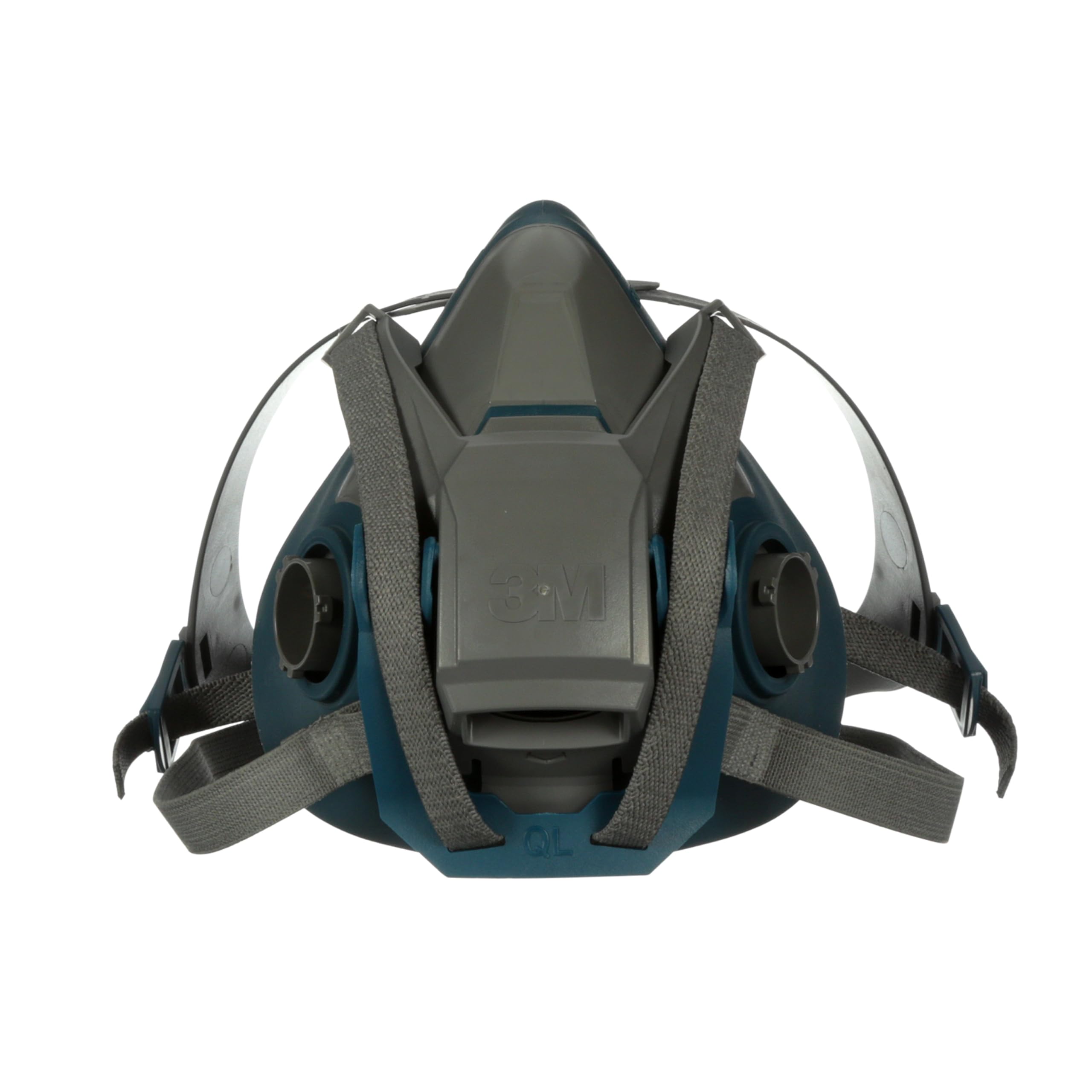
The 3M Rugged Comfort Quick Latch uses a soft silicone facepiece that conforms to a wide range of facial geometries, creating a reliable seal even during extended sanding or painting sessions. Its bottom-exhaust Cool Flow valve is a standout feature for woodworkers because it directs warm, moist breath downward instead of up into safety glasses, virtually eliminating fogging — a complaint that plagues front-exhaust masks.
Users consistently report that the Quick Latch system allows the mask to hang around the neck without removing a hard hat or headband, making transition between tasks seamless. The bayonet-style filter connection is compatible with 3M’s extensive line of P100 and organic vapor cartridges, so upgrading filtration for finishing work requires no new hardware.
Multiple reviewers confirm that the large size fits bigger faces comfortably without pressure points, and the absence of chemical odors out of the box means it is ready to wear immediately. For woodworkers who spend full days in the shop, the balance of breathability, secure seal, and fog-free eyewear is hard to beat.
Why it’s great
- Silicone facepiece provides a comfortable, long-lasting seal without irritation.
- Bottom exhaust valve design keeps safety glasses and face shields fog-free.
Good to know
- Front straps can accumulate fine dust; periodic cleaning is recommended.
- Some users with narrow bridges may need the small/medium size for optimal fit.
2. 3M Half Facepiece Reusable Respirator Assembly Kit 6191, Size Small

The 3M 6191 kit bundles a 6000 Series half facepiece with two 2091 P100 particulate filters, making it an entry-level package that skips the hassle of sourcing filters separately. The small size is a critical option for woodworkers with narrower faces or smaller bone structures — a demographic often underserved by respirator manufacturers that default to medium or large.
The thermoplastic elastomer facepiece is lightweight at just over a quarter pound, reducing neck fatigue during overhead or prolonged work. The adjustable head straps allow a custom tension that balances seal tightness with comfort, and the bayonet connection makes filter swaps tool-free and fast between sanding and finishing tasks.
Customer feedback highlights the small size as a perfect fit for women and smaller-framed users who struggle with leaky seals on standard masks. Some buyers noted the kit sometimes omits the 2091 filters, so confirming inclusion at purchase is wise. For the price, this is the most cost-effective way to get a NIOSH-approved P100 respirator ready to use out of the box.
Why it’s great
- Includes P100 filters so the kit is ready to use immediately.
- True small sizing provides a reliable seal for narrower faces.
Good to know
- Thermoplastic elastomer is less supple than silicone in cold shops.
- Verify filter inclusion at purchase as packaging varies.
3. GVS Elipse P100 Elastomeric Half Mask with Source Control

The GVS Elipse sets itself apart with an ultra-low-profile design that keeps the filter cartridges close to the face, reducing the moment-arm leverage that can cause heavier masks to shift during dynamic movements like belt sanding or overhead routing. The silicone facepiece is noticeably supple, and multiple users with full beards report that it achieves a functional seal where rigid masks fail — though any facial hair compromises a perfect lab-grade seal, the GVS is the best compromise for the bearded woodworker.
Breathing resistance is remarkably low for a P100 mask, which matters during the sustained exertion of hand-planing or using a heavy sander. The integrated filter cartridges are replaceable, and the source-control exhalation valve is designed to capture exhaled air — a feature increasingly relevant for shared workspaces.
One common point of frustration is condensation buildup inside the mask during long shifts. While the low-profile design improves visibility and comfort, the interior can accumulate moisture after eight hours, requiring a wipe-down at lunch break. For half-day or hobbyist use, the GVS Elipse is exceptionally comfortable and rarely creates pressure marks on the nose bridge.
Why it’s great
- Low-profile filter design minimizes mask shifting during active work.
- Works better than most with beards while maintaining a usable seal.
Good to know
- Condensation can accumulate inside during full-day use.
- The nose area may feel tight if the strap is over-tightened for seal.
4. RZ Mask RZM3 – Patented Dust Mask w/ 99.9% Carbon Filtration
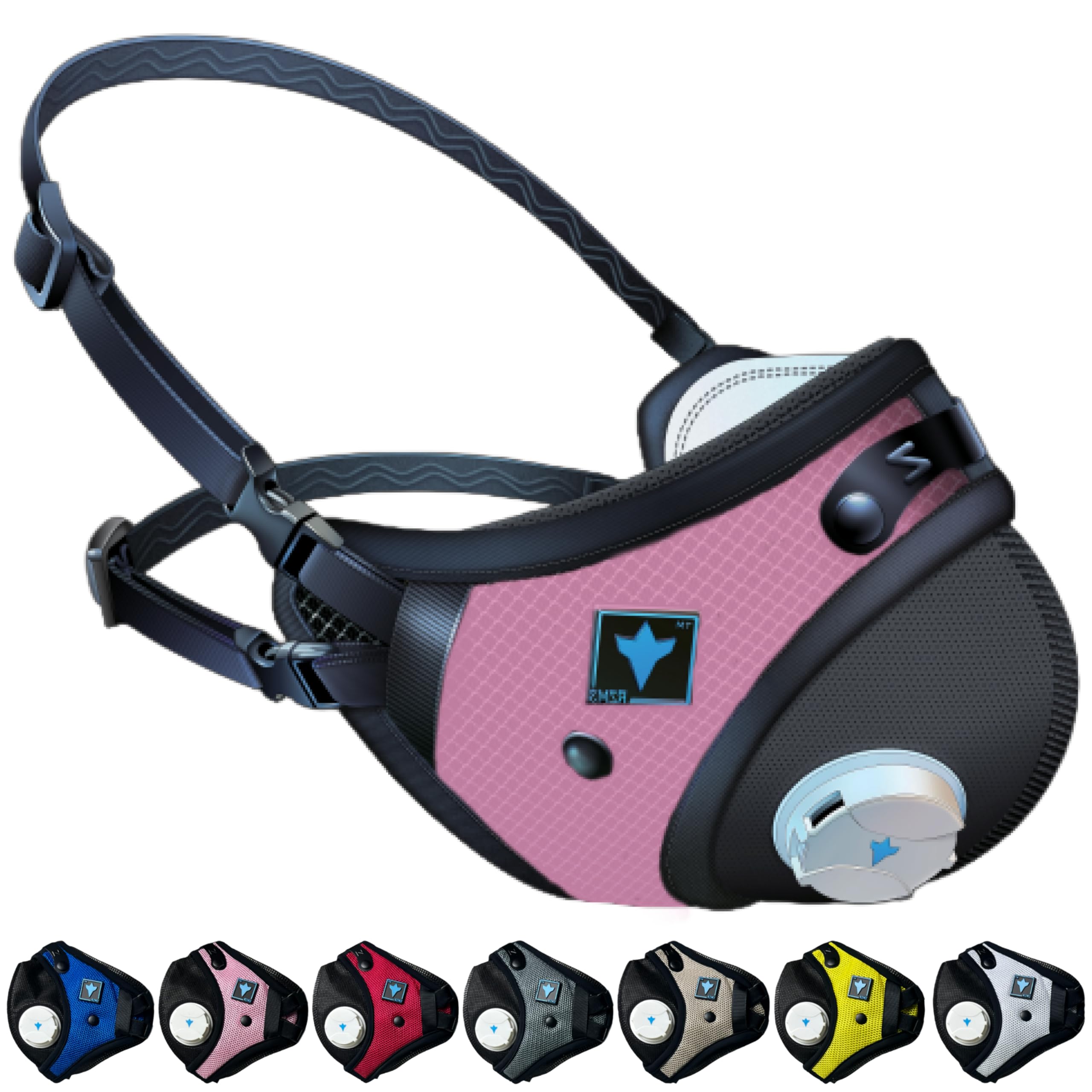
The RZ Mask RZM3 is not a half-face respirator in the traditional elastomeric sense — it is a fabric-based dust mask with a replaceable carbon filter rated at 99.9% particle capture. Its three-strap 360-degree seal system distributes tension evenly around the head, which some users with neck issues or cervical spinal stenosis find more comfortable than the typical dual-strap respirator. The foam nose bridge conforms well and effectively prevents fogging on safety glasses.
For woodworking tasks that generate low dust loads — sweeping, light hand-sanding, or assembly work where fine particulate is minimal — the RZM3 is breathable enough to wear all day without feeling like you are breathing through a restriction. The replaceable filter is simple to swap, and the mask itself is machine-washable, keeping long-term costs low.
However, it is not NIOSH-approved as an elastomeric respirator and should not be relied upon for heavy sanding, MDF cutting, or exposure to toxic finishing fumes. Some users noted the mask gets warm with extended use due to the tight seal. It is best considered a comfortable upgrade from disposable N95 masks for light-duty dust control rather than a primary respirator.
Why it’s great
- Three-strap design provides comfortable, even tension for sensitive necks.
- Replaceable carbon filter is easy to swap and the mask is washable.
Good to know
- Not NIOSH-approved; not suitable for heavy sanding or toxic fume protection.
- Gets warm after prolonged wear due to the tight 360-degree seal.
5. Miller ML00894 Lpr-100 Respirator W/Filters, Small/Medium
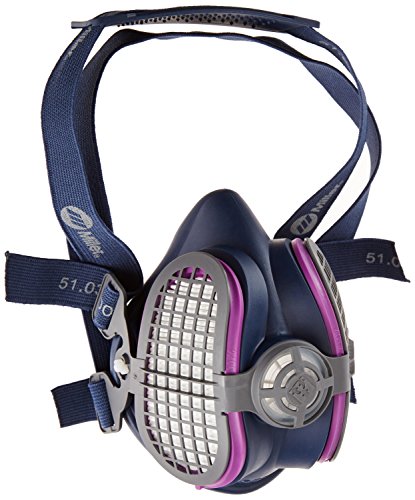
The Miller Lpr-100 is engineered primarily for welders who need a respirator that fits under a welding helmet, but its low-profile silicone facepiece and compact canister filters make it equally valuable for woodworking. The small/medium sizing is ideal for woodworkers with slender faces who find standard respirators too bulky. The synthetic rubber seal feels robust and remains pliable in cooler shop environments.
Breathing effort is notably low — the large exhalation valve reduces user fatigue during sustained tasks like lathe work or heavy grinding. One reviewer specifically highlighted its effectiveness for woodworking, praising the HEPA-level filtration and comfortable fit around a prominent nose. The front exhaust valve, while fine for most tasks, can fog a full-face shield during lathe use, so pairing it with safety glasses rather than a shield is recommended.
Filter replacement intervals are roughly every two months with moderate woodworking use, and replacement filters are straightforward to install. The Miller Lpr-100 is slightly more expensive than comparable 3M models, but its slim profile and compatibility with welding headgear make it a strong choice for the mixed-process shop that does both fabrication and woodworking.
Why it’s great
- Ultra-compact design fits easily under welding hoods and close to the face.
- Silicone seal stays flexible and comfortable across temperature changes.
Good to know
- Front exhaust can fog a full-face shield during lathe work.
- Replacement filters are more expensive than standard 3M P100 cartridges.
FAQ
Can I wear a dust mask for woodworking with a beard?
How often should I replace the filters on my woodworking respirator?
Why does my dust mask fog my safety glasses and how do I stop it?
Final Thoughts: The Verdict
For most users, the dust mask for woodworking winner is the 3M Rugged Comfort Quick Latch because it pairs a soft silicone seal with a bottom exhaust that keeps eyewear clear, plus a quick-latch system that makes intermittent sanding and painting tasks fluid. If you need an all-in kit with P100 filters included and a true small size, grab the 3M Half Facepiece Kit 6191. And for light-duty dust control with better breathability than disposables, nothing beats the comfort and configurability of the RZ Mask RZM3.

Mo Maruf
I created WellFizz to bridge the gap between vague wellness advice and actionable solutions. My mission is simple: to decode the research and give you practical tools you can actually use.
Beyond the data, I am a passionate traveler. I believe that stepping away from the screen to explore new environments is essential for mental clarity and physical vitality.